RcloneView Keyboard Shortcuts and Productivity Tips
Power users know that keyboard shortcuts can cut file management time in half. RcloneView's shortcut system gives you fast access to navigation, selection, transfers, and job management without reaching for the mouse.
RcloneView's two-pane explorer is designed for efficient file operations across cloud providers. While the GUI is fully navigable with mouse clicks, learning the keyboard shortcuts transforms your workflow — especially when managing thousands of files across multiple remotes. This guide covers the essential shortcuts and workflow tips that experienced RcloneView users rely on daily.
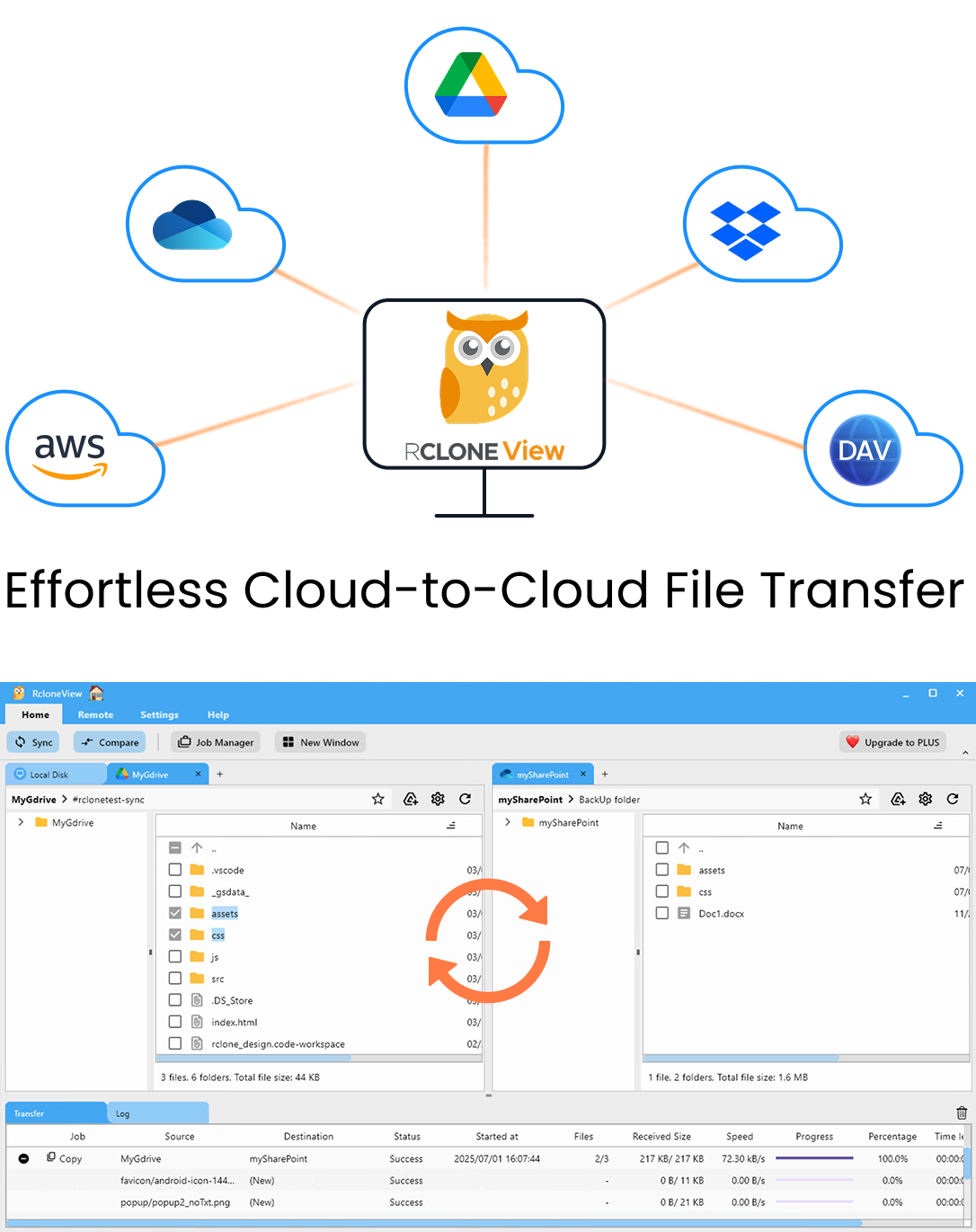
Manage & Sync All Clouds in One Place
RcloneView is a cross-platform GUI for rclone. Compare folders, transfer or sync files, and automate multi-cloud workflows with a clean, visual interface.
- One-click jobs: Copy · Sync · Compare
- Schedulers & history for reliable automation
- Works with Google Drive, OneDrive, Dropbox, S3, WebDAV, SFTP and more
Free core features. Plus automations available.
Navigation Shortcuts
Efficient navigation is the foundation of fast file management. These shortcuts let you move between panes, switch remotes, and navigate folder trees without clicking:
Pane Management
- Tab: Switch focus between the left and right panes. This is the most-used shortcut in RcloneView — it lets you alternate between source and destination without moving your hands from the keyboard.
- Enter: Open the selected folder or file. For folders, this navigates into them. For files, this triggers the default action.
- Backspace / Alt+Up: Navigate up one directory level in the current pane.
File Selection
- Ctrl+A: Select all files in the current pane. Useful for bulk operations like copying an entire folder's contents.
- Shift+Click: Select a range of files between the last selected file and the clicked file.
- Ctrl+Click: Toggle selection of individual files without deselecting others. Build up a multi-file selection across non-contiguous items.
File Operation Shortcuts
Once you have files selected, these shortcuts execute operations quickly:
- Ctrl+C: Copy selected files to clipboard (for paste to the other pane).
- Ctrl+X: Cut selected files (move operation).
- Ctrl+V: Paste files from clipboard to the current pane's location.
- Delete / Del: Delete selected files on the remote. RcloneView prompts for confirmation before deletion.
- F2: Rename the selected file or folder.
- Ctrl+Shift+N: Create a new folder in the current pane's location.
Comparison and Sync Shortcuts
RcloneView's compare and sync features have their own shortcuts:
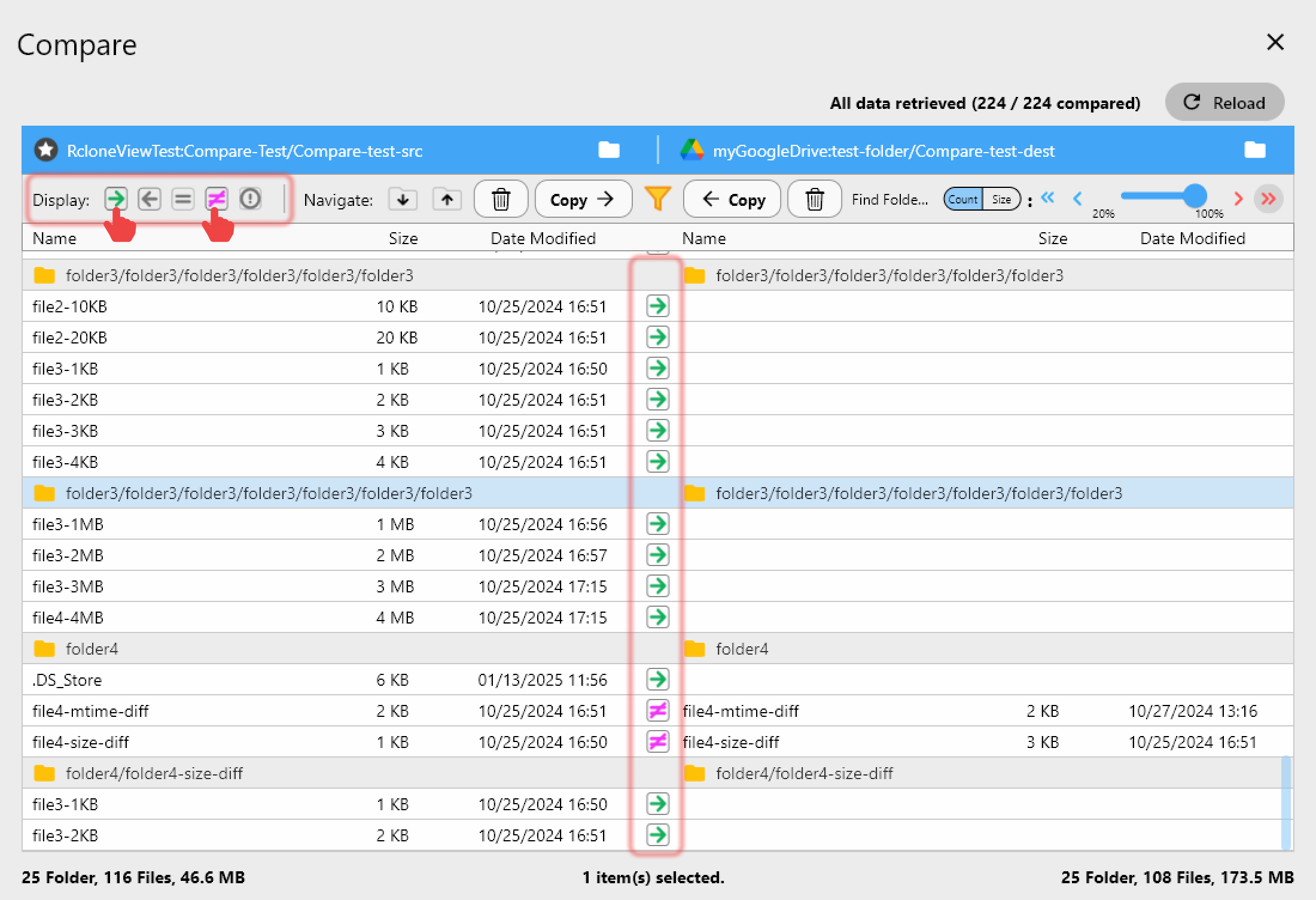
- Compare button / shortcut: Launch a folder comparison between the left and right panes. The comparison highlights files unique to each side, files that differ, and identical files.
- Sync shortcuts: Initiate sync from left to right or right to left directly from the toolbar or keyboard.
Search and Filter
- Ctrl+F: Open the search/filter bar in the current pane. Type a filename pattern to filter the visible files. This is invaluable in folders with hundreds of files — type a few characters to narrow the list instantly.
- Esc: Close the search/filter bar and restore the full file list.
Productivity Tips
Tip 1: Use Named Remotes Descriptively
Name your remotes by purpose rather than provider — "Client-A-Drive" instead of "Google-Drive-2". When you have 10+ remotes, descriptive names save time finding the right one in the dropdown.
Tip 2: Leverage the Two-Pane Layout
Keep your most-used remote in the left pane and switch the right pane as needed. For example, always keep your backup destination (Backblaze B2, S3) in the left pane and load different source remotes in the right pane. This creates a consistent spatial model — "left is backup, right is source" — that becomes automatic.
Tip 3: Pin Frequently Used Paths
If you repeatedly navigate to the same deeply nested folder, create a bookmark or alias remote that points directly to it. Instead of navigating remote:/projects/2026/client-a/deliverables/ every time, create an alias remote called "Client-A-Deliverables" that opens directly to that path.
Tip 4: Use Dry Run Before Sync
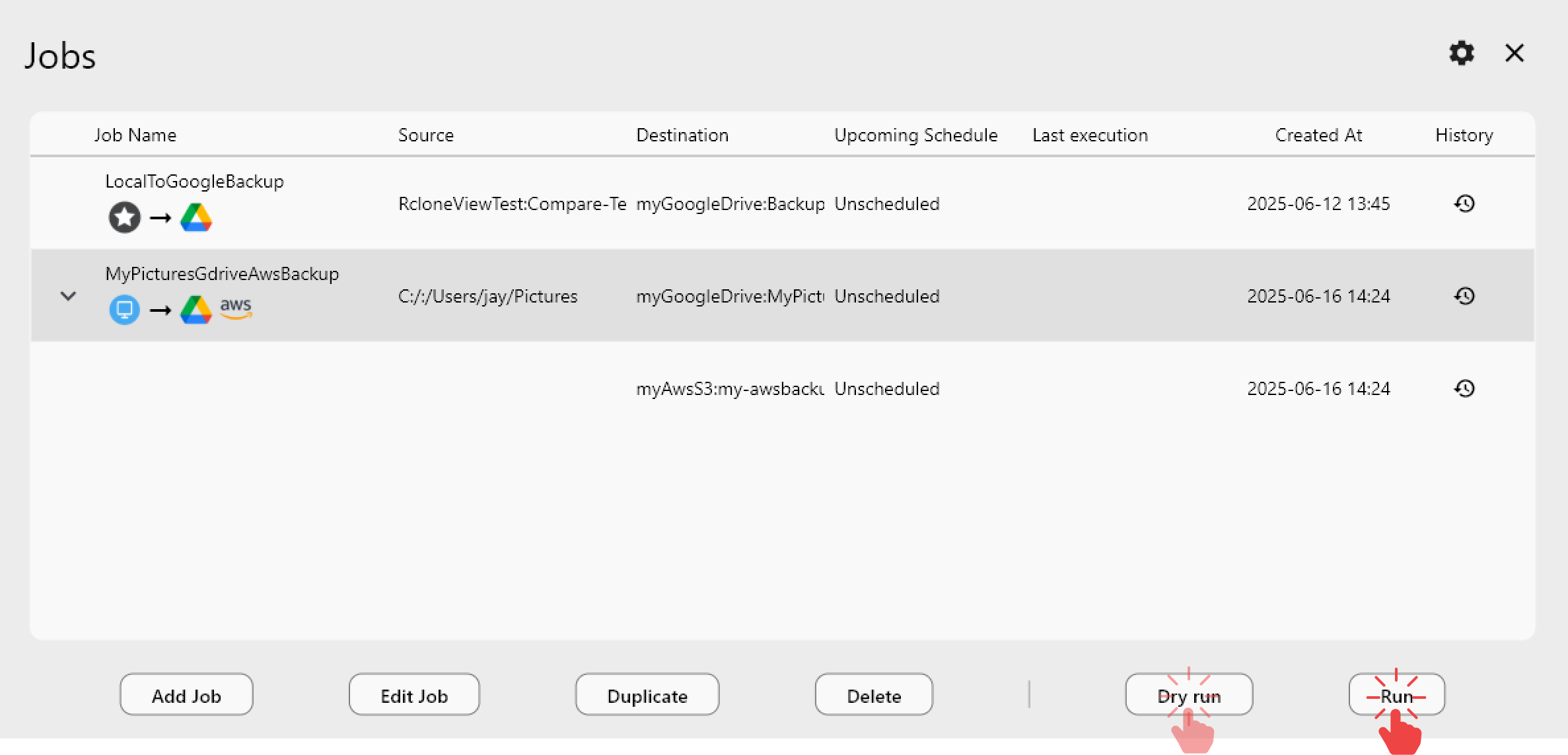
Before running a sync job on production data, always preview with dry run. This shows exactly what will be transferred, deleted, or skipped — without actually making changes. Catch errors before they happen.
Tip 5: Batch Operations with Job Queue
Instead of running transfers one at a time, queue multiple jobs. Set up a copy from Remote A to B, then a sync from C to D, and let them run sequentially. The job queue handles execution order while you move on to other work.
Tip 6: Monitor Without Interrupting
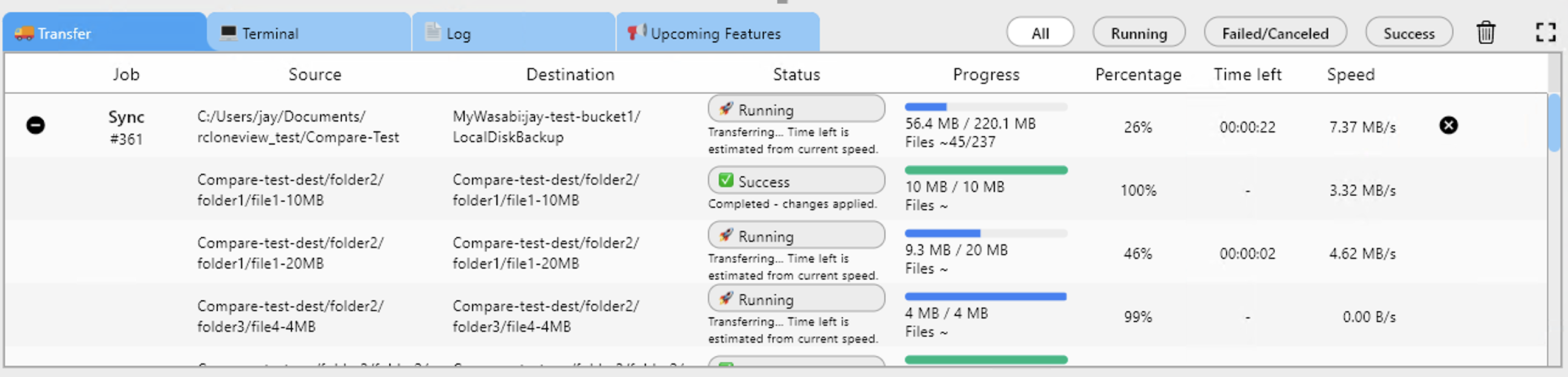
Switch to the transfer monitoring view to check progress without stopping your navigation. RcloneView shows real-time transfer speeds, per-file progress, and estimated completion time. Pause or cancel individual transfers without affecting others in the queue.
Tip 7: Use Drag and Drop for Quick Transfers
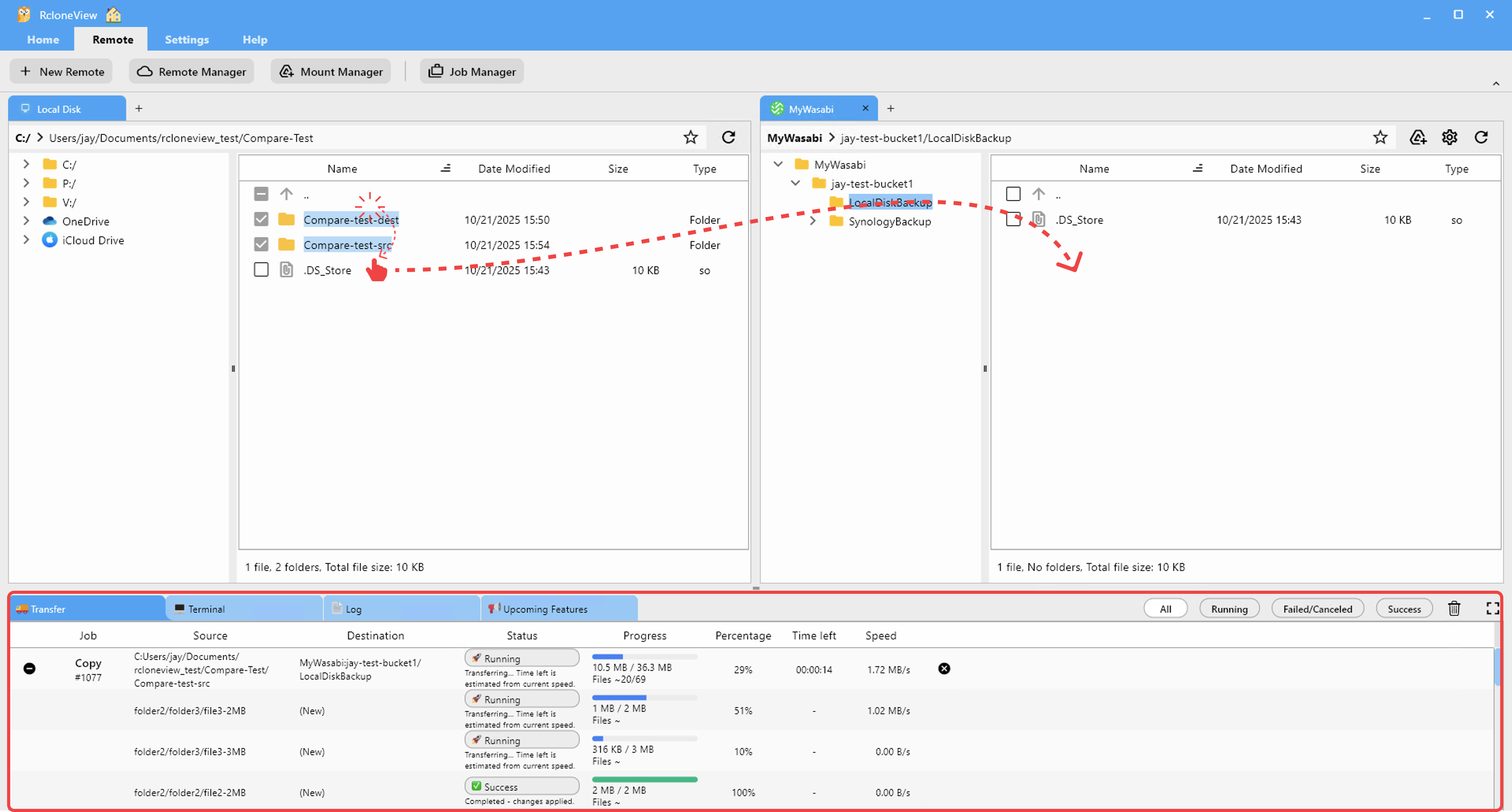
For one-off transfers, drag and drop is the fastest method. Select files in one pane and drag them to the other. This works across any two remotes — cloud to cloud, local to cloud, or cloud to local.
Tip 8: Review Job History Regularly
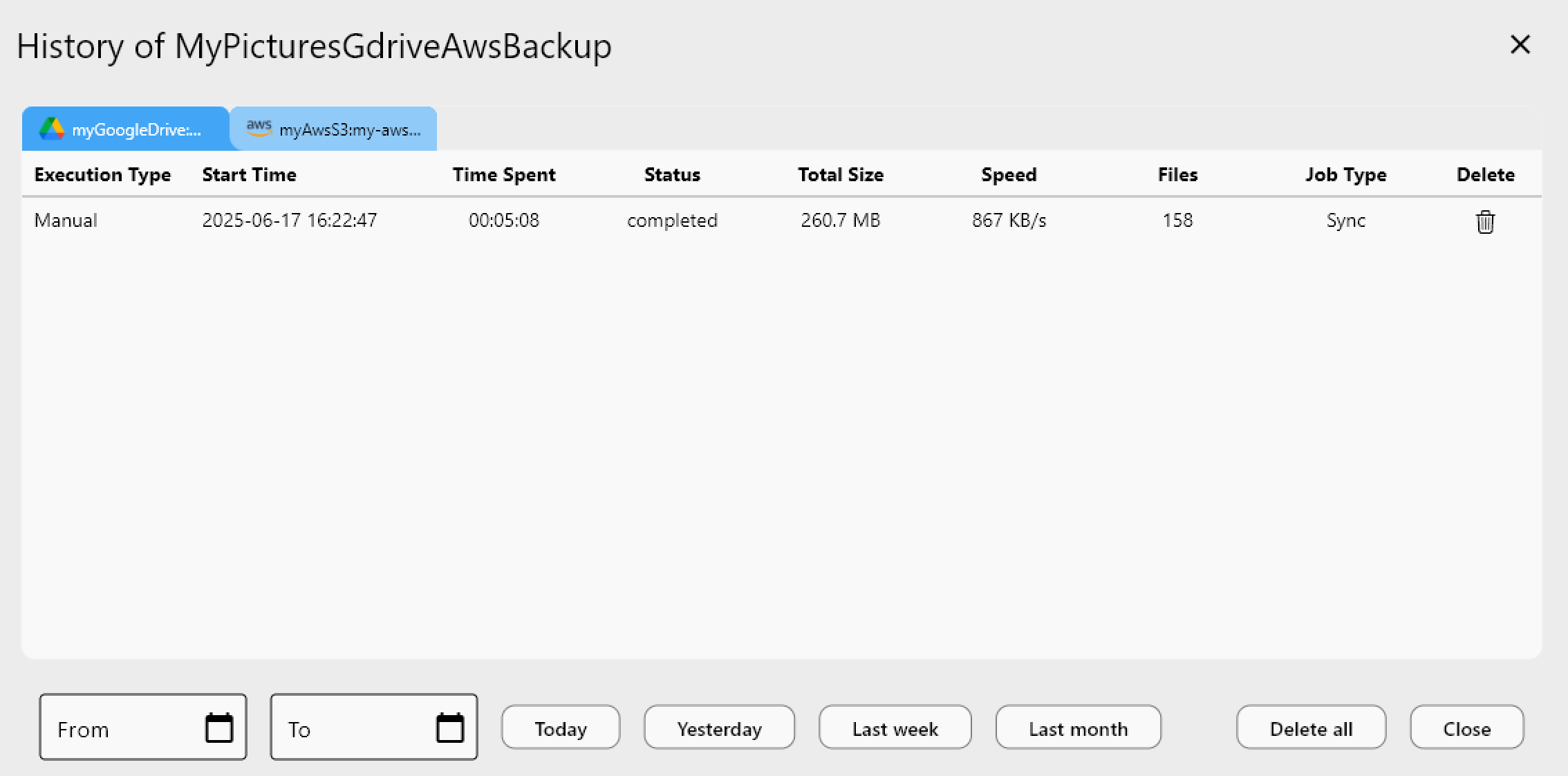
The job history panel records every operation with statistics. Review it periodically to confirm that scheduled jobs are running successfully, check transfer speeds, and identify any errors. This habit catches problems early — before a failed backup becomes a missed backup.
Building Muscle Memory
The fastest way to internalize shortcuts is to use them deliberately for one week. Each time you reach for the mouse to switch panes, stop and press Tab instead. Each time you right-click to copy, use Ctrl+C instead. After a week, the shortcuts become automatic and your file management speed increases noticeably.
Getting Started
- Download RcloneView from rcloneview.com.
- Set up your remotes with descriptive names.
- Practice the navigation shortcuts (Tab, Enter, Backspace) until they are automatic.
- Use Ctrl+F to filter large folders instead of scrolling.
- Leverage dry run, job queues, and history reviews for confident operations.
Keyboard shortcuts and workflow habits compound over time. A few seconds saved per operation adds up to hours saved per month when you manage files across multiple cloud providers daily.
Related Guides:
Supported Cloud Providers