Log and Debug Cloud Transfers — Troubleshoot Issues in RcloneView
Transfer failures frustrate users, but mysterious error messages frustrate them more. RcloneView's comprehensive logging and debug features reveal exactly what went wrong and how to fix it.
A file transfer stops midway with a cryptic timeout message. A sync job reports success but files remain out of sync. Your scheduled backup missed its window silently. Without visibility into what actually happened, troubleshooting becomes guesswork. RcloneView's logging and debug capabilities transform opacity into clarity, showing you exactly which files succeeded, which failed, and precisely why.
Manage & Sync All Clouds in One Place
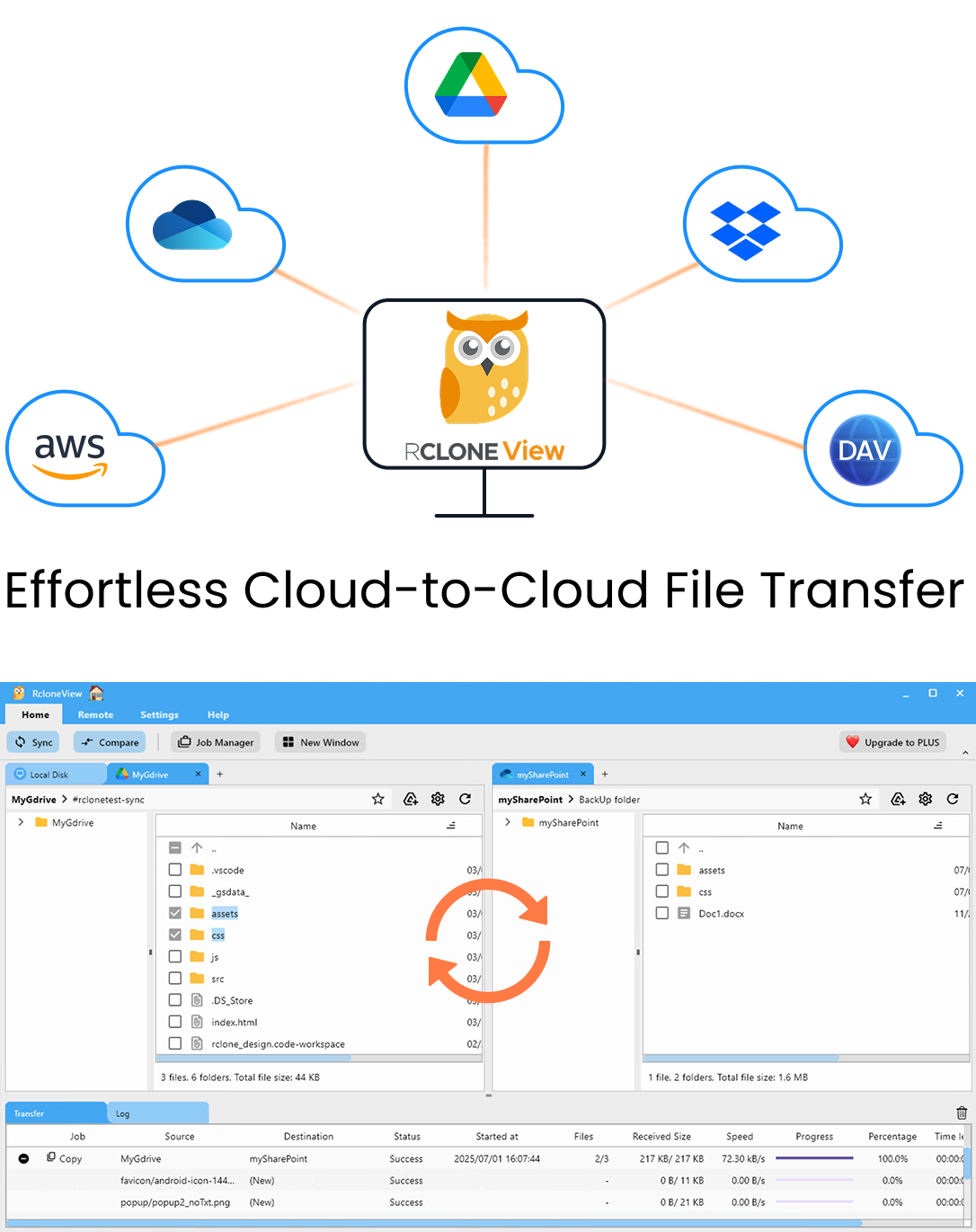
RcloneView is a cross-platform GUI for rclone. Compare folders, transfer or sync files, and automate multi-cloud workflows with a clean, visual interface.
- One-click jobs: Copy · Sync · Compare
- Schedulers & history for reliable automation
- Works with Google Drive, OneDrive, Dropbox, S3, WebDAV, SFTP and more
Free core features. Plus automations available.
Enabling Debug Mode in RcloneView
Debug mode exposes every operation RcloneView and rclone perform. Access it through the Preferences menu: Logging > Debug Level, then set to "DEBUG". This captures network requests, authentication flows, file comparisons, and permission checks at maximum verbosity.
Once enabled, RcloneView's logs record every transaction. Run your problematic transfer now. Each API call, file check, and decision gets documented. This verbosity helps diagnose subtle issues: authentication timing problems, permission denials, provider-specific API quirks, network failures at specific points.
Reading and Interpreting RcloneView Logs
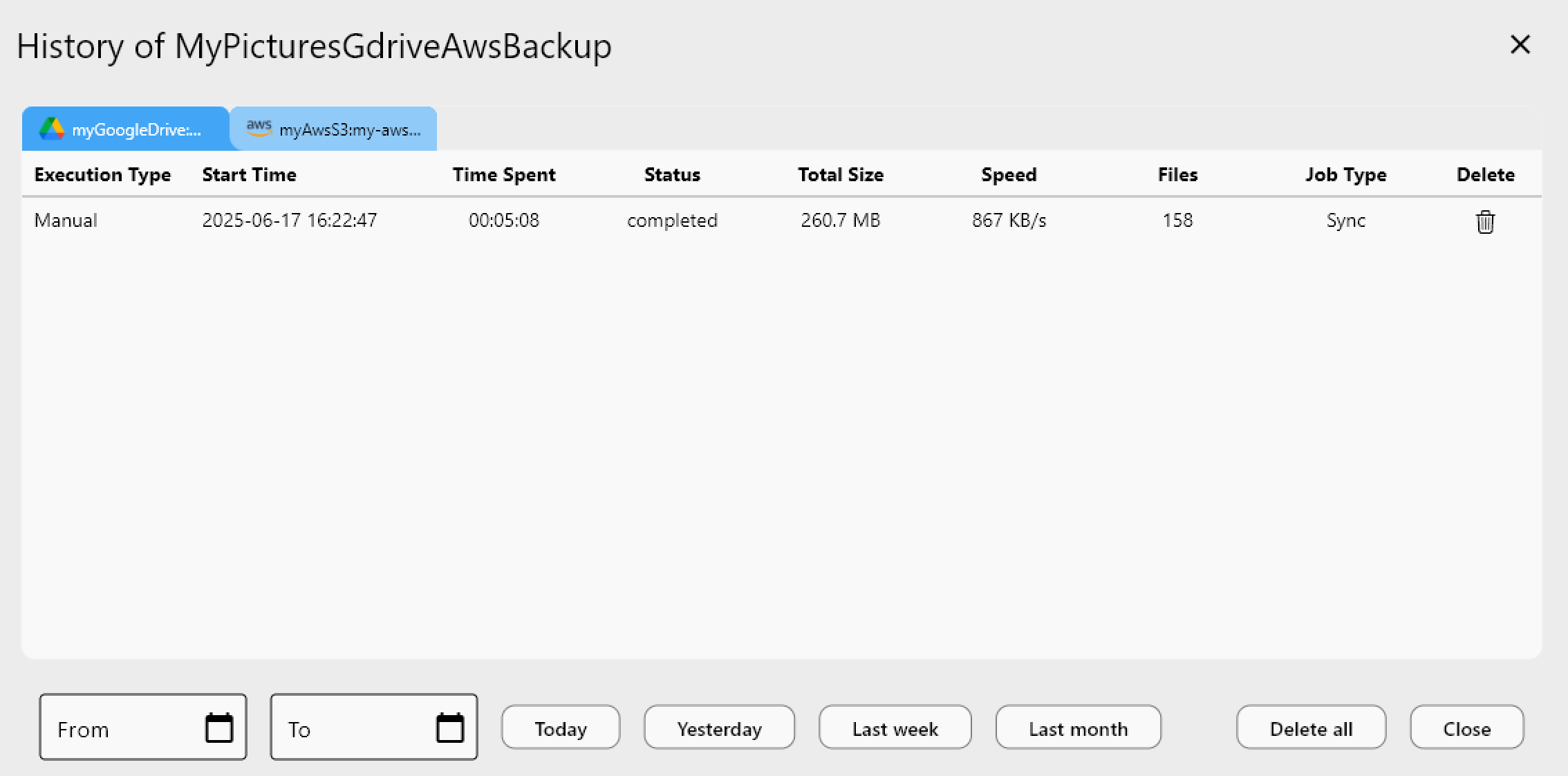
RcloneView stores logs in your user configuration directory. On Windows, find them in %APPDATA%/RcloneView/logs/. On Linux/Mac, look in ~/.config/rcloneview/logs/. Each job creates a timestamped log file. Open the relevant log in any text editor.
Key sections to examine: "Authentication" shows whether credentials worked correctly. "File Enumeration" reveals which files RcloneView discovered and their properties. "Transfer" logs show individual file uploads/downloads with byte counts and durations. "Errors" sections highlight problems: permission denied, insufficient quota, checksum mismatches, timeout occurrences.
Search for keywords matching your issue. Looking for timeout errors? Search "timeout" or "deadline exceeded". Investigating permission failures? Search "permission denied" or "access denied". Most errors repeat consistently, appearing multiple times in the same transfer.
Advanced Debugging: Verbose Mode and Trace Logging
When standard debug mode lacks detail, enable verbose mode (Logging > Verbose) alongside debug level. Verbose mode outputs HTTP headers, request bodies, and raw API responses. Use this when investigating provider-specific issues: why does Google Drive reject this file? Why does S3 rate-limit your transfers?
For expert diagnosis, enable Trace mode (highest logging level). Trace captures every system call, memory operation, and network packet detail. This overwhelms log files quickly but reveals deep issues in network stacks or file system interactions. Reserve trace mode for reproducible problems under controlled conditions.
Common Issues Revealed by Logs
Logs pinpoint recurring problems. "Insufficient quota" errors mean your cloud provider storage is full. "Rate limit exceeded" indicates you're hitting API call limits—reduce parallel threads or increase spacing between requests. "Checksum mismatch" shows file corruption in transit or provider caching issues.
Network timeouts appear as "context deadline exceeded" or "connection reset by peer"—increase timeout values or reduce transfer speeds. Permission errors "403 Forbidden" signal credential problems or insufficient folder permissions. Each error type maps to specific solutions once you read the logs.
Getting Started
- Download RcloneView from rcloneview.com.
- Enable Debug mode through Preferences > Logging > Debug Level.
- Run your problematic transfer and let it fail naturally.
- Open the corresponding log file and search for error keywords to identify the root cause.
Stop treating transfer failures as mysterious black boxes. RcloneView's logging transforms troubleshooting from frustration into systematic problem-solving. The answers are in the logs—you just needed to know where to look.
Related Guides:
- Fix Slow Cloud Transfers — Optimize Speed in RcloneView
- Fix Cloud Sync Stuck or Hanging — Resolve Stalled Transfers in RcloneView
- Fix Cloud API Rate Limiting Errors — Resolve Provider Throttling in RcloneView
Supported Cloud Providers