Manage Wasabi Storage — Sync and Backup Files with RcloneView
Wasabi delivers S3-compatible hot storage with zero egress fees, and RcloneView makes managing those buckets as simple as drag and drop.
Wasabi has carved out a strong position in the object storage market with a transparent pricing model: $7.99 per TB/month with no charges for egress, API calls, or data retrieval. Unlike cold storage tiers that penalize frequent access, every Wasabi bucket is hot storage — meaning your files are instantly accessible without retrieval delays. RcloneView provides a full graphical interface for Wasabi, letting you manage buckets across all Wasabi regions, run syncs against other clouds, and automate backup schedules without writing scripts.
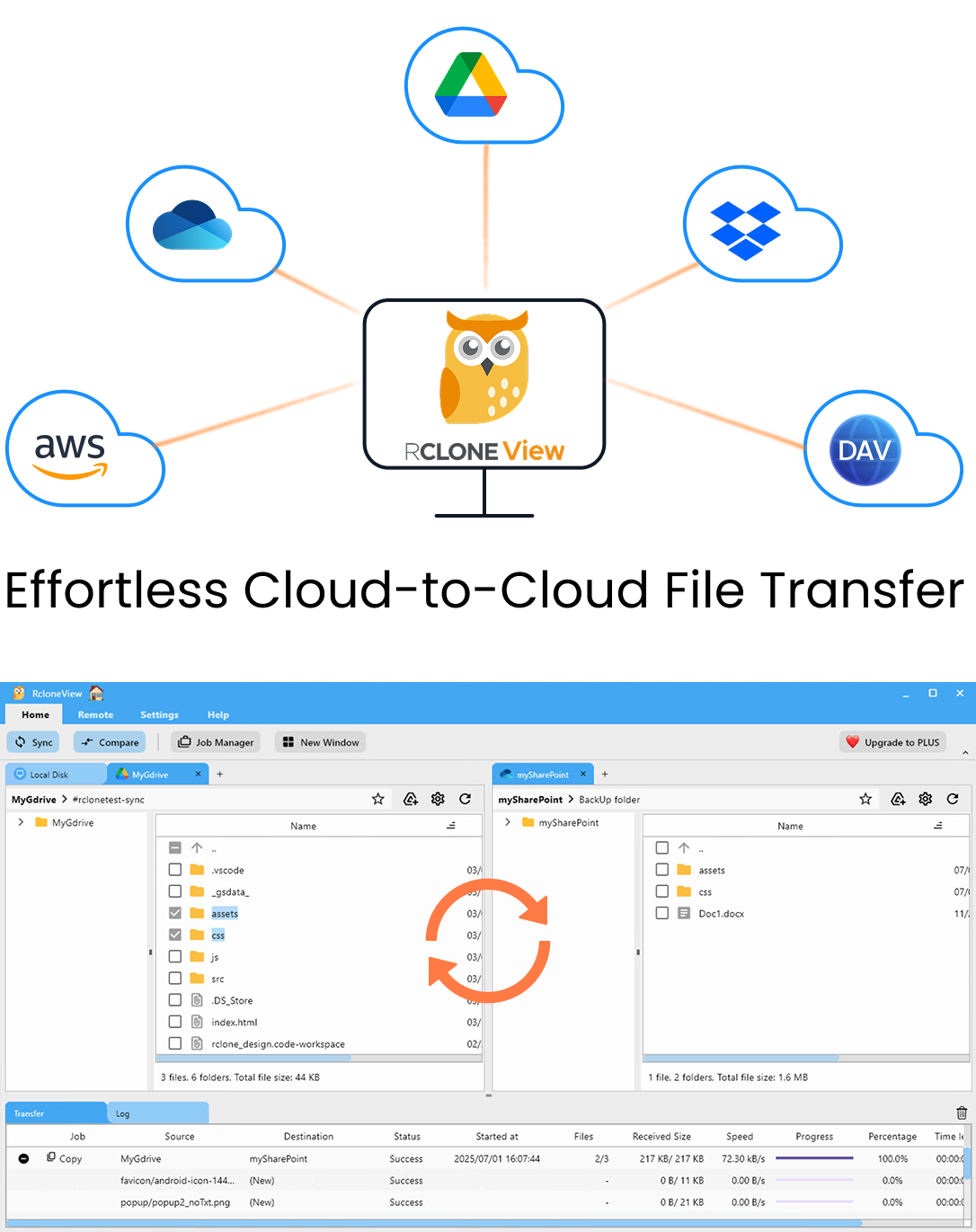
Manage & Sync All Clouds in One Place
RcloneView is a cross-platform GUI for rclone. Compare folders, transfer or sync files, and automate multi-cloud workflows with a clean, visual interface.
- One-click jobs: Copy · Sync · Compare
- Schedulers & history for reliable automation
- Works with Google Drive, OneDrive, Dropbox, S3, WebDAV, SFTP and more
Free core features. Plus automations available.
Connecting Wasabi in RcloneView
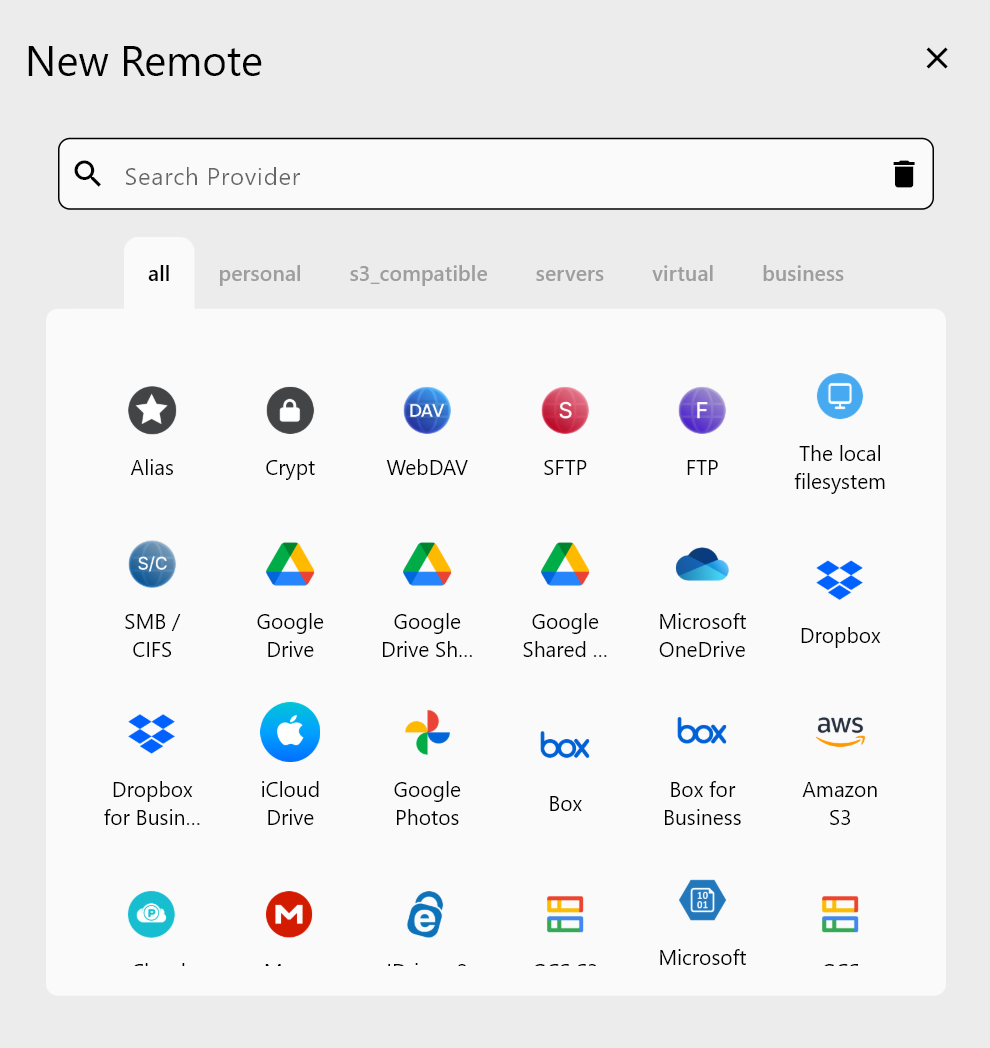
To add Wasabi, open the Remote Manager and select S3-compatible as the provider type, then choose Wasabi from the vendor list. Enter your Access Key and Secret Key, and select the appropriate region endpoint. Wasabi operates data centers in us-east-1 (Ashburn), us-east-2 (Manassas), us-west-1 (Hillsboro), us-central-1 (Dallas), eu-central-1 (Amsterdam), eu-central-2 (Frankfurt), eu-west-1 (London), eu-west-2 (Paris), and ap-northeast-1 (Tokyo), among others.
Choosing the correct region is critical. Wasabi enforces a minimum 90-day storage duration charge — if you delete a file before 90 days, you are billed as if it existed for the full period. Selecting a region close to your primary data source reduces latency for uploads and syncs, which becomes important for large recurring jobs.
Drag-and-Drop File Management
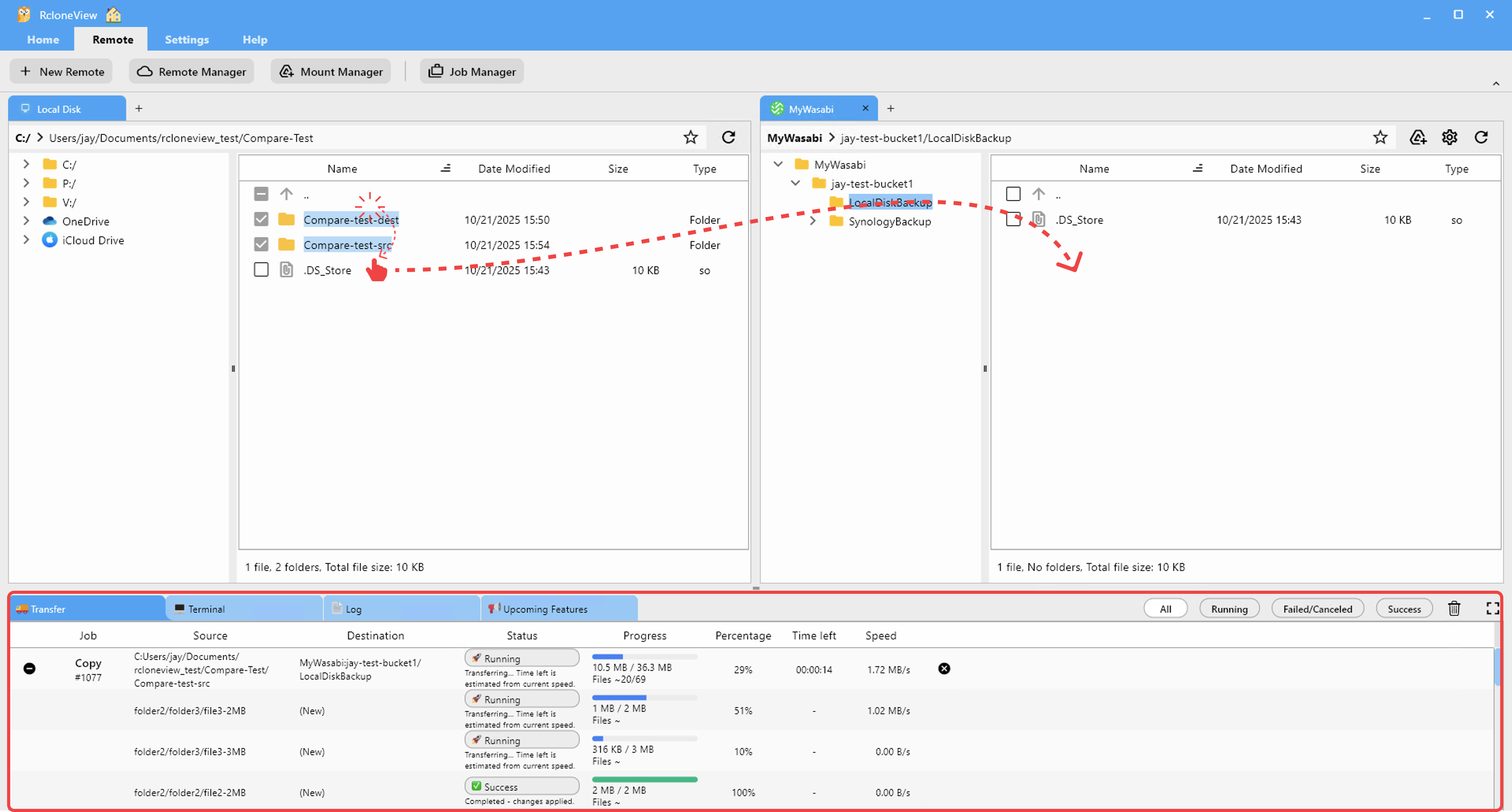
Once connected, Wasabi buckets appear in the two-pane explorer just like any other remote. You can navigate folder hierarchies, preview files, and check metadata. Dragging files from a local drive or another cloud remote onto the Wasabi pane initiates a transfer immediately.
RcloneView's multi-threaded engine is well-suited for Wasabi's infrastructure. Wasabi supports high-throughput uploads, and RcloneView lets you configure parallel transfers and chunk sizes to maximize bandwidth utilization. For datasets in the multi-terabyte range, you can push sustained throughput that saturates a gigabit connection.
The real-time transfer monitor shows per-file progress, speed, and estimated time remaining. If a transfer encounters a transient error — a network blip or a 503 from the API — RcloneView automatically retries with configurable backoff intervals.
Automating Backups and Cross-Cloud Sync
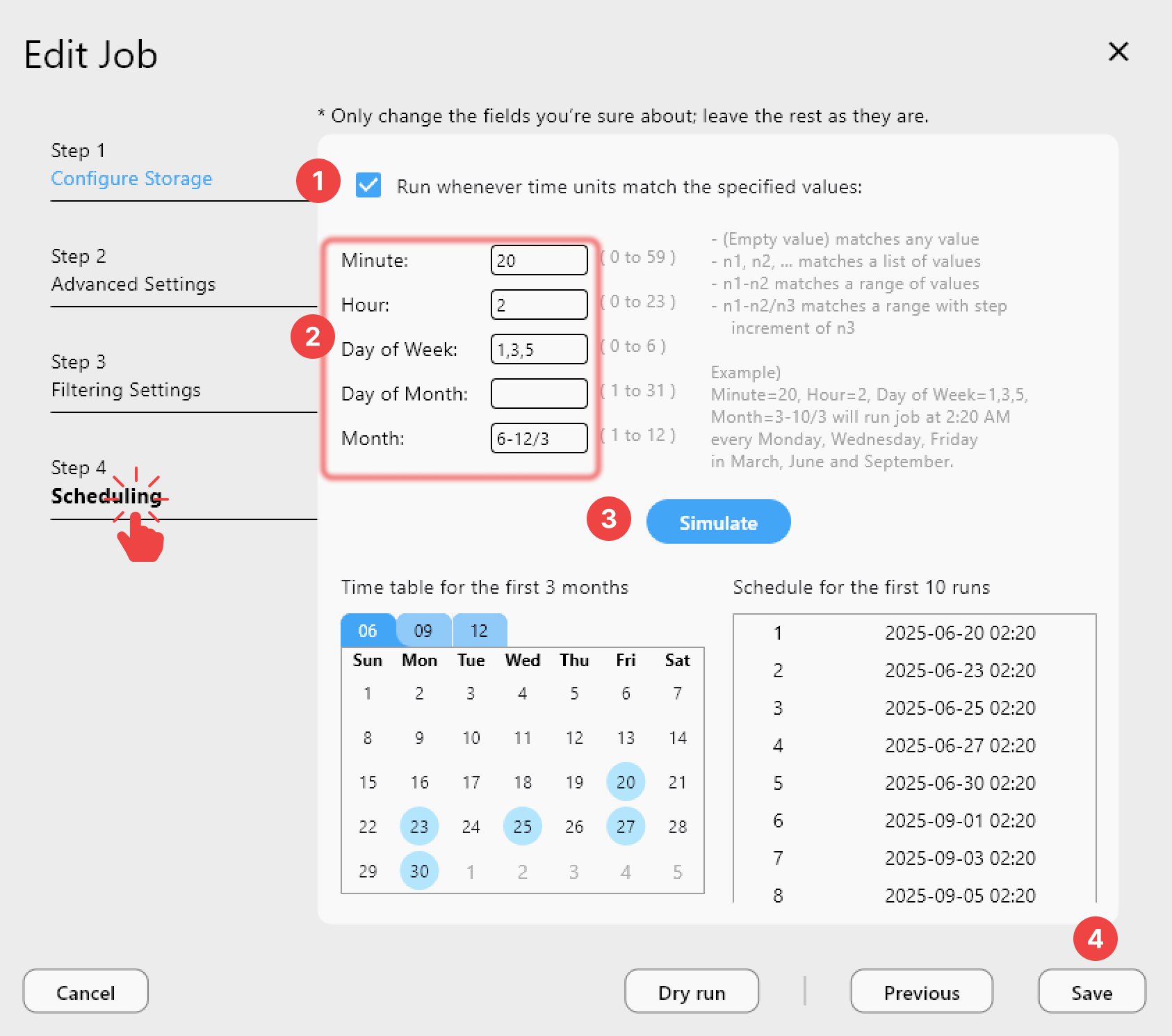
Wasabi's zero egress pricing makes it an ideal hub for multi-cloud backup strategies. You can pull data from Wasabi to Google Drive, AWS S3, or a local NAS without worrying about download costs. RcloneView's job scheduler lets you automate these transfers on a cron schedule.
A common pattern is to use Wasabi as the central backup repository: schedule nightly syncs from Google Drive and Dropbox into Wasabi, then run a weekly copy from Wasabi to a secondary provider like Backblaze B2 for geographic diversity. RcloneView's job chaining lets you define these workflows and monitor them from a single dashboard.
Wasabi also supports Object Lock for immutable backups. When combined with versioning, you can create write-once-read-many (WORM) compliance buckets that satisfy regulatory requirements for data retention.
Monitoring Transfer Performance
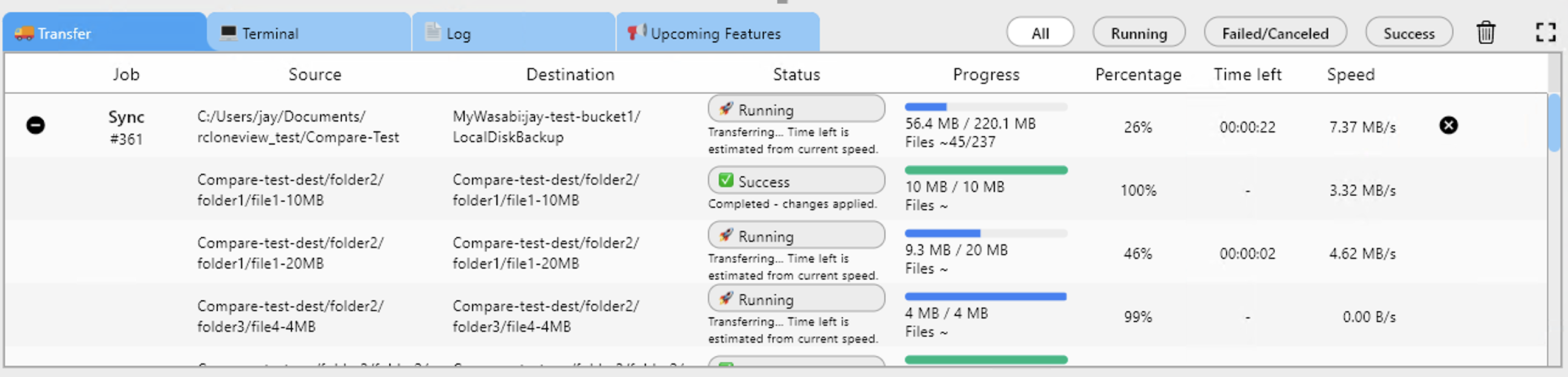
RcloneView's real-time monitoring panel provides granular visibility into active Wasabi transfers. You can see aggregate throughput, individual file progress, and a rolling log of completed operations. The job history panel retains records of every past transfer, making it easy to audit backup completeness or diagnose performance regressions.
Getting Started
- Download RcloneView from rcloneview.com.
- Create an Access Key in the Wasabi console and add it as an S3-compatible remote in RcloneView.
- Browse your Wasabi buckets and drag files from local storage or other cloud remotes.
- Set up a scheduled sync job to automate nightly backups to Wasabi.
Wasabi's predictable pricing eliminates egress surprises, and RcloneView's visual interface removes the need to memorize S3 CLI syntax for day-to-day operations.
Related Guides:
- Centralize S3, Wasabi, and R2 with RcloneView
- Manage IDrive e2 S3 Cloud Backup with RcloneView
- Manage Storj Decentralized Cloud Sync with RcloneView
Supported Cloud Providers