Migrate pCloud to Backblaze B2 — Transfer Files with RcloneView
Moving from pCloud to Backblaze B2 gives you significantly cheaper archival storage — RcloneView handles the cloud-to-cloud transfer without routing data through your machine.
pCloud is a reliable personal cloud storage service with lifetime plan options, but for archiving large volumes of data, Backblaze B2's per-GB pricing is often more cost-effective. Whether you're consolidating cloud services or adding B2 as an archival tier, RcloneView makes the migration straightforward: connect both providers, preview with Dry Run, and run the sync job. The entire transfer happens cloud-to-cloud.
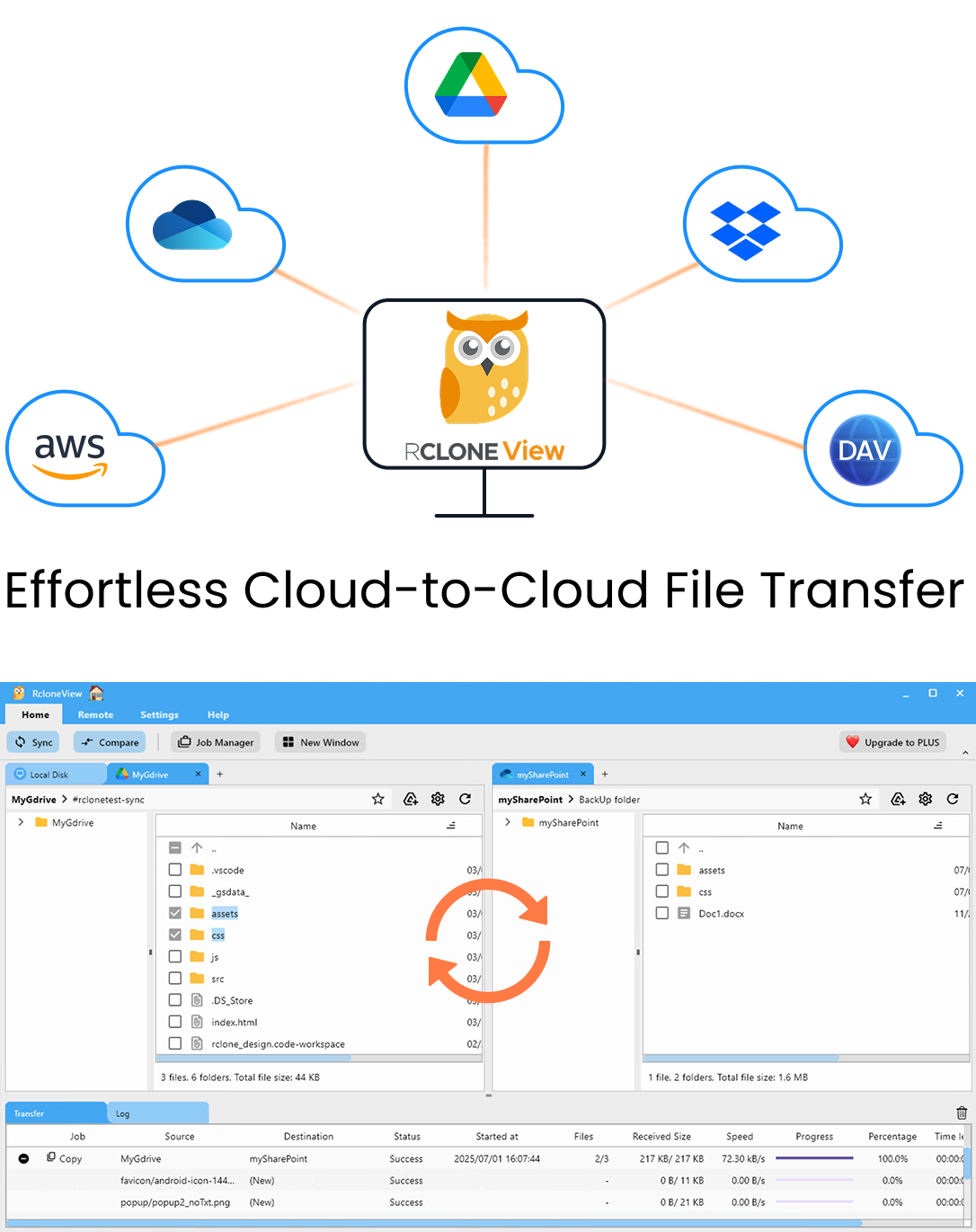
Manage & Sync All Clouds in One Place
RcloneView is a cross-platform GUI for rclone. Compare folders, transfer or sync files, and automate multi-cloud workflows with a clean, visual interface.
- One-click jobs: Copy · Sync · Compare
- Schedulers & history for reliable automation
- Works with Google Drive, OneDrive, Dropbox, S3, WebDAV, SFTP and more
Free core features. Plus automations available.
Step 1 — Connect pCloud
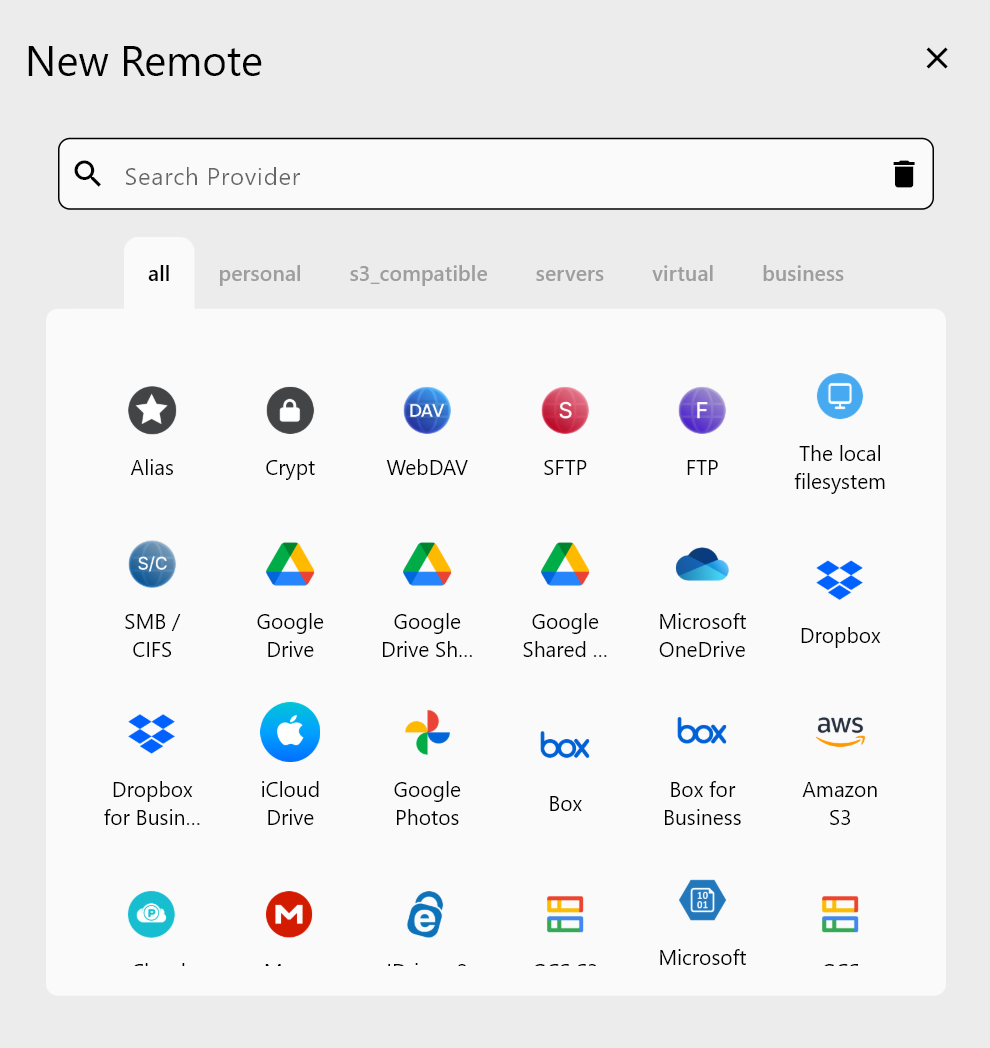
Open RcloneView and go to Remote Manager. Click New Remote and select pCloud from the provider list. pCloud uses OAuth browser login — RcloneView opens your browser, you log in and authorize, and the token is saved. No API keys to manage manually.
After authorization, open the pCloud remote in the File Explorer to confirm you can see your files and folders. Note which top-level directories you want to migrate.
Step 2 — Connect Backblaze B2
Still in Remote Manager, click New Remote again and select Backblaze B2. Backblaze B2 authenticates with an Application Key ID and Application Key — both found in the Backblaze console under App Keys. Create a key with appropriate permissions (read and write on the target bucket, or all buckets if this is a migration). Enter both values in RcloneView and save.
Open the B2 remote to confirm it loads your buckets. If the target bucket doesn't exist yet, you can create it directly from the RcloneView file explorer by right-clicking the root level.
Step 3 — Configure the Migration Job
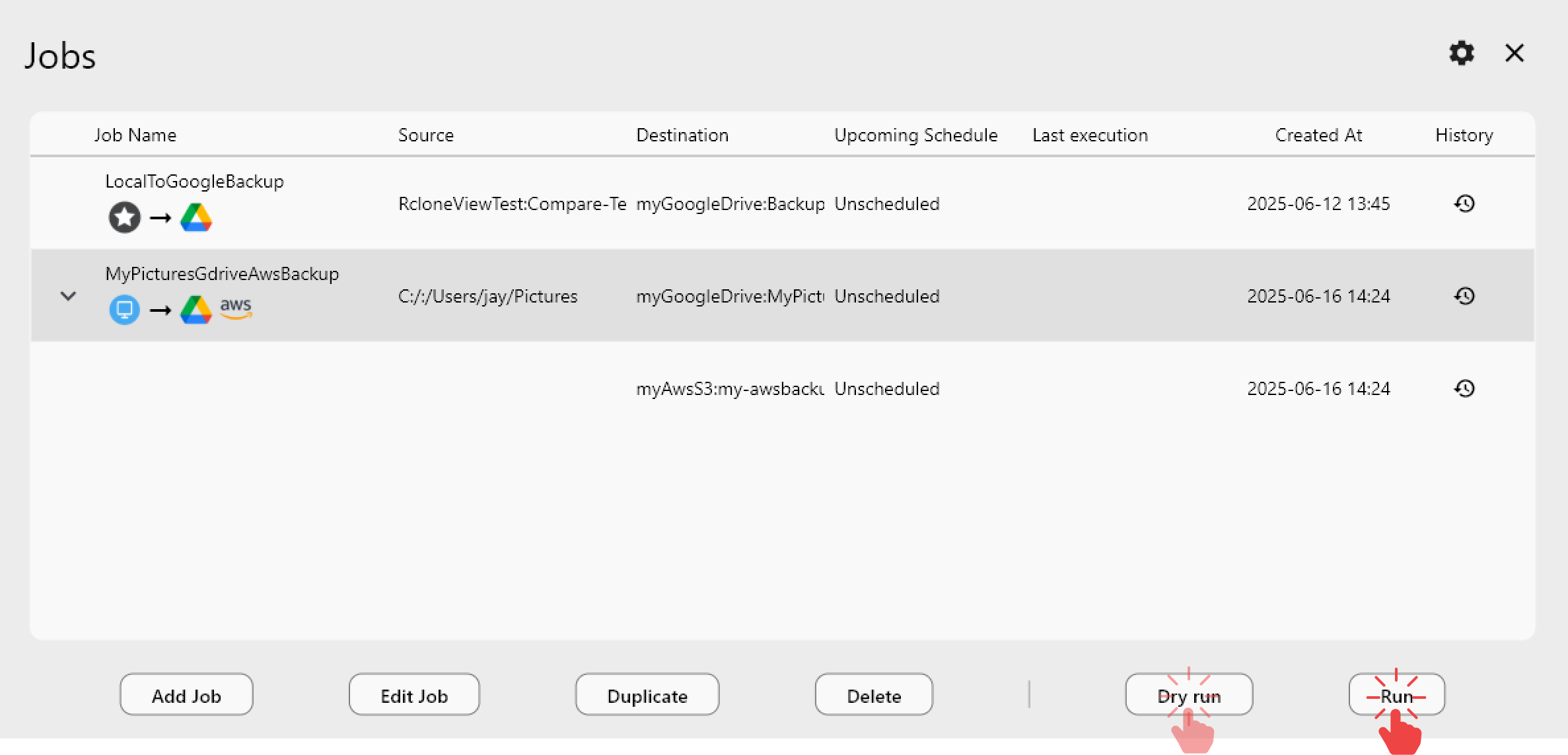
Go to Jobs and click New Job. Set pCloud as the source and select the specific folder or root. Set Backblaze B2 as the destination and choose the target bucket and path.
In step 2 of the job wizard, review the transfer options:
- Enable Dry Run first to see exactly what will be copied
- Set transfers to 4–8 for a balance of speed and API stability
- Enable checksum verification if you want to confirm file integrity after transfer
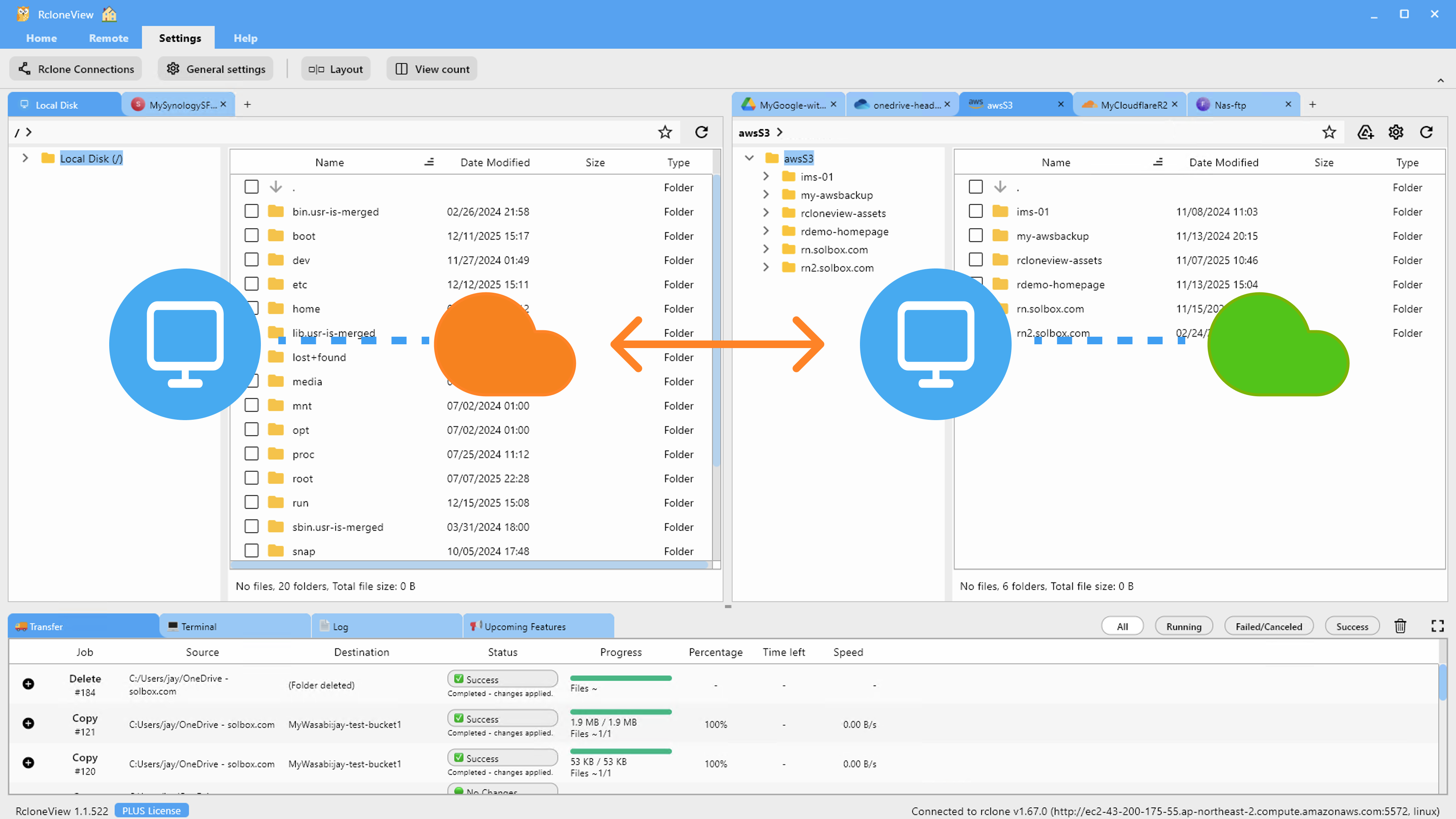
Step 4 — Run Dry Run, Then the Real Migration
With Dry Run enabled, click Run. RcloneView logs what it would transfer — file names, sizes, and counts — without making any changes. Review the output in the Log tab. If the list looks correct, go back to the job settings, disable Dry Run, and run again.
The actual migration runs cloud-to-cloud: pCloud sends data to B2 without passing through your local machine, so your local bandwidth is not a bottleneck. Transfer speed depends on both providers' servers.
Verifying the Migration
After the job completes, open the Folder Compare tool and point it at the pCloud source and the B2 destination. RcloneView compares both sides and highlights any discrepancies. For high-value data, this step confirms the migration was complete before you remove files from pCloud.
Job History records the full run: total files, data transferred, duration, and any errors. Keep this for reference.
Getting Started
- Download RcloneView from rcloneview.com.
- Connect pCloud via OAuth and Backblaze B2 via Application Key in Remote Manager.
- Create a sync job with pCloud as source and B2 as destination; run a Dry Run first.
- Disable Dry Run and execute the migration; verify with Folder Compare.
Once migration is confirmed, Backblaze B2 gives you durable, cost-effective archival storage for everything that was in pCloud.
Related Guides:
- Backup pCloud to AWS S3 with RcloneView
- Migrate pCloud to OneDrive with RcloneView
- Checksum Verified Cloud Migrations with RcloneView
Supported Cloud Providers