Sync Dropbox to Amazon S3 — Cloud Backup with RcloneView
Mirror your Dropbox files to Amazon S3 for durable, independently managed object storage — using RcloneView's visual cloud-to-cloud sync without any CLI.
Many teams rely on Dropbox for day-to-day collaboration but want a secondary backup in Amazon S3 for long-term retention, compliance archiving, or reduced vendor dependency. RcloneView makes it straightforward to sync files directly from Dropbox to an S3 bucket without routing data through your local machine or writing rclone commands by hand. A video production company with 500 GB of project files can set up a nightly Dropbox-to-S3 backup job in minutes and have a full audit trail of every run.
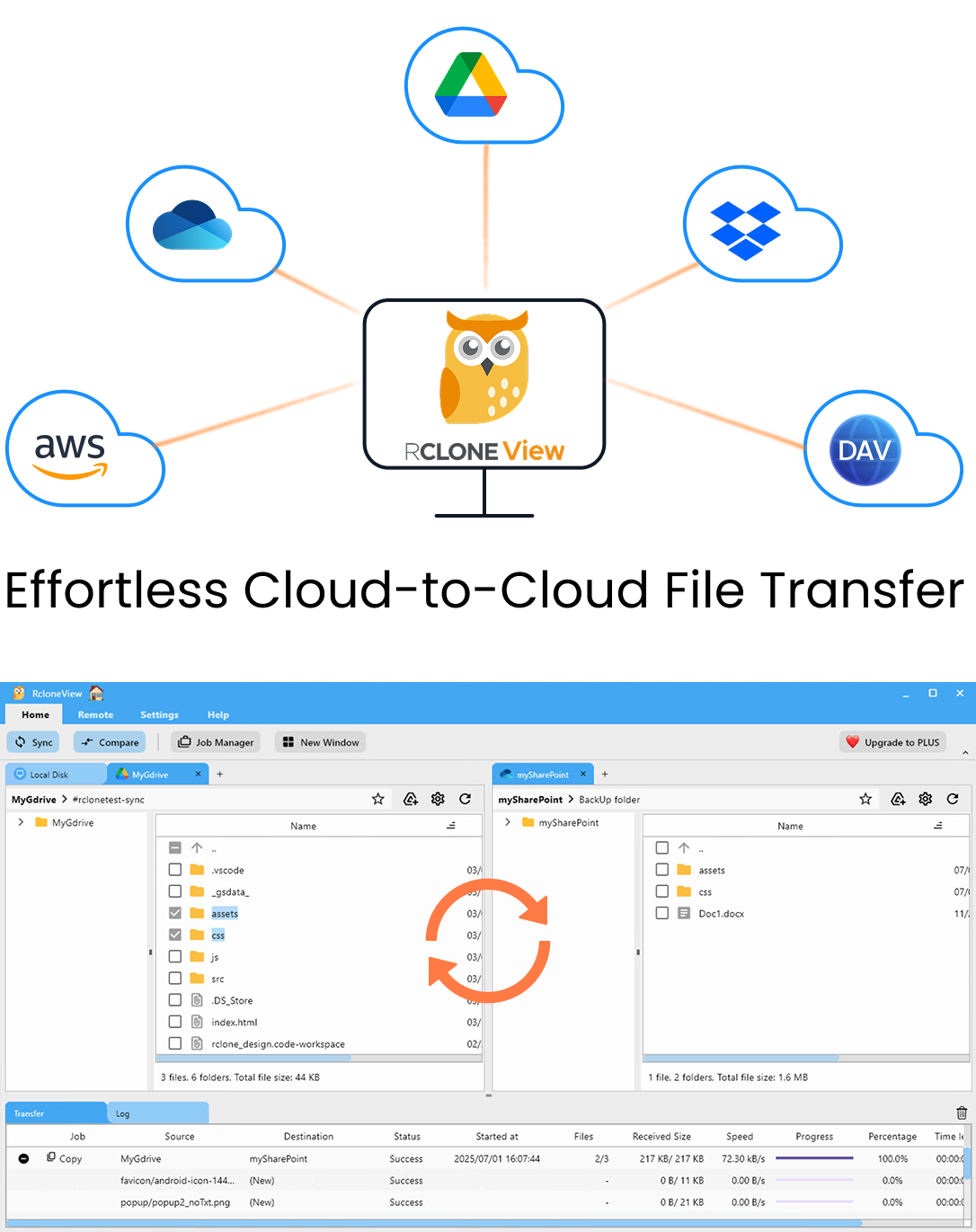
Manage & Sync All Clouds in One Place
RcloneView is a cross-platform GUI for rclone. Compare folders, transfer or sync files, and automate multi-cloud workflows with a clean, visual interface.
- One-click jobs: Copy · Sync · Compare
- Schedulers & history for reliable automation
- Works with Google Drive, OneDrive, Dropbox, S3, WebDAV, SFTP and more
Free core features. Plus automations available.
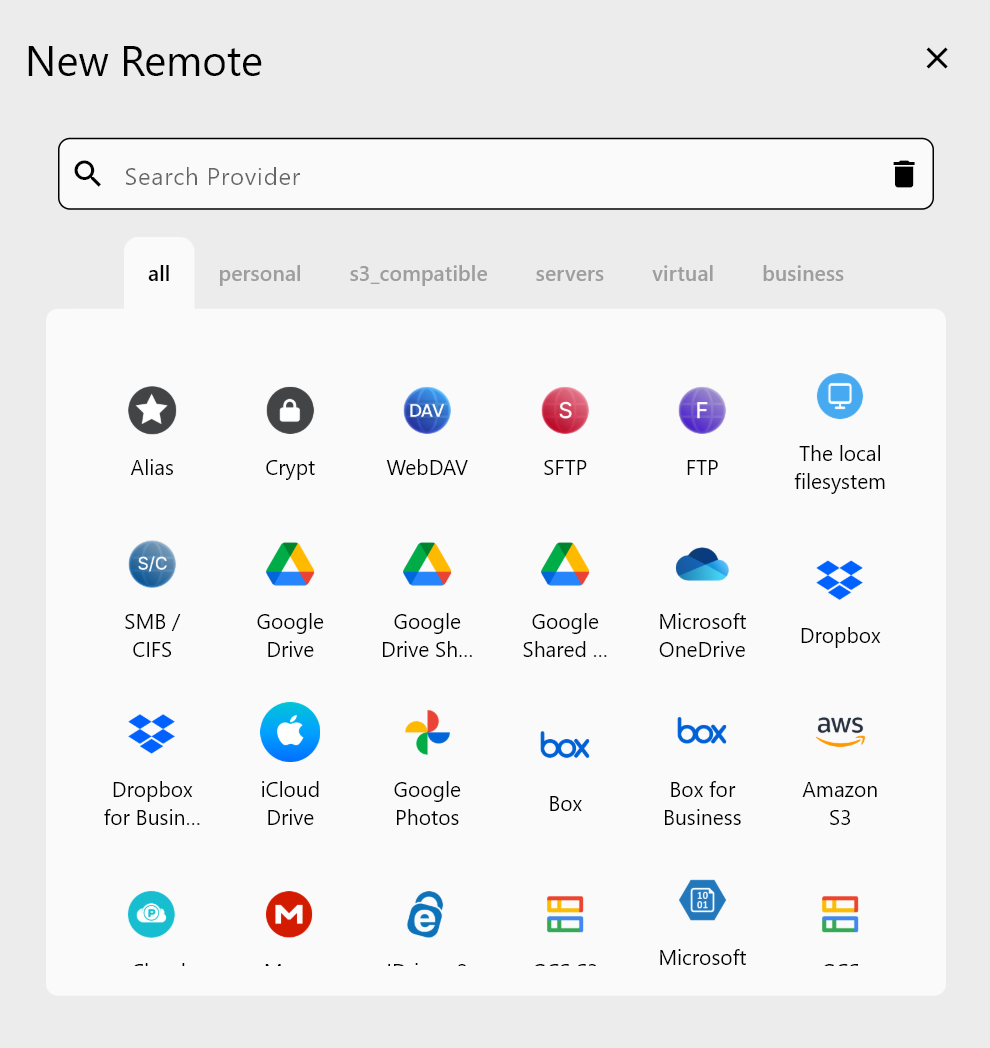
Connect Dropbox and Amazon S3 as Remotes
Start by adding both providers in RcloneView. Go to Remote tab > New Remote and select Dropbox — RcloneView opens a browser window for OAuth authentication. Grant access and your Dropbox account appears in the Explorer panel immediately, with no API key or manual token configuration required.
For Amazon S3, add a second remote, choose Amazon S3, and enter your Access Key ID, Secret Access Key, and the target region code (for example, us-east-1). Both remotes then appear as tabs in the Explorer, letting you browse each side and confirm folder structures before creating any jobs. Right-clicking a Dropbox folder shows its size before you commit to syncing it.
Configure the Cloud-to-Cloud Sync Job
With both remotes ready, open Home tab > Sync to launch the 4-step sync wizard:
- Configure Storage — Select your Dropbox source folder (for example,
/Project Files) and the Amazon S3 destination bucket with a key prefix (for example,my-backup-bucket/dropbox-mirror). Name the job clearly for the history log. - Advanced Settings — Set the number of concurrent transfers to balance speed against API rate limits, and enable checksum verification if you need byte-level data integrity assurance in S3.
- Filtering — Exclude
.dropboxsystem metadata files, cache directories, or any file types you don't need in S3. The predefined filter categories (Image, Video, Document) provide quick shortcuts for common filtering scenarios. - Schedule (PLUS license) — Configure a crontab-style schedule for automatic overnight runs. The scheduling UI lets you simulate next execution times to confirm timing before saving.
Run a Dry Run Before the First Live Sync
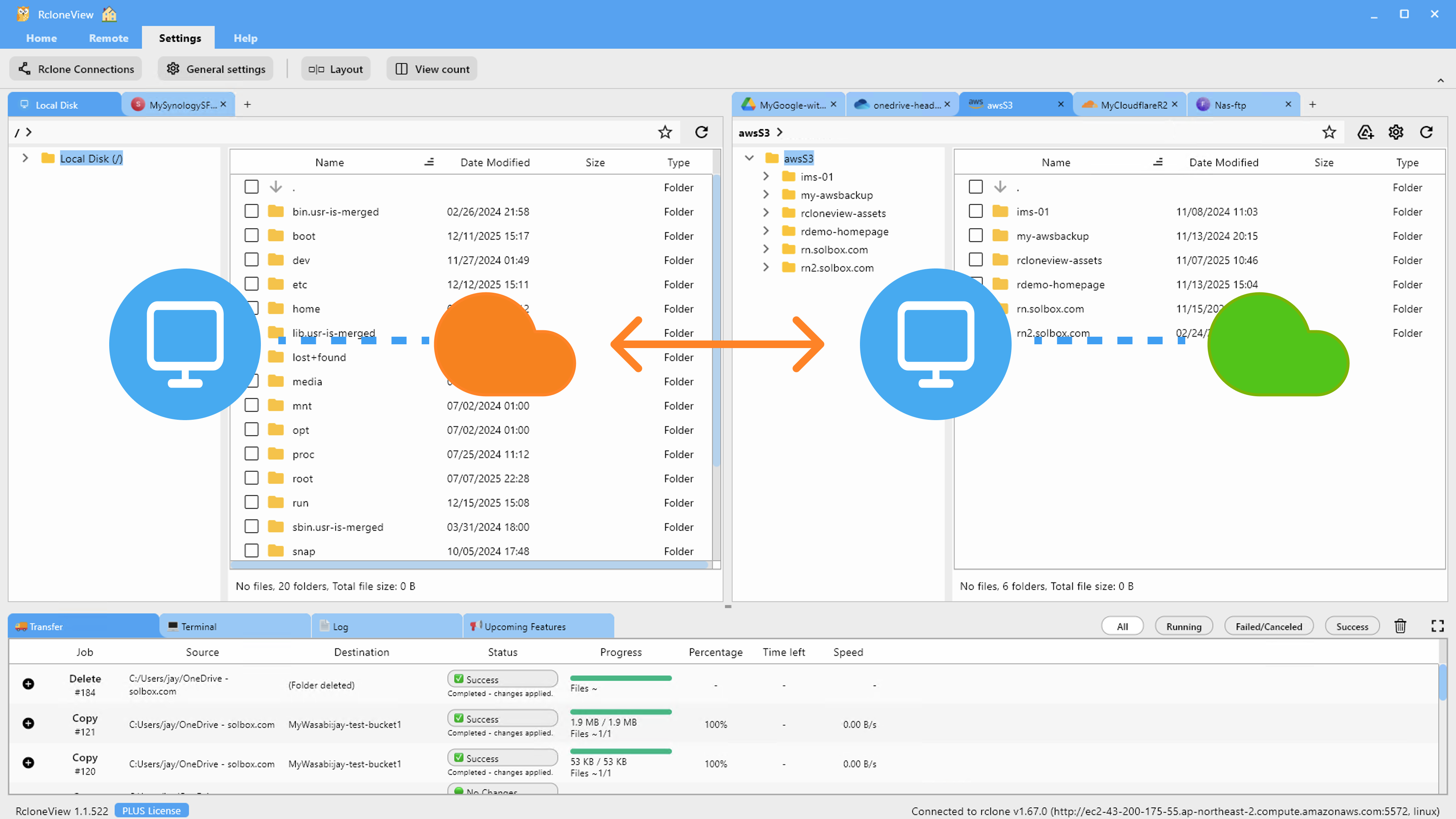
Before committing to the first live transfer — especially if your S3 bucket already holds some data — use the Dry Run feature. Dry Run simulates the sync and shows exactly which files would be copied and which (if any) would be deleted from the destination, without making any actual changes. This preview catches misconfigured source paths or unexpected deletions before they reach your S3 bucket.
Once you're satisfied with the dry-run output, click Run in the Job Manager to start the actual sync.
Monitor Transfers and Review Job History
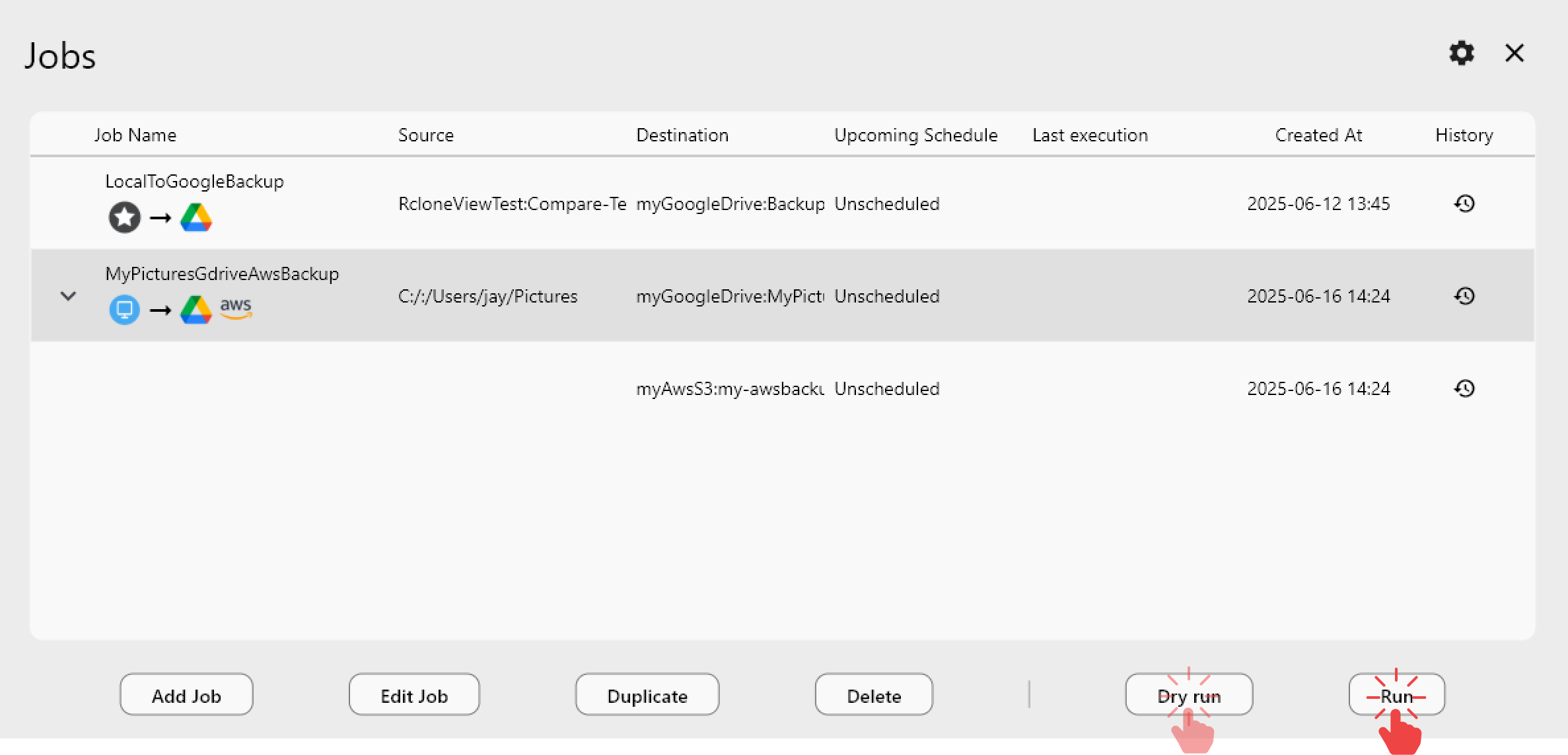
While the job runs, the Transferring tab at the bottom of RcloneView shows live progress: file name, transfer speed, and total bytes moved. Files travel directly between Dropbox and S3 without passing through your local workstation, so the speed reflects the cloud-side bandwidth rather than your local connection.
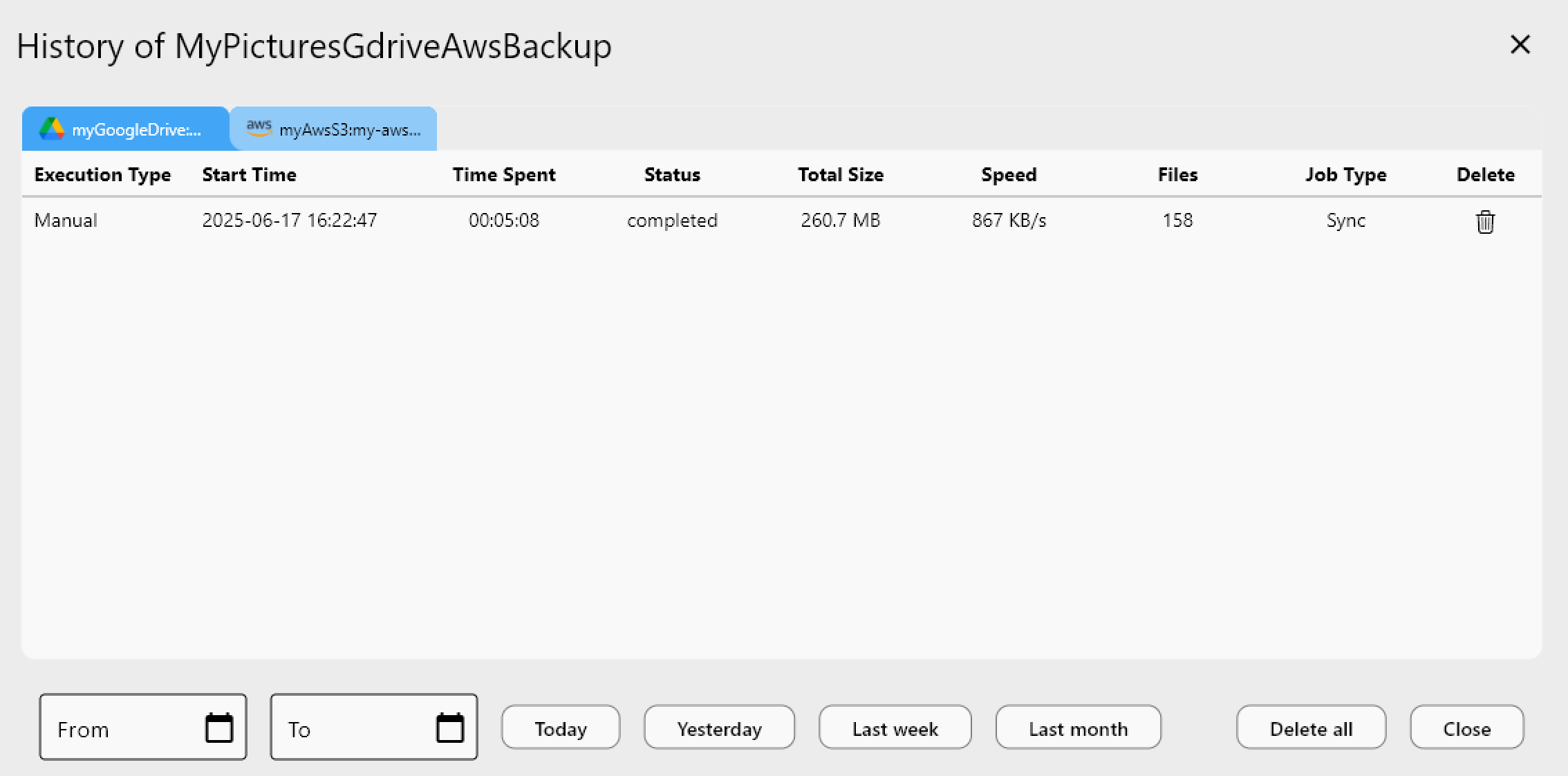
After each sync completes, the Job History tab records start time, duration, status (Completed / Errored / Canceled), and total data transferred. For compliance-sensitive workflows, this log provides the documentation needed to confirm that scheduled backups ran on time and without errors.
Getting Started
- Download RcloneView from rcloneview.com.
- Add Dropbox via Remote tab > New Remote > Dropbox and authenticate through the browser OAuth flow.
- Add Amazon S3 via Remote tab > New Remote > Amazon S3 with your Access Key ID, Secret Access Key, and region.
- Open Home tab > Sync, select Dropbox as source and S3 as destination, run a dry-run preview, then save and schedule for automated nightly backups.
Your Dropbox files will have a durable, independently managed backup on Amazon S3 — running on your configured schedule, with a full history of every transfer.
Related Guides:
- Migrate OneDrive to Amazon S3 with RcloneView
- Manage Amazon S3 — Cloud Sync and Backup with RcloneView
- Incremental Backup Google Drive to Amazon S3 with RcloneView
Supported Cloud Providers