Manage Amazon S3 Storage — Sync and Backup Files with RcloneView
Amazon S3 is the industry's benchmark for object storage — RcloneView brings its bucket management into a visual, multi-cloud interface without sacrificing any of rclone's underlying power.
Amazon S3 remains the gold standard for object storage, but managing buckets, syncing data, and scheduling backups through the AWS console or CLI is tedious for teams that need results without constant command-line work. RcloneView connects directly to S3 and lets you transfer, sync, and backup files with drag-and-drop simplicity — alongside all your other cloud remotes in one window.
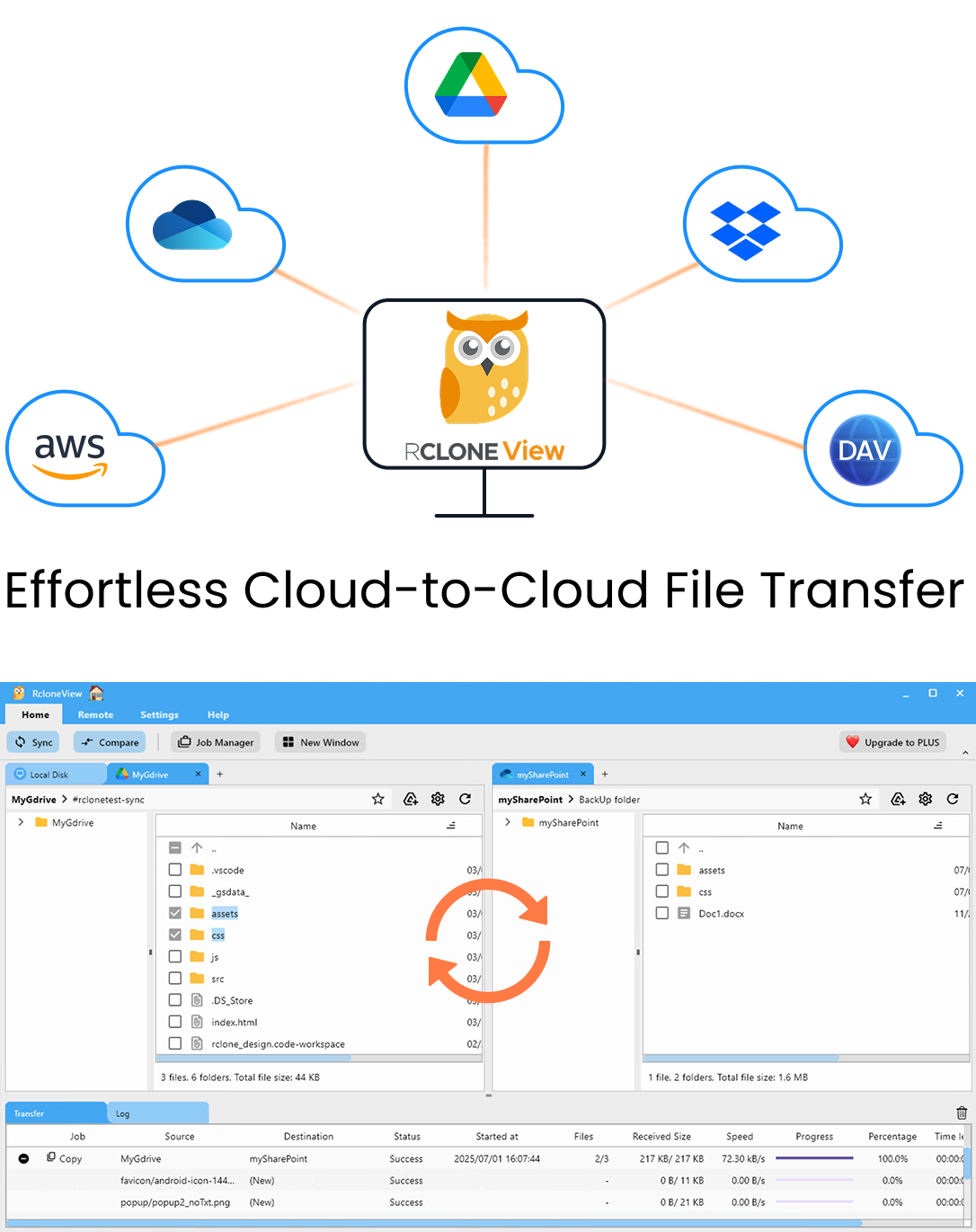
Manage & Sync All Clouds in One Place
RcloneView is a cross-platform GUI for rclone. Compare folders, transfer or sync files, and automate multi-cloud workflows with a clean, visual interface.
- One-click jobs: Copy · Sync · Compare
- Schedulers & history for reliable automation
- Works with Google Drive, OneDrive, Dropbox, S3, WebDAV, SFTP and more
Free core features. Plus automations available.
Connecting Amazon S3 to RcloneView
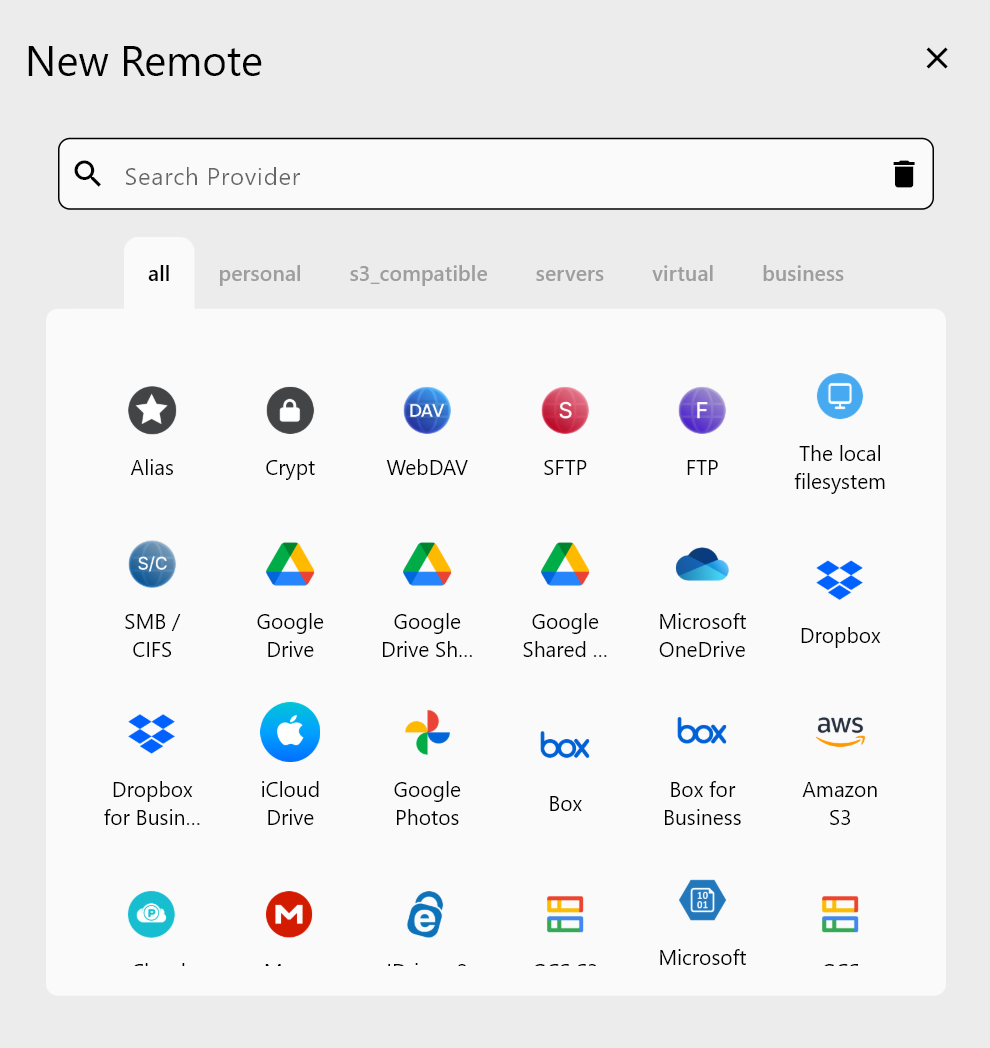
To add S3 as a remote in RcloneView, open the Remote tab and click New Remote. Select Amazon S3 from the provider list, then enter your Access Key ID, Secret Access Key, and the AWS Region where your buckets reside (for example, us-east-1). Once saved, your S3 remote appears in the explorer panel, displaying all accessible buckets and prefixes as folders.
Within the file explorer, you can browse bucket contents just like a local filesystem — navigating prefixes, checking file sizes, and verifying modification timestamps. The breadcrumb bar shows your current S3 path in rclone format (e.g., mys3:mybucket/folder), which you can copy directly for use in CLI commands via the built-in terminal.
The thumbnail view makes it easy to spot images stored in S3 at a glance, while the file list's size and date columns help identify large or stale objects consuming your storage budget.
Syncing and Backing Up Files to S3
RcloneView's Job Manager handles sync workflows between S3 and any other storage. A typical scenario: syncing an on-premises NAS or local folder to S3 for disaster recovery. Set your source (a local path or another cloud remote) and destination (your S3 bucket path), configure the sync mode, then schedule the job to run daily or weekly — automatically.
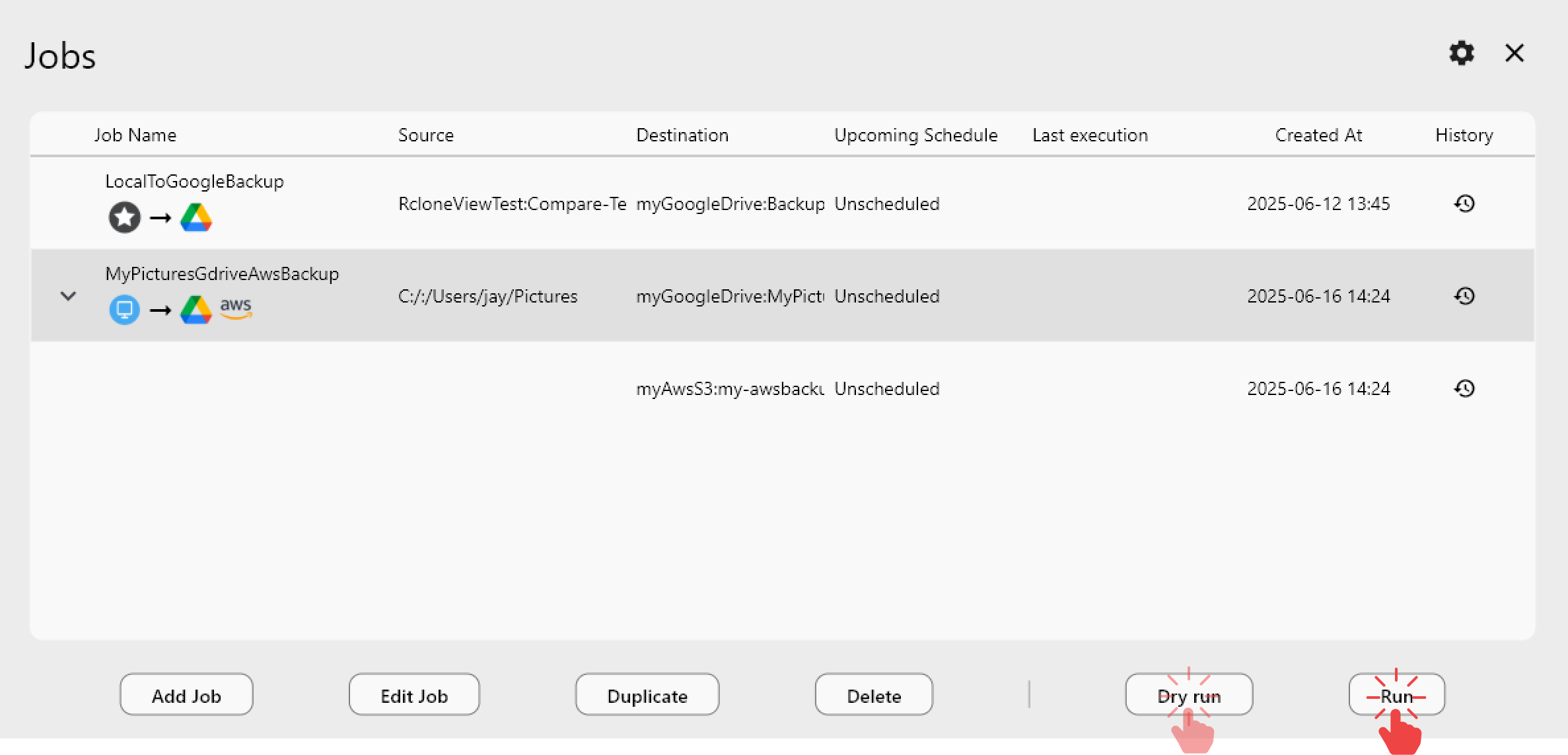
Multi-thread transfers and concurrent file upload settings make large backup jobs significantly faster. RcloneView's underlying rclone handles S3's native multipart upload — large files are automatically split into chunks, uploaded in parallel, and assembled on S3. This avoids timeout failures common when uploading files over 5 GB with single-stream methods.
For teams needing backup integrity verification, enabling checksum comparison ensures files are validated by both size and hash, catching any corruption before it silently affects your archive.
Cross-Bucket and Cross-Account Transfers
A common scenario for infrastructure teams: moving data between S3 buckets in different accounts or regions. Create multiple S3 remotes in RcloneView — each pointing to different IAM credentials or endpoints — and use the Sync or Copy job types to mirror content across them.
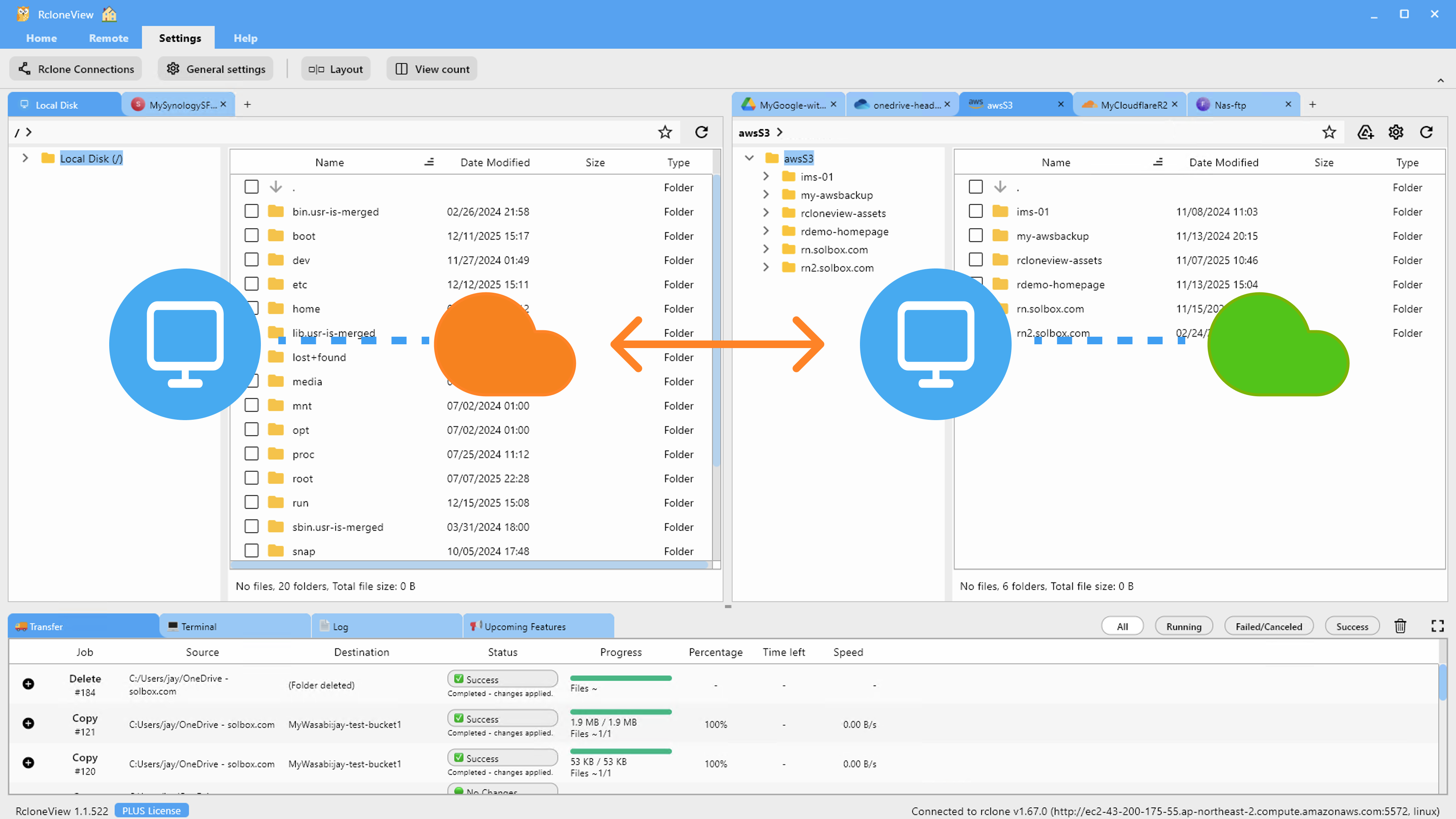
A software company replicating 500 GB of deployment artifacts to a secondary region for compliance can configure this as a nightly scheduled job. The Job History tab records each run with transfer size, speed, and status — providing an audit trail without any extra tooling.
Getting Started
- Download RcloneView from rcloneview.com.
- Go to Remote tab > New Remote, select Amazon S3, and enter your Access Key ID, Secret Access Key, and Region.
- Browse your S3 buckets in the explorer panel — navigate prefixes, check file sizes, and verify content.
- Open Job Manager to set up a sync or backup job between S3 and your local storage or other clouds.
A reliable S3 backup strategy requires consistency and verification — RcloneView delivers both through a GUI that eliminates scripting overhead while preserving rclone's full power.
Related Guides:
- Manage Cloudflare R2 Cloud Storage — Sync and Backup with RcloneView
- Fix S3 Access Denied Permission Errors with RcloneView
- Migrate Backblaze B2 to AWS S3 with RcloneView
Supported Cloud Providers