Sync Dropbox to DigitalOcean Spaces — Cloud Backup with RcloneView

Back up your Dropbox files to DigitalOcean Spaces object storage automatically — without any CLI commands.
Dropbox is a natural collaboration tool for teams sharing files daily. DigitalOcean Spaces offers S3-compatible object storage built for developers who want scalable, affordable storage integrated with their infrastructure. Pairing both with RcloneView gives you an automated offsite backup pipeline: files live in Dropbox for active collaboration, and Spaces holds the durable backup copies. RcloneView handles the entire cloud-to-cloud transfer visually — no terminal required.
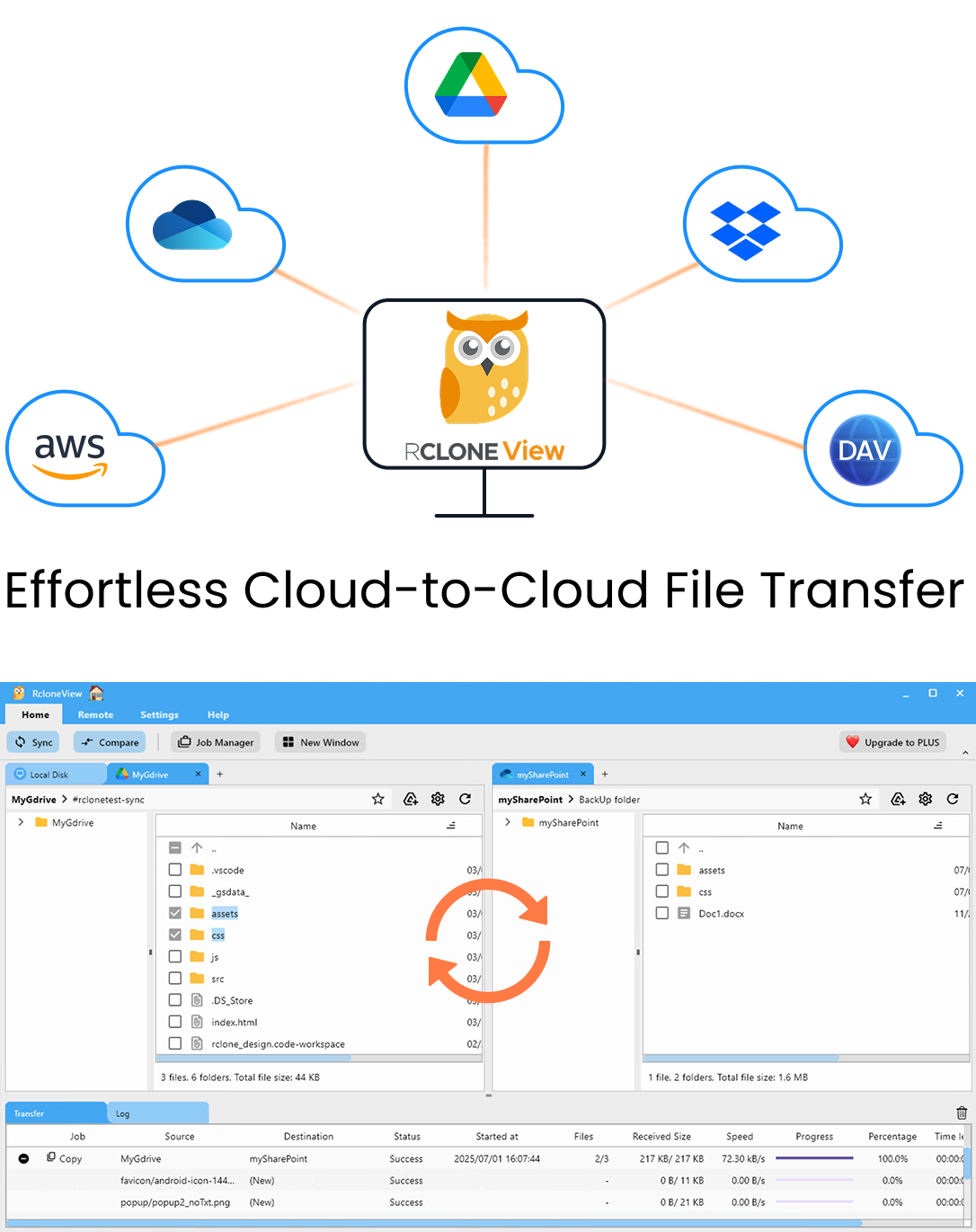
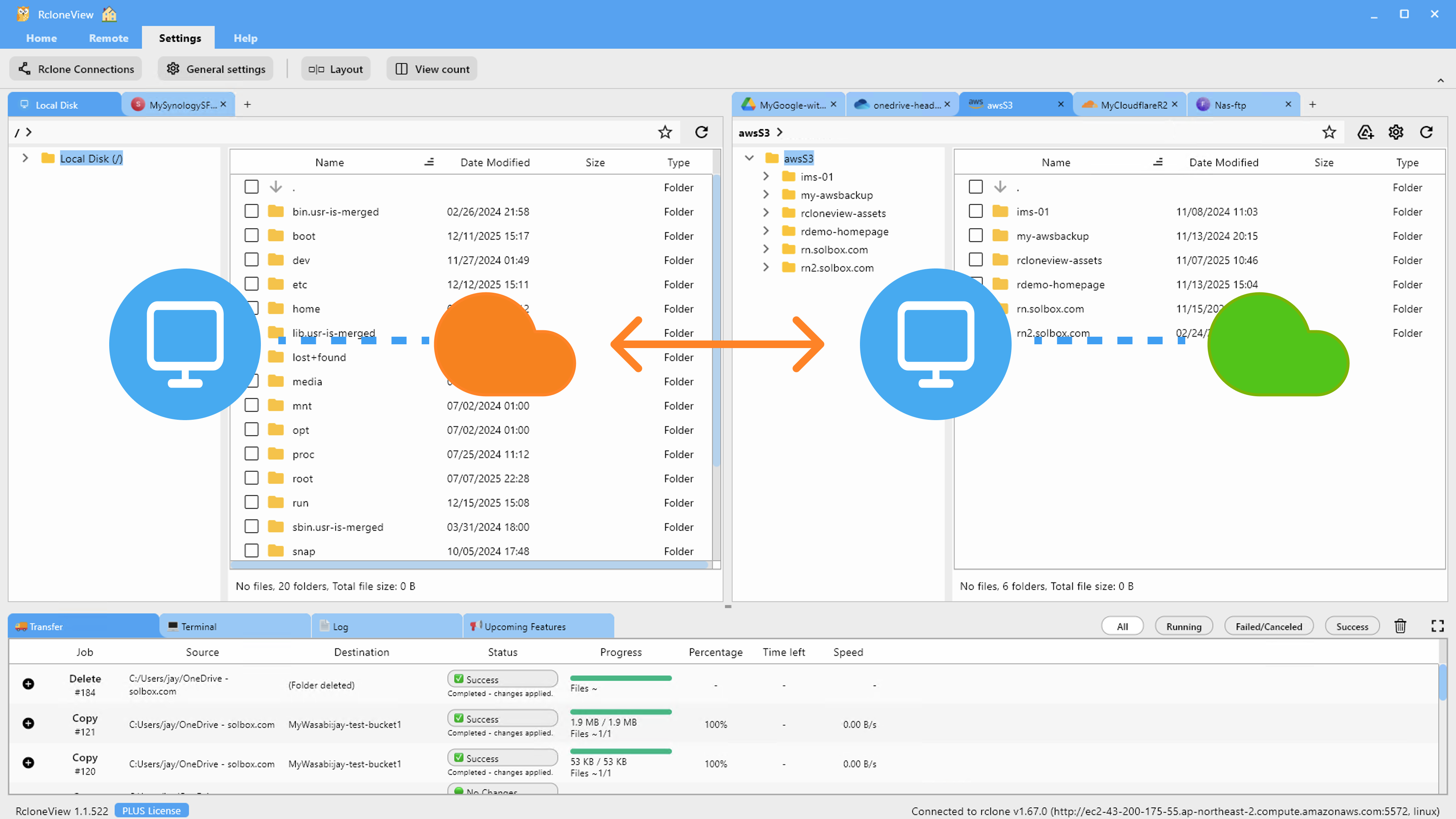
Manage & Sync All Clouds in One Place
RcloneView is a cross-platform GUI for rclone. Compare folders, transfer or sync files, and automate multi-cloud workflows with a clean, visual interface.
- One-click jobs: Copy · Sync · Compare
- Schedulers & history for reliable automation
- Works with Google Drive, OneDrive, Dropbox, S3, WebDAV, SFTP and more
Free core features. Plus automations available.
Connecting Dropbox and DigitalOcean Spaces
Start by adding both services as remotes in RcloneView. For Dropbox, go to Remote tab > New Remote, select Dropbox, and click through the OAuth browser flow to authorize RcloneView. No API keys to copy — the browser window that opens handles authentication automatically and returns you to RcloneView once complete.
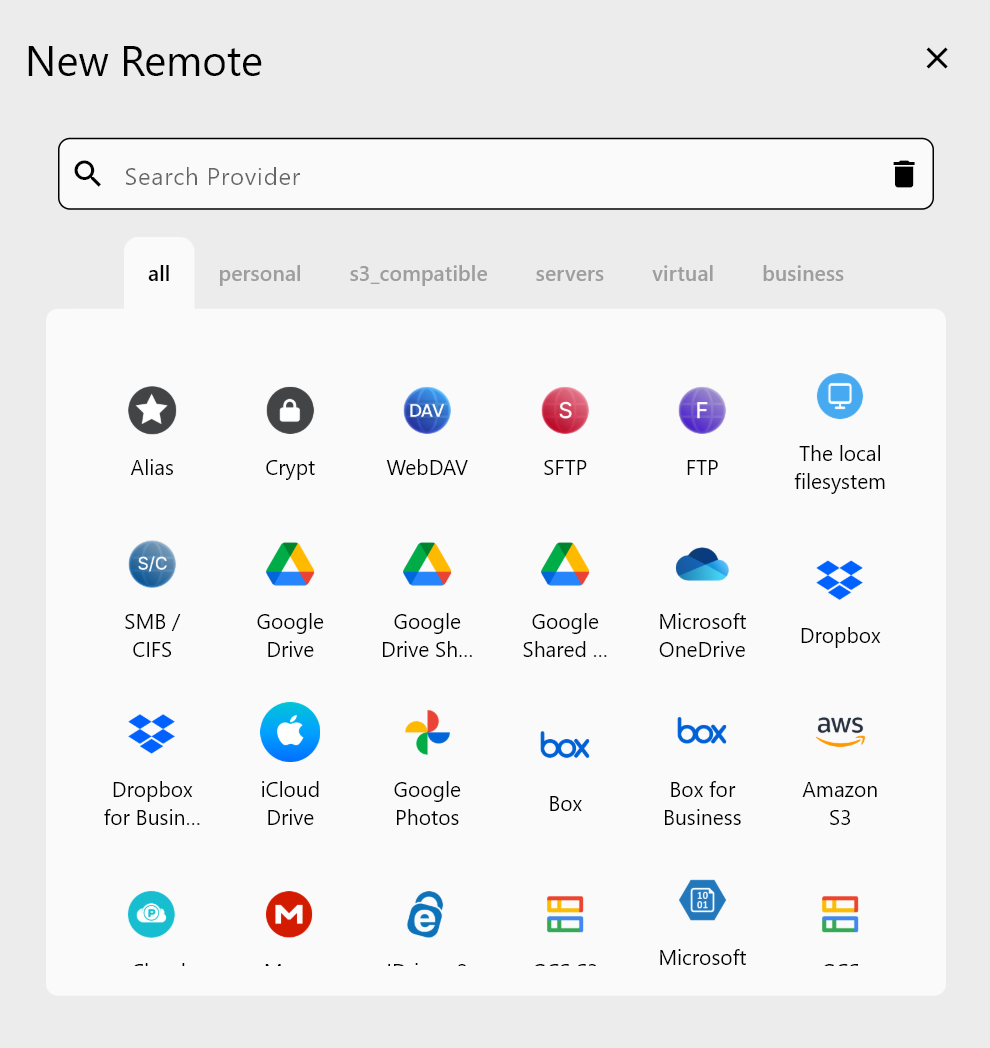
For DigitalOcean Spaces, create a second new remote, select S3, and choose DigitalOcean as the provider. You'll need an Access Key and Secret Key from the DigitalOcean control panel (under API > Spaces Keys), plus the region endpoint for your Spaces region — for example, nyc3.digitaloceanspaces.com for New York. Once both remotes are saved, they appear as browsable tabs in the RcloneView file explorer.
Configuring the Sync Job
With both remotes connected, click Sync in the Home tab to open the 4-step sync wizard. In Step 1, set your Dropbox folder as the source and your DigitalOcean Spaces bucket (or a subdirectory within it) as the destination. Name the job something descriptive — dropbox-spaces-backup works well — and choose one-way sync to keep the destination as a faithful replica of the source.
In Step 2, set the number of concurrent file transfers to match your connection capacity. For a design agency with thousands of small asset files spread across many Dropbox folders, increasing this value speeds up the initial full sync noticeably. In Step 3, add filter rules to exclude anything you don't need in Spaces — for example, .DS_Store files, Dropbox Paper documents, or any folder you use only for ephemeral drafts.
Before running the job for the first time, click Dry Run to see exactly which files would be transferred or deleted. This confirms your filter rules are working as intended before any data moves.
Monitoring Active Transfers
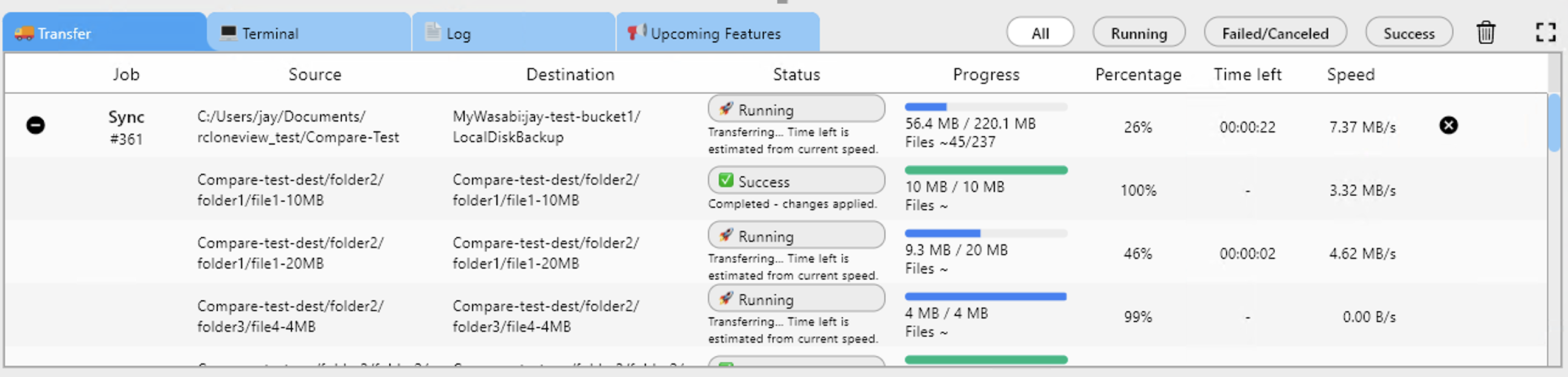
Once you click Run Job, the Transferring tab at the bottom of RcloneView shows live progress: file count, transfer speed, and total bytes moved. For a large initial sync — a content studio moving 80,000 files from a full Dropbox account — this view makes it easy to estimate how long the job will take and catch any early errors. You can cancel a running job at any point, and the retry setting (configurable in Step 2) handles transient network hiccups automatically.
Scheduling Automatic Backups (PLUS License)
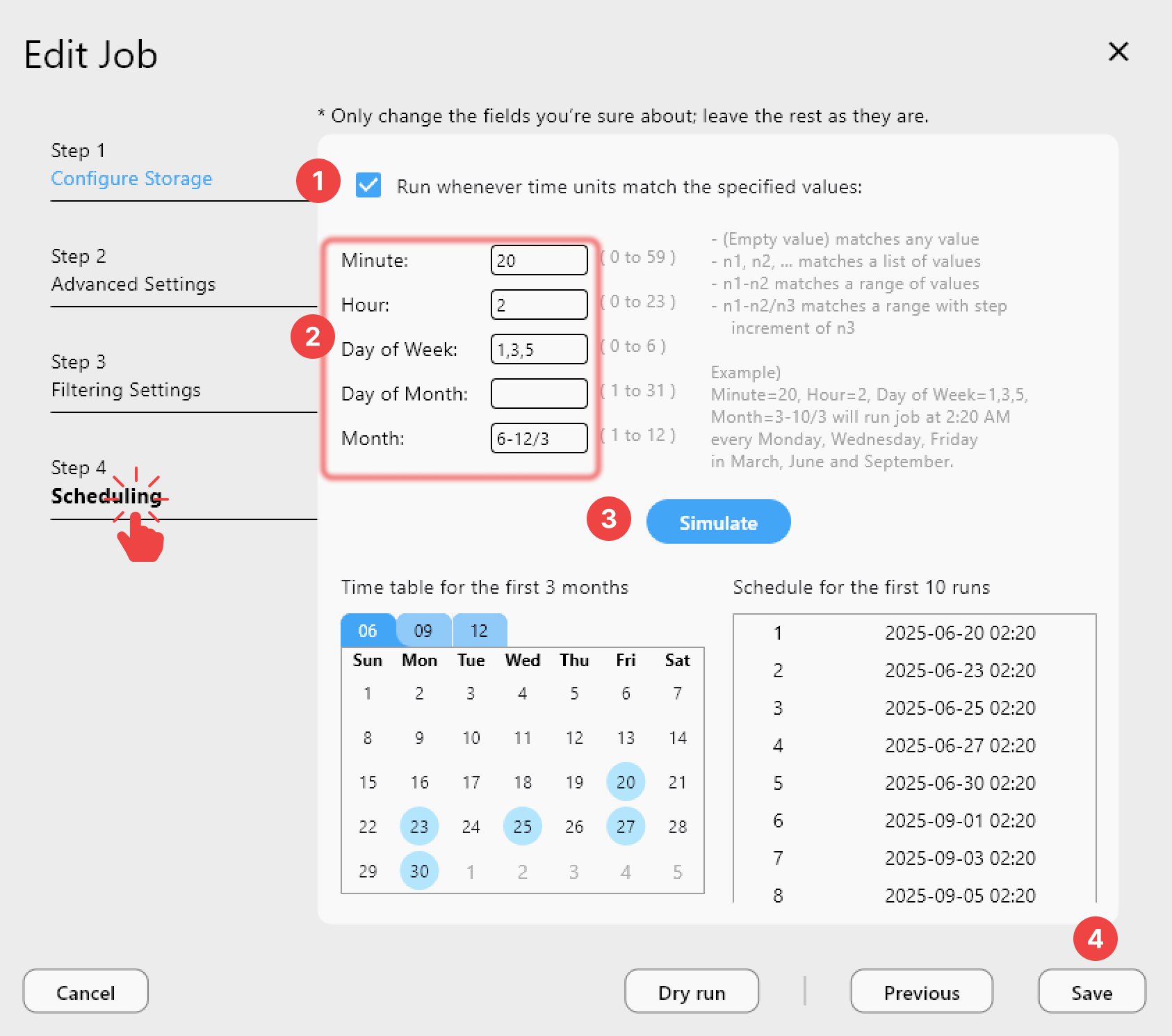
For a hands-off backup routine, PLUS license users can add a crontab-style schedule in Step 4 of the sync wizard. Set the job to run every night, every few hours, or on specific days of the week. Click Simulate Schedule before saving to preview the next several execution times and confirm the timing is correct.
Once scheduled, RcloneView runs the job in the background and sends a desktop notification when it completes. The Job History view records every execution — start time, duration, file count, total size, and final status — so you always have a clear record of when your Dropbox backup last ran and whether it succeeded.
Getting Started
- Download RcloneView from rcloneview.com.
- Add Dropbox as a remote via the OAuth browser login flow.
- Add DigitalOcean Spaces as an S3 remote with your Access Key, Secret Key, and region endpoint.
- Open the sync wizard, set Dropbox as source and Spaces as destination, and click Run Job.
With this setup in place, your Dropbox contents are continuously mirrored to DigitalOcean Spaces — giving you a durable, automatically maintained offsite backup that requires no ongoing manual effort.
Related Guides:
- Manage Dropbox — Cloud Sync and Backup with RcloneView
- Manage DigitalOcean Spaces — Sync and Backup Files with RcloneView
- Back Up Dropbox to Backblaze B2 — Affordable Cloud Storage with RcloneView
Supported Cloud Providers