Copy Full Path — Fast Remote Path Copying in RcloneView

Stop retyping remote names and folder paths by hand — right-click the breadcrumb bar and copy the exact
remote:pathstring rclone expects.
Anyone who mixes the RcloneView GUI with rclone CLI commands knows the friction: you find a folder visually, then have to reconstruct its path manually to reference it in a script or terminal command. RcloneView's Copy Full Path feature removes that step entirely by generating the exact mygoogledrive:Meet recordings format rclone uses, ready to paste straight into a command, job filter, or automation script.
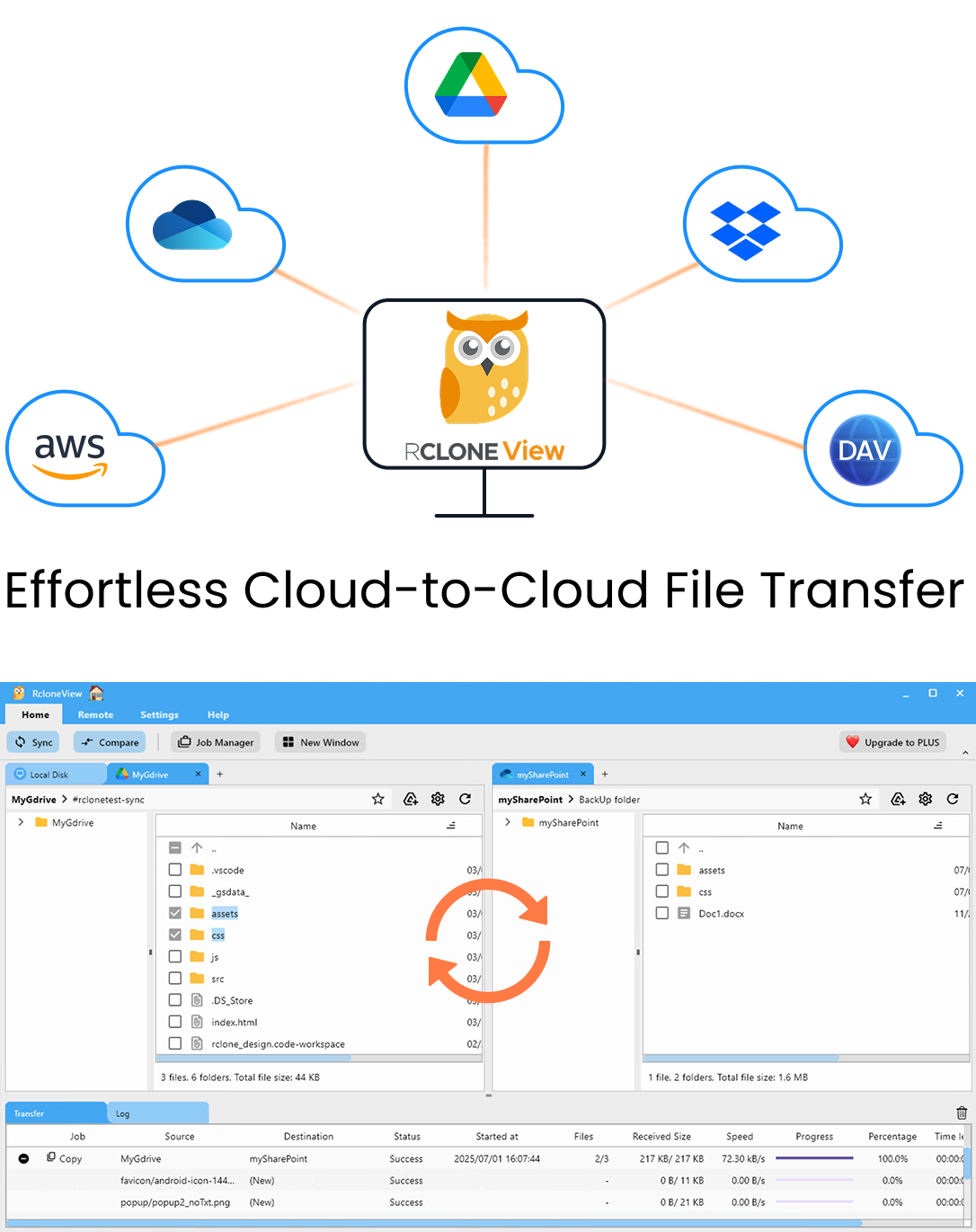
Manage & Sync All Clouds in One Place
RcloneView is a cross-platform GUI for rclone. Compare folders, transfer or sync files, and automate multi-cloud workflows with a clean, visual interface.
- One-click jobs: Copy · Sync · Compare
- Schedulers & history for reliable automation
- Works with Google Drive, OneDrive, Dropbox, S3, WebDAV, SFTP and more
Free core features. Plus automations available.
Where the Command Lives
Copy Full Path sits in the right-click menu of the Breadcrumb Path Bar at the top of every Explorer panel, alongside Cut, Copy, Paste, and Select All. Navigate to any folder — local or cloud — right-click the path bar itself (not a file row), and choose Copy Full Path. RcloneView writes the remote name and the folder path to your clipboard in the same remote:path syntax that rclone's own CLI, config files, and RC API calls expect.
This matters because rclone is strict about that syntax: a colon separates the remote name from the path, and getting it wrong (a stray slash, a missing colon) is one of the more common sources of "directory not found" errors when people hand-type paths from memory.
Why It Beats Manual Path Entry
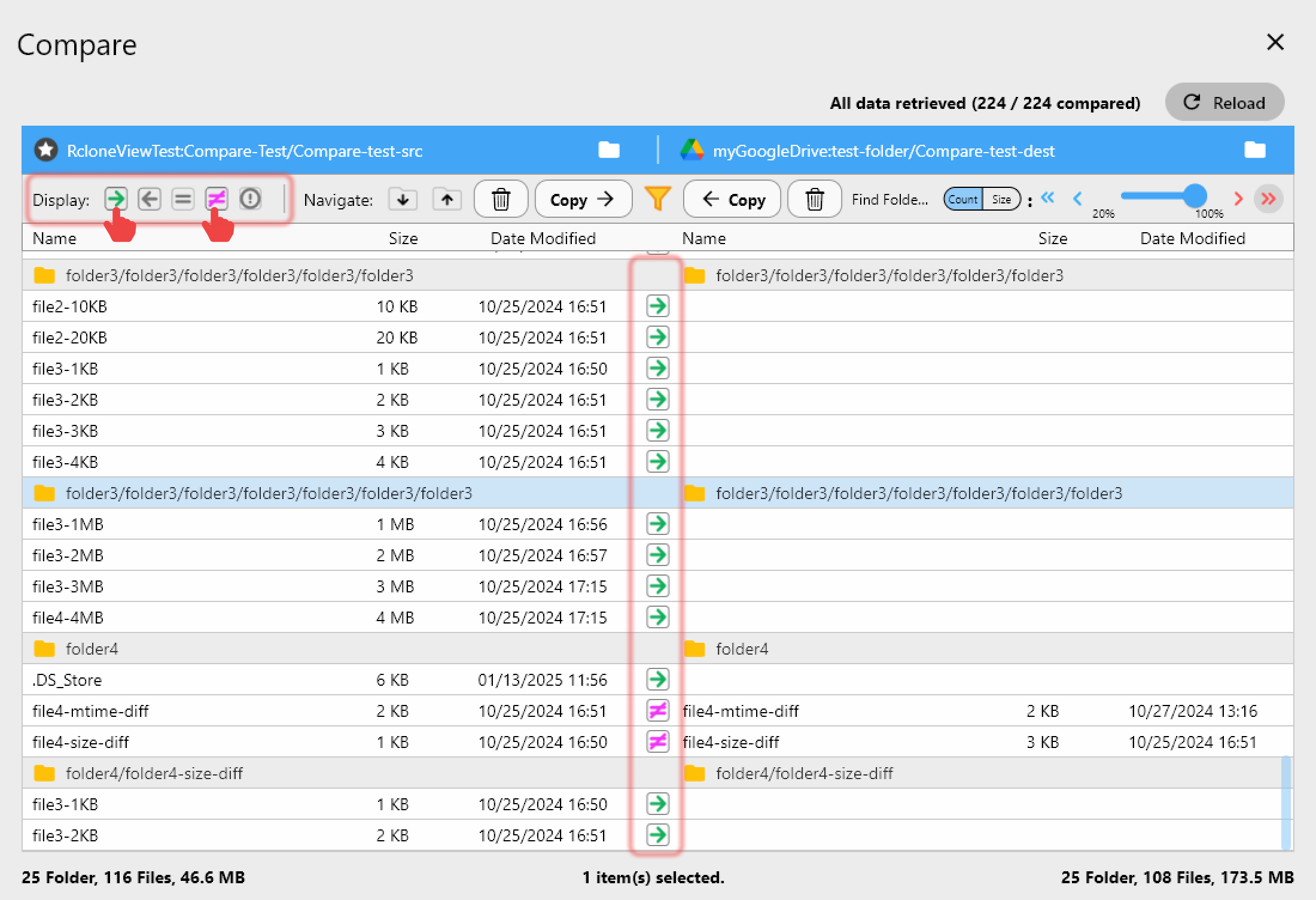
Typing paths by hand doesn't scale once folder names include unicode characters, spaces, or deep nesting — exactly the kind of paths that are easy to mistype and hard to debug. Copy Full Path sidesteps all of that by copying the literal string RcloneView already resolved when it rendered the folder tree, so what you paste is guaranteed to match what the remote actually contains. RcloneView also syncs and compares folders — on the FREE license — and Copy Full Path works the same way across all three: Explorer, Sync job configuration, and Folder Compare.
It's especially useful when setting up a Sync job's source or destination folder, or when writing a custom filter rule that needs an exact path prefix — pasting a copied path avoids the small typos that silently exclude the wrong files.
Pairing It with the Built-In Terminal
Copy Full Path is most powerful combined with the Rclone Terminal in the bottom Info View. Copy a path from the Explorer, switch to the Terminal tab, and paste it directly into a command like rclone lsf or rclone about without leaving the app or re-typing anything. This turns RcloneView into a hybrid workflow tool: browse visually to find the folder you need, then drop straight into CLI-level control for anything the GUI doesn't expose yet.
For anyone scripting recurring maintenance tasks — a rclone size check, a manual rclone check between two folders — this shortcut removes the single most error-prone step in writing that command by hand.
Getting Started
- Download RcloneView from rcloneview.com if you haven't already.
- Open any remote in the Explorer and navigate to the folder you want to reference.
- Right-click the Breadcrumb Path Bar and select Copy Full Path.
- Paste the copied
remote:pathstring into a Sync job, filter rule, or the built-in Rclone Terminal.
Once this becomes muscle memory, hand-typing remote paths starts to feel like the slow way to work.
Related Guides:
- RcloneView Terminal: Use the Full Power of rclone CLI Inside a GUI
- RcloneView Keyboard Shortcuts and Productivity Tips
- 10 Two-Pane Explorer Tips That Will Speed Up Your Cloud File Management in RcloneView
Supported Cloud Providers