Manage RackCorp Object Storage — Sync and Backup Files with RcloneView
Browse, sync, and back up RackCorp object storage buckets with the same drag-and-drop workflow you use for every other cloud in RcloneView.
RackCorp's S3-compatible object storage gives teams a regional alternative to the big hyperscalers, but managing buckets usually means juggling separate CLI tools or a browser console tab. RcloneView connects to RackCorp through rclone's S3 protocol and puts your buckets in the same explorer window as Google Drive, OneDrive, or any other remote you already manage. Unlike mount-only tools, RcloneView also syncs and compares folders — on the FREE license.
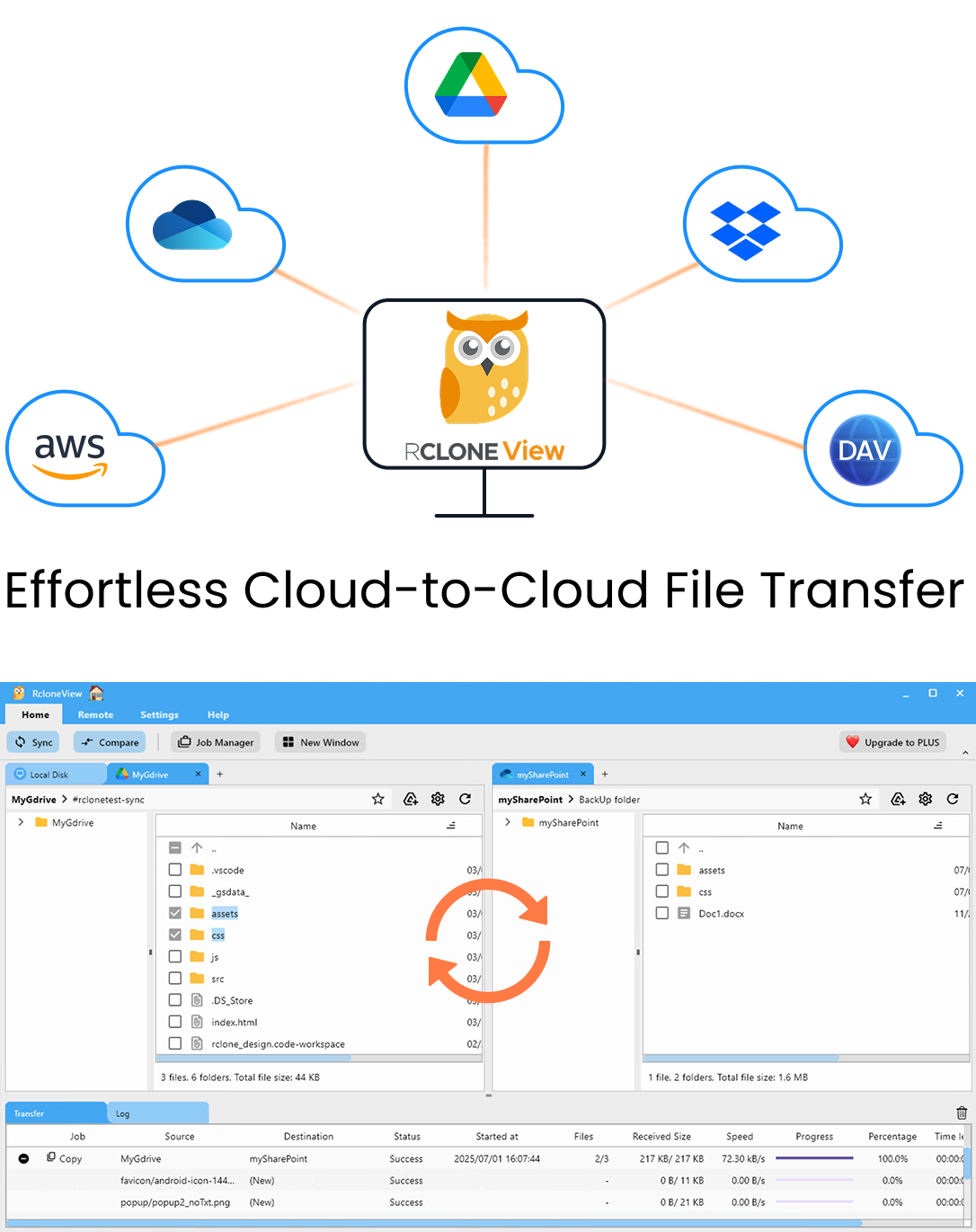
Manage & Sync All Clouds in One Place
RcloneView is a cross-platform GUI for rclone. Compare folders, transfer or sync files, and automate multi-cloud workflows with a clean, visual interface.
- One-click jobs: Copy · Sync · Compare
- Schedulers & history for reliable automation
- Works with Google Drive, OneDrive, Dropbox, S3, WebDAV, SFTP and more
Free core features. Plus automations available.
Connecting RackCorp to RcloneView
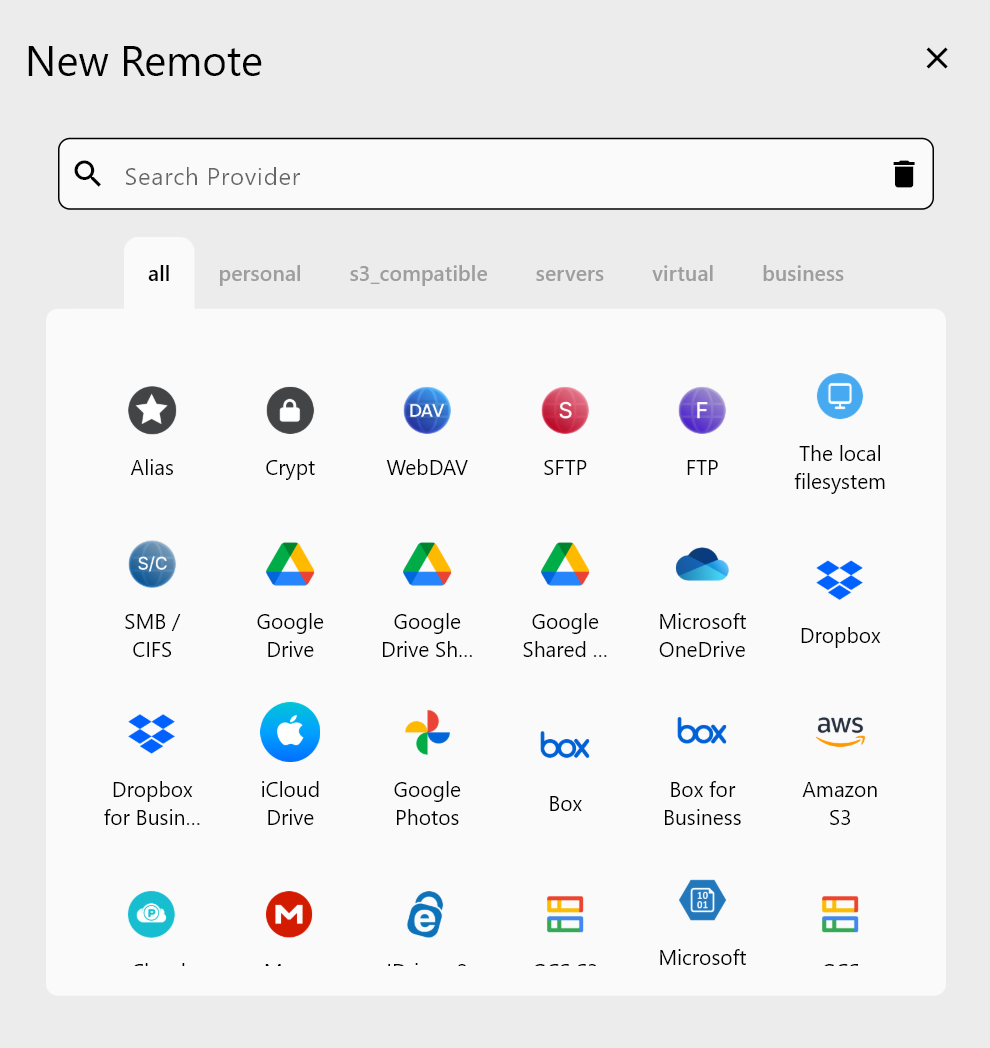
RackCorp object storage is added like any other S3-compatible provider: open Remote tab > New Remote, select the S3-compatible option, and enter your Access Key ID, Secret Access Key, and the RackCorp endpoint URL. RcloneView passes these credentials straight to rclone's config, so there's no separate driver or plugin to install — the embedded rclone binary handles the protocol negotiation.
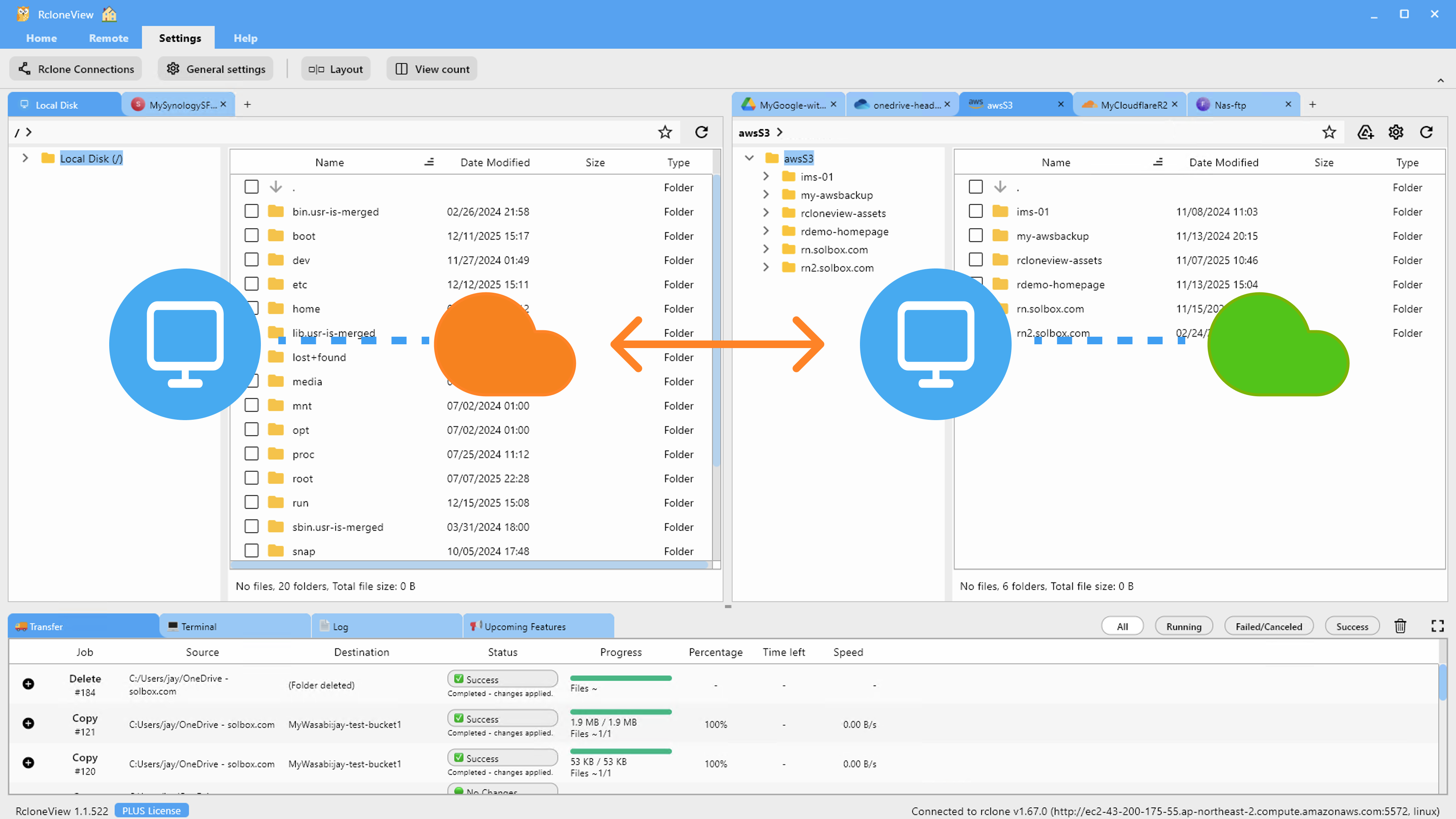
Once the remote is created, it appears as a new tab in the Explorer panel. You can browse buckets with the List View for detailed metadata, or switch to Thumbnail View if you're storing images and want a quick visual scan. The folder tree on the left lets you jump between prefixes without re-typing paths.
Right-click any object in the file list to access Copy, Cut, Rename, Get Size, or Get Public Link — the same context menu you'd use for local files, applied directly to your RackCorp bucket.
Syncing RackCorp with Other Clouds
Object storage rarely lives in isolation. A common pattern is keeping a working copy in Google Drive or OneDrive for day-to-day editing while archiving finished assets to RackCorp for cheaper, longer-term retention. RcloneView's 4-step Sync wizard handles this without touching a terminal: pick RackCorp as source or destination, set filters to exclude temp files or oversized assets, and choose one-way sync so the archive only receives new material.
Before committing to a full transfer, run a Dry Run to preview exactly which files will be copied or deleted. This is especially useful with object storage, where re-uploading large buckets by accident can waste bandwidth and time.
Automating Backups with Scheduled Jobs
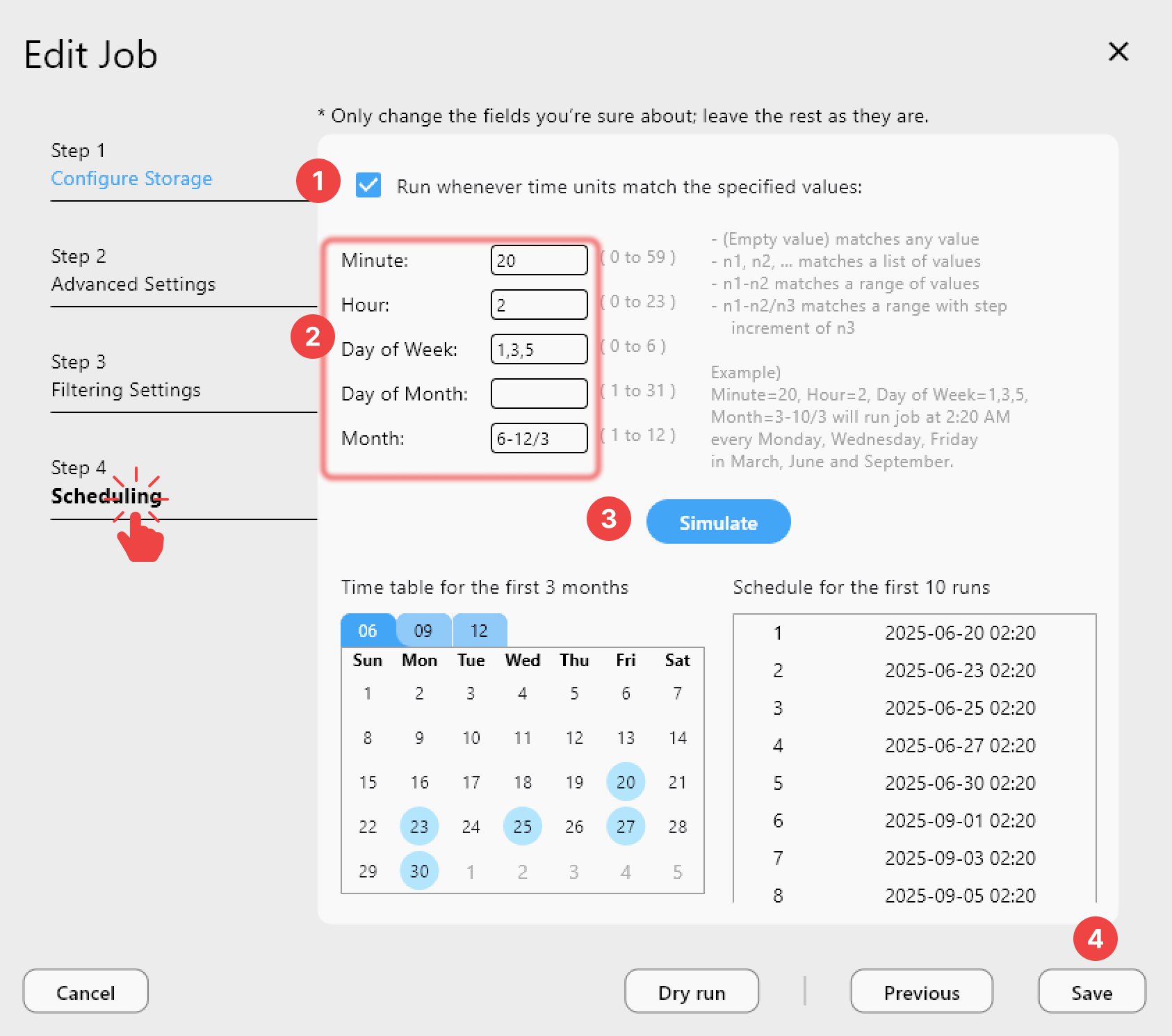
For teams on a PLUS license, RackCorp sync jobs can run on a crontab-style schedule instead of requiring a manual trigger every time. Set the minute, hour, and day fields once, and RcloneView keeps your RackCorp bucket current in the background — check the Job History tab afterward to confirm each run's status, transfer speed, and file count.
Enable checksum verification in the Advanced Settings step if data integrity matters more than raw speed — RcloneView compares file hashes rather than just size and timestamp, catching silent corruption during transfer.
Getting Started
- Download RcloneView from rcloneview.com.
- Go to Remote tab > New Remote and select the S3-compatible option for RackCorp.
- Enter your Access Key ID, Secret Access Key, and RackCorp endpoint to connect.
- Set up a sync or backup job to keep RackCorp in step with your other cloud remotes.
Once connected, RackCorp behaves like any other tab in your RcloneView workspace — no separate console, no CLI flags to memorize.
Related Guides:
- Manage Scaleway Object Storage — Cloud Sync and Backup with RcloneView
- Manage Selectel Cloud Storage — Sync and Backup Files with RcloneView
- VFS Cache — Faster Cloud Mount Performance in RcloneView
Supported Cloud Providers