How to Migrate from OneDrive to Google Drive — Step-by-Step Transfer Guide with RcloneView
Your organization is moving to Google Workspace. Now you need to move terabytes of OneDrive files to Google Drive without disrupting your team's workflow. Here's how to do it properly.
Whether you're switching productivity suites, consolidating cloud accounts, or maintaining a parallel backup, migrating from OneDrive to Google Drive requires careful planning. RcloneView handles the heavy lifting — direct cloud-to-cloud transfer that preserves your folder structure and handles the file format differences automatically.
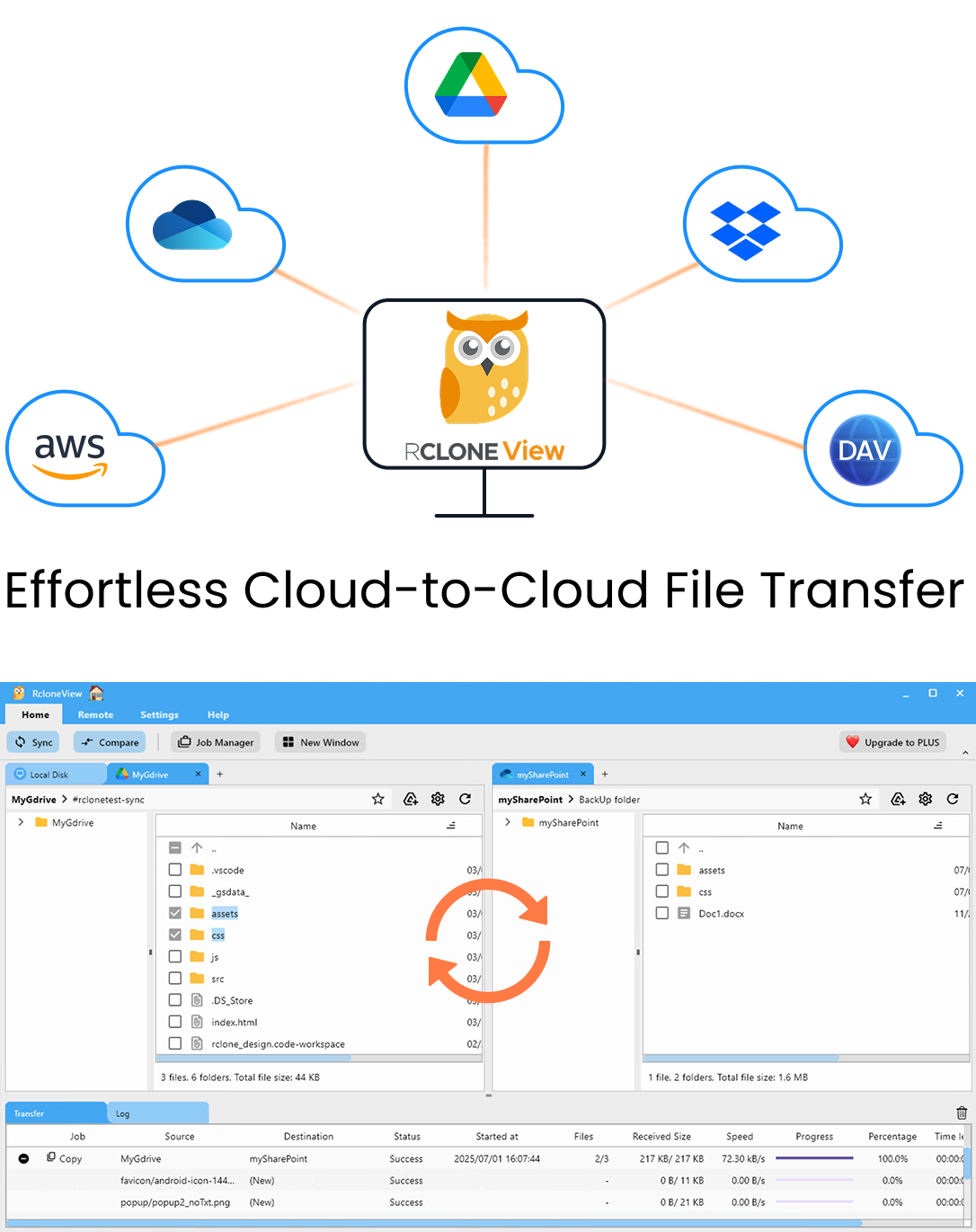
Manage & Sync All Clouds in One Place
RcloneView is a cross-platform GUI for rclone. Compare folders, transfer or sync files, and automate multi-cloud workflows with a clean, visual interface.
- One-click jobs: Copy · Sync · Compare
- Schedulers & history for reliable automation
- Works with Google Drive, OneDrive, Dropbox, S3, WebDAV, SFTP and more
Free core features. Plus automations available.
Why Not Just Download and Re-Upload?
The manual approach — download from OneDrive, then upload to Google Drive — has serious drawbacks:
- Requires local disk space for the entire dataset.
- Double the time — download + upload instead of direct transfer.
- No incremental updates — any changes during transfer are lost.
- Breaks on large datasets — browser uploads fail on files over a few GB.
RcloneView transfers directly between clouds, requiring only bandwidth — not local storage.
Migration Steps
1) Connect Both Accounts
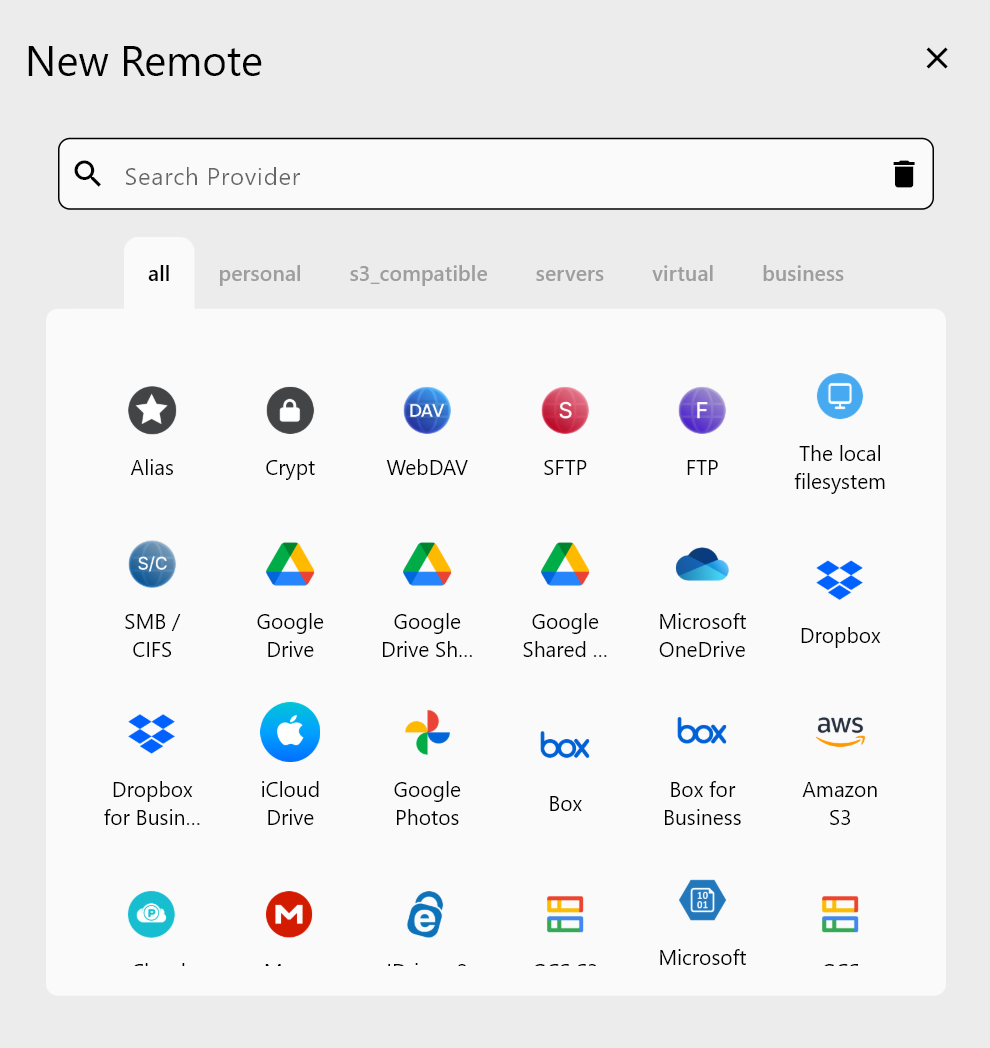
Add OneDrive and Google Drive as remotes in RcloneView:
2) Assess and Plan
Browse both clouds side-by-side:
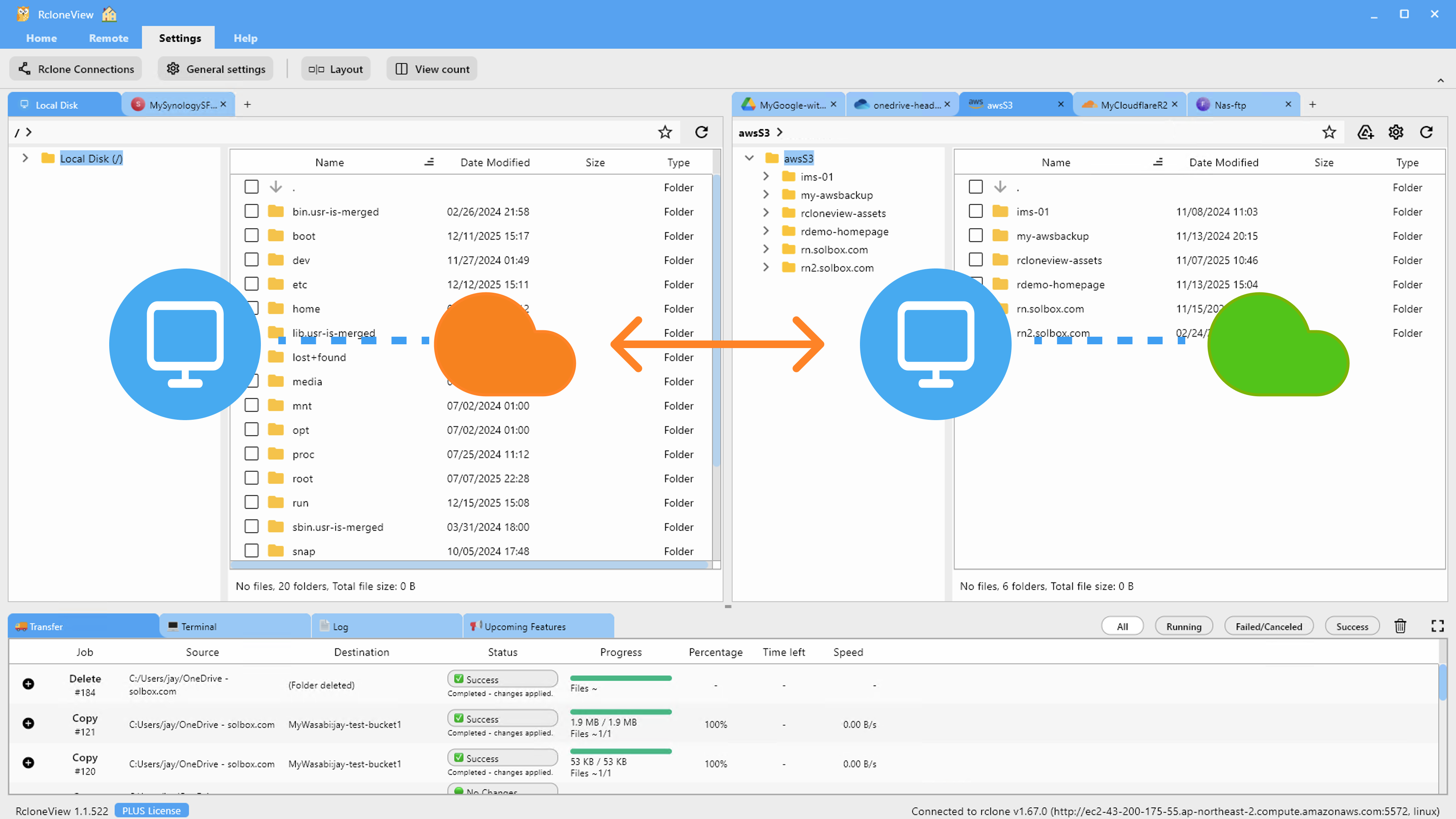
Before migrating, check:
- Total size — How much data needs to move?
- File types — Office documents convert automatically (see below).
- Shared folders — OneDrive shared items need separate handling.
- Path lengths — Google Drive has a 400-character path limit.
3) File Format Handling
When transferring, Office documents can be uploaded as-is to Google Drive. Google Drive supports opening .docx, .xlsx, and .pptx natively. Optionally, you can convert them to Google-native formats after migration.
| OneDrive Format | Google Drive Handling |
|---|---|
| .docx | Opens natively or converts to Google Docs |
| .xlsx | Opens natively or converts to Google Sheets |
| .pptx | Opens natively or converts to Google Slides |
| Images, PDFs | Transferred as-is |
4) Run the Migration
Create a Copy job from OneDrive to Google Drive:
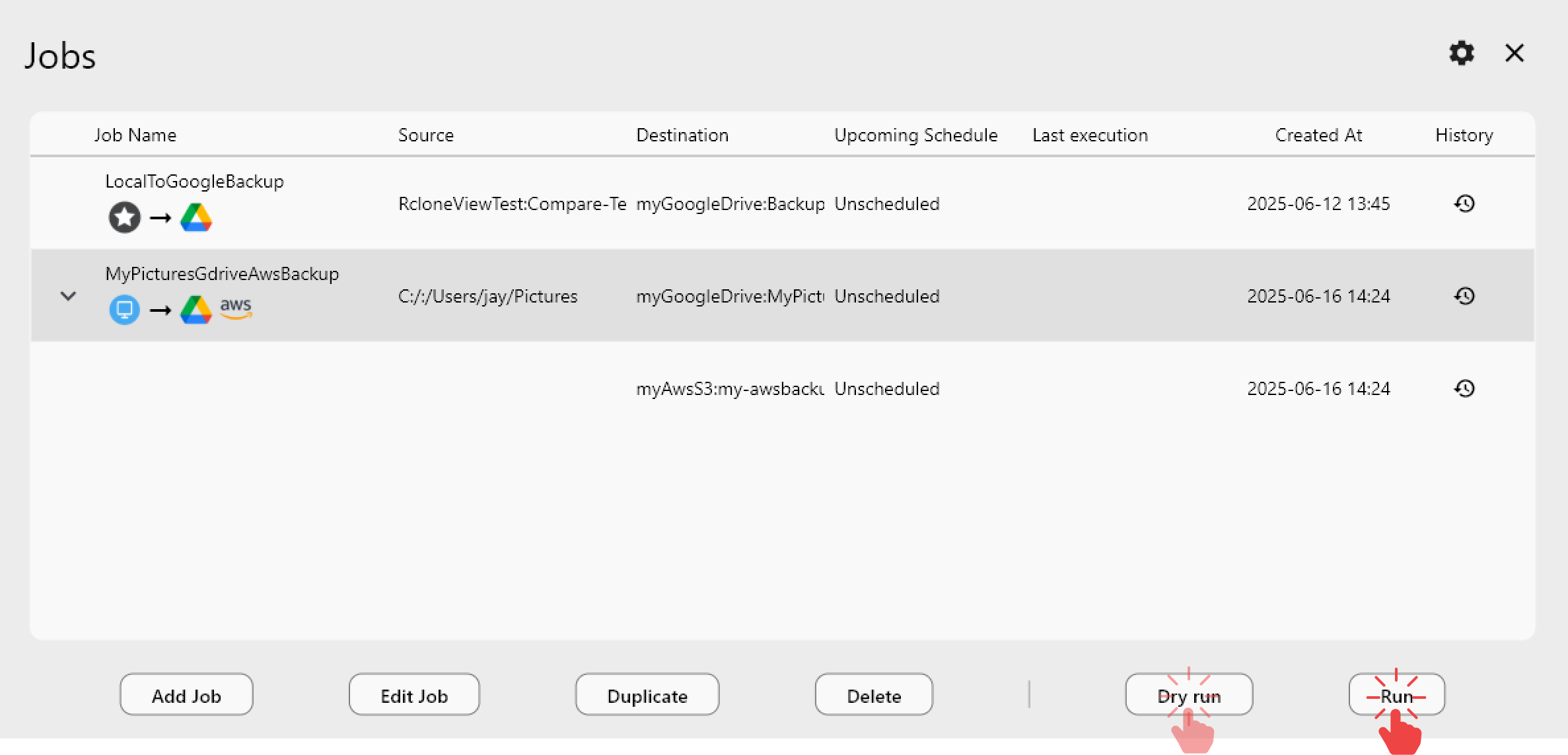
Use Copy rather than Sync — it only adds files, never deletes from the destination.
5) Monitor Progress
Watch the migration in real time:
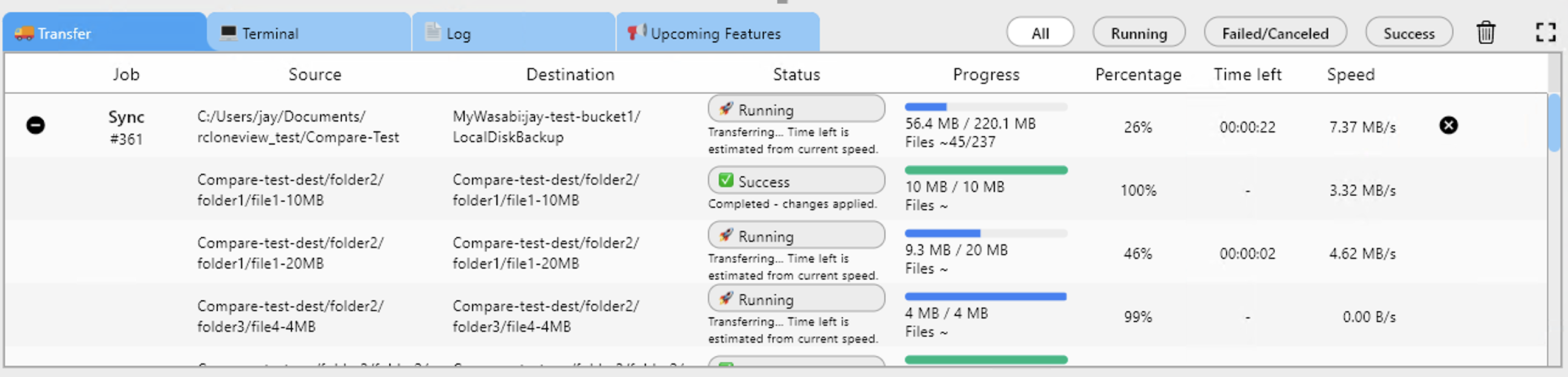
6) Verify
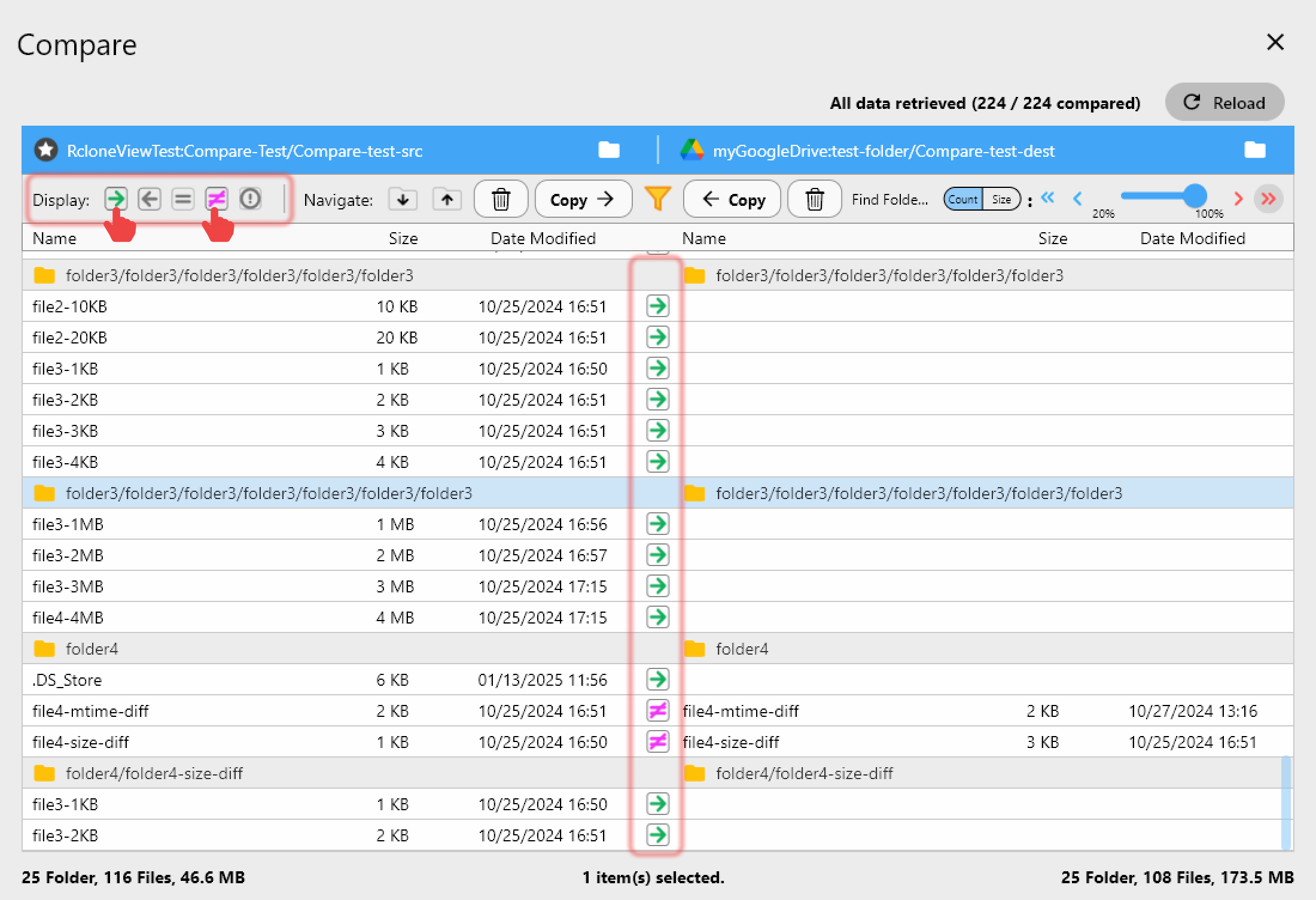
Compare both sides after migration:
Handling Special Cases
SharePoint Document Libraries
SharePoint libraries are separate from personal OneDrive. Add SharePoint as a separate remote in RcloneView to migrate team sites.
OneDrive for Business vs Personal
If migrating from OneDrive for Business, the OAuth setup differs from personal OneDrive. RcloneView guides you through both authentication flows.
Large migrations (500 GB+)
For very large datasets:
- Migrate in batches — Start with critical folders, then secondary data.
- Use filter rules — Prioritize by file type or date.
- Schedule off-hours — Run during nights/weekends to avoid rate limits.
- Enable retry — v1.3's retry feature handles transient failures.
During the transition period
Keep both clouds in sync while your team transitions:
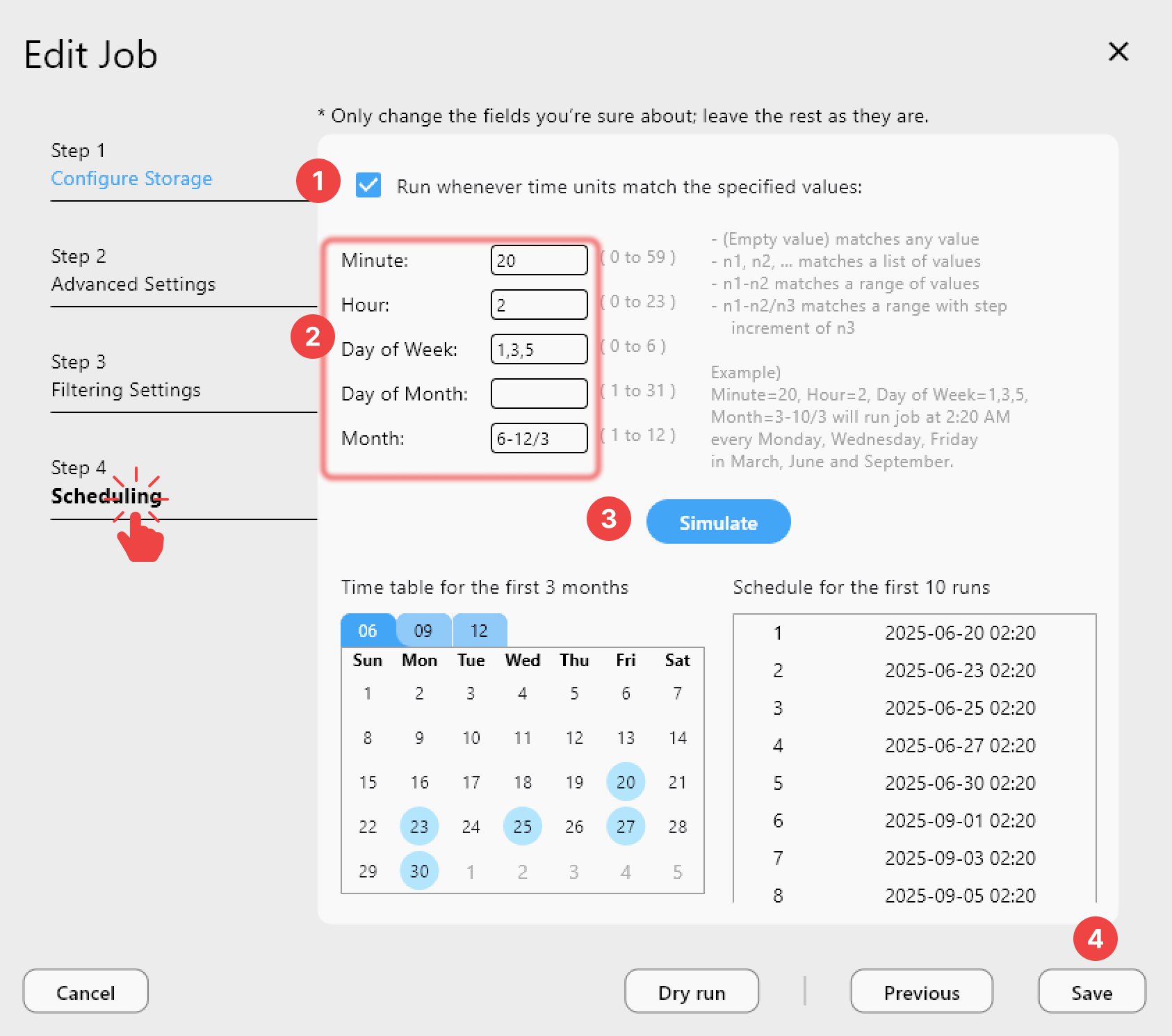
Schedule daily syncs from OneDrive → Google Drive until everyone has switched.
Post-Migration Checklist
- Verify file counts — Folder Comparison confirms all files transferred.
- Test file access — Open key documents on Google Drive.
- Update sharing — Re-share folders on Google Drive with team members.
- Update app integrations — Point scripts, tools, and workflows to Google Drive.
- Keep OneDrive active — Maintain the old account for 30 days as a safety net.
- Decommission — After confirming everything works, cancel OneDrive subscriptions.
Getting Started
- Download RcloneView from rcloneview.com.
- Add OneDrive and Google Drive as remotes.
- Run a Copy job to transfer files.
- Verify with Folder Comparison.
- Schedule incremental syncs during transition.
Migration is stressful enough without worrying about missing files. Let RcloneView handle the transfer while you focus on the transition plan.
Related Guides:
Supported Cloud Providers