RcloneView vs MultCloud: Which Multi-Cloud Manager Is Better for Power Users?
Both RcloneView and MultCloud let you manage multiple cloud storage accounts. But they take fundamentally different approaches — one runs in your browser through a third-party server, the other runs on your desktop with direct connections. Here's what that means for you.
If you manage files across Google Drive, OneDrive, Dropbox, S3, and other clouds, you've probably looked at multi-cloud management tools. MultCloud and RcloneView are two popular options, but they differ significantly in architecture, privacy, features, and pricing. This comparison helps you choose the right one for your workflow.
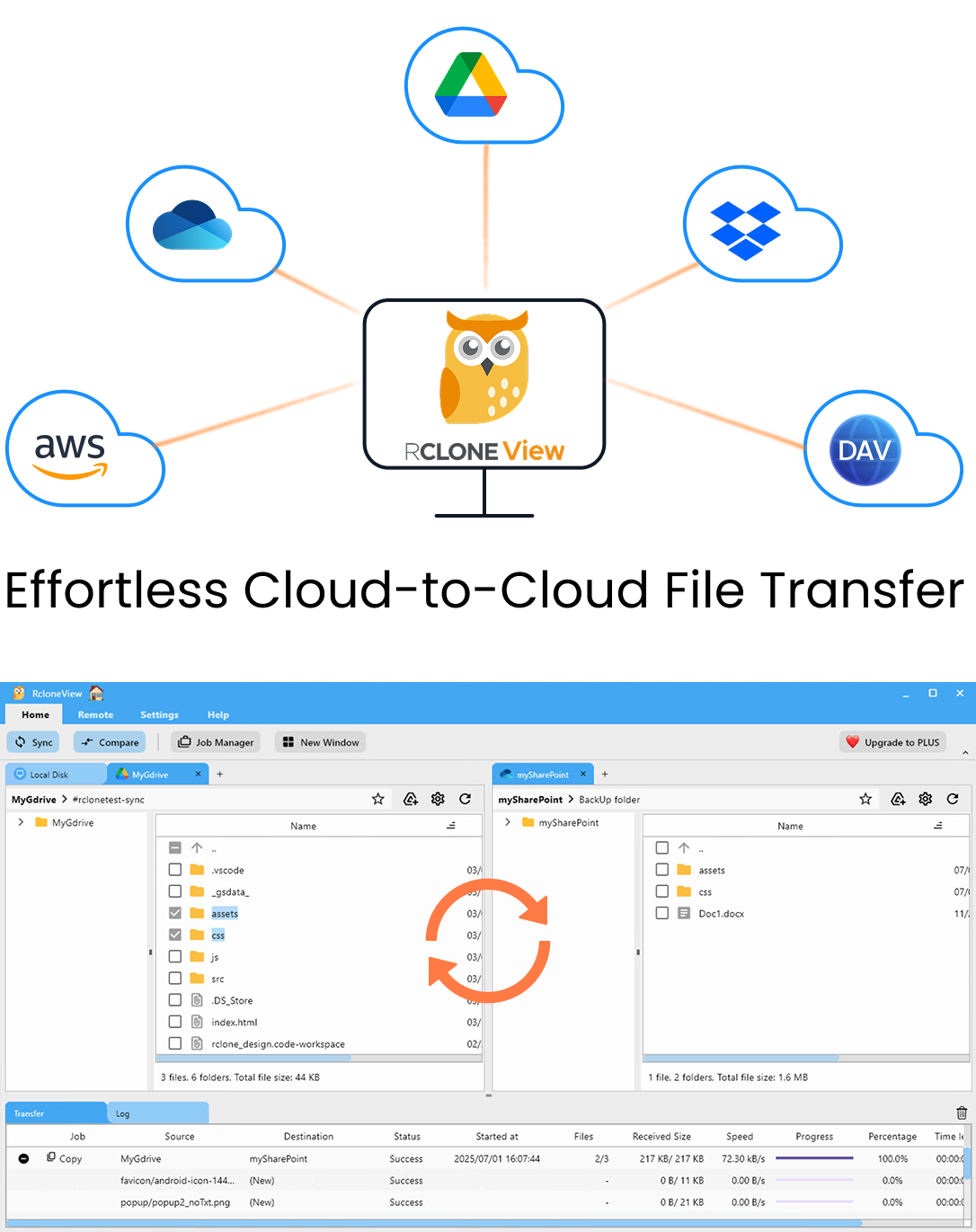
Manage & Sync All Clouds in One Place
RcloneView is a cross-platform GUI for rclone. Compare folders, transfer or sync files, and automate multi-cloud workflows with a clean, visual interface.
- One-click jobs: Copy · Sync · Compare
- Schedulers & history for reliable automation
- Works with Google Drive, OneDrive, Dropbox, S3, WebDAV, SFTP and more
Free core features. Plus automations available.
Architecture: Web-Based vs Desktop
This is the fundamental difference.
MultCloud is a web-based service. Your cloud credentials are stored on MultCloud's servers, and file transfers route through their infrastructure. You access it via a browser.
RcloneView is a desktop application. It runs locally on your computer (Windows, macOS, Linux). Transfers happen directly between your machine and your clouds — or directly between clouds via rclone's server-side copy when supported. No third-party server touches your data.
What this means in practice
| Aspect | MultCloud | RcloneView |
|---|---|---|
| Where data flows | Through MultCloud servers | Direct (your machine ↔ cloud) |
| Credential storage | MultCloud's servers | Your local machine only |
| Requires internet account | Yes (MultCloud account) | No account needed |
| Works offline for local ops | No | Yes |
Cloud Provider Support
| Feature | MultCloud | RcloneView |
|---|---|---|
| Major clouds (Google, OneDrive, Dropbox, S3) | ✅ | ✅ |
| S3-compatible (Wasabi, Backblaze B2, MinIO, etc.) | Limited | ✅ 70+ providers via rclone |
| FTP/SFTP/WebDAV | ✅ | ✅ |
| Mega, pCloud, Box | ✅ | ✅ |
| NAS (Synology, QNAP) | ❌ | ✅ (auto-detect Synology) |
| Local drives | ❌ | ✅ |
| Encrypted remotes (crypt) | ❌ | ✅ |
| Total providers | ~30 | 70+ |
RcloneView inherits rclone's massive provider library, including S3-compatible services, enterprise storage, and niche providers that MultCloud doesn't support.
Feature Comparison
File Management
| Feature | MultCloud | RcloneView |
|---|---|---|
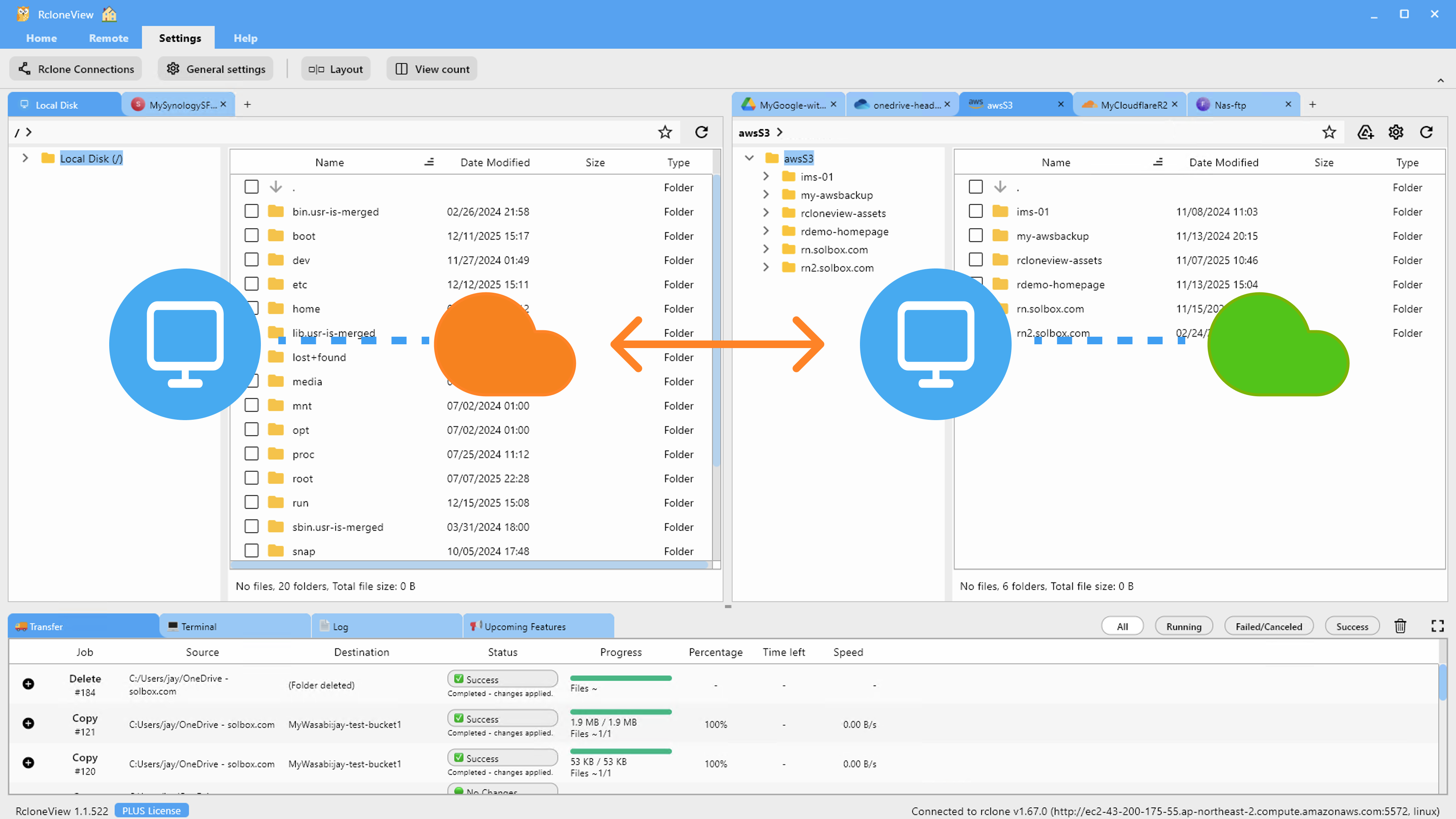
| Two-pane file explorer | ❌ | ✅ |
| Drag and drop between clouds | ✅ (web) | ✅ (desktop) |
| Mount cloud as local drive | ❌ | ✅ |
| Folder comparison | ❌ | ✅ |
| Built-in terminal | ❌ | ✅ (rclone CLI) |
Sync and Transfer
| Feature | MultCloud | RcloneView |
|---|---|---|
| Cloud-to-cloud sync | ✅ | ✅ |
| One-way sync | ✅ | ✅ |
| Copy (no delete) | ✅ | ✅ |
| Move | Limited | ✅ |
| Bandwidth limiting | ❌ | ✅ |
| Parallel transfers (configurable) | ❌ | ✅ |
| Dry run (preview before sync) | ❌ | ✅ |
| Filter rules (include/exclude) | Basic | ✅ Full rclone filters |
| Retry failed transfers | ❌ | ✅ (v1.3) |
Automation
| Feature | MultCloud | RcloneView |
|---|---|---|
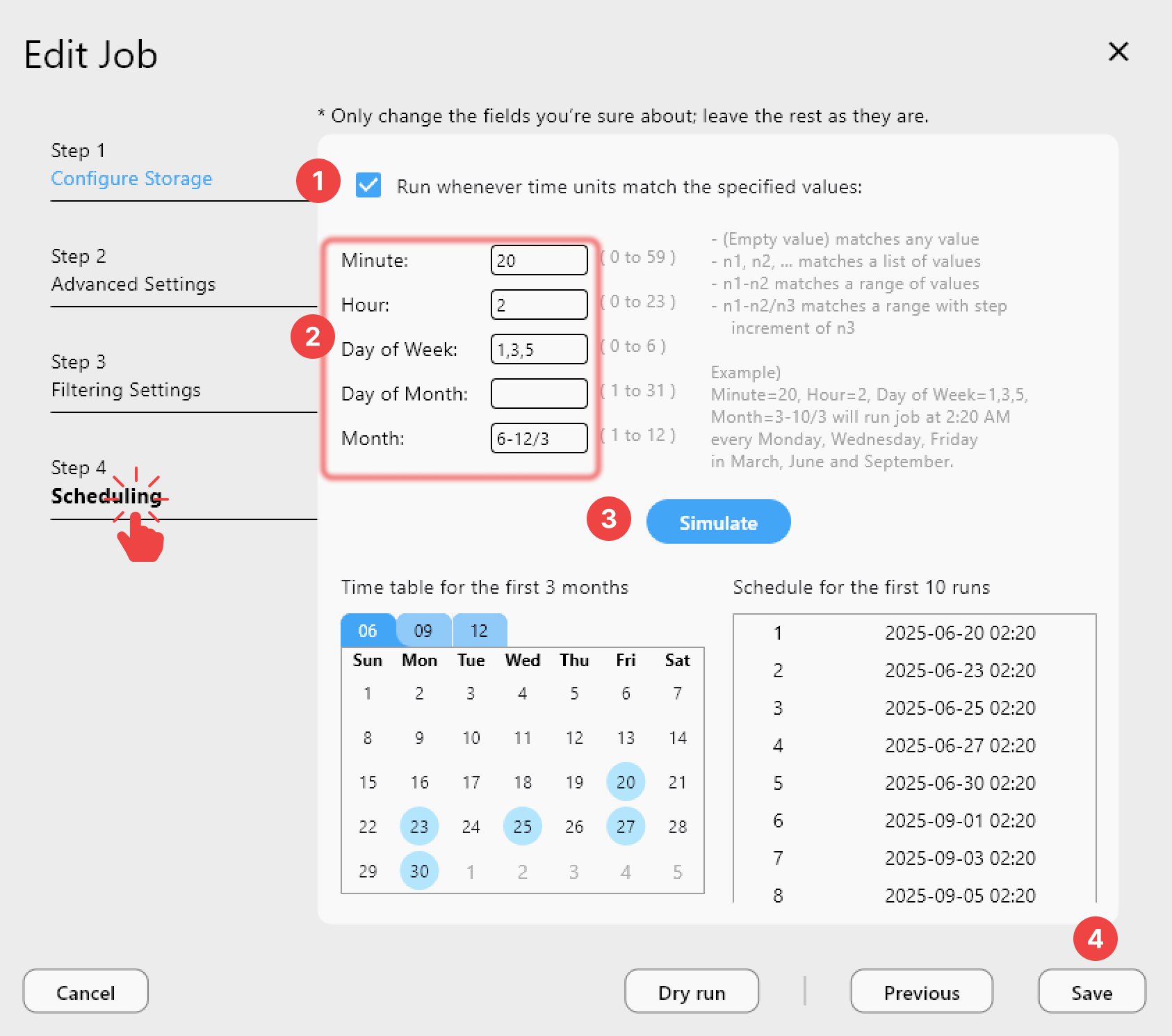
| Scheduled sync | ✅ | ✅ |
| Batch jobs (multi-step) | ❌ | ✅ (v1.3) |
| Slack/Discord/Telegram alerts | ❌ | ✅ (v1.3) |
Privacy and Security
This is where the architecture difference matters most.
MultCloud: Your OAuth tokens or credentials are stored on MultCloud's servers. All data passes through their infrastructure. You're trusting a third party with access to all your cloud accounts simultaneously.
RcloneView: Credentials never leave your machine. Data transfers happen directly. You can add client-side encryption with rclone's crypt remote — MultCloud has no equivalent.
For teams handling sensitive data (legal, medical, financial), this distinction is significant.
Pricing
| Plan | MultCloud | RcloneView |
|---|---|---|
| Free tier | 5 GB/month transfer | Full features, unlimited transfer |
| Paid | $9.99/month (unlimited) | $5.99/month or $49.99/year |
| Transfer limits on free | Yes (5 GB) | No limits |
| Feature limits on free | Many features locked | Trial period, then subscription |
When to Choose MultCloud
- You need quick, occasional cloud-to-cloud transfers from any browser.
- You don't want to install software.
- You're comfortable with a third-party handling your cloud credentials.
- Your transfer volumes are under 5 GB/month (free tier).
When to Choose RcloneView
- You manage multiple clouds regularly and need a full desktop interface.
- Privacy matters — you don't want credentials on third-party servers.
- You need advanced features: mount as drive, folder comparison, dry run, filters, batch jobs.
- You work with S3-compatible storage, NAS, or local drives.
- You need notifications (Slack/Discord) and automation beyond simple scheduling.
- You transfer large volumes of data.
Getting Started with RcloneView
- Download RcloneView from rcloneview.com.
- Add your cloud remotes — all credentials stay local.
- Browse, compare, sync — with full desktop power.
- Schedule and automate — with batch jobs and notifications.
Related Guides:
Supported Cloud Providers