How to Detect and Resolve Cloud Sync Conflicts with RcloneView
You edited a file on your laptop. Your colleague edited the same file on theirs. Now the cloud has two versions and neither is complete. Sound familiar?
Sync conflicts are one of the most frustrating aspects of cloud storage. When the same file is modified in two locations before a sync runs, you end up with conflicting versions — and most cloud tools either silently overwrite one or create confusing duplicate files. RcloneView helps you detect conflicts before they cause damage and resolve them with visual tools.
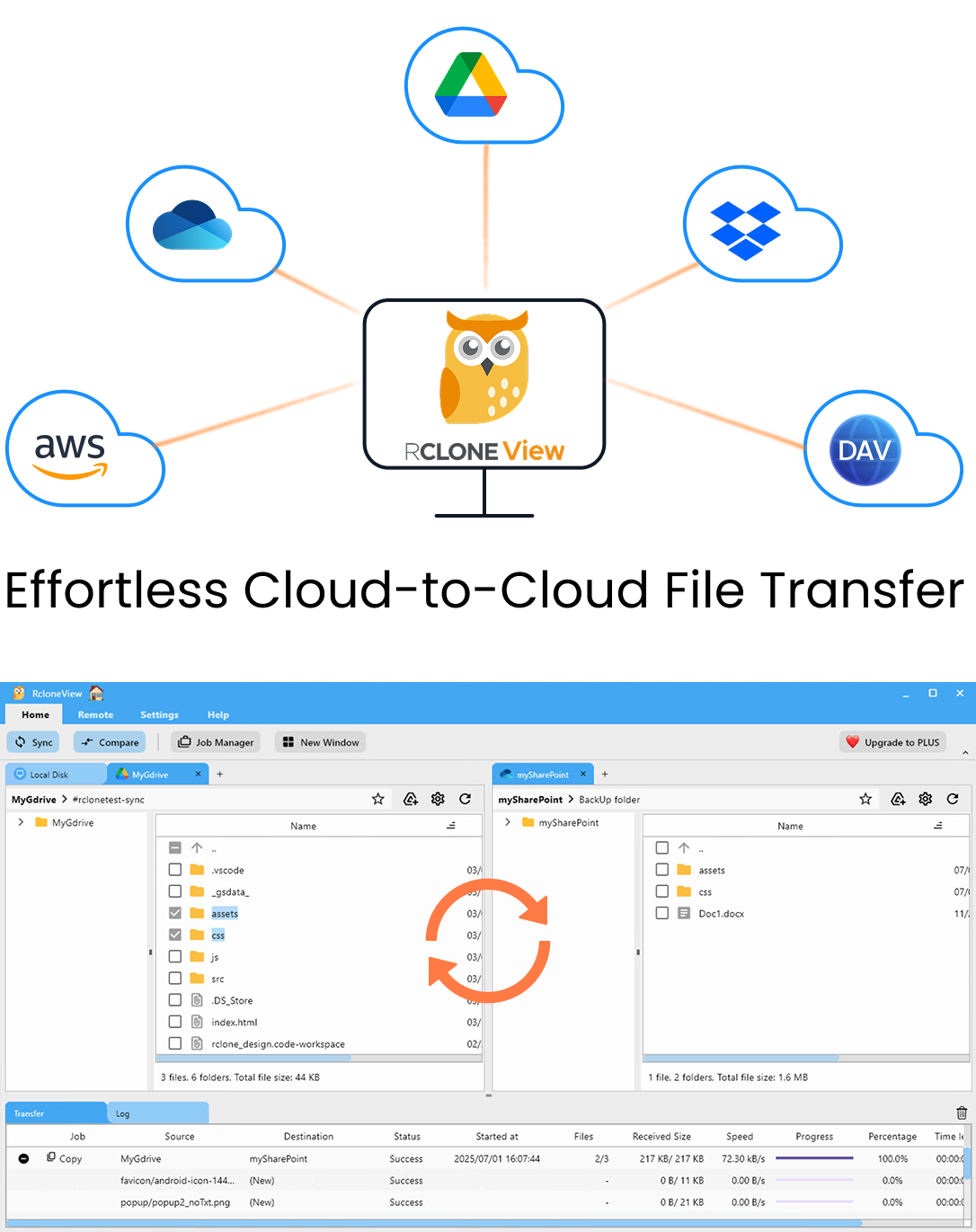
Manage & Sync All Clouds in One Place
RcloneView is a cross-platform GUI for rclone. Compare folders, transfer or sync files, and automate multi-cloud workflows with a clean, visual interface.
- One-click jobs: Copy · Sync · Compare
- Schedulers & history for reliable automation
- Works with Google Drive, OneDrive, Dropbox, S3, WebDAV, SFTP and more
Free core features. Plus automations available.
What Causes Sync Conflicts?
Conflicts arise when:
- Same file, different edits — Two people modify the same document before the next sync.
- Offline edits — You work offline, make changes, then reconnect — but the cloud copy changed while you were offline.
- Multi-device sync delays — Your phone syncs a photo to Google Drive, but your laptop's sync hasn't caught up yet, and you modify the same file locally.
- Cross-cloud discrepancies — You have the same data on Google Drive and OneDrive, and changes happen on both.
How RcloneView Helps
1) Folder Comparison — See Differences Before Syncing
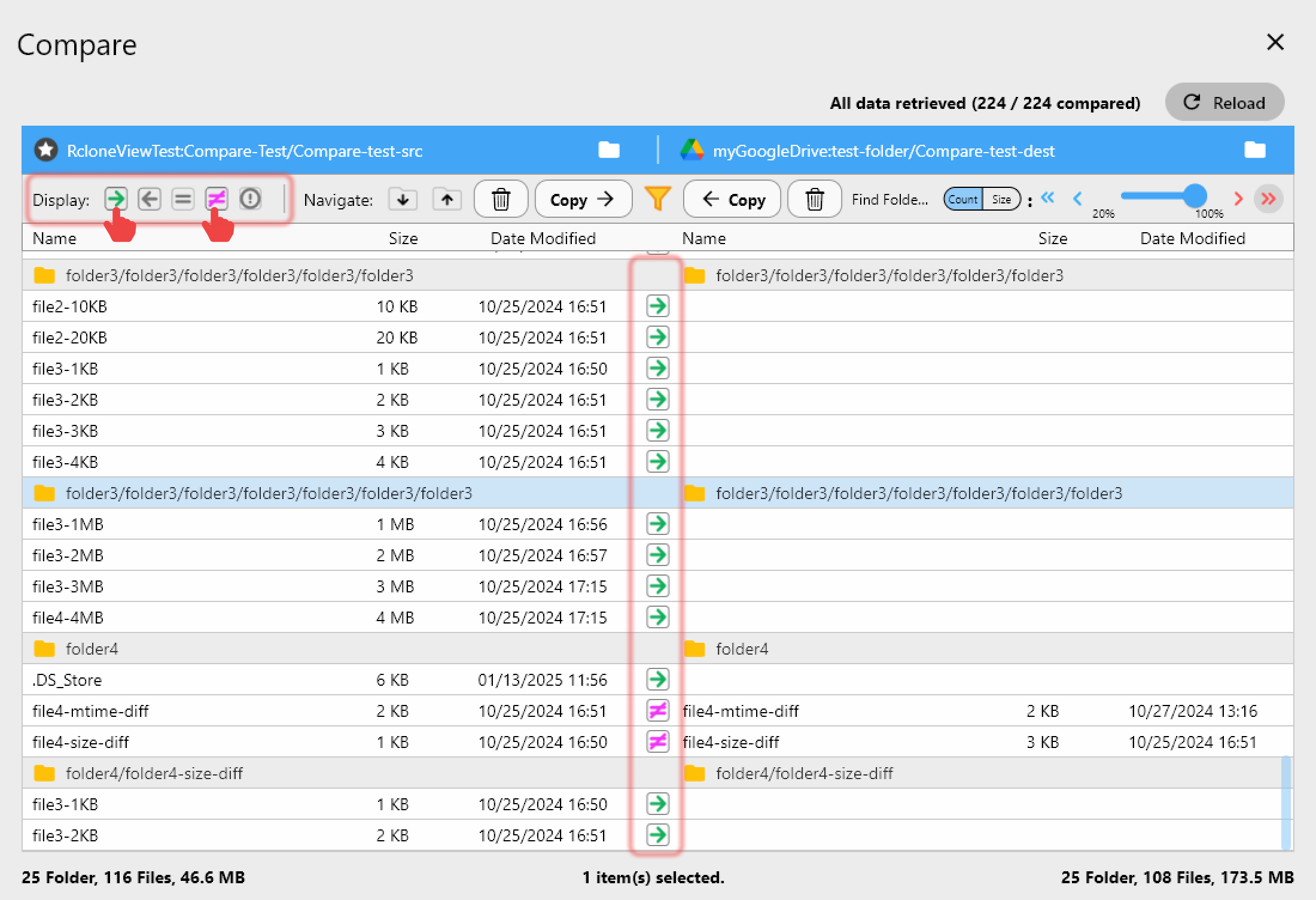
Before running any sync job, use Folder Comparison to see exactly what's different:
- Files only on source — New files that will be copied.
- Files only on destination — Files that exist at the destination but not the source (potential deletions if you sync).
- Files that differ — Same filename, different content. These are your potential conflicts.
2) Dry Run — Preview Before Committing
Run your sync job in dry-run mode first. This shows you exactly what would change without actually modifying anything. v1.3's dry-run panel auto-expands the final column for full details.
3) Copy Instead of Sync for Safety
When in doubt, use Copy instead of Sync:
- Copy only adds new files. It never deletes.
- Sync mirrors source to destination, which can delete files at the destination.
For scenarios where conflicts are likely, Copy is always safer.
4) Compare After Sync — Verify Results
After a sync completes, run Folder Comparison again to confirm both sides match. Any remaining differences need investigation.
Prevention Strategies
Use one-way sync
If data flows in one direction (e.g., local → cloud), conflicts can't happen. Only use bidirectional sync when truly necessary.
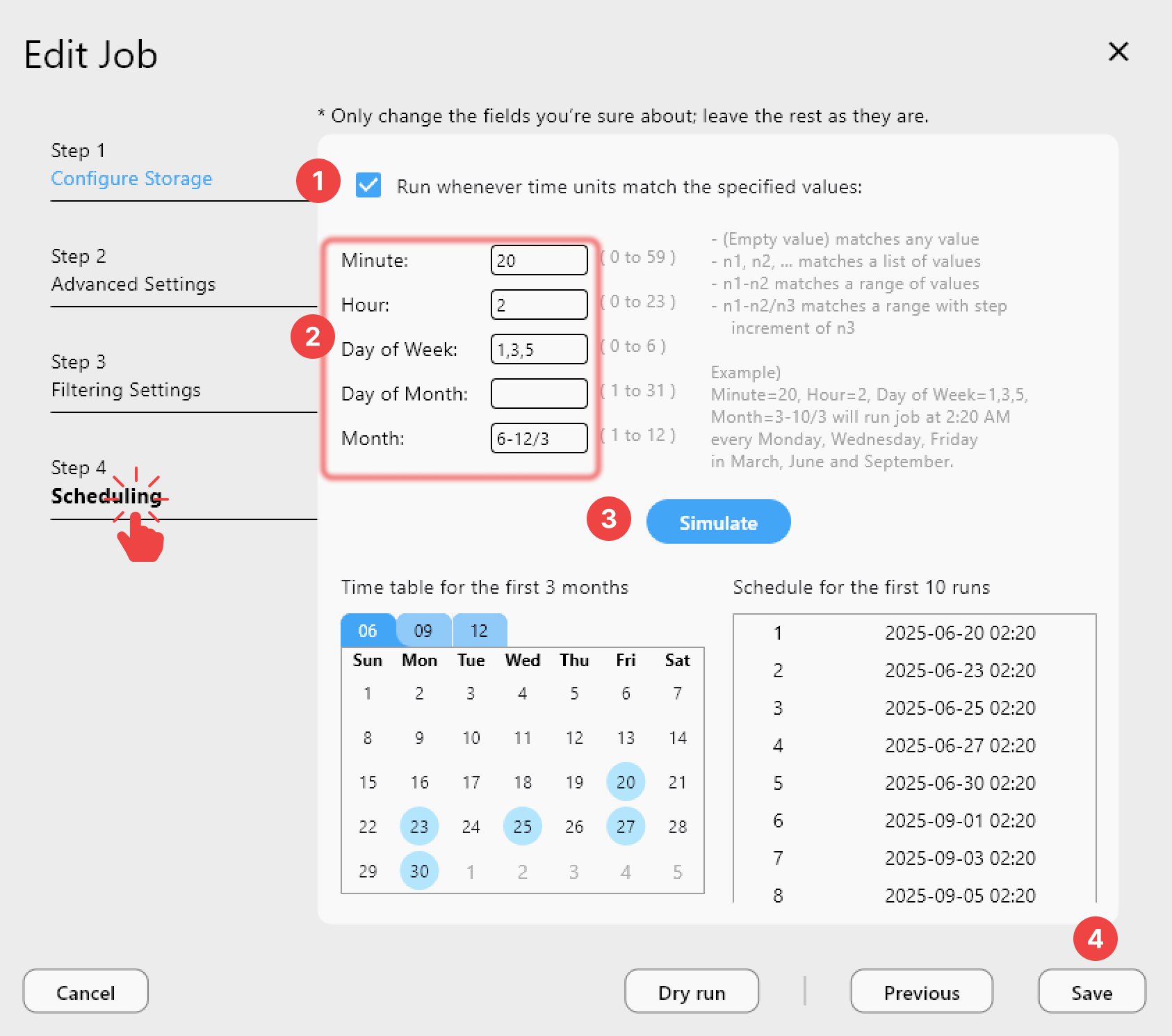
Schedule sync at consistent times
Use Job Scheduling to sync at predictable intervals — nightly at 2 AM, for example. This creates a clear "last sync point" that users can work around.
Use Batch Jobs for ordered operations
v1.3 Batch Jobs let you run operations in order — compare first, then sync. This ensures you always see the differences before committing.
Monitor with notifications
Get Slack alerts when sync jobs detect unexpected differences or when file counts don't match expectations.
Getting Started
- Download RcloneView from rcloneview.com.
- Always Compare before Sync — make it a habit.
- Use dry-run for critical sync jobs.
- Prefer Copy over Sync when conflict risk is high.
- Schedule and notify for predictable, monitored workflows.
Sync conflicts are inevitable. Data loss from sync conflicts is not — if you have the right tools.
Related Guides:
Supported Cloud Providers