Cloud Storage for Cybersecurity Companies — Secure Data Management with RcloneView
Give your analysts a reliable, encrypted cloud backup workflow for threat data, incident logs, and forensic evidence — without writing a single command.
Cybersecurity companies handle uniquely sensitive datasets: threat intelligence feeds, penetration test findings, incident response logs, and forensic images — all requiring reliable, encrypted, and auditable storage. When an engagement wraps or a breach investigation closes, that data must be retained for compliance, secured against unauthorized access, and accessible to distributed analyst teams on demand. RcloneView provides a multi-cloud GUI that makes configuring and automating these workflows achievable without CLI expertise.
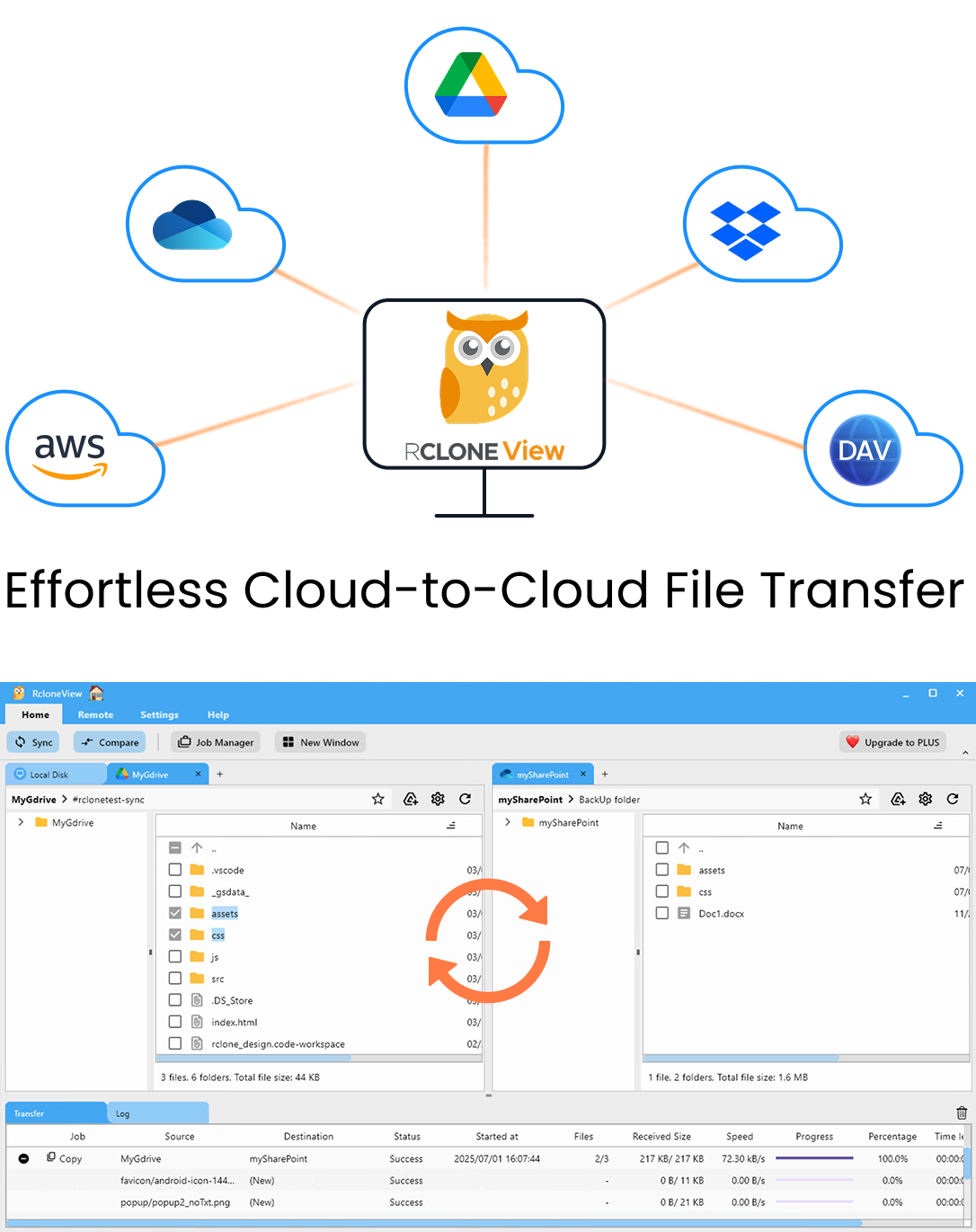
Manage & Sync All Clouds in One Place
RcloneView is a cross-platform GUI for rclone. Compare folders, transfer or sync files, and automate multi-cloud workflows with a clean, visual interface.
- One-click jobs: Copy · Sync · Compare
- Schedulers & history for reliable automation
- Works with Google Drive, OneDrive, Dropbox, S3, WebDAV, SFTP and more
Free core features. Plus automations available.
Connecting Secure S3-Compatible Storage for Security Workloads
Cybersecurity workflows commonly rely on S3-compatible object storage because of its fine-grained IAM policies, programmatic API access, and support for immutable object lock — a requirement for tamper-evident evidence retention. RcloneView connects directly to Amazon S3, Wasabi, Backblaze B2, IDrive e2, and Cloudflare R2 — all commonly used for security workloads due to their zero-egress or low-egress pricing, which matters when analysts routinely pull large log archives for review.
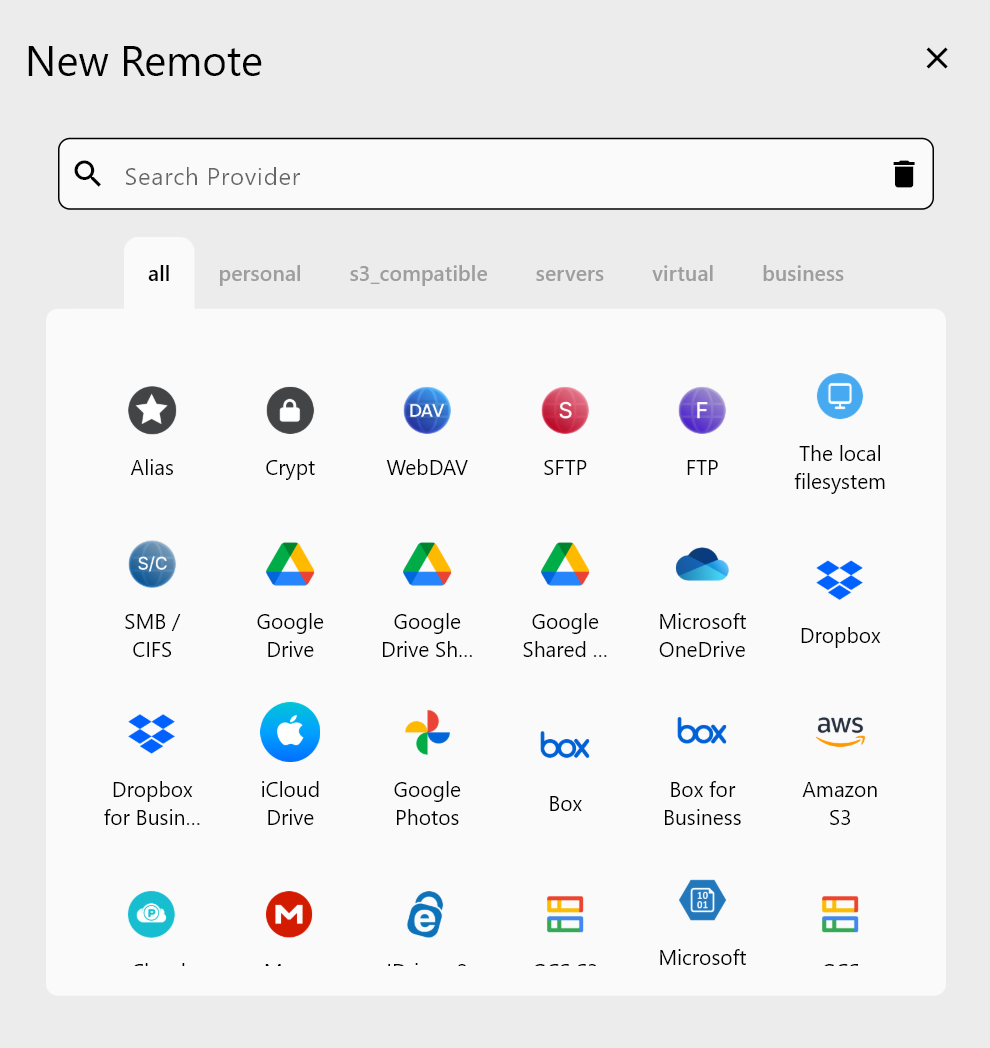
Click New Remote in the Remote tab, select your S3-compatible provider, enter your Access Key ID, Secret Access Key, and region or endpoint, and the bucket hierarchy is immediately browsable in the Explorer panel. Multiple providers can be registered simultaneously, letting your team maintain a primary hot store and a cold archive without switching tools.
Encrypting Sensitive Data with a Crypt Remote
Incident reports, client findings, and forensic images must be encrypted before reaching any third-party storage provider. RcloneView supports rclone's Crypt virtual remote, which wraps any existing S3 bucket or cloud folder with strong encryption. File names and directory structures can be optionally obfuscated, so even a compromised storage credential exposes no intelligible information.
Create a Crypt remote in the New Remote wizard by selecting Crypt as the type, pointing it at your existing S3 or cloud remote, and setting a strong password and salt. Analysts interact with the Crypt remote through the standard file browser — encryption and decryption happen transparently so the workflow is identical to any unencrypted remote, just with a strong security boundary underneath.
Automating Log Archival and Compliance Retention
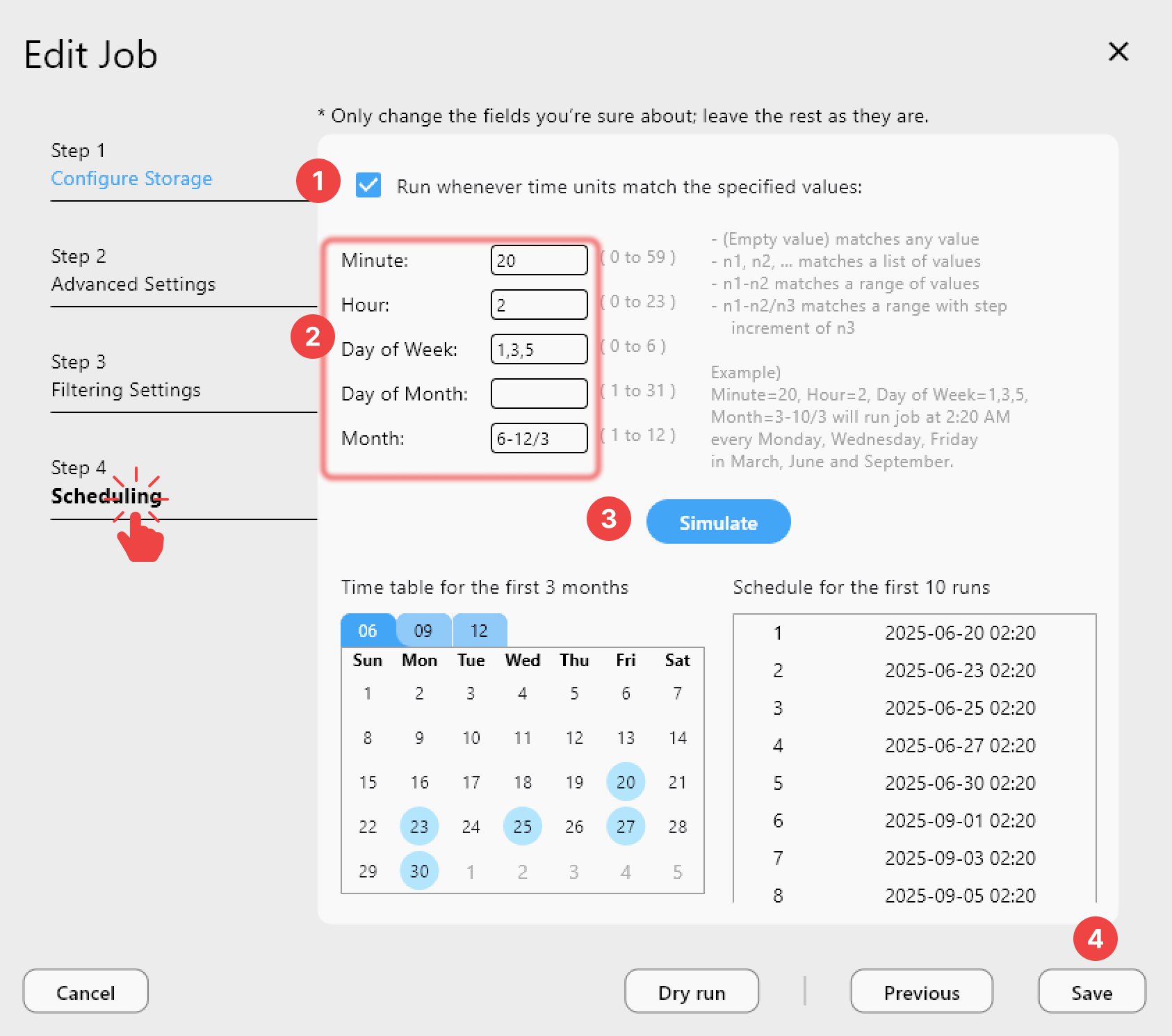
Frameworks like SOC 2, ISO 27001, and PCI DSS require that security logs be retained for defined periods — commonly one to seven years. RcloneView's Schedule feature (PLUS license) accepts crontab-style rules, so you can define a nightly job that automatically copies new log bundles from local storage or a primary cloud bucket to an encrypted cold archive.
With 1:N Sync, a single scheduled job simultaneously pushes logs to both a primary Amazon S3 bucket and a secondary Backblaze B2 vault — satisfying the 3-2-1 backup rule in one pass. Run a Dry Run before activating the schedule to confirm exactly which files will be included, so temporary analysis artifacts are excluded from the archive.
Maintaining Audit Trails and Evidence Chain of Custody
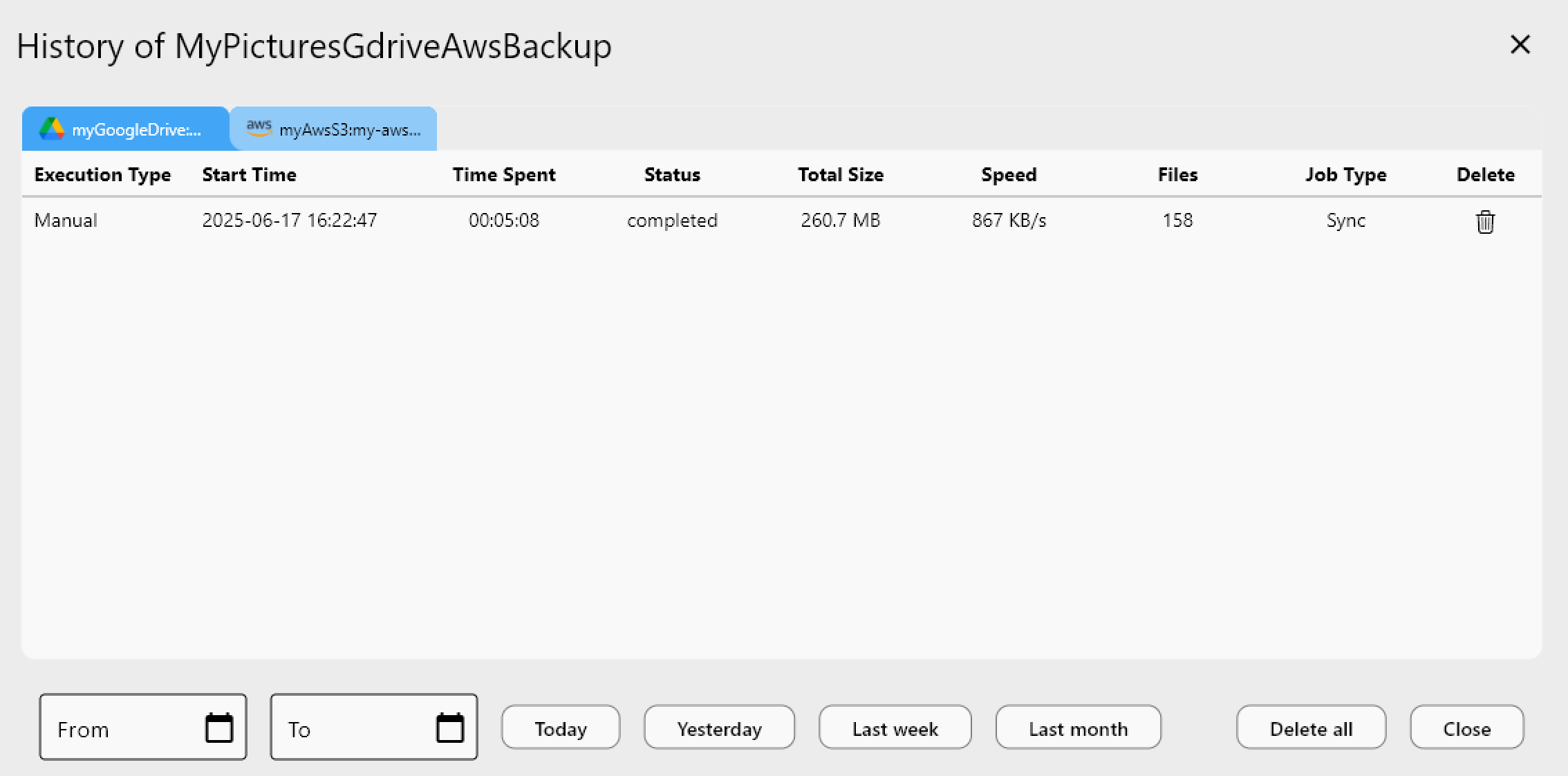
In forensic investigations, documentation of when files were transferred, to which destination, and whether the transfer succeeded is part of the evidence chain of custody. RcloneView's Job History captures every job's execution type (manual or scheduled), start time, duration, final status (Completed / Errored / Canceled), total data size, speed, and file count.
Enable rclone logging in Settings > Embedded Rclone to produce timestamped log files that satisfy auditor requests. Combined with the Crypt remote's encryption and your storage provider's object lock, RcloneView gives cybersecurity teams the workflow controls needed to demonstrate that evidence was preserved intact and transferred securely.
Getting Started
- Download RcloneView from rcloneview.com.
- Add an S3-compatible remote (Amazon S3, Wasabi, Backblaze B2, or Cloudflare R2) via New Remote.
- Create a Crypt virtual remote pointing to that S3 bucket for client-side encryption.
- Build a scheduled 1:N Sync job to archive logs to both a hot and cold storage tier automatically.
- Review Job History to maintain an auditable record of every data transfer for compliance reporting.
With RcloneView, cybersecurity teams can enforce consistent, encrypted cloud backup workflows across their entire evidence and log retention pipeline — with no command-line scripting required.
Related Guides:
- How to Encrypt Cloud Backups — Secure Google Drive, OneDrive & S3
- Encrypt Cloud Backups with Rclone Crypt in RcloneView
- Cloud Storage Security Audit Checklist with RcloneView
Supported Cloud Providers