Hidden Cloud Storage Costs — Egress Fees, API Charges, and How to Save Money
AWS S3 advertises $0.023/GB/month. Sounds cheap for 1 TB — just $23/month. But then you download that terabyte and your bill jumps to $113. Welcome to egress fees.
Cloud storage pricing has a sticker price and a real price. The sticker price is storage per GB. The real price includes egress (download) fees, API request charges, minimum storage durations, and retrieval fees for cold storage. Understanding these hidden costs helps you choose the right provider and avoid surprise bills.
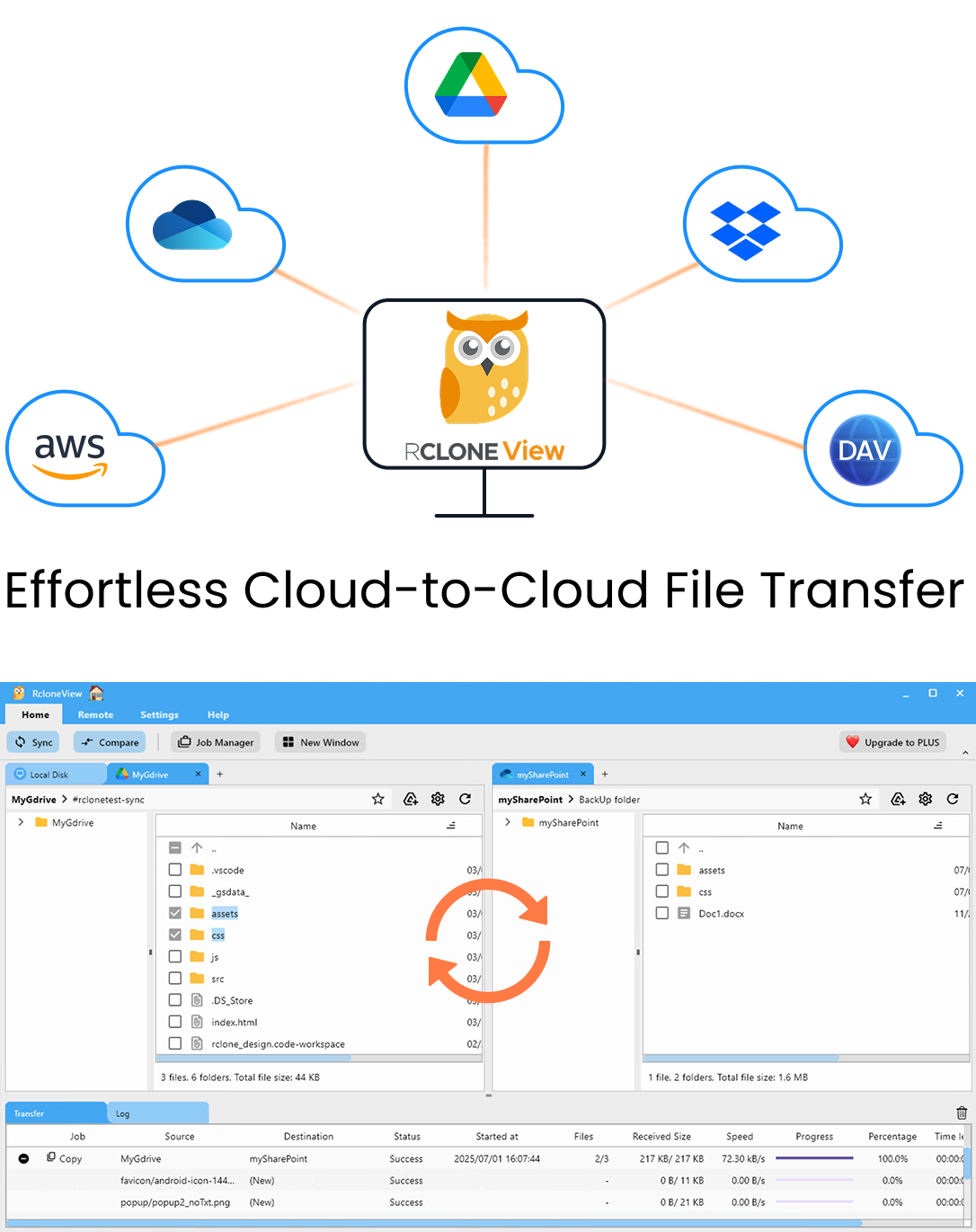
Manage & Sync All Clouds in One Place
RcloneView is a cross-platform GUI for rclone. Compare folders, transfer or sync files, and automate multi-cloud workflows with a clean, visual interface.
- One-click jobs: Copy · Sync · Compare
- Schedulers & history for reliable automation
- Works with Google Drive, OneDrive, Dropbox, S3, WebDAV, SFTP and more
Free core features. Plus automations available.
The Hidden Costs
1) Egress fees
Egress is what you pay to download data FROM the cloud. It's the biggest surprise on most cloud bills.
| Provider | Egress (per TB) |
|---|---|
| AWS S3 | $90 |
| Google Cloud | $120 |
| Azure | $87 |
| Oracle Cloud | Free (first 10 TB) |
| Backblaze B2 | $10 (free via Cloudflare) |
| Wasabi | Free* |
| Storj | $7 |
*Wasabi's free egress has a fair use policy — egress should not exceed storage volume.
Real-world impact: A 10 TB migration from AWS S3 costs $900 in egress alone.
2) API request charges
Every file operation (list, read, write, delete) is an API call. Each call costs money.
| Provider | PUT/POST (per 1,000) | GET (per 1,000) |
|---|---|---|
| AWS S3 Standard | $0.005 | $0.0004 |
| Google Cloud | $0.005 | $0.0004 |
| Backblaze B2 | $0.004 | Free (2,500/day) |
Syncing 100,000 small files means 100,000+ API calls — it adds up.
3) Minimum storage duration
| Provider | Minimum Duration | What Happens |
|---|---|---|
| AWS S3 Standard | None | Pay as you go |
| AWS S3 Standard-IA | 30 days | Charged for 30 days even if deleted earlier |
| AWS S3 Glacier | 90 days | Charged for 90 days minimum |
| Wasabi | 90 days | Charged for 90 days minimum |
| Backblaze B2 | 1 day | Essentially no minimum |
Delete a file from Wasabi after 10 days — you still pay for 90 days of storage.
4) Retrieval fees
Cold storage tiers charge to retrieve data:
| Tier | Retrieval Cost |
|---|---|
| S3 Glacier Instant | $10/TB |
| S3 Glacier Flexible | $30/TB (3–5 hours) |
| S3 Glacier Deep Archive | $20/TB (12 hours) |
5) Early deletion fees
S3 Glacier charges early deletion fees if objects are removed before the minimum storage period.
How to Optimize Cloud Storage Costs
Choose the right provider for the right data
| Data Type | Best Provider | Why |
|---|---|---|
| Hot (daily access) | Google Drive, OneDrive | Included in Workspace/M365 |
| Warm (weekly access) | S3 Standard-IA, B2 | Cheap storage, moderate egress |
| Cold (monthly access) | B2, Wasabi | Low storage, predictable pricing |
| Archive (yearly access) | S3 Glacier, Storj | Cheapest storage |
Use RcloneView to move data between tiers
As data ages, move it to cheaper storage:
Week 1-4: Google Drive (included in subscription)
Month 2-12: Backblaze B2 ($6/TB, low egress)
Year 2+: S3 Glacier ($4/TB, archive)
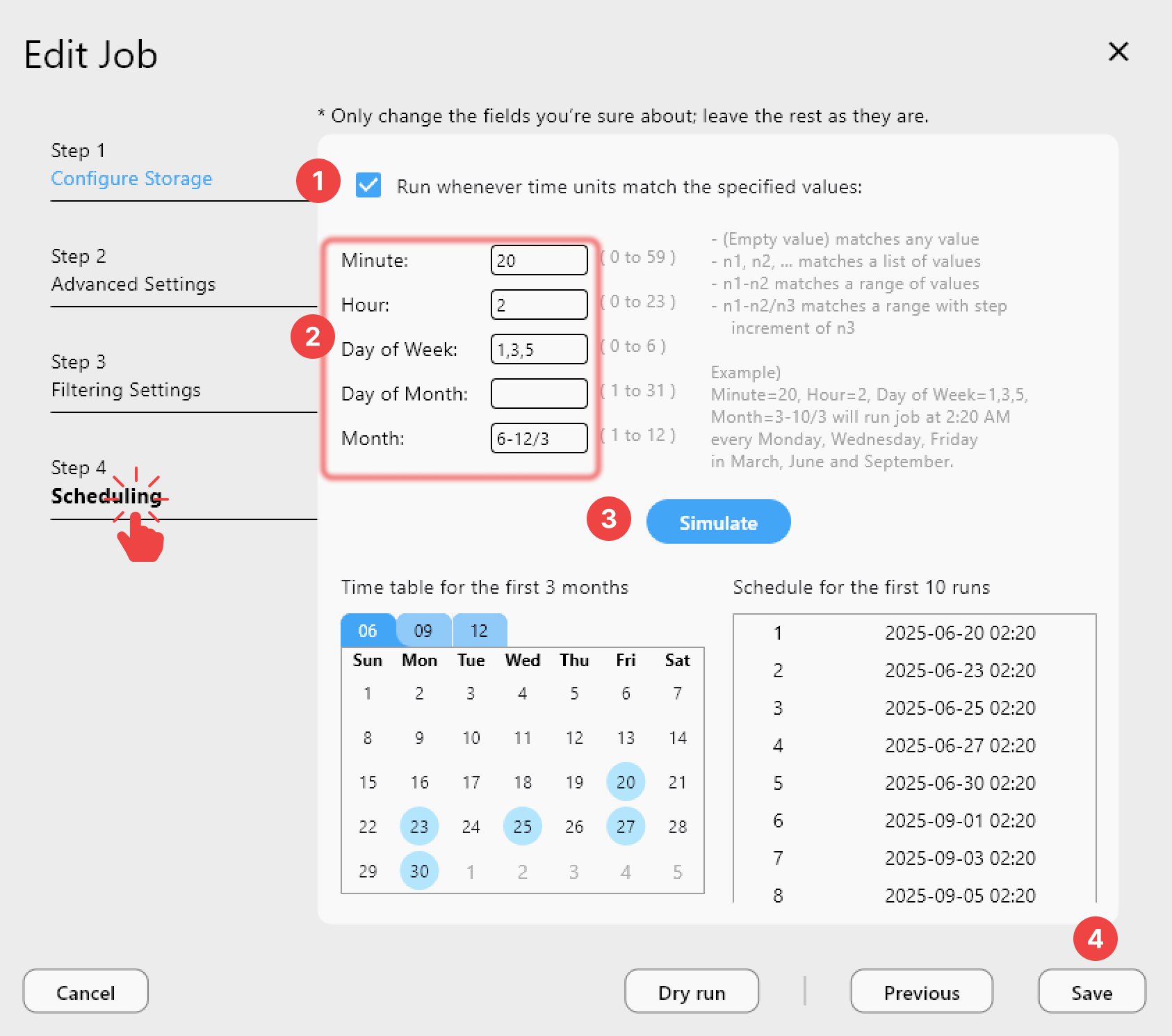
Minimize egress with smart syncing
- Sync during free egress windows — Some providers offer free egress during certain hours or to specific partners.
- Use Cloudflare with B2 — B2 egress is free through Cloudflare's Bandwidth Alliance.
- Choose Oracle Cloud — 10 TB/month free egress.
- Use filters to sync only what you need — less data transferred means less egress.
Reduce API calls
- Use
--fast-listin rclone settings to reduce API calls when listing directories. - Sync less often for stable data — weekly instead of hourly.
- Use size-only checking instead of checksum checking for large files.
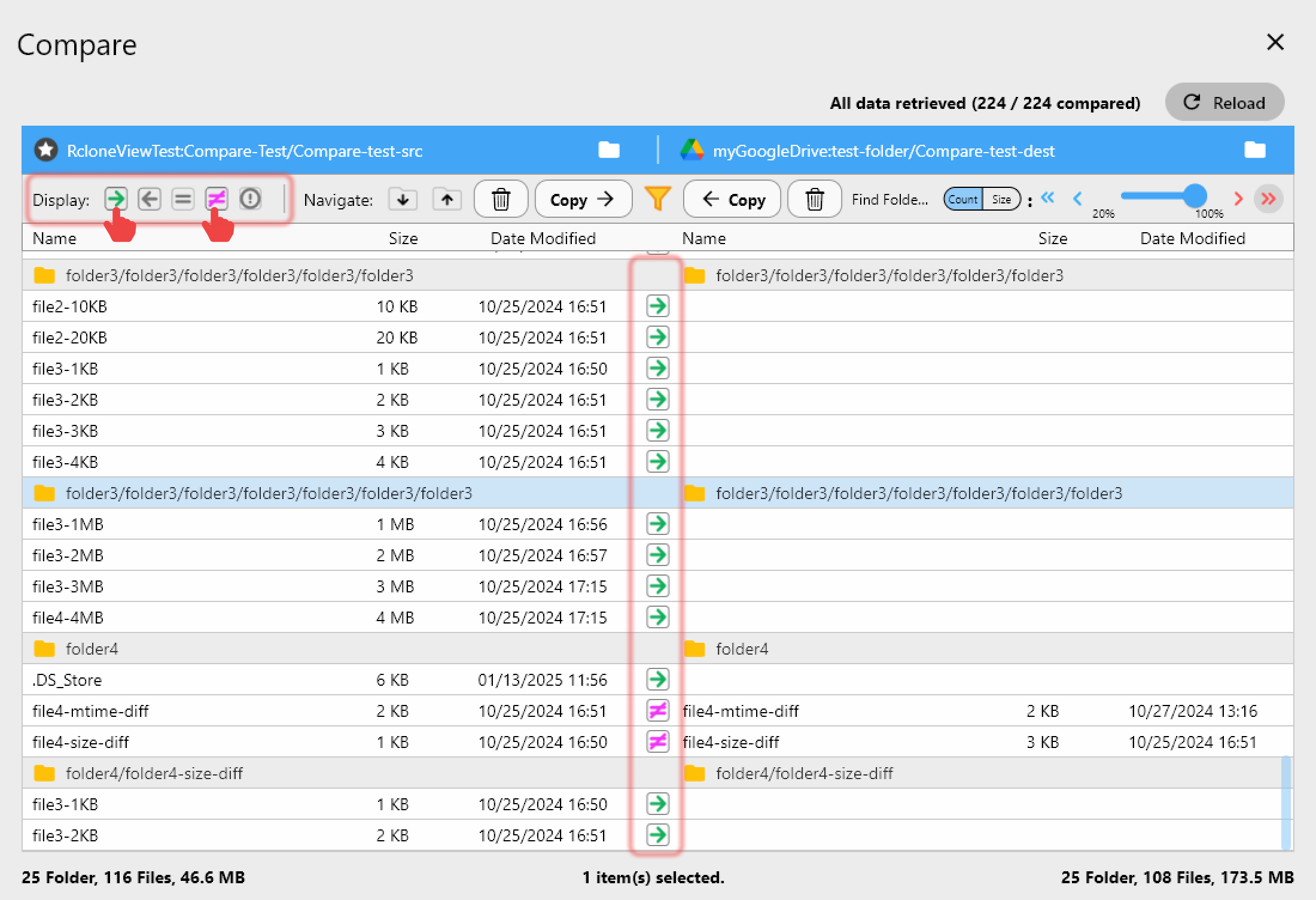
Find and eliminate waste
Use Folder Comparison to find duplicate data across clouds:
Monthly Cost Comparison: 5 TB Storage
| Scenario | Monthly Cost |
|---|---|
| AWS S3 Standard (5 TB storage + 1 TB egress) | $205 |
| Backblaze B2 (5 TB + 1 TB egress) | $40 |
| Wasabi (5 TB, no egress fees) | $35 |
| Google Drive (2 TB plan, personal) | $10 |
| Optimized mix (B2 + Glacier) | $25 |
The right provider mix can reduce costs by 80%.
Getting Started
- Download RcloneView from rcloneview.com.
- Audit your current cloud costs — check what you're paying.
- Identify waste — duplicates, unused data, wrong storage tier.
- Move data to optimal providers using RcloneView.
- Schedule automated tiering to keep costs low over time.
The cheapest cloud is the one that fits your access pattern.
Related Guides:
Supported Cloud Providers