How to Set Bandwidth Limits for Cloud Transfers in RcloneView
Running a massive cloud sync during work hours? Your team will notice. Here's how to throttle bandwidth so backups run without killing everyone's internet.
Cloud sync and backup jobs can saturate your network connection — slowing down video calls, web browsing, and other critical work. This is especially problematic in office environments, home offices with shared connections, or when syncing terabytes of data. RcloneView lets you set precise bandwidth limits so your cloud transfers run in the background without disrupting your network.
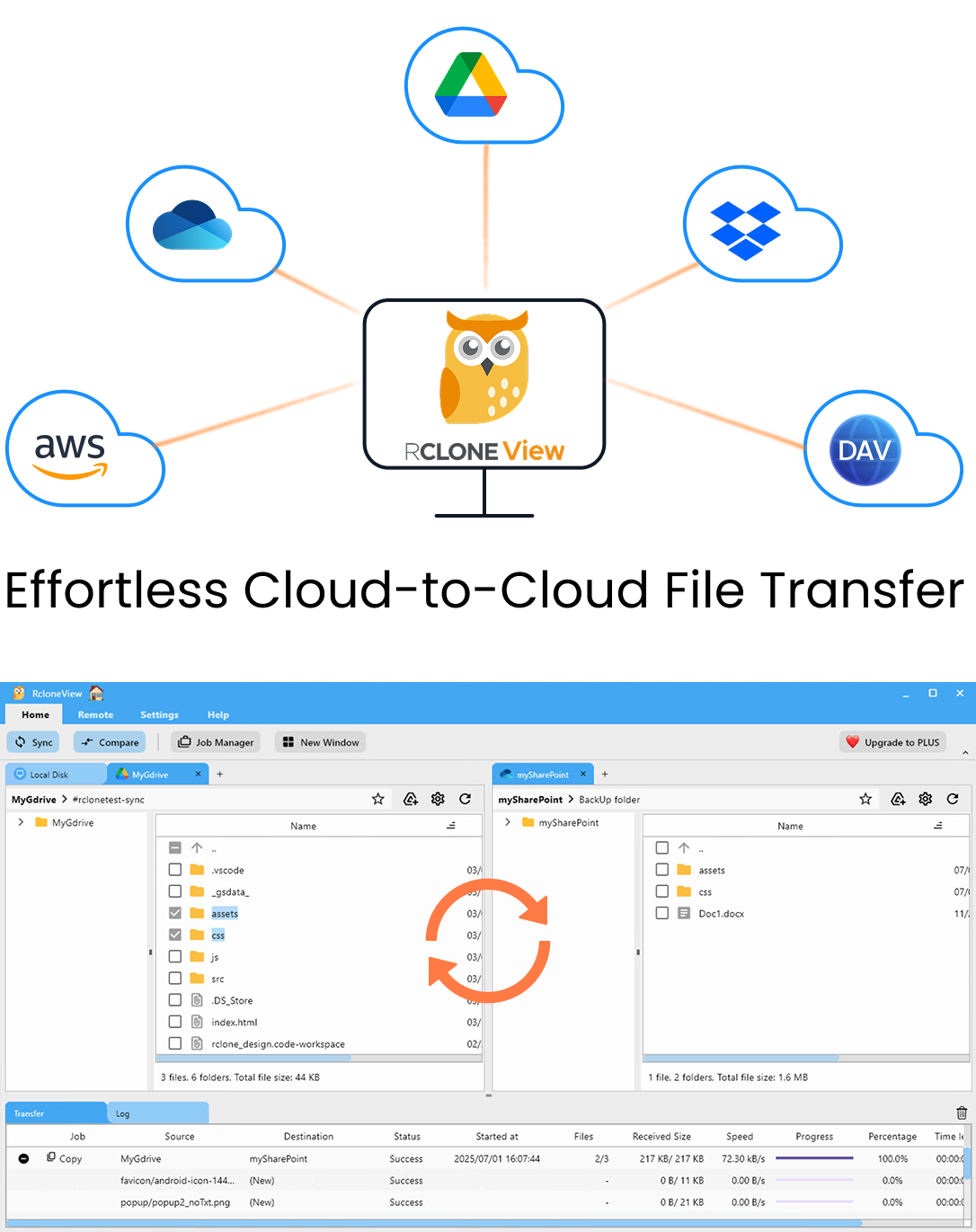
Manage & Sync All Clouds in One Place
RcloneView is a cross-platform GUI for rclone. Compare folders, transfer or sync files, and automate multi-cloud workflows with a clean, visual interface.
- One-click jobs: Copy · Sync · Compare
- Schedulers & history for reliable automation
- Works with Google Drive, OneDrive, Dropbox, S3, WebDAV, SFTP and more
Free core features. Plus automations available.
Why Bandwidth Limits Matter
Shared networks
In an office with a 100 Mbps connection, a single unthrottled cloud sync job can consume 80+ Mbps — leaving almost nothing for the rest of the team.
Home office
Video calls need ~5–10 Mbps. If your backup job takes all available bandwidth, your Zoom call drops to potato quality.
ISP fair use policies
Some ISPs throttle or charge extra for sustained high-bandwidth usage. Limiting cloud transfers prevents unexpected bills or slowdowns.
Cloud provider rate limits
Some providers (especially Google Drive) throttle or return errors when transfers are too fast. Bandwidth limiting keeps you within safe limits.
How to Set Bandwidth Limits
Method 1: Per-job bandwidth limit
When creating or editing a job in RcloneView, add the bandwidth limit flag in the rclone options:
--bwlimit 10M— Limits to 10 MB/s (megabytes per second)--bwlimit 50M— Limits to 50 MB/s--bwlimit 1M— Limits to 1 MB/s (good for background trickle sync)
Method 2: Time-based bandwidth scheduling
rclone supports time-based bandwidth limits — use different speeds at different times of day:
--bwlimit "08:00,5M 18:00,50M 23:00,off"
This means:
- 8 AM – 6 PM: Limited to 5 MB/s (work hours, minimal impact)
- 6 PM – 11 PM: Limited to 50 MB/s (evening, more available)
- 11 PM – 8 AM: Unlimited (overnight, full speed)
This is the sweet spot for most users — transfers run 24/7 but only go full speed when the network is idle.
Method 3: Upload vs download limits
Set different limits for upload and download:
--bwlimit "10M:5M"
This limits uploads to 10 MB/s and downloads to 5 MB/s. Useful when your ISP has asymmetric speeds (common with cable and DSL connections).
Practical Examples
Home office with 100 Mbps connection
--bwlimit "09:00,2M 17:00,off"
- During work hours: 2 MB/s (barely noticeable alongside video calls)
- After hours: Unlimited
Small office with 50 Mbps shared connection
--bwlimit "08:00,3M 18:00,25M 22:00,off"
- Business hours: 3 MB/s (leaves 47 Mbps for staff)
- Evening: 25 MB/s (half capacity)
- Night: Full speed
Large migration over a weekend
--bwlimit off
- No limits — maximize transfer speed during maintenance windows.
Combining with Job Scheduling
The most powerful approach: schedule heavy jobs at night with no bandwidth limit and light jobs during the day with strict limits.
- Create two versions of your sync job:
- Daytime job:
--bwlimit 5M— runs at noon for quick incremental sync - Nighttime job: no bandwidth limit — runs at 2 AM for heavy transfers
- Daytime job:
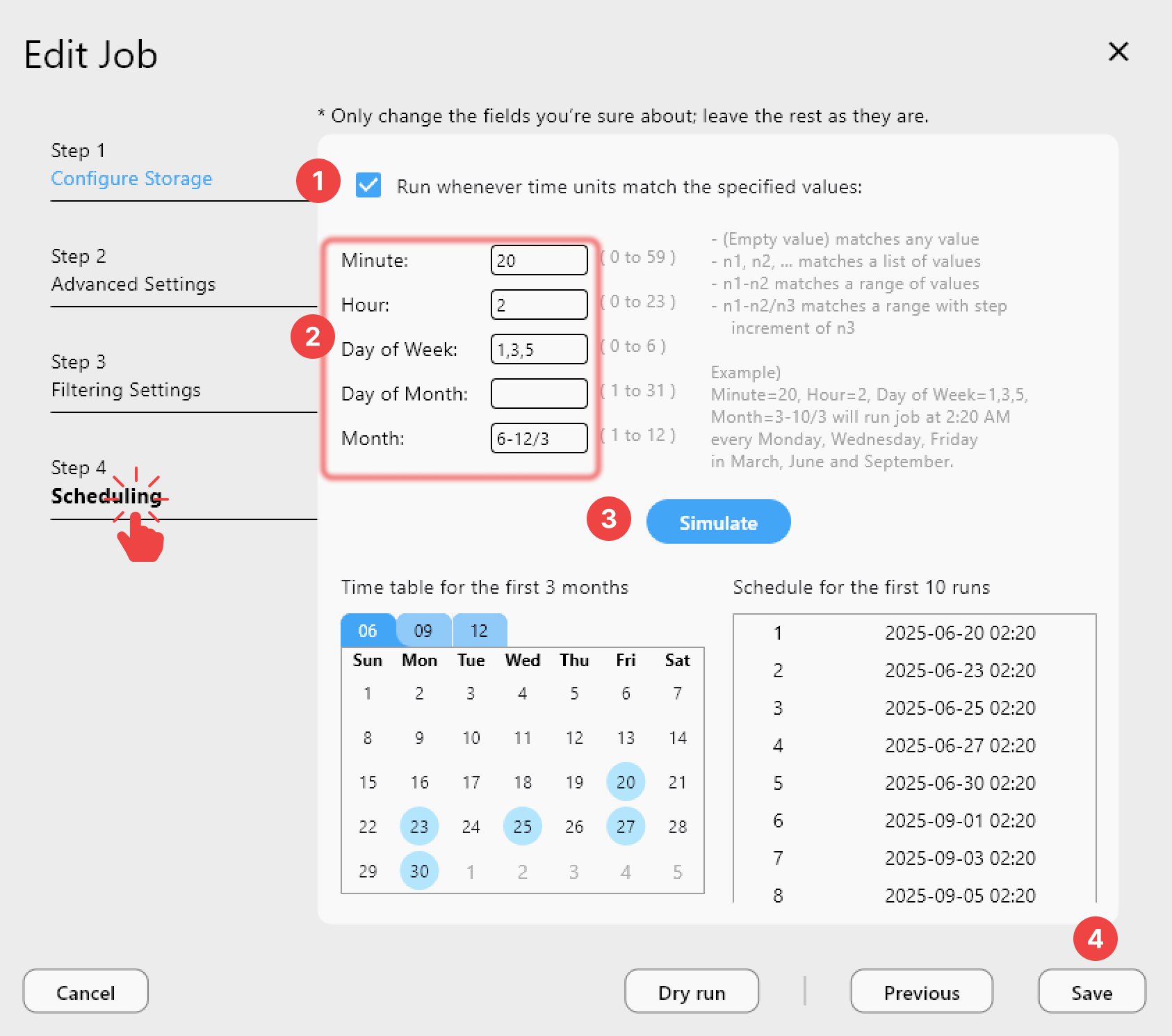
- Schedule both with Job Scheduling.
Monitoring Actual Speed
Use real-time transfer monitoring to verify your bandwidth limits are working:
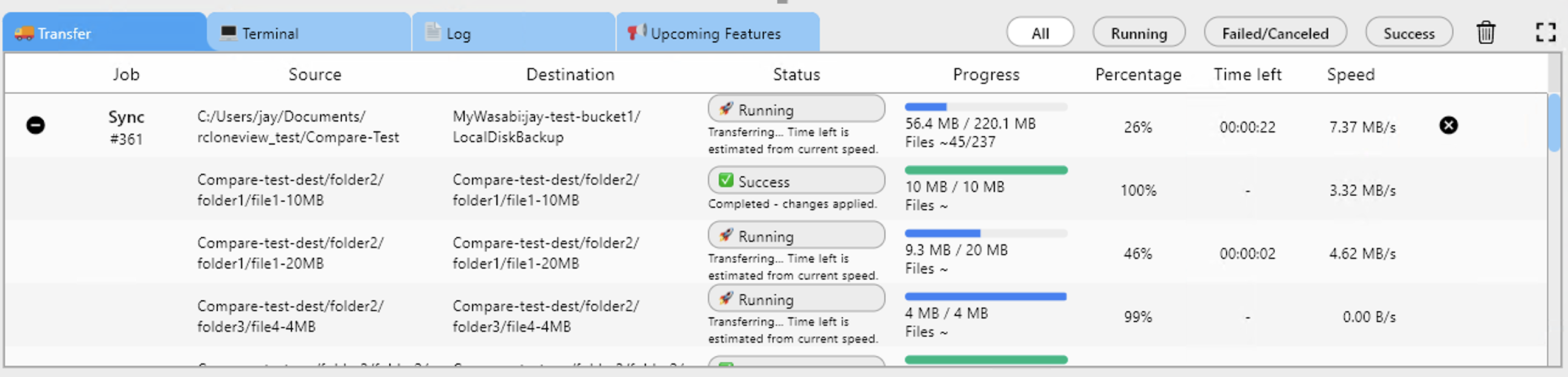
The transfer speed display should show values at or below your configured limit. If you're seeing lower speeds than your limit, the bottleneck is elsewhere (network, provider API, disk speed).
Quick Reference
| Scenario | Setting | Effect |
|---|---|---|
| Light background sync | --bwlimit 2M | Barely noticeable |
| Moderate transfers | --bwlimit 10M | Visible but manageable |
| Work hours only | --bwlimit "09:00,5M 17:00,off" | Throttled during work |
| Upload-heavy | --bwlimit "20M:5M" | 20M up, 5M down |
| No limit | --bwlimit off or omit | Maximum speed |
Getting Started
- Download RcloneView from rcloneview.com.
- Add your remotes and create a sync/copy job.
- Add
--bwlimitto the job's rclone flags. - Test and monitor to find the right balance.
- Combine with scheduling for the best of both worlds.
Fast transfers are good. But transfers that don't crash your team's video calls are better.
Related Guides:
- Accelerate Large Cloud Transfers
- Create Sync Jobs
- Job Scheduling
- Real-time Transfer Monitoring
- Fix Google Drive Rate Limit Errors
Supported Cloud Providers