How to Find and Remove Duplicate Files Across Cloud Storage — Free Up Space with RcloneView
You've been using cloud storage for years. Files have been copied, synced, moved, and shared across multiple accounts. Now you're paying for the same files stored in three different places. Sound familiar?
Duplicates are the hidden cost of multi-cloud workflows. A file gets copied to Google Drive for sharing, backed up to OneDrive by IT policy, and archived on S3 by a sync script you forgot about. Each copy costs money. RcloneView's Folder Comparison helps you identify these duplicates and decide which copies to keep.
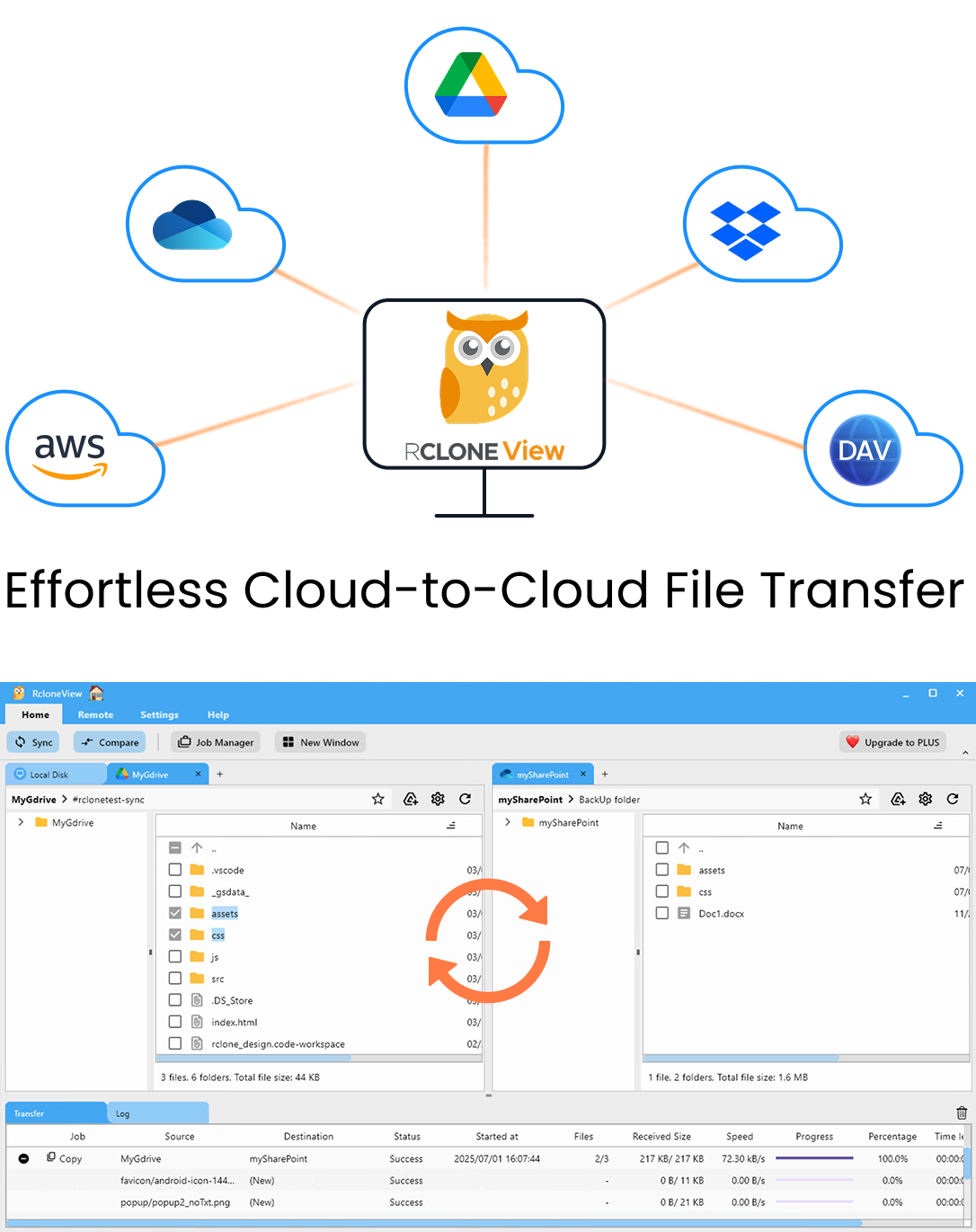
Manage & Sync All Clouds in One Place
RcloneView is a cross-platform GUI for rclone. Compare folders, transfer or sync files, and automate multi-cloud workflows with a clean, visual interface.
- One-click jobs: Copy · Sync · Compare
- Schedulers & history for reliable automation
- Works with Google Drive, OneDrive, Dropbox, S3, WebDAV, SFTP and more
Free core features. Plus automations available.
The Duplicate Problem
How duplicates accumulate
- Manual copies — "I'll just copy this to my other Drive for safety."
- Multiple sync tools — Different backup tools copying the same files to different clouds.
- Team collaboration — Shared folders that duplicate files across team members' drives.
- Migration leftovers — Files remain on the old cloud after migrating to a new one.
- Download-and-reupload — Downloading from one cloud and uploading to another, forgetting the original.
Real cost impact
If you have 500 GB of genuine data but 200 GB of duplicates across your clouds:
| Scenario | Storage Used | Monthly Cost |
|---|---|---|
| With duplicates | 700 GB × 3 clouds | $30–70/month |
| After cleanup | 500 GB × 1 primary + 1 backup | $10–25/month |
That's hundreds of dollars per year saved.
Find Duplicates with Folder Comparison
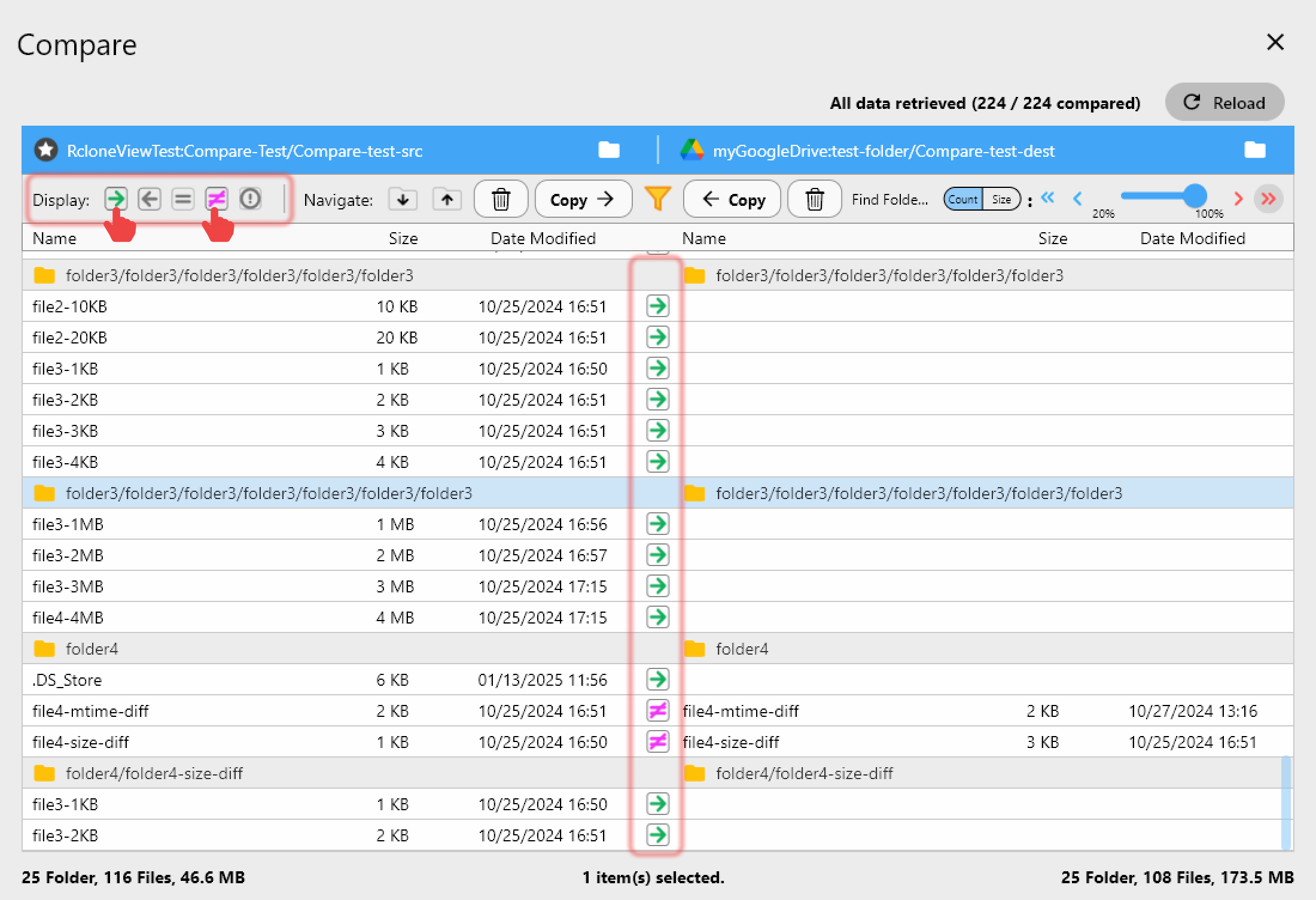
RcloneView's Folder Comparison shows exactly which files exist in both locations, which are unique to one side, and which have different versions:
Step 1: Compare two cloud accounts
Open your Google Drive on the left and OneDrive on the right. Navigate to similar folders and run a comparison:
- Files in both — These are your duplicates. Compare sizes and dates to verify they're identical.
- Left only — Files only in Google Drive.
- Right only — Files only in OneDrive.
Step 2: Compare across multiple pairs
Repeat the comparison for each cloud pair:
- Google Drive vs OneDrive
- Google Drive vs S3
- OneDrive vs Dropbox
- Any combination
Step 3: Decide what to keep
For each set of duplicates, decide on a single source of truth:
- Active files → Keep on Google Drive or OneDrive (whatever your team uses daily).
- Archive copies → Keep on cheaper storage (Backblaze B2, S3 Glacier).
- True duplicates → Remove from all but one location.
Prevent Future Duplicates
Use Sync instead of Copy
Copy adds files without checking what's already there. Sync ensures the destination mirrors the source — no extra files accumulate.
Consolidate to one backup target
Instead of multiple tools backing up to different clouds, use RcloneView to set up a single, scheduled backup workflow:
Primary (Google Drive) → Backup (Backblaze B2)
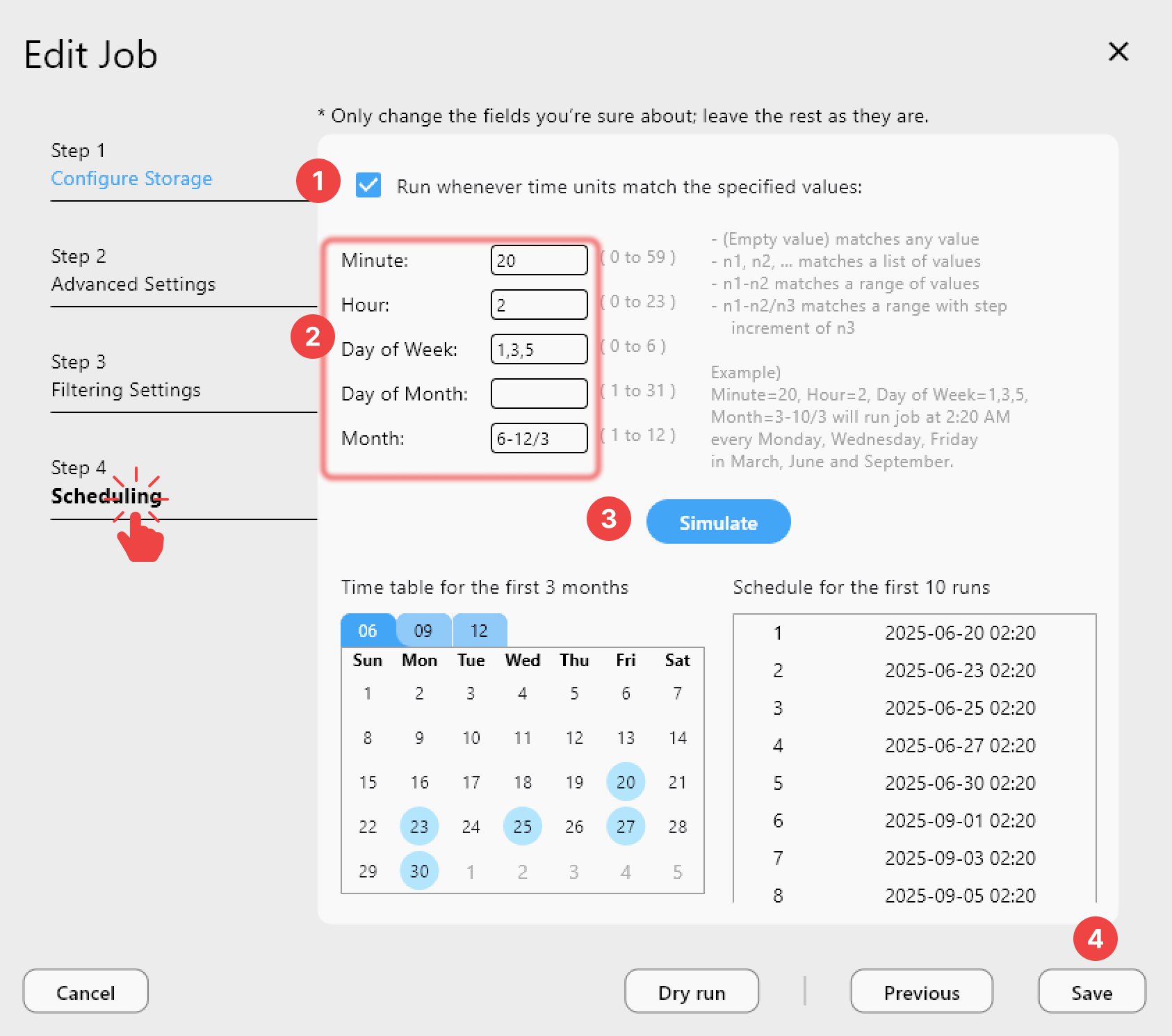
Regular comparison audits
Schedule a monthly comparison check between your clouds. Even 5 minutes of review can catch duplicate accumulation early.
Cleanup Workflow
- Compare your cloud accounts with Folder Comparison.
- Identify files that exist in multiple locations.
- Verify they're truly identical (same size, same content).
- Choose which location keeps the file.
- Remove duplicates from other locations.
- Set up Sync jobs to prevent re-accumulation.
Getting Started
- Download RcloneView from rcloneview.com.
- Add all your cloud accounts as remotes.
- Run Folder Comparisons between cloud pairs.
- Clean up duplicates to free storage and reduce costs.
- Set up proper Sync jobs to prevent future duplication.
Stop paying for the same file three times.
Related Guides:
Supported Cloud Providers