Manage Enterprise File Fabric Storage — Sync and Backup Files with RcloneView

RcloneView connects directly to Enterprise File Fabric, letting you browse, sync, and back up your organization's managed file storage without writing a single CLI command.
Enterprise File Fabric is a cloud content services platform used by organizations that need to consolidate disparate storage backends under a single governance layer. Whether your team stores project files, compliance records, or shared digital assets there, keeping that content synced and backed up requires a reliable, cross-cloud-capable tool. RcloneView — a Flutter-based GUI client built on rclone — handles Enterprise File Fabric alongside 90+ other cloud providers from one unified interface on Windows, macOS, and Linux.
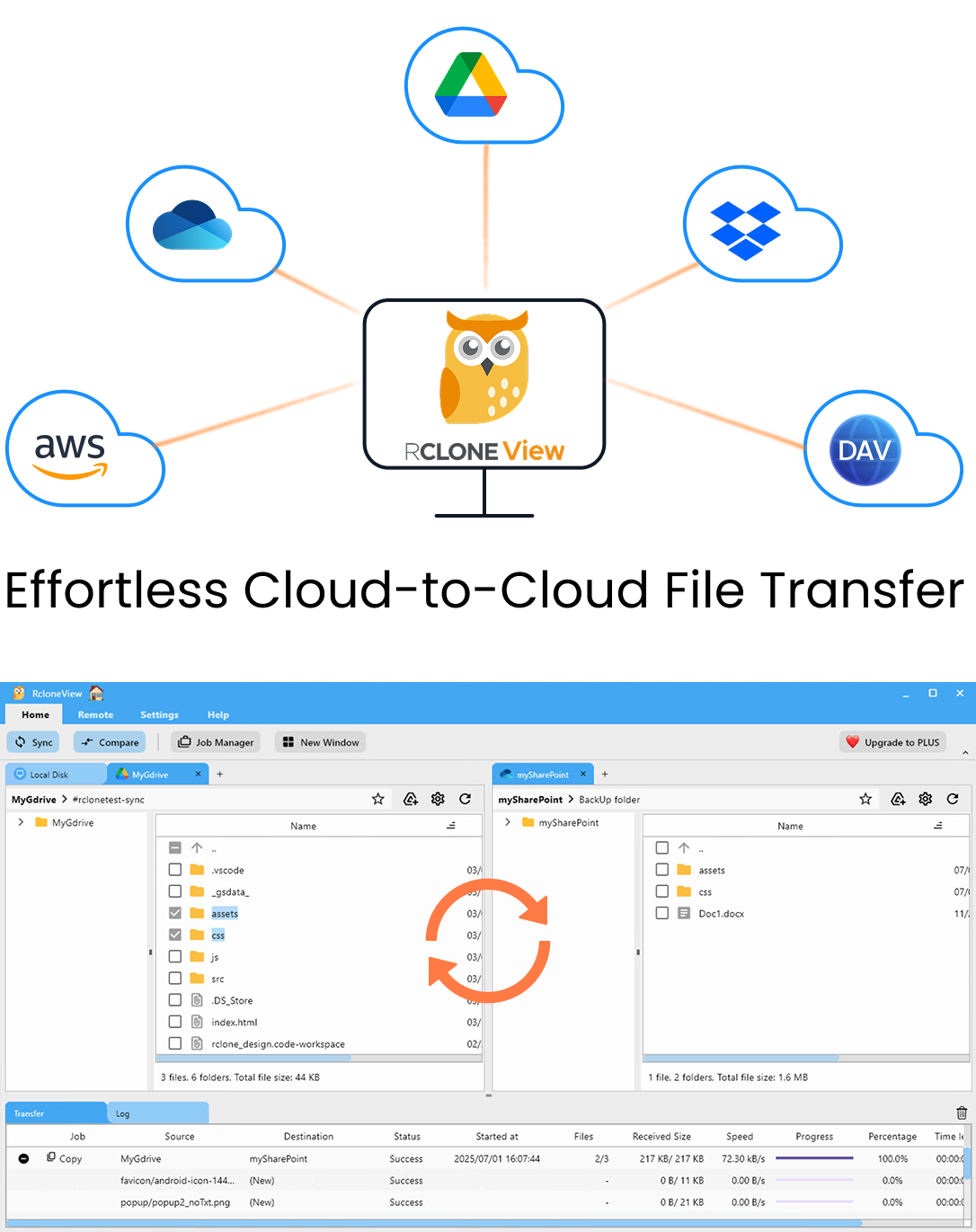
Manage & Sync All Clouds in One Place
RcloneView is a cross-platform GUI for rclone. Compare folders, transfer or sync files, and automate multi-cloud workflows with a clean, visual interface.
- One-click jobs: Copy · Sync · Compare
- Schedulers & history for reliable automation
- Works with Google Drive, OneDrive, Dropbox, S3, WebDAV, SFTP and more
Free core features. Plus automations available.
Connecting Enterprise File Fabric in RcloneView
Adding Enterprise File Fabric as a remote takes just minutes through RcloneView's built-in new-remote wizard. Open the Remote tab, click New Remote, and select Enterprise File Fabric from the provider list. Enter your endpoint URL and API token — the same credentials your organization uses for API access — then save. The remote appears immediately in the explorer panel, where you can browse folders, view file counts and sizes, and copy paths directly from the breadcrumb bar.
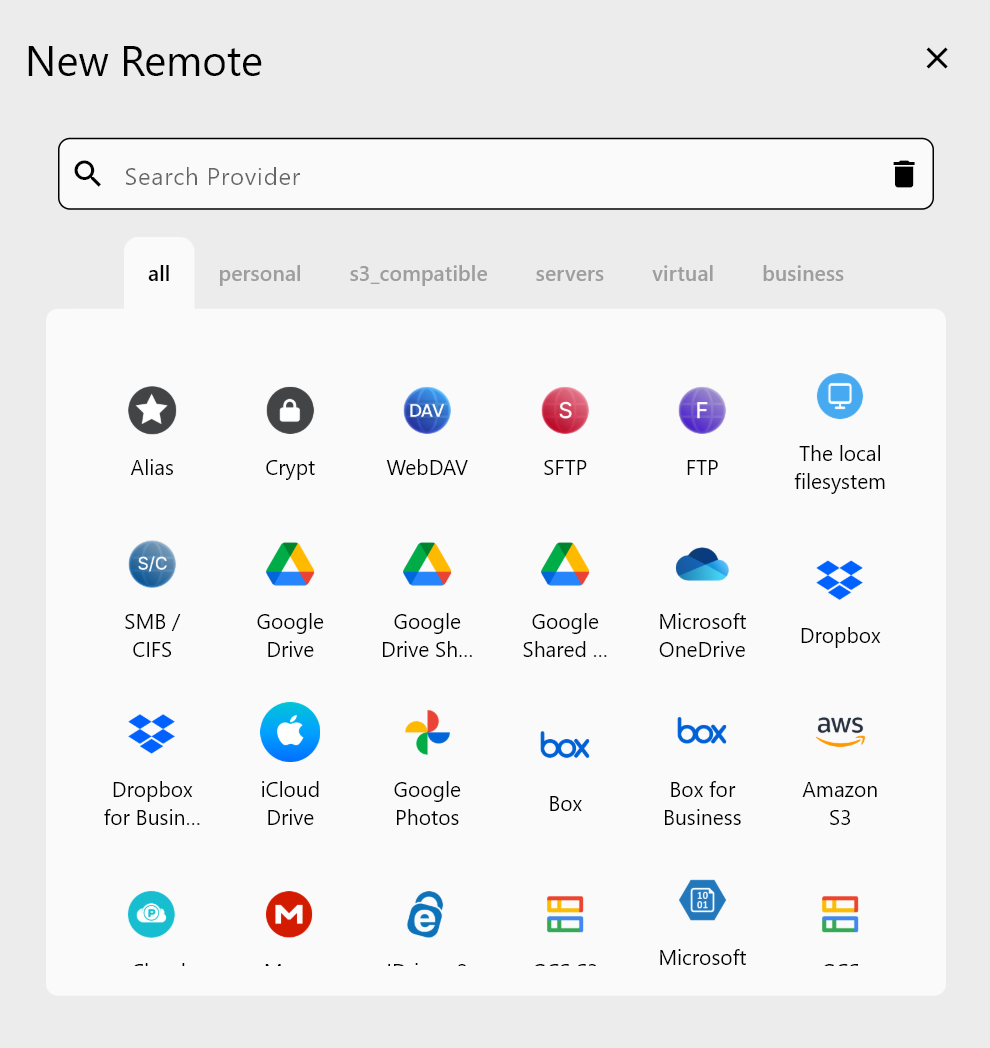
Unlike mount-only tools, RcloneView also syncs and compares folders on the FREE license, so you can move beyond simple drive mapping and manage your Enterprise File Fabric content actively across all your cloud environments.
Syncing Enterprise File Fabric to Other Cloud Destinations
A common Enterprise File Fabric scenario is replicating managed content to a secondary cloud destination for disaster recovery or long-term archival. In RcloneView's sync wizard, set Enterprise File Fabric as the source and choose any destination — Amazon S3, Backblaze B2, Google Drive, or an on-premises SFTP server. The 4-step wizard walks you through transfer concurrency, checksum verification, and file-age filters so you only move what you need.
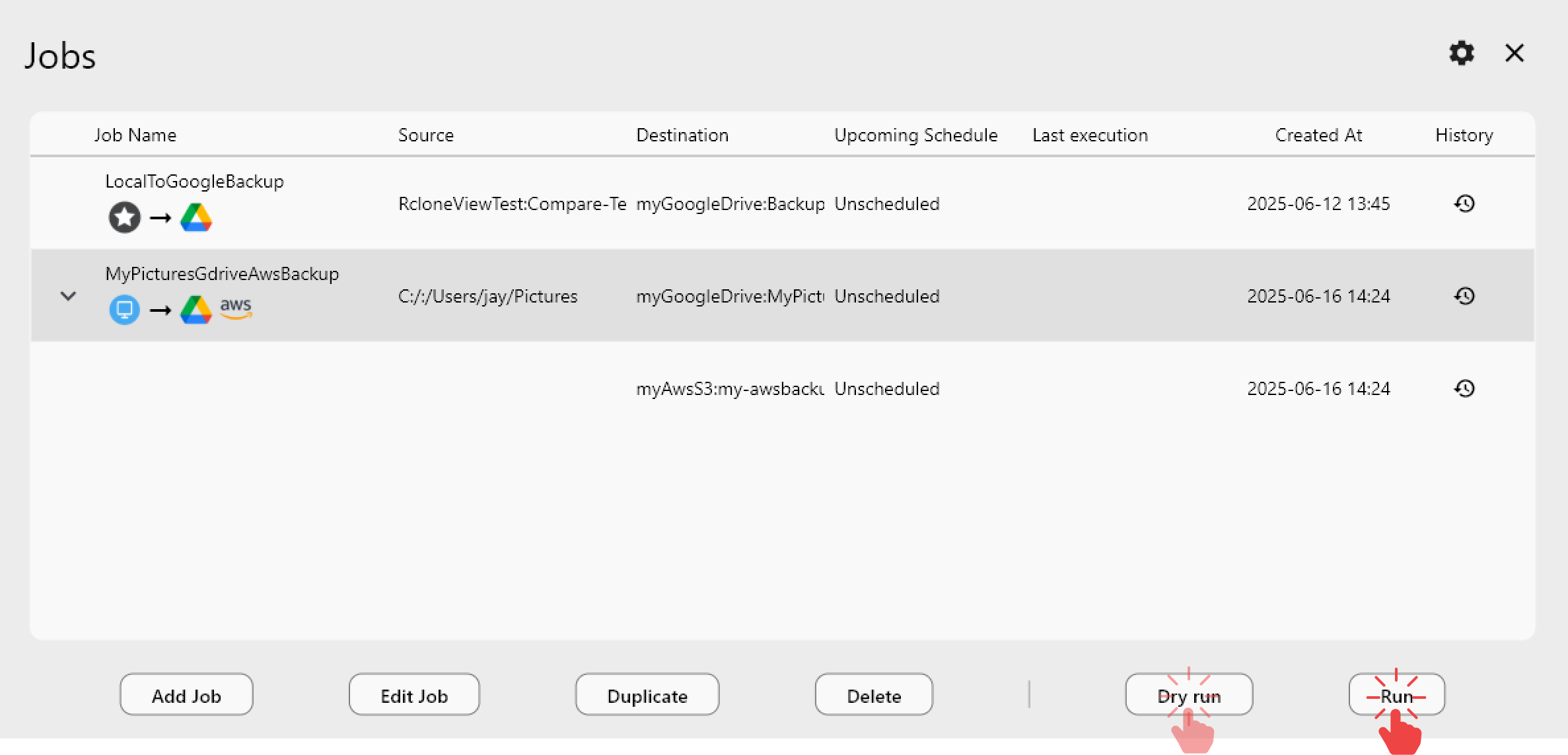
Always run a Dry Run before the live transfer. RcloneView will list the exact files it would copy or skip, letting you refine filter rules before a single byte moves. For 1:N replication — mirroring the same Enterprise File Fabric folder to multiple destinations simultaneously — simply add additional destination paths in Step 1. This is available on the FREE license with no cap on destination count.
Scheduling Automated Backups
Organizations using Enterprise File Fabric often need nightly or weekly backup windows that run without human intervention. The PLUS license unlocks crontab-style scheduling directly inside RcloneView. Configure minute, hour, day-of-week, and month fields to fire your Enterprise File Fabric sync jobs on any cadence. The built-in Simulate schedule tool previews the next several execution times so you can confirm timing before committing.
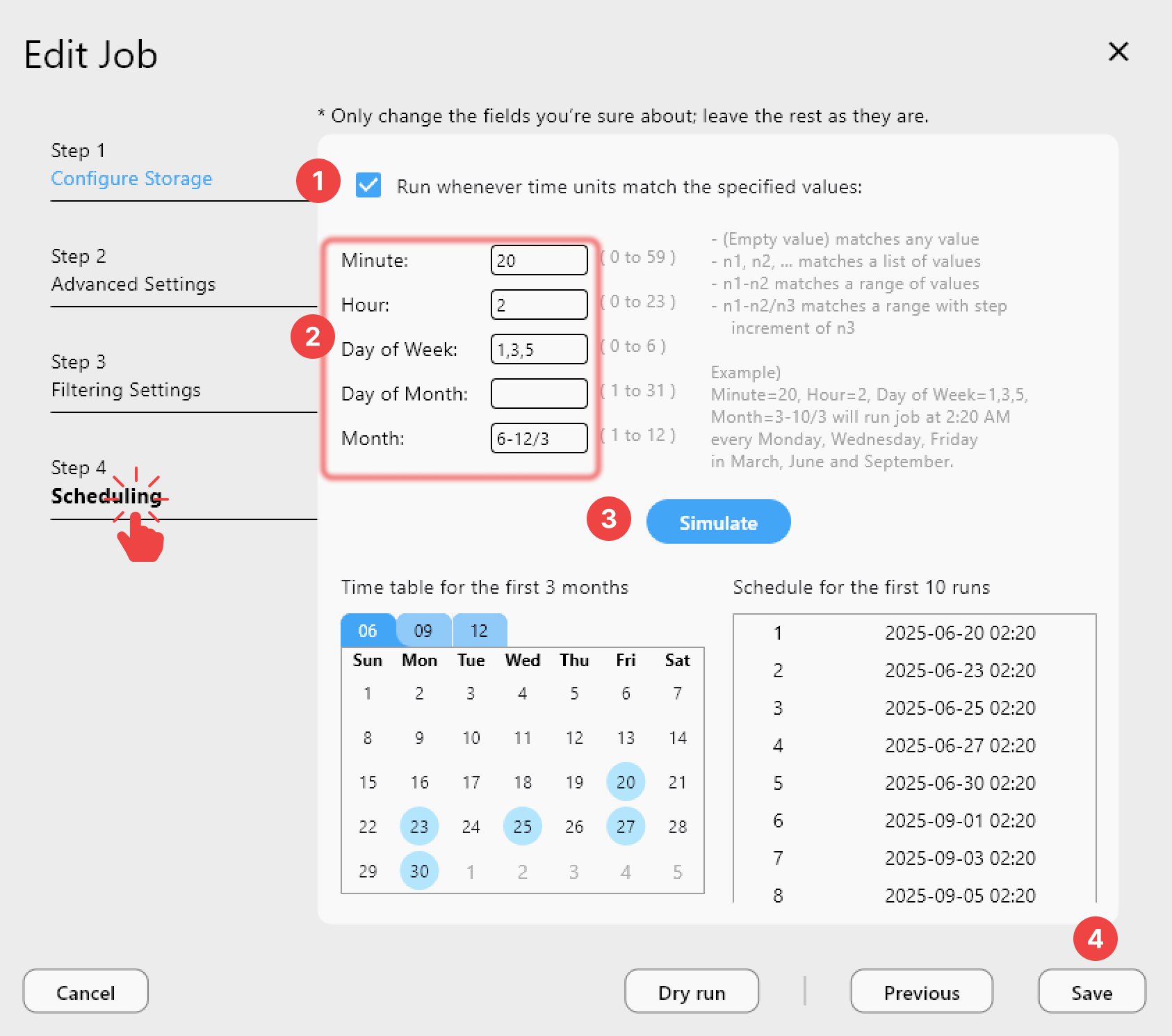
Job completion notifications keep operations teams informed even when the app runs minimized in the system tray.
Monitoring Transfer History and Audit Trails
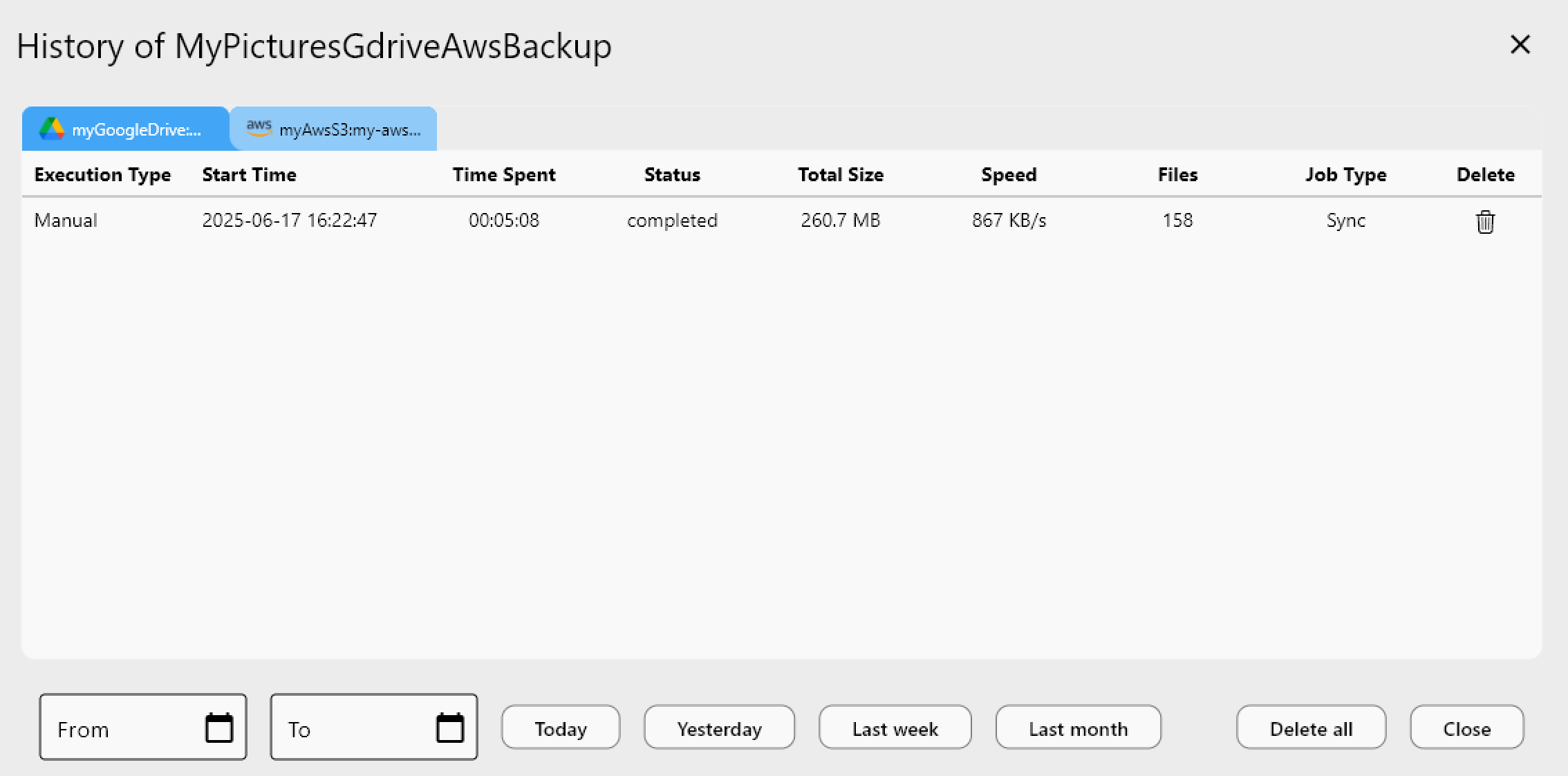
Every Enterprise File Fabric sync job is logged in RcloneView's Job History view with start time, duration, transfer speed, file count, and final status. Filter history by date range or outcome to verify SLA compliance and audit data movements — practical for organizations with retention or governance requirements around their managed file storage platform.
The rclone terminal tab inside RcloneView also lets advanced users run custom rclone commands against their Enterprise File Fabric remote without leaving the GUI — useful for ad-hoc queries or one-time operations.
Getting Started
- Download RcloneView from rcloneview.com.
- Open the Remote tab and click New Remote, then select Enterprise File Fabric.
- Enter your Enterprise File Fabric endpoint URL and API token, then save the remote.
- Build a sync job, set your preferred backup destination, and run a Dry Run first.
- (PLUS) Enable scheduled execution to automate ongoing backups with email or Slack alerts.
Centralizing Enterprise File Fabric management inside RcloneView eliminates tool sprawl and gives your team a single, auditable record of every cloud data movement.
Related Guides:
- Manage SharePoint Storage with RcloneView
- Manage Azure Files with RcloneView
- Cloud Storage for DevOps & Software Teams with RcloneView
Supported Cloud Providers