Cloud Storage for DevOps and Software Development Teams with RcloneView
DevOps teams manage build artifacts, release packages, database dumps, logs, and documentation across S3, GCS, and other cloud providers. RcloneView provides a visual management layer for cloud storage without adding complexity to your pipelines.
Software teams interact with cloud storage constantly: CI/CD pipelines push build artifacts to S3, database backups land in Backblaze B2, documentation gets synced to Google Drive for non-technical stakeholders, and release archives pile up in object storage. Managing this storage — cleaning up old artifacts, verifying backups, migrating between providers — typically falls to a dev who has to write one-off scripts. RcloneView replaces those scripts with a visual interface that anyone on the team can use.
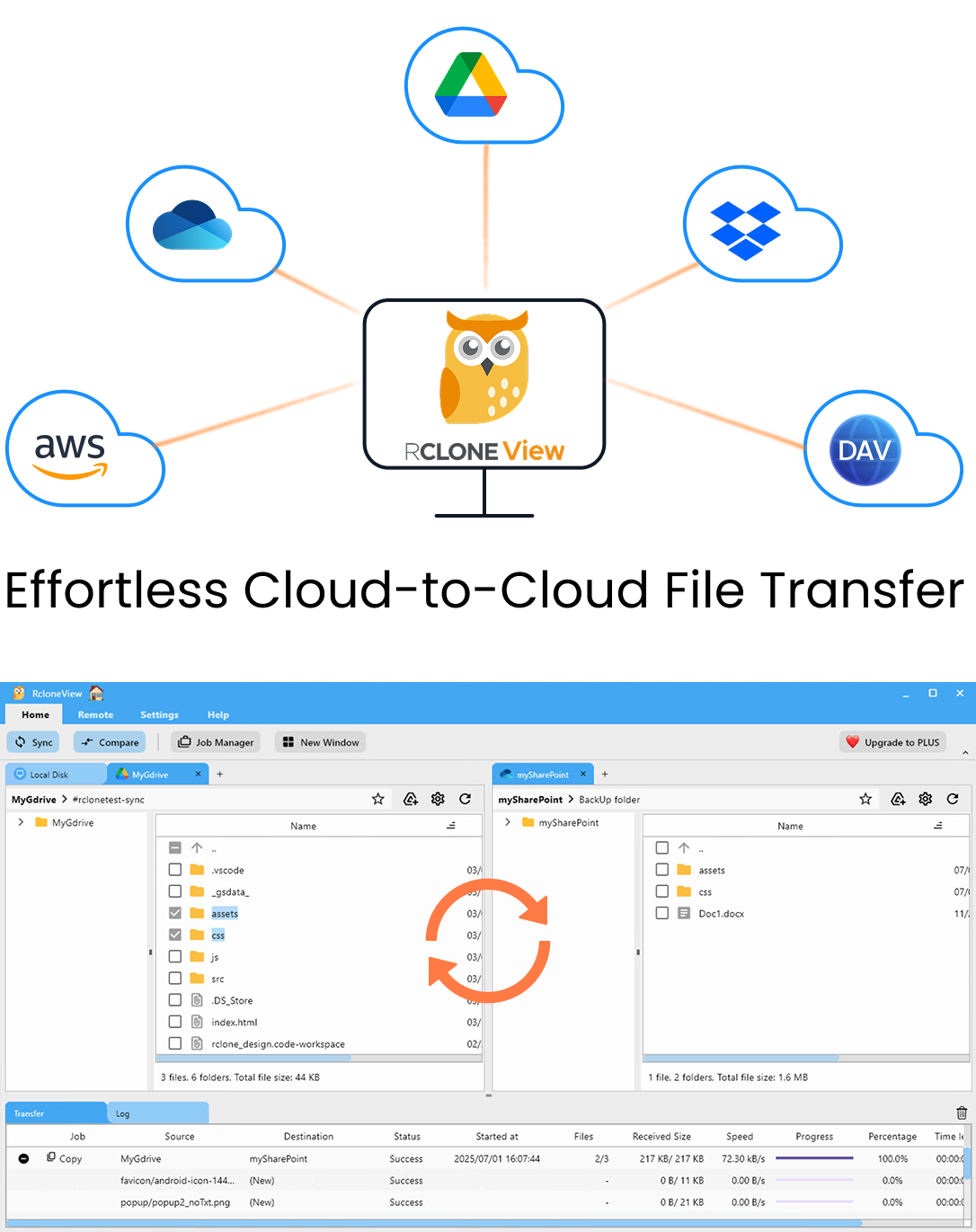
Manage & Sync All Clouds in One Place
RcloneView is a cross-platform GUI for rclone. Compare folders, transfer or sync files, and automate multi-cloud workflows with a clean, visual interface.
- One-click jobs: Copy · Sync · Compare
- Schedulers & history for reliable automation
- Works with Google Drive, OneDrive, Dropbox, S3, WebDAV, SFTP and more
Free core features. Plus automations available.
Cloud Storage Touchpoints in Software Development
| Asset | Typical Storage | Managed By |
|---|---|---|
| Build artifacts | AWS S3, GCS | CI/CD pipeline |
| Release packages | S3, GitHub Releases | Release engineer |
| Database backups | S3, Backblaze B2 | DBA / DevOps |
| Log archives | S3 Glacier, GCS Coldline | Ops team |
| Documentation | Google Drive, Confluence | All teams |
| ML model weights | S3, GCS | Data team |
| Infrastructure snapshots | Cloud provider native | DevOps |
| Shared dev assets | Dropbox, Google Drive | All teams |
Use Cases for DevOps Teams
1) Cross-cloud artifact inspection
Build pipelines often push artifacts to S3 automatically. When you need to inspect, copy, or move artifacts outside the pipeline, RcloneView provides the visual interface:
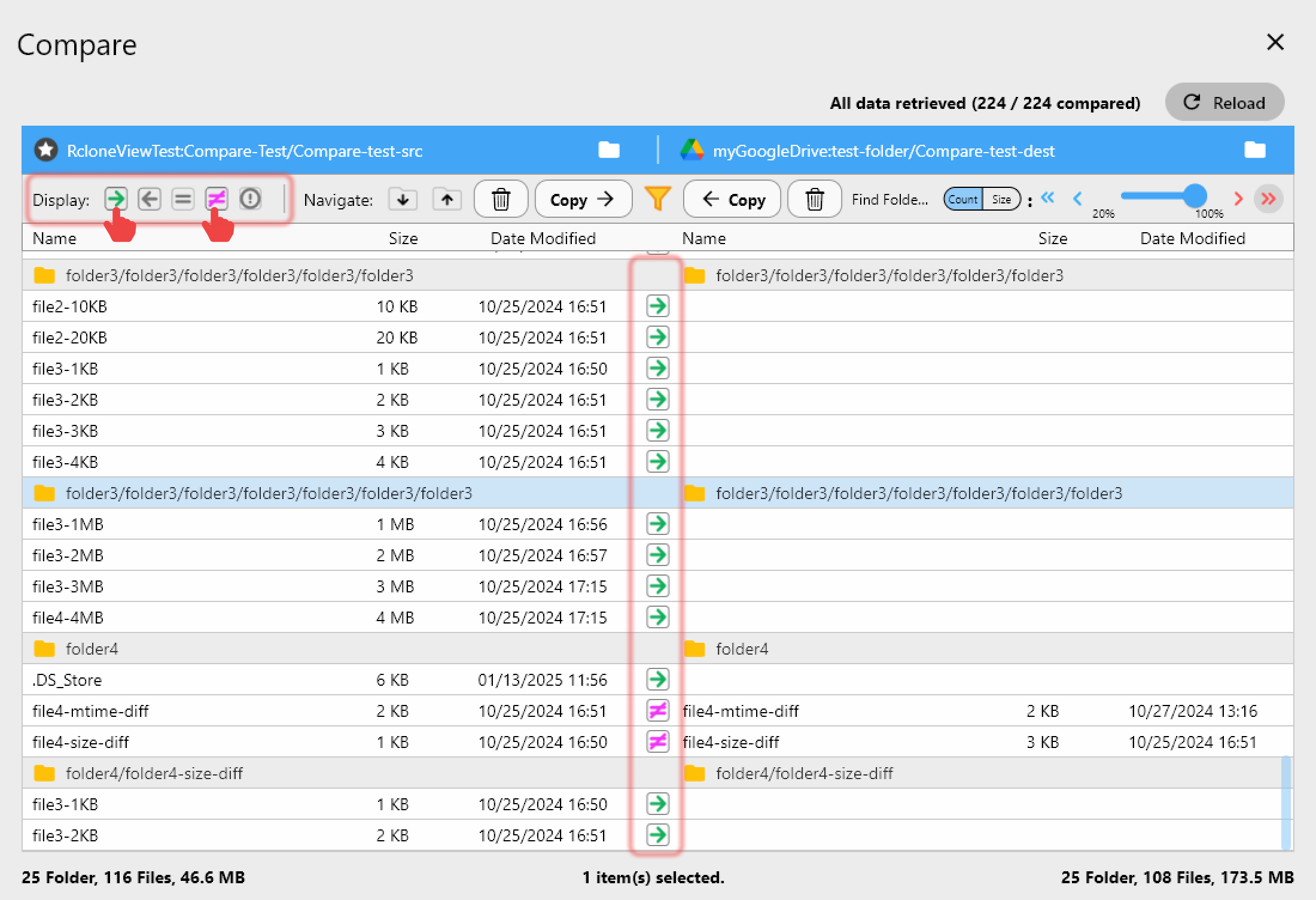
Navigate your S3 buckets, compare artifact versions side-by-side, and copy specific builds to a staging location — without writing AWS CLI commands.
2) Database backup verification
Automated database backups run nightly — but are they actually landing in cloud storage? Use RcloneView's Folder Comparison to verify that backup files match expectations:
- Compare the local backup directory with the S3 destination.
- Identify any missed backups or size anomalies.
- Re-trigger failed backups manually if needed.
3) Artifact lifecycle management
Old build artifacts accumulate storage costs. Use RcloneView to:
- Delete artifacts older than a retention window.
- Move release builds to Glacier or Coldline for cheap long-term retention.
- Migrate artifacts from one cloud provider to another (S3 → GCS, or AWS region migration).
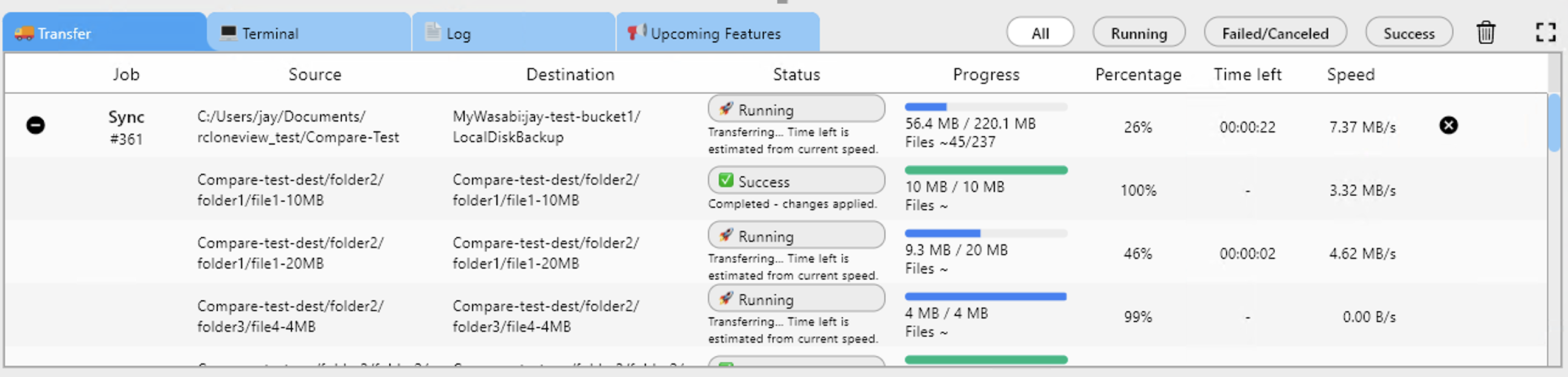
4) Disaster recovery: replicate critical storage
For critical application data (user uploads, processed files, ML models), use RcloneView to replicate between cloud providers:
- Primary:
aws-s3:prod-user-uploads/ - DR replica:
gcs:prod-user-uploads-dr/
Schedule a daily Sync job. In a DR event, your application can point to the GCS bucket with confidence that it's current.
5) Sync documentation to non-technical stakeholders
Engineering documentation in Confluence or a Git wiki isn't always accessible to product managers or clients. Export documentation as PDFs or HTML and use RcloneView to sync to a shared Google Drive or SharePoint folder that everyone can access.
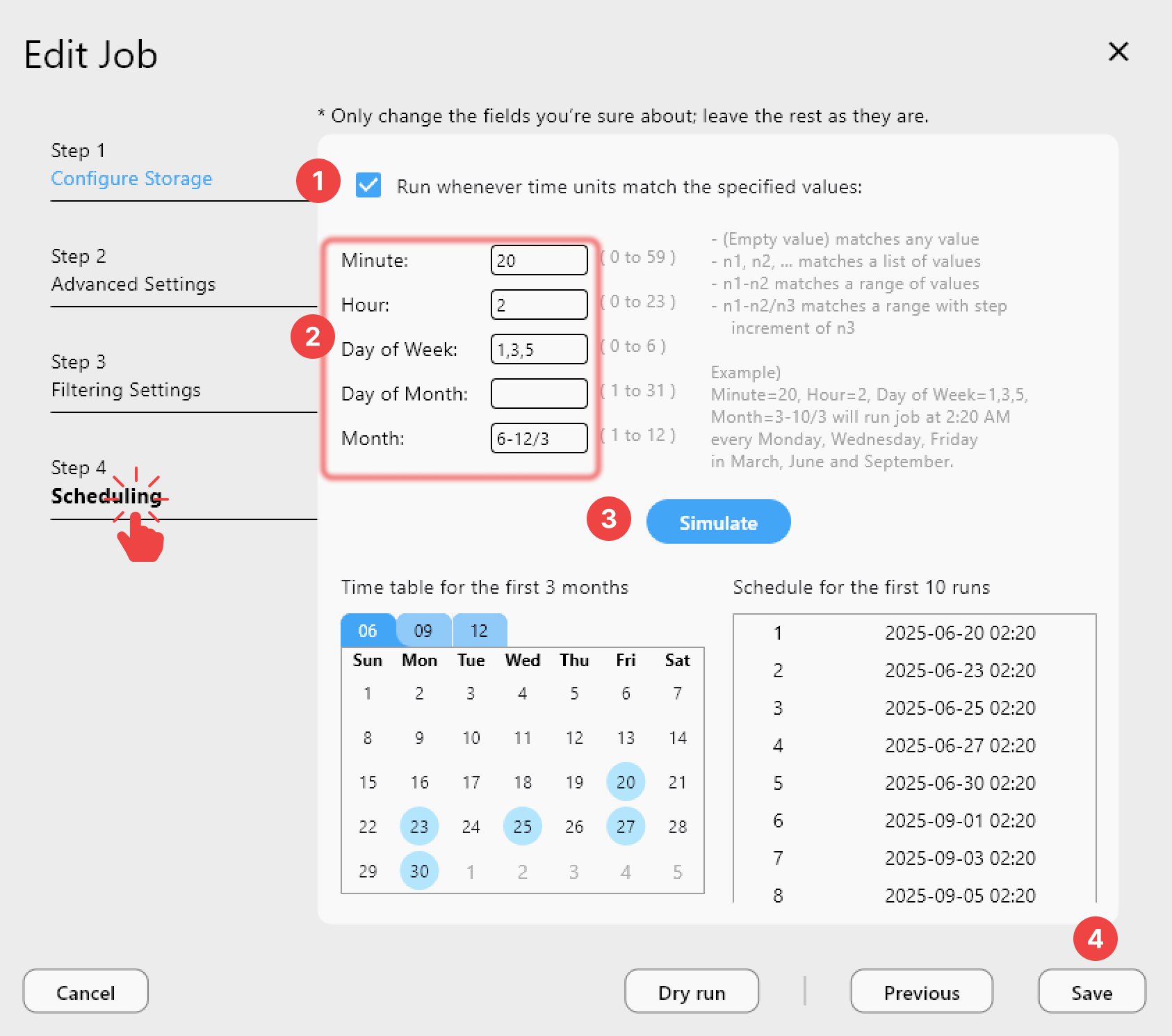
6) Cross-team asset distribution
Data teams, QA teams, and frontend teams each need different subsets of shared files. Use RcloneView's Filter rules to sync only relevant subsets to each team's storage:
--include /qa-test-data/**
--exclude /proprietary-models/**
Storage Cost Management
DevOps teams often discover they're the owners of runaway cloud storage costs. RcloneView helps:
- Find unused artifacts using Folder Comparison between what's stored and what's actually referenced.
- Identify largest storage consumers by navigating bucket structures visually.
- Move cold data to tiered storage (Glacier, Coldline) automatically on schedule.
Security Considerations for Dev Teams
| Practice | Implementation |
|---|---|
| Least-privilege IAM | Create separate RcloneView credentials with minimal S3 permissions per environment |
| Encrypt sensitive exports | Use Crypt remote for database dumps containing PII |
| Audit access | Use RcloneView's job history for a transfer audit trail |
| Rotate credentials | Update RcloneView remote config when IAM keys are rotated |
Getting Started
- Download RcloneView from rcloneview.com.
- Connect your cloud providers — S3, GCS, Azure Blob, Backblaze B2.
- Browse and manage build artifacts without writing CLI commands.
- Set up DR replication jobs for critical storage.
DevOps cloud storage management shouldn't require a script for every task. RcloneView handles the visual, one-off, and scheduled operations so your pipelines can focus on automation.
Related Guides:
- Centralize S3, Wasabi, and R2 with RcloneView
- Warm Standby DR with RcloneView
- AI Training Dataset Pipeline with RcloneView
Supported Cloud Providers