Manage SharePoint Files and Cloud Sync with RcloneView
SharePoint Online powers document management across Microsoft 365, but syncing its content to external clouds or a NAS requires a purpose-built tool — RcloneView bridges that gap.
SharePoint Online is the document management backbone for millions of organizations using Microsoft 365. Each SharePoint site contains document libraries that store team files, project assets, and corporate records. While the native OneDrive sync client can sync SharePoint libraries to local machines, it provides no mechanism for replicating data to AWS S3, Google Drive, or external storage. RcloneView connects to SharePoint Online via the Microsoft Graph API and exposes document libraries as navigable remotes — browse, sync, copy, move, and schedule backups across SharePoint and any other provider.
Whether you need to back up a compliance-sensitive library to immutable S3 storage or migrate a departing team's SharePoint site to Google Workspace, RcloneView handles it through a visual interface.
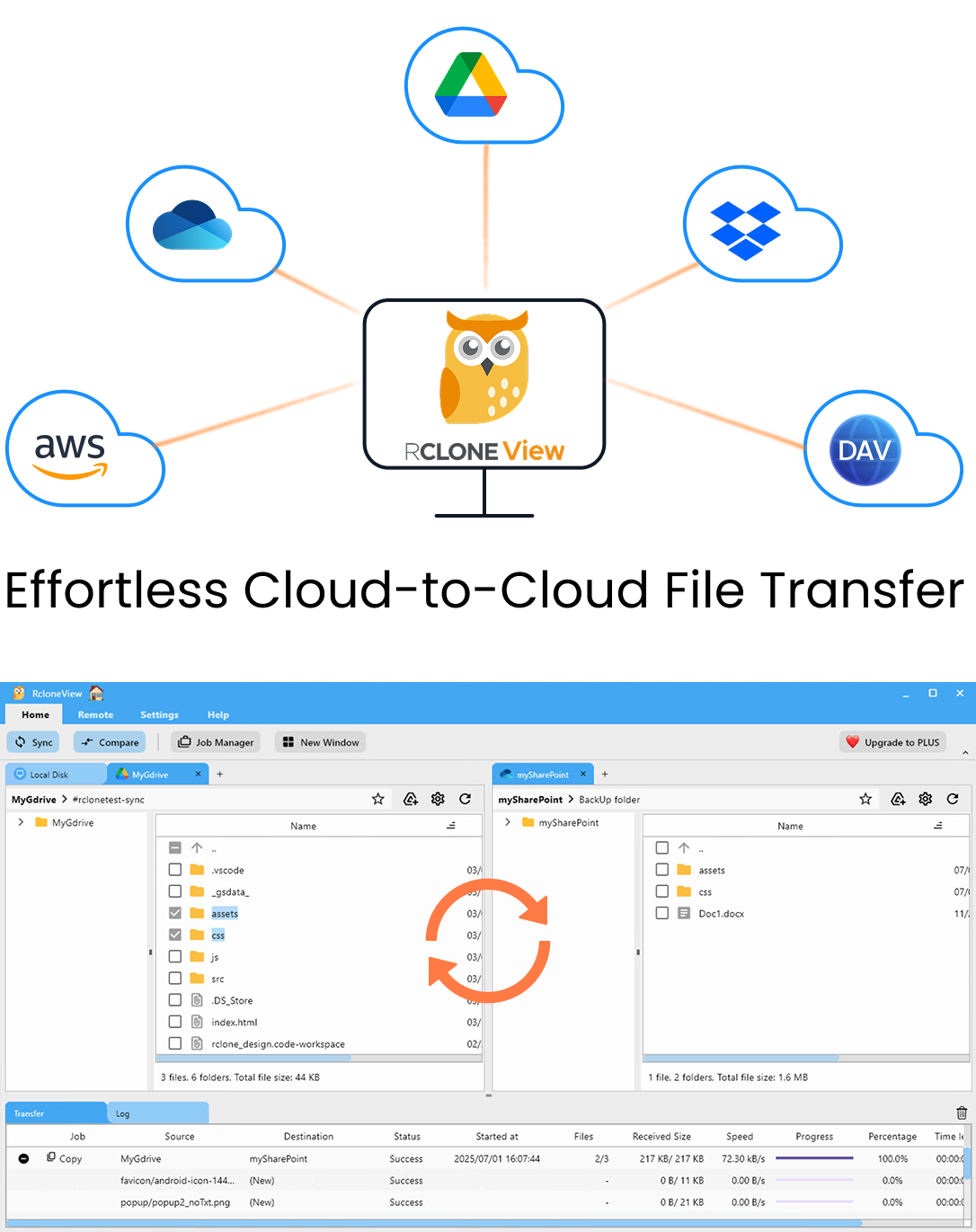
Manage & Sync All Clouds in One Place
RcloneView is a cross-platform GUI for rclone. Compare folders, transfer or sync files, and automate multi-cloud workflows with a clean, visual interface.
- One-click jobs: Copy · Sync · Compare
- Schedulers & history for reliable automation
- Works with Google Drive, OneDrive, Dropbox, S3, WebDAV, SFTP and more
Free core features. Plus automations available.
Connecting SharePoint in RcloneView
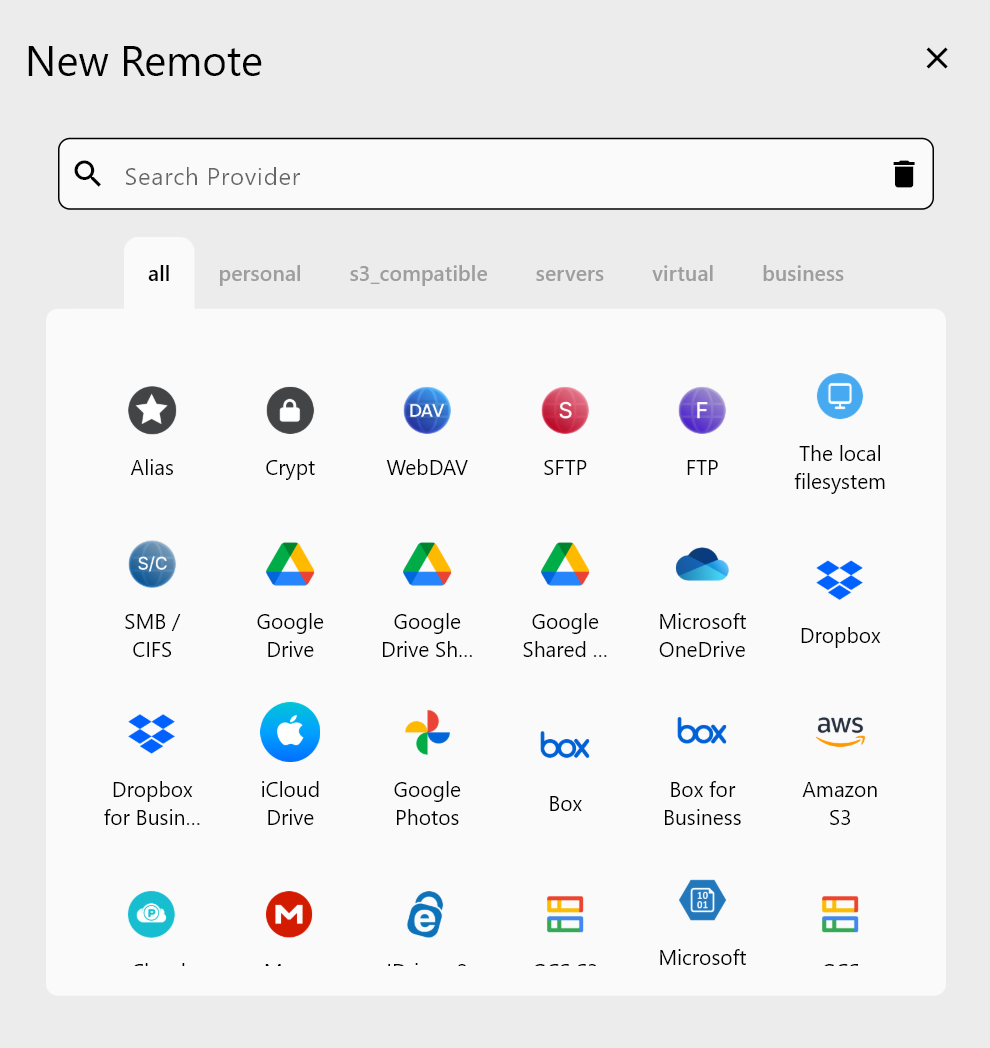
SharePoint remotes in RcloneView are configured through the OneDrive remote type. During OAuth authorization, select SharePoint site instead of OneDrive Personal or Business. RcloneView queries the Graph API for available sites and lets you pick the target site and document library.
Each document library appears as a separate navigable path. If your organization has dozens of SharePoint sites — Marketing, Engineering, Legal, HR — you can add each as a separate remote or switch between libraries within a single remote configuration.
SharePoint's API throttling follows the same patterns as OneDrive for Business — 429 responses with Retry-After headers. RcloneView respects these automatically, using exponential backoff to ensure large transfers complete without manual intervention.
Navigating SharePoint Document Libraries
SharePoint document libraries can contain nested folder structures, metadata columns, and versioned files. RcloneView's explorer displays the folder tree and file listing in its familiar two-pane layout. You can browse deep folder hierarchies, select files across multiple folders, and perform bulk operations — copy, move, delete, or download.
SharePoint enforces filename restrictions that are stricter than many other providers. Characters like #, %, and * are disallowed, and path lengths are limited to 400 characters. When syncing from a less restrictive provider (like Google Drive or a local filesystem) to SharePoint, RcloneView automatically encodes or replaces restricted characters to prevent transfer failures.
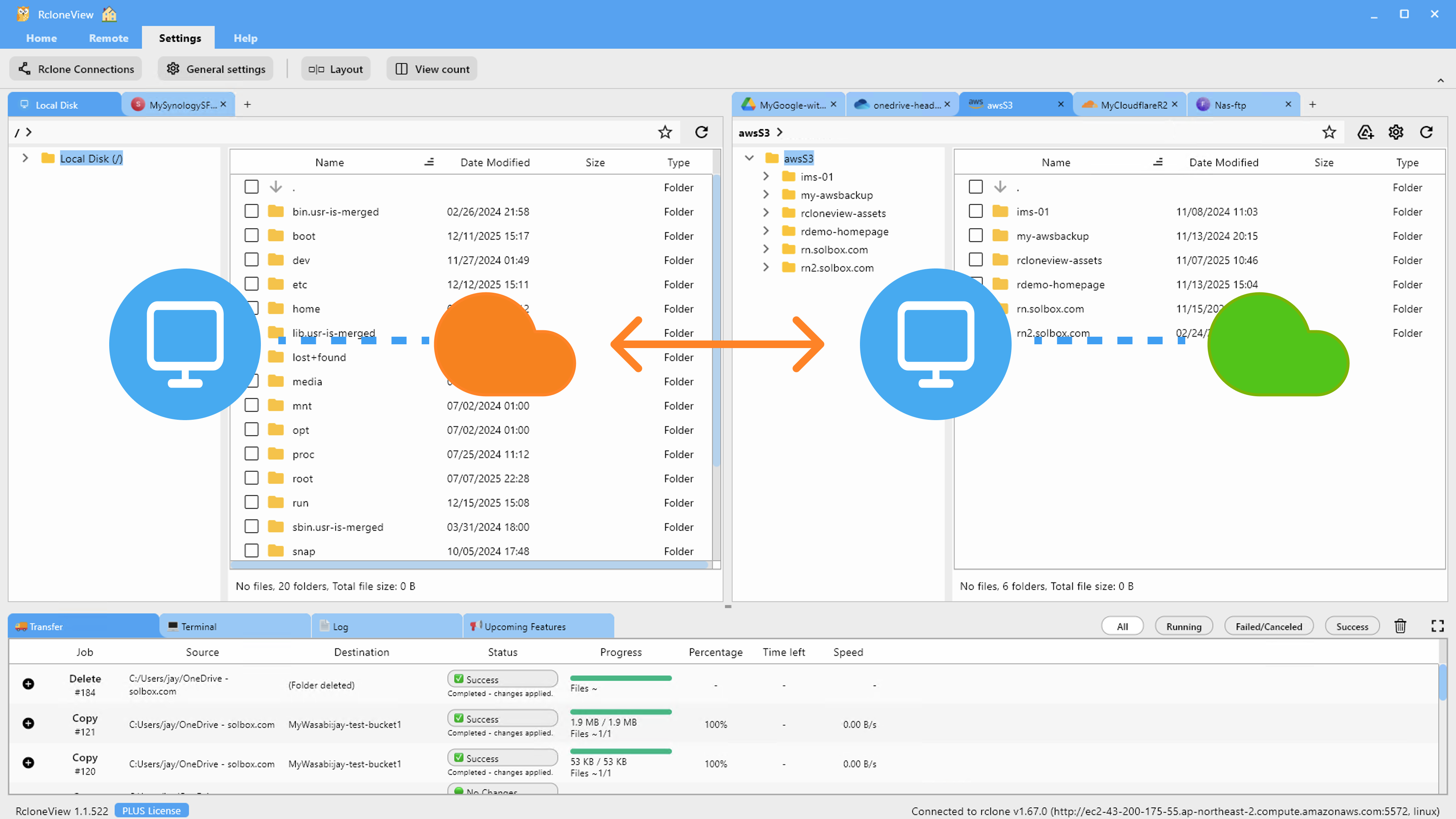
Syncing SharePoint to Other Cloud Providers
Organizations frequently need to replicate SharePoint data to external systems — a secondary cloud for disaster recovery, a NAS for local access, or a different cloud suite during a platform migration. RcloneView makes this straightforward.
Open your SharePoint library in one pane and the destination (AWS S3, Google Drive, Backblaze B2, a local path) in the other. RcloneView compares file lists using size and modification time, transferring only changed files. For initial migrations with thousands of files, multi-threaded transfers and configurable chunk sizes keep the process efficient.
SharePoint stores file hashes as QuickXorHash, the same algorithm used by OneDrive for Business. RcloneView supports QuickXorHash natively, enabling accurate delta detection without downloading file contents for comparison.
Scheduling Automated SharePoint Backups
SharePoint's built-in retention policies and recycle bin provide some protection, but they operate within Microsoft's ecosystem. A ransomware attack that compromises your Microsoft 365 tenant can affect SharePoint data along with everything else. An independent backup to a separate provider is the strongest protection.
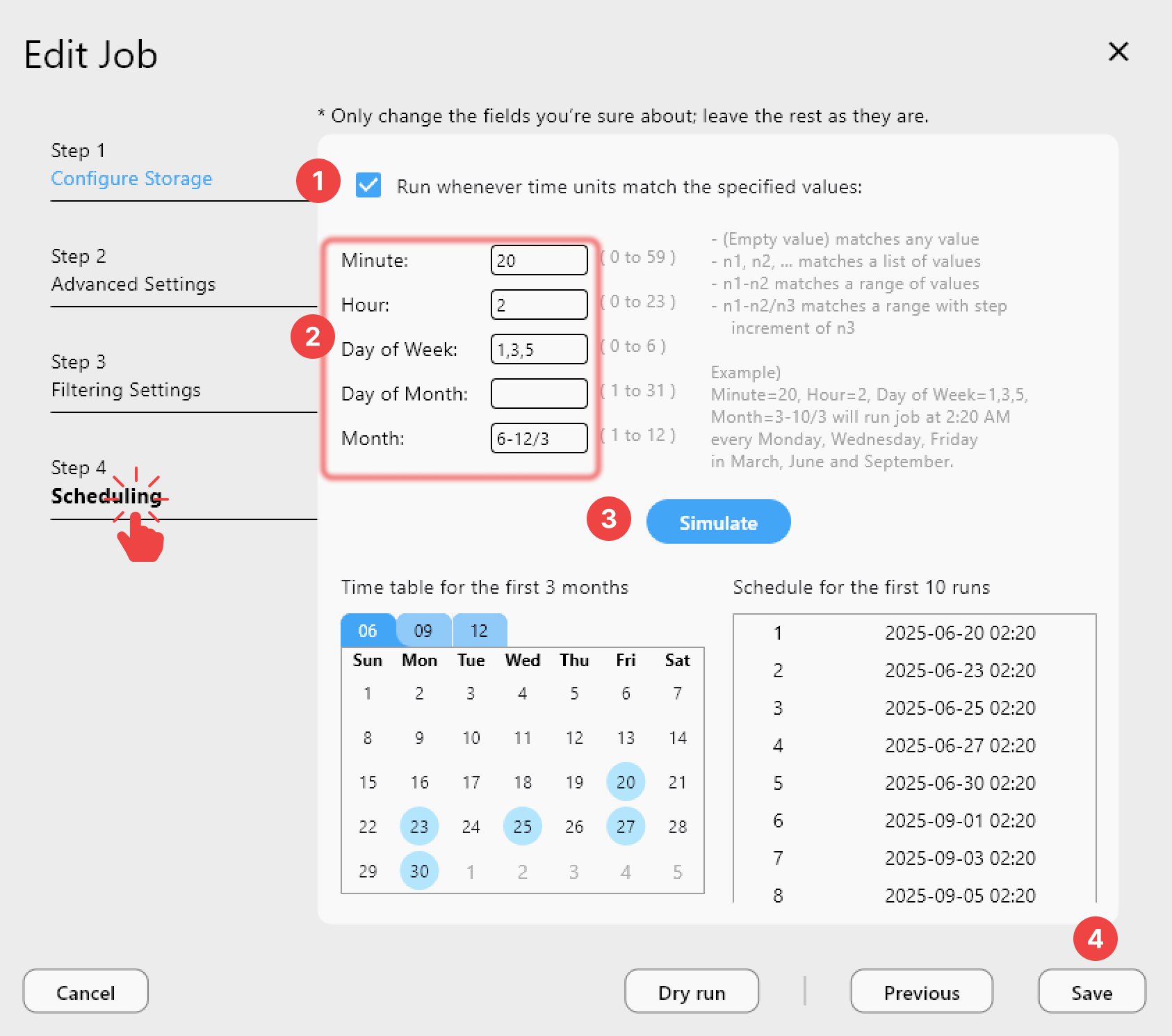
RcloneView's scheduler automates this. Configure a nightly sync job from a SharePoint document library to AWS S3 with versioning enabled, and RcloneView handles the rest. The job history panel logs every run with transfer statistics, making it easy to verify that backups are completing successfully.
For compliance-driven organizations, pairing scheduled SharePoint backups with S3 Object Lock or Backblaze B2's file lock feature creates an immutable archive that satisfies regulatory requirements for data retention.
Comparing Folders and Verifying Migrations
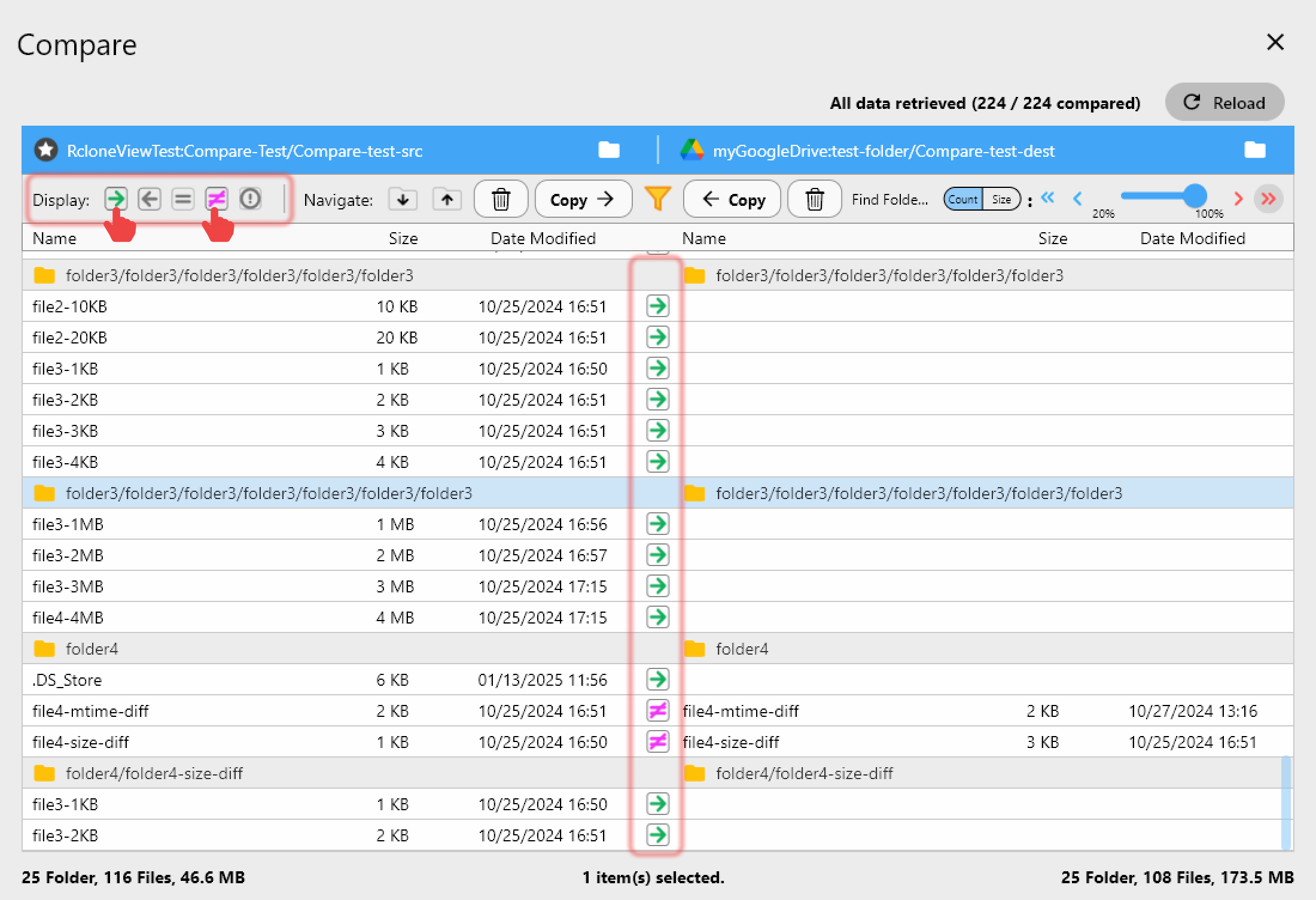
After syncing or migrating a SharePoint library, use RcloneView's compare feature to verify completeness. Select the SharePoint source and the backup destination, and RcloneView highlights files that exist only on one side, files that differ, and files that are identical. This visual verification eliminates guesswork and ensures data integrity before decommissioning the original.
Mounting SharePoint as a Local Drive
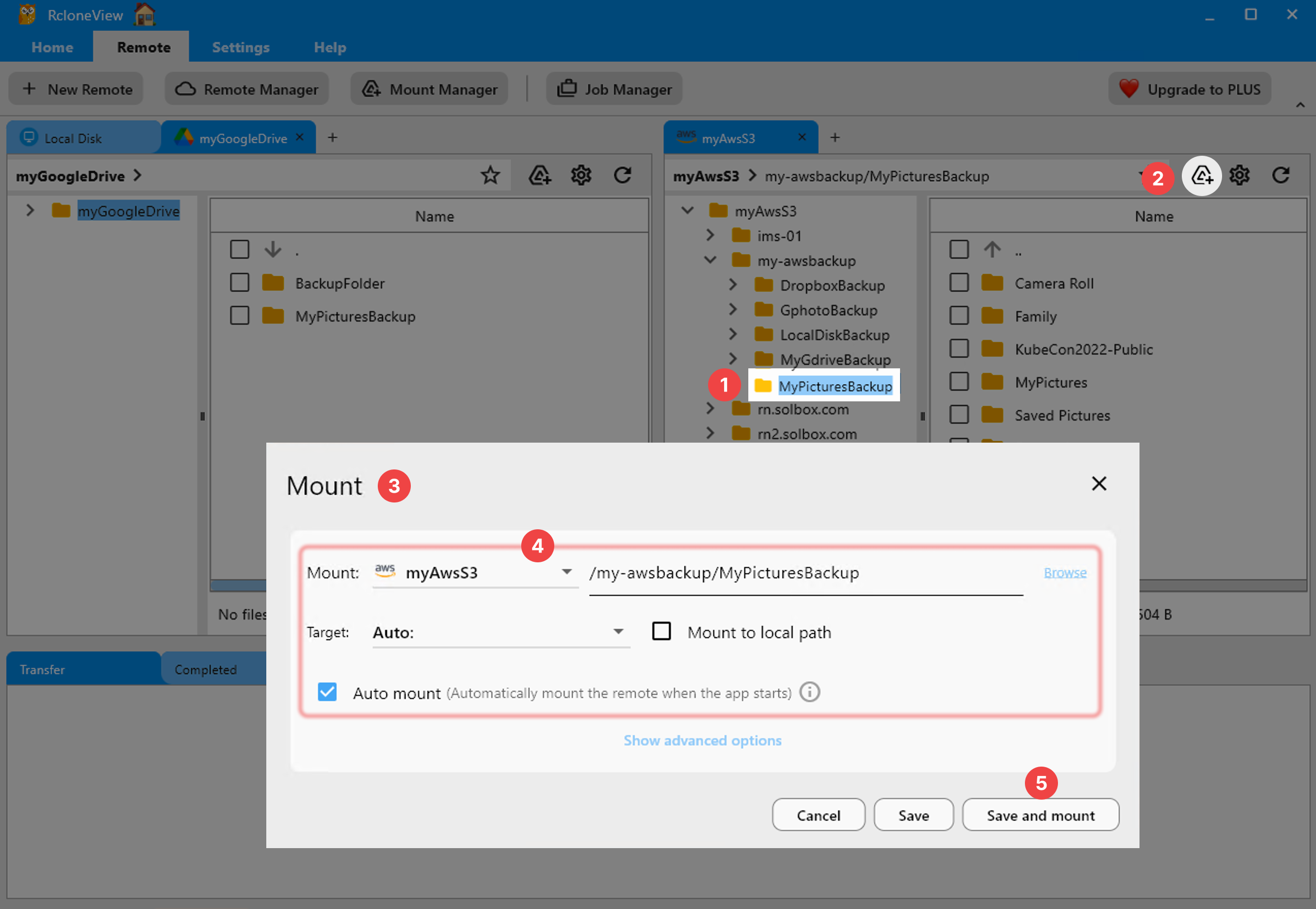
RcloneView can mount a SharePoint document library as a local drive letter (Windows) or mount point (macOS/Linux). This lets you access SharePoint files from any desktop application — CAD software, image editors, or analytics tools — without the overhead of the OneDrive sync client.
Enable VFS caching to store recently accessed files locally for fast repeated access. This is particularly useful for teams that need to work with SharePoint-hosted files in applications that do not support cloud storage natively.
Monitoring Transfers
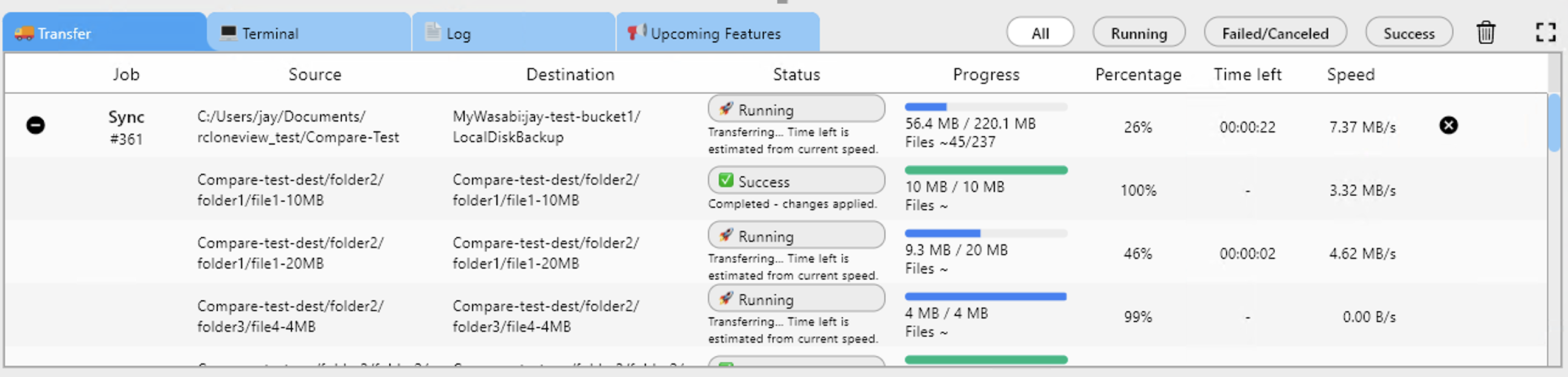
Large SharePoint migrations can involve hundreds of thousands of files. RcloneView's real-time monitoring dashboard shows transfer speed, per-file progress, and overall completion. You can pause, resume, or cancel transfers individually. Bandwidth limits prevent SharePoint transfers from consuming your entire network connection during business hours.
Getting Started
- Download RcloneView from rcloneview.com.
- Authorize your Microsoft 365 account via OAuth and select the SharePoint site and document library.
- Browse your SharePoint library in the two-pane explorer and set up a sync or copy job to another provider.
- Schedule a daily backup to maintain an independent copy on S3, B2, or another cloud.
SharePoint handles document management within Microsoft 365, but RcloneView ensures your SharePoint data is backed up, portable, and accessible across every cloud you use.
Related Guides:
- Add Remote via Browse-based Log-in(OAuth)
- Browse and Manage Remote Storage
- Create Sync Jobs
- Job Scheduling
Supported Cloud Providers