Manage Google Drive Files and Cloud Sync with RcloneView
Google Drive is the backbone of Google Workspace, but managing backups and cross-cloud transfers requires more than the native client — RcloneView delivers that control through a visual interface.
Google Drive serves over two billion users with 15 GB of free storage shared across Gmail, Drive, and Photos. Workspace plans scale to unlimited storage on Enterprise tiers. The native Google Drive desktop client syncs files to your local machine, but it cannot replicate data to AWS S3, OneDrive, or a NAS. RcloneView connects to Google Drive via the Drive API v3 and provides a complete file management interface — browse, sync, copy, move, and schedule backups across Google Drive and any other storage provider.
Whether you are a student protecting coursework, a photographer managing thousands of RAW files, or a Workspace administrator syncing Shared Drives to an independent backup target, RcloneView gives you capabilities that the native client does not offer.
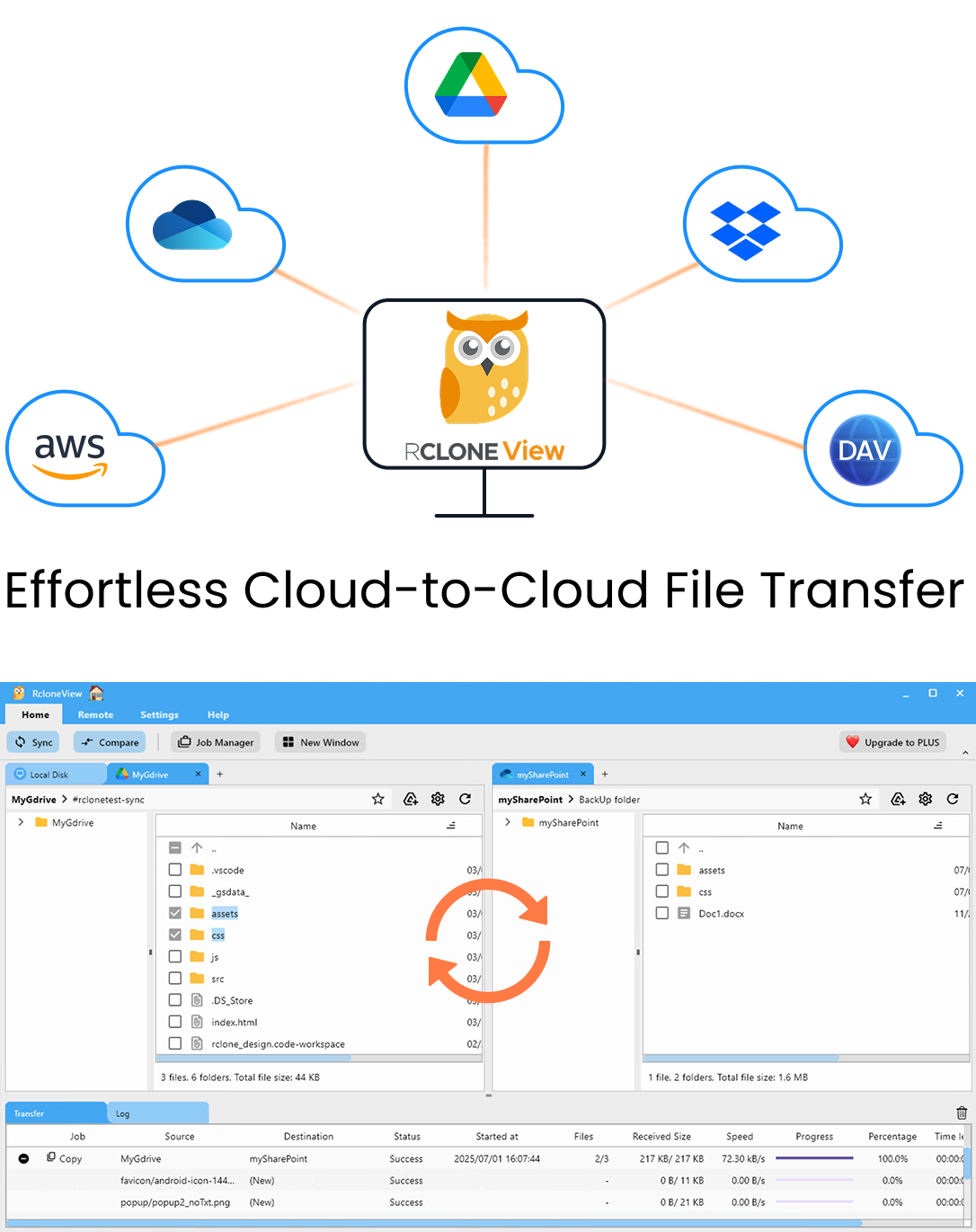
Manage & Sync All Clouds in One Place
RcloneView is a cross-platform GUI for rclone. Compare folders, transfer or sync files, and automate multi-cloud workflows with a clean, visual interface.
- One-click jobs: Copy · Sync · Compare
- Schedulers & history for reliable automation
- Works with Google Drive, OneDrive, Dropbox, S3, WebDAV, SFTP and more
Free core features. Plus automations available.
Connecting Google Drive in RcloneView
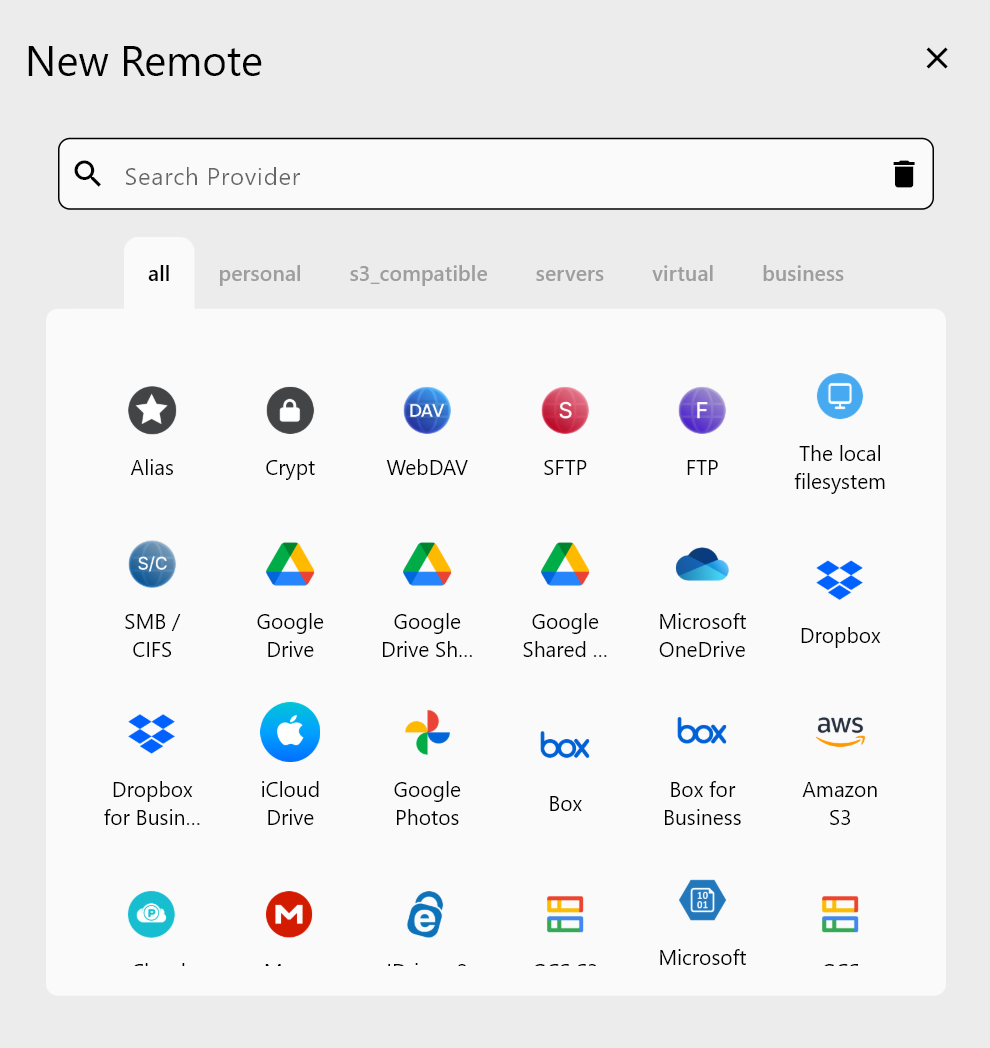
Adding Google Drive uses the standard OAuth 2.0 flow. Open the Remote Manager, select Google Drive, and click authorize. A browser window opens where you log in to your Google account and grant access. The token is stored securely in your local rclone configuration.
During setup you choose the scope of access — full drive access, read-only, or file-level access limited to files created by RcloneView. For most backup and sync workflows, full access is the right choice. You can also configure access to Shared Drives (formerly Team Drives) during this step, selecting a specific Shared Drive by ID or letting RcloneView list all available drives.
Google Drive enforces API quotas — 10,000 queries per 100 seconds per project by default. RcloneView handles 403 userRateLimitExceeded responses automatically with exponential backoff. For large-scale operations, you can register your own Google Cloud project and supply your own client ID to increase quota limits.
My Drive vs. Shared Drives
Google Drive distinguishes between My Drive (personal storage tied to a user account) and Shared Drives (organization-owned storage where files belong to the team, not an individual). This distinction matters for sync and backup because Shared Drives have different ownership semantics, stricter file naming rules, and separate storage quotas.
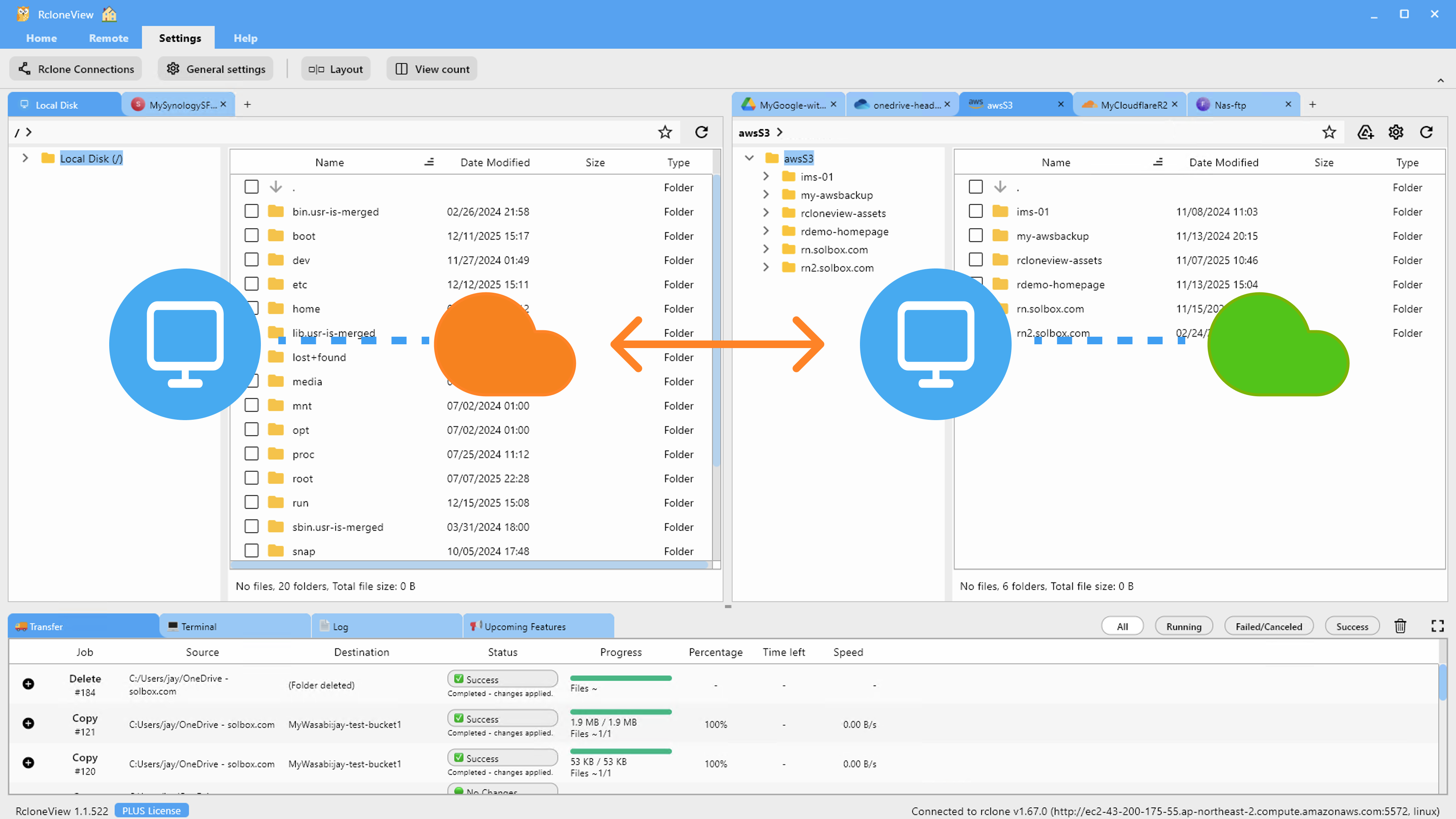
RcloneView handles both transparently. You can open My Drive and a Shared Drive side by side in the two-pane explorer, compare folder contents, and sync between them. When syncing from My Drive to a Shared Drive, RcloneView automatically adjusts for Shared Drive limitations — files with unsupported characters are renamed, and shortcut files are resolved or skipped depending on your preference.
Syncing Google Drive with Other Cloud Providers
RcloneView's two-pane explorer places Google Drive alongside any other remote. Sync your entire Drive to Backblaze B2 for affordable backup, copy a specific project folder to AWS S3 for archival, or move old files to Wasabi for cost-effective cold storage.
Google Drive uses MD5 checksums for file integrity verification. RcloneView natively supports MD5 comparison during sync, so only files that have actually changed are transferred. This saves both time and API quota. For Google Docs, Sheets, and Slides — which are stored as cloud-native formats without a fixed file size — RcloneView exports them to standard formats (docx, xlsx, pptx) during download and sync.
For large transfers, you can configure multi-threaded downloads and adjust chunk sizes. Google Drive supports resumable uploads for files over 5 MB, and RcloneView leverages this to recover from interruptions without restarting the entire file.
Scheduling Automated Google Drive Backups
A single copy of your data on Google Drive is not a backup. Accidental deletions, account suspensions, and ransomware can all result in data loss. An independent backup to a separate provider adds a critical safety net.
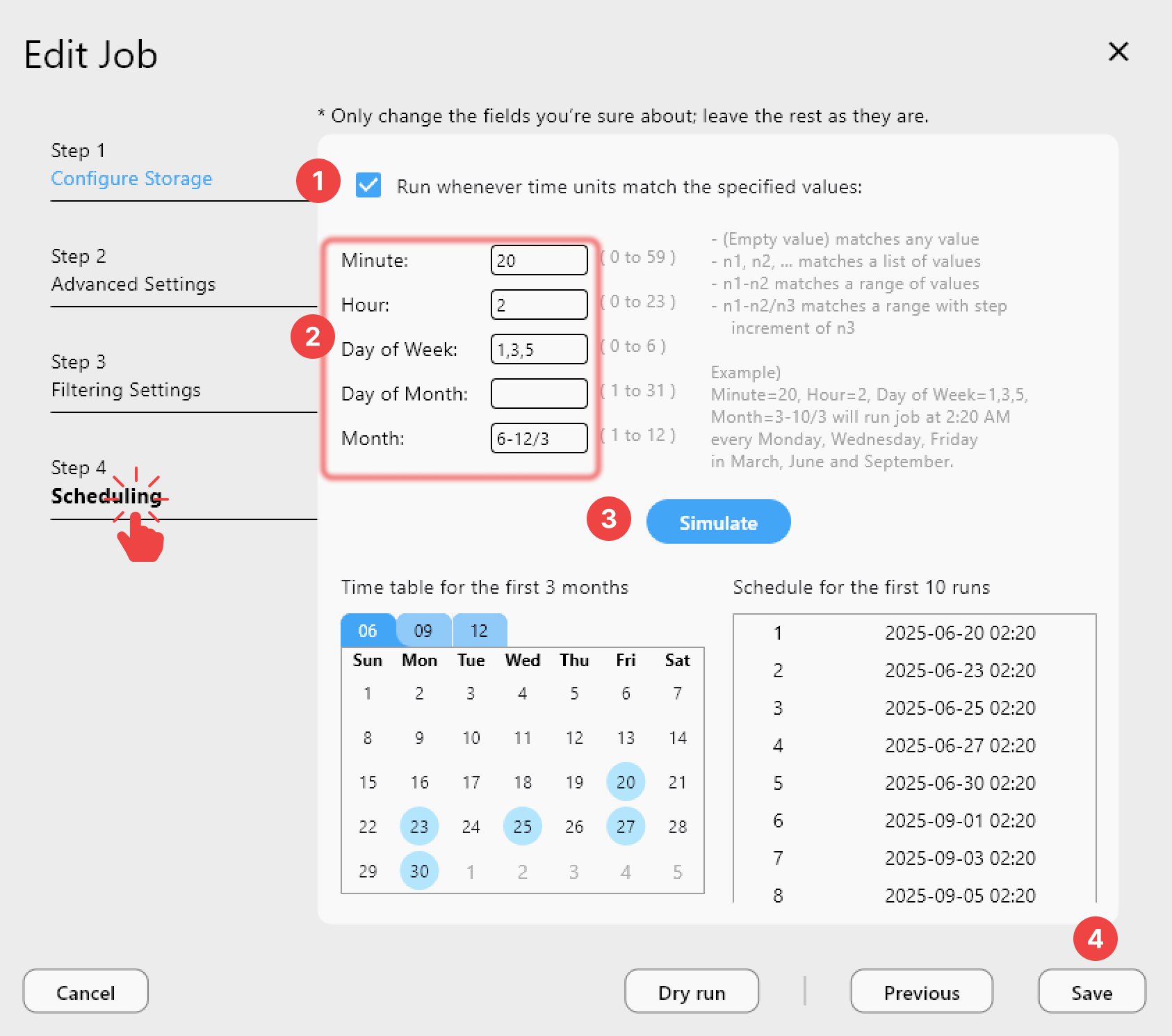
RcloneView's scheduler automates this process. Configure a nightly sync job from Google Drive to AWS S3 or Backblaze B2, and RcloneView handles delta detection, transfer, and logging. The job history panel records every run with statistics — files transferred, files skipped, total bytes moved, and elapsed time.
For Workspace administrators, scheduled backups of Shared Drives ensure that team data is replicated independently of Google's infrastructure. Pair scheduled backups with encryption (using a crypt remote) for an additional layer of protection.
Comparing Folders and Verifying Data
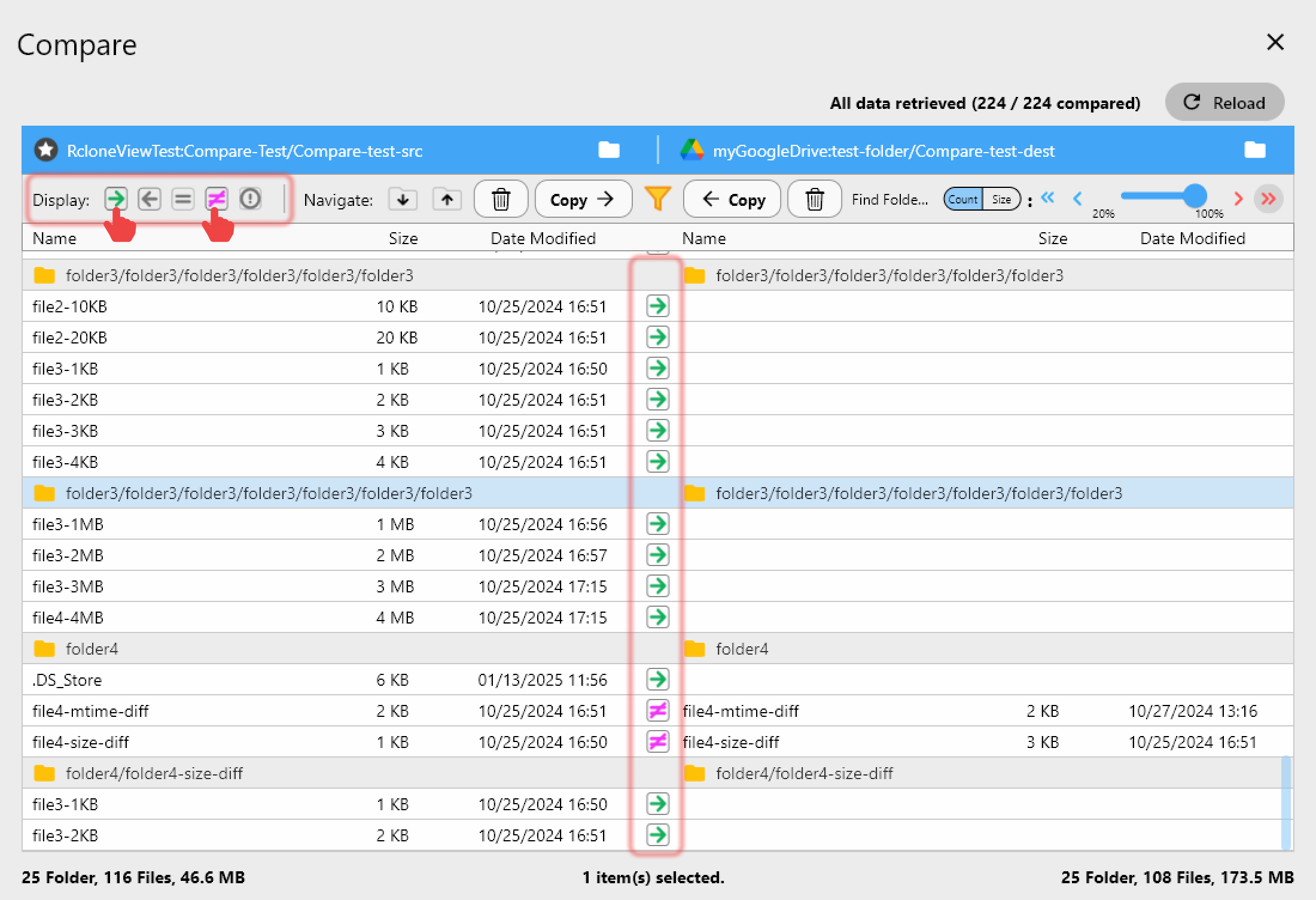
Before committing to a large sync, RcloneView's compare feature shows exactly what will change. Select two folders — one on Google Drive, one on another remote — and RcloneView highlights files that exist only on one side, files that differ in size or hash, and files that are identical.
This is especially valuable after a migration. Run a compare between your Google Drive source and the backup destination to confirm every file arrived intact. The visual diff makes it straightforward to spot gaps and resolve them before decommissioning the original.
Mounting Google Drive as a Local Drive
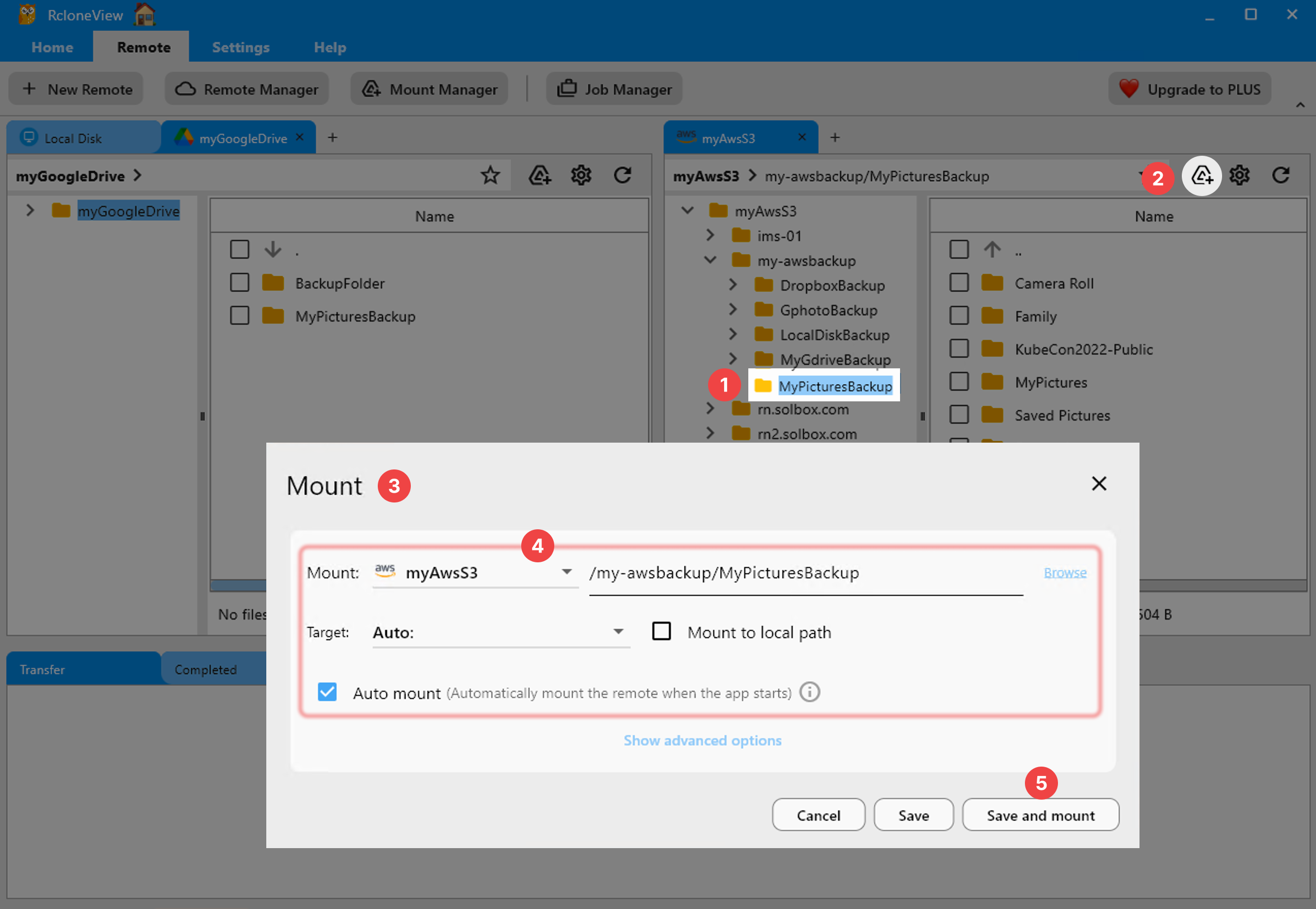
RcloneView can mount Google Drive as a local drive letter on Windows or a mount point on macOS and Linux. This lets you access Drive files directly from any application — file managers, video editors, or command-line tools — without downloading them first.
Enable VFS caching for best performance. This stores recently accessed files locally so subsequent reads are instant. The cache size and expiration are configurable. Mounting is particularly useful for media workflows where you need to browse or preview Drive files without a full sync.
Monitoring Transfers in Real Time
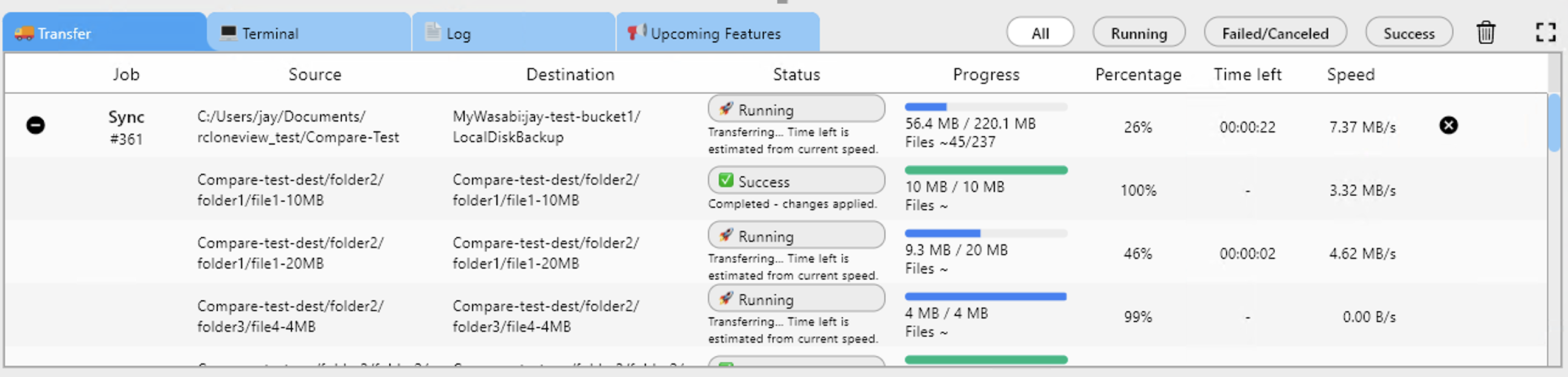
During large transfers, RcloneView provides a real-time monitoring dashboard showing transfer speed, progress per file, and overall completion percentage. You can pause, resume, or cancel individual transfers without affecting the rest of the queue. Bandwidth throttling prevents Google Drive transfers from saturating your network — set a limit during business hours and allow full speed overnight.
Browsing and Managing Files
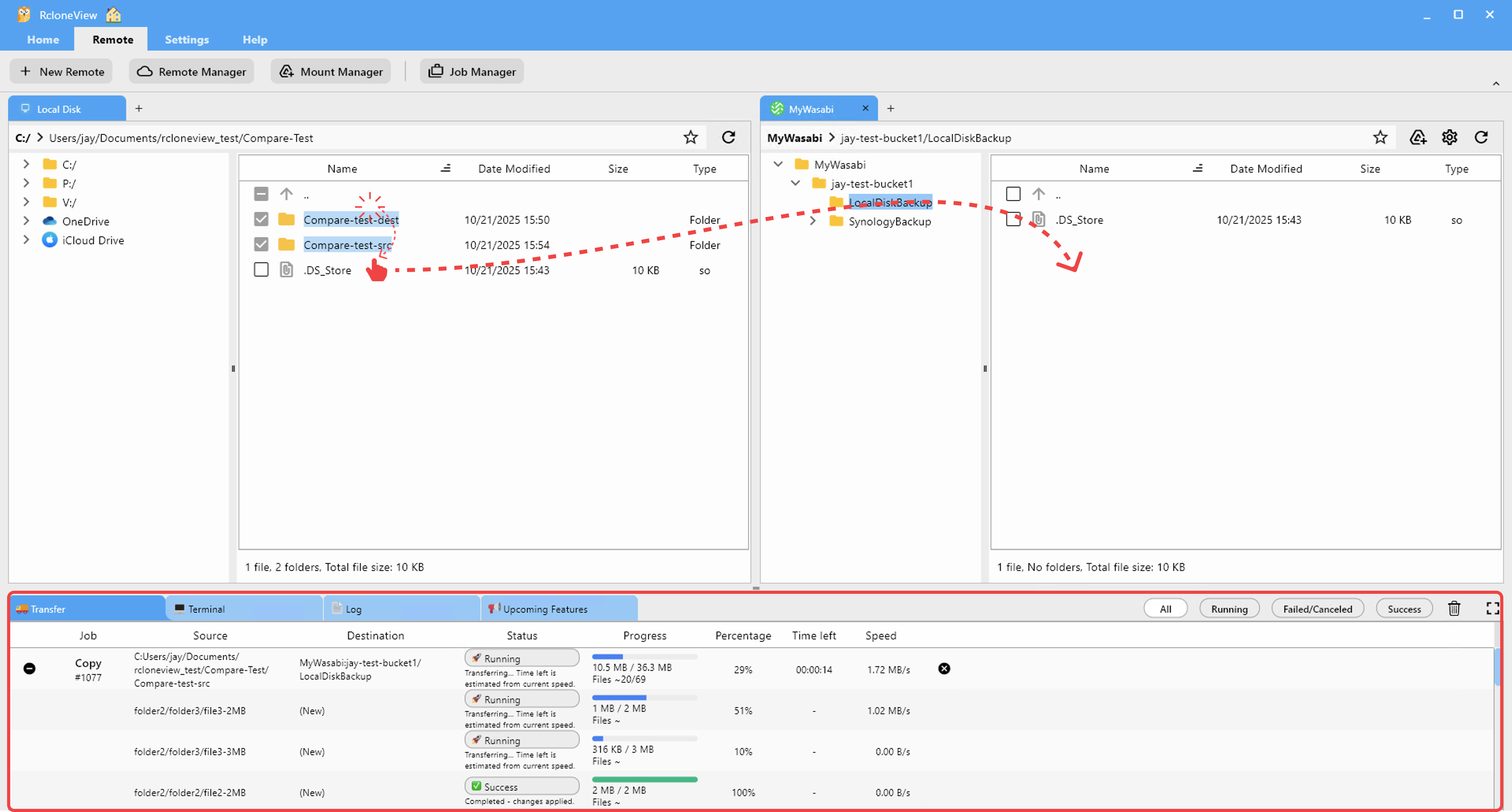
RcloneView's explorer offers capabilities that the Google Drive web interface does not — bulk operations across tens of thousands of files, drag-and-drop between any two cloud providers, and side-by-side folder comparison. You can rename, move, delete, and create folders directly on Google Drive through the explorer. Shared Drives, shortcuts, and nested folder structures are all navigable in the explorer panel.
Getting Started
- Download RcloneView from rcloneview.com.
- Authorize your Google account via OAuth in the Remote Manager and select your Drive type (My Drive or Shared Drive).
- Browse your Google Drive in the two-pane explorer and set up a sync or copy job to another provider.
- Schedule a daily backup to keep a redundant copy on S3, B2, or another cloud.
Google Drive handles collaboration and document editing, but RcloneView ensures your data is backed up, portable, and accessible across every cloud you use.
Related Guides:
- Add Google Drive
- Browse and Manage Remote Storage
- Create Sync Jobs
- Mount Cloud Storage as a Local Drive
Supported Cloud Providers