Manage Huawei OBS Storage — Sync and Backup Files with RcloneView

Connect Huawei OBS buckets to a visual file manager, then sync and back up files across clouds without touching the command line.
Huawei Object Storage Service (OBS) is a scalable, enterprise-grade object storage platform used across Asia-Pacific deployments and global enterprise environments. Whether you're managing a multi-terabyte data lake or backing up a regional office's project archives, OBS delivers the reliability large organizations expect. RcloneView connects to Huawei OBS via its S3-compatible API, giving you a full GUI experience for browsing buckets, transferring files, and running automated backup jobs—so your team spends time on actual work instead of memorizing rclone flags.
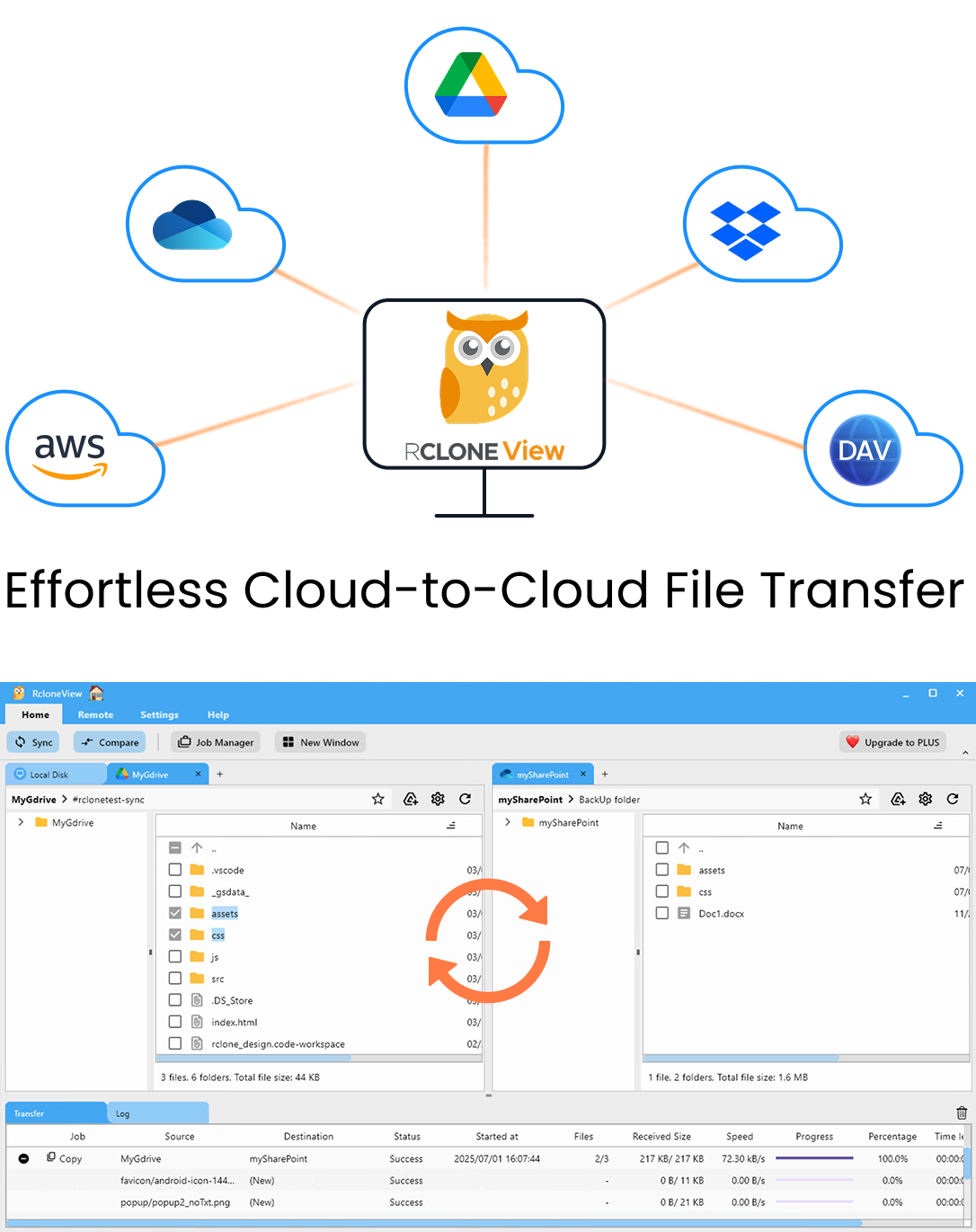
Manage & Sync All Clouds in One Place
RcloneView is a cross-platform GUI for rclone. Compare folders, transfer or sync files, and automate multi-cloud workflows with a clean, visual interface.
- One-click jobs: Copy · Sync · Compare
- Schedulers & history for reliable automation
- Works with Google Drive, OneDrive, Dropbox, S3, WebDAV, SFTP and more
Free core features. Plus automations available.
Connecting RcloneView to Huawei OBS
Adding Huawei OBS as a remote in RcloneView follows the same S3-compatible setup used for providers like Alibaba Cloud OSS or IDrive E2. From the Remote tab, click New Remote, choose the S3 provider type, and select Huawei OBS from the provider list. You'll supply three credentials: an Access Key ID, a Secret Access Key, and the regional endpoint URL for your OBS bucket. Huawei's endpoints follow the pattern obs.{region}.myhuaweicloud.com—for example, obs.cn-north-4.myhuaweicloud.com for the North China 4 region.
Once configured, RcloneView's file explorer panels display your OBS buckets as top-level folders. Navigate nested object prefixes using the breadcrumb path bar, switch between list and thumbnail view, and see file metadata—name, size, and modified date—at a glance. The folder tree on the left makes it straightforward to locate a specific dataset in a multi-bucket environment without scrolling through a flat file list.
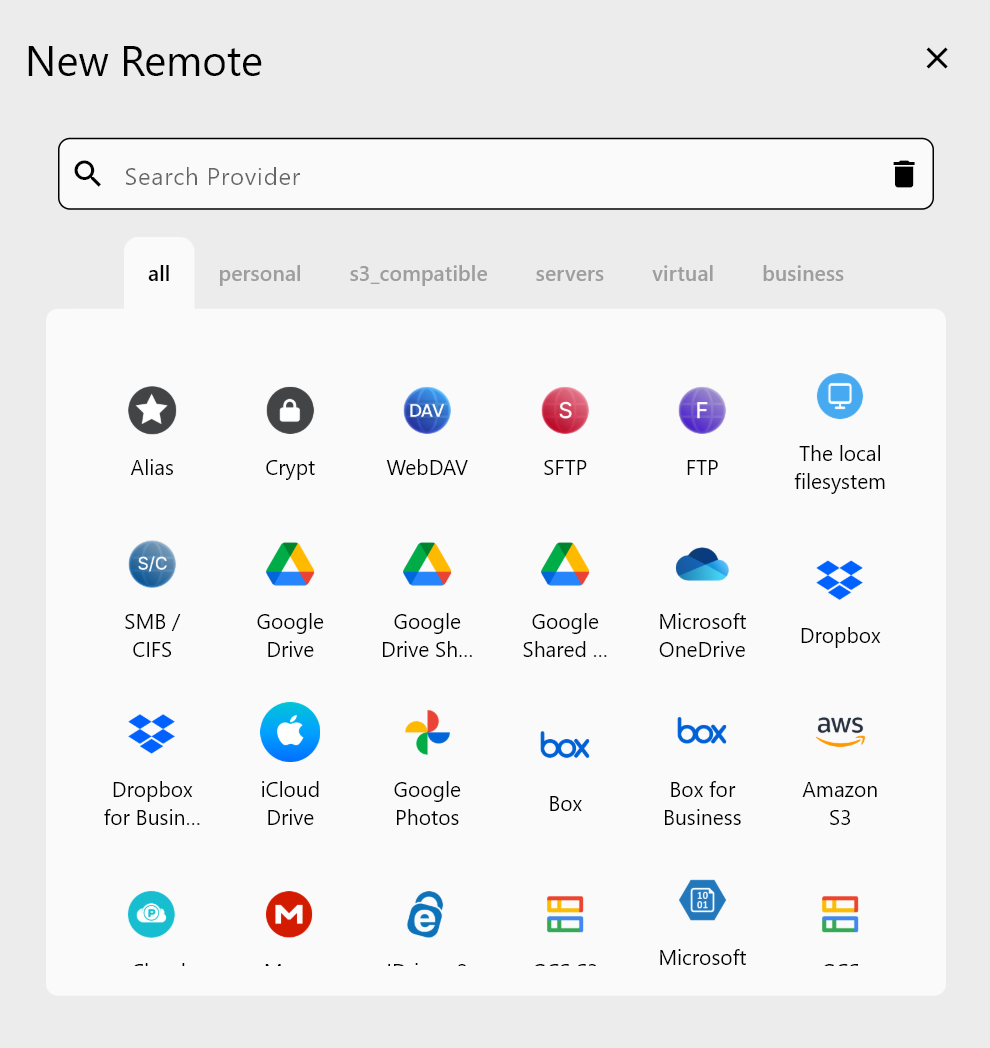
RcloneView also supports up to four simultaneous explorer panels, so you can open one panel to your OBS bucket and another to a local drive or a different cloud provider—enabling side-by-side comparisons without switching windows.
Syncing and Backing Up Files to Huawei OBS
RcloneView's 4-step sync wizard makes it straightforward to create recurring backup jobs targeting Huawei OBS. Set your source (a local folder, NAS path, or another cloud remote) and your destination (an OBS bucket prefix), give the job a name, then configure advanced options. Increasing the concurrent transfer count accelerates throughput on high-bandwidth connections, while enabling checksum verification ensures every file arrives intact—particularly valuable when migrating a 2TB dataset of engineering drawings or financial records where silent corruption is unacceptable.
Filtering keeps your OBS buckets lean and cost-efficient. Exclude large file types you don't need archived (.iso, .vmdk), restrict syncing to files modified within a rolling time window using max-age filters, or cap folder depth to avoid copying deeply nested temporary directories. For organizations with compliance requirements, these filters ensure only the right files reach OBS without manual selection on every run.
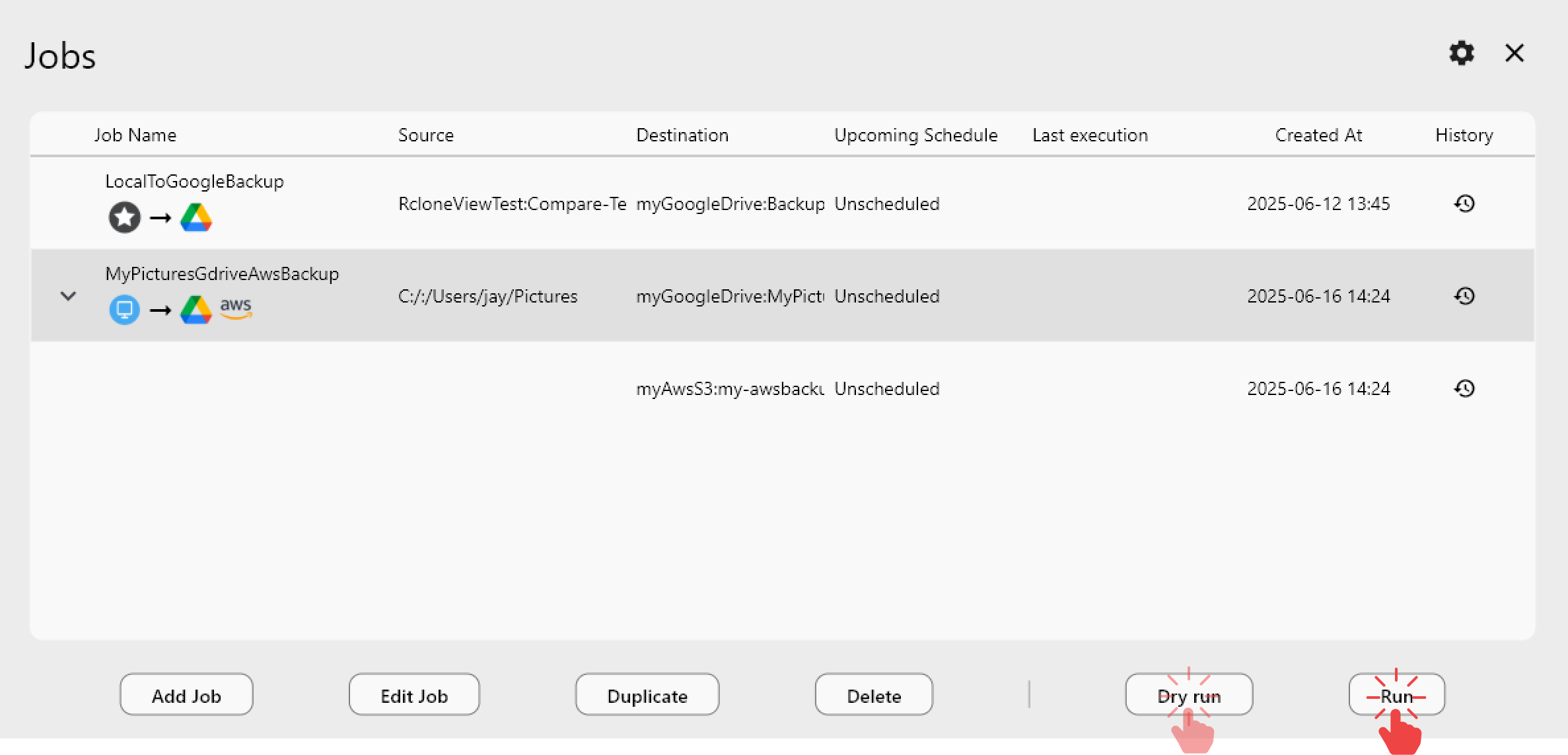
Run the dry-run simulation before the first live execution—RcloneView shows exactly which files would be added or removed without touching any data, a critical safety net when syncing production buckets.
Scheduling Automated Backups and Monitoring Jobs
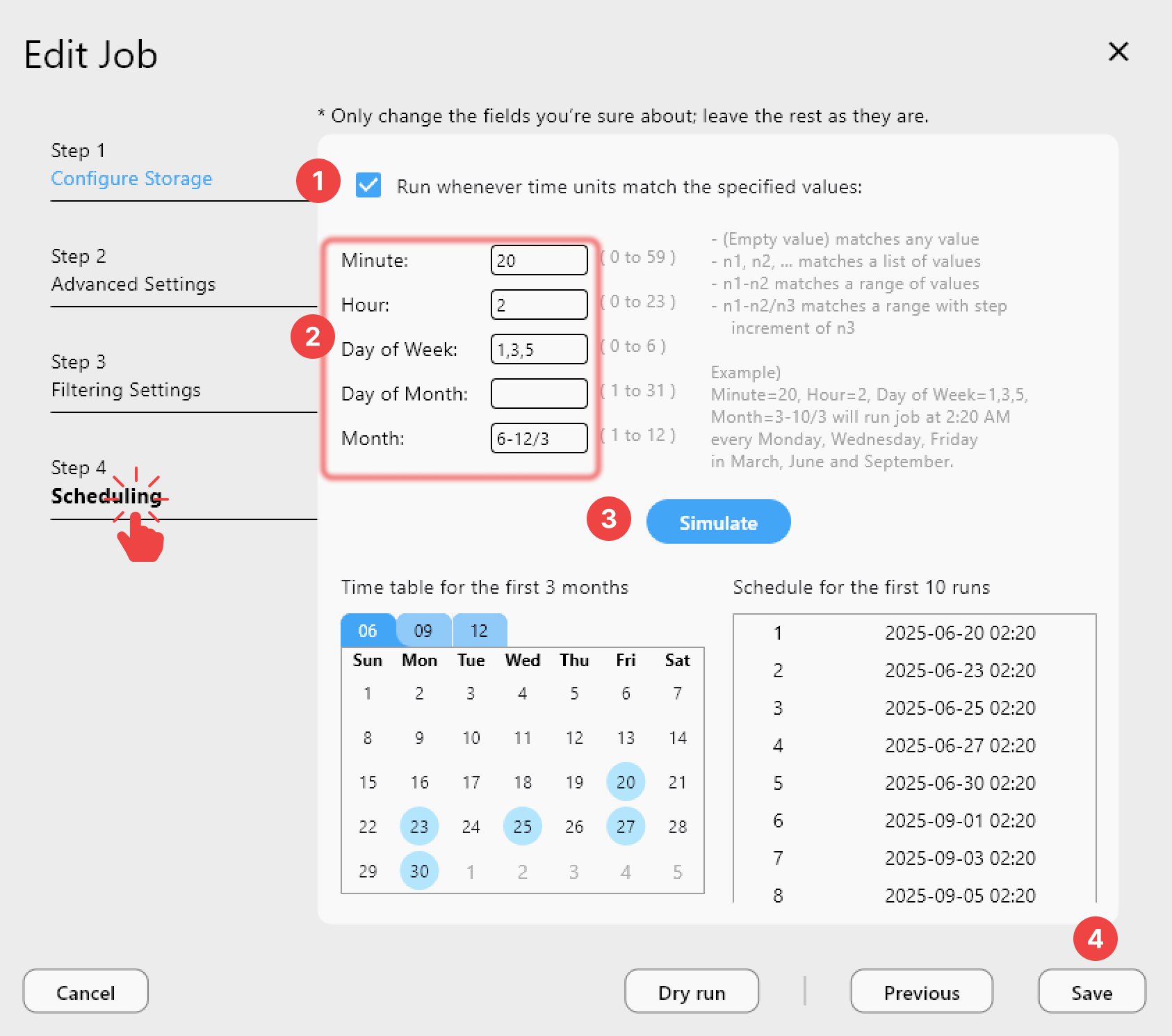
With a RcloneView PLUS license, your Huawei OBS backup runs on autopilot using crontab-style scheduling. Configure a nightly differential backup at 02:00 every weekday, a weekly full-bucket sync on Sundays, or any cadence that matches your data lifecycle. The schedule simulator in the wizard previews the next five execution times so you can verify the pattern before committing.
Job history provides a full audit trail for every run—start time, duration, transfer speed, file count, total size transferred, and final status (Completed, Errored, or Canceled). For a team managing compliance archiving across multiple OBS regions, this log doubles as documentation for internal audits. PLUS license holders can also configure job completion notifications so the right people are alerted the moment a job completes or fails.
Getting Started
- Download RcloneView from rcloneview.com.
- Open the Remote tab → New Remote → select S3 → choose Huawei OBS.
- Enter your Access Key ID, Secret Access Key, and the regional OBS endpoint URL.
- Browse your buckets in the file explorer and create sync or backup jobs via the Job Manager.
Once connected, Huawei OBS behaves like any other drive in RcloneView—giving your team a reliable, GUI-driven path to enterprise object storage without CLI overhead.
Related Guides:
- Manage Alibaba Cloud OSS — Sync and Backup with RcloneView
- Manage Tencent COS Object Storage with RcloneView
- Centralize S3, Wasabi, and R2 Storage with RcloneView
Supported Cloud Providers