Manage OneDrive Files and Cloud Sync with RcloneView
OneDrive integrates tightly with Microsoft 365, but managing backups and cross-cloud sync requires a dedicated tool — RcloneView makes it effortless.
Microsoft OneDrive serves hundreds of millions of users across Personal and Business plans, offering 5 GB free and up to unlimited storage on enterprise tiers. While the native OneDrive client handles local-to-cloud sync well, it provides no built-in mechanism for replicating data to AWS S3, Google Drive, or a NAS. RcloneView connects to OneDrive via the Microsoft Graph API and provides a full-featured file management interface — browse, sync, copy, move, and schedule backups across OneDrive and any other storage provider.
Whether you are an individual backing up personal photos or an IT administrator managing OneDrive for Business across an organization, RcloneView gives you control over your data that the native client simply does not offer.
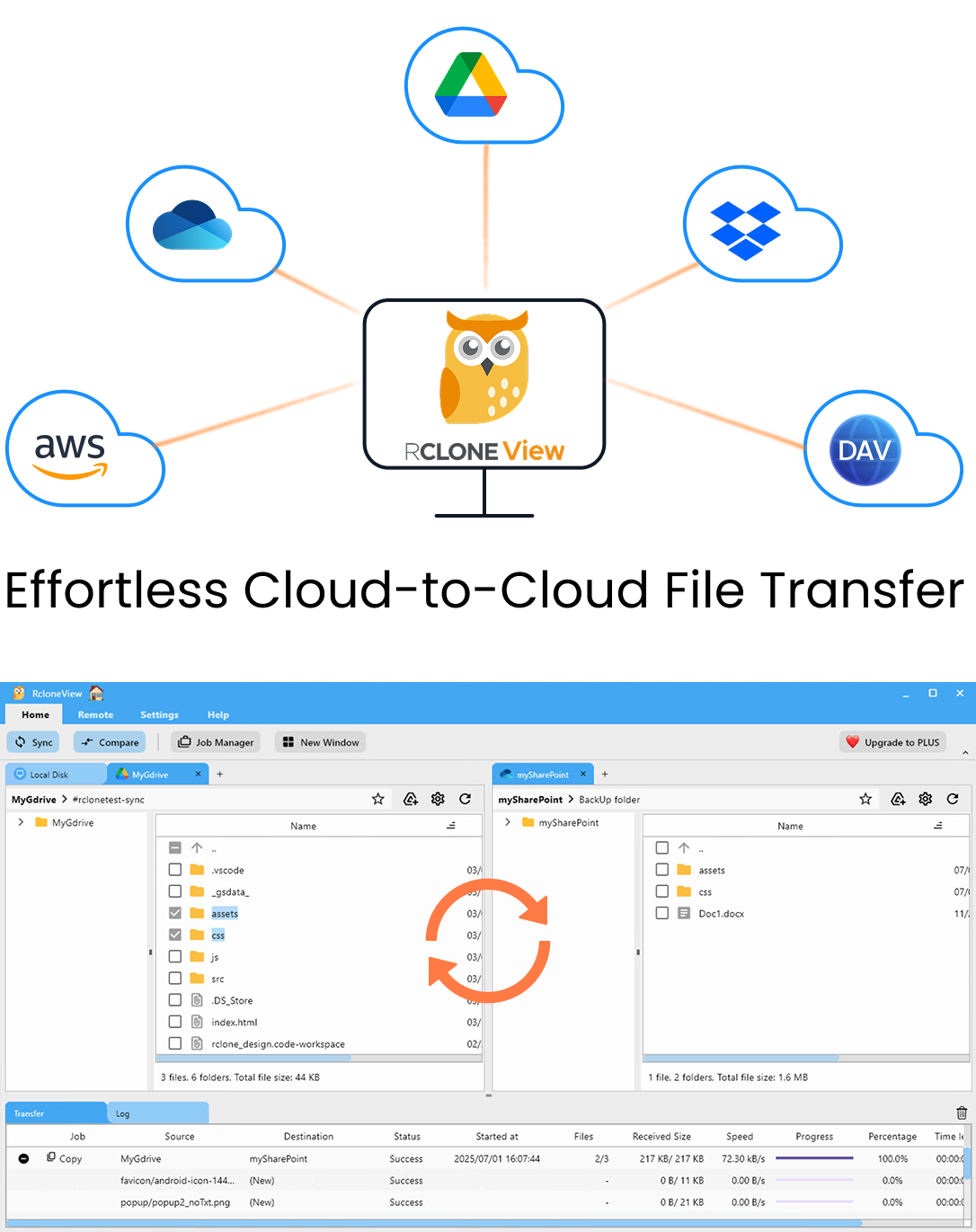
Manage & Sync All Clouds in One Place
RcloneView is a cross-platform GUI for rclone. Compare folders, transfer or sync files, and automate multi-cloud workflows with a clean, visual interface.
- One-click jobs: Copy · Sync · Compare
- Schedulers & history for reliable automation
- Works with Google Drive, OneDrive, Dropbox, S3, WebDAV, SFTP and more
Free core features. Plus automations available.
Connecting OneDrive in RcloneView
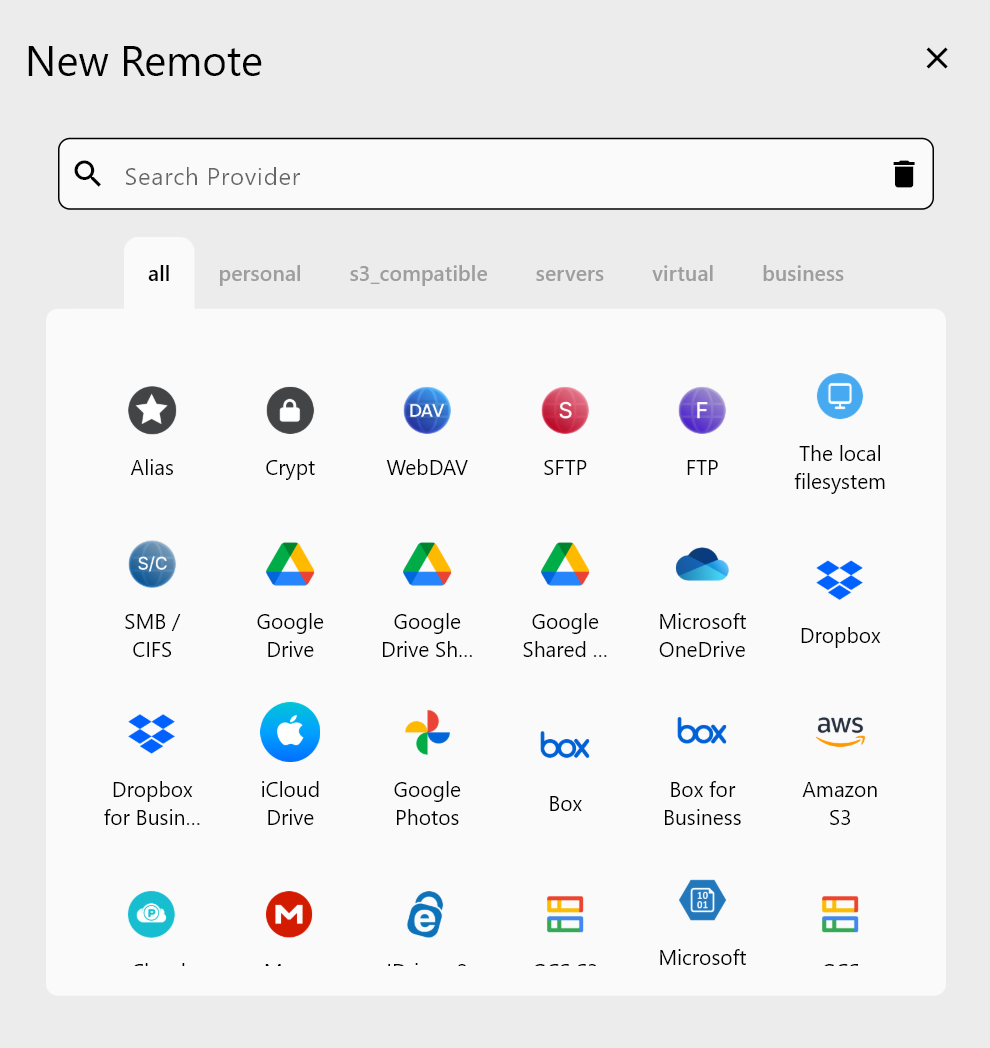
Adding OneDrive to RcloneView uses the standard OAuth 2.0 flow. Open the Remote Manager, select Microsoft OneDrive, and click authorize. A browser window opens where you log in to your Microsoft account and grant access. The resulting token is stored securely in your local rclone configuration.
During setup, RcloneView detects whether you are using OneDrive Personal, OneDrive for Business, or SharePoint Document Libraries and configures the connection accordingly. For Business accounts, you can choose to connect to your personal drive or a SharePoint site's document library. This flexibility means a single RcloneView instance can manage multiple OneDrive tenants side by side.
OneDrive's API enforces throttling — typically 10,000 API calls per 10-minute window for Business accounts, with lower limits on Personal plans. RcloneView handles 429 (Too Many Requests) responses automatically with exponential backoff, so large transfers proceed without manual intervention.
OneDrive Personal vs. Business Differences
OneDrive Personal and OneDrive for Business differ in important ways that affect sync behavior. Personal accounts use a flat namespace and have a maximum file size of 250 GB. Business accounts support nested site structures, SharePoint integration, and stricter filename restrictions (certain characters like # and % are disallowed).
RcloneView handles these differences transparently. When syncing from a provider that allows special characters (like Google Drive) to OneDrive for Business, RcloneView automatically encodes or replaces restricted characters to prevent transfer failures. If you are migrating data between Personal and Business accounts, the same logic applies — no manual filename cleanup required.
Syncing OneDrive with Other Cloud Providers
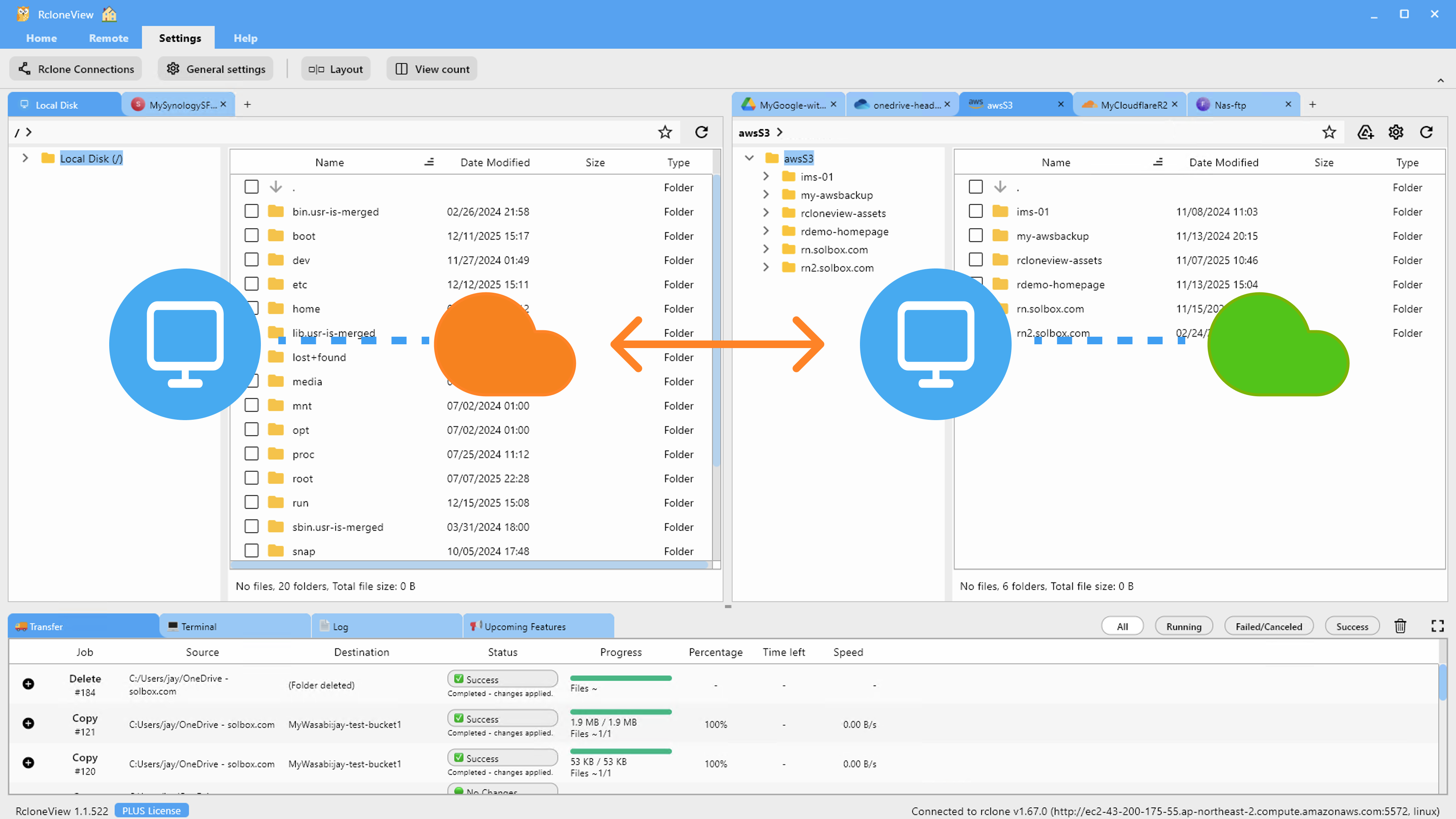
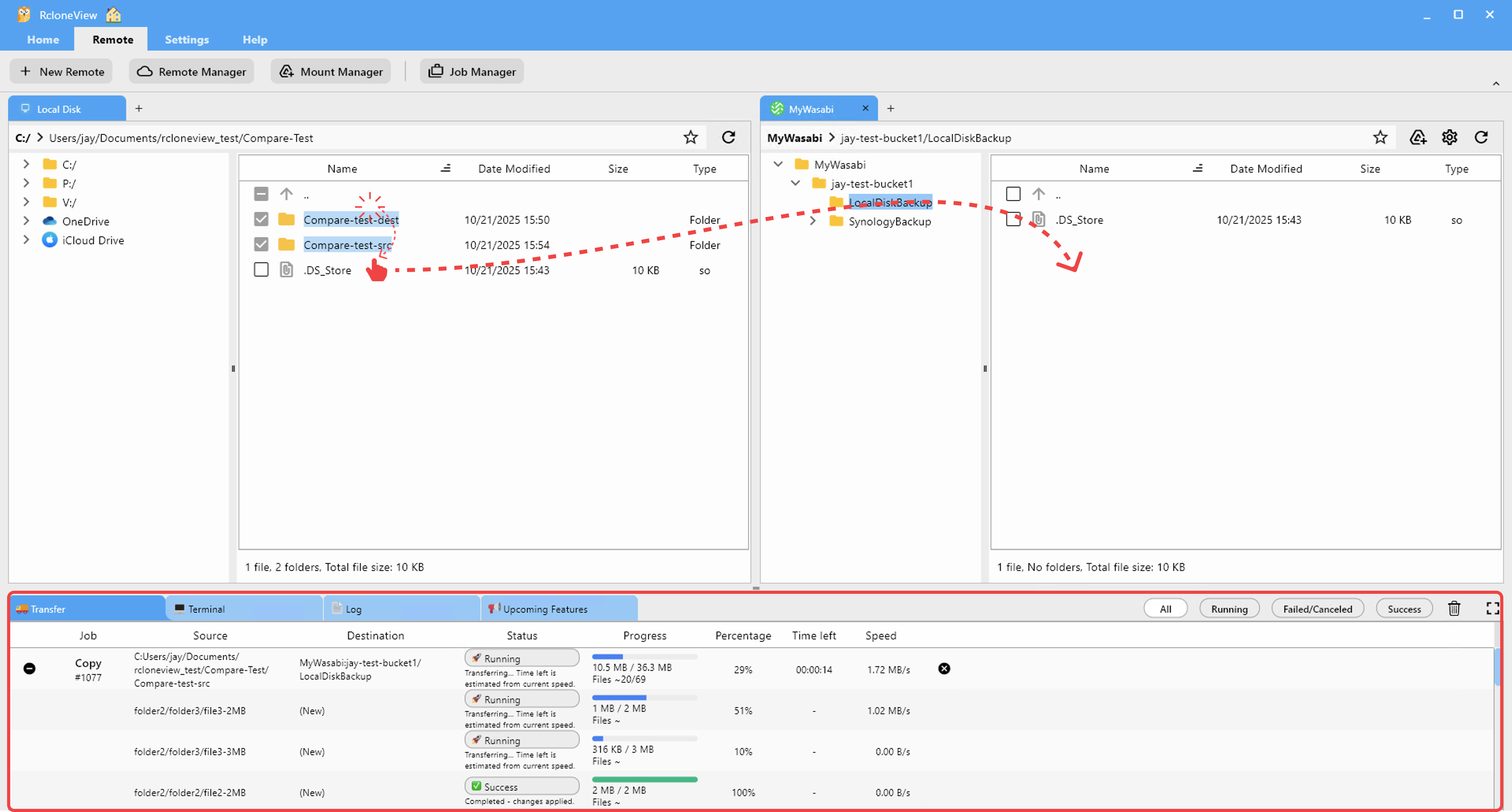
RcloneView's two-pane explorer places OneDrive alongside any other remote. You can sync your entire OneDrive to Google Drive, copy a specific project folder to AWS S3, or move archived files to Backblaze B2 for cost-effective long-term storage.
OneDrive uses QuickXorHash for file integrity verification — a proprietary hash function unique to Microsoft. RcloneView natively supports QuickXorHash, so file comparisons during sync are accurate and efficient. Files that have not changed are skipped automatically, reducing both transfer time and API usage.
For large OneDrive for Business deployments, you can scope your sync to specific folders or SharePoint document libraries rather than syncing the entire drive. This targeted approach minimizes API calls and transfer time while ensuring critical data is backed up.
Scheduling Automated OneDrive Backups
Relying solely on OneDrive for critical files introduces risk — accidental deletions propagate across devices, and OneDrive's version history is limited to 30 days on Personal plans (though Business plans offer configurable retention). An independent backup to a separate provider adds a critical safety net.
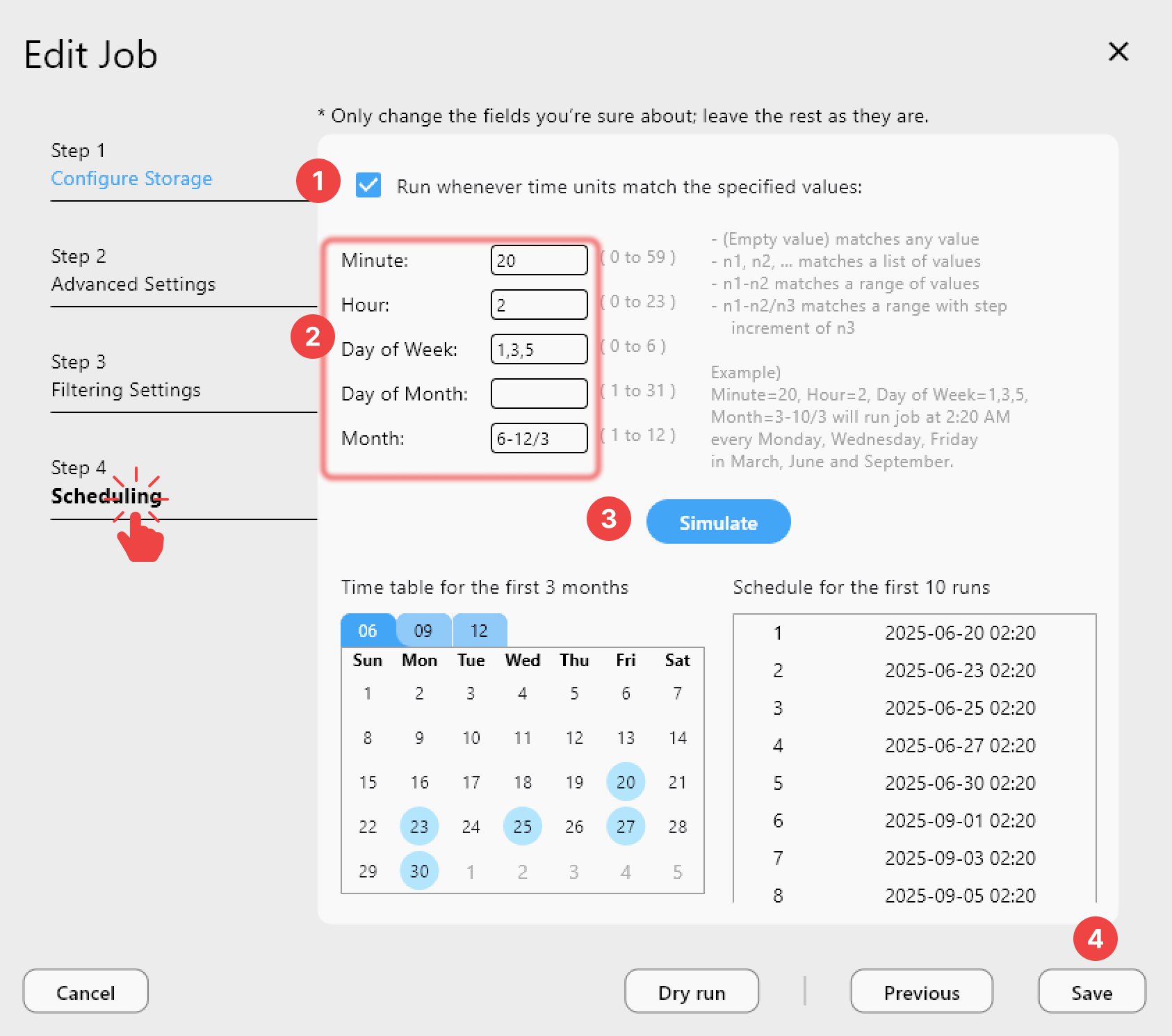
RcloneView's scheduler automates this process. Configure a daily sync job from OneDrive to Backblaze B2 or AWS S3, and RcloneView handles delta detection, transfer, and logging. The job history panel records every run with statistics: files transferred, files skipped, total bytes moved, and elapsed time.
For organizations with compliance requirements, pairing scheduled backups with immutable storage targets (like S3 Object Lock) ensures that even if OneDrive data is compromised, the backup remains intact and tamper-proof.
Comparing Folders and Verifying Data
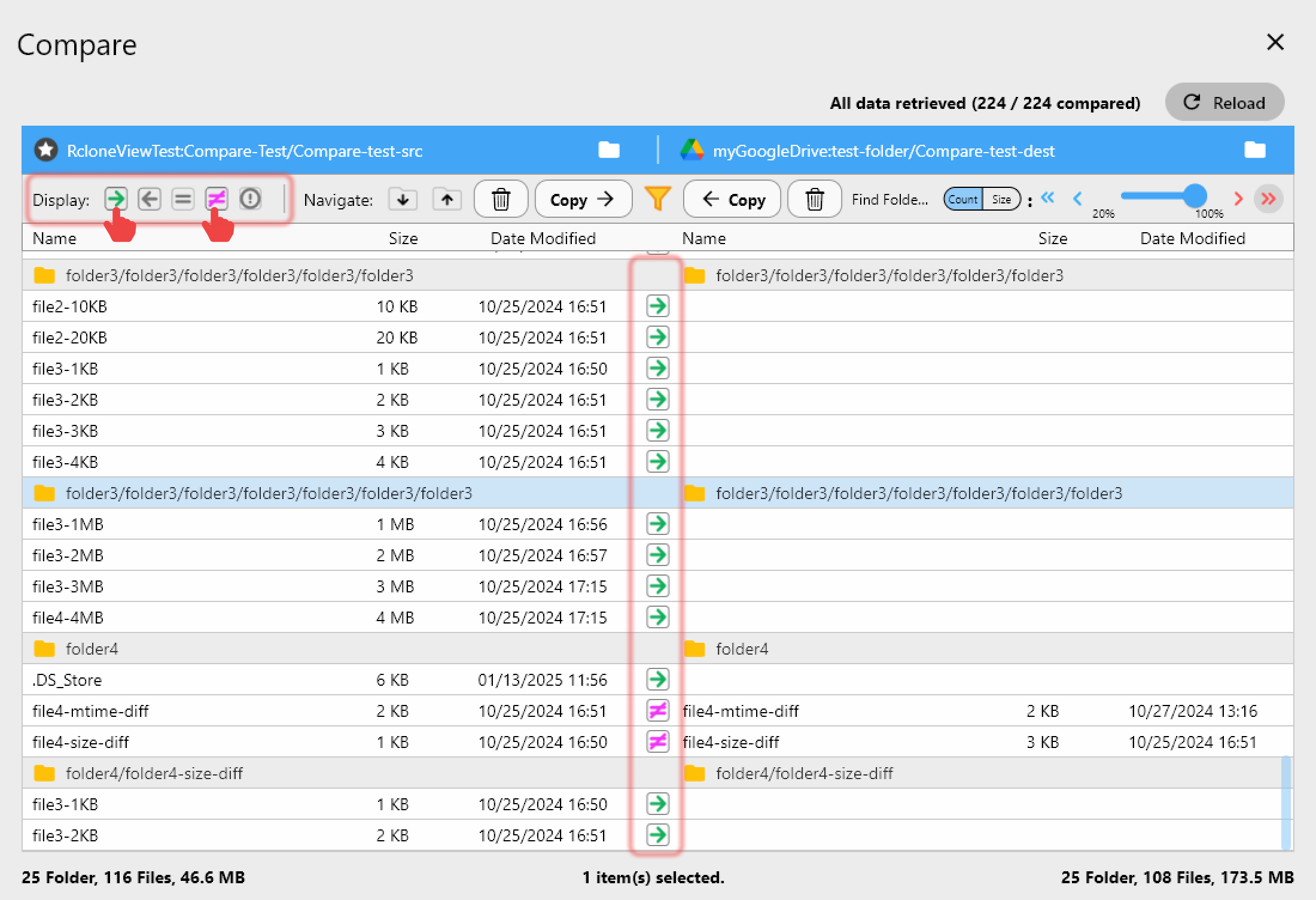
Before committing to a large sync, RcloneView's compare feature lets you see exactly what will change. Select two folders — one on OneDrive, one on another remote — and RcloneView highlights files that exist only on one side, files that differ in size or hash, and files that are identical.
This is particularly valuable after a migration. Run a compare operation between your OneDrive source and the backup destination to verify that every file arrived intact. The visual diff makes it easy to spot gaps and resolve them before decommissioning the original data.
Mounting OneDrive as a Local Drive
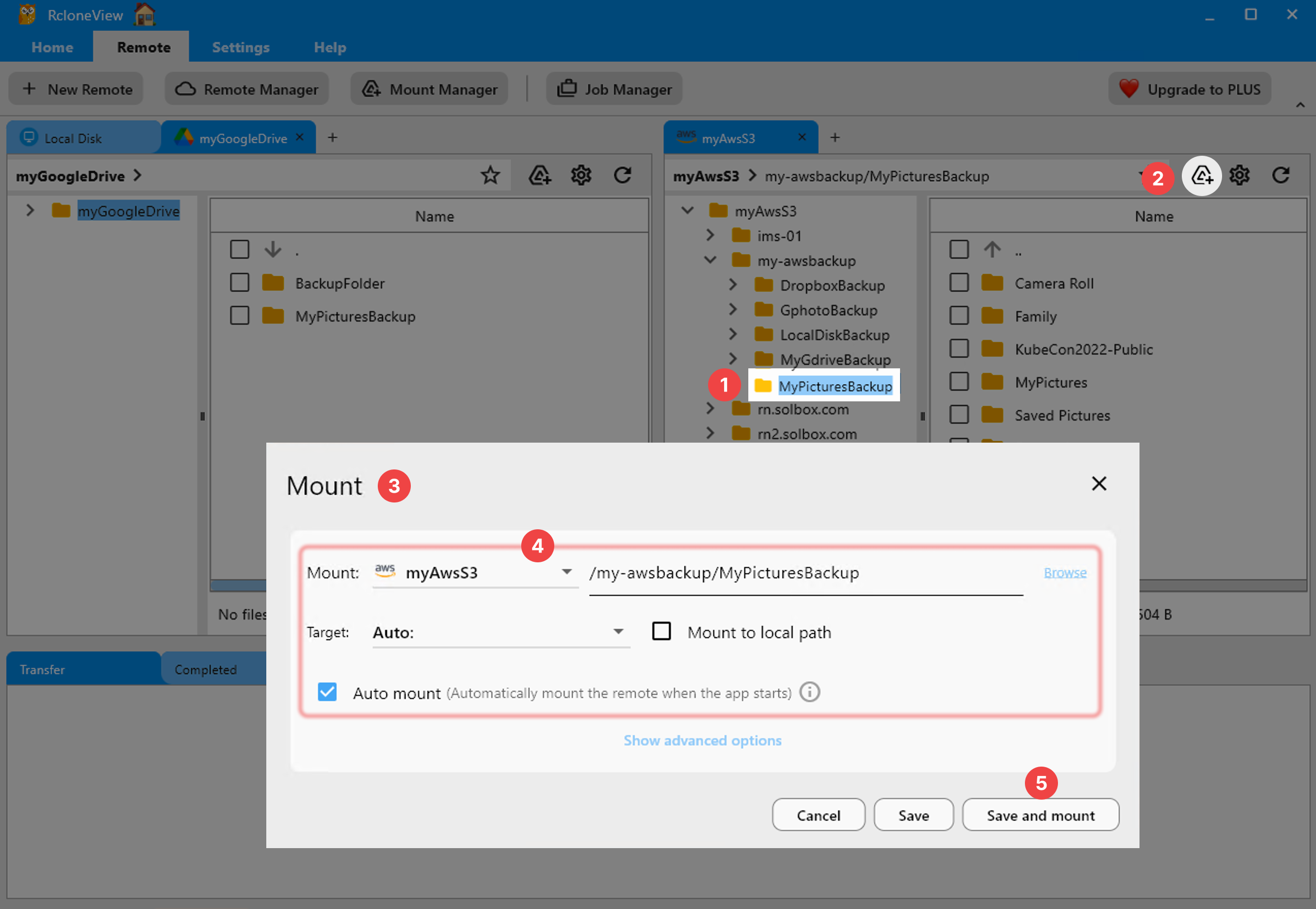
RcloneView can mount OneDrive as a local drive letter on Windows or a mount point on macOS and Linux. This lets you access OneDrive files directly from any application — file managers, media players, or command-line tools — without downloading them first.
For best performance, enable VFS caching. This stores recently accessed files locally so subsequent reads are instant. The cache size and expiration are configurable, allowing you to balance between disk usage and access speed. Mounting is especially useful for workflows where you need to browse or preview OneDrive files without a full sync.
Monitoring Transfers in Real Time
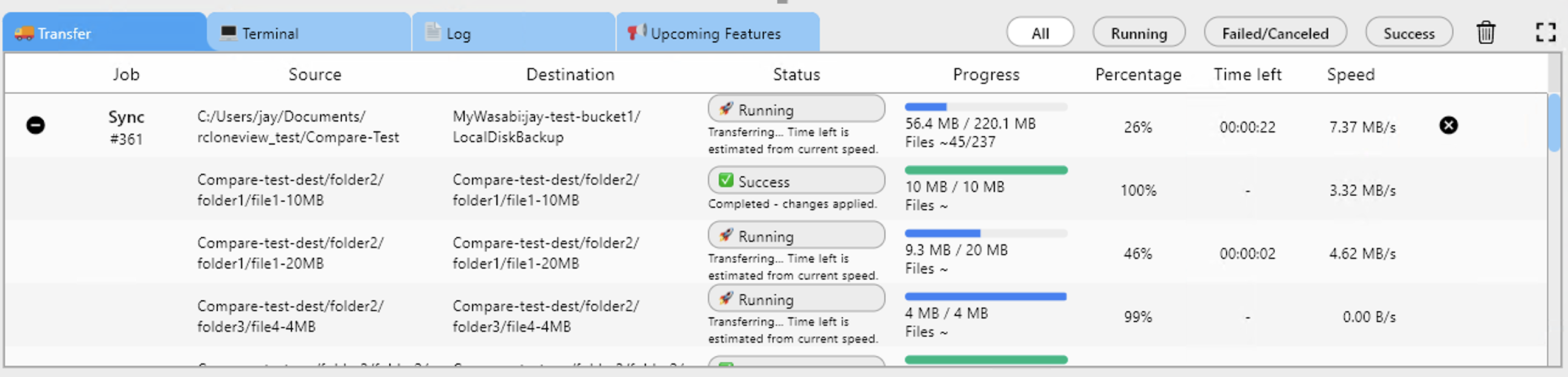
During large transfers, RcloneView provides a real-time monitoring dashboard showing transfer speed, progress per file, and overall completion percentage. You can pause, resume, or cancel individual transfers without affecting the rest of the queue. Bandwidth throttling is available to prevent OneDrive transfers from saturating your network — set a limit during business hours and allow full speed overnight.
Browsing and Managing Files
RcloneView's explorer offers capabilities that the OneDrive web interface does not — bulk operations across tens of thousands of files, drag-and-drop between any two cloud providers, and side-by-side comparison. You can rename, move, delete, and create folders directly on OneDrive through the explorer. For OneDrive for Business users with access to multiple SharePoint sites, each site appears as a navigable tree in the explorer panel.
Getting Started
- Download RcloneView from rcloneview.com.
- Authorize your Microsoft account via OAuth in the Remote Manager and select your OneDrive type (Personal, Business, or SharePoint).
- Browse your OneDrive in the two-pane explorer and set up a sync or copy job to another provider.
- Schedule a daily backup to keep a redundant copy on S3, B2, or another cloud.
OneDrive handles Microsoft 365 collaboration, but RcloneView ensures your data is backed up, portable, and accessible across every cloud you use.
Related Guides:
Supported Cloud Providers