Manage Cloudflare R2 Storage and Cloud Sync with RcloneView
Cloudflare R2 delivers S3-compatible object storage with zero egress fees — RcloneView gives you a visual interface to manage buckets, sync data, and automate backups.
Cloudflare R2 has rapidly gained traction as a cost-effective alternative to AWS S3. By eliminating per-gigabyte egress charges, R2 makes data retrieval predictable and affordable — a game-changer for workloads that serve content frequently. RcloneView connects to R2 using the S3-compatible API and provides a full file management GUI: browse buckets, upload and download files, sync with other clouds, and schedule automated backups.
Whether you are hosting static assets, archiving application logs, or using R2 as a central data hub across multiple clouds, RcloneView removes the need for CLI commands and makes R2 management accessible to everyone on your team.
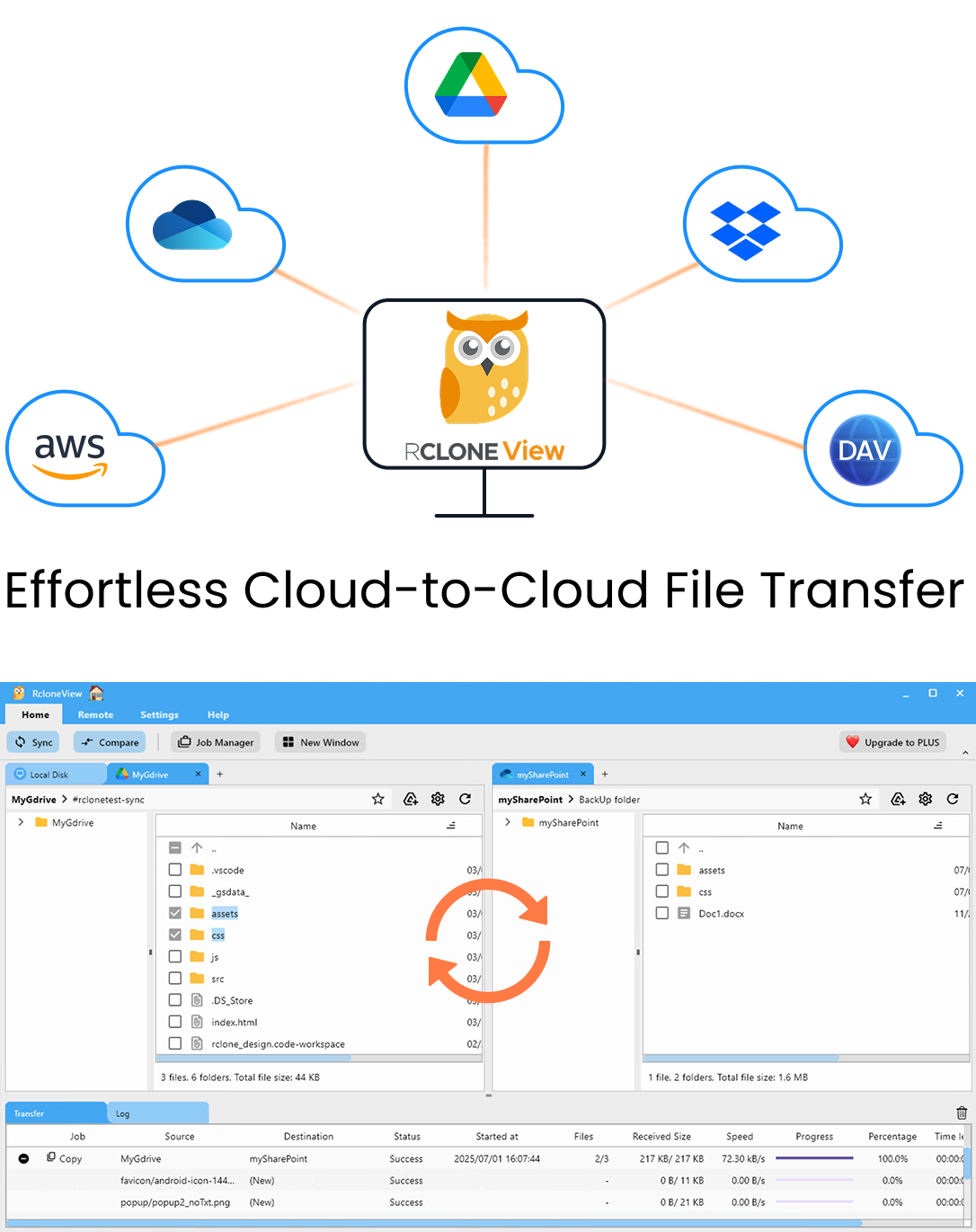
Manage & Sync All Clouds in One Place
RcloneView is a cross-platform GUI for rclone. Compare folders, transfer or sync files, and automate multi-cloud workflows with a clean, visual interface.
- One-click jobs: Copy · Sync · Compare
- Schedulers & history for reliable automation
- Works with Google Drive, OneDrive, Dropbox, S3, WebDAV, SFTP and more
Free core features. Plus automations available.
Connecting Cloudflare R2 in RcloneView
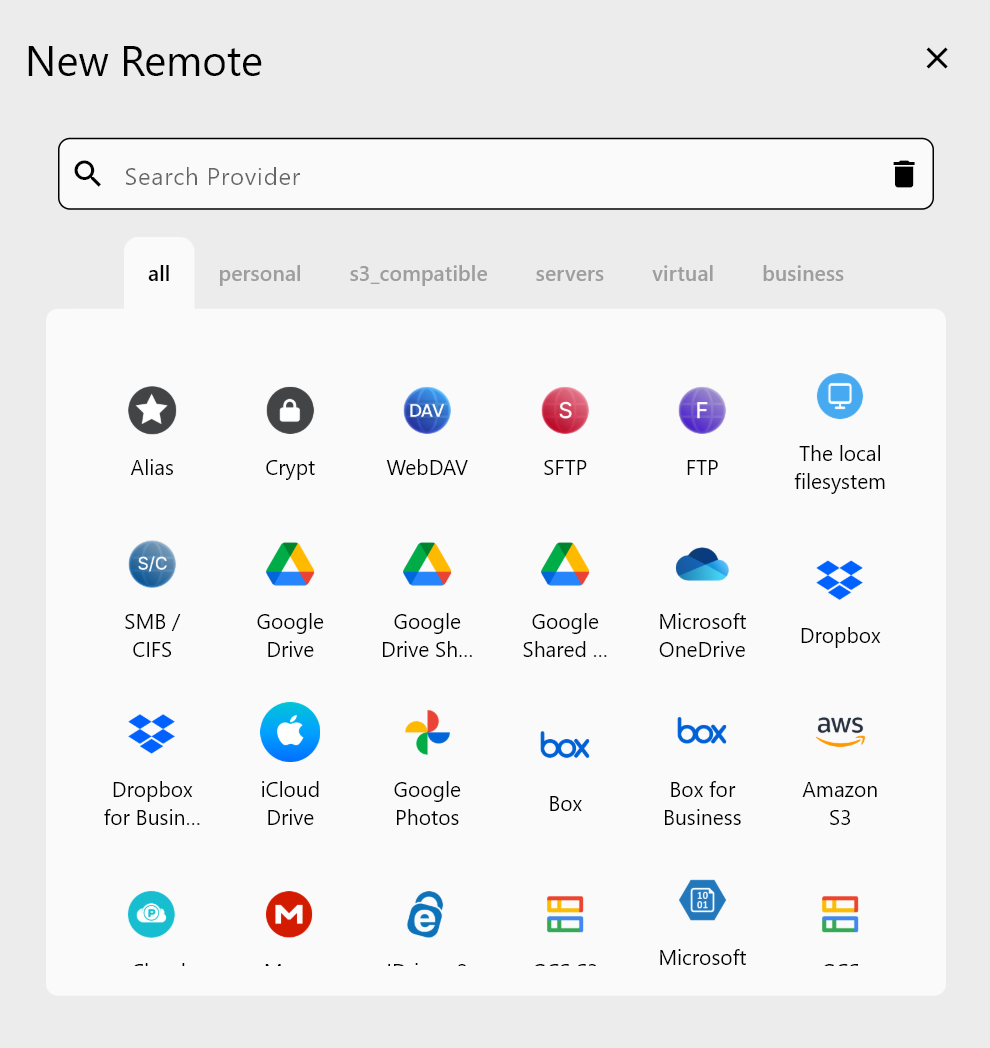
R2 uses S3-compatible credentials, so adding it to RcloneView follows the S3 remote setup flow. Open the Remote Manager, select Amazon S3 Compatible, and enter your R2 credentials:
- Provider: Cloudflare
- Access Key ID: Generated from the Cloudflare dashboard under R2 > Manage R2 API Tokens
- Secret Access Key: The corresponding secret
- Endpoint:
https://<account-id>.r2.cloudflarestorage.com
Once configured, RcloneView lists all your R2 buckets in the explorer panel. You can create new buckets, delete empty ones, and navigate the object hierarchy just as you would with any file system.
R2 does not support all S3 features — notably, it lacks lifecycle policies and some multipart upload edge cases. RcloneView handles these limitations gracefully, falling back to compatible operations when an unsupported feature is encountered.
The Zero-Egress-Fee Advantage
The single biggest differentiator of R2 is its pricing model. AWS S3 charges $0.09/GB for data transferred out to the internet. For a workload serving 10 TB per month, that is $900 in egress alone. R2 charges nothing for egress — you only pay for storage ($0.015/GB/month) and Class A/B operations.
This makes R2 ideal as a sync target. You can replicate data from Google Drive, OneDrive, or S3 to R2, and then serve it without worrying about bandwidth bills. RcloneView makes this replication simple: set up a sync job from any source to your R2 bucket, and the cost of accessing that data drops to zero.
For teams distributing large datasets — media files, software builds, machine learning models — the savings are substantial. RcloneView's scheduled sync ensures R2 always has the latest copy.
Syncing R2 with Other Cloud Providers
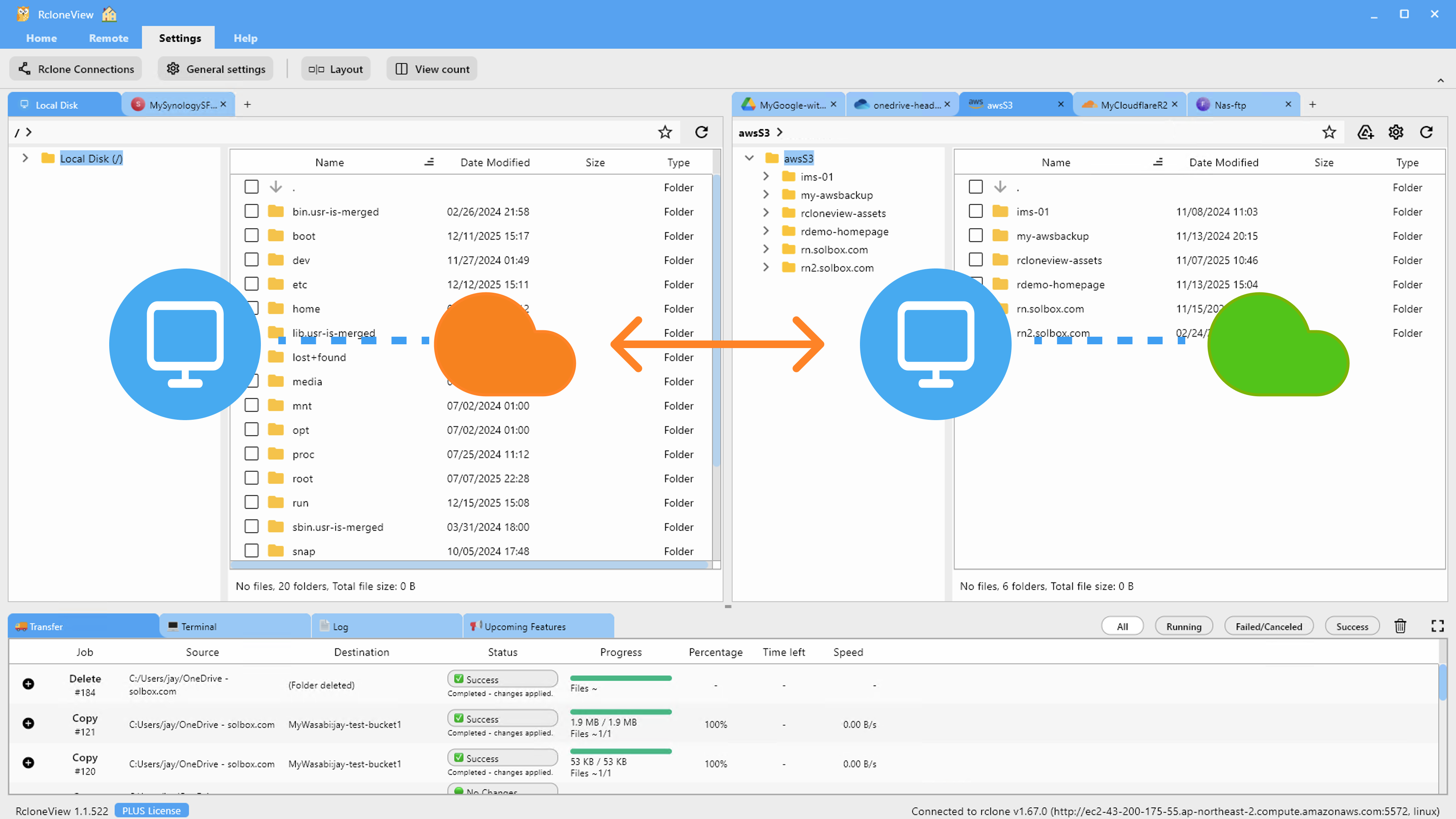
RcloneView's two-pane explorer places R2 alongside any other remote. Common workflows include:
- Google Drive to R2: Back up collaborative documents to R2 for long-term, cost-effective retention.
- S3 to R2: Mirror existing S3 buckets to R2 to reduce egress costs without changing your application layer.
- R2 to Backblaze B2: Create a secondary archive on a different provider for disaster recovery.
Since R2 supports standard S3 checksums (MD5 via ETag for non-multipart uploads), RcloneView can efficiently compare files between R2 and other S3-compatible providers. Files that have not changed are skipped, keeping sync operations fast and API costs low.
Scheduling Automated R2 Backups
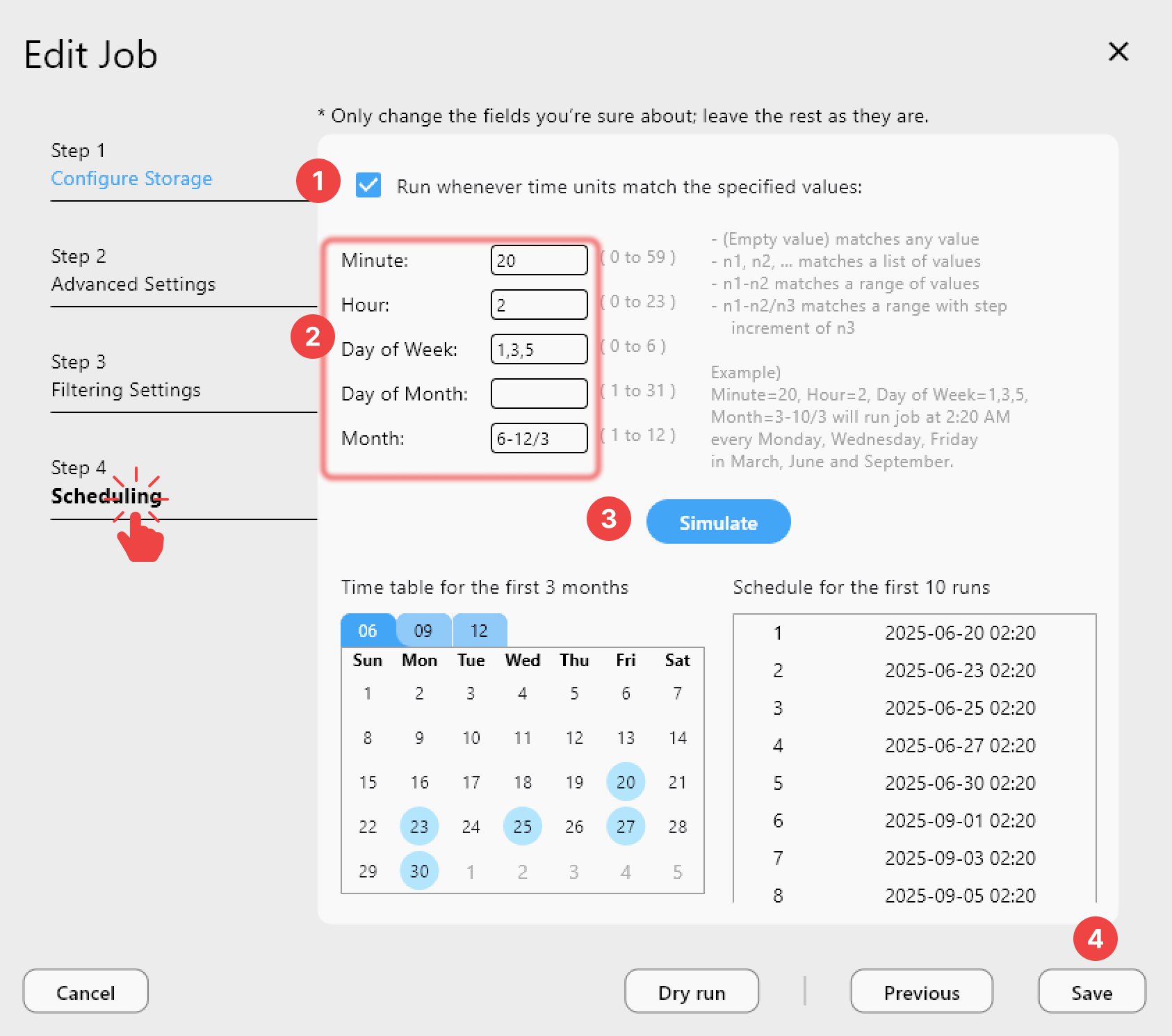
Automated backups to R2 are straightforward with RcloneView's scheduler. Define a sync job — for example, a nightly backup of your Google Drive project folders to an R2 bucket — and set the schedule. RcloneView handles delta detection, transfers only changed files, and logs every run.
The job history panel provides detailed statistics: files transferred, files skipped, bytes moved, duration, and any errors encountered. If a transfer fails mid-run (network interruption, API timeout), RcloneView resumes from where it left off on the next scheduled execution.
For critical data, consider running two scheduled jobs to separate R2 buckets in different regions (R2 supports automatic placement or specific location hints). This provides geographic redundancy without the complexity of configuring cross-region replication manually.
Browsing and Managing R2 Buckets
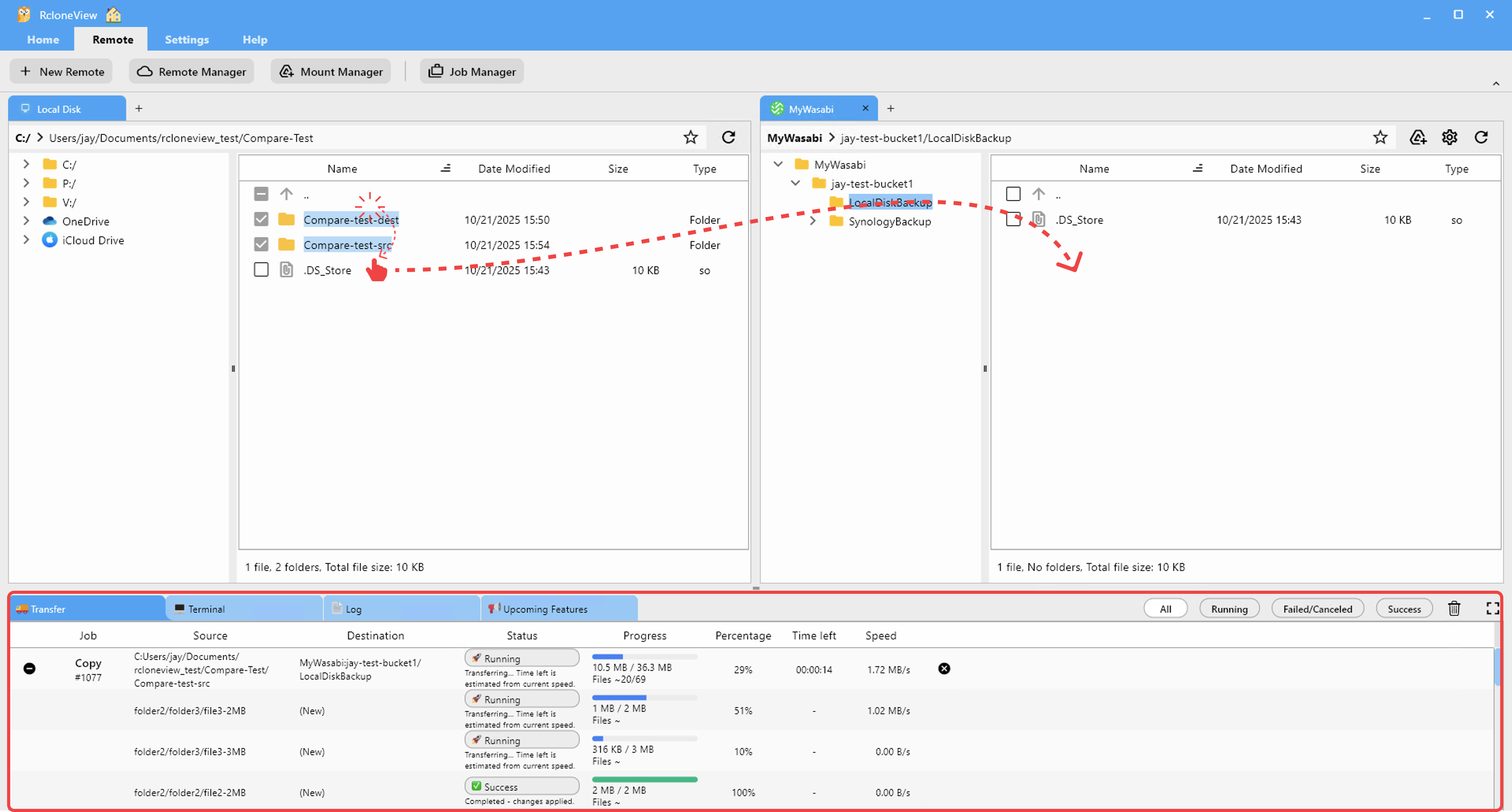
RcloneView's explorer lets you navigate R2 buckets as though they were local folders. You can upload files via drag-and-drop, create folder-like prefixes, rename objects, and delete in bulk. The explorer displays object sizes, last-modified timestamps, and storage class metadata.
For buckets with millions of objects, RcloneView paginates listing requests efficiently so the interface remains responsive. You can filter by prefix or use the search function to locate specific objects without scrolling through the entire bucket.
Monitoring Transfers and Optimizing Performance
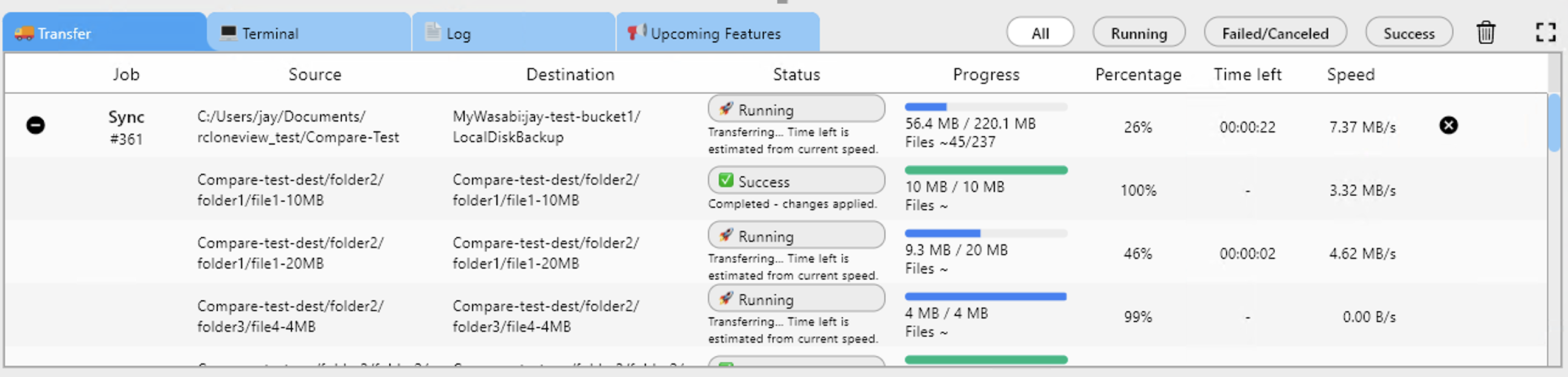
R2 supports multipart uploads for objects larger than 5 MB, and RcloneView uses this automatically to maximize throughput. The real-time monitoring dashboard shows per-file progress, overall transfer speed, and estimated time remaining.
For large migrations, you can tune concurrency (number of parallel transfers) and chunk size to match your network capacity. Bandwidth throttling is available to prevent R2 transfers from consuming all available bandwidth during business hours.
Cost Optimization Tips
To keep R2 costs as low as possible, follow these practices with RcloneView:
- Use sync instead of copy: Sync deletes files on the destination that no longer exist on the source, preventing orphaned objects from accumulating storage costs.
- Filter unnecessary files: Use RcloneView's filter rules to exclude temporary files, caches, and OS metadata from backups.
- Monitor storage growth: Review job history regularly to track how much data each sync job adds to your R2 buckets.
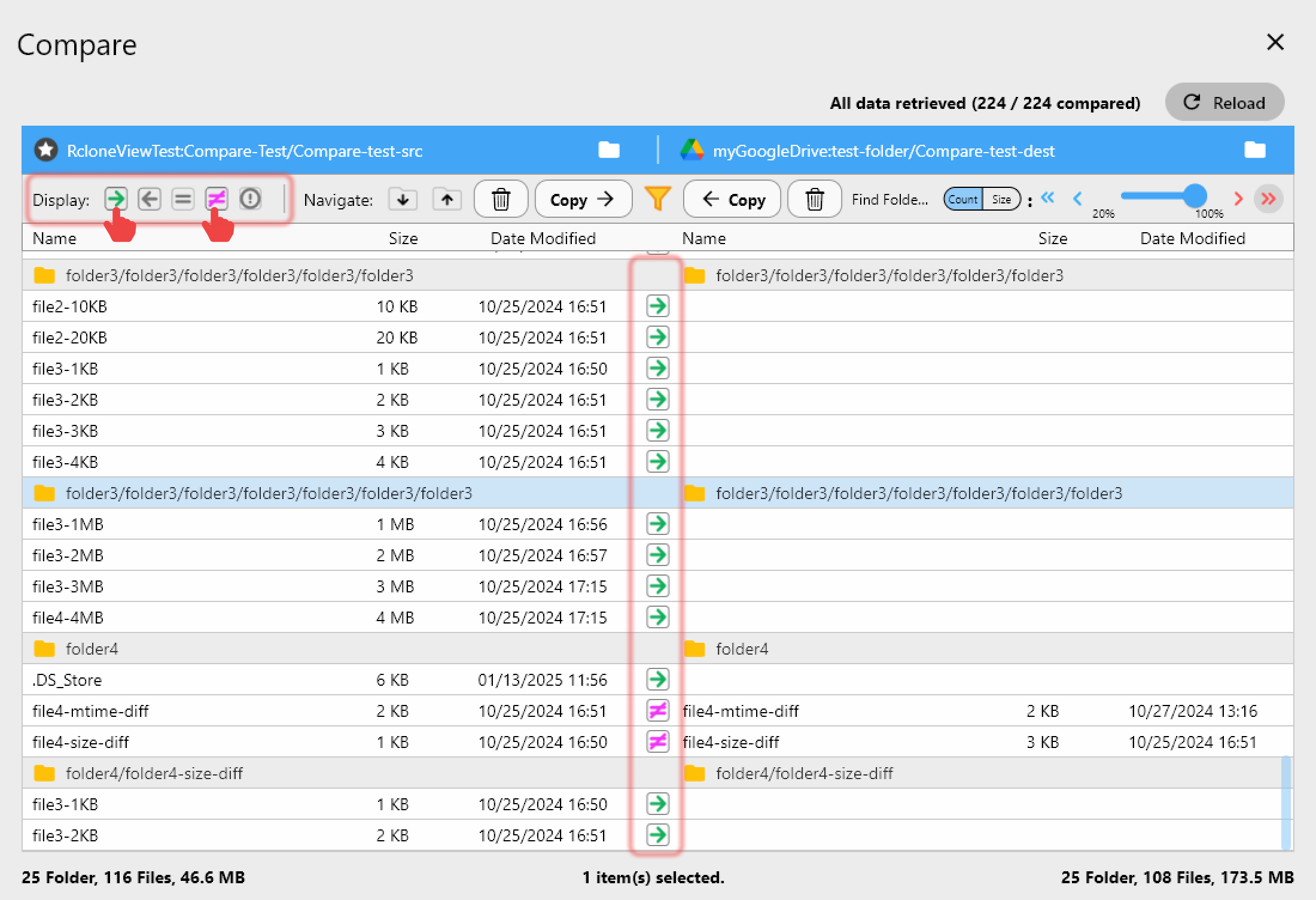
- Combine with compare: Before running a large sync, use RcloneView's compare feature to preview what will change and avoid unnecessary operations.
Getting Started
- Download RcloneView from rcloneview.com.
- Create an R2 API token in the Cloudflare dashboard and add R2 as an S3-compatible remote in the Remote Manager.
- Browse your R2 buckets in the two-pane explorer and set up sync jobs from other cloud providers.
- Schedule automated backups to keep R2 in sync with your primary storage.
Cloudflare R2 offers predictable pricing with zero egress fees, and RcloneView provides the visual management layer to make the most of it.
Related Guides:
Supported Cloud Providers