RcloneView vs CloudMounter: Multi-Cloud Mounting and File Management Compared
CloudMounter is a polished macOS/Windows tool for mounting cloud drives. RcloneView goes further with sync, transfers, scheduling, and 70+ provider support — all for free.
CloudMounter by Eltima (now part of Electronic Team) has earned a strong reputation among macOS users who want to mount cloud storage as local drives without syncing everything to disk. RcloneView takes a different philosophy: rather than just mounting, it provides a complete cloud file management platform built on rclone's engine. This comparison helps you understand when each tool makes sense.
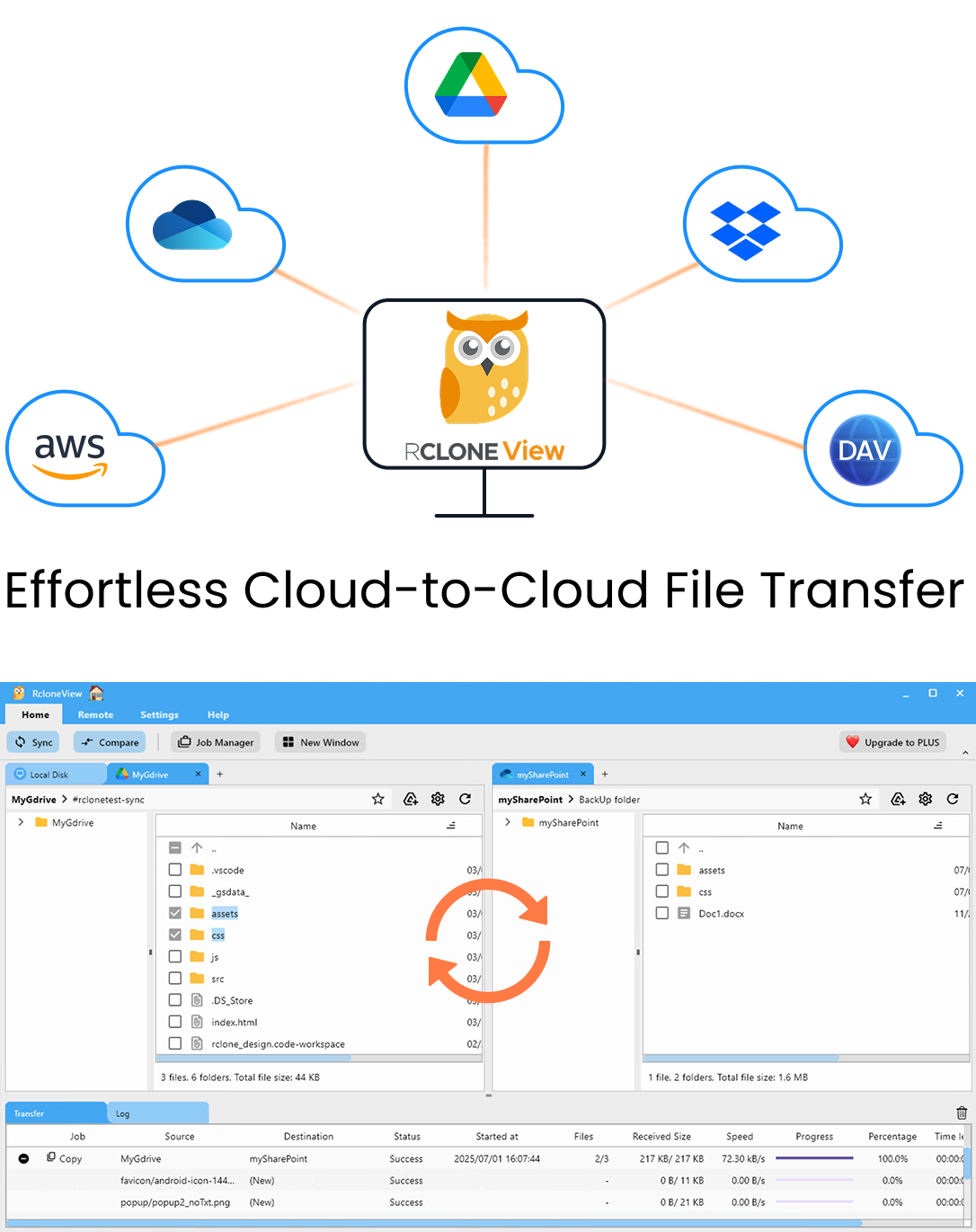
Manage & Sync All Clouds in One Place
RcloneView is a cross-platform GUI for rclone. Compare folders, transfer or sync files, and automate multi-cloud workflows with a clean, visual interface.
- One-click jobs: Copy · Sync · Compare
- Schedulers & history for reliable automation
- Works with Google Drive, OneDrive, Dropbox, S3, WebDAV, SFTP and more
Free core features. Plus automations available.
Feature Comparison
| Feature | RcloneView | CloudMounter |
|---|---|---|
| Cloud providers supported | 70+ | ~8 (Google Drive, OneDrive, Dropbox, S3, FTP, SFTP, WebDAV, Backblaze B2) |
| Mount cloud as local drive | Yes | Yes (primary feature) |
| Cloud-to-cloud transfers | Yes | No |
| File sync/copy/move | Yes | No (mount-only) |
| Folder comparison | Yes | No |
| Job scheduling | Yes | No |
| Encryption | Yes (rclone crypt — zero-knowledge) | Yes (local file-level encryption) |
| Bandwidth throttling | Yes | No |
| Real-time transfer monitoring | Yes | No |
| Finder/Explorer integration | Via mount | Native Finder integration |
| Platforms | Windows, macOS, Linux | macOS, Windows |
| Pricing | Free | $44.99 one-time or $29.99/year subscription |
| Backend | rclone (open source) | Proprietary |
Mounting Capabilities
CloudMounter's core strength is its seamless Finder integration on macOS. Mounted cloud drives appear in the sidebar, support Finder previews, and feel native. It handles on-demand file access so you don't need to download entire folders. The Windows version provides a similar experience through File Explorer.
RcloneView mounts cloud storage through rclone's VFS layer. This gives you more configurability: you can choose between full cache, minimal cache, or off (streaming) modes. VFS cache settings let you control how much local disk space is used, how long files are cached, and how frequently directory listings are refreshed.
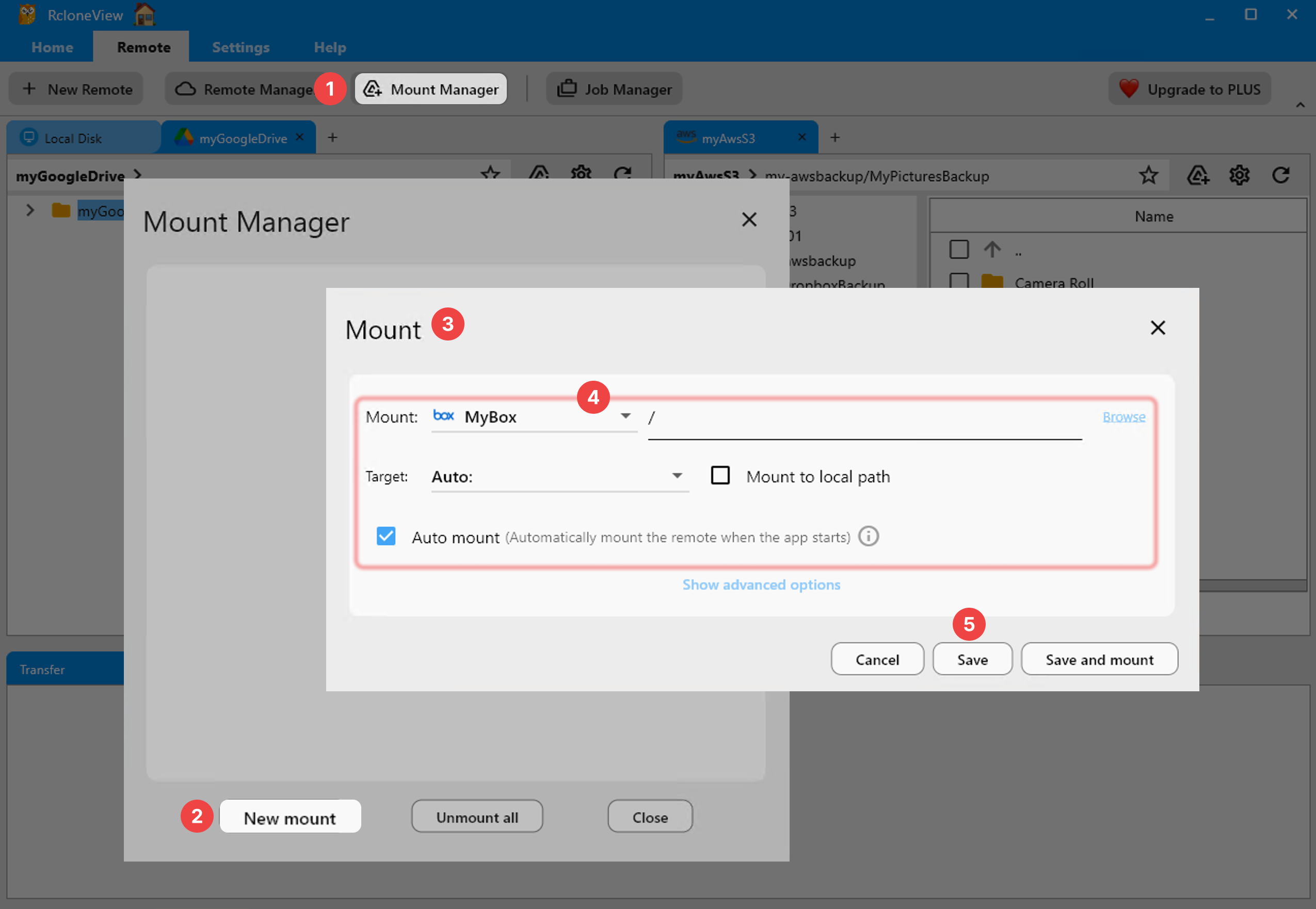
Both tools deliver functional cloud mounts, but CloudMounter prioritizes polish while RcloneView prioritizes flexibility and control.
Supported Cloud Providers
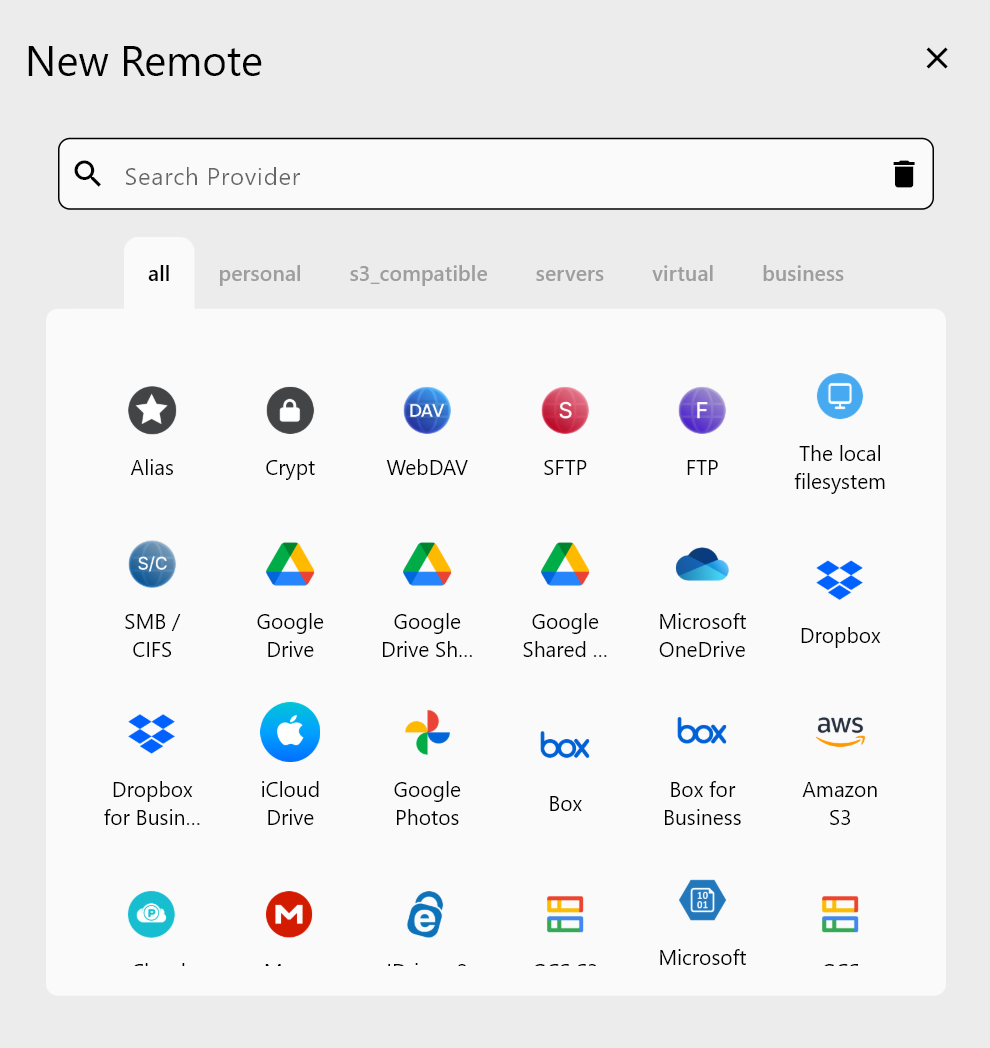
CloudMounter connects to approximately 8 services: Google Drive, OneDrive, Dropbox, Amazon S3, Backblaze B2, FTP, SFTP, and WebDAV. This covers the most common consumer and developer clouds.
RcloneView supports over 70 providers through rclone, including all of CloudMounter's supported services plus Wasabi, Cloudflare R2, Azure Blob Storage, Google Cloud Storage, pCloud, Mega, Jottacloud, Internet Archive, and dozens more. If you work with niche or enterprise storage, the difference is decisive.
Sync and Transfer Features
CloudMounter is strictly a mounting tool. Once a drive is mounted, any file operations happen through your OS file manager. There is no built-in sync engine, no copy/move operations with progress tracking, and no way to schedule automated transfers.
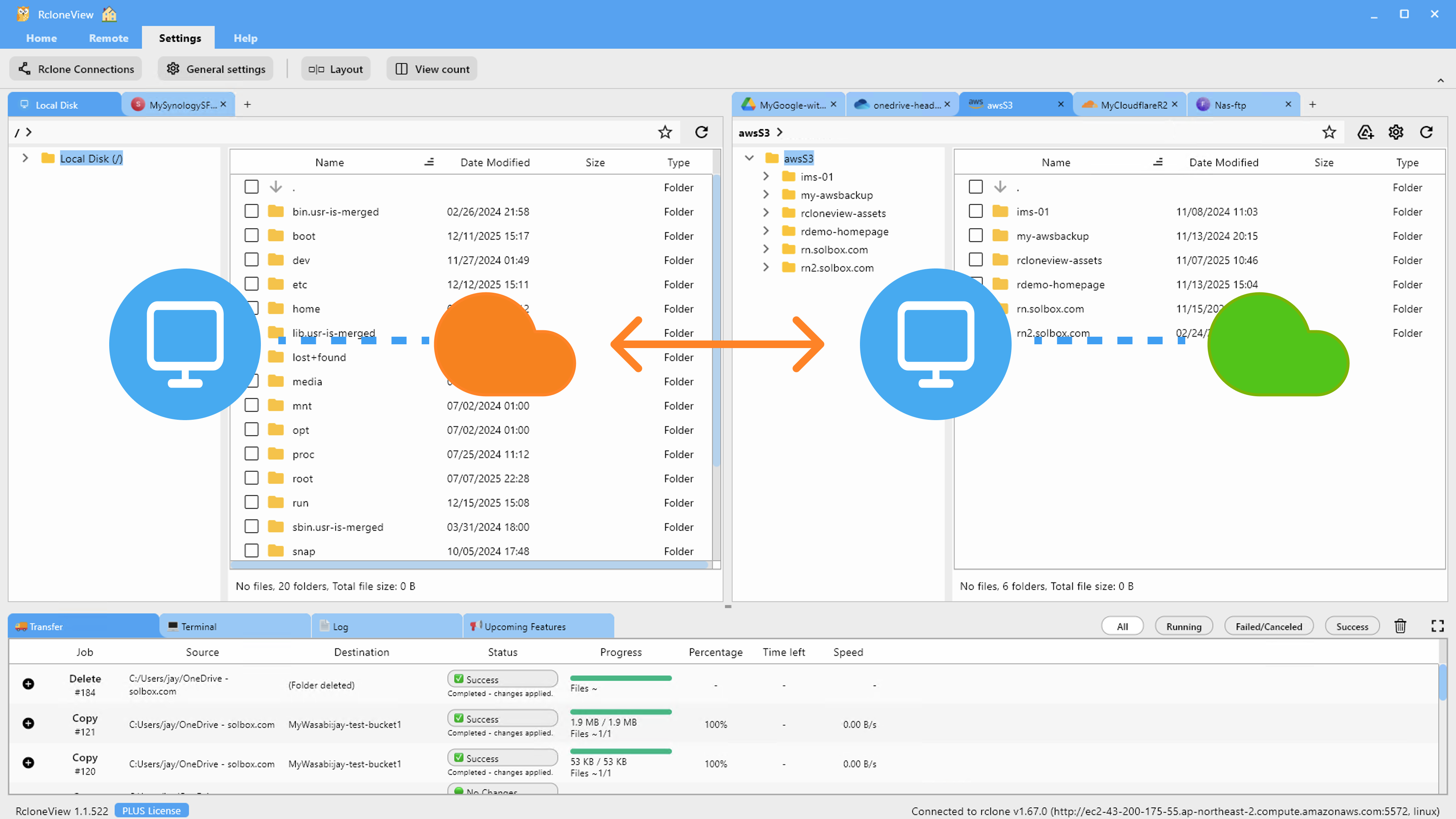
RcloneView includes a full two-pane file manager where you can browse two different cloud providers side by side, compare folder contents, and run sync, copy, or move operations with real-time monitoring. You can also schedule recurring jobs for automated backups.
Encryption Approaches
CloudMounter offers local file-level encryption. When you enable encryption for a mounted drive, files are encrypted before upload. However, the encryption is tied to CloudMounter itself — if you stop using the tool, accessing those encrypted files requires CloudMounter.
RcloneView uses rclone's crypt remote, which provides zero-knowledge encryption with standard algorithms (XSalsa20 for file contents, EME for file names). Encrypted remotes are fully interoperable with the rclone CLI, so you are never locked into a single tool. You can decrypt files with rclone on any machine, even without RcloneView installed.
Pricing
CloudMounter is a paid product. Eltima offers either a one-time purchase at $44.99 or an annual subscription at $29.99/year. The Setapp subscription bundle also includes CloudMounter for macOS users. There is no free tier beyond a limited trial.
RcloneView is completely free with no feature restrictions, no device limits, and no subscription requirements. For teams or users managing multiple machines, this difference compounds quickly.
Cross-Platform Support
CloudMounter supports macOS and Windows. There is no Linux version. If you work in a mixed environment with Linux servers or workstations, CloudMounter cannot help.
RcloneView runs on Windows, macOS, and Linux. The same interface and feature set is available across all three platforms, making it suitable for heterogeneous environments common in development teams, media production, and enterprise IT.
Job Scheduling and Automation
CloudMounter has no scheduling or automation capabilities. It is a mount-only tool — any recurring file operations require external scripting or manual intervention.
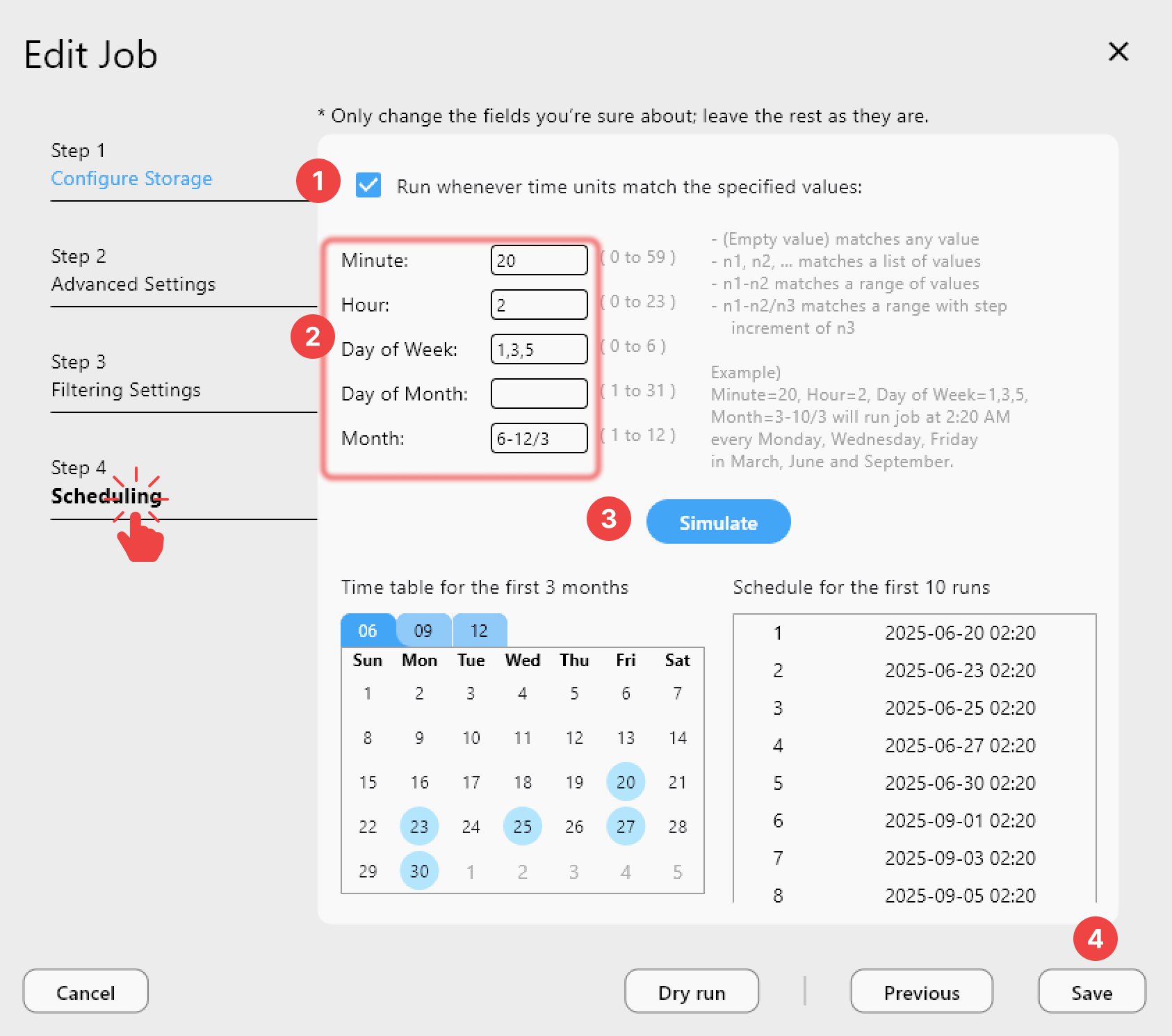
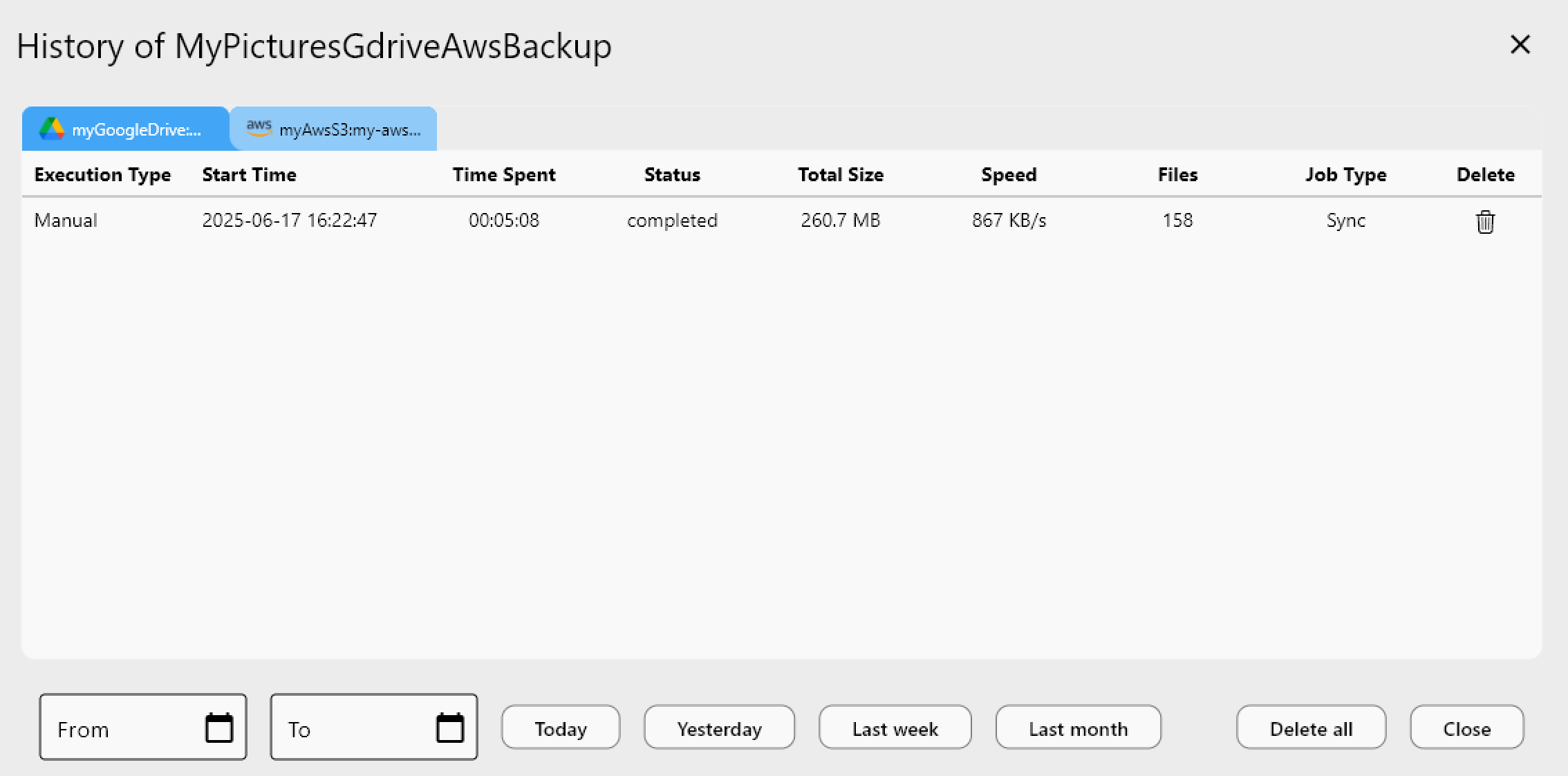
RcloneView includes built-in job scheduling with support for recurring sync, copy, and move operations. You can define filter rules, set bandwidth limits, and review job history after each run. For teams managing regular backups or data pipelines, this eliminates the need for external cron jobs or task schedulers.
When to Choose CloudMounter
- You primarily use macOS and want the best possible Finder integration for mounted drives.
- You only need to mount a few popular cloud services (Google Drive, Dropbox, OneDrive).
- You do not need sync, scheduling, or cloud-to-cloud transfer features.
- You are comfortable with the purchase price or already subscribe to Setapp.
When to Choose RcloneView
- You need support for more than 8 cloud providers.
- You want sync, copy, move, and folder comparison features.
- You need job scheduling for automated backups and recurring transfers.
- You prefer zero-knowledge encryption that is not tied to a single vendor.
- You need Linux support.
- You want a free tool with no license fees.
- You need cloud-to-cloud transfers without downloading files locally.
Getting Started with RcloneView
- Download RcloneView from rcloneview.com.
- Add your cloud remotes — any of 70+ supported providers.
- Mount drives from the Mount Manager or the remote explorer.
- Transfer and sync files between clouds with real-time progress tracking.
If mounting is all you need and you live on macOS, CloudMounter is a capable tool. If you need a broader cloud management platform with sync, scheduling, encryption, and 70+ providers, RcloneView covers far more ground — for free.
Related Guides:
Supported Cloud Providers