RcloneView vs GoodSync: Which Cloud Sync and Backup Tool Is Right for You?
· 3 min read
GoodSync has been a reliable sync and backup tool for years. RcloneView is a newer contender built on rclone's massive cloud provider library. Here's how they compare for cloud sync, backup, and multi-cloud management.
Both tools handle file synchronization and cloud backup, but they approach the problem differently. GoodSync focuses on bidirectional sync with conflict resolution. RcloneView focuses on multi-cloud management with 70+ providers and visual tools.
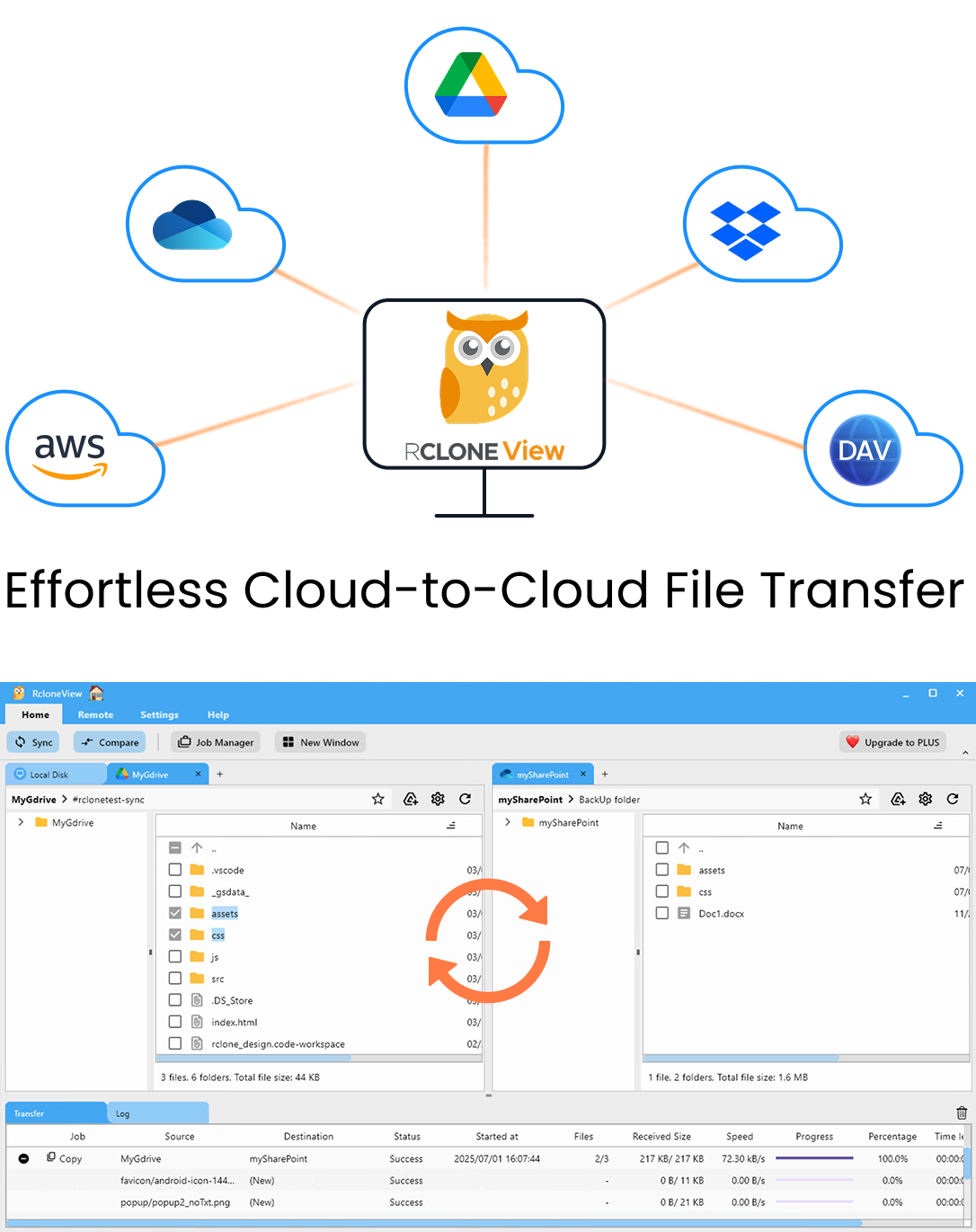
Manage & Sync All Clouds in One Place
RcloneView is a cross-platform GUI for rclone. Compare folders, transfer or sync files, and automate multi-cloud workflows with a clean, visual interface.
- One-click jobs: Copy · Sync · Compare
- Schedulers & history for reliable automation
- Works with Google Drive, OneDrive, Dropbox, S3, WebDAV, SFTP and more
WindowsmacOSLinux
Get Started Free →Free core features. Plus automations available.
Feature Comparison
Cloud Support
| Feature | GoodSync | RcloneView |
|---|---|---|
| Google Drive | ✅ | ✅ |
| OneDrive | ✅ | ✅ |
| Dropbox | ✅ | ✅ |
| AWS S3 | ✅ | ✅ |
| Backblaze B2 | ✅ | ✅ |
| Azure | ✅ | ✅ |
| FTP/SFTP | ✅ | ✅ |
| NAS (Synology) | Via network | ✅ (auto-detect) |
| Encrypted remotes | ❌ | ✅ (crypt) |
| Total providers | ~20 | 70+ |
Sync Features
| Feature | GoodSync | RcloneView |
|---|---|---|
| One-way sync | ✅ | ✅ |
| Two-way sync | ✅ (strong) | ✅ |
| Copy (no delete) | ✅ | ✅ |
| Conflict resolution | ✅ (advanced) | ✅ |
| Real-time sync | ✅ | Via scheduling |
| Scheduling | ✅ | ✅ |
| Batch jobs | ❌ | ✅ (v1.3) |
| Filter rules | ✅ | ✅ (full rclone) |
| Dry run | ✅ | ✅ |
File Management
| Feature | GoodSync | RcloneView |
|---|---|---|
| Two-pane explorer | ❌ | ✅ |
| Folder comparison | ✅ (sync preview) | ✅ (dedicated feature) |
| Mount as local drive | ❌ | ✅ |
| Built-in terminal | ❌ | ✅ |
| Slack/Discord alerts | ❌ | ✅ (v1.3) |
Pricing
| Plan | GoodSync | RcloneView |
|---|---|---|
| Personal | $29.95 (one-time, 1 PC) | $5.99/month or $49.99/year |
| Business | $49.95+ per seat/year | Same |
| Additional PCs | Extra licenses | Same price |
When to Choose GoodSync
- Real-time bidirectional sync is your primary need.
- You need strong conflict resolution for collaborative folders.
- You prefer one-time purchase licensing.
When to Choose RcloneView
- You manage 70+ cloud providers.
- You need visual file explorer, mount, and folder comparison.
- You need batch jobs, notifications, and encryption.
- You work with S3-compatible and niche providers.
Getting Started
- Download RcloneView from rcloneview.com.
- Add all your cloud accounts.
- Browse, sync, compare, and automate.
Related Guides:
Supported Cloud Providers