RcloneView vs MEGAsync: Cloud Storage Tools Compared
MEGAsync is a capable sync client for MEGA cloud storage, but it only works with one provider. RcloneView connects to over 70 cloud services, making it the more versatile choice for anyone managing files across multiple platforms.
MEGAsync is the official desktop client for MEGA, a cloud storage provider known for its end-to-end encryption and generous 20 GB free tier. MEGAsync handles syncing, selective sync, and file transfers between your local machine and your MEGA account. It does what it does well, but it is locked to a single ecosystem.
RcloneView is a graphical interface built on rclone that supports MEGA alongside 70+ other cloud storage providers. It offers cloud-to-cloud transfers, a two-pane file explorer, mount capabilities, sync job scheduling, and real-time monitoring. If you use MEGA as one of several cloud services -- or plan to migrate away from MEGA -- RcloneView gives you the tools to manage everything from one place.
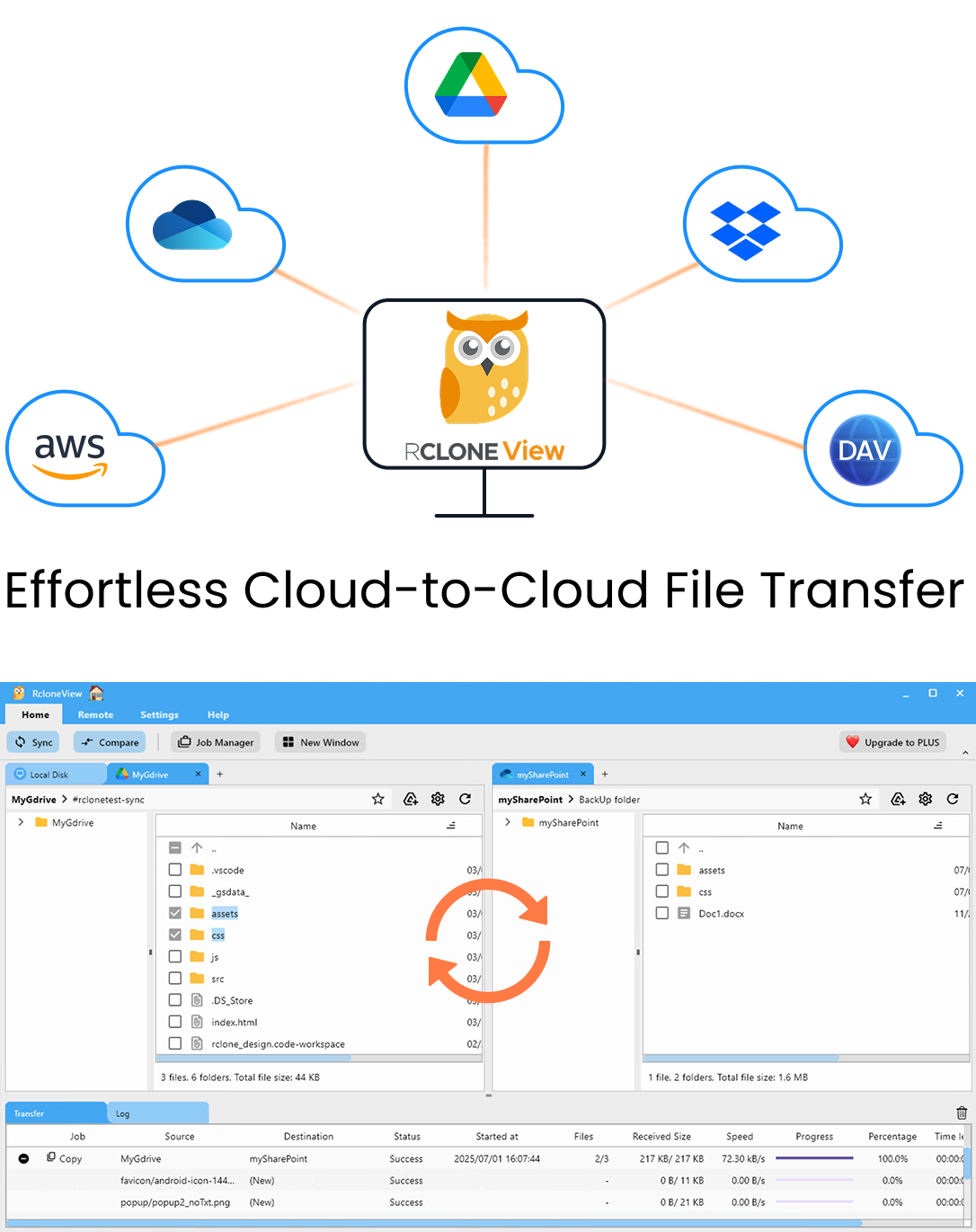
Manage & Sync All Clouds in One Place
RcloneView is a cross-platform GUI for rclone. Compare folders, transfer or sync files, and automate multi-cloud workflows with a clean, visual interface.
- One-click jobs: Copy · Sync · Compare
- Schedulers & history for reliable automation
- Works with Google Drive, OneDrive, Dropbox, S3, WebDAV, SFTP and more
Free core features. Plus automations available.
Provider Support
MEGAsync works exclusively with MEGA. It cannot connect to Google Drive, OneDrive, Amazon S3, or any other service. If you need to move files between MEGA and another provider, you must download locally first and re-upload manually.
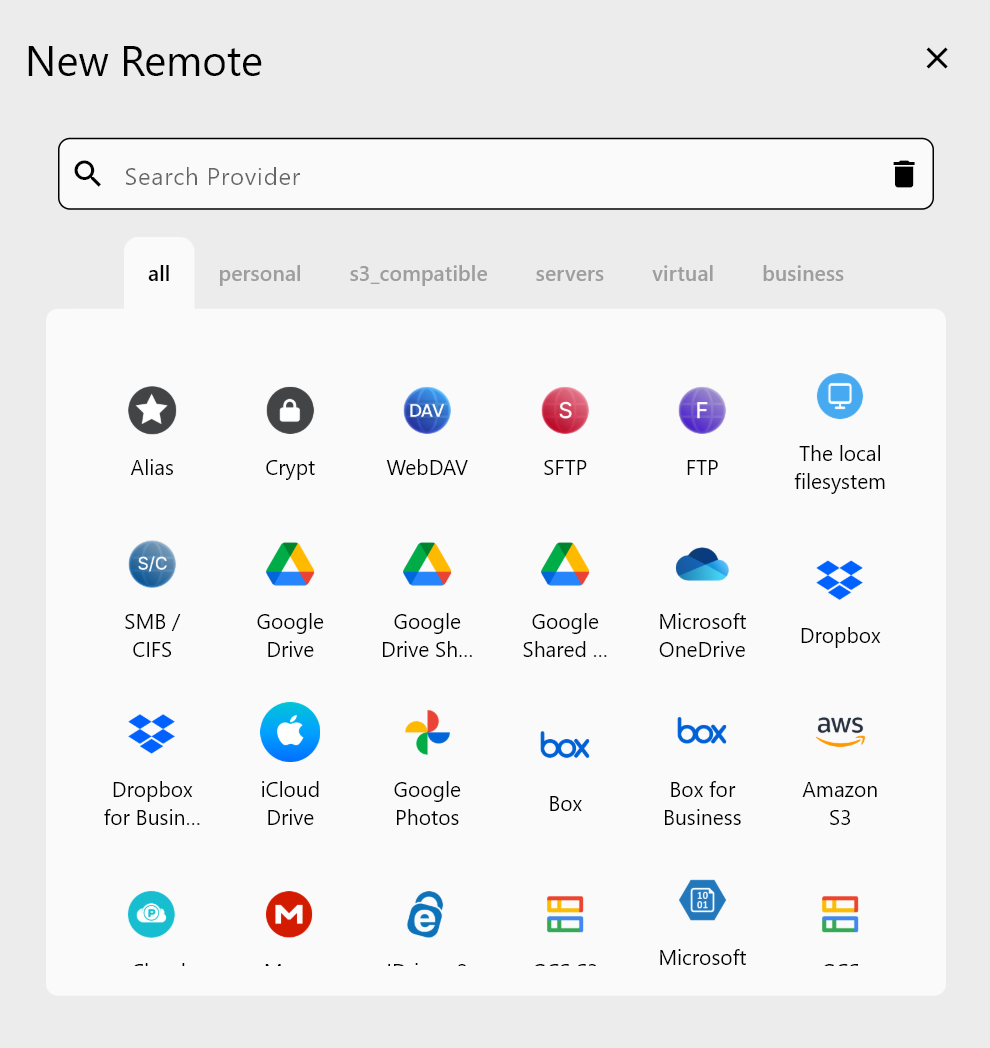
RcloneView supports MEGA as one of over 70 providers. You can connect Google Drive, OneDrive, Dropbox, Amazon S3, Azure Blob, Backblaze B2, Wasabi, Cloudflare R2, SFTP, WebDAV, and many more -- all from a single application. Switching between providers or transferring across them is built into the core workflow.
Encryption
This is where MEGA genuinely shines. MEGAsync provides end-to-end encryption by default. All files uploaded to MEGA are encrypted client-side before they leave your device, and only you hold the decryption keys. This zero-knowledge encryption is a core part of MEGA's value proposition.
RcloneView does not include built-in end-to-end encryption for all providers, but it supports rclone's crypt remote, which lets you encrypt files before uploading to any cloud storage. You choose the provider and layer encryption on top. This gives you zero-knowledge encryption on Google Drive, S3, Azure, or any other service -- not just MEGA. The trade-off is that you need to configure the crypt remote manually, while MEGAsync encrypts automatically.
Sync Features
MEGAsync offers two-way sync between local folders and your MEGA cloud. It supports selective sync, so you can choose which MEGA folders sync to your machine. The sync engine detects changes in near real time and handles conflict resolution.
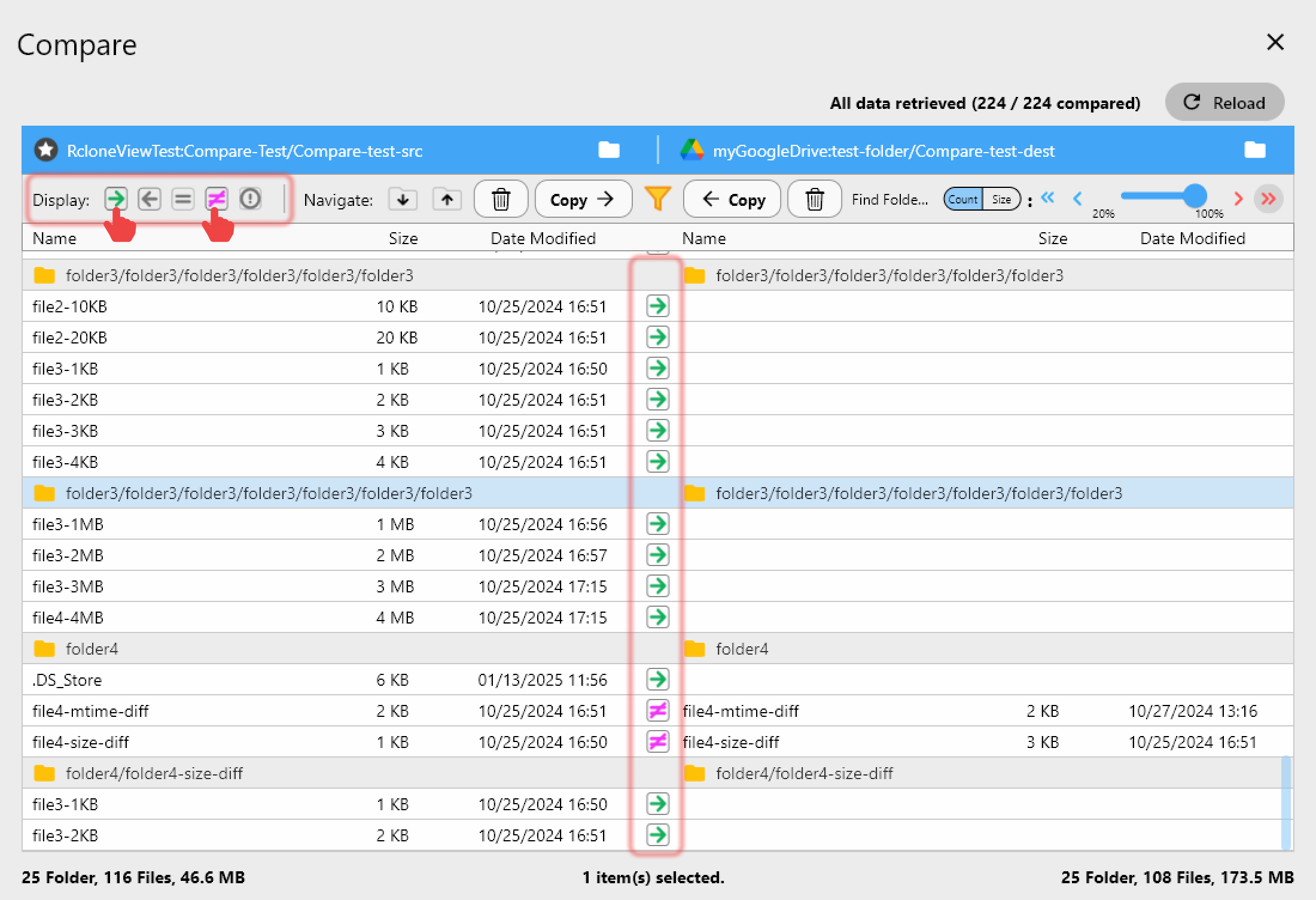
RcloneView offers sync, copy, and move operations between any two locations. You can sync local-to-cloud, cloud-to-local, or cloud-to-cloud. The compare feature lets you preview differences before executing a transfer. You can also create persistent sync jobs with custom flags and filter rules.
Cloud-to-Cloud Transfers
MEGAsync does not support cloud-to-cloud transfers. Moving files from MEGA to Google Drive requires downloading to your local machine first, then uploading to the destination. For large libraries, this doubles the time and requires sufficient local disk space.
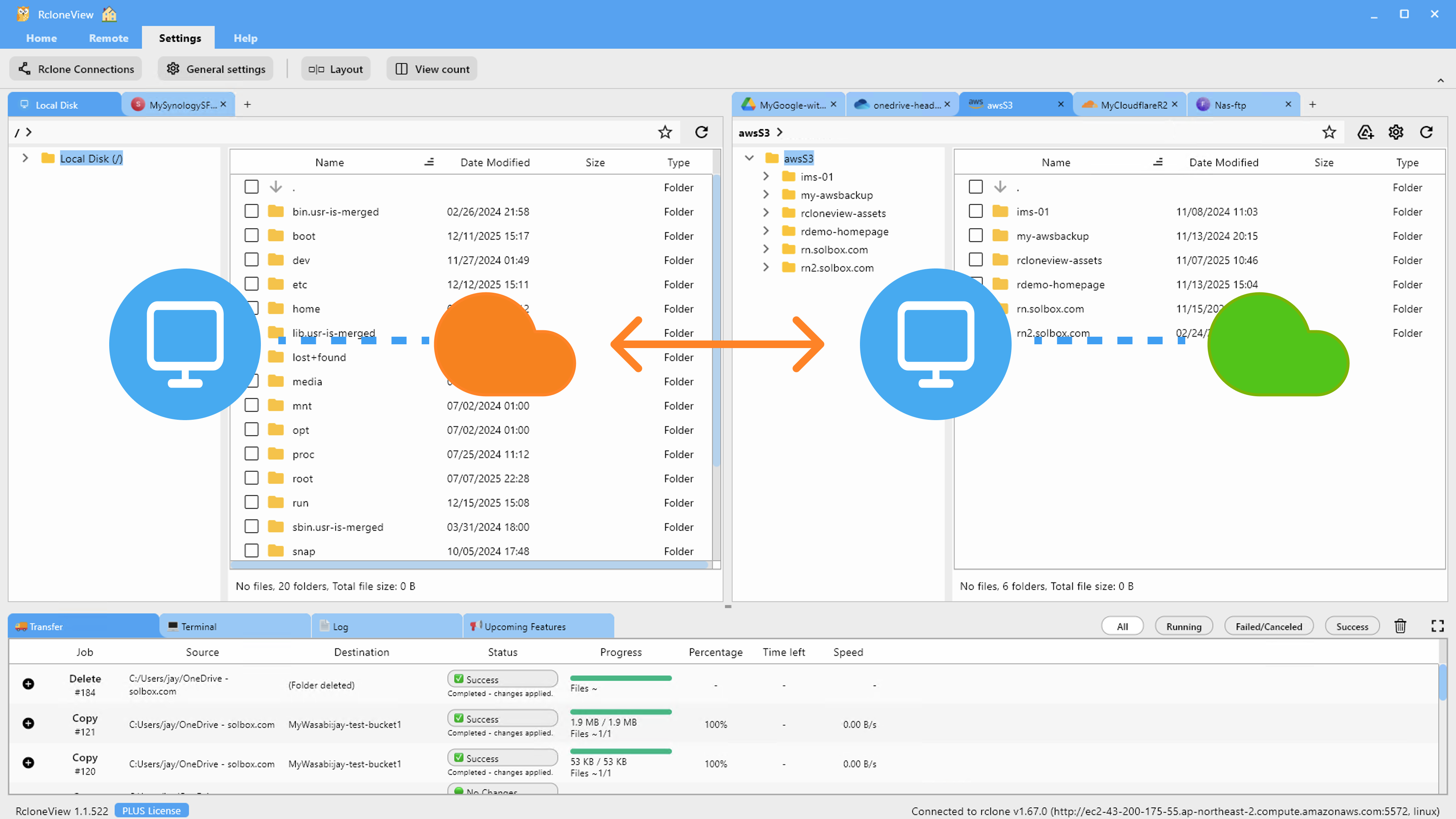
RcloneView handles cloud-to-cloud transfers natively. Open MEGA on one side and Google Drive on the other, then drag and drop. Files stream through your machine without requiring you to store them locally. This is invaluable for migrations, cross-cloud backups, and consolidating storage.
Mount Capabilities
MEGAsync does not offer native mount support. Your MEGA files are either synced to a local folder or accessed through the MEGA web interface. There is no way to browse your MEGA storage as a virtual drive without third-party tools.
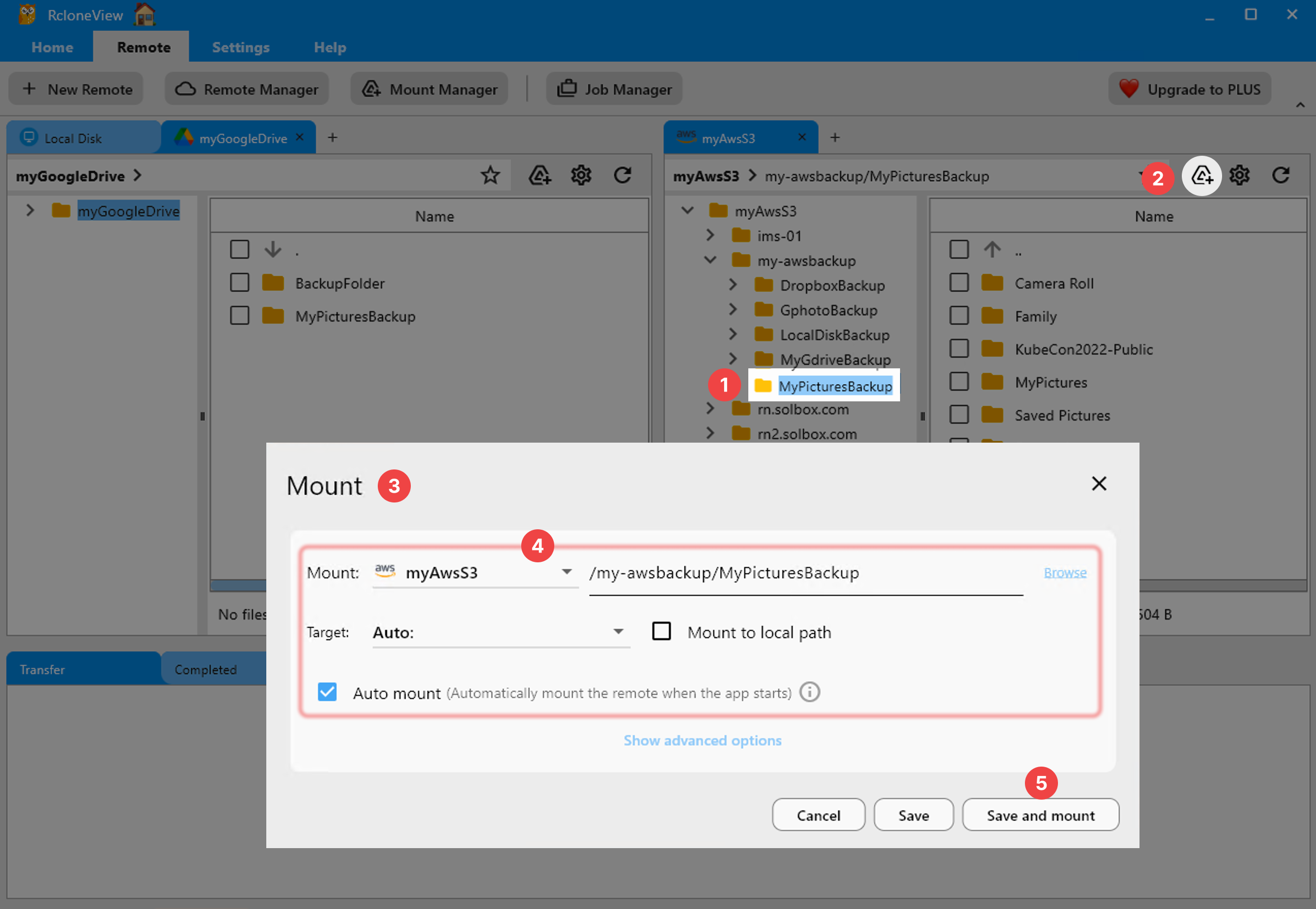
RcloneView can mount MEGA (and any other supported provider) as a local drive letter on Windows or a mount point on macOS and Linux. This lets you browse, open, and edit cloud files directly from your file explorer or terminal without syncing the entire contents to your disk.
Scheduling and Automation
MEGAsync runs continuously in the background and syncs changes as they happen. There is no built-in job scheduler. If you want to sync only at specific times -- for example, a nightly backup -- MEGAsync does not support that natively.
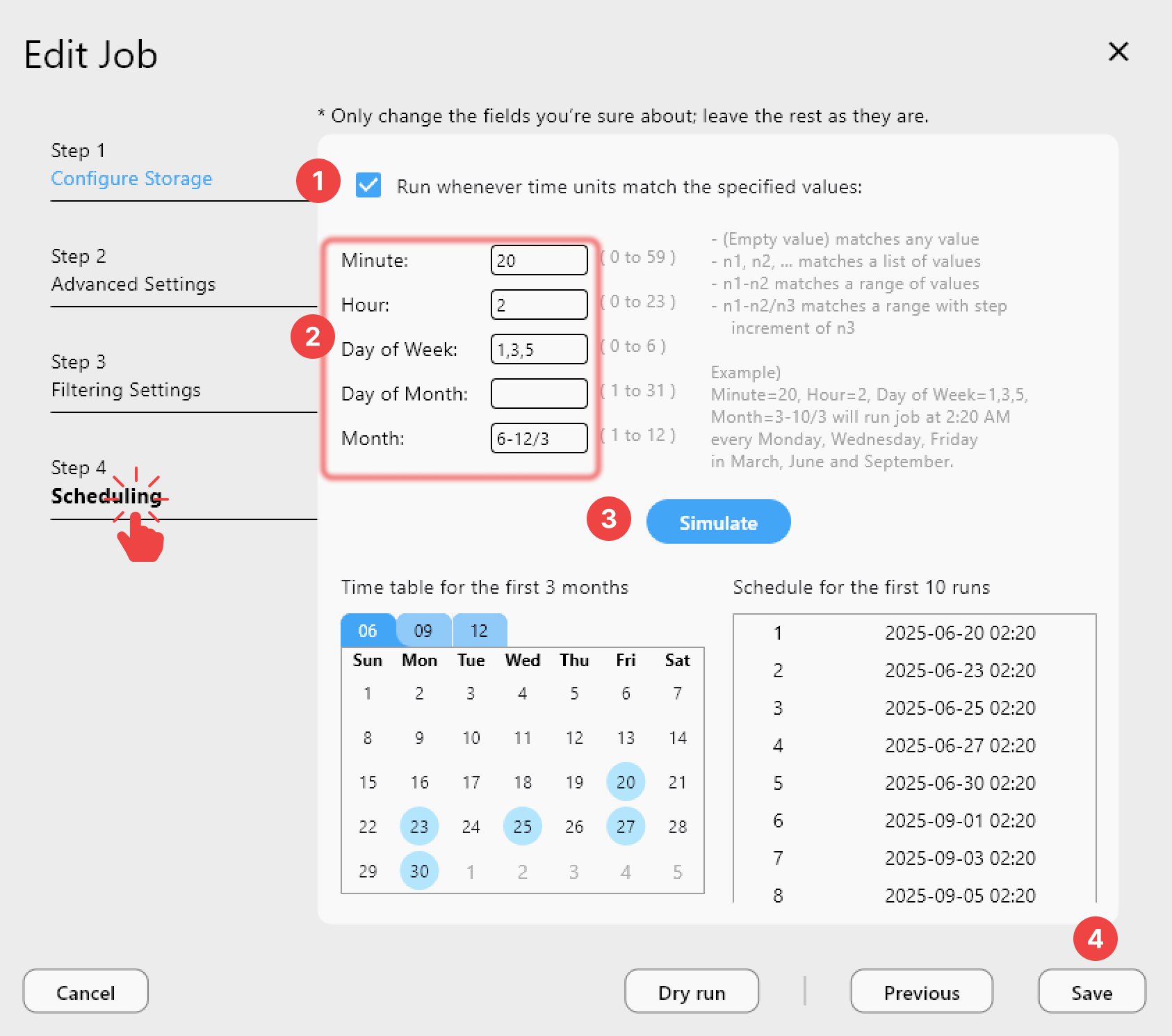
RcloneView lets you create sync jobs and schedule them to run at specific times or intervals. You can set up daily backups, weekly migrations, or on-demand transfers. Job history tracking lets you review past runs and catch any failures.
Transfer Monitoring
MEGAsync shows basic transfer progress in its desktop client -- you can see what files are uploading or downloading and their progress percentage. For most users this is sufficient, but detailed bandwidth and throughput metrics are limited.
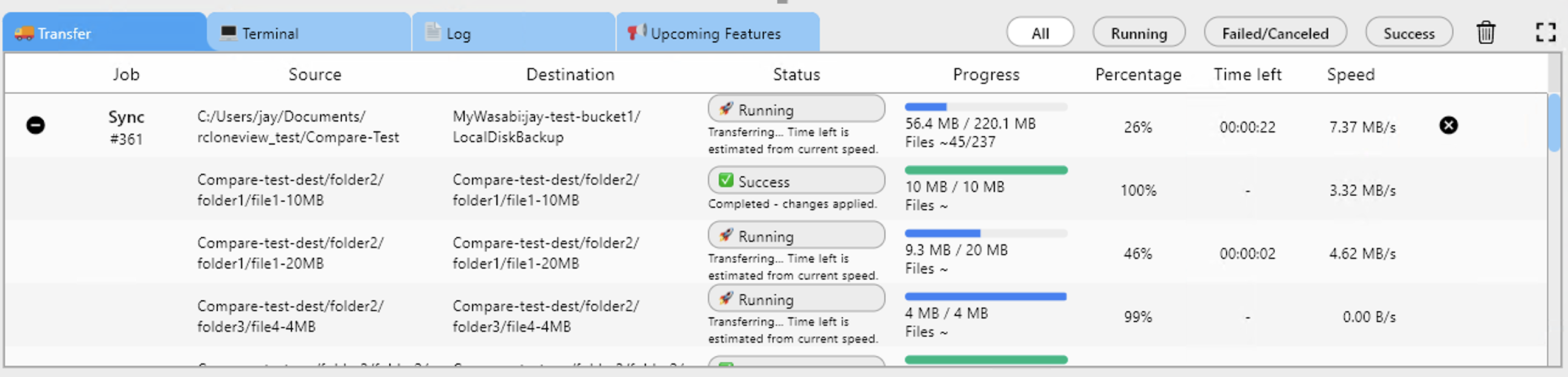
RcloneView provides real-time transfer monitoring with detailed statistics including transfer speed, files transferred, bytes moved, and estimated time remaining. You can monitor multiple concurrent transfers and review completed job history for auditing.
Pricing and Free Storage
MEGA offers 20 GB of free storage, which is among the most generous free tiers available. Paid plans start at around $5.50/month for 400 GB. MEGAsync itself is free to use with any MEGA account.
RcloneView is completely free regardless of which providers you connect. Since it is a management tool rather than a storage provider, your storage costs depend on the providers you choose. You could connect MEGA's free 20 GB alongside Backblaze B2's low-cost storage and Google Drive's 15 GB free tier, effectively combining multiple free tiers under one interface.
Feature Comparison Summary
| Feature | RcloneView | MEGAsync |
|---|---|---|
| Supported providers | 70+ | MEGA only |
| Built-in E2E encryption | Via crypt remote | Yes (default) |
| Cloud-to-cloud transfers | Yes | No |
| Mount as local drive | Yes | No |
| Job scheduling | Yes | No |
| S3/object storage support | Yes | No |
| Two-pane explorer | Yes | No |
| Free storage included | Depends on provider | 20 GB with MEGA |
| Price | Free | Free (with MEGA account) |
| Platform support | Windows, macOS, Linux | Windows, macOS, Linux |
Getting Started
- Download RcloneView from rcloneview.com.
- Add your MEGA account and any other cloud providers through the remote configuration wizard.
- Use the two-pane explorer to browse, transfer, or sync files between MEGA and other clouds.
- Set up scheduled sync jobs for automated backups from MEGA to a secondary provider.
MEGAsync is a strong choice if MEGA is your only cloud provider and you value its built-in encryption. But if you work with multiple services, need cloud-to-cloud transfers, or want mount and scheduling features, RcloneView provides a far more complete toolkit.
Related Guides:
Supported Cloud Providers