RcloneView vs Insync: Multi-Cloud File Management Compared
Choosing the right cloud file management tool can save hours of manual work every week. RcloneView and Insync both aim to simplify cloud storage, but they take fundamentally different approaches.
Insync has built a solid reputation as a Google Drive, OneDrive, and Dropbox desktop client. It offers selective sync, multiple account support, and a polished interface for those three providers. For users who only work with Google and Microsoft ecosystems, it can be a capable tool.
RcloneView, on the other hand, is a visual interface built on top of rclone that connects to over 70 cloud storage providers. It offers a two-pane file explorer, cloud-to-cloud transfers, mount support, job scheduling, and real-time transfer monitoring -- all without a subscription fee.
This comparison breaks down both tools across the categories that matter most: provider support, sync capabilities, pricing, mount features, and overall flexibility.
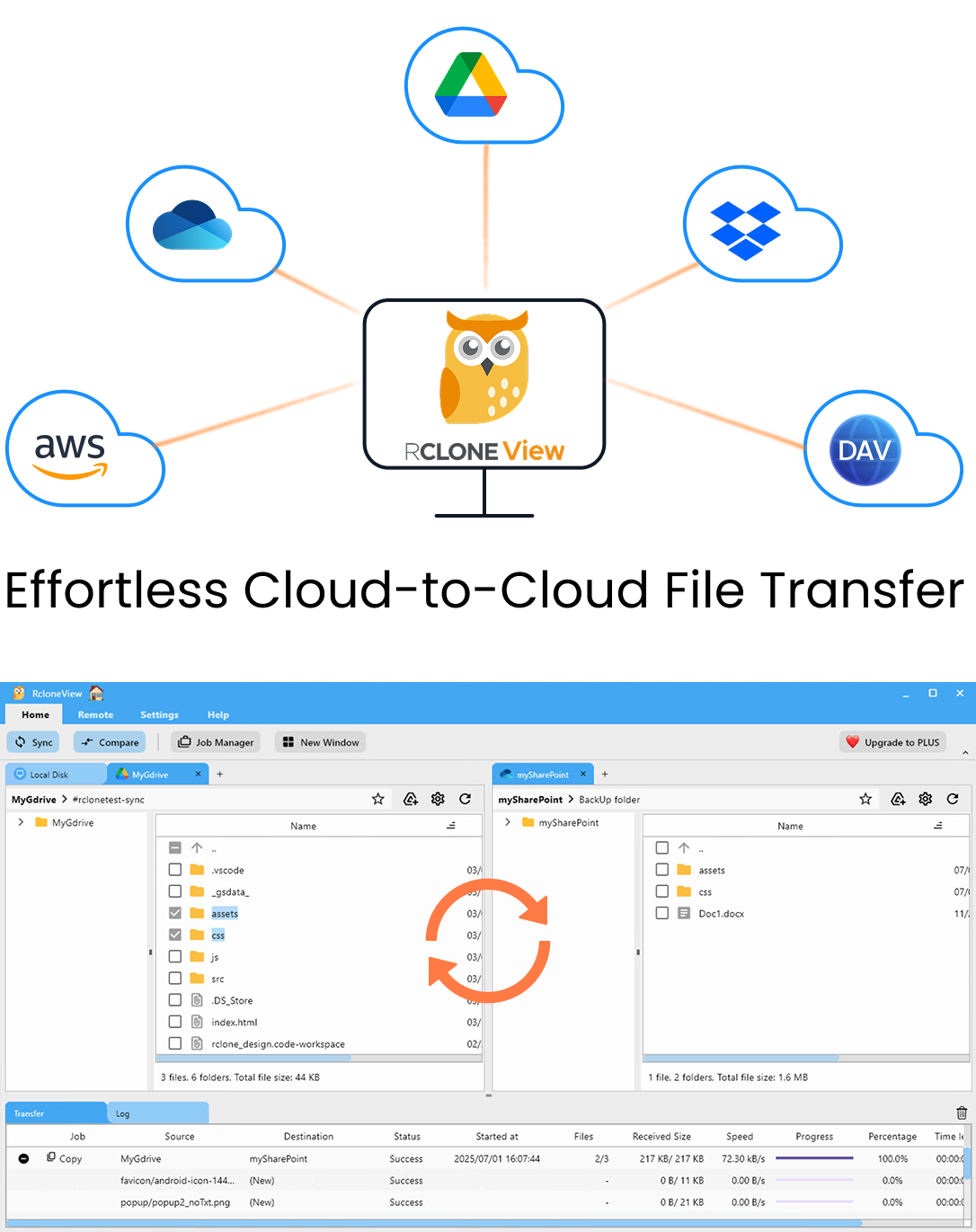
Manage & Sync All Clouds in One Place
RcloneView is a cross-platform GUI for rclone. Compare folders, transfer or sync files, and automate multi-cloud workflows with a clean, visual interface.
- One-click jobs: Copy · Sync · Compare
- Schedulers & history for reliable automation
- Works with Google Drive, OneDrive, Dropbox, S3, WebDAV, SFTP and more
Free core features. Plus automations available.
Provider Support
This is the single biggest difference between the two tools. Insync supports three providers: Google Drive (including Shared Drives), OneDrive (including SharePoint), and Dropbox. If your workflow lives entirely within those ecosystems, Insync covers you.
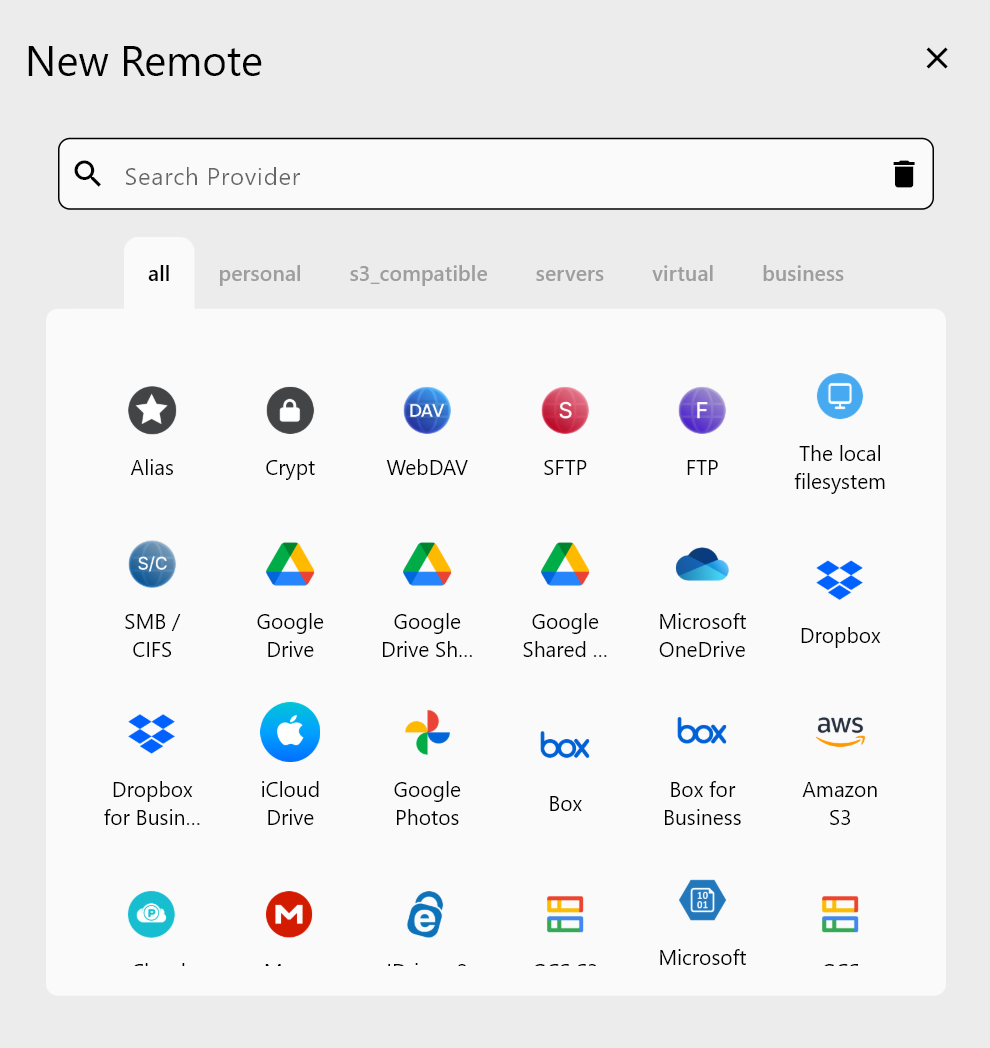
RcloneView supports over 70 providers, including all three that Insync supports plus Amazon S3, Azure Blob Storage, Backblaze B2, Wasabi, Cloudflare R2, MEGA, pCloud, SFTP, WebDAV, and dozens more. For teams working with S3-compatible object storage, NAS devices, or any provider outside the Google/Microsoft/Dropbox triangle, RcloneView is the clear choice.
Pricing Model
Insync uses a one-time purchase model, but it is not free. A single license costs around $30 per Google or OneDrive account, with additional costs for Teams or enterprise features. If you manage multiple accounts across multiple providers, the cost adds up.
RcloneView is free. It is built on rclone, which is open-source software. There are no per-account fees, no subscription charges, and no feature gates. Every capability -- from mount support to job scheduling to encryption -- is available at no cost.
Sync Features
Insync offers one-way and two-way sync between your local machine and supported cloud providers. It supports selective sync, ignore rules, and handles Google Docs conversion. The sync engine is mature and reliable for its supported providers.
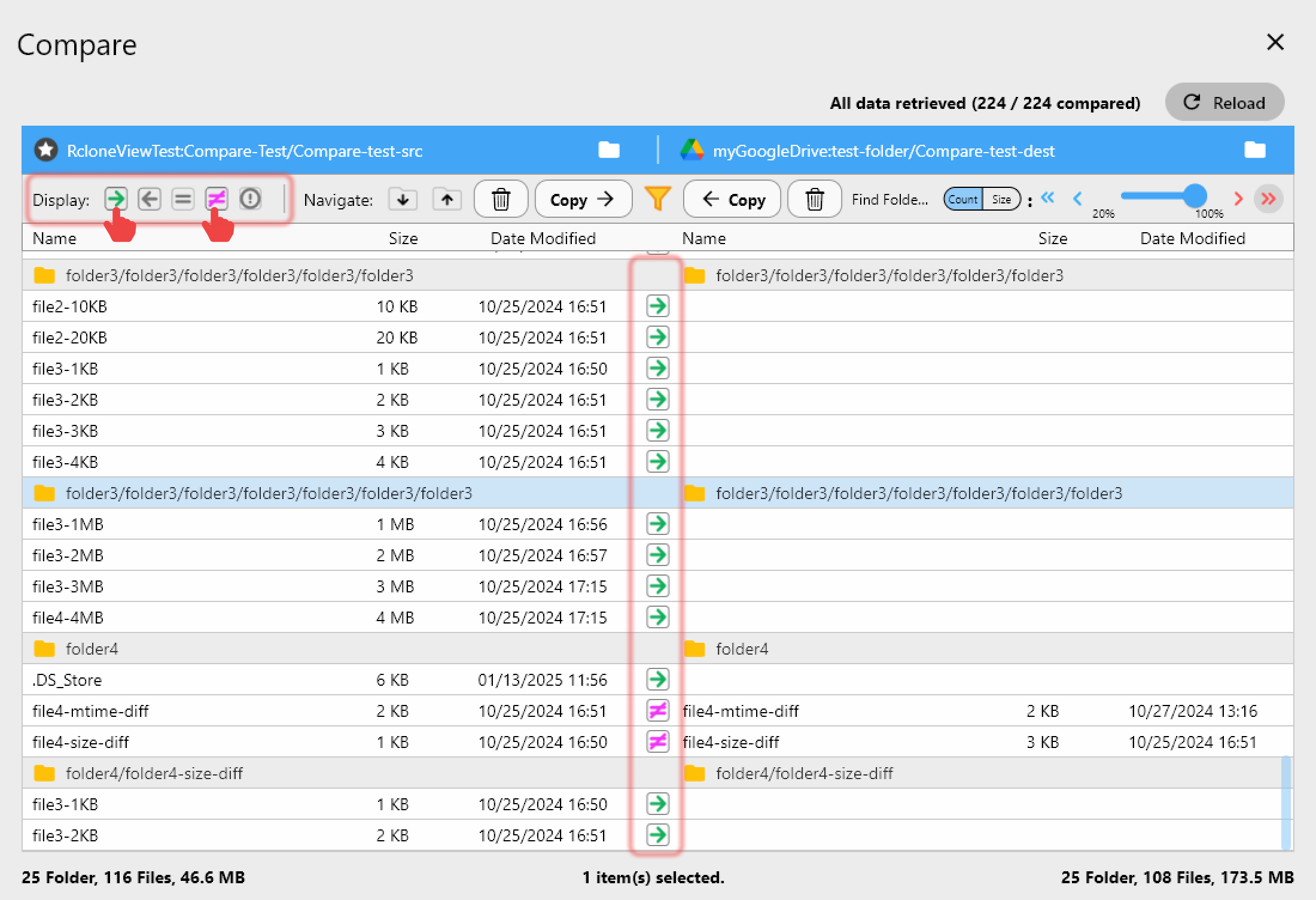
RcloneView provides sync, copy, and move operations between any two locations -- local-to-cloud, cloud-to-cloud, or even cloud-to-NAS. You can create reusable sync jobs, schedule them on a timer, and monitor progress in real time. The compare feature lets you preview differences between folders before committing to a transfer.
Cloud-to-Cloud Transfers
This is an area where Insync has a significant limitation. Insync syncs files between your local machine and the cloud. It does not support direct cloud-to-cloud transfers. If you want to move files from Google Drive to OneDrive, you would need to download them locally first, then upload to the destination.
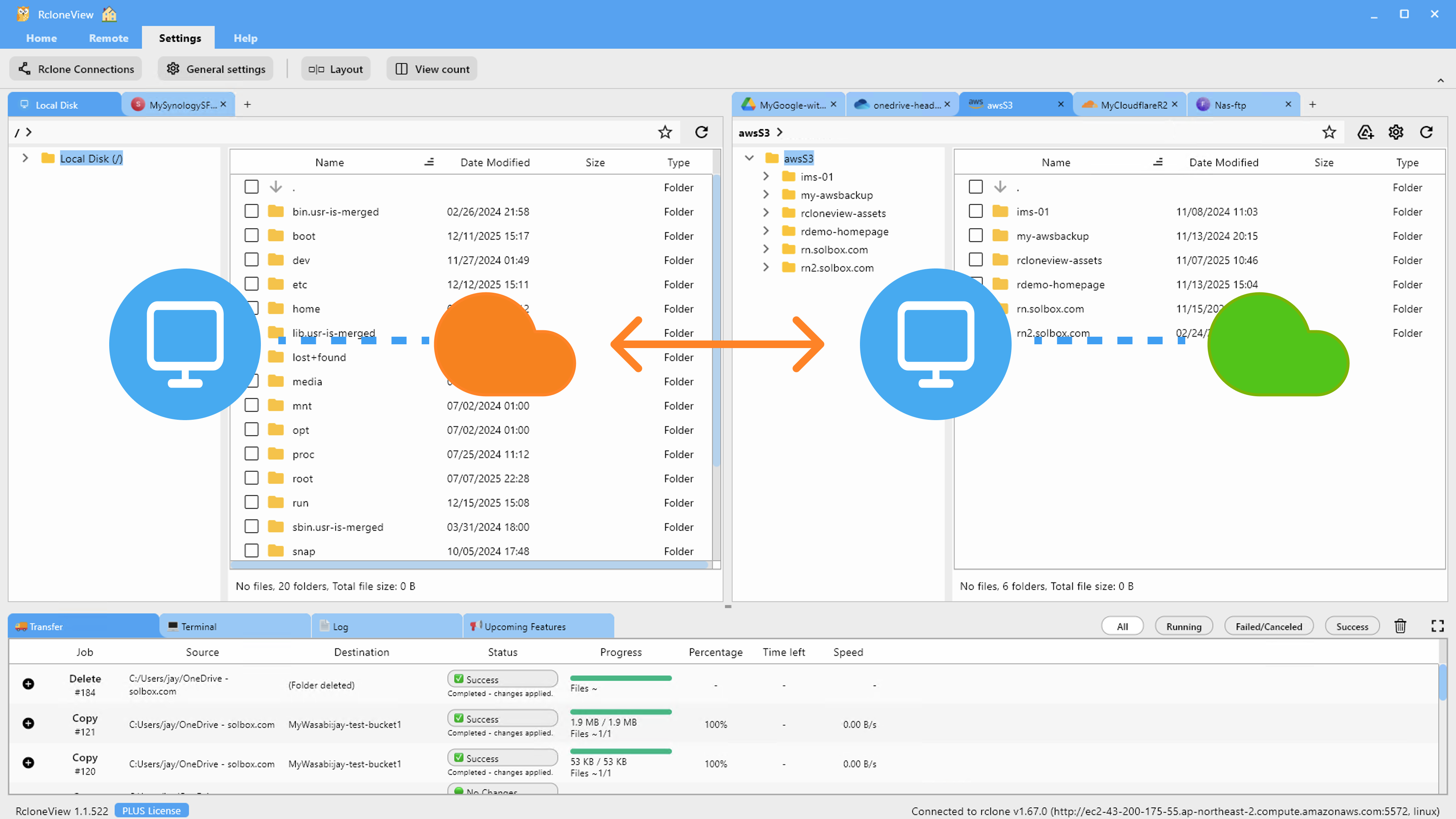
RcloneView handles cloud-to-cloud transfers natively. Using the two-pane explorer, you can drag files from one cloud provider to another. Data flows directly between providers through your machine without requiring double the storage space on your local disk. This is critical for migration projects and cross-cloud backups.
Mount Capabilities
Insync does not provide mount functionality. It relies on syncing files to your local filesystem and keeping them in sync with the cloud.
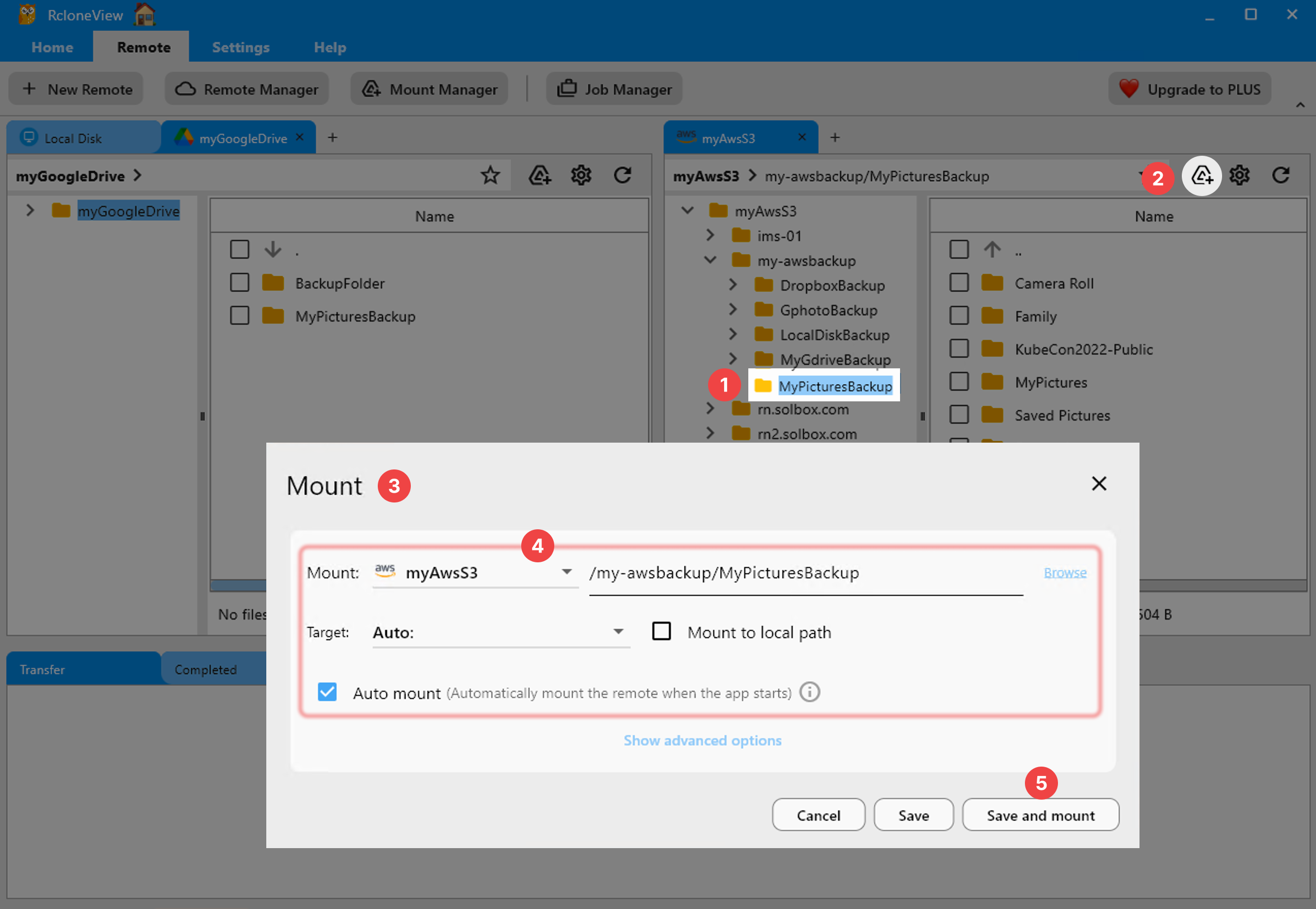
RcloneView supports mounting any of its 70+ cloud providers as a local drive letter (Windows) or mount point (macOS/Linux). This means you can browse Amazon S3 buckets, Azure Blob containers, or SFTP servers directly in your operating system's file explorer without syncing the entire contents locally.
Job Scheduling and Automation
Insync runs as a background service and continuously monitors for file changes. It does not offer granular job scheduling -- sync runs automatically whenever changes are detected.
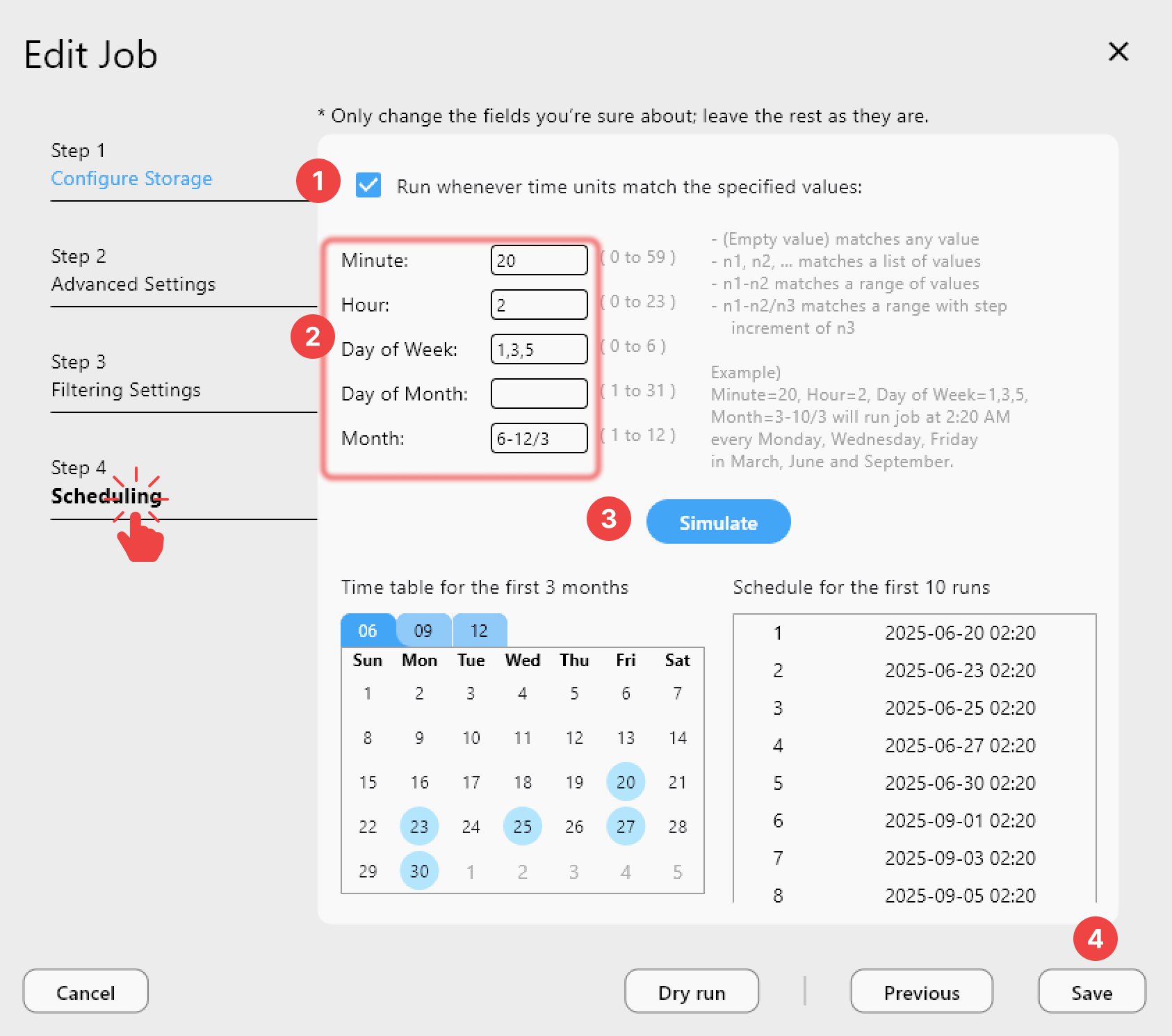
RcloneView lets you create discrete sync jobs, configure them with specific flags and filters, and schedule them to run at specific times or intervals. You can review job history, check transfer logs, and retry failed operations. For backup workflows that need to run nightly or weekly, this level of control is essential.
UI and User Experience
Insync provides a clean, minimal desktop client that sits in the system tray. It focuses on simplicity and staying out of the way. The setup process is straightforward for its supported providers.
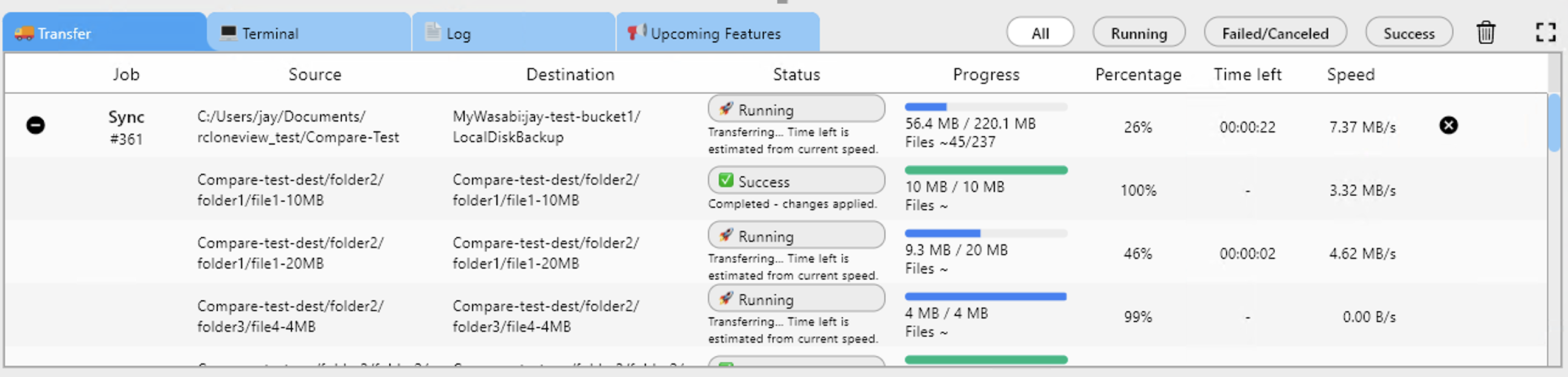
RcloneView offers a two-pane file explorer similar to classic file managers. It is more feature-dense, but that density is the point -- you get a full cloud management dashboard with transfer monitoring, job queues, and remote configuration all in one window. The learning curve is slightly steeper, but the payoff is far greater flexibility.
Feature Comparison Summary
| Feature | RcloneView | Insync |
|---|---|---|
| Supported providers | 70+ | 3 (Google Drive, OneDrive, Dropbox) |
| Cloud-to-cloud transfers | Yes | No |
| Mount as local drive | Yes | No |
| Job scheduling | Yes | No |
| S3/object storage support | Yes | No |
| Encryption | Yes (crypt remote) | No |
| Price | Free | ~$30 per account |
| Two-pane explorer | Yes | No |
| Real-time transfer monitoring | Yes | Limited |
| Platform support | Windows, macOS, Linux | Windows, macOS, Linux |
Getting Started
- Download RcloneView from rcloneview.com.
- Add your Google Drive, OneDrive, or any other provider using the remote configuration wizard.
- Browse your cloud files in the two-pane explorer and start transferring, syncing, or mounting.
- Create sync jobs and set up scheduling for automated backups.
Both tools have their place, but if you need multi-cloud support, cloud-to-cloud transfers, mount capabilities, or S3-compatible storage access, RcloneView delivers all of that at no cost.
Related Guides:
- Browse and Manage Remote Storage
- Add Remote via Browse-based Log-in(OAuth)
- Mount Cloud Storage as a Local Drive
Supported Cloud Providers