Remote Management Guide — Add, Edit, and Organize Cloud Connections in RcloneView
Your first remote takes 2 minutes to set up. Your 15th needs a system. Here's how to manage all your cloud connections efficiently as your multi-cloud setup grows.
Every cloud provider in RcloneView starts as a "remote" — a named connection with credentials and configuration. When you have two or three remotes, management is simple. But as you add more providers (and many users end up with 10+), keeping them organized becomes essential. This guide covers everything from adding your first remote to managing a complex multi-cloud setup.
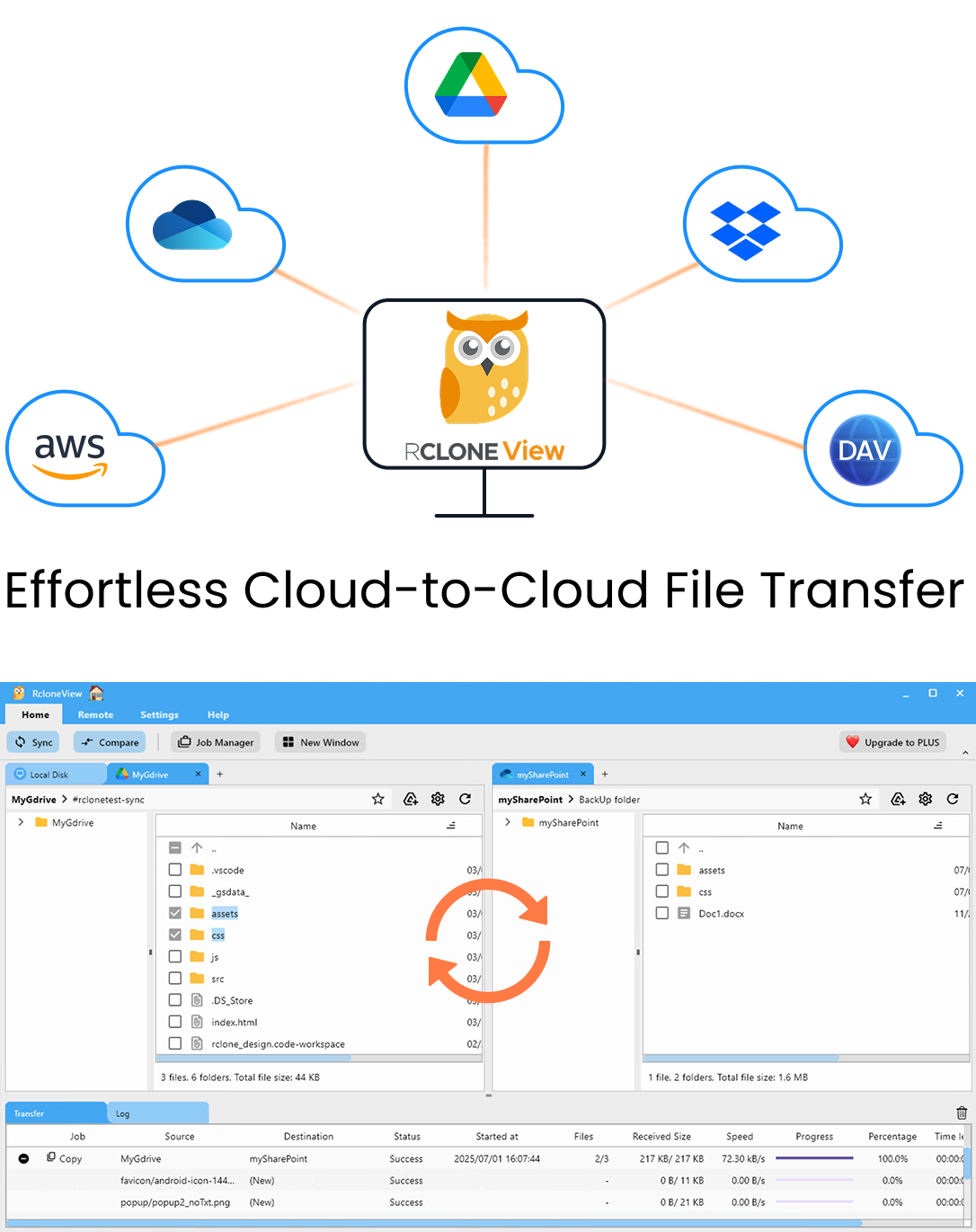
Manage & Sync All Clouds in One Place
RcloneView is a cross-platform GUI for rclone. Compare folders, transfer or sync files, and automate multi-cloud workflows with a clean, visual interface.
- One-click jobs: Copy · Sync · Compare
- Schedulers & history for reliable automation
- Works with Google Drive, OneDrive, Dropbox, S3, WebDAV, SFTP and more
Free core features. Plus automations available.
Adding a New Remote
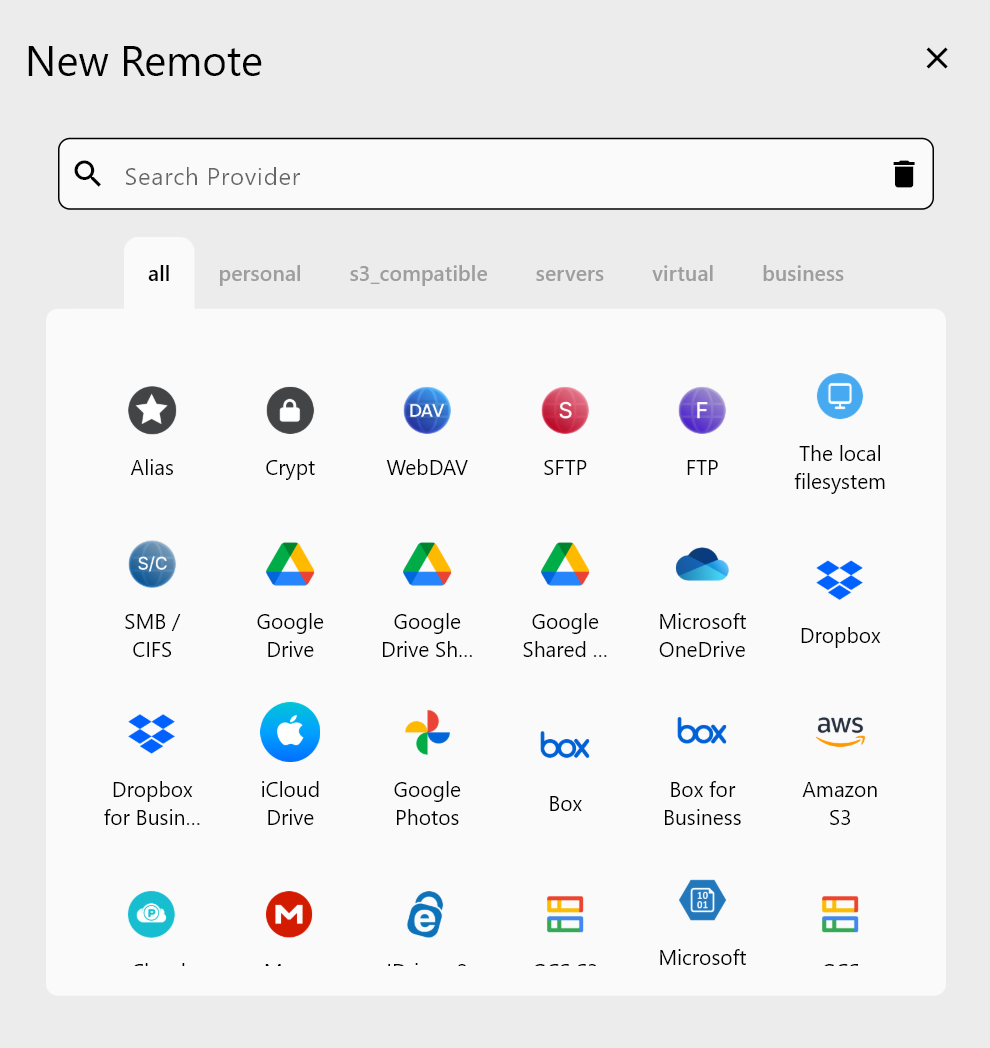
The remote manager walks you through adding any of 70+ providers. Each provider type has different configuration fields — Google Drive uses OAuth, S3 uses access keys, WebDAV uses URL and credentials.
Common provider types
| Connection Type | Examples | Auth Method |
|---|---|---|
| OAuth | Google Drive, OneDrive, Dropbox | Browser login |
| Access Keys | S3, B2, Wasabi, R2 | Key + Secret |
| Username/Password | WebDAV, FTP, SFTP | Credentials |
| Token | Box, Mega | API token |
Naming Conventions
Good naming saves confusion later. Consider these patterns:
- By provider:
gdrive-personal,gdrive-work,s3-backup - By purpose:
backup-primary,backup-secondary,archive - By team:
marketing-drive,engineering-s3,finance-onedrive
Editing Remote Configuration
Need to update credentials, change endpoints, or modify settings? Edit any remote through the remote manager without recreating it.
Common reasons to edit:
- Expired OAuth tokens — re-authorize without losing job configurations
- Changed access keys — update S3 credentials after rotation
- Different endpoint — switch S3 regions or custom endpoints
Advanced Configuration
Crypt remotes
Create encrypted wrappers around existing remotes. A crypt remote encrypts file names and contents before they reach the cloud:
Union/Combine remotes
Merge multiple remotes into a single virtual view. Useful for combining free storage tiers across providers.
Organizing Your Remotes
As your remote count grows:
- Use consistent naming so remotes sort logically
- Document your setup — which remote backs up to which
- Clean up unused remotes — remove old trial accounts
- Test connections periodically — expired tokens cause silent failures
Using Remotes in the Explorer
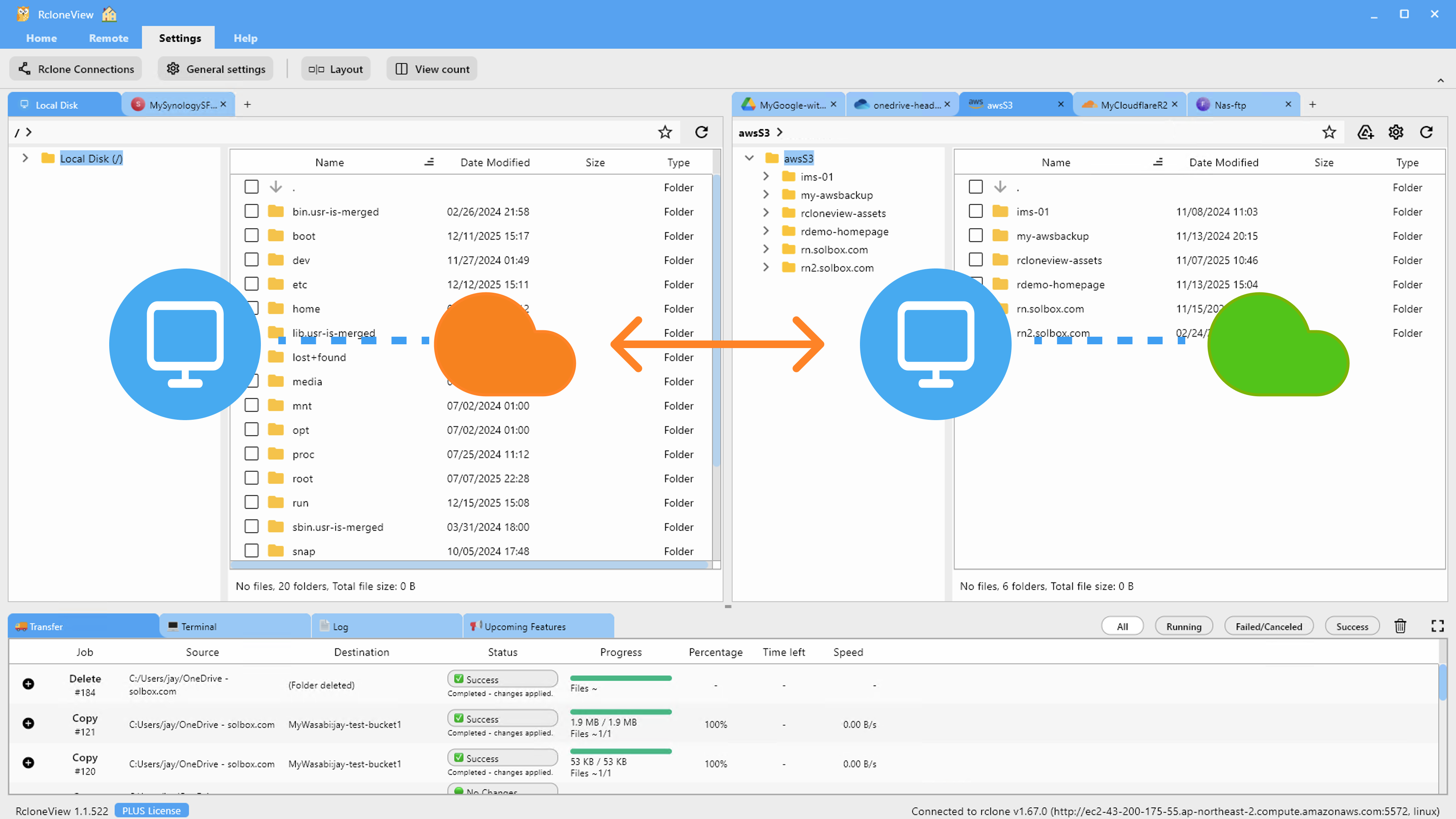
Once configured, remotes appear in the two-pane explorer. Select any remote as the source or destination pane:
Getting Started
- Download RcloneView from rcloneview.com.
- Add your first remote — follow the guided setup.
- Name it clearly for future reference.
- Add more remotes as needed.
- Keep them organized with consistent naming.
Good remote management is the foundation of good cloud management.
Related Guides:
Supported Cloud Providers