Sync Koofr to Amazon S3 — Cloud Backup with RcloneView
Koofr's European-hosted storage and Amazon S3's global durability serve complementary roles — RcloneView syncs between them directly, creating a cross-provider backup strategy without local disk overhead.
Koofr's European data centers and GDPR-compliant infrastructure make it a strong active storage platform, while Amazon S3 delivers world-class durability and CDN integration for archiving and distribution. Syncing between them creates a robust two-tier strategy: keep working data in Koofr's European data centers while archiving to S3 for long-term cost optimization. RcloneView handles the sync directly between both remotes without touching your local disk.
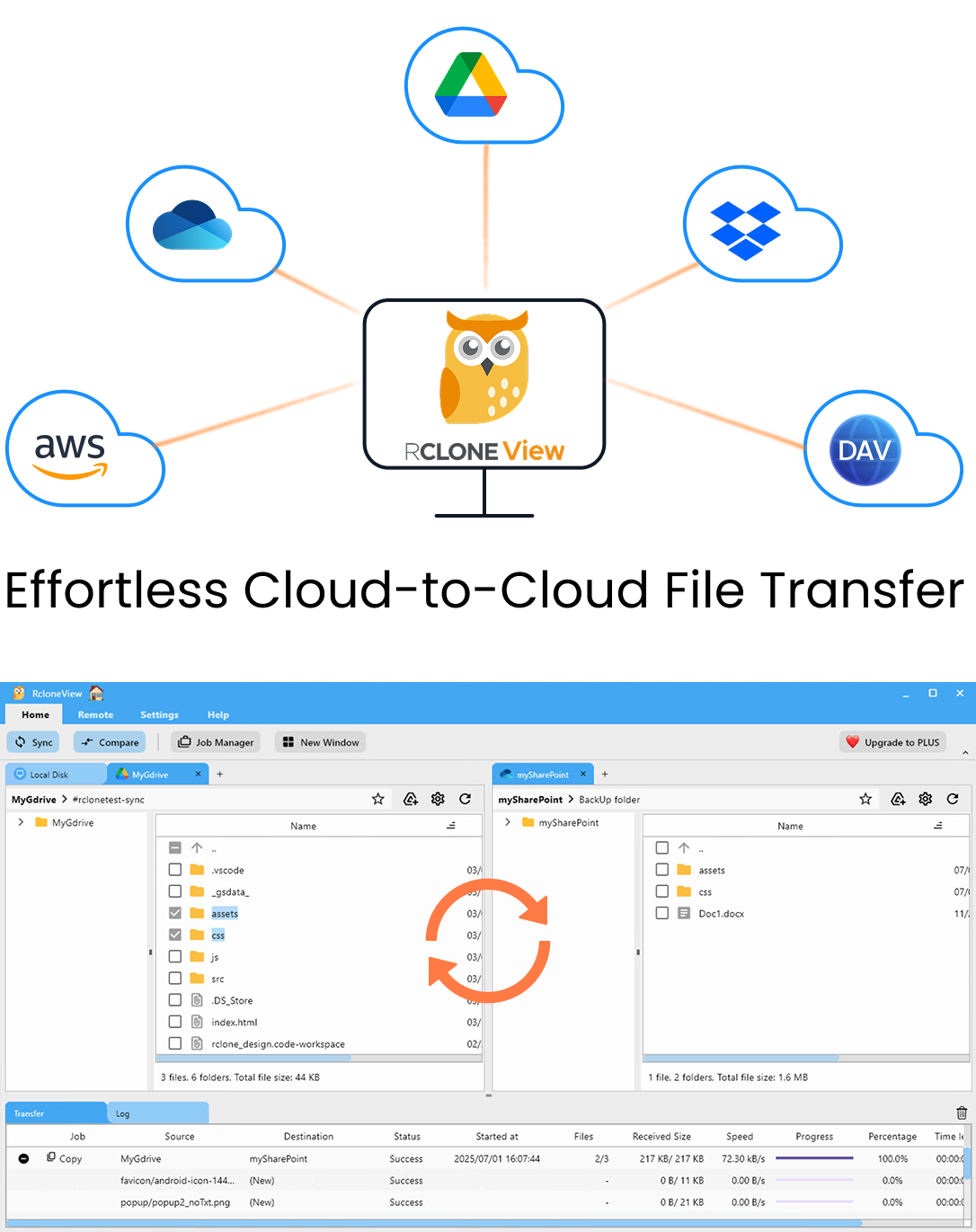
Manage & Sync All Clouds in One Place
RcloneView is a cross-platform GUI for rclone. Compare folders, transfer or sync files, and automate multi-cloud workflows with a clean, visual interface.
- One-click jobs: Copy · Sync · Compare
- Schedulers & history for reliable automation
- Works with Google Drive, OneDrive, Dropbox, S3, WebDAV, SFTP and more
Free core features. Plus automations available.
Setting Up Both Remotes
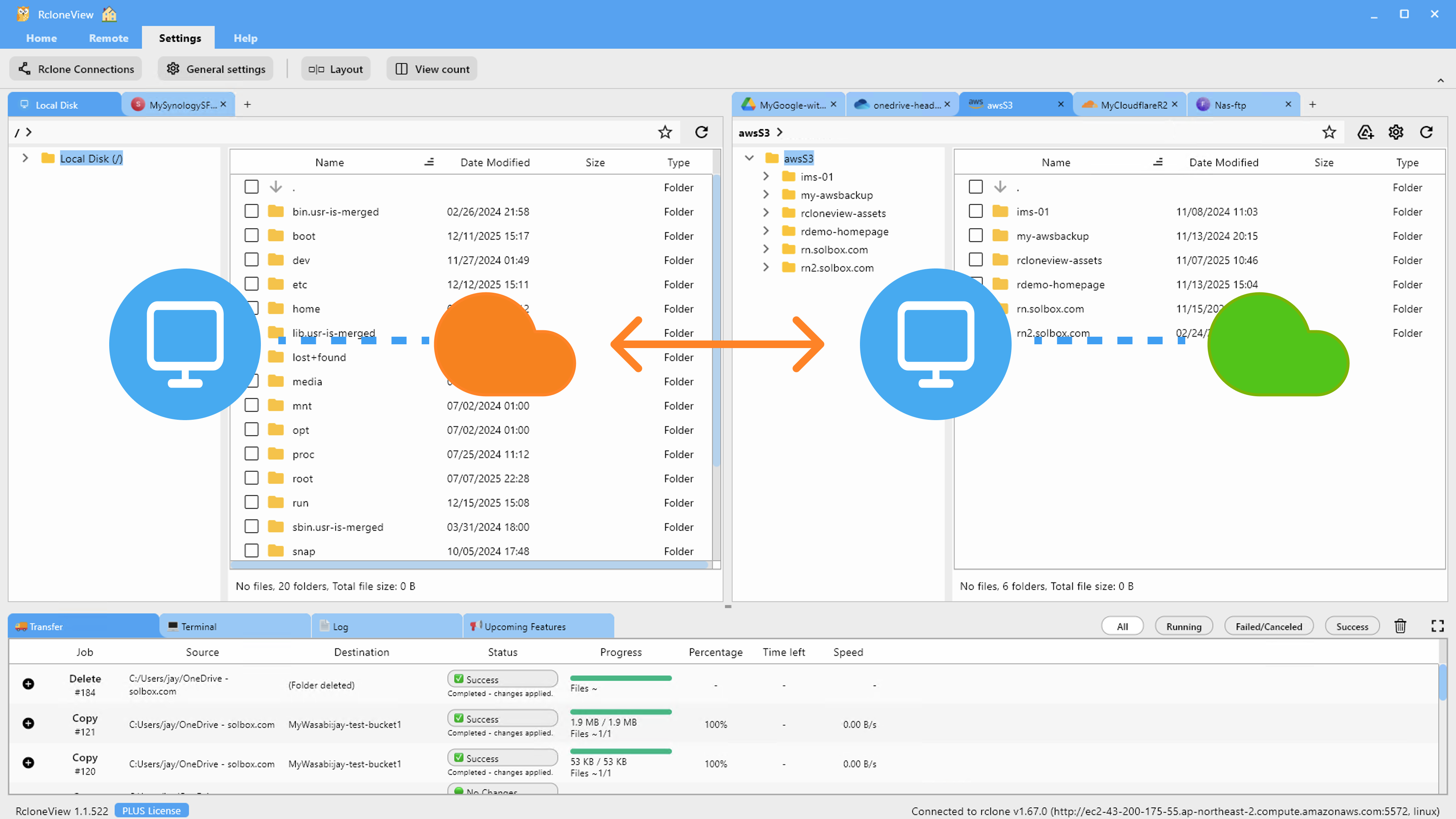
In RcloneView, add Koofr via Remote tab > New Remote > Koofr and enter your credentials. Then add Amazon S3: select it from the provider list and enter your Access Key ID, Secret Access Key, and AWS Region. With both remotes active, open the dual-panel explorer — Koofr on one side, your S3 bucket on the other — for a side-by-side view of your storage.
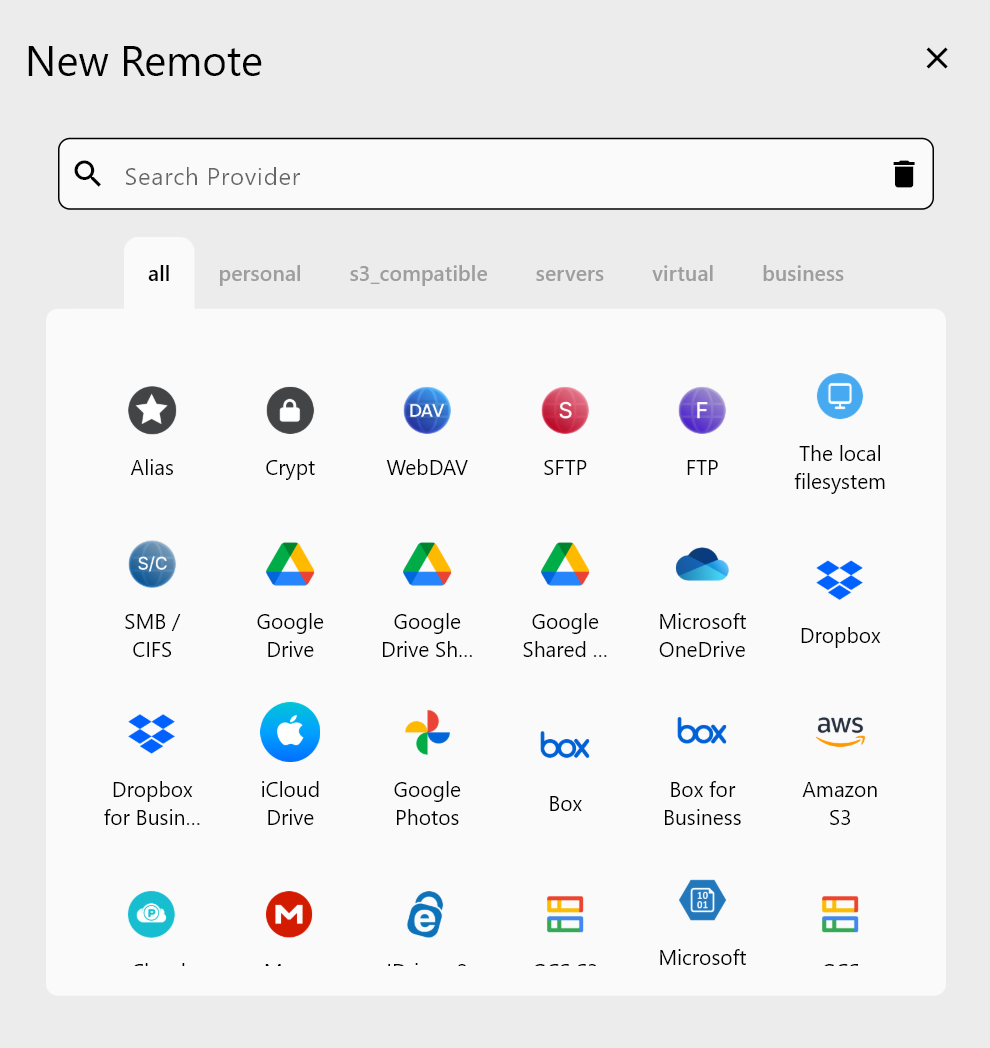
This direct comparison is useful for planning: review what's in Koofr, confirm the S3 bucket structure you want, and verify folder names before starting the sync job.
Configuring the Sync Job
In Job Manager, create a sync job from your Koofr folder to the target S3 bucket path. For a compliance team backing up sensitive documents from Koofr to S3 Standard-IA for cost-efficient retention, the sync job runs weekly using scheduling (PLUS license).
RcloneView's filtering options let you restrict the sync to specific file types — for example, syncing only .pdf and .docx files while excluding temporary files and thumbnails. Max File Age filtering further limits syncs to recently modified files, keeping incremental runs fast and focused.
Monitoring and Verification
After the initial sync, subsequent runs only transfer changes — RcloneView compares file sizes and modification dates to identify differences. The Job History tab shows each sync's outcome with bytes transferred, file count, duration, and status.
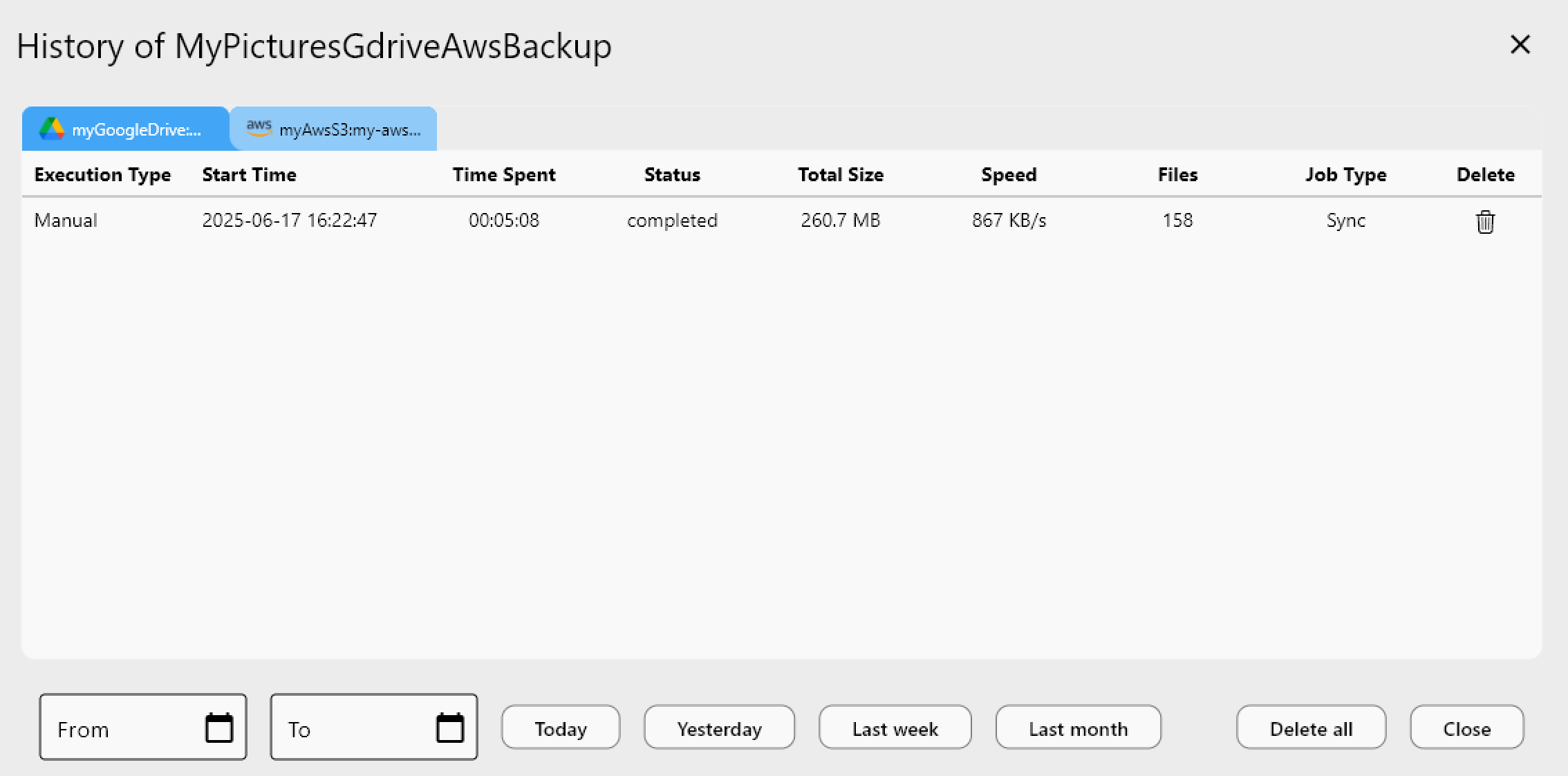
For organizations maintaining Koofr as their GDPR-compliant primary storage and S3 as an archival tier, this sync pattern creates a clear data lifecycle: active in Koofr, archived to S3 on a schedule. The Folder Compare feature provides point-in-time verification that both platforms are in sync when needed.
Getting Started
- Download RcloneView from rcloneview.com.
- Add Koofr remote (credentials) and Amazon S3 remote (Access Key).
- Create a sync job in Job Manager from Koofr to S3.
- Enable scheduling (PLUS) to automate regular backups.
RcloneView turns a two-cloud architecture into a managed, automated workflow — Koofr for compliance, S3 for archiving, with syncs keeping both current.
Related Guides:
- Manage Koofr Storage — Sync and Backup with RcloneView
- Koofr as Multi-Cloud Hub — Google Drive, OneDrive, Dropbox with RcloneView
- Backup Dropbox to AWS S3 with RcloneView
Supported Cloud Providers