Cloud Storage for Aerospace & Defense — Secure Data Management with RcloneView
Aerospace and defense teams deal with some of the largest, most sensitive files in any industry — RcloneView provides the encrypted, auditable cloud sync workflow to handle them.
Engineering data in aerospace is anything but lightweight. A single aircraft assembly in CATIA or Siemens NX can exceed tens of gigabytes. Computational fluid dynamics (CFD) outputs run larger still, and satellite imagery or test telemetry generates continuous data streams that must be retained and accessible across geographically dispersed sites. Add compliance mandates — DO-178C for avionics software, AS9100 for quality systems, ITAR for controlled technology — and moving files between cloud environments becomes a risk-management exercise, not just an IT task. RcloneView mounts AND syncs 90+ providers from one window, on Windows, macOS, and Linux, making it a practical single tool for organizations juggling government clouds, corporate S3 buckets, and on-premise SFTP servers.
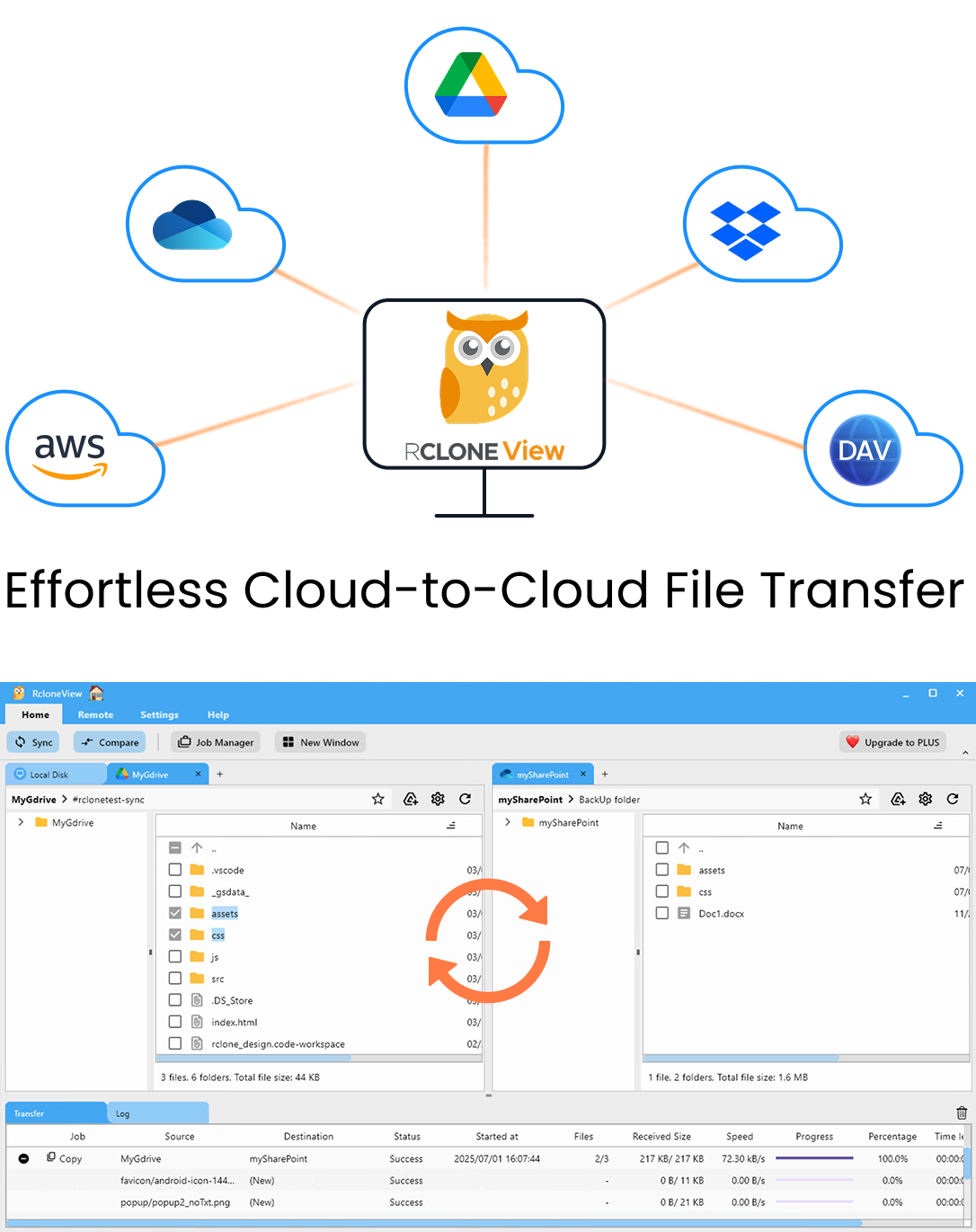
Manage & Sync All Clouds in One Place
RcloneView is a cross-platform GUI for rclone. Compare folders, transfer or sync files, and automate multi-cloud workflows with a clean, visual interface.
- One-click jobs: Copy · Sync · Compare
- Schedulers & history for reliable automation
- Works with Google Drive, OneDrive, Dropbox, S3, WebDAV, SFTP and more
Free core features. Plus automations available.
Connecting Secure and Mixed Cloud Environments
Aerospace and defense organizations rarely live on a single cloud. A typical stack might include an AWS GovCloud or Azure Government bucket for controlled data, a corporate Amazon S3 or Wasabi archive for internal tooling, SFTP servers at secure manufacturing or test facilities, and Synology or QNAP NAS systems for local site storage. The operational challenge is moving large files between these environments efficiently — a 6 GB finite-element model needed at a remote test site should not require browser uploads or manual VPN transfers.
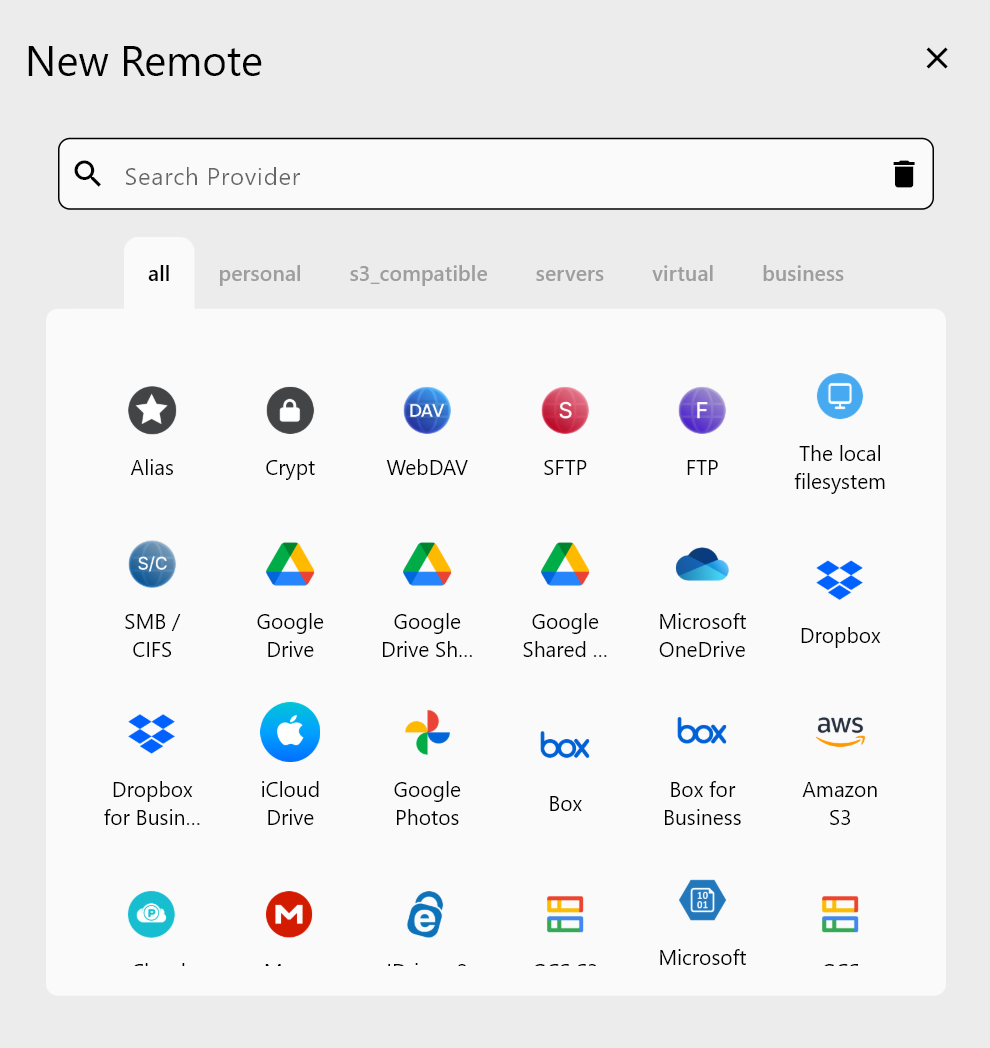
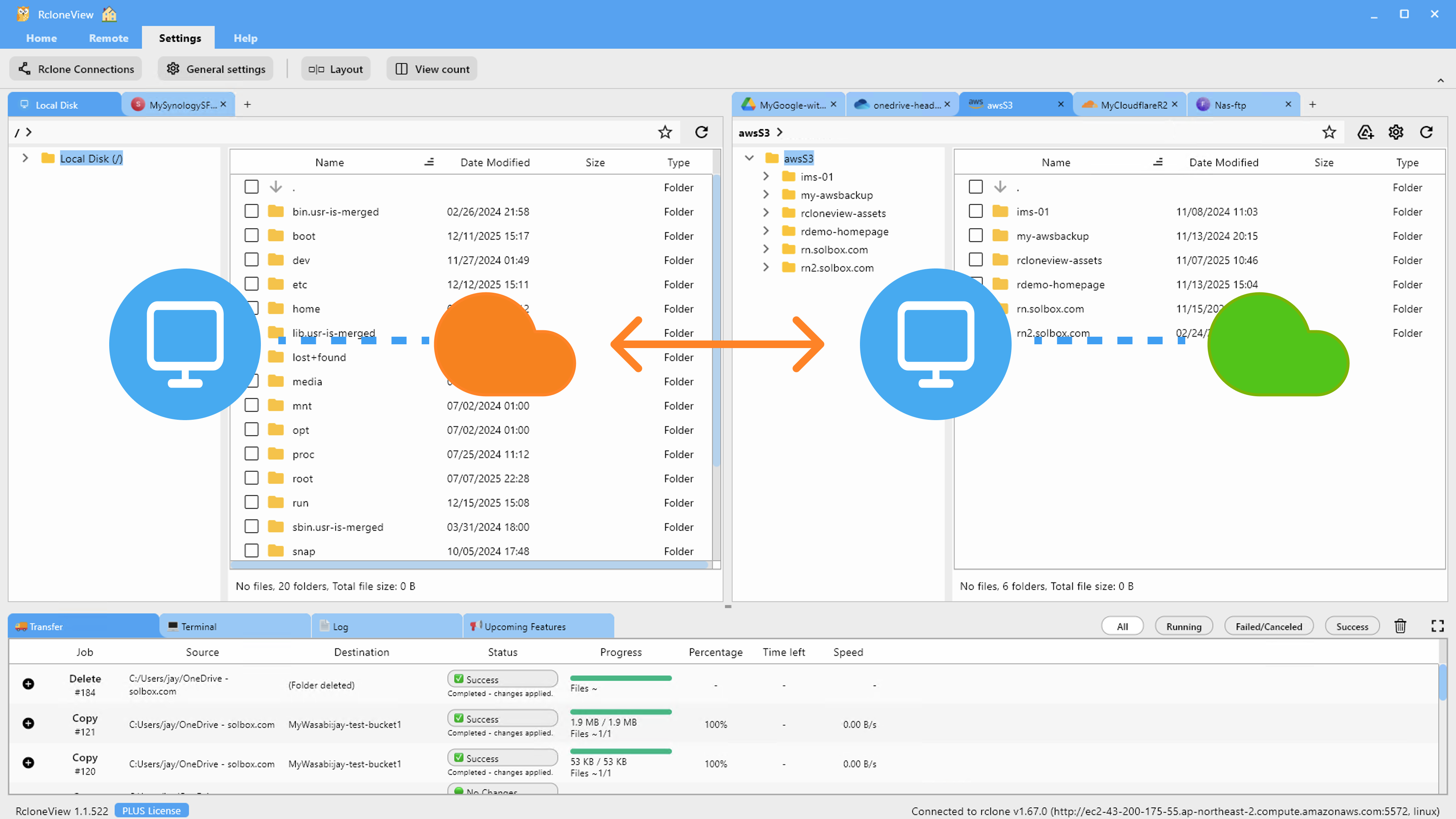
RcloneView handles all of these simultaneously through its Remote Manager. Open Remote tab > New Remote and add each storage endpoint individually: S3-compatible buckets with Access Key credentials, Azure File Storage shares with account keys, SFTP servers with SSH authentication, and SMB/CIFS network shares. Each remote appears as a panel in RcloneView's dual-pane explorer, so engineers can transfer directly — for example, from an SFTP server at a classified facility to a corporate S3 archive — without staging data locally.
Encrypted Transfer and Verification for Compliance
Audit requirements in aerospace demand more than just successful transfers — they demand proof. RcloneView addresses this at two levels. First, layering a Crypt virtual remote on any storage destination encrypts file names and contents client-side before data leaves the machine, so the cloud provider never handles plaintext. This is particularly valuable when using commercial cloud storage for ITAR-adjacent technical data where the contract permits storage but restricts provider access.
Second, enabling checksum verification in the sync wizard's Step 2 computes hashes on both source and destination after each transfer. If a single byte differs, the job flags the file as errored and retries. For firmware images, simulation datasets, or approved deliverables that must be identical to their source, this verification step replaces a separate integrity-checking process. The Job History tab records every run with a timestamp, status, transfer size, and speed — exportable as JSON for integration with a compliance audit system or data pipeline.
Automating Multi-Site Backup Workflows
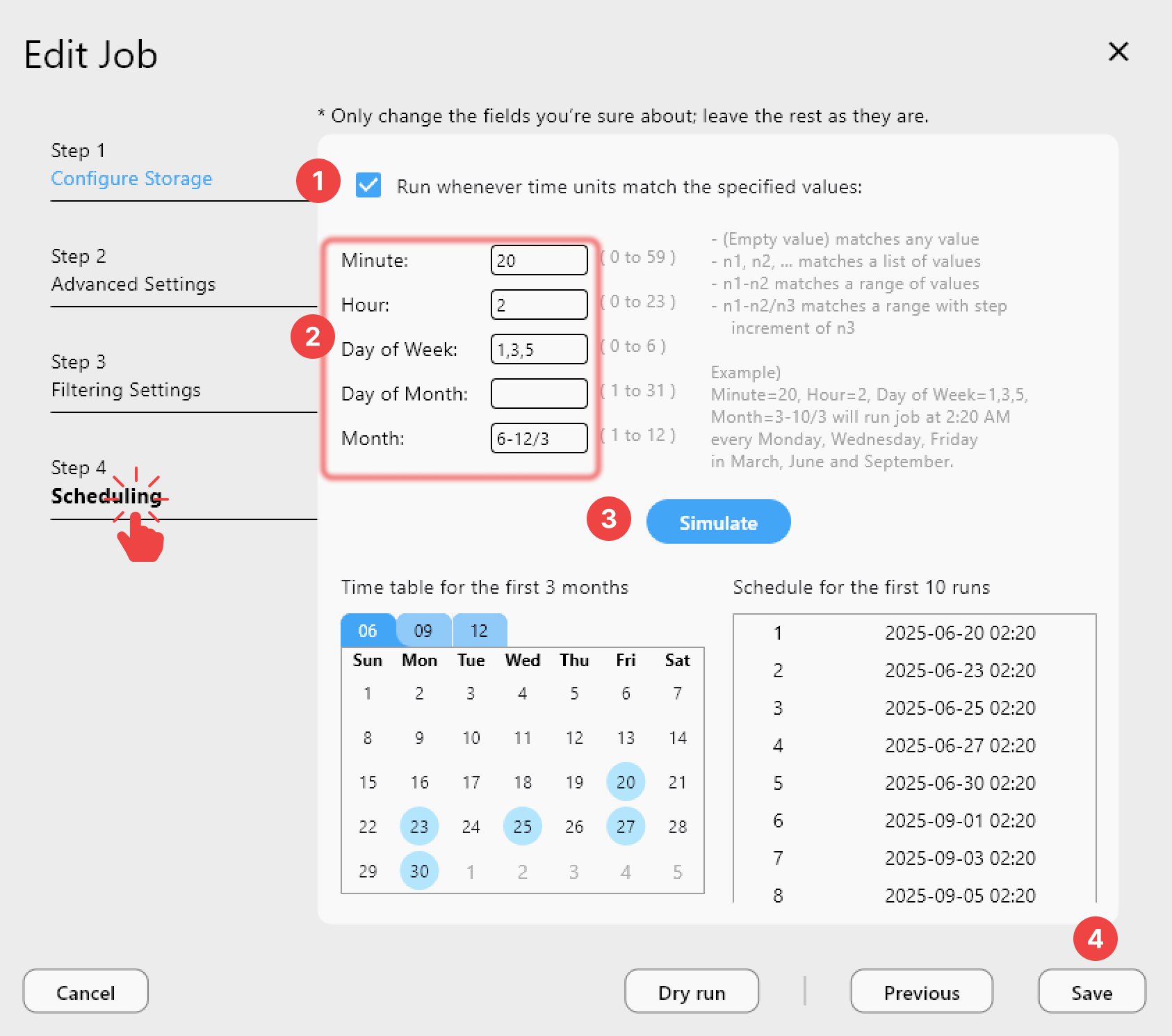
A production aerospace backup workflow might look like this: a nightly sync of CAD checkout servers to an S3-compatible archive, a weekly full backup to a cold-tier bucket, and immediate replication of approved deliverables to a customer-facing SFTP drop folder. With RcloneView's PLUS license, each is a separate scheduled sync job configured once via the cron-style Step 4 interface and running unattended thereafter.
The 1:N sync feature is especially useful here: a single completed test package directory can replicate simultaneously to an internal archive, a regulatory submission bucket, and a project partner's WebDAV endpoint — all in one job execution. Filter rules in Step 3 let you exclude work-in-progress scratch files, restrict transfers to files older than a specified age, or include only specific file types such as .step, .stp, or .pdf deliverables. For large initial data migrations between sites — moving terabytes of historical simulation data from an expiring on-premise NAS to cloud archive — the Dry Run preview shows the complete file list and total size before any data moves.
Getting Started
- Download RcloneView from rcloneview.com.
- Add your cloud remotes — AWS S3, Azure Files, SFTP servers, NAS shares — via Remote tab > New Remote.
- Create Crypt virtual remotes on any destination requiring client-side encryption of file names and contents.
- Configure sync jobs with checksum verification enabled; use a PLUS license for automated nightly scheduling across all sites.
With RcloneView, aerospace and defense teams gain an auditable, encrypted, and automated cloud transfer workflow that spans every environment in the organization — from government cloud to SFTP servers at the test range.
Related Guides:
- Cloud Storage for Architecture & Engineering CAD Teams with RcloneView
- Cloud Storage for Cybersecurity Companies with RcloneView
- Cloud Storage for Government & Public Sector with RcloneView
Supported Cloud Providers