Manage Qiniu Cloud Object Storage — Sync and Backup Files with RcloneView

Connect Qiniu Cloud's Kodo object storage to RcloneView's dual-pane interface and handle uploads, backups, and cross-cloud transfers without touching a CLI.
Qiniu Cloud (七牛云) is one of China's leading cloud infrastructure providers, and its Kodo object storage service is widely used for media delivery, application asset management, and large-scale data archiving. Because Kodo implements an S3-compatible API, RcloneView connects to it using the same workflow as Amazon S3, Wasabi, or Cloudflare R2 — no special plugins required. Unlike mount-only tools, RcloneView also syncs and compares folders against Kodo and 90+ other providers on the FREE license, making it a practical single tool for teams with mixed cloud environments.
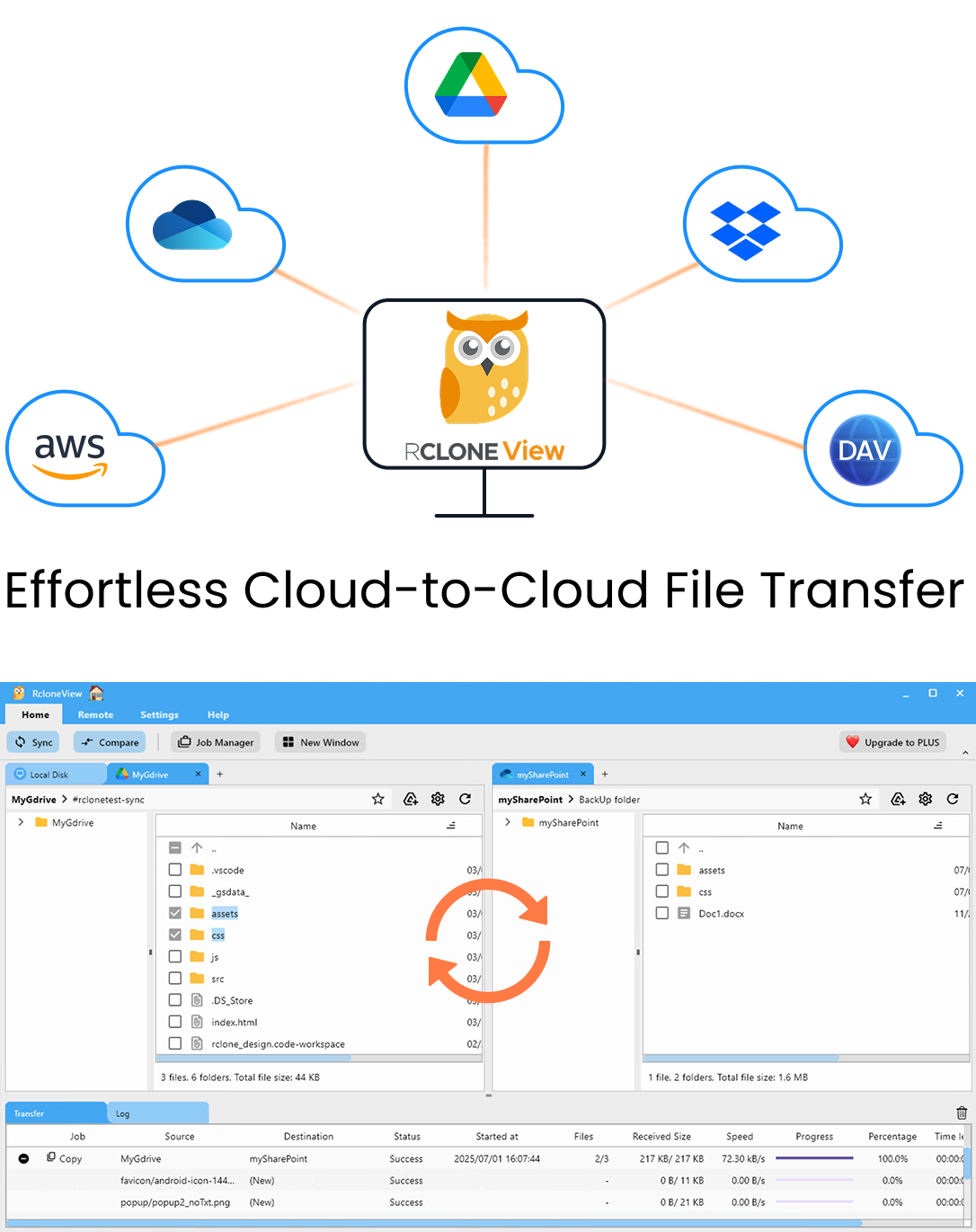
Manage & Sync All Clouds in One Place
RcloneView is a cross-platform GUI for rclone. Compare folders, transfer or sync files, and automate multi-cloud workflows with a clean, visual interface.
- One-click jobs: Copy · Sync · Compare
- Schedulers & history for reliable automation
- Works with Google Drive, OneDrive, Dropbox, S3, WebDAV, SFTP and more
Free core features. Plus automations available.
Setting Up Qiniu Kodo as an S3 Remote in RcloneView
To add Qiniu Kodo, open the Remote tab and click New Remote. Select the S3 protocol from the provider list, then choose Qiniu as the S3 provider. You will need three credentials from your Qiniu Cloud Console: your Access Key, your Secret Key, and the regional endpoint for the bucket's zone. Once entered, RcloneView saves the configuration to your local rclone config file and the remote appears immediately in the explorer panel.
No separate rclone installation is needed — RcloneView ships with an embedded rclone binary that handles all API communication. If you already manage rclone externally, you can connect RcloneView to that instance instead via Settings > Connect Manager.
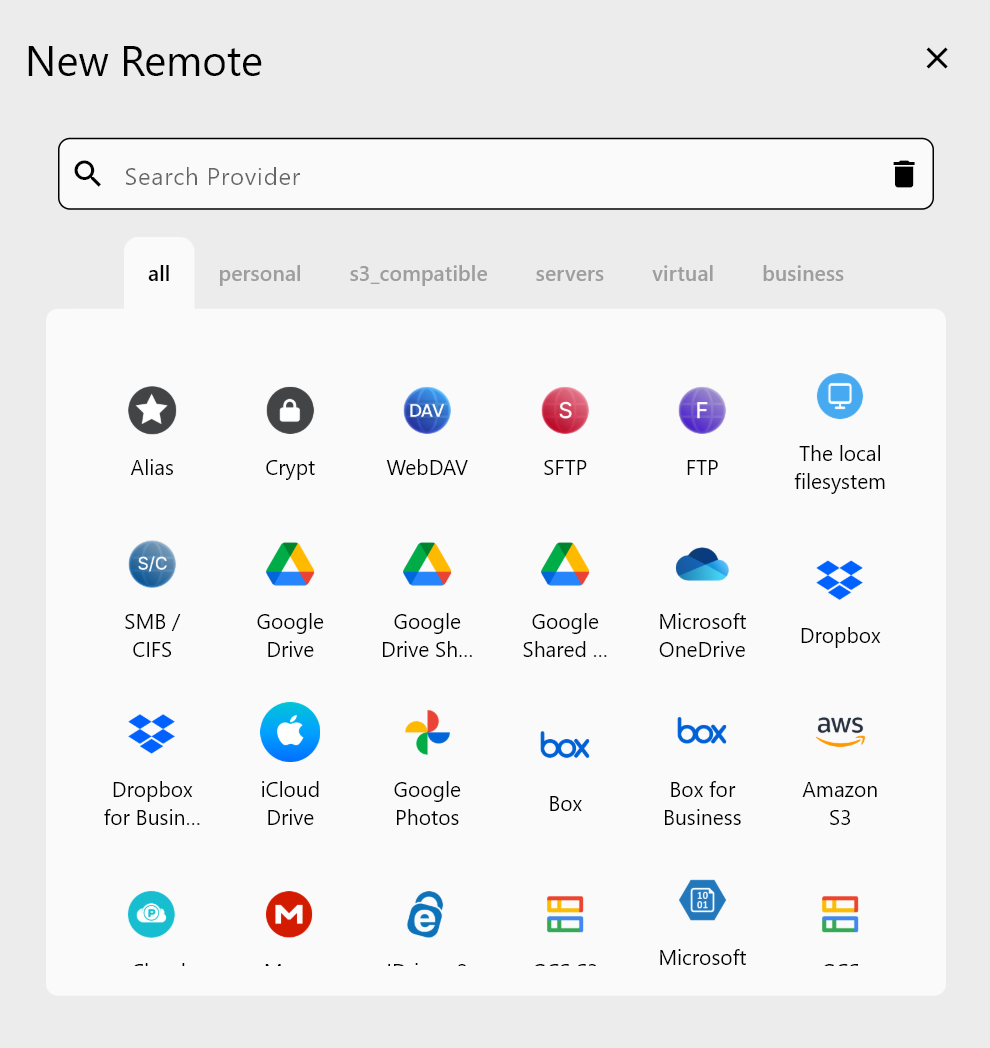
After saving, your Kodo buckets appear in the panel's tab bar. Click any bucket to browse its contents in the file list, with columns showing name, type, modification date, and size.
Browsing and Managing Kodo Buckets
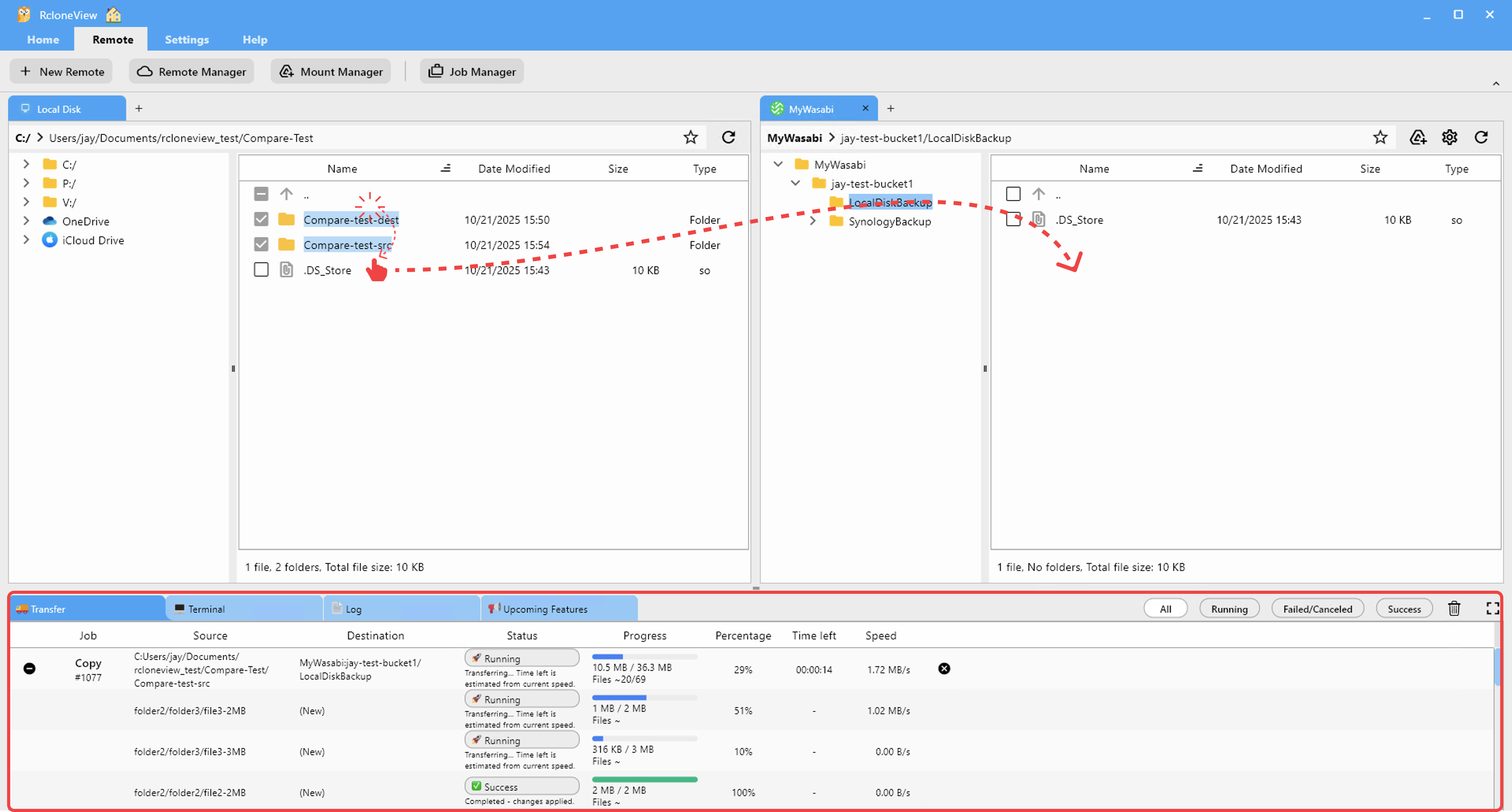
RcloneView's dual-pane layout lets you work with Qiniu Kodo alongside any other remote — a local folder, Google Drive, a corporate S3 bucket — in the same window. Drag files from the local panel to the Kodo panel to upload, or in reverse to download. Moving files between two Qiniu remotes (or buckets) copies them directly without routing through your local disk.
For bulk work, use Shift+Click or Ctrl+Click to select multiple objects and then copy, move, or delete them in one action. The Thumbnail view mode is useful when browsing image-heavy Kodo buckets. Before any destructive operation, the Dry Run button previews exactly which files would be affected — an important safeguard when cleaning up production assets.
Syncing and Backing Up Files with Qiniu Cloud
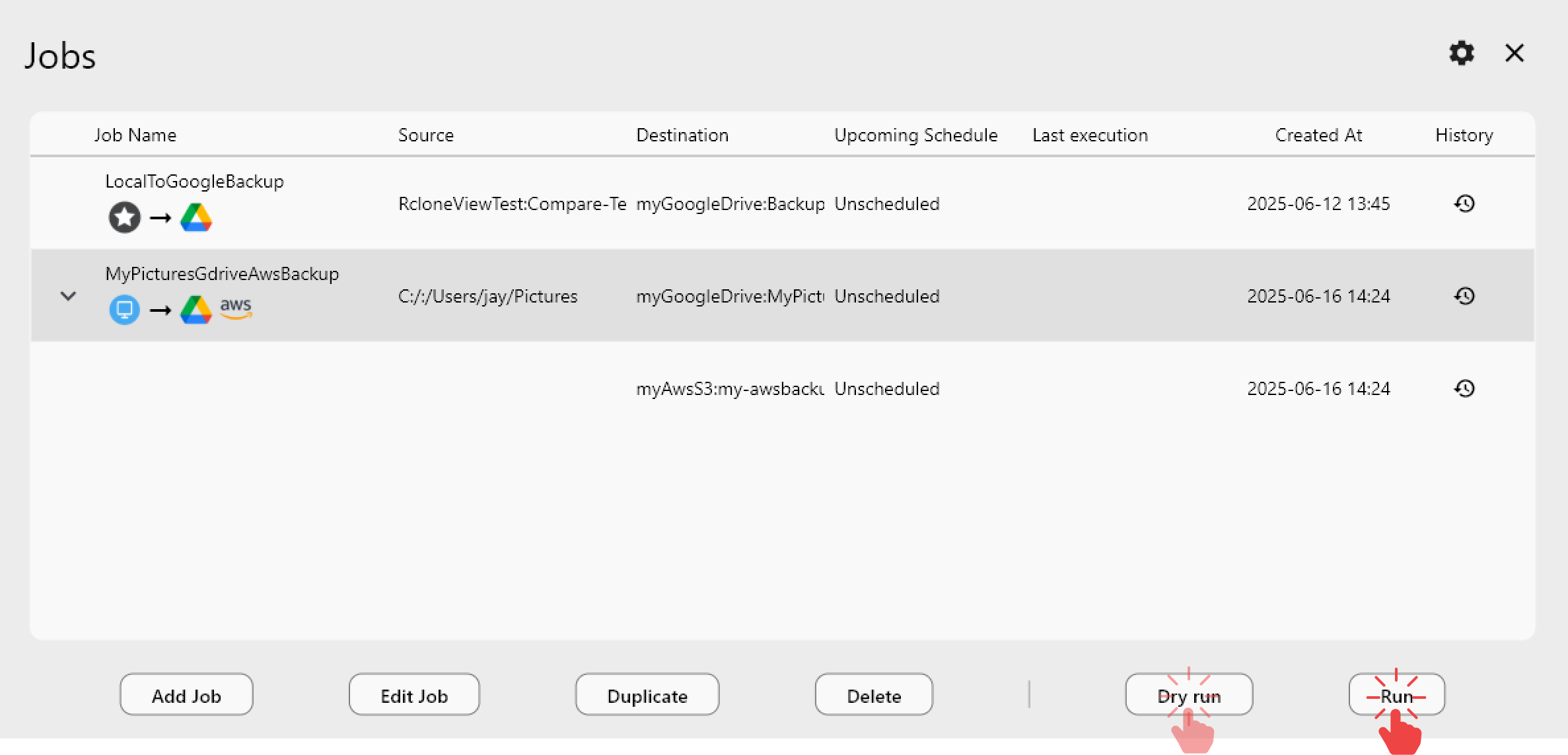
RcloneView's 4-step sync wizard configures repeatable jobs against Kodo. In Step 1, select Qiniu as either source or destination and pair it with another remote — for example, syncing a local media library to a Kodo bucket for CDN distribution. In Step 2, tune parallel transfer count and enable checksum verification to confirm every uploaded object is bit-for-bit identical to its source. Step 3 offers file-type filters, age ranges, and size limits so you can exclude cache files or restrict syncs to recently modified assets.
With a PLUS license, Step 4 unlocks cron-style scheduling: configure a nightly backup from a production server directory to Kodo and RcloneView runs it automatically in the background. The 1:N sync feature lets a single source replicate simultaneously to multiple destinations — useful for distributing the same asset set to Qiniu Kodo and a secondary S3 archive in a single job.
Monitoring Transfers and Job History
The Transferring tab at the bottom of RcloneView shows live progress for active Kodo jobs: file name, bytes transferred, current speed, and overall completion. For a large initial seed — uploading several hundred gigabytes of video assets to a new bucket, for instance — this live transfer monitoring view eliminates the need for a separate monitoring dashboard.
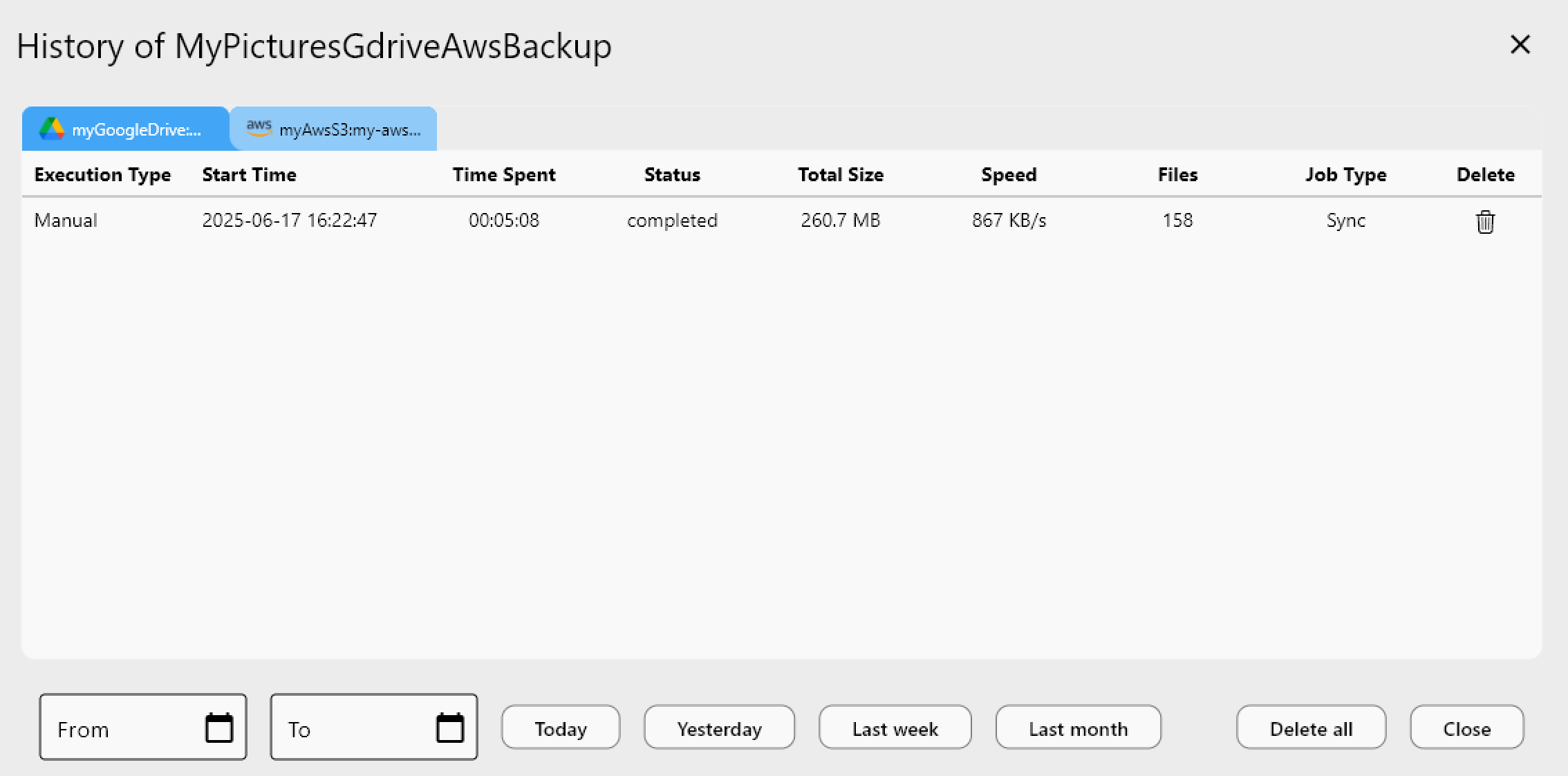
The Job History tab records every completed run with start time, duration, total size, transfer speed, file count, and status. Filter by date range or job type to audit sync activity over weeks or months.
Getting Started
- Download RcloneView from rcloneview.com.
- Open the Remote tab, click New Remote, select the S3 protocol, and choose Qiniu as the provider.
- Enter your Access Key, Secret Key, and regional endpoint from your Qiniu Cloud Console.
- Create a sync job pointing to your Kodo bucket and run it to back up local files or transfer data between Qiniu and another cloud.
With Qiniu Kodo connected, RcloneView gives you full control over your Chinese cloud object storage from the same interface you use for every other provider.
Related Guides:
- Manage Amazon S3 Storage — Sync and Backup Files with RcloneView
- Manage Cloudflare R2 Storage — Cloud Sync with RcloneView
- Manage Wasabi Cloud Storage — Sync and Backup with RcloneView
Supported Cloud Providers