Cloud Storage for Logistics and Supply Chain: Manage Shipping Documents with RcloneView
Logistics operations generate thousands of shipping documents daily — bills of lading, customs declarations, proof of delivery, and invoices — scattered across warehouses, carriers, and partners. RcloneView brings order to the chaos.
A single shipment can produce a dozen documents: the purchase order, commercial invoice, packing list, bill of lading, customs entry, arrival notice, proof of delivery, and carrier invoice. Multiply that by hundreds or thousands of shipments per month, and the document management burden becomes enormous. Most logistics teams rely on email attachments, shared drives with inconsistent naming, and manual folder copying between systems. RcloneView replaces that friction with automated cloud-to-cloud sync, scheduled backups, and a visual file explorer that works across every storage provider rclone supports.
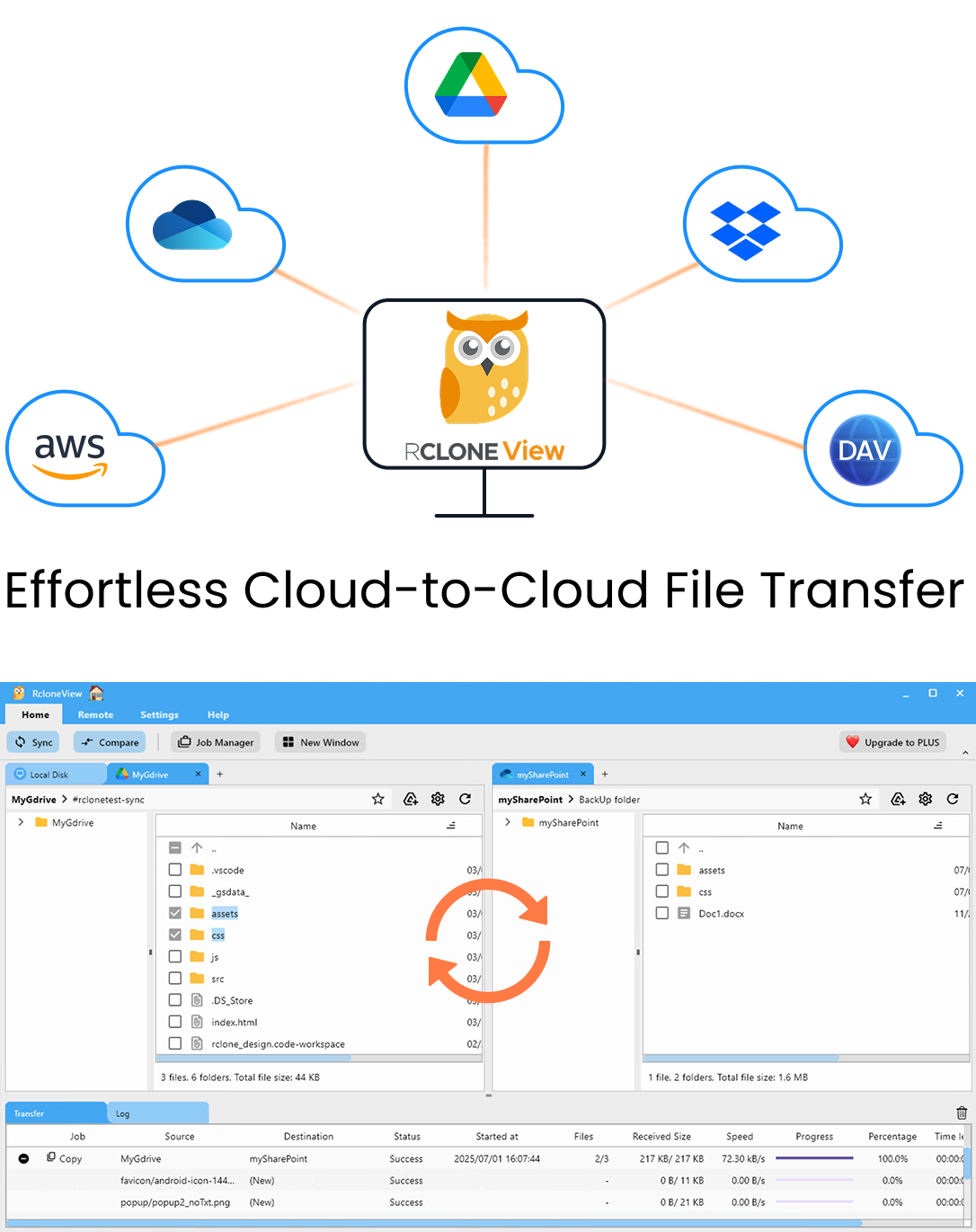
Manage & Sync All Clouds in One Place
RcloneView is a cross-platform GUI for rclone. Compare folders, transfer or sync files, and automate multi-cloud workflows with a clean, visual interface.
- One-click jobs: Copy · Sync · Compare
- Schedulers & history for reliable automation
- Works with Google Drive, OneDrive, Dropbox, S3, WebDAV, SFTP and more
Free core features. Plus automations available.
The Supply Chain Document Challenge
| Document Type | Frequency | Typical Storage |
|---|---|---|
| Bills of Lading (BOL) | Per shipment | TMS / email / shared drive |
| Commercial Invoices | Per shipment | ERP / Google Drive |
| Customs Declarations | Per import/export | Broker portal / local |
| Proof of Delivery (POD) | Per delivery | Carrier portal / Dropbox |
| Packing Lists | Per shipment | Warehouse local drive |
| Tracking & Status Logs | Continuous | TMS database exports |
| Carrier Rate Contracts | Quarterly/Annual | OneDrive / SharePoint |
The challenge is not just volume — it is fragmentation. Documents live in different systems at different locations, controlled by different teams and partners. When an audit request arrives or a shipment dispute occurs, finding the right files fast is critical.
Multi-Warehouse File Synchronization
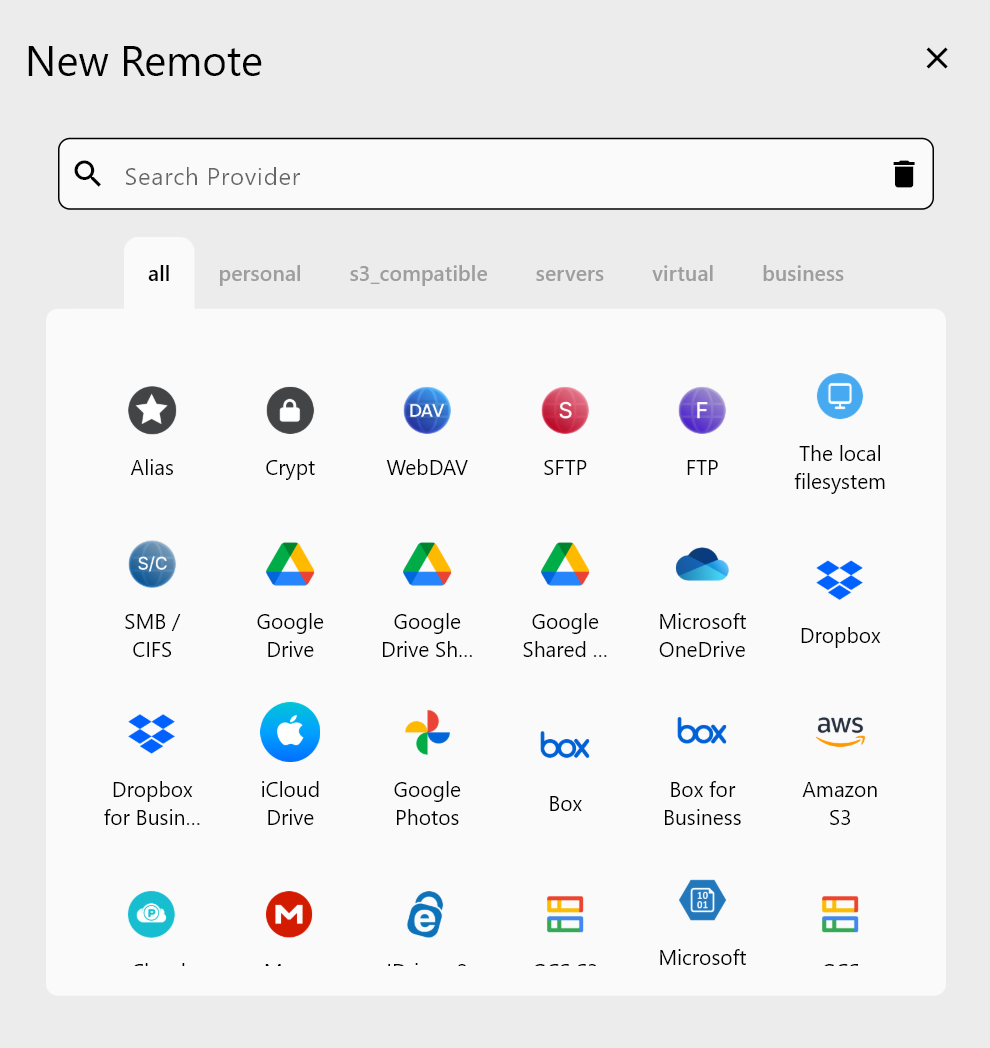
Logistics companies with multiple warehouses need consistent document access across locations. RcloneView enables this with two-pane cloud-to-cloud transfers:
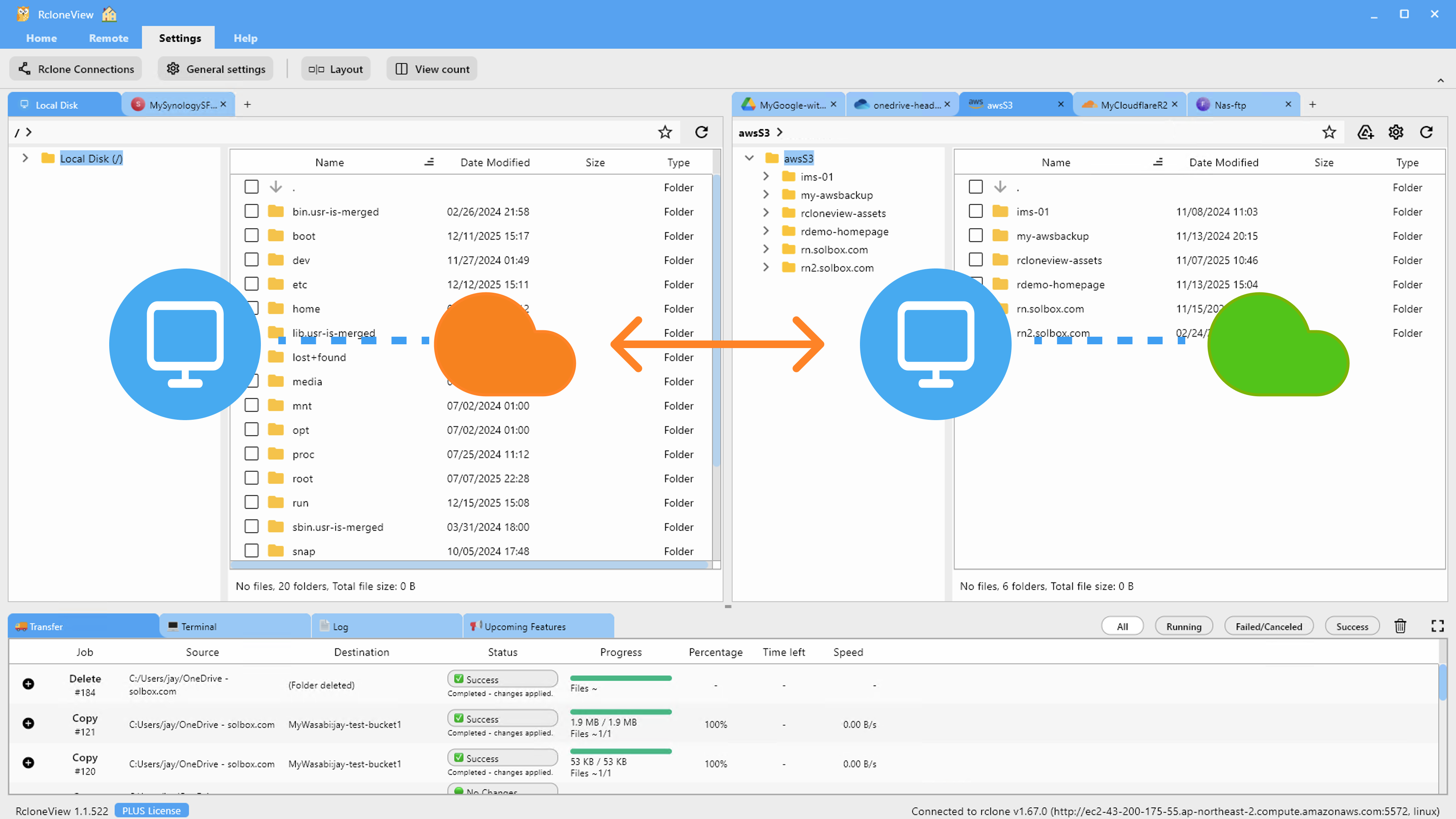
Setting up warehouse sync
- Create remotes for each warehouse's storage — whether that is a local NAS, Google Drive, S3 bucket, or SFTP server.
- In the two-pane explorer, set the source to Warehouse A's document folder and the destination to Warehouse B.
- Use Sync mode to keep both locations identical, or Copy mode to push new documents without deleting anything at the destination.
This ensures every warehouse has access to the latest BOLs, packing lists, and receiving documents — without waiting for email forwards or manual uploads.
Partner document exchange
Freight forwarders, customs brokers, and 3PL providers each maintain their own file systems. Instead of downloading from one portal and uploading to another, connect both as remotes in RcloneView and transfer directly:
Source: sftp-broker:/customs-docs/2026-Q2/
Destination: s3-archive:compliance/customs/2026-Q2/
Compliance Archiving
Logistics companies face strict document retention requirements. Customs records often must be kept for 5 to 7 years. Carrier contracts, rate agreements, and proof of delivery may have their own retention windows.
Building a compliance archive
- Designate a low-cost archive remote — Backblaze B2, Wasabi, or S3 Glacier are cost-effective for long-term storage.
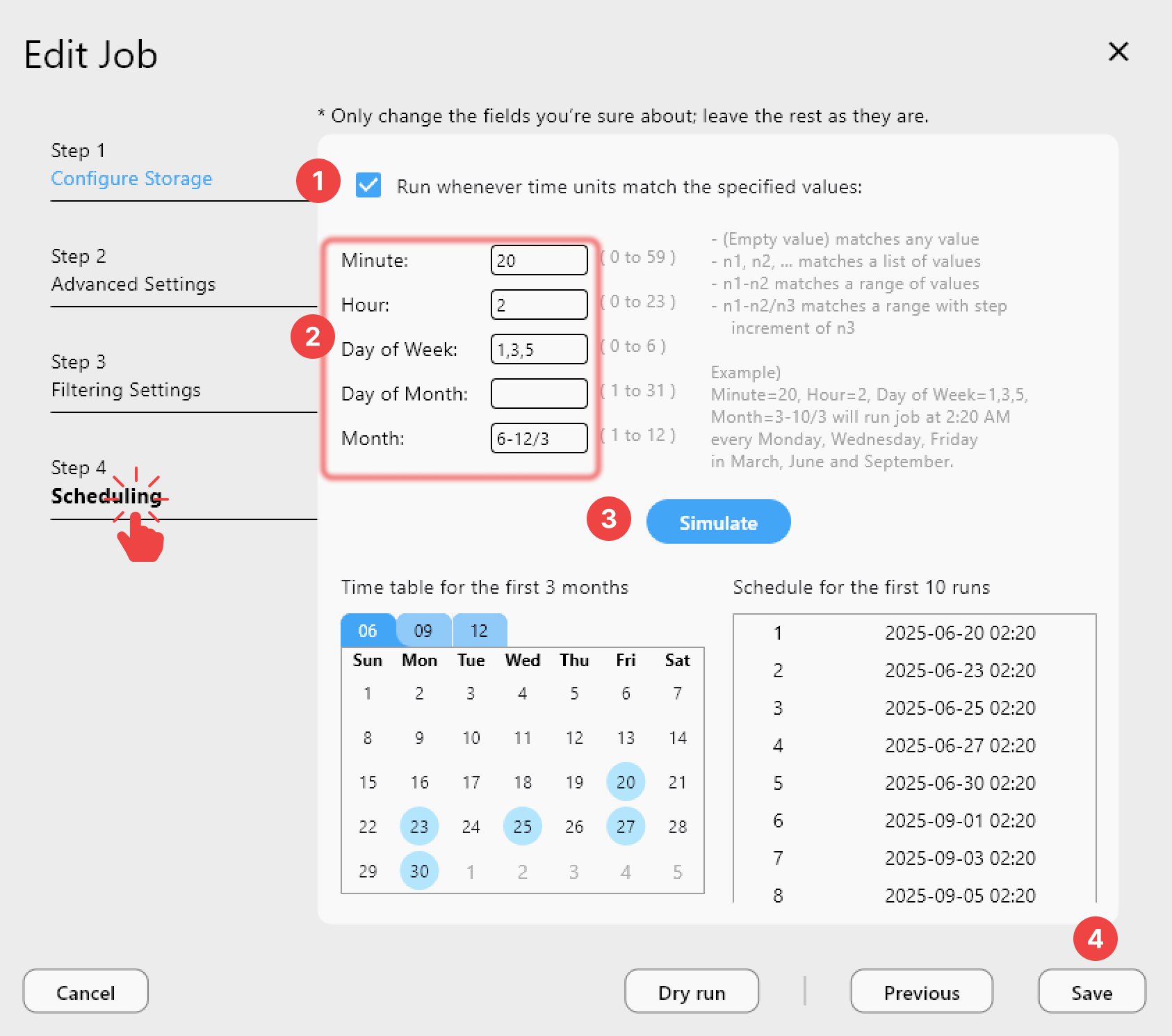
- Schedule monthly archive jobs in RcloneView to copy closed-shipment documents from your active storage to the archive.
- Use folder structures by year and quarter for easy retrieval during audits:
archive-bucket:compliance/BOL/2026/Q1/
archive-bucket:compliance/customs/2026/Q1/
archive-bucket:compliance/invoices/2026/Q1/
Audit readiness
When regulators or auditors request documents, use RcloneView's Compare feature to verify that your archive matches source records. The visual diff highlights any missing or modified files immediately — no spreadsheet reconciliation needed.
Automating Document Flows
Inbound shipment document pipeline
Set up a chain of scheduled jobs to automate the flow of inbound shipment documents:
- Carrier delivery: Carrier uploads PODs to their shared Dropbox folder.
- Nightly sync: RcloneView pulls new PODs from the carrier Dropbox into your central Google Drive.
- Weekly archive: Completed shipment folders are copied to long-term S3 storage.
Tracking data exports
Many TMS platforms export tracking data as CSV or JSON files. Schedule RcloneView to pick up these exports from a local folder or SFTP endpoint and push them to a cloud data lake for analytics.
Backup Strategies for Logistics
Supply chain data is irreplaceable during disputes, insurance claims, and compliance audits. A robust backup strategy includes:
- 3-2-1 rule: Keep 3 copies of critical documents on 2 different storage types with 1 offsite copy.
- Daily incremental backups of active shipment folders to a second cloud provider.
- Immutable storage for compliance-critical documents — use S3 Object Lock or Backblaze B2's file lock to prevent accidental deletion.
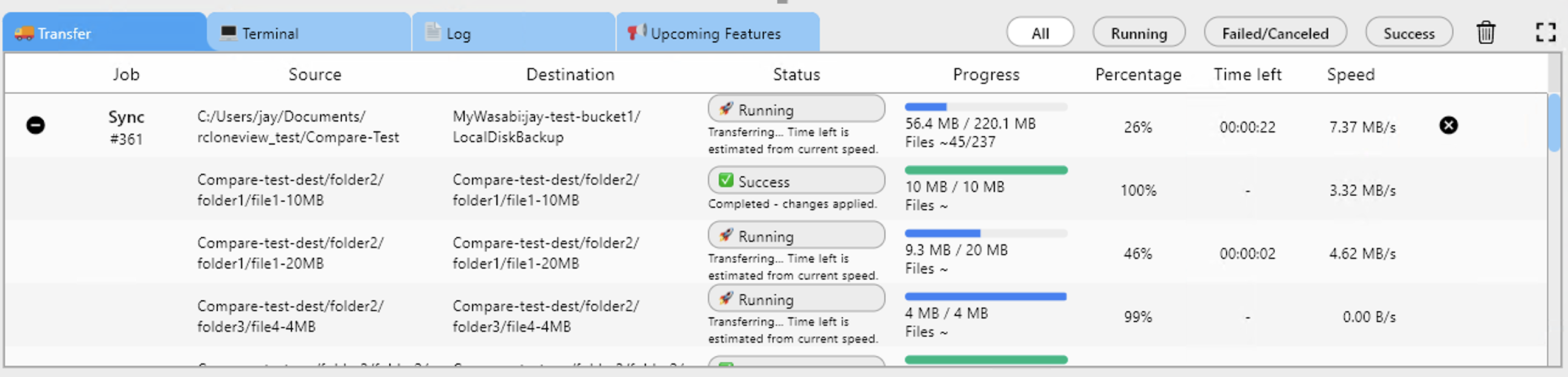
- Monitor job history in RcloneView to confirm every backup completed successfully.
Getting Started
- Download RcloneView from rcloneview.com.
- Connect your storage endpoints — warehouse NAS, Google Drive, S3, broker SFTP.
- Map your document flows and create Copy or Sync jobs for each.
- Schedule backups and archives to run automatically overnight.
Supply chain documents are the paper trail of your entire operation. Automate their management and never scramble for a missing BOL again.
Related Guides:
- Cloud Storage for E-commerce Businesses
- Automate Daily Cloud Backups
- Reduce Multi-Cloud Costs with RcloneView
Supported Cloud Providers