Best Cloud Storage Workflow for Video Production Teams — Sync Dailies, Proxies, and Finals with RcloneView
Your camera cards fill up daily. Editors need proxies immediately. Clients want final deliverables on their Dropbox. And the raw footage needs to be safely archived. Managing all of this across drives and clouds is a full-time job — unless you automate it.
Video production generates enormous amounts of data. A single shooting day can produce hundreds of gigabytes of raw footage, and that's before proxies, project files, audio, graphics, and exports. Most teams juggle NAS drives, local SSDs, Google Drive for collaboration, and object storage for archiving. RcloneView connects all of these and automates the flow between them.
Manage & Sync All Clouds in One Place
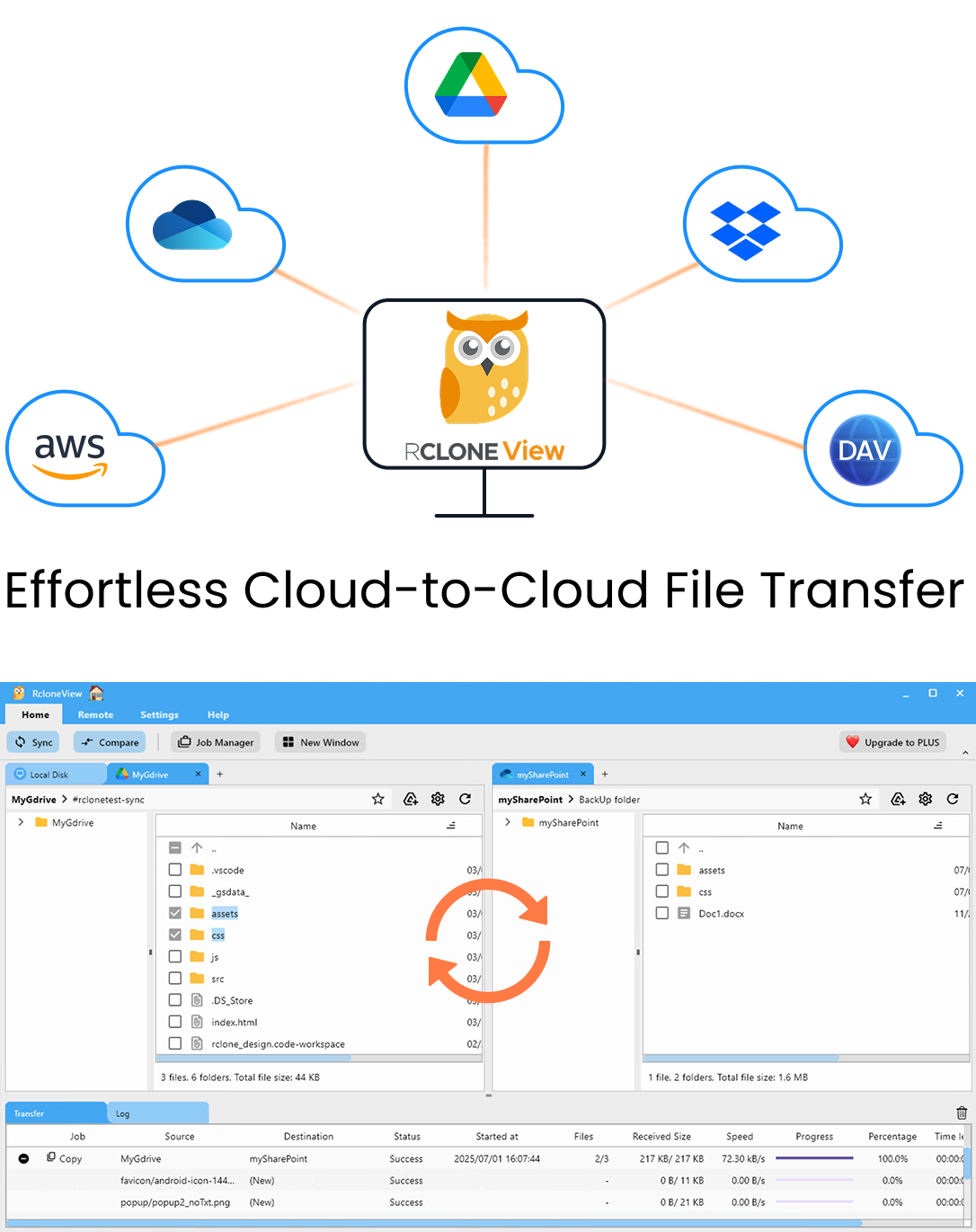
RcloneView is a cross-platform GUI for rclone. Compare folders, transfer or sync files, and automate multi-cloud workflows with a clean, visual interface.
- One-click jobs: Copy · Sync · Compare
- Schedulers & history for reliable automation
- Works with Google Drive, OneDrive, Dropbox, S3, WebDAV, SFTP and more
Free core features. Plus automations available.
The Video Production Data Problem
Data volumes are massive
A typical production workflow involves:
- Camera RAW — 200–500 GB per shoot day (RED, ARRI, Blackmagic).
- Proxy files — 10–50 GB (lower-resolution copies for editing).
- Project files — Premiere, DaVinci Resolve, After Effects projects.
- Audio — Separate WAV/AIFF recordings.
- Graphics and VFX — Motion graphics, composites.
- Final exports — Multiple deliverables (4K master, web version, social cuts).
This data lives across multiple locations: camera cards, local NVMe drives, NAS, Google Drive, Dropbox, and archival storage like Backblaze B2 or AWS S3 Glacier.
Current pain points
- Manual copying — DIT operators spend hours manually transferring between drives.
- No centralized view — Files are scattered across 5+ locations with no single dashboard.
- No automated backup — Raw footage often exists on only one drive until someone remembers to back it up.
- Client delivery is manual — Exporting finals, then uploading to client Dropbox/Google Drive by hand.
How RcloneView Solves This
1) Connect Everything in One Interface
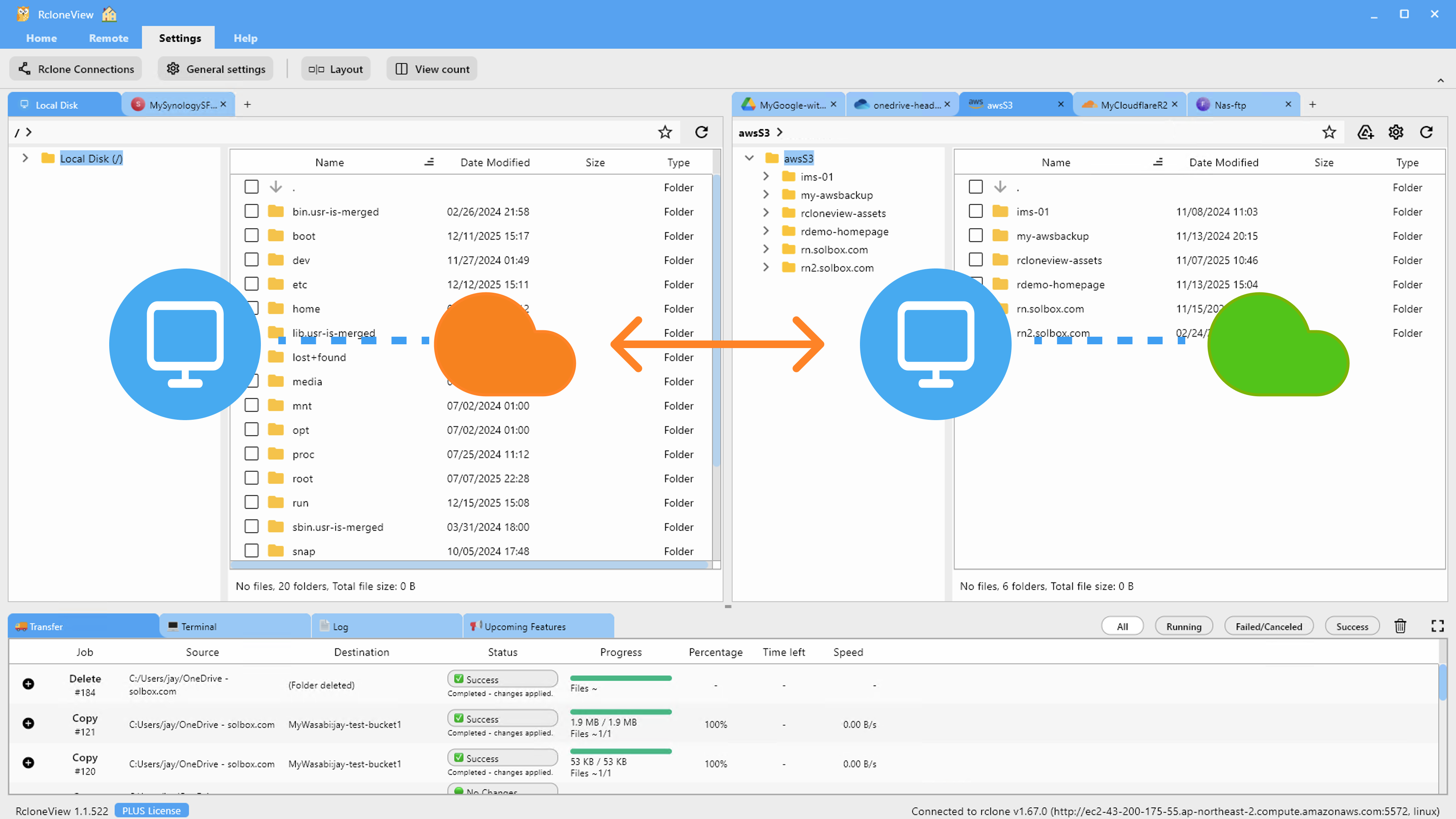
Add your NAS, local drives, Google Drive, Dropbox, Backblaze B2, and AWS S3 as remotes. Browse them all in RcloneView's two-pane explorer:
2) Automated Dailies Workflow
Set up a nightly sync to automatically push today's footage to backup storage:
Camera Card → NAS (immediate)
NAS → Backblaze B2 (nightly archive)
NAS → Google Drive /Proxies (nightly for editors)
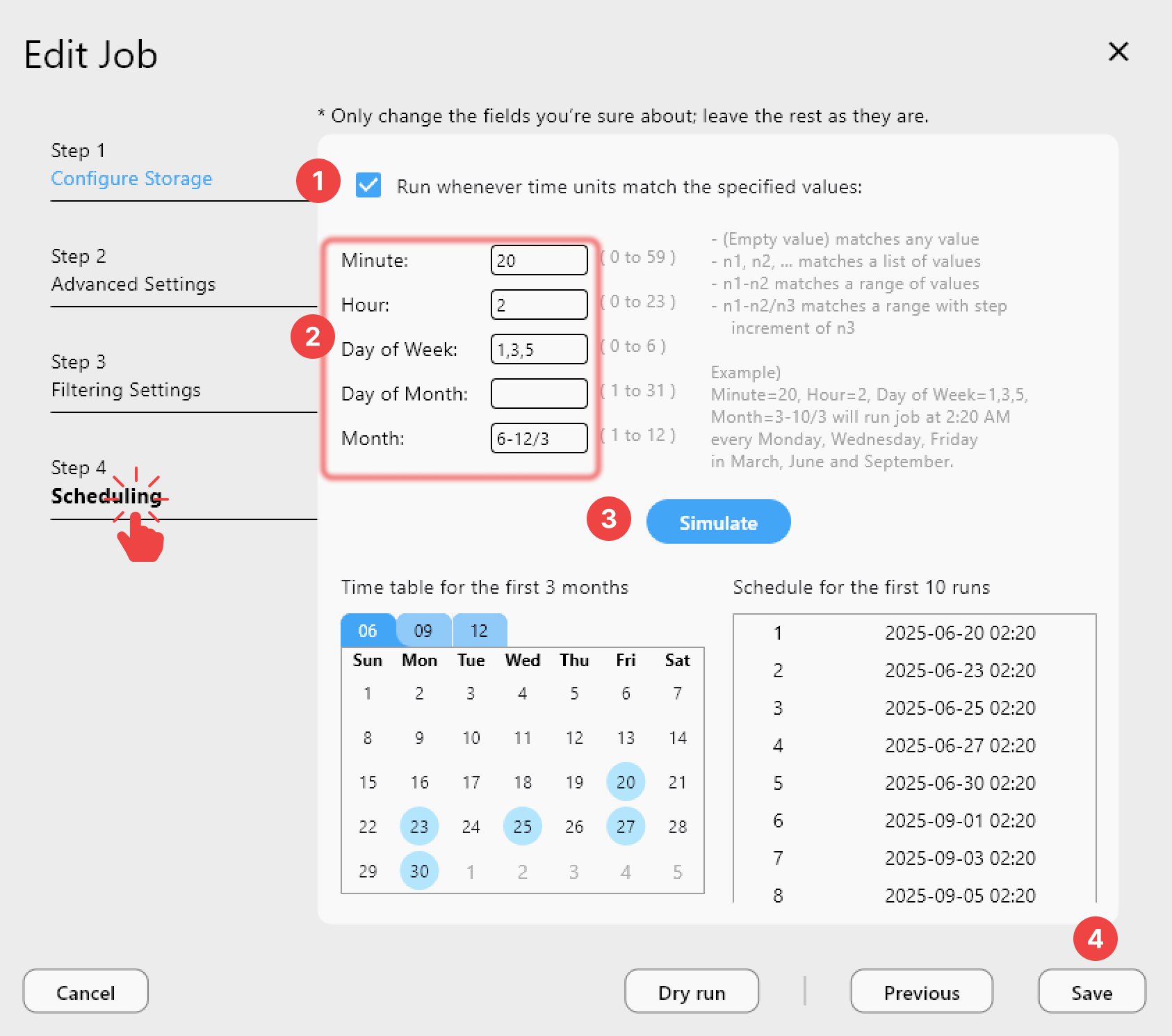
Use Job Scheduling to automate each step:
3) Proxy Distribution
Editors don't need the full RAW files. Create a Copy job that syncs only proxy files to Google Drive or Dropbox where editors can access them instantly.
Use filter rules to include only proxy formats:
- Include
*.movproxy files - Exclude RAW formats like
.r3d,.braw,.ari
4) Client Delivery
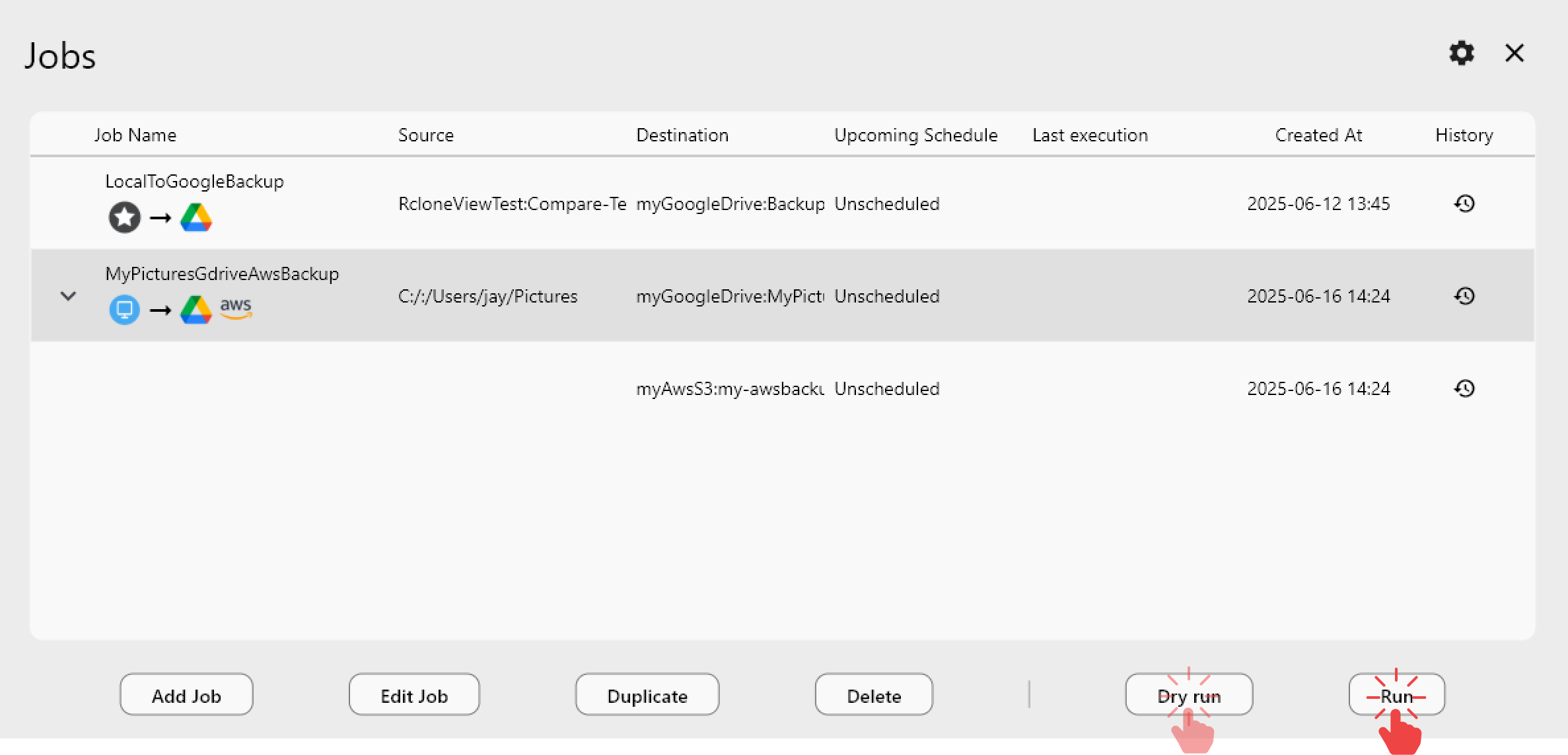
When finals are ready, run a one-click Copy job from your local export folder to the client's Dropbox or Google Drive folder:
5) Long-Term Archive
After a project wraps, archive everything to cold storage:
- Backblaze B2 — $6/TB/month, good for archives you might need again.
- AWS S3 Glacier — $4/TB/month, for deep archive.
- Wasabi — $7/TB/month, no egress fees for frequent access.
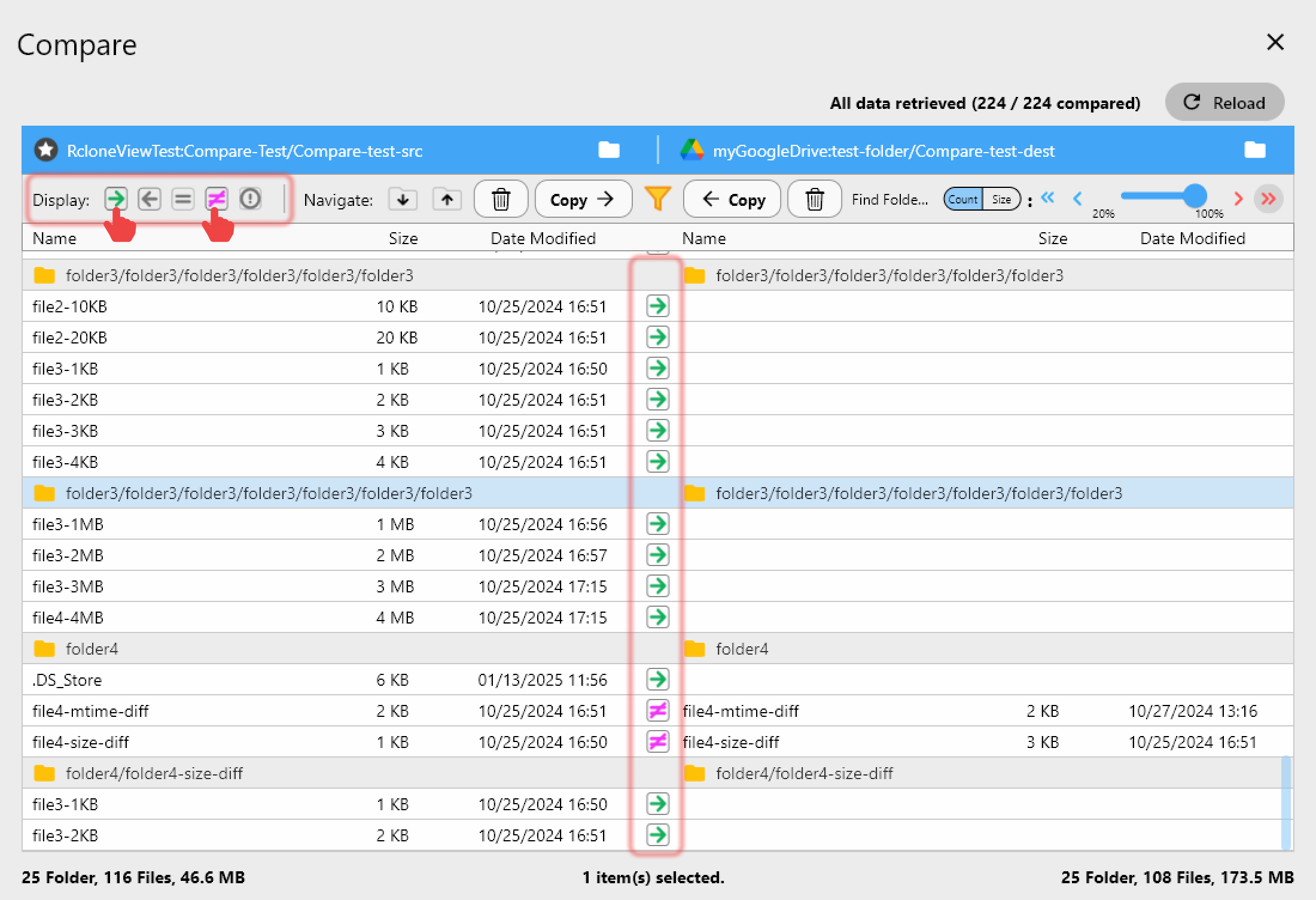
Schedule a final sync job to push the entire project folder to archive storage, then verify with Folder Comparison:
6) Batch Jobs for Multi-Step Workflows
v1.3's Batch Jobs let you chain operations. For example, a single batch can:
- Copy RAW from NAS → Backblaze B2
- Copy proxies from NAS → Google Drive
- Compare NAS vs B2 to verify
All in one click.
Recommended Setup for a Small Production Team
| Storage | Purpose | Provider |
|---|---|---|
| Local NVMe | Active editing | Local drive |
| NAS (Synology/QNAP) | Centralized storage | Local network |
| Google Drive | Proxy sharing, collaboration | Google Workspace |
| Backblaze B2 | Archive backup | $6/TB/month |
| Client Dropbox | Final delivery | Client's account |
Monitor Large Transfers
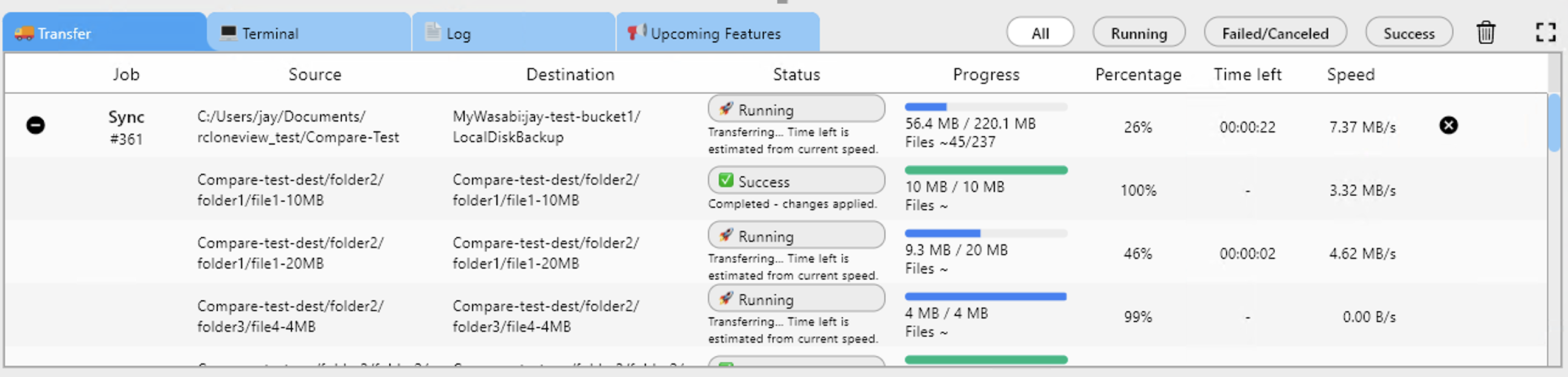
Video files are huge. Monitor transfer progress in real time:
Getting Started
- Download RcloneView from rcloneview.com.
- Add all your storage — NAS, local, cloud, and archive.
- Create Copy/Sync jobs for dailies, proxies, delivery, and archive.
- Schedule everything — stop copying files by hand.
- Verify with Folder Comparison — ensure nothing is missing.
Your footage is irreplaceable. Your time shouldn't be spent copying files between drives. Automate the boring parts and focus on the creative work.
Related Guides:
Supported Cloud Providers