Manage Google Cloud Storage Buckets with RcloneView
Google Cloud Storage is the object storage backbone of GCP — durable, fast, and deeply integrated with Google's cloud platform. RcloneView gives you a visual file manager for your GCS buckets without requiring
gsutilor the GCP console.
Google Cloud Storage (GCS) is the preferred object store for teams already using Google Cloud Platform — whether for app data, ML datasets, BigQuery staging, or media delivery. While gsutil and the GCP console work, they're slow for bulk file operations and day-to-day file management. RcloneView provides a dual-pane file manager for GCS buckets, letting you browse, transfer, and sync files the same way you'd use a desktop file explorer.
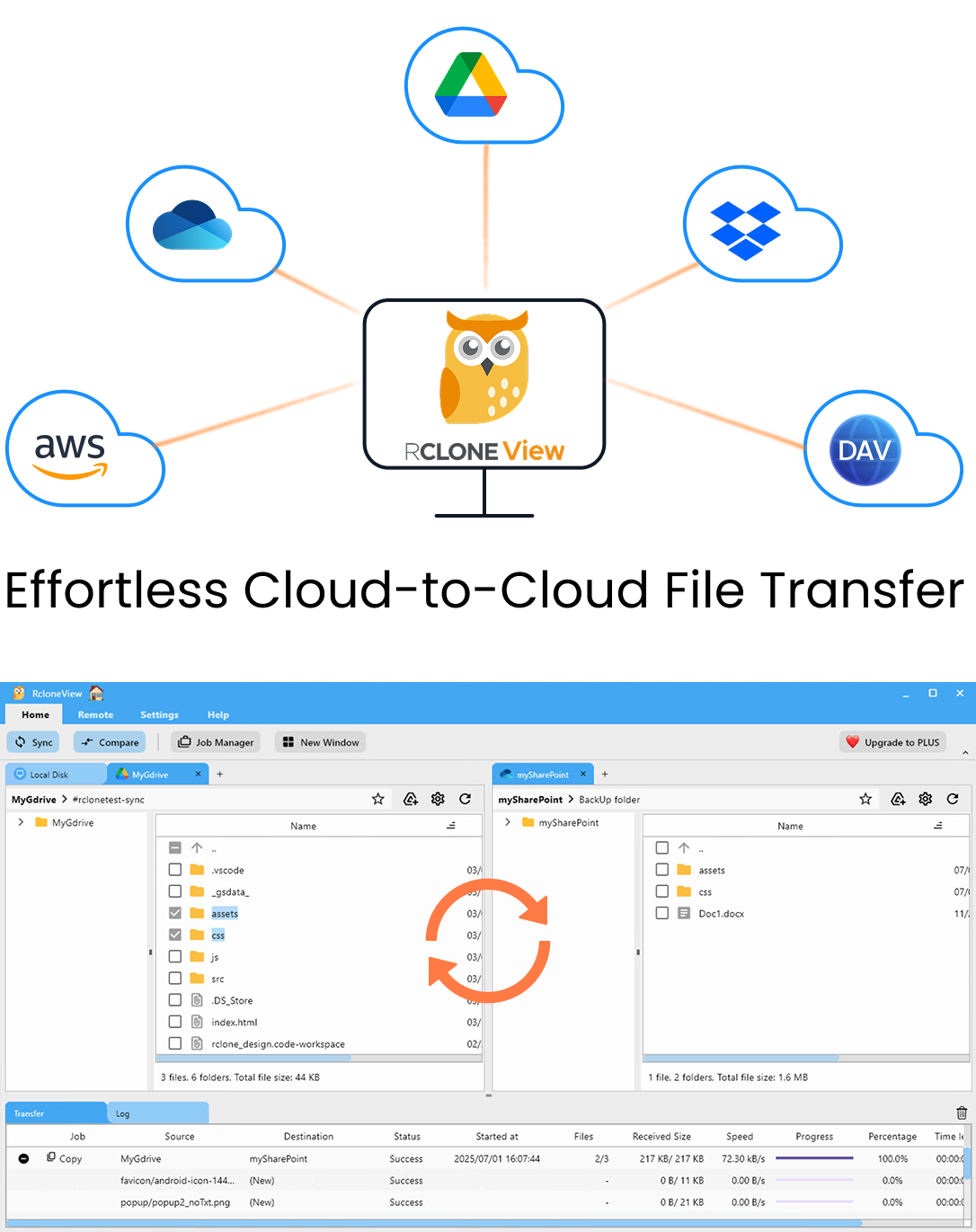
Manage & Sync All Clouds in One Place
RcloneView is a cross-platform GUI for rclone. Compare folders, transfer or sync files, and automate multi-cloud workflows with a clean, visual interface.
- One-click jobs: Copy · Sync · Compare
- Schedulers & history for reliable automation
- Works with Google Drive, OneDrive, Dropbox, S3, WebDAV, SFTP and more
Free core features. Plus automations available.
What RcloneView Adds to GCS Management
| Task | GCP Console | gsutil CLI | RcloneView |
|---|---|---|---|
| Browse buckets visually | ✓ | ✗ | ✓ |
| Drag-and-drop upload | Limited | ✗ | ✓ |
| Sync to other clouds | ✗ | ✗ | ✓ |
| Transfer to local disk | Slow | ✓ | ✓ |
| Schedule sync jobs | ✗ | Manual | ✓ |
| Real-time transfer monitoring | ✗ | ✓ | ✓ |
Connecting Google Cloud Storage to RcloneView
Step 1 — Create a Service Account
In the GCP console:
- Go to IAM & Admin → Service Accounts.
- Create a new service account with the Storage Admin (or Storage Object Admin for read/write without bucket management) role.
- Generate a JSON key file and download it.
Step 2 — Add the GCS remote in RcloneView
Open RcloneView and click New Remote:
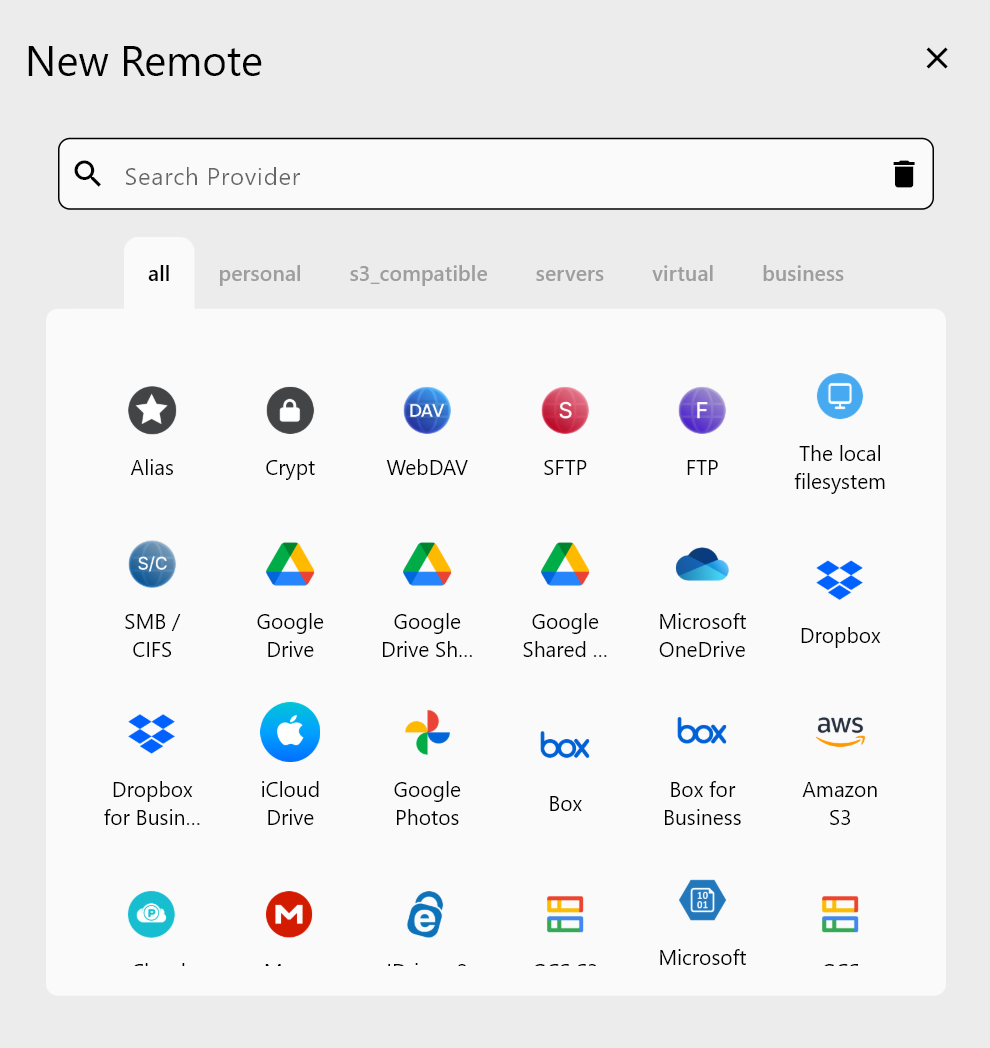
- Select Google Cloud Storage from the remote type list.
- Point to your downloaded JSON service account key file.
- Enter your GCP Project ID.
- Name the remote (e.g.,
gcs-prod) and save.
After connecting, your GCS buckets appear as top-level folders in RcloneView's file browser.
Browsing and Managing GCS Buckets
Navigate into any bucket to see its contents. RcloneView renders the object key hierarchy as folders, matching what you'd see in the GCP console.
From the dual-pane interface you can:
- Copy files between GCS paths or to/from local disk
- Move objects within a bucket or across buckets
- Delete objects with confirmation
- Rename by copying with a new key and deleting the old one
Syncing Files to and from GCS
Upload a local dataset to GCS
- Open a Job in RcloneView.
- Set source to your local folder (e.g.,
D:\ml-dataset\). - Set destination to a GCS path (e.g.,
gcs-prod:my-ml-bucket/training-data/). - Choose Copy (add new files only) or Sync (mirror exactly).
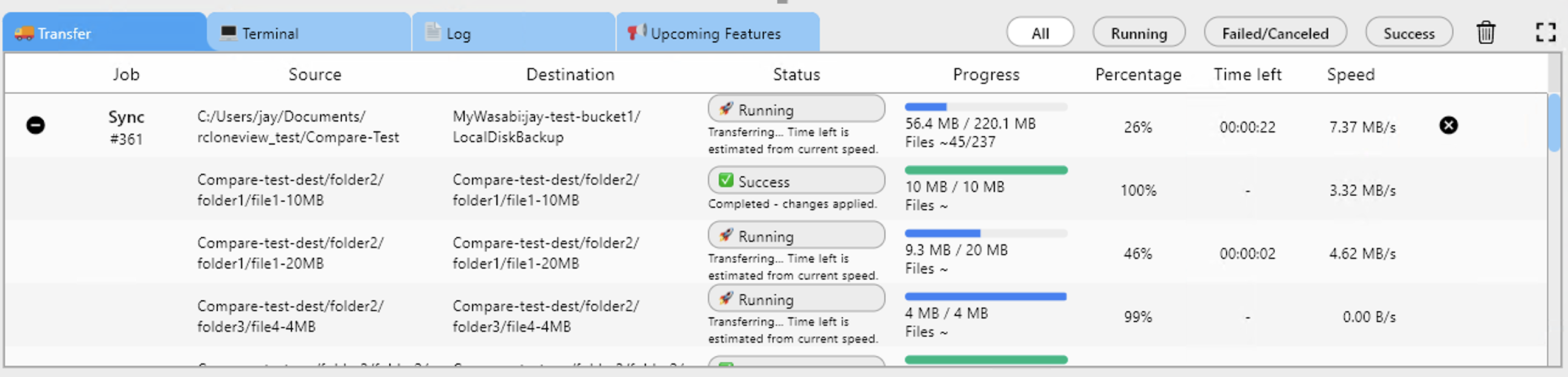
- Run the job and monitor progress live.
Cross-cloud: GCS to another provider
RcloneView transfers directly between clouds. Common GCS workflows:
- GCS → AWS S3 — replicate buckets across clouds for redundancy
- GCS → Backblaze B2 — archive cold data to cheaper storage
- GCS → Google Drive — share processed outputs with non-technical stakeholders
- GCS → local NAS — pull data for on-premises processing
GCS Storage Class Awareness
GCS has multiple storage classes: Standard, Nearline, Coldline, and Archive. When setting up a sync job in RcloneView, you can pass rclone flags to target a specific storage class for new objects:
| Storage Class | Use Case | Minimum Storage Duration |
|---|---|---|
| Standard | Frequently accessed data | None |
| Nearline | Monthly access | 30 days |
| Coldline | Quarterly access | 90 days |
| Archive | Annual access | 365 days |
Use the Custom flags field in RcloneView's job editor to pass --gcs-storage-class COLDLINE for archival data.
Scheduling Regular GCS Syncs
For recurring backup jobs — nightly uploads, daily staging syncs, or weekly archival runs:
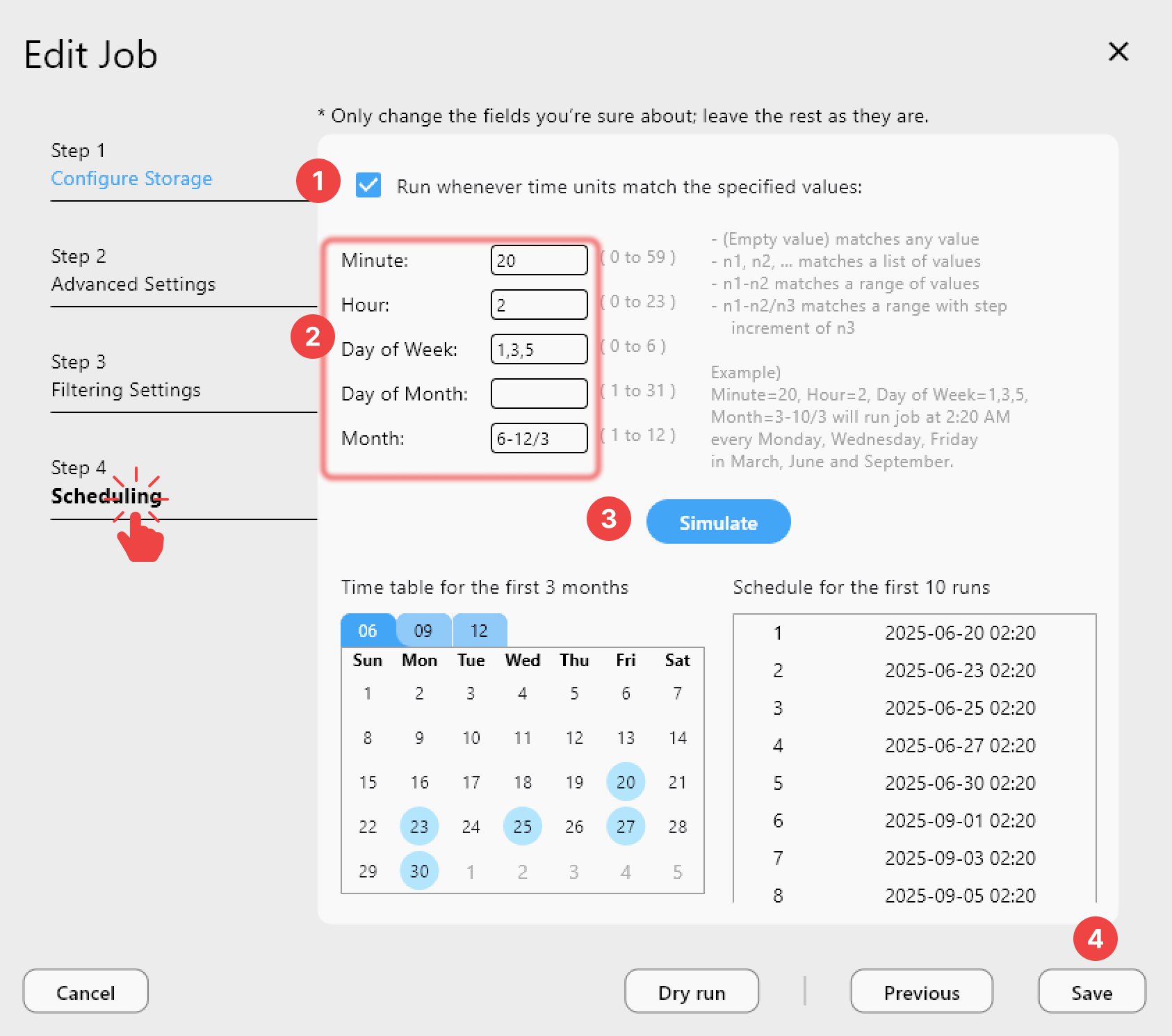
- Create a job with your source and GCS destination.
- Open Schedule settings.
- Set frequency (daily, weekly, custom cron).
- Enable email or notification alerts on completion.
Folder Comparison for Verification
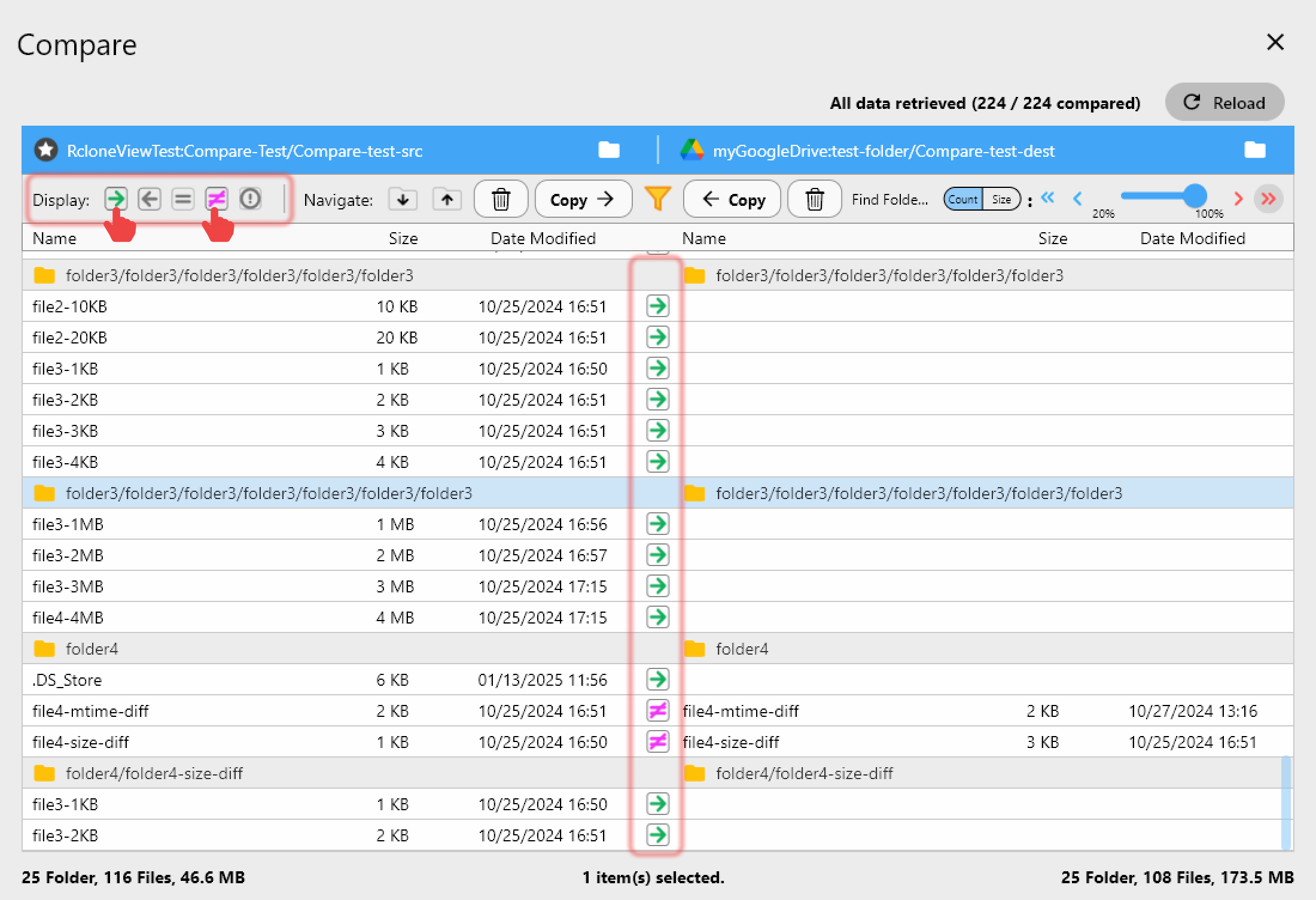
After large transfers, use RcloneView's Folder Comparison to verify that your local files match what's in GCS — checking file counts, sizes, and checksums:
Any missing or mismatched objects appear highlighted, letting you re-run only the affected files.
Getting Started
- Download RcloneView from rcloneview.com.
- Create a service account in the GCP console with Storage Object Admin permissions.
- Download the JSON key and add the GCS remote in RcloneView.
- Browse your buckets and start transferring files visually.
GCS is powerful infrastructure — RcloneView makes the day-to-day file management feel as easy as a local drive.
Related Guides:
- Transfer Google Cloud Storage to AWS S3
- Mount Amazon S3 Buckets as Local Drives
- Centralize S3, Wasabi, and R2 with RcloneView
Supported Cloud Providers