Google Drive vs OneDrive for Business: A Practical Comparison
Both Google Drive (via Google Workspace) and OneDrive (via Microsoft 365) come bundled with widely-used productivity suites. The right choice depends on your existing ecosystem, compliance needs, and how your team collaborates.
Google Drive and OneDrive are the two dominant cloud storage platforms for businesses. Most companies end up standardizing on one — but teams frequently need to work with both, especially in organizations that have merged, have clients on the opposite platform, or are considering switching. This comparison covers the key decision factors and shows how RcloneView bridges the gap between the two.
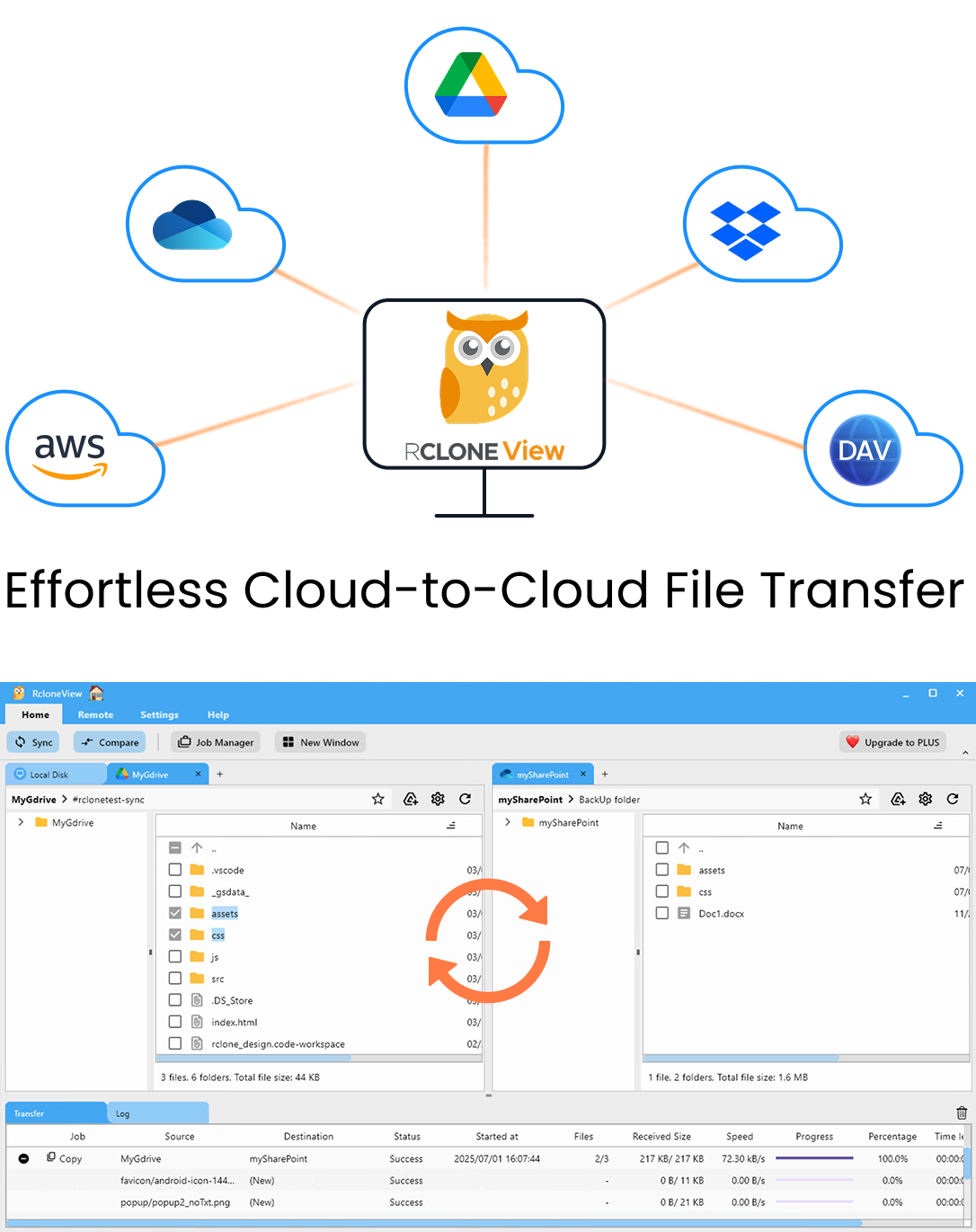
Manage & Sync All Clouds in One Place
RcloneView is a cross-platform GUI for rclone. Compare folders, transfer or sync files, and automate multi-cloud workflows with a clean, visual interface.
- One-click jobs: Copy · Sync · Compare
- Schedulers & history for reliable automation
- Works with Google Drive, OneDrive, Dropbox, S3, WebDAV, SFTP and more
Free core features. Plus automations available.
Quick Comparison Table
| Feature | Google Drive (Workspace) | OneDrive (Microsoft 365) |
|---|---|---|
| Bundled with | Google Workspace | Microsoft 365 |
| Storage per user | 30 GB – 5 TB (plan dependent) | 1 TB – unlimited (plan dependent) |
| Shared drives | Shared Drives (Team Drives) | SharePoint document libraries |
| Desktop sync client | Google Drive for Desktop | OneDrive sync client |
| Collaboration | Google Docs/Sheets/Slides | Word/Excel/PowerPoint Online |
| Version history | 30 days (Business Starter) to 180 days | 180 days (recycle bin) |
| Offline access | ✓ (selective) | ✓ (selective) |
| Mobile apps | ✓ iOS, Android | ✓ iOS, Android |
| eDiscovery / compliance | Google Vault | Microsoft Purview |
| Active Directory integration | Google Workspace LDAP | Azure AD (native) |
| HIPAA BAA available | ✓ | ✓ |
| GDPR compliance | ✓ | ✓ |
| Third-party app ecosystem | Google Workspace Marketplace | Microsoft AppSource |
| Pricing (Business Standard) | ~$12/user/month | ~$12.50/user/month |
Google Drive Strengths
Real-time collaborative editing is where Google Workspace excels. Multiple users editing the same Google Doc simultaneously, with change attribution and comments, remains best-in-class. If your team lives in Docs, Sheets, and Slides, Drive is the natural home.
Cross-platform access is seamless. Google Drive works equally well on Windows, macOS, Linux, iOS, Android, and in the browser — without needing Windows to get full functionality.
Shared Drives (formerly Team Drives) provide organizational ownership of files — files don't belong to an individual user, preventing data loss when someone leaves the company.
Search quality is excellent. Google's search technology applies to your Drive content, making it easy to find files by content, not just name.
OneDrive Strengths
Microsoft ecosystem integration is OneDrive's defining advantage. If your organization uses Active Directory, Azure AD, SharePoint, Teams, and Office apps, OneDrive is natively wired into all of them. Permissions, identity, and compliance are unified.
SharePoint integration means OneDrive for Business is really a SharePoint layer — files stored in Teams channels, SharePoint sites, and OneDrive all flow through the same infrastructure with consistent permissions.
Offline sync reliability is generally considered stronger for Windows-heavy organizations — the OneDrive sync client is deeply integrated with Windows Explorer.
Compliance tooling via Microsoft Purview (formerly Compliance Center) is more mature for organizations with strict regulatory requirements in heavily Microsoft-regulated industries.
When to Choose Google Drive
- Your team primarily uses Google Docs, Sheets, and Slides.
- You have a mixed-OS environment (Linux, Mac, Windows).
- You value real-time collaboration over Office format compatibility.
- You're a startup or SMB without an existing Microsoft infrastructure investment.
When to Choose OneDrive
- You're already on Microsoft 365 / Active Directory.
- Your team works primarily in Word, Excel, and PowerPoint.
- You use SharePoint or Teams for communication and file sharing.
- You need deep Azure AD RBAC integration for enterprise access control.
Running Both: Where RcloneView Helps
Many organizations run both — a Google Workspace team working with Microsoft 365 clients, a company mid-migration, or a hybrid environment. RcloneView lets you:
- Mirror files between Google Drive and OneDrive — keep shared folders in sync across both platforms.
- Migrate content from one to the other without using a paid migration service.
- Backup both to S3 or Backblaze B2 for compliance-grade retention independent of either provider.
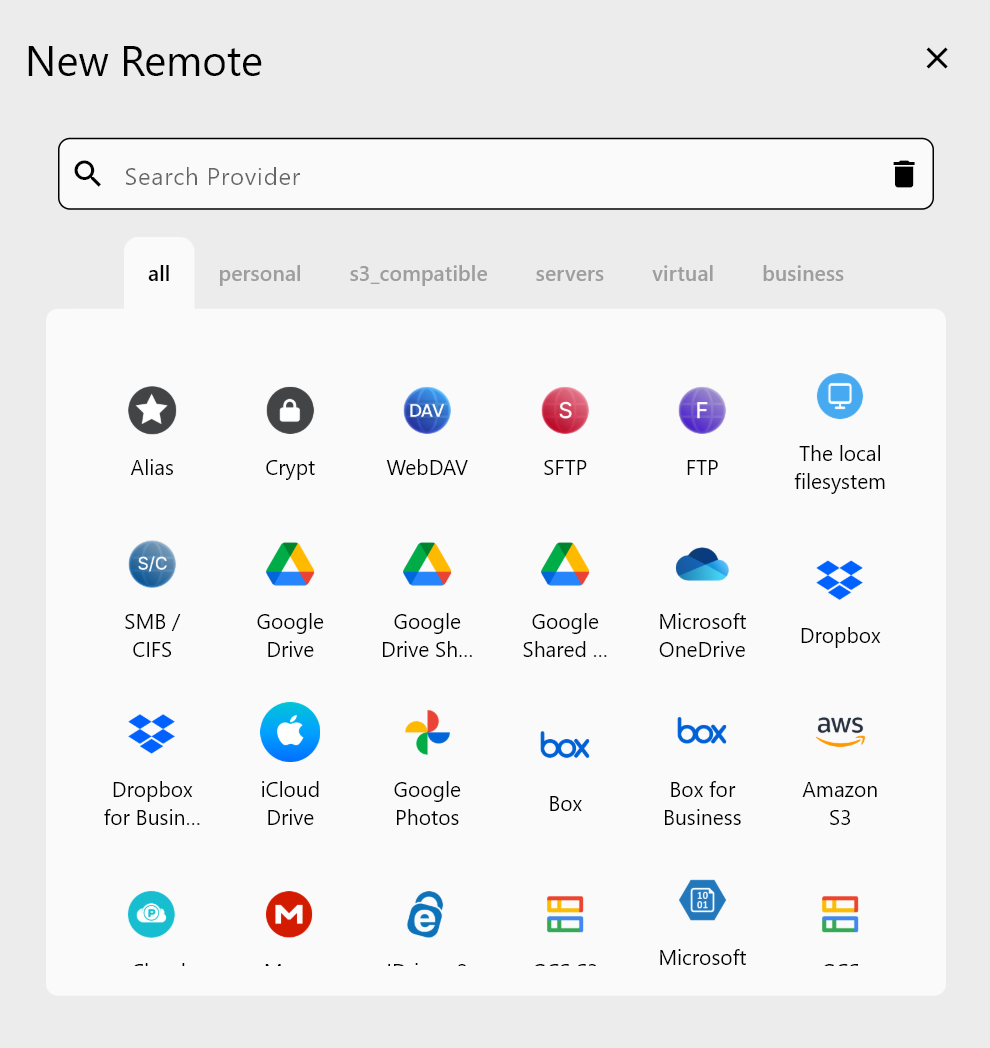
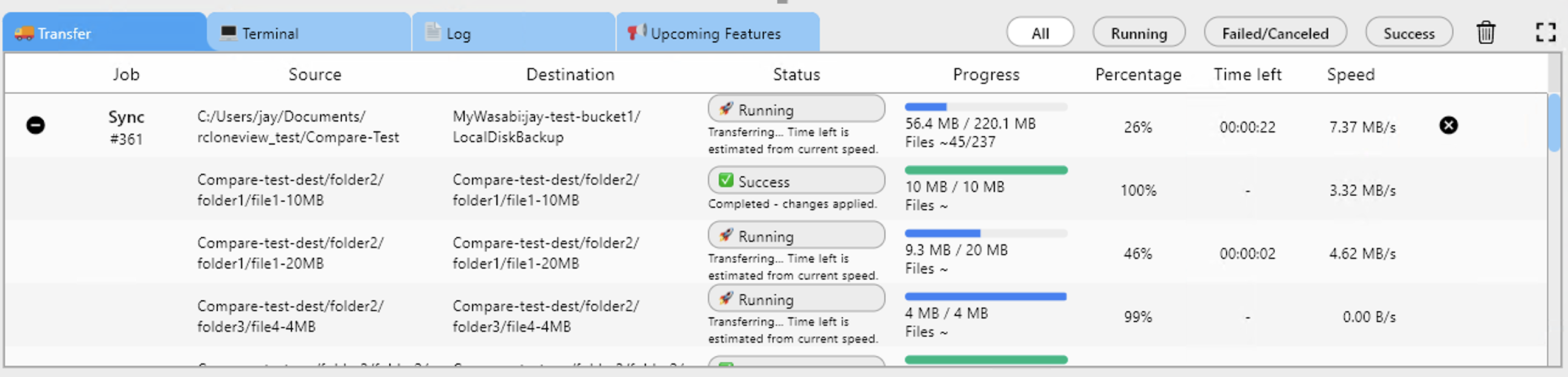
With both remotes added in RcloneView, you can run a Copy or Sync job between them:
Migration Path: Switching Between Platforms
If you're switching from one to the other, RcloneView handles the bulk file transfer:
- Google Drive → OneDrive: Use the Migrate Google Drive to OneDrive guide.
- OneDrive → Google Drive: Use the Migrate OneDrive to Google Drive guide.
Native file formats (Google Docs, Sheets) don't transfer as editable Office formats automatically — use Google's bulk export first, then transfer the resulting files with RcloneView.
Getting Started
- Download RcloneView from rcloneview.com.
- Add both Google Drive and OneDrive remotes to manage or migrate between them.
- Run comparison, sync, or copy jobs depending on your workflow.
- Schedule ongoing sync if you need to keep both platforms in sync during a transition.
The "which is better" question depends entirely on your existing stack. But whichever you use — or if you use both — RcloneView gives you full programmatic control over both.
Related Guides:
- Migrate Google Drive to OneDrive
- Migrate OneDrive to Google Drive
- Effortless Transfers Between Google Drive and OneDrive
Supported Cloud Providers