Sync Seafile to Wasabi — Cloud Backup with RcloneView

Give a self-hosted Seafile library an off-site backup on Wasabi without writing a single sync script.
Seafile is a popular choice for teams that want their file sync platform running on their own server, but self-hosting also means the backup story is entirely your responsibility — if the server disk fails, so does the only copy. Wasabi is a natural off-site target: S3-compatible, affordable at scale, and reachable from anywhere. RcloneView connects to both directly, so a Seafile library can mirror into a Wasabi bucket on a schedule instead of relying on manual exports.
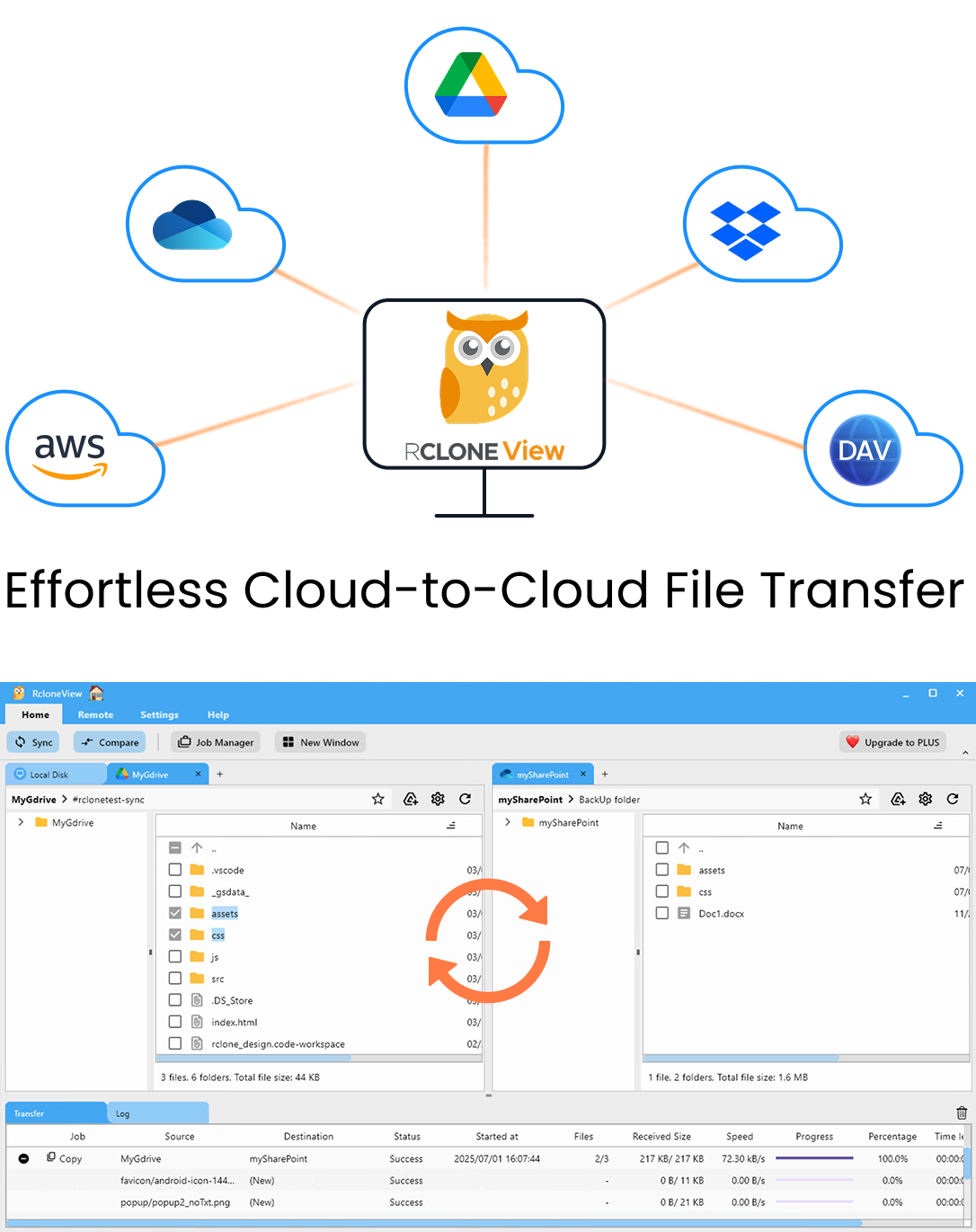
Manage & Sync All Clouds in One Place
RcloneView is a cross-platform GUI for rclone. Compare folders, transfer or sync files, and automate multi-cloud workflows with a clean, visual interface.
- One-click jobs: Copy · Sync · Compare
- Schedulers & history for reliable automation
- Works with Google Drive, OneDrive, Dropbox, S3, WebDAV, SFTP and more
Free core features. Plus automations available.
Connecting Seafile and Wasabi as Remotes
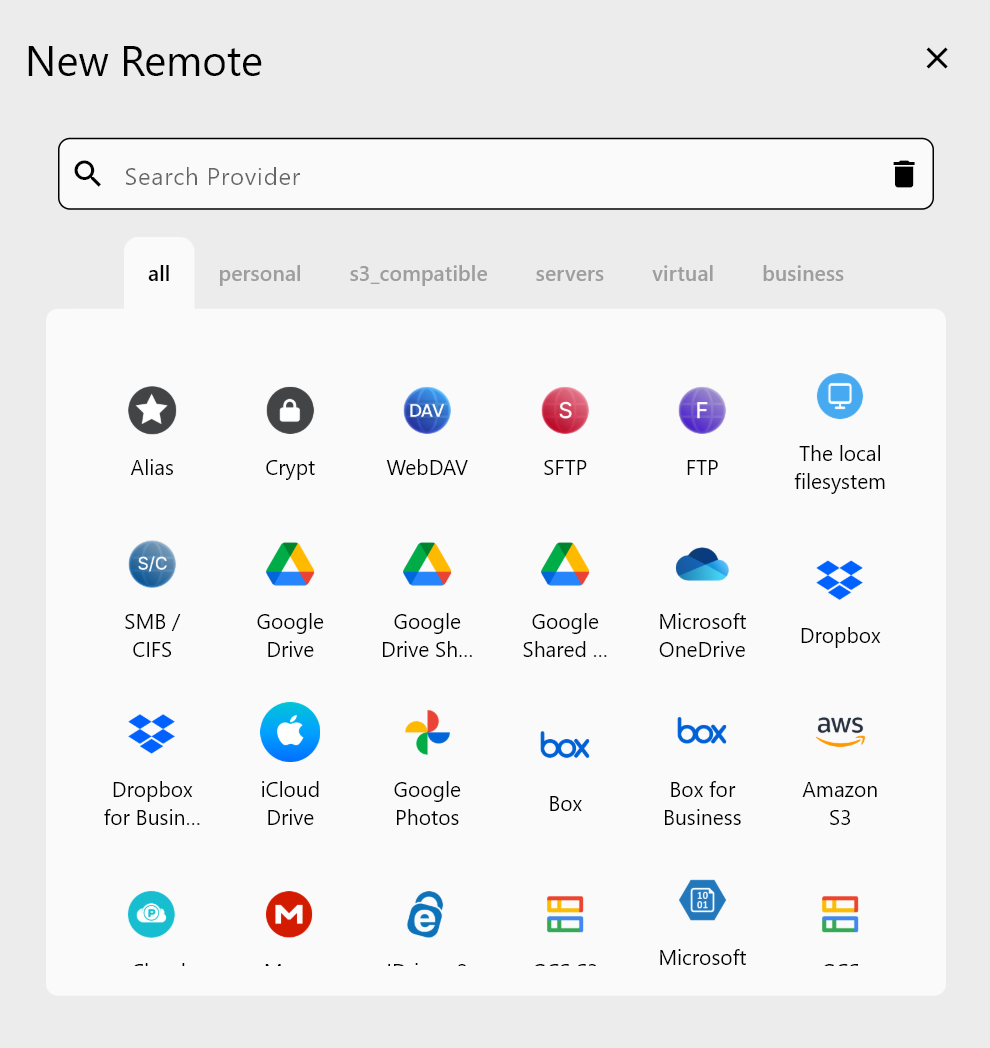
Add your Seafile server as a remote first, pointing RcloneView at your server URL and library credentials. Add Wasabi separately using your Access Key ID, Secret Access Key, and the appropriate Wasabi regional endpoint. Once both remotes are configured, they appear as browsable file trees in the Explorer panels, so you can confirm library structure and file counts before wiring up a sync job. RcloneView mounts AND syncs 90+ providers from one window on Windows, macOS, and Linux, so Seafile and Wasabi sit alongside any other clouds already in your setup.
Building a One-Way Sync Job
Configure a sync job with your Seafile library as the source and a Wasabi bucket as the destination, using "Modifying destination only" so Wasabi stays a pure mirror that never writes back into Seafile. For a design team with a 500GB shared library of source files and exports, the Filtering step lets you exclude temp and lock files Seafile generates internally, keeping the Wasabi copy clean rather than cluttered with sync artifacts.
Enable checksum comparison in the Advanced Settings step so files are matched by hash and size instead of just modification time — useful since Seafile and S3-compatible storage track file metadata differently.
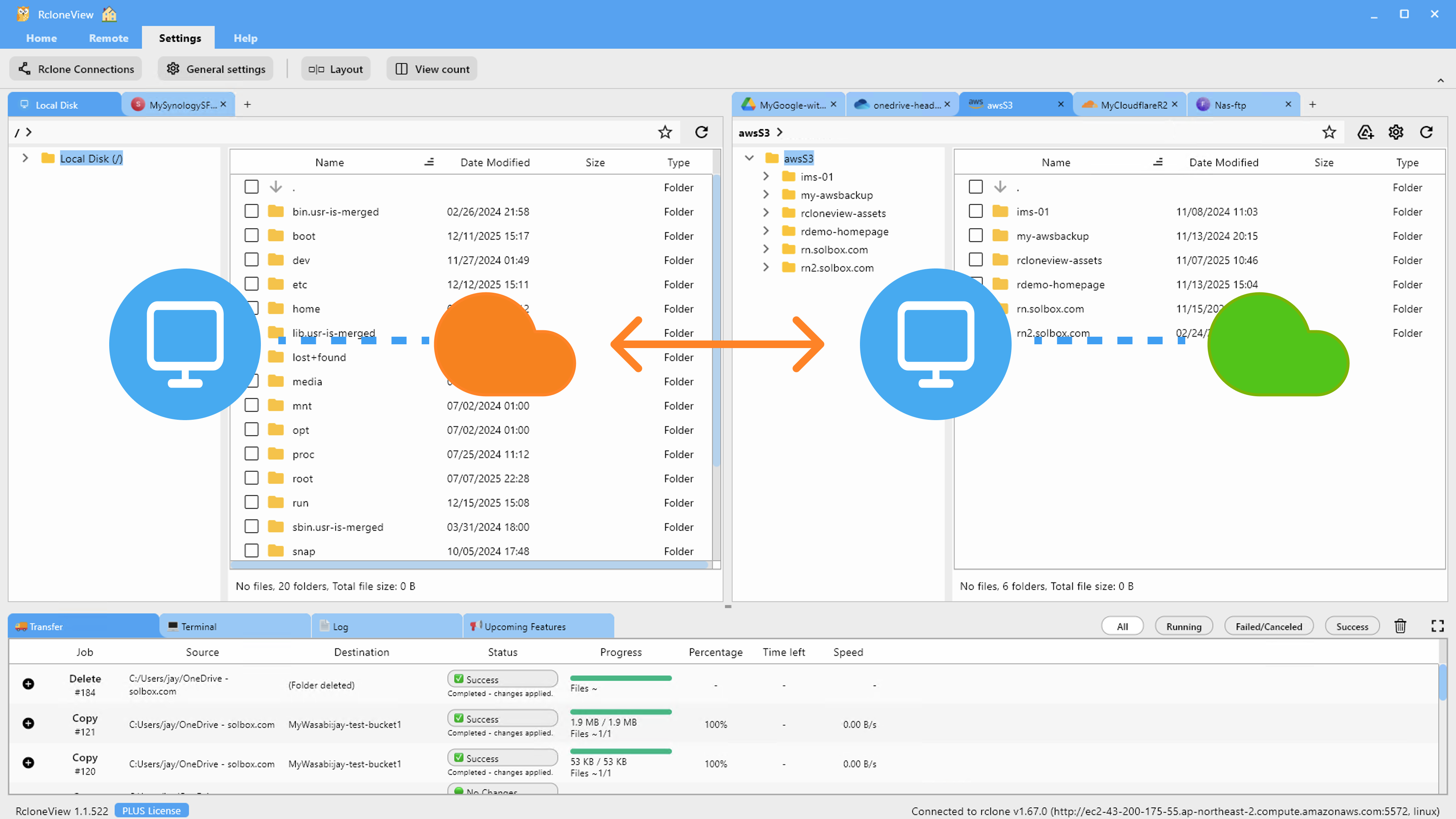
Run Dry Run before the first real sync. It lists exactly what would transfer without moving any data, which matters most on that first pass when you're not yet sure how large the library actually is.
Scheduling and Verifying the Backup
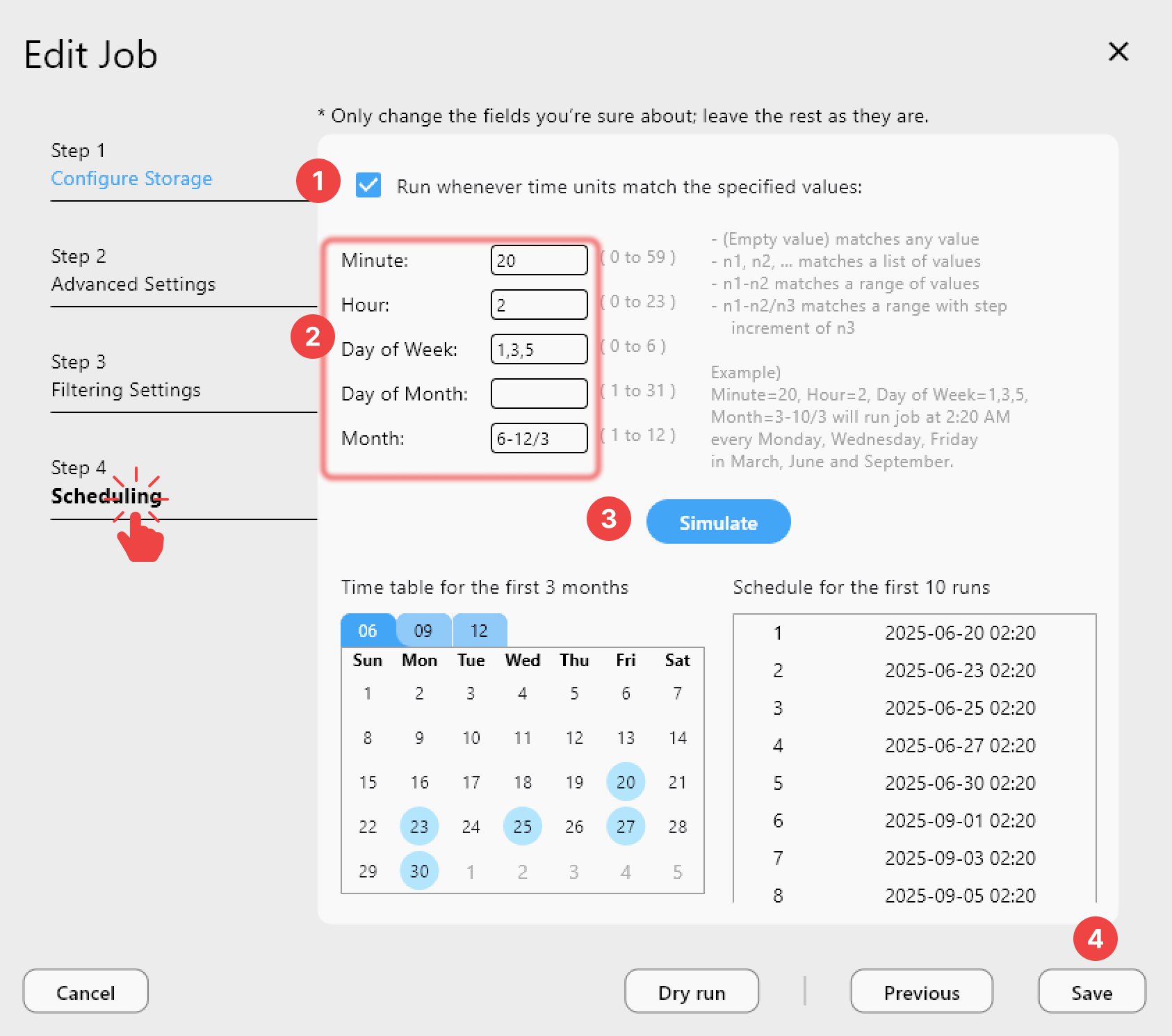
On a PLUS license, attach a crontab-style schedule to the job so it reruns automatically — nightly for an actively-used library, weekly for something closer to archival. Job History records every run's duration, transfer speed, and status, giving you a clear log of when the Wasabi copy was last brought current.
After the first full sync, run Folder Compare between the Seafile source and Wasabi destination to confirm every file landed and matches by size — a fast way to catch anything that dropped out during a network interruption.
Getting Started
- Download RcloneView from rcloneview.com.
- Add your Seafile server as a remote with its server URL and library credentials.
- Add Wasabi as a remote using your Access Key ID, Secret Access Key, and regional endpoint.
- Build a one-way sync job, run Dry Run, then schedule recurring runs to keep the backup current.
A self-hosted library only stays safe if it exists somewhere else too, and a scheduled Seafile-to-Wasabi sync turns that requirement into something that runs on its own.
Related Guides:
- Manage Seafile Self-Hosted Cloud Sync with RcloneView
- Manage Wasabi Cloud Sync and Backup with RcloneView
- Migrate Seafile to Backblaze B2 with RcloneView
Supported Cloud Providers