Cloud Storage for Energy and Utility Companies with RcloneView
Energy and utility companies generate vast amounts of operational data — from SCADA telemetry to field inspection photos. RcloneView helps manage, back up, and sync this data across cloud providers and on-premises storage.
The energy sector produces data at every level of operation: smart meter readings from millions of endpoints, SCADA system logs from substations, drone inspection footage of transmission lines, GIS mapping data for pipeline routes, and regulatory compliance records that must be retained for decades. This data lives across disparate systems — on-premises servers at generation facilities, cloud storage for corporate offices, and field devices that upload via mobile connections.
RcloneView provides a unified interface to manage this data across cloud providers, on-premises NAS devices, and S3-compatible object storage — enabling backup, replication, and archival workflows that span the organization.
Manage & Sync All Clouds in One Place
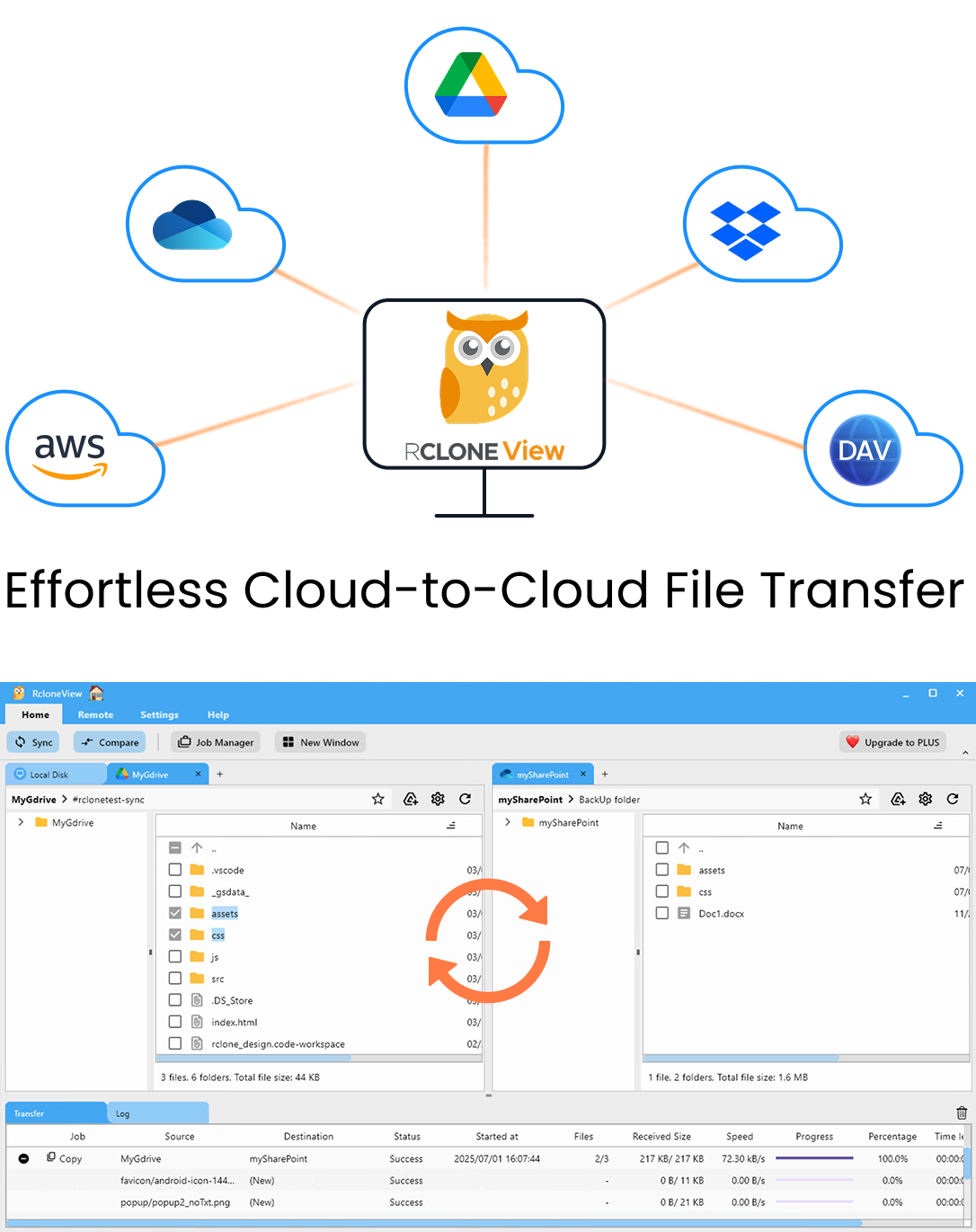
RcloneView is a cross-platform GUI for rclone. Compare folders, transfer or sync files, and automate multi-cloud workflows with a clean, visual interface.
- One-click jobs: Copy · Sync · Compare
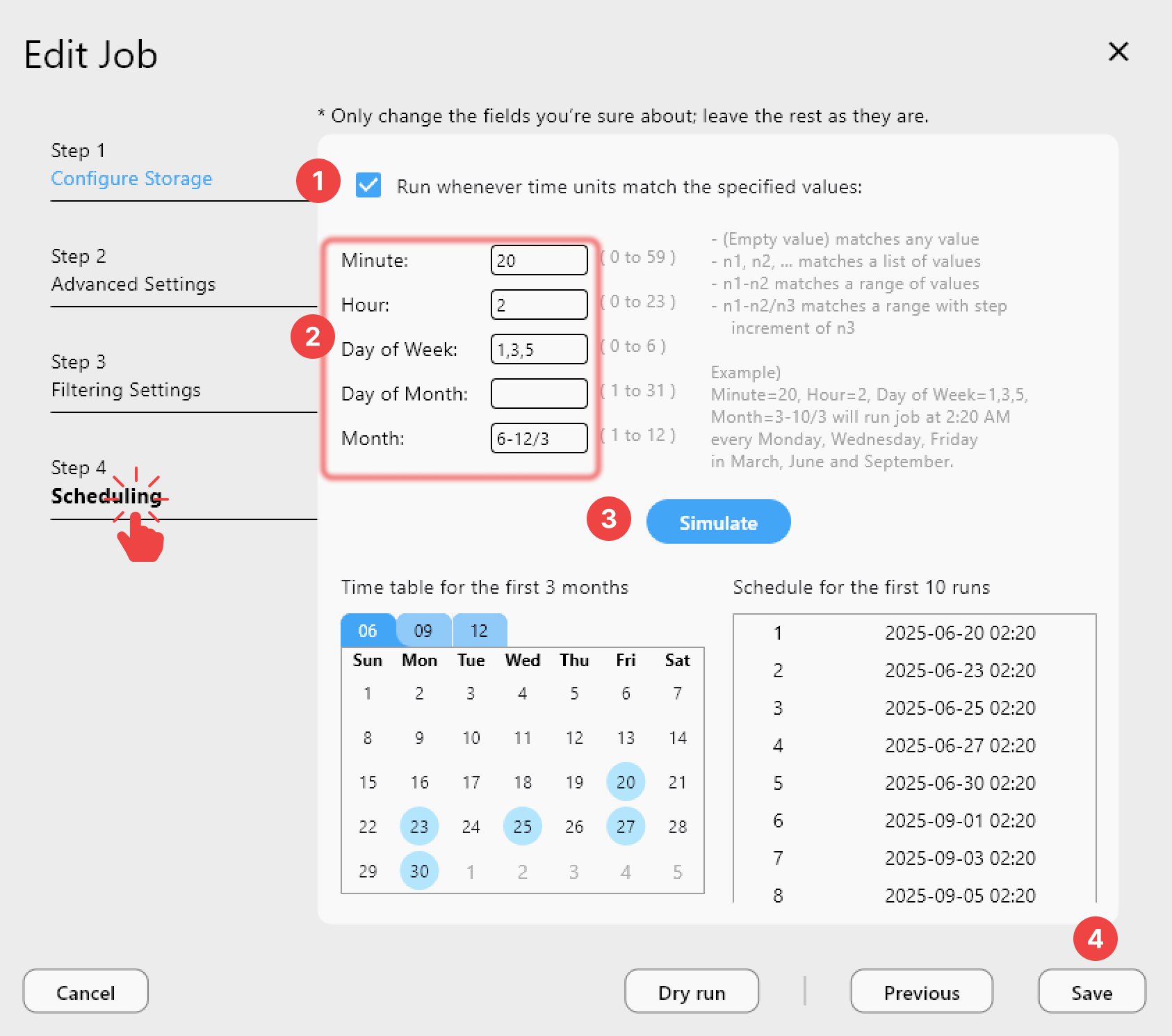
- Schedulers & history for reliable automation
- Works with Google Drive, OneDrive, Dropbox, S3, WebDAV, SFTP and more
Free core features. Plus automations available.
Data Challenges in Energy and Utilities
Energy companies face unique data management challenges:
- Volume: A single wind farm's SCADA system can generate gigabytes of telemetry data daily. Smart meter deployments produce terabytes annually.
- Retention requirements: NERC CIP standards require certain records to be retained for 3-6 years. Environmental compliance data may need to be kept for 30+ years.
- Geographic distribution: Assets are spread across remote locations — offshore platforms, rural substations, pipeline corridors — each with varying network connectivity.
- Security: Critical infrastructure data requires protection against both cyber threats and physical disasters. NERC CIP mandates specific cybersecurity controls for bulk electric system data.
- Multi-vendor environments: Different divisions may use different cloud providers based on their specific needs (Azure for corporate IT, AWS for analytics, on-premises for OT systems).
SCADA and Operational Data Backup
SCADA historian databases accumulate operational data that is critical for both real-time operations and regulatory compliance. Backing up this data to cloud storage provides geographic redundancy and protects against on-site disasters.
RcloneView can sync SCADA data exports from an on-premises NAS or file server to AWS S3, Azure Blob, or Backblaze B2. Schedule nightly backup jobs that capture the day's historian exports and replicate them to cloud storage. For cost optimization, configure lifecycle policies on S3 to transition older data to Glacier tiers automatically — recent data stays in Standard for quick access, while historical data moves to Glacier Deep Archive at a fraction of the cost.
Field Inspection and Drone Footage
Utility companies conduct regular inspections of transmission lines, pipelines, wind turbines, and solar installations. Modern inspections use drones that capture thousands of high-resolution photos and LiDAR scans per flight. This footage needs to be uploaded from field laptops to centralized storage for analysis.
RcloneView simplifies this workflow. Field technicians connect to the corporate cloud (Google Drive, OneDrive, or S3) from their laptops and upload inspection footage directly. RcloneView's bandwidth throttling prevents uploads from consuming the field site's limited connectivity. For sites with intermittent connections, RcloneView resumes interrupted transfers automatically.
Compliance and Regulatory Records
NERC CIP, FERC, EPA, and state-level regulators require energy companies to maintain extensive records. These records must be stored securely, backed up independently, and available for audit on demand.
RcloneView's encrypted backup capabilities protect compliance records at rest. Use a crypt remote to encrypt files before uploading them to cloud storage. Pair this with S3 Object Lock or Backblaze B2 file lock for immutable storage — files cannot be modified or deleted during the retention period, satisfying WORM (Write Once Read Many) compliance requirements.
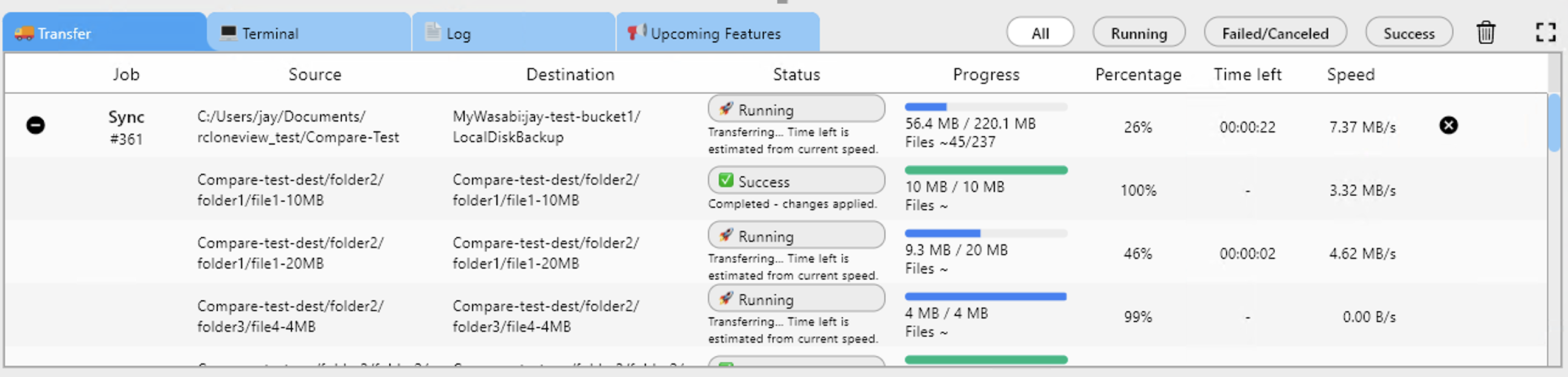
The job history panel provides an audit trail of every backup operation — when it ran, how many files were transferred, and whether any errors occurred. This log supports compliance audits by demonstrating that backup procedures are being followed.
Multi-Site Data Consolidation
Energy companies operate across dozens or hundreds of sites, each with its own local storage. Consolidating data from these sites into a central cloud repository enables enterprise-wide analytics, reporting, and disaster recovery.
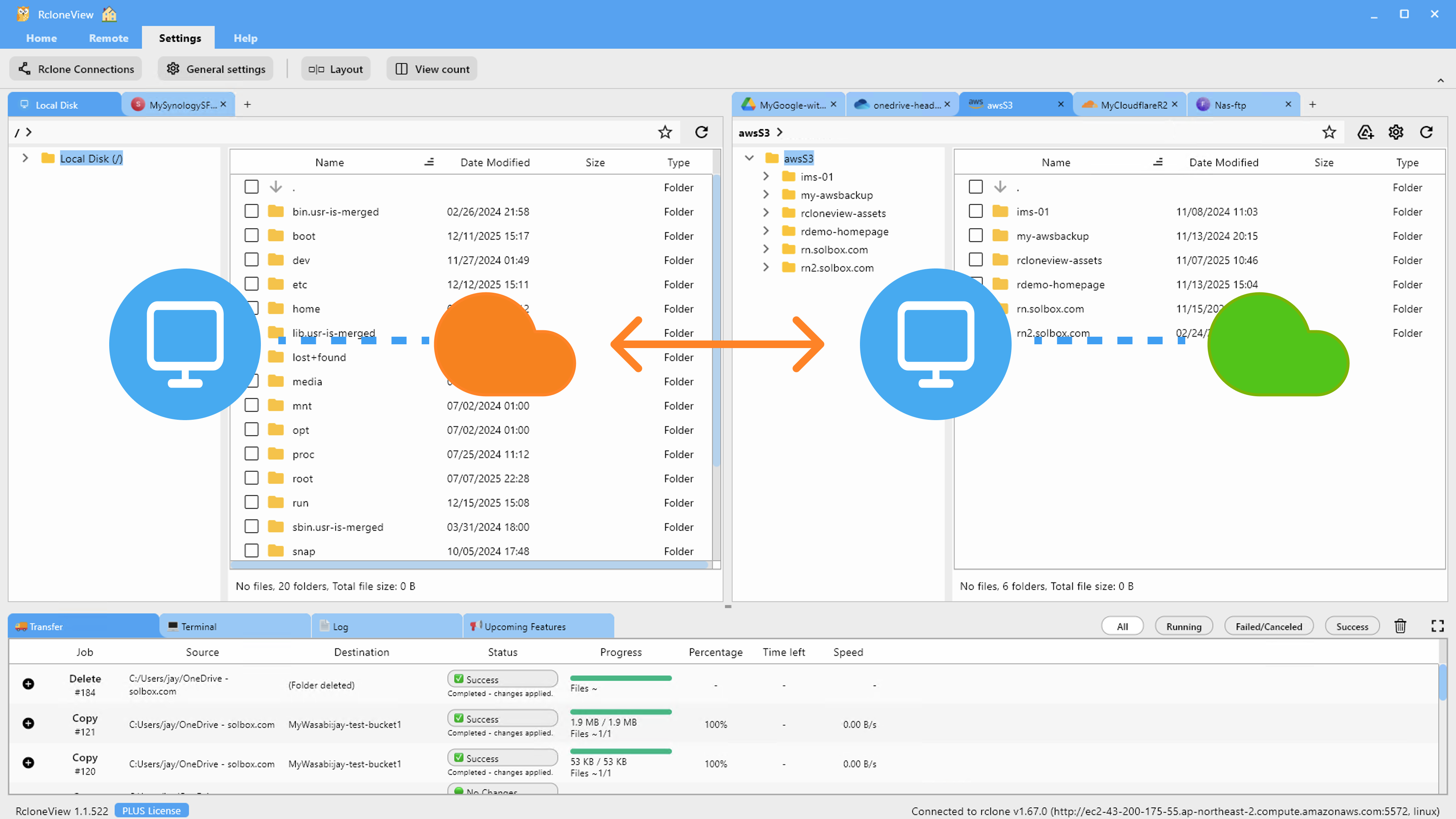
RcloneView supports this by connecting to storage at each site (via SFTP, SMB, or WebDAV) and syncing to a central cloud destination. Configure a separate remote for each site and create sync jobs that pull data into a unified bucket or container. The two-pane explorer makes it easy to verify that data from all sites is arriving correctly.
GIS and Mapping Data
Geographic Information System (GIS) data — pipeline maps, transmission line routes, substation layouts, and environmental survey data — consists of large shapefiles, geodatabases, and raster images. This data is essential for operations, planning, and regulatory submissions.
RcloneView can sync GIS data between on-premises GIS workstations and cloud storage, providing backup and enabling collaboration between distributed teams. Mount a cloud-stored GIS repository as a local drive so that GIS applications can access the data directly without downloading entire datasets.
Getting Started
- Download RcloneView from rcloneview.com.
- Add remotes for your cloud storage (S3, Azure, or B2) and on-premises storage (SFTP, SMB, NAS).
- Configure automated backup jobs for SCADA exports and compliance records.
- Set up upload workflows for field inspection data with bandwidth controls.
Energy and utility companies manage some of the most critical and heavily regulated data in any industry. RcloneView provides the multi-cloud file management, automated backups, and encryption capabilities needed to protect this data while meeting compliance requirements.
Related Guides:
Supported Cloud Providers