Cloud Storage for Event Management — Organize and Backup Media with RcloneView

Event professionals generate gigabytes of irreplaceable media per assignment — RcloneView turns cloud backup from an afterthought into an automated overnight workflow.
An event management company running 50 weddings, 20 corporate conferences, and 30 product launches per year faces a serious data volume problem: thousands of photos per event, multi-gigabyte video files from multiple camera operators, signed vendor contracts, floor plans, and post-event deliverables — all of it irreplaceable and accumulating fast. RcloneView provides a GUI-driven tool to move, back up, and organize files across whatever cloud storage combination your workflow demands, connecting 90+ supported providers without requiring a single terminal command.
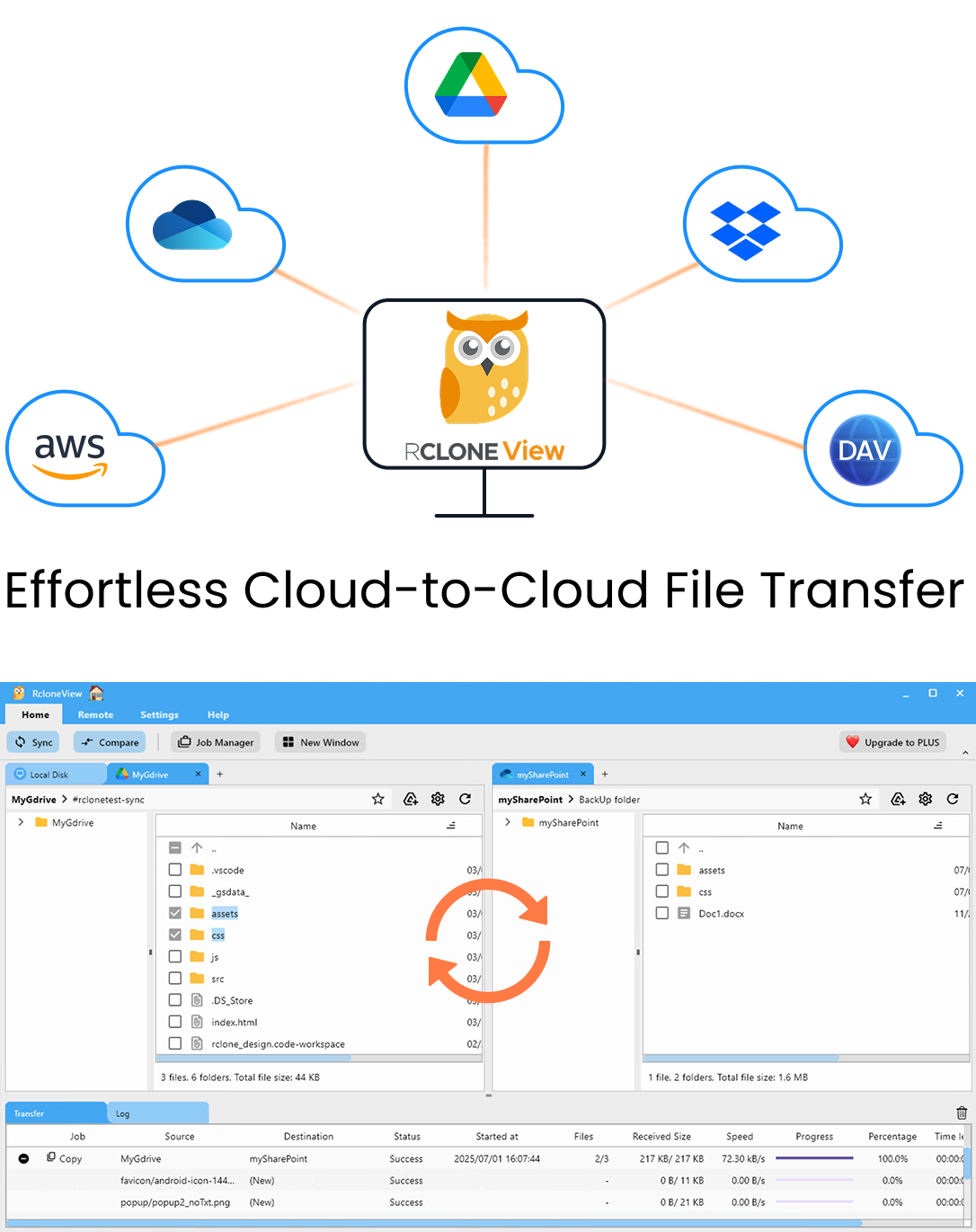
Manage & Sync All Clouds in One Place
RcloneView is a cross-platform GUI for rclone. Compare folders, transfer or sync files, and automate multi-cloud workflows with a clean, visual interface.
- One-click jobs: Copy · Sync · Compare
- Schedulers & history for reliable automation
- Works with Google Drive, OneDrive, Dropbox, S3, WebDAV, SFTP and more
Free core features. Plus automations available.
The Media Volume Challenge for Event Companies
After a large corporate gala, a single event can produce 500 GB of raw footage from videographers, 80 GB of RAW stills from three photographers, and dozens of vendor documents, floor plans, and attendee data sheets. That content must be backed up the same night — before memory cards are reformatted and before the working context of which folder belongs to which shooter is lost.
A typical event company workflow has photographers uploading directly from cards to a local NAS, while a second copy needs to land in cloud storage for remote access and long-term archive. RcloneView connects your local storage, Synology NAS, Google Drive, Amazon S3, Backblaze B2, Dropbox, or any of 90+ supported providers and automates the handoff between them with scheduled sync jobs.
Setting Up Your Event Backup Workflow
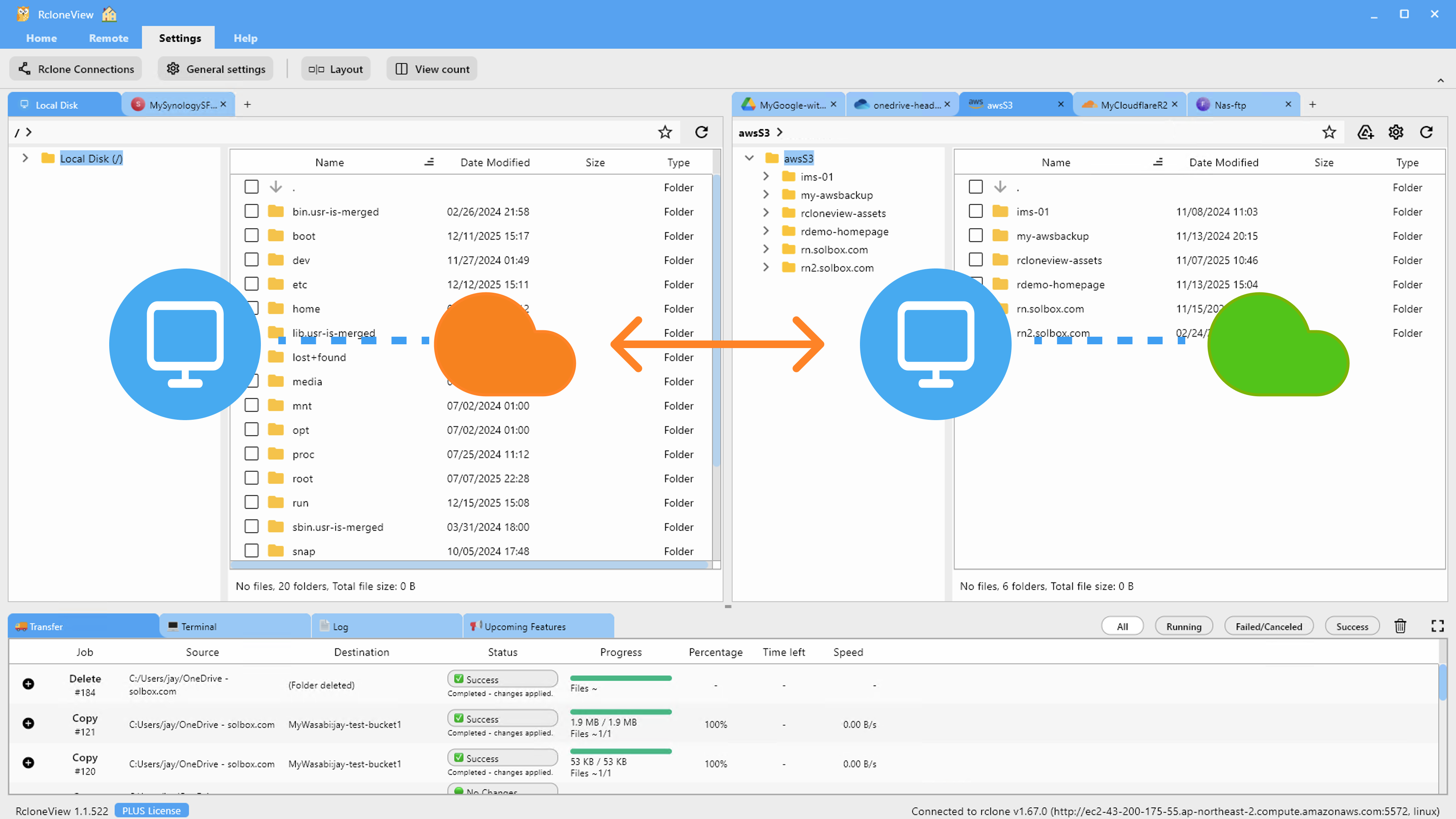
Start by adding your storage remotes in RcloneView's Remote tab. For most event companies, the primary workflow connects a local folder or NAS share as the source, with Google Drive (for working files and client delivery) and Backblaze B2 (for cost-effective long-term archive) as destinations. RcloneView supports 1:N sync — one source pushing to multiple destinations simultaneously — so a single job can deliver your event folder to both providers in one run.
Create a Sync job from the Home tab. In Step 1, set the source to your event folder and add both cloud destinations. In Step 3, apply file type filters to include only camera assets — .jpg, .cr3, .arw, .mp4, .mov — while excluding Lightroom catalog files and temporary .tmp items that clutter the archive without value.
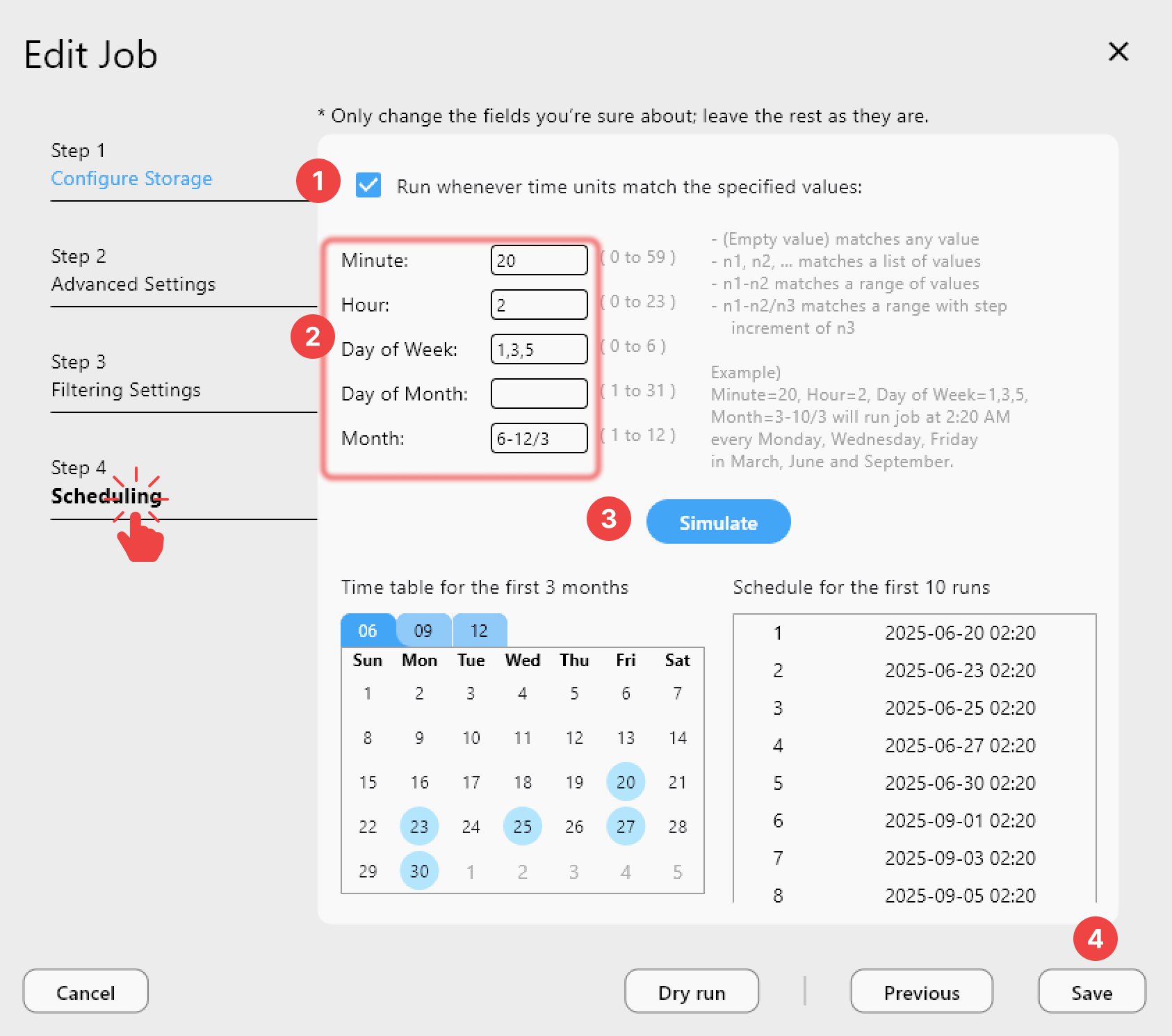
Schedule Post-Event Backups Automatically
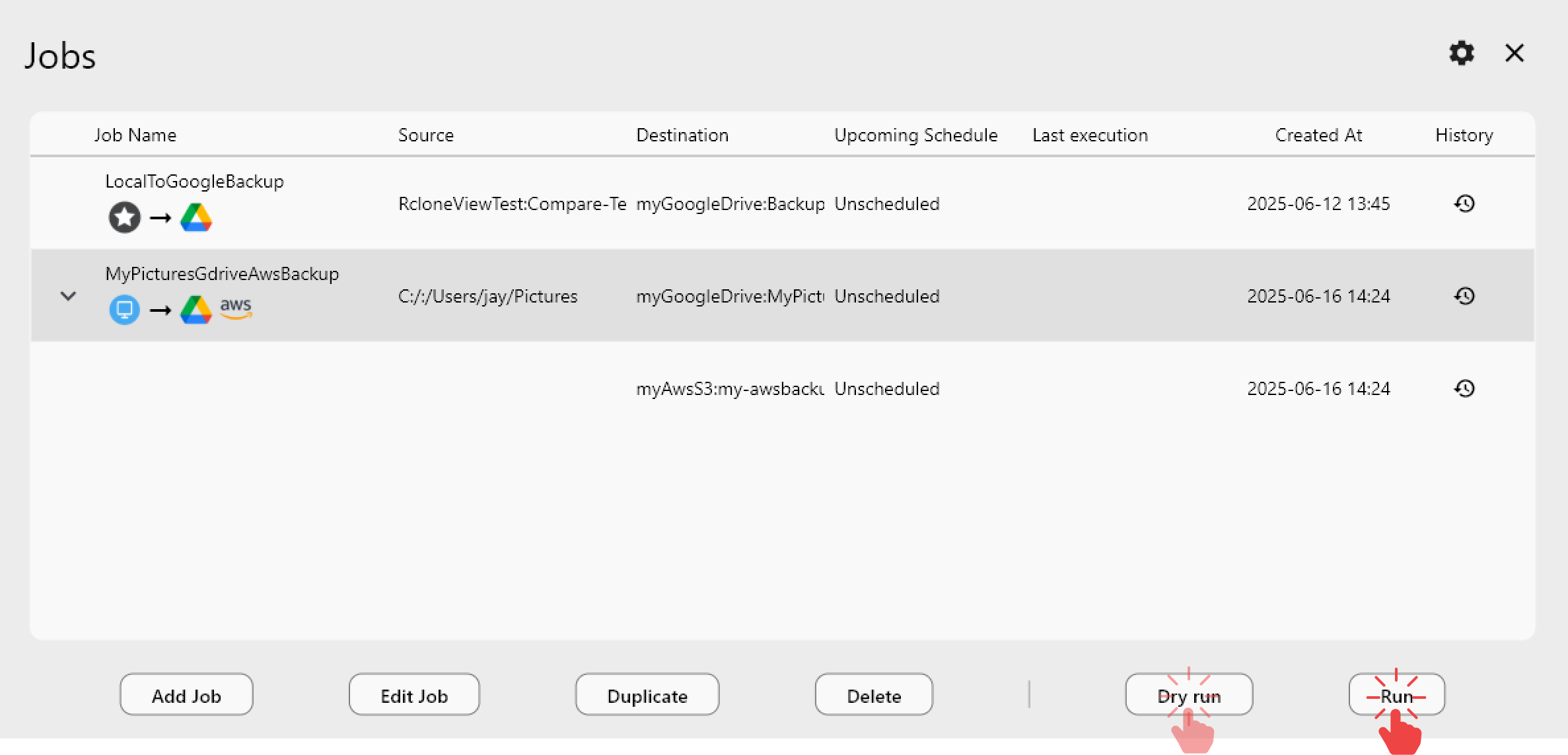
With a PLUS license, create a nightly schedule that automatically pushes new event content to cloud storage at 1:00 AM. For active production weekends — where content is captured Friday through Sunday — this means Monday morning the team arrives to find everything already backed up and accessible remotely, with no manual upload step required.
Use the Max file age filter in Step 3 to limit nightly jobs to files modified within the last 24 hours, keeping each incremental run fast even when the master archive folder holds years of events. Before the first live run, use Dry Run mode to preview which files will be transferred — an essential step when syncing an active production folder where a wrong destination could overwrite already-delivered client content.
Verify Delivery with Folder Compare and Job History
Before sharing client delivery links, event companies need confidence that every file made the transfer. RcloneView's Folder Compare tool puts source and cloud destination side by side, highlighting left-only files (not yet uploaded), right-only files (unexpected additions), and size mismatches. A production company delivering 1,200 edited photos to a wedding client can confirm the full set is in the cloud destination before sharing the link — no manual count required.
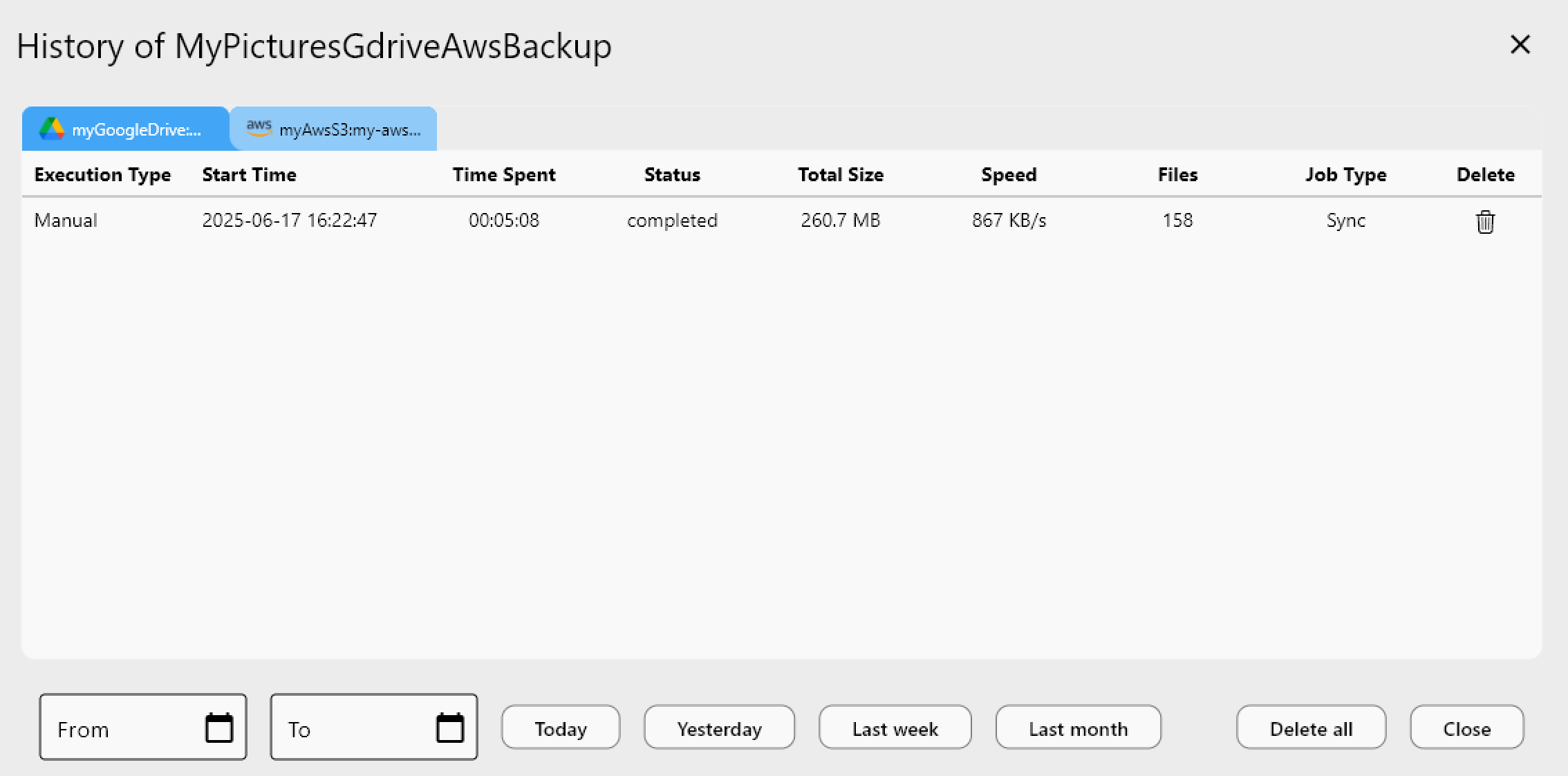
The Job History view records every backup run with timestamps, transfer speed, file count, and final status. This creates a natural audit trail — useful for demonstrating to clients that their content is securely stored, and for internal records when an event's files need to be retrieved months later from cold storage.
Getting Started
- Download RcloneView from rcloneview.com.
- Add your cloud remotes — Google Drive, Backblaze B2, or your provider of choice — via the Remote tab.
- Create a Sync job from your event folder to one or more cloud destinations, with file type filters for camera assets.
- Schedule automatic nightly backups (PLUS license) so post-event uploads run without manual intervention.
With RcloneView handling the logistics, event companies can stop worrying about whether the backup ran and focus entirely on delivering exceptional events.
Related Guides:
- Cloud Storage for Creative Agencies — Multi-Cloud Workflows with RcloneView
- Cloud Storage for Video Production Teams — Manage Media with RcloneView
- Cloud Storage for Photographers — RAW File Backup with RcloneView
Supported Cloud Providers