Migrate Google Drive to AWS S3 with RcloneView
Moving from Google Drive to AWS S3 gives you object-level control, lifecycle policies, and infrastructure-grade durability — RcloneView handles the transfer through a visual interface.
Google Drive excels at collaboration and document editing, but organizations that need fine-grained access control, programmatic integration, or long-term archival often outgrow it. AWS S3 offers 11 nines of durability, lifecycle transitions to Glacier for cold storage, and IAM-based access policies. Migrating from Google Drive to S3 can seem daunting — different authentication models, different file semantics, and potentially terabytes of data. RcloneView simplifies the process with a visual GUI that handles the complexity behind the scenes.
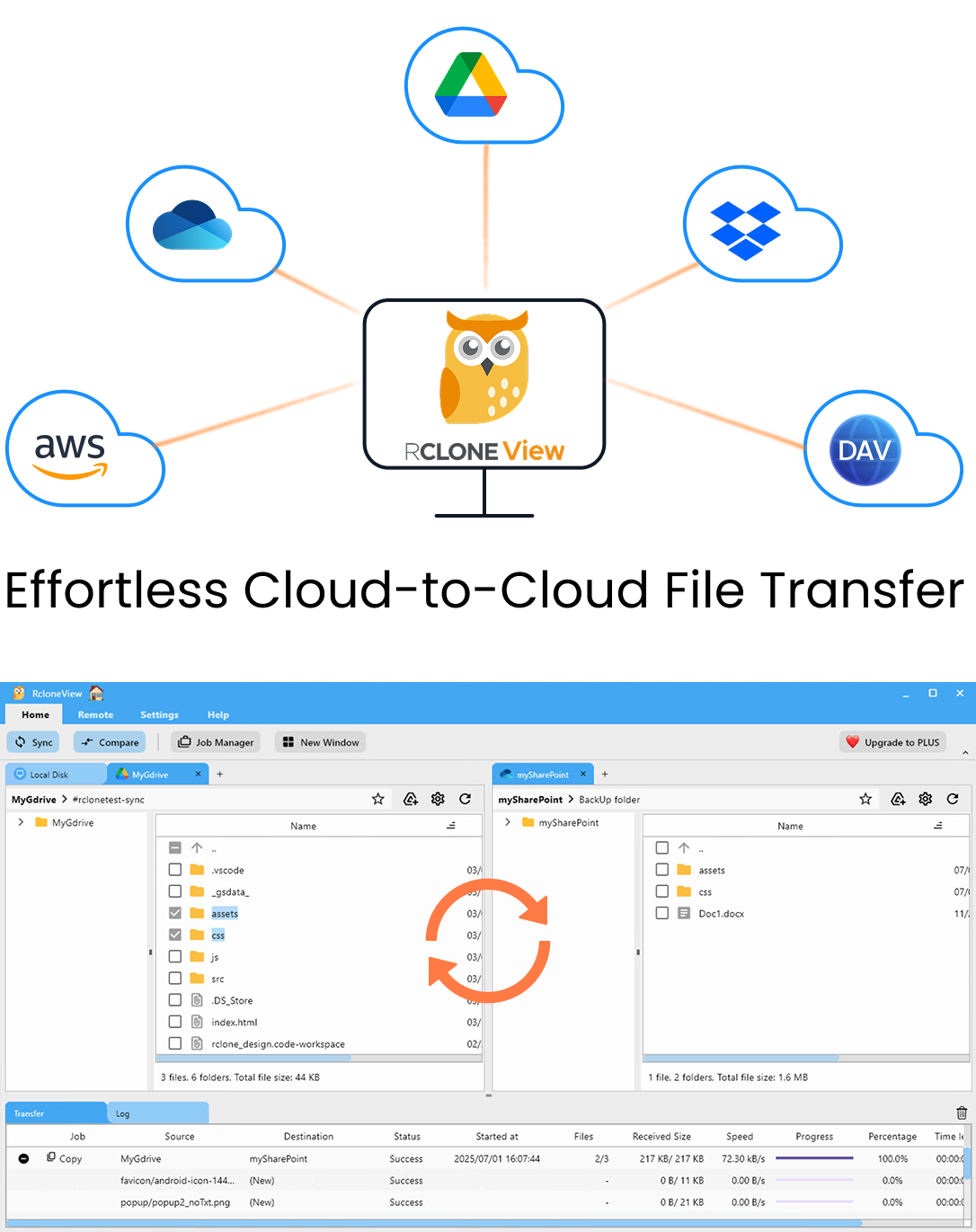
Manage & Sync All Clouds in One Place
RcloneView is a cross-platform GUI for rclone. Compare folders, transfer or sync files, and automate multi-cloud workflows with a clean, visual interface.
- One-click jobs: Copy · Sync · Compare
- Schedulers & history for reliable automation
- Works with Google Drive, OneDrive, Dropbox, S3, WebDAV, SFTP and more
Free core features. Plus automations available.
Why Migrate from Google Drive to AWS S3
Google Drive stores files as objects with Google-specific metadata — MIME types, sharing permissions, and native document formats (Docs, Sheets, Slides). AWS S3 stores objects as raw bytes with user-defined metadata, offering greater flexibility for programmatic access. Common reasons for this migration include:
- Cost optimization: S3 Standard costs roughly $0.023/GB/month, and S3 Glacier Deep Archive drops to $0.00099/GB/month. For large datasets that are rarely accessed, S3 is significantly cheaper than Google Workspace storage plans.
- Infrastructure integration: Applications running on AWS can access S3 directly with IAM roles, eliminating the need for OAuth tokens and API quotas.
- Compliance: S3 supports Object Lock for WORM compliance, bucket policies for IP-based restrictions, and CloudTrail for audit logging.
- Lifecycle management: Automatically transition files from Standard to Infrequent Access to Glacier based on age, reducing costs without manual intervention.
Setting Up Both Remotes
Google Drive Remote
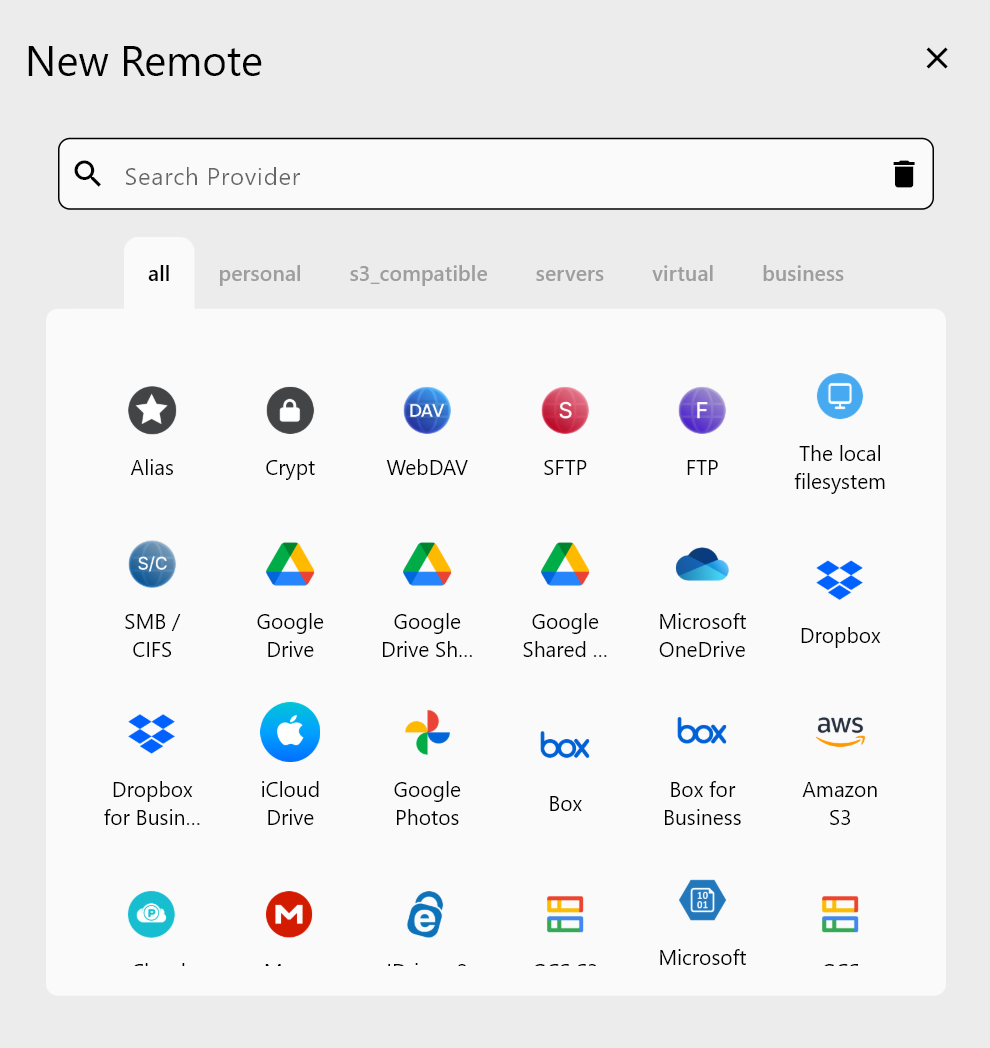
Open RcloneView's Remote Manager and add a Google Drive remote. Authorize via OAuth, selecting full access scope. If you need to migrate Shared Drives, select the target Shared Drive during setup. For large migrations, consider registering your own Google Cloud project client ID to increase API quota limits beyond the default 10,000 queries per 100 seconds.
AWS S3 Remote
Add an S3 remote in the Remote Manager. Provide your AWS Access Key ID and Secret Access Key, select the target region, and specify the bucket name. If the bucket does not exist, you can create it from RcloneView or the AWS console. For the storage class, choose Standard for frequently accessed data or Standard-IA for archival migrations.
Planning the Migration
Before transferring data, assess the scope:
- Size audit: Use RcloneView's storage analysis to determine the total size of your Google Drive. This helps estimate S3 costs and transfer time.
- Google Docs handling: Native Google documents (Docs, Sheets, Slides) have no file size on Drive. During migration, RcloneView exports them to standard formats (docx, xlsx, pptx). Decide whether you need these exports or can skip them.
- Folder structure: Google Drive allows characters in filenames that S3 handles differently. RcloneView encodes special characters automatically, but review your folder structure for extremely deep nesting or very long path names.
- Bandwidth: A 1 TB migration at 100 Mbps takes roughly 22 hours. Schedule migrations during off-peak hours or set bandwidth limits to avoid disrupting other operations.
Executing the Migration
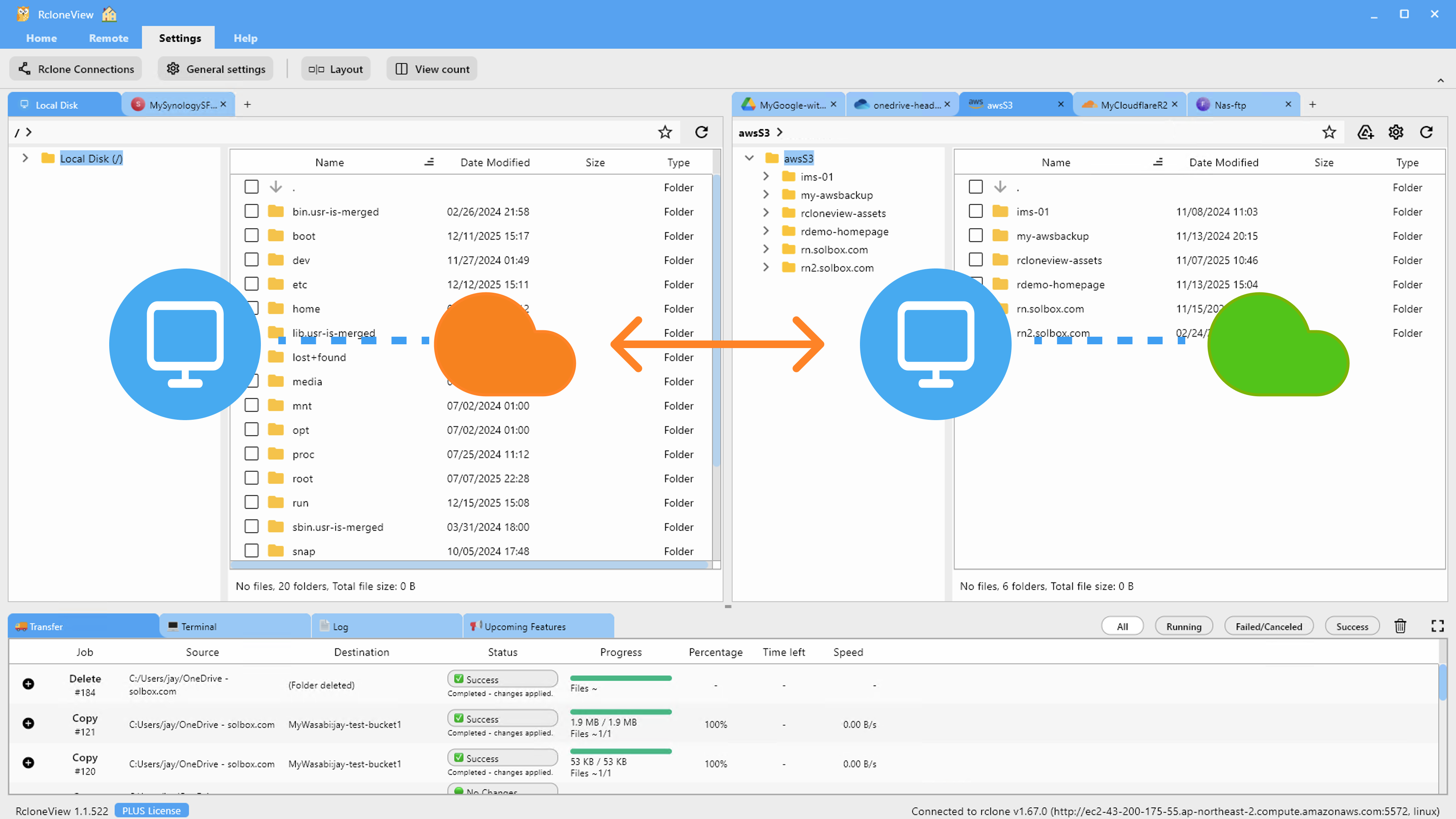
Open Google Drive in the left pane and S3 in the right pane. Navigate to the source folder on Drive and the target prefix on S3. You can copy the entire Drive or select specific folders.
RcloneView uses MD5 checksums from Google Drive and compares them against S3 ETags for files under 5 GB. For larger files uploaded as multipart, S3 ETags are not standard MD5 — RcloneView falls back to size and modification time comparison in these cases.
For the initial migration, use a copy job rather than sync to avoid any risk of deleting files on the destination. Once the initial transfer completes and you verify the data, you can switch to sync for ongoing replication.
Verifying the Migration
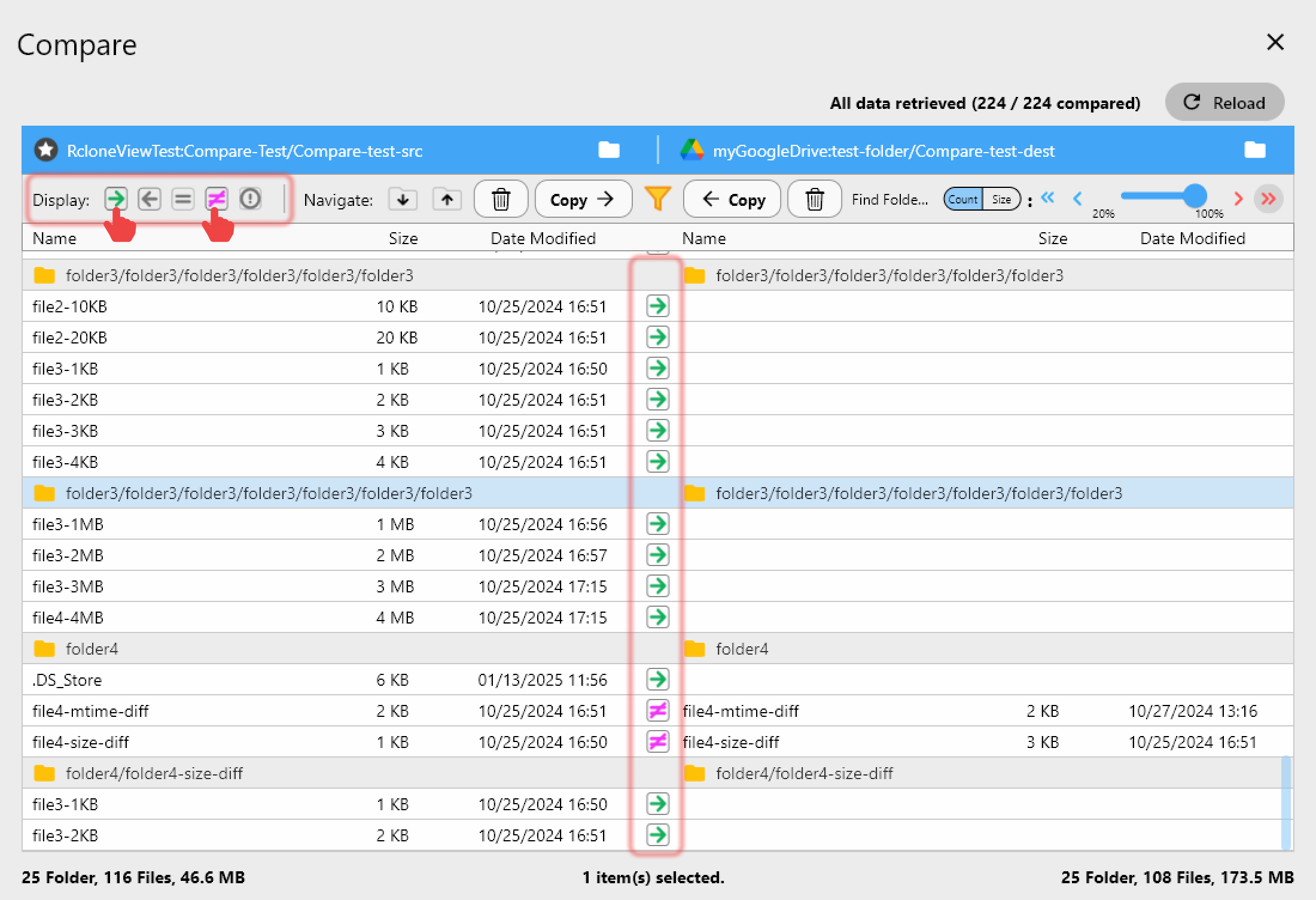
After the transfer completes, use RcloneView's compare feature to verify that every file arrived. Select the Google Drive source and S3 destination and run a comparison. Files that match appear as identical; files that differ or are missing are highlighted.
For critical migrations, run a check operation that computes checksums on both sides and reports any discrepancies. This adds time but provides cryptographic verification of data integrity.
Post-Migration: Ongoing Sync or Cutover
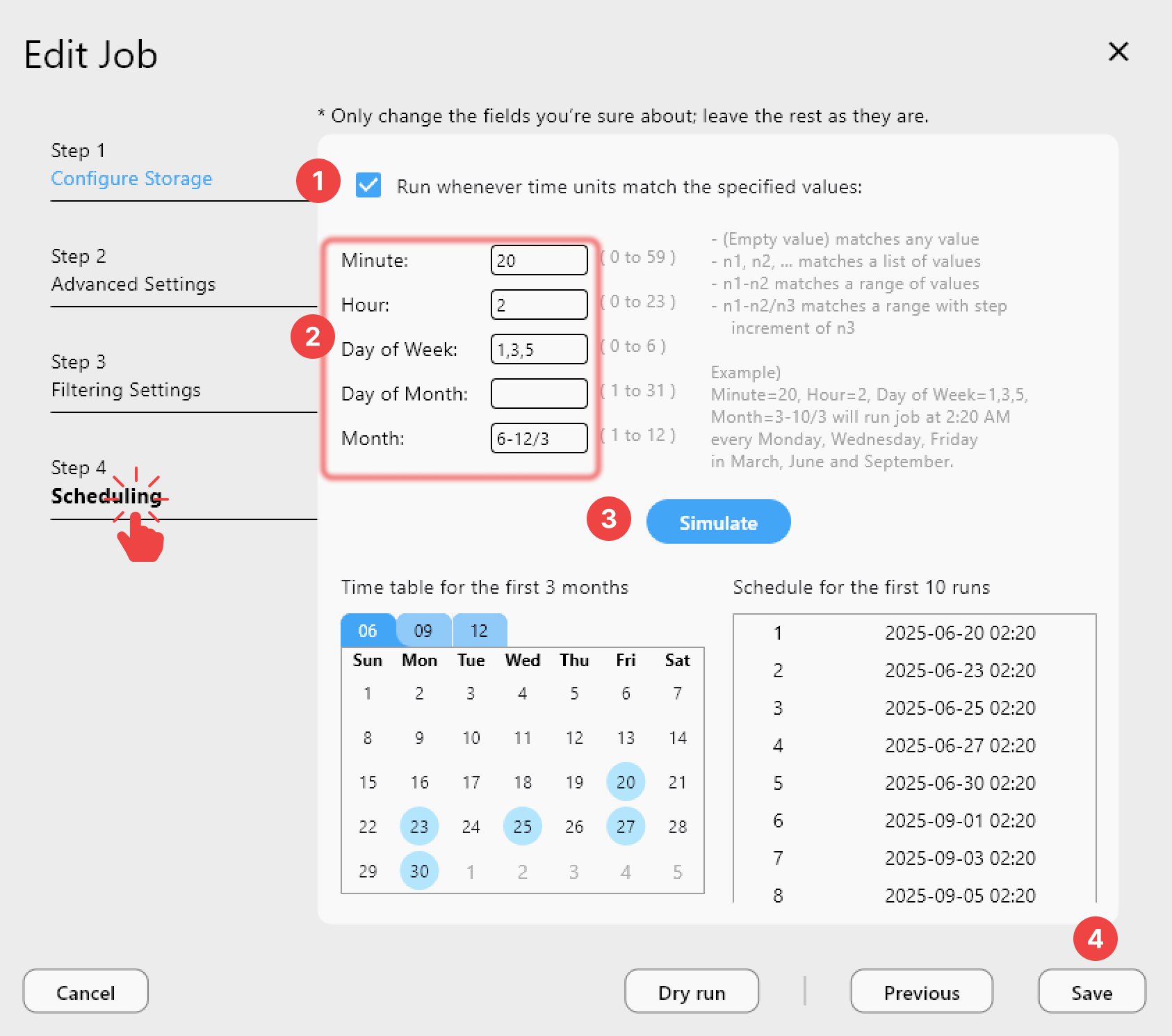
If you are running Google Drive and S3 in parallel during a transition period, schedule a daily sync job in RcloneView to keep S3 up to date with Drive changes. Once you are ready to cut over, disable the sync job and decommission the Google Drive storage.
For organizations moving from Google Workspace to an AWS-native stack, this migration is often one piece of a larger platform transition. RcloneView can handle the data movement while your team manages the application and workflow changes.
Getting Started
- Download RcloneView from rcloneview.com.
- Add Google Drive and AWS S3 remotes in the Remote Manager.
- Run a storage audit to estimate migration size and cost.
- Execute a copy job from Drive to S3 and verify with compare.
- Optionally schedule ongoing sync until you are ready to cut over.
Google Drive handles collaboration, but AWS S3 delivers the durability, lifecycle management, and programmatic access that production workloads demand. RcloneView bridges the two with a straightforward migration path.
Related Guides:
Supported Cloud Providers