Transfer Files Between Storj and Google Drive with RcloneView
Move folders between Storj and Google Drive without touching the command line. RcloneView gives you side-by-side Explorer panes, Compare, Sync, and scheduled Jobs so cloud-to-cloud transfers stay fast and predictable.
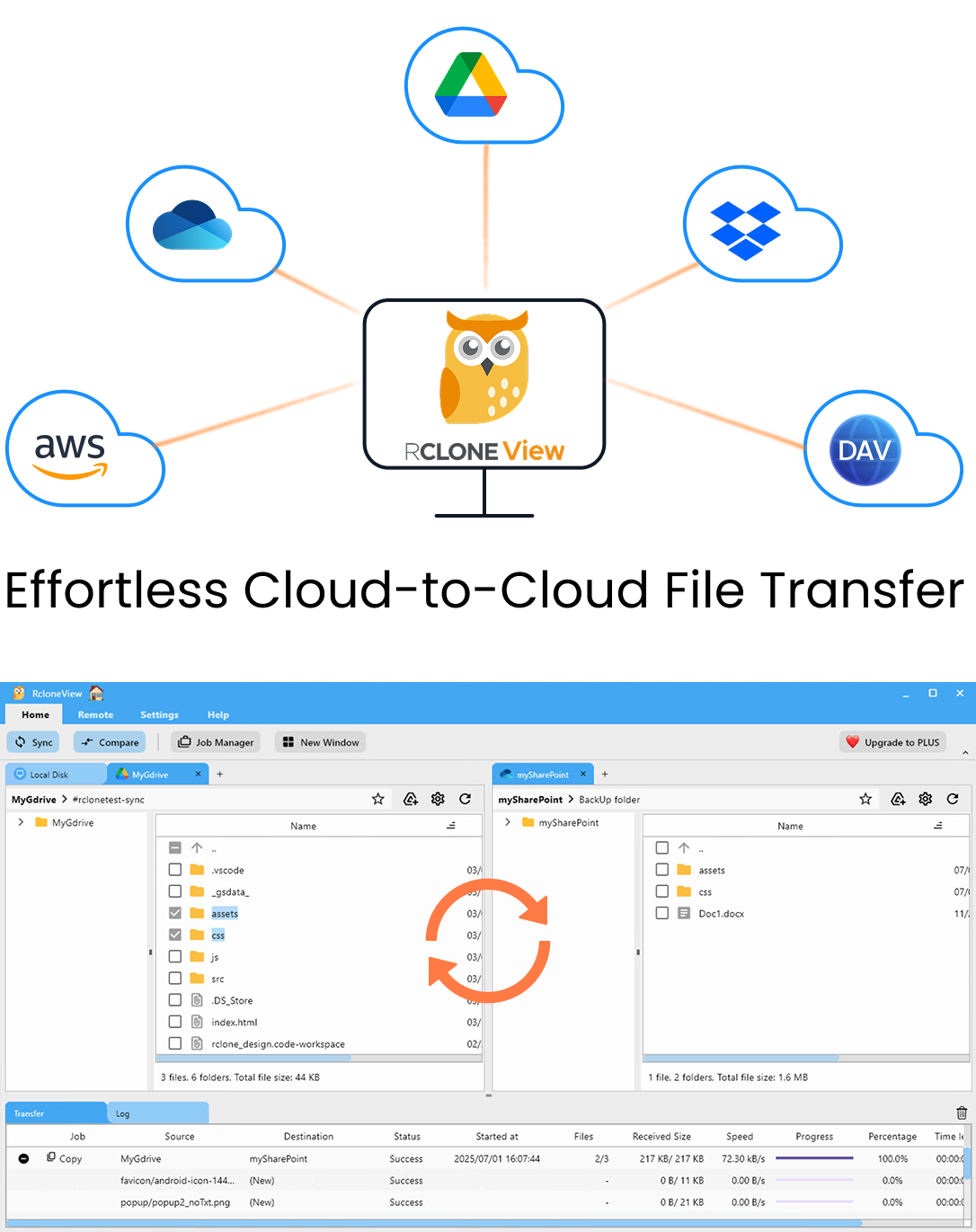
Manage & Sync All Clouds in One Place
RcloneView is a cross-platform GUI for rclone. Compare folders, transfer or sync files, and automate multi-cloud workflows with a clean, visual interface.
- One-click jobs: Copy · Sync · Compare
- Schedulers & history for reliable automation
- Works with Google Drive, OneDrive, Dropbox, S3, WebDAV, SFTP and more
Free core features. Plus automations available.
Why use RcloneView for Storj ↔ Google Drive?
- OAuth login for Google Drive; access grant support for Storj (no manual CLI needed).
- Multi-threaded, resumable transfers with progress logs and retries.
- Two-pane Explorer for drag-and-drop moves.
- Compare to preview differences before copying or deleting.
- Sync with filters and dry-run, plus reusable Jobs and scheduling.
- Bandwidth limits and throttling controls to keep work hours smooth.
RcloneView builds on rclone so you get reliability and advanced options—without writing scripts.
Before you start
- Have your Storj access grant ready (includes encryption scope). Store it securely.
- Sign in to Google Drive and note its 750 GB/day per-user upload cap.
- Install the latest RcloneView build: Download.
- For large transfers, prefer wired connections and keep RcloneView running.
Step 1: Connect your cloud remotes
- Open Remote → + New Remote.
- Choose Storj and paste your access grant. (If using a separate encryption passphrase, add it in the options.) Save the remote.
- Repeat for Google Drive, click Connect, and finish the OAuth browser login.
- Confirm both remotes appear in Remote Manager.
👉 Learn more: Add Google Drive Remote
👉 Manage remotes: Remote Manager
Step 2: Open both remotes in the Explorer pane
- Go to Browse.
- In the left pane, click + and open your Storj remote.
- In the right pane, click + and open your Google Drive remote.
- Navigate to the source and destination buckets/folders you want to move.
Four methods for Storj ↔ Google Drive transfers
Method 1: Drag & drop between panes
- Select files or folders in the Storj pane.
- Drag them into the Google Drive pane (or the reverse).
- Track progress in the Transfer tab; pause/resume as needed.
👉 More details: Browse & Manage Remote Storage
Method 2: Compare, then copy or delete
- Open the source on the left and destination on the right.
- Click Compare.
- RcloneView highlights unique items, size differences, and matches.
- Select items to move, then choose Copy → or ← Copy.
- Use Delete carefully to clean up duplicates or old data.
👉 Learn more: Compare Folder Contents
Method 3: Sync or save as a Job
- Select your Storj source and Google Drive destination.
- Click Sync and choose one-way or two-way sync.
- Preview changes, adjust filters (include/exclude), then start.
- Click Save to Jobs to reuse the configuration later.
👉 Learn more:
Method 4: Schedule recurring sync jobs
- Open Job Manager → Add Job.
- Set Storj as source and Google Drive as destination (or reverse).
- Choose a schedule (hourly, daily, weekly, or cron-like).
- Enable the job and let RcloneView run it automatically.
- Check logs and history to verify success.
👉 Learn more: Job Scheduling and Execution
Tips for smooth transfers
- Use dry-run before large syncs to confirm what will change.
- For Storj, keep your access grant scoped narrowly (bucket-specific) for better security.
- If uploads stall, lower concurrency or set bandwidth limits to reduce throttling.
- When Google Drive nears the daily cap, split jobs across days or accounts.
- Keep an eye on the Transfer tab for retries, speeds, and any API messages.
Summary
RcloneView makes Storj ↔ Google Drive migrations straightforward: connect remotes, browse side-by-side, compare, sync, or schedule recurring jobs—all without the command line.
Supported Cloud Providers