Best Cloud Sync and Mount Tool for macOS in 2026: Why RcloneView Stands Out
Mac users deserve better than juggling five different cloud apps. RcloneView gives you one native macOS app to browse, mount, sync, and automate across every cloud you use.
If you use a Mac and work with multiple cloud services — Google Drive, OneDrive, Dropbox, S3, iCloud — you've probably installed separate apps for each. That means five menu bar icons, five different sync behaviors, and no way to move files between providers. RcloneView replaces all of that with a single, native macOS application that connects to 70+ cloud providers.
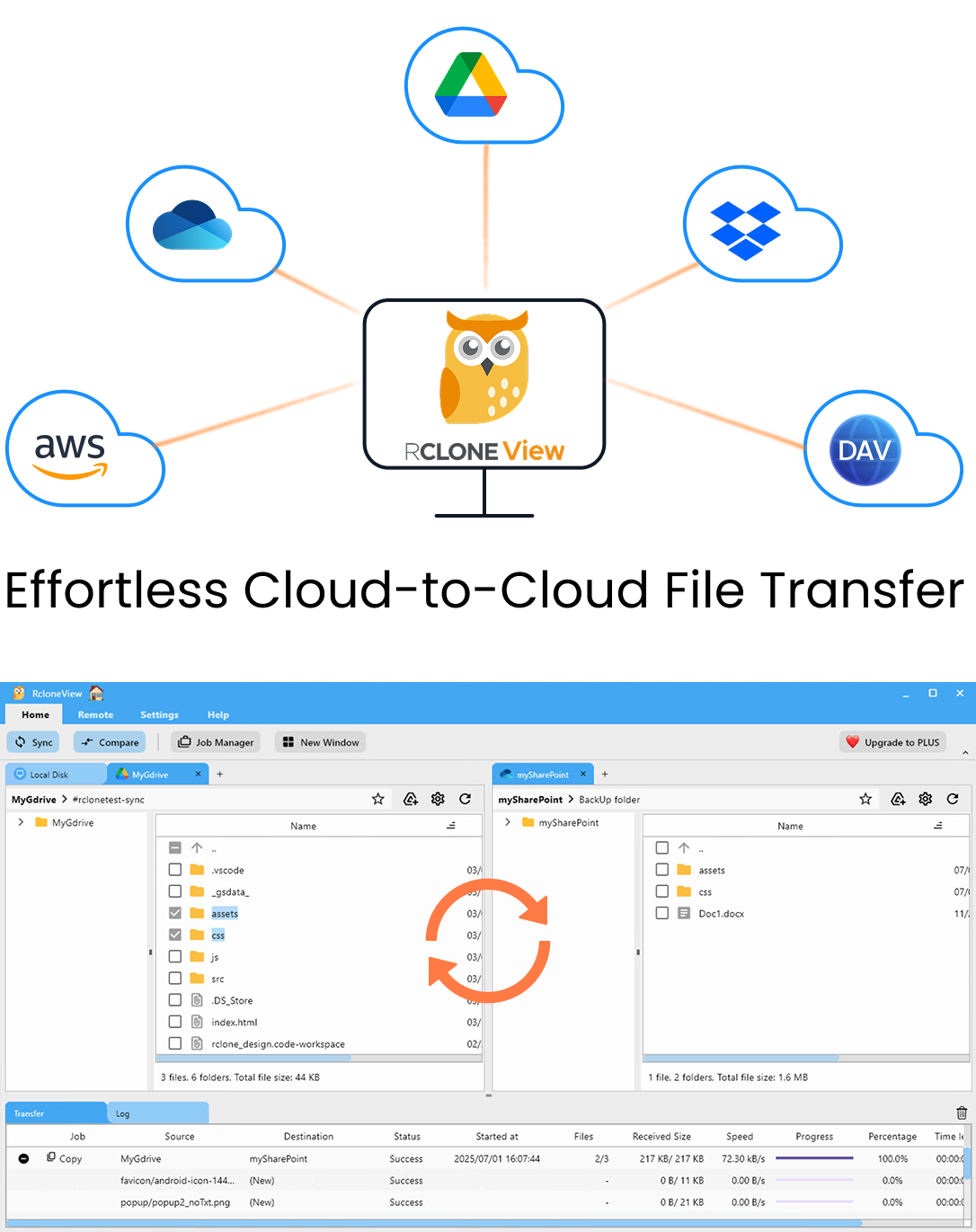
Manage & Sync All Clouds in One Place
RcloneView is a cross-platform GUI for rclone. Compare folders, transfer or sync files, and automate multi-cloud workflows with a clean, visual interface.
- One-click jobs: Copy · Sync · Compare
- Schedulers & history for reliable automation
- Works with Google Drive, OneDrive, Dropbox, S3, WebDAV, SFTP and more
Free core features. Plus automations available.
Why macOS Users Need RcloneView
One app instead of five
Instead of installing Google Drive for Desktop, OneDrive, Dropbox, and Cyberduck separately, RcloneView connects to all of them — plus S3, Wasabi, Backblaze, SFTP, NAS, and 60+ more.
Native macOS experience
- Runs natively on Apple Silicon (M1/M2/M3/M4) and Intel Macs.
- Proper macOS window management and keyboard shortcuts.
- Tray icon integration for quick access.
- Dark mode support.
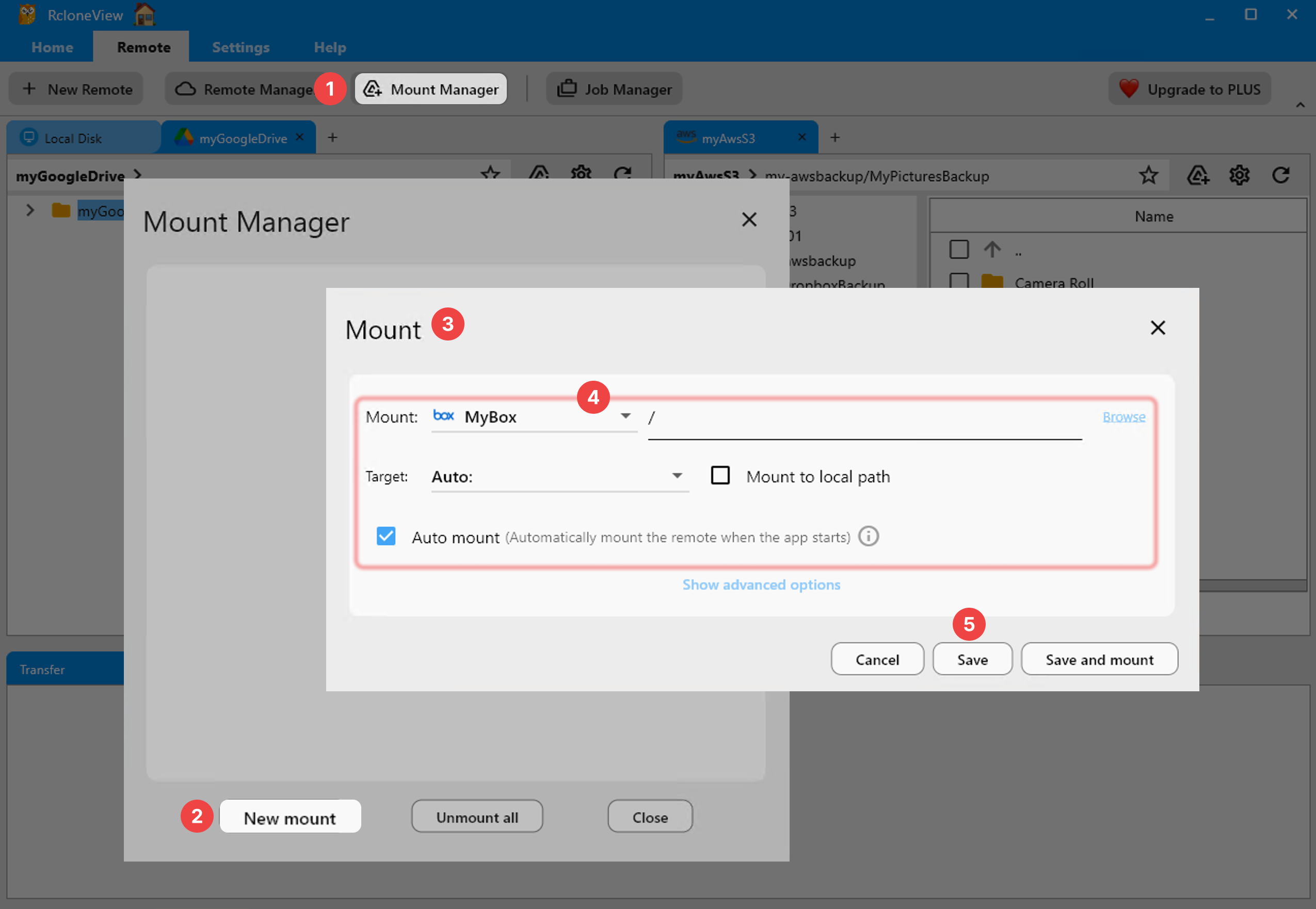
Mount clouds as Finder volumes
Using macFUSE, RcloneView can mount any cloud as a local volume in Finder. Your Google Drive, S3 bucket, or SFTP server appears alongside your local drives — browsable with any macOS app.
Key Features on macOS
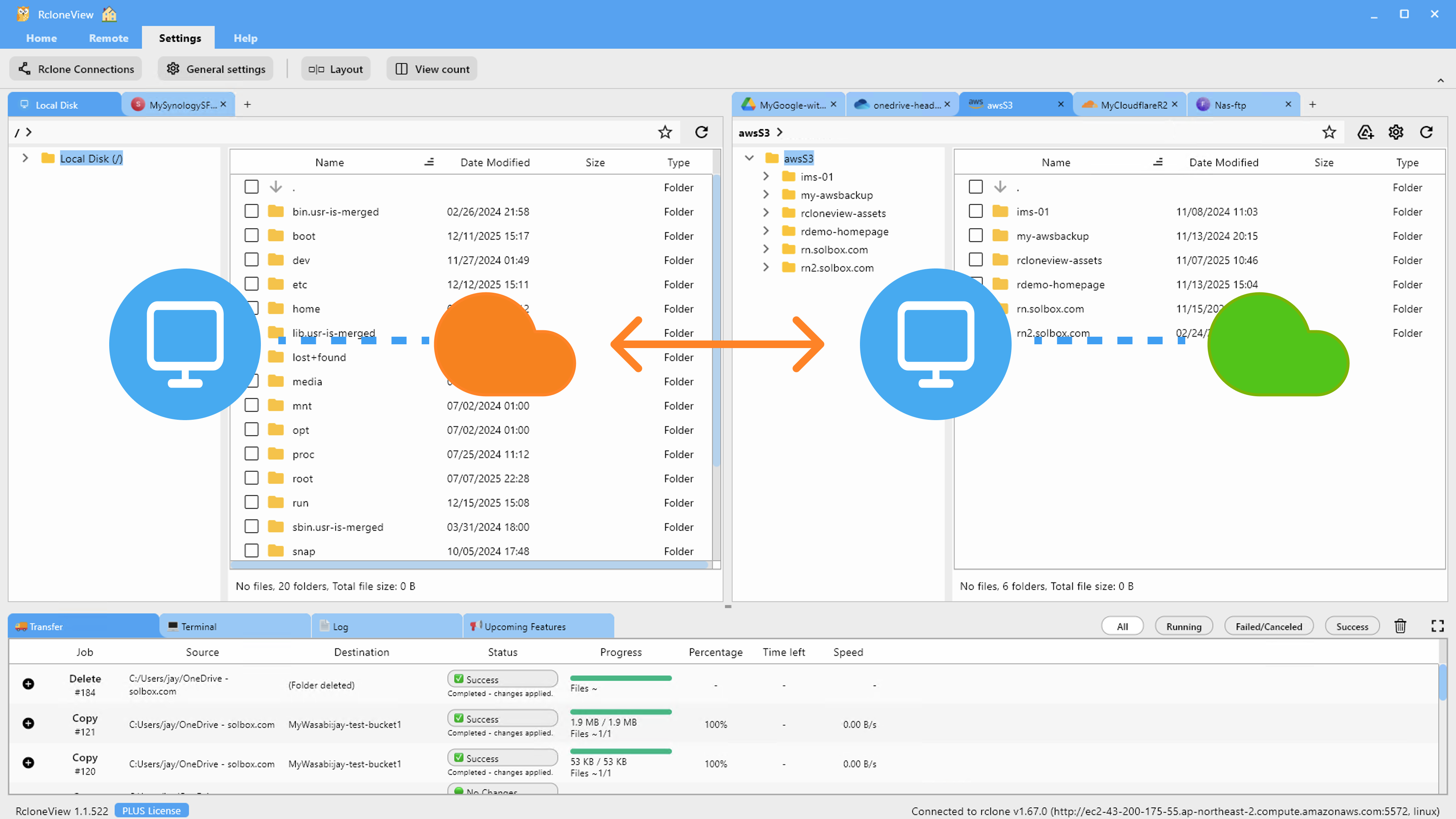
Two-pane Explorer
Browse two clouds side by side, drag files between them:
Cloud mounting
Mount any remote as a Finder-accessible volume:
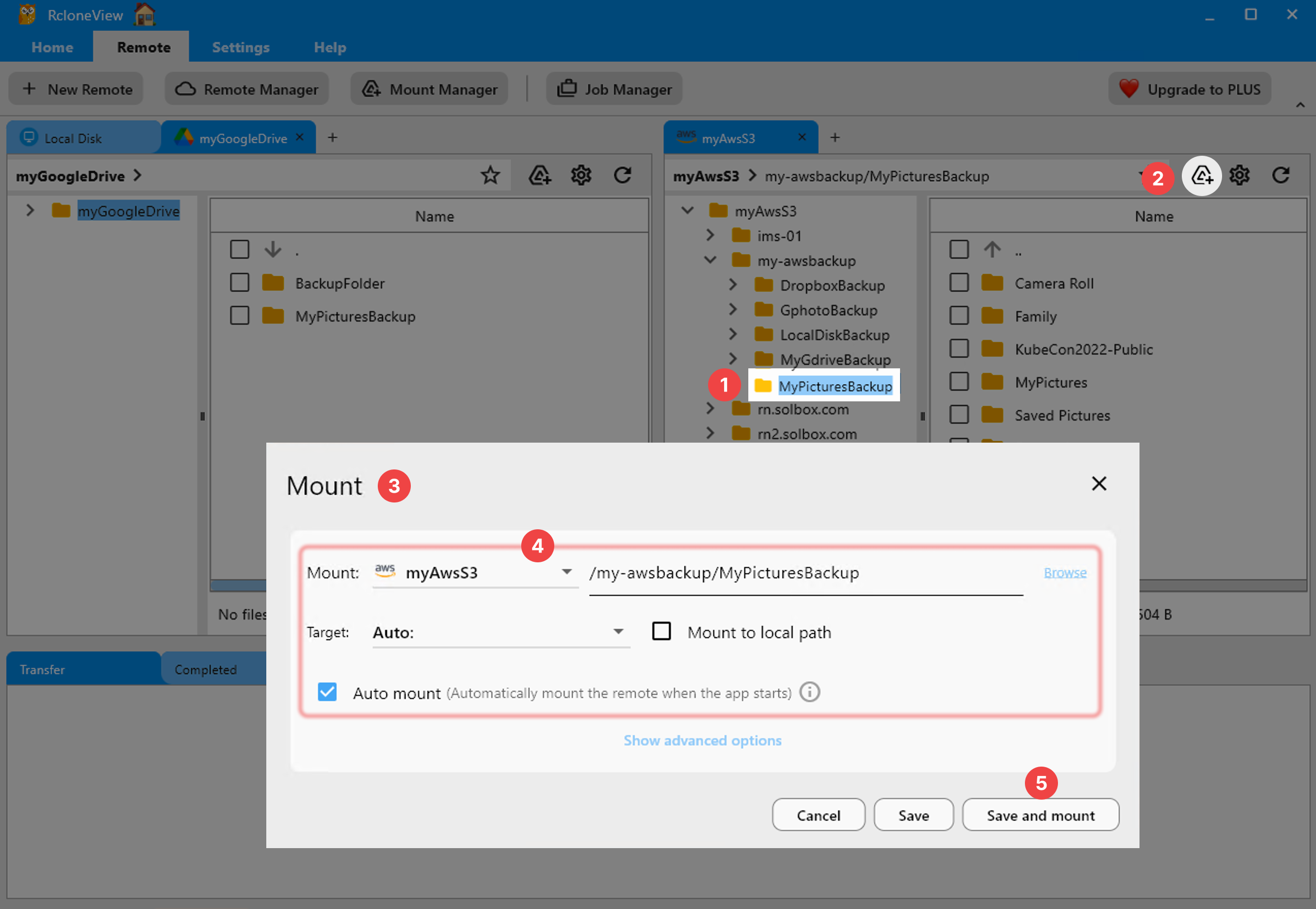
Note: macFUSE is required for mount functionality on macOS. RcloneView handles multiple remotes using cmount — v1.0 fixed an issue where mounting multiple remotes via cmount could fail.
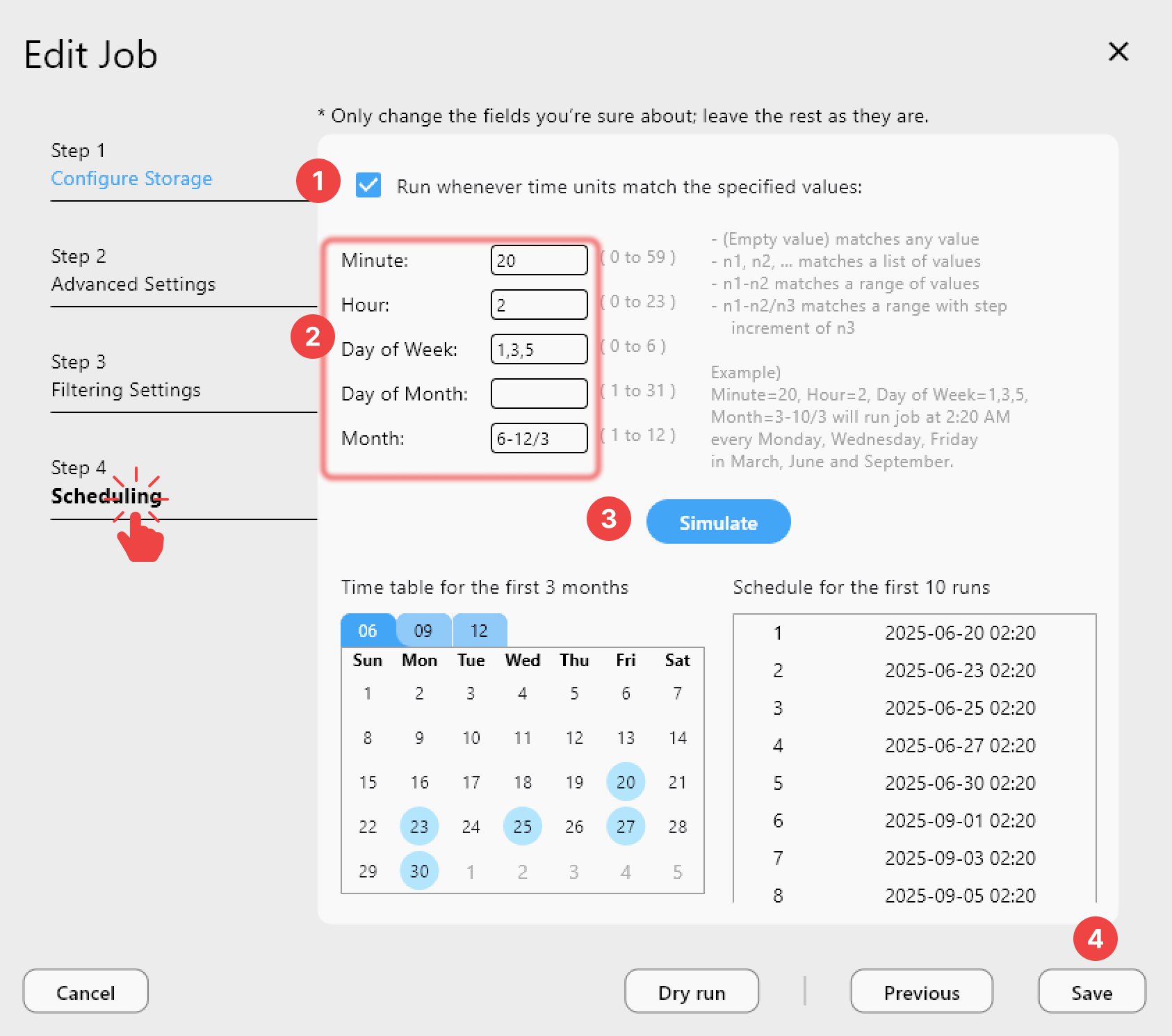
Job scheduling
Automate sync and backup jobs on your Mac:
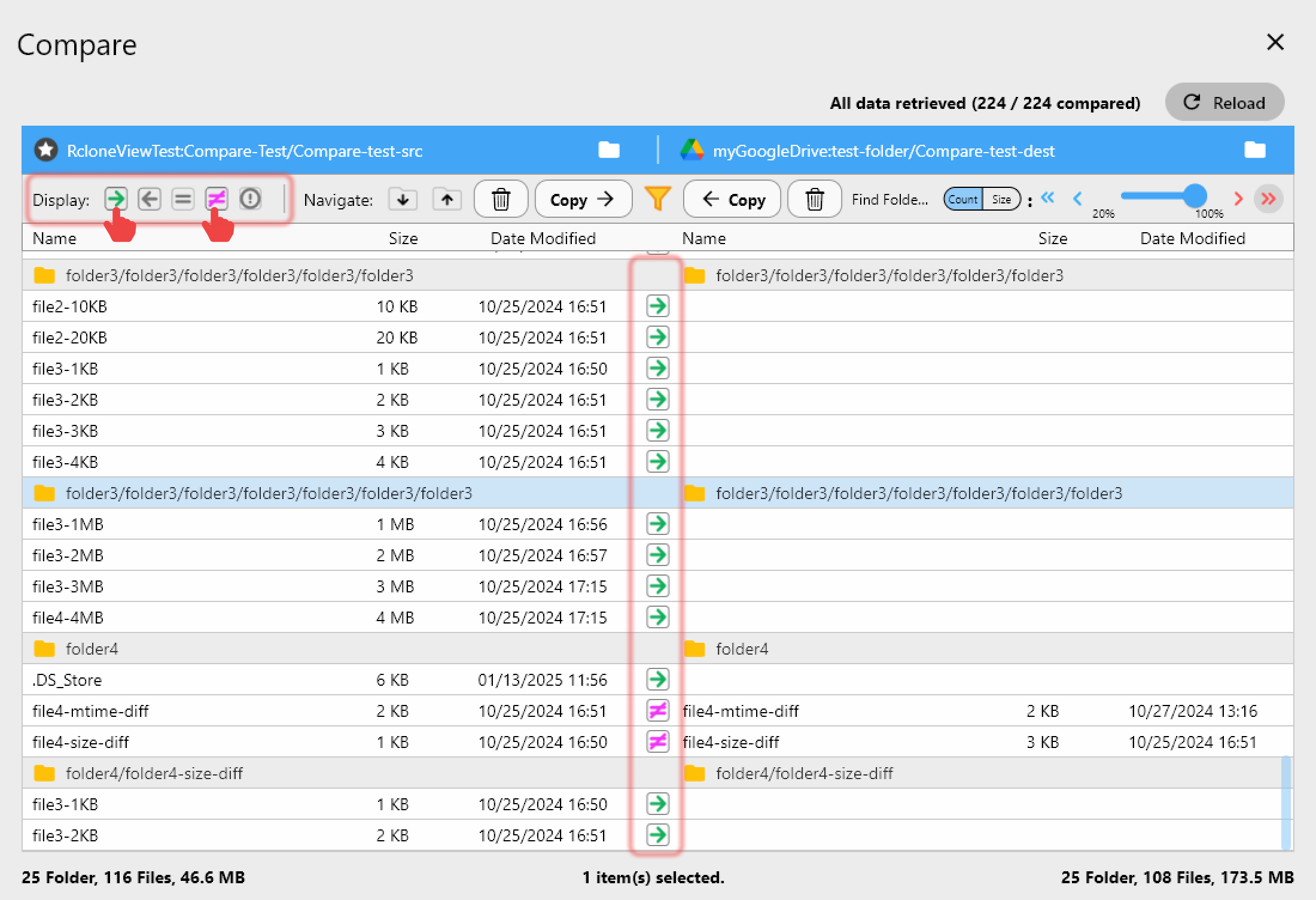
Folder comparison
Compare cloud contents visually:
iCloud Drive support
Since v1.1, RcloneView correctly browses iCloud Drive folders in the file browser — sync iCloud to other clouds or back up to S3.
macOS-Specific Setup Tips
- Install macFUSE before using mount features — download from macfuse.io.
- Grant Full Disk Access in System Settings → Privacy & Security if you need to access protected folders.
- Allow system extension — macOS may prompt you to approve the macFUSE kernel extension in Security settings.
- Use Homebrew for easy rclone management if using external rclone:
brew install rclone.
Common macOS Workflows
Creative professional backup
Photographer or video editor on a Mac:
- Sync your working folder to Google Drive (collaboration).
- Backup to S3 Glacier (archival).
- Schedule nightly with Batch Jobs.
Developer multi-cloud
Full-stack developer managing multiple cloud environments:
- Mount S3, GCS, and Azure Blob as Finder volumes.
- Drag-and-drop assets between cloud environments.
- Use the built-in Terminal for rclone CLI access when needed.
Personal data protection
Mac user with photos, documents, and media spread across iCloud, Google Drive, and Dropbox:
- Connect all three clouds.
- Use Folder Comparison to find duplicates.
- Consolidate into one primary cloud with B2 as backup.
Getting Started on macOS
- Download RcloneView for macOS from rcloneview.com.
- Install macFUSE if you want mount functionality.
- Add your clouds and start managing them from one app.
- Set up automated jobs for backup and sync.
Your Mac can handle multiple clouds beautifully — you just need the right app.
Related Guides:
- Mount Cloud Storage as a Local Drive
- iCloud Drive with RcloneView
- Browse & Manage Remotes
- Job Scheduling
- RcloneView Terminal
Supported Cloud Providers