Mount Google Shared Drives in Windows & macOS with RcloneView -- Full Access, No Sync Client Needed
Give every team the Shared Drive they need without forcing a full sync client on their laptops.
Google Workspace Shared Drives often hold your design assets, handover folders, or compliance archives, yet Drive for Desktop only keeps a small cache and struggles with dozens of Shared Drives per user. RcloneView builds on rclone's Shared Drive support so you can mount exactly the drive you need as a real drive letter on Windows or a Finder volume on macOS, with auto-mount and VFS caching baked in.
Manage & Sync All Clouds in One Place
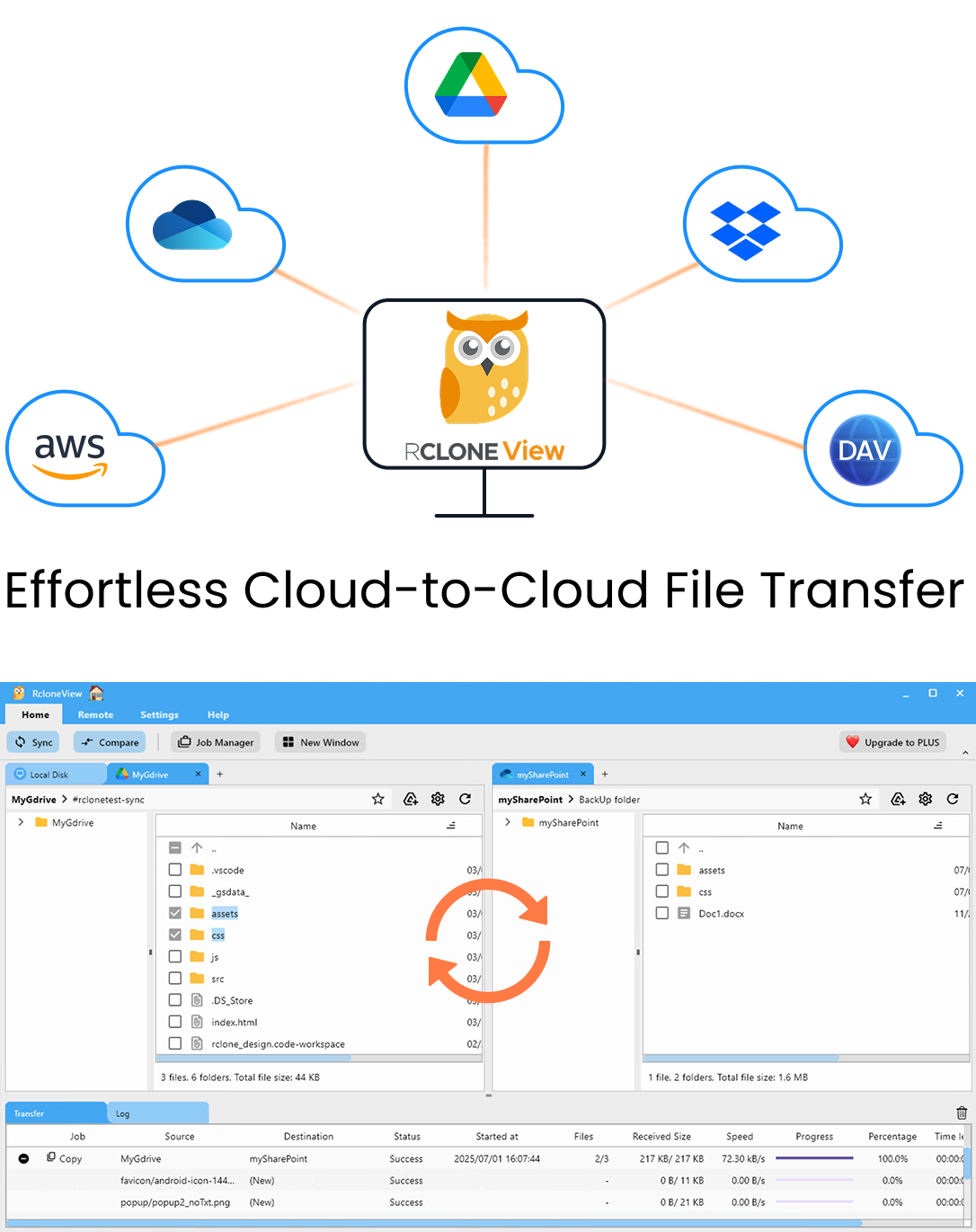
RcloneView is a cross-platform GUI for rclone. Compare folders, transfer or sync files, and automate multi-cloud workflows with a clean, visual interface.
- One-click jobs: Copy · Sync · Compare
- Schedulers & history for reliable automation
- Works with Google Drive, OneDrive, Dropbox, S3, WebDAV, SFTP and more
Free core features. Plus automations available.
Why Teams Need Shared Drive Mounting Without Drive for Desktop
- Drive for Desktop mirrors the whole drive, eating SSD space and leaving laptops offline when quotas are reached.
- Help desks have no way to hand contractors a single Shared Drive without granting account-wide sync rights.
- Engineers and media teams need predictable paths (X:\Marketing or /Volumes/Archive) for automations, scripts, and creative apps.
How RcloneView Brings Shared Drives to Windows & macOS
RcloneView layers a GUI over rclone, so the Shared Drive picker, auth tokens, and mount flags are handled for you.
- Guided remote wizard lists every Shared Drive that your Google Workspace account can access and stores it securely. See the reference steps in /support/howto/remote-storage-connection-settings/connect-using-cli/add-google-shared-drive.
- Mount Manager surfaces the options described in /support/howto/rcloneview-basic/mount-cloud-storage-as-a-local-drive so you do not have to memorize CLI syntax.
- Auto-mount lives in the Mount dialog; Launch at login is available in Settings -> General (documented in /support/howto/rcloneview-basic/general-settings).
What You Need Before Mounting
| Requirement | Details |
|---|---|
| RcloneView + Rclone | Install the latest RcloneView bundle (includes rclone). |
| File system drivers | Windows uses WinFsp (bundled). macOS requires macFUSE; follow the prompts inside RcloneView. Check /support/howto/FAQ/increase-file-handle-limit-on-macos for tuning limits. |
Step-by-Step: Mount a Google Shared Drive with RcloneView
These steps mirror what admins already do in the CLI but in a friendly wizard so help desks can repeat them quickly.
Step 1 -- Connect your Google Workspace account
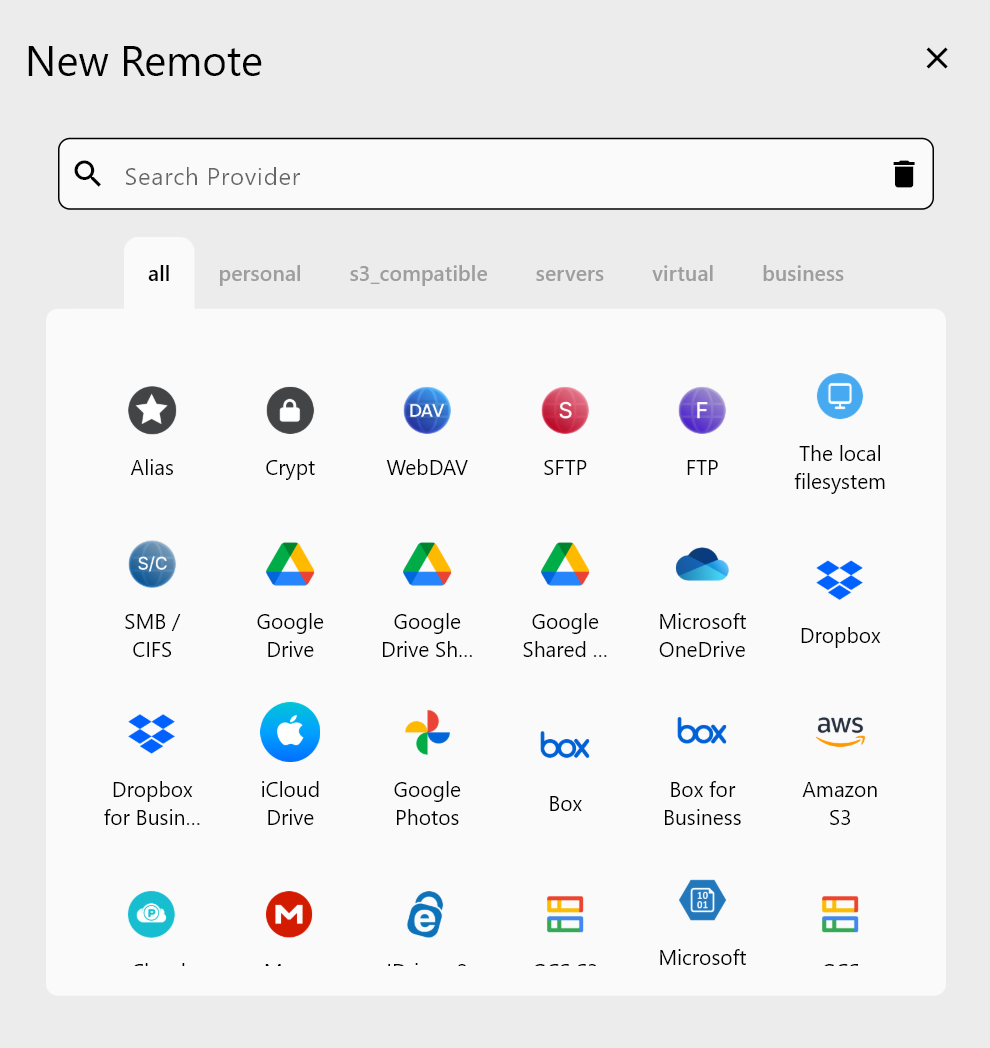
- Open Remote Manager -> + New Remote.
- Choose Google Drive -> OAuth (Browser).
- After the browser login completes, RcloneView stores the refresh token locally so the Shared Drive stays authorized.
Step 2 -- Pick the Shared Drive you want
- When prompted "Configure this as a Shared Drive?", select Yes.
- RcloneView lists all Shared Drives returned by Google. Type the number or search to highlight the correct drive.
- Save the remote with a descriptive name such as
shared_marketingso teammates immediately know what it contains.
Step 3 -- Configure the mount profile
- Go to Mount Manager (or click the mount icon inside Remote Explorer).
- Select the Shared Drive remote and pick the folder you want to mount (root or subfolder).
- Set mount targets and options:
- Target: keep
Autoor assign a fixed drive letter/mount path with Mount to local path. - Auto mount: enable so RcloneView remounts on launch (pair with Launch at login in Settings).
- Advanced options: set Volume name (optional label), Mount type (
cmountdefault), Network drive (Windows), Allow other (Linux), and Read only if you want to block writes. - Cache options: choose Cache mode (
fullfor best compatibility), set Cache max size, Cache max age, and Dir cache time using the nanosecond values shown in the dialog.
- Target: keep
Step 4 -- Launch and verify
- Click Save & Mount. The status chip turns green once the mount is active.
- In File Explorer or Finder, open the new drive. You should see the Shared Drive folders; large directories may take a moment while the directory cache fills based on your Dir cache time setting.
- Use Mount Manager to unmount, open the mounted folder, or edit settings.
Performance & Access Tips
- Set Cache mode to Full and size Cache max size generously for the smoothest editing experience.
- Use Read only for finance/legal drives to prevent accidental deletes; create a separate writable mount when needed.
- Tune Dir cache time based on change frequency (shorter for active drives, longer for archives).
- Reuse a fixed Target or Mount to local path so scripts and applications always find the same mount.
Automate, Share, and Secure Access
RcloneView lets you keep Shared Drive mounts consistent across machines:
- Enable Auto mount on each mount and Launch at login in Settings so drives are ready when the OS starts.
- Use the Job Scheduler to mirror Shared Drive content into S3/Wasabi for off-site retention after business hours.
- Check Mount Manager status (Mounted vs. Unmounted) to verify connectivity before users open Office or Adobe.
Troubleshooting & FAQ
| Symptom | Likely cause | Fix |
|---|---|---|
| Drive disappears after sleep | OS unmounted WinFsp/macFUSE | Enable Auto mount and Launch at login so RcloneView remounts on startup. |
| Slow file open | Cache too small or on slow disk | Increase Cache max size and keep Cache mode on Full. |
| Permissions error on macOS | FUSE lacks Full Disk Access | Grant RcloneView and macFUSE Full Disk Access, then restart the mount (Apple menu -> System Settings -> Privacy & Security). |
too many open files | macOS ulimit default 256 | Apply the plist tuning in /support/howto/FAQ/increase-file-handle-limit-on-macos. |
| Shared Drive list empty | Workspace admin disabled Drive API | Re-enable Drive API in Google Admin or ask for delegated access to the Shared Drive. |
Ship Shared Drive Mounts Without Scripts
RcloneView makes Shared Drive access predictable: no bloated sync folders, no scripting, and no waiting on IT for each new mount. Give every team a clean drive letter or Finder volume today and keep your Google Workspace storage under control.
Supported Cloud Providers