Multi-Cloud Backup Strategy with RcloneView: Google Drive, OneDrive, S3, and NAS
Keep redundant copies across clouds and on-prem without scripting. RcloneView gives you a GUI for Google Drive, OneDrive, S3-compatible storage, and NAS so you can design nightly backups, verify checksums, and monitor retries from one place.
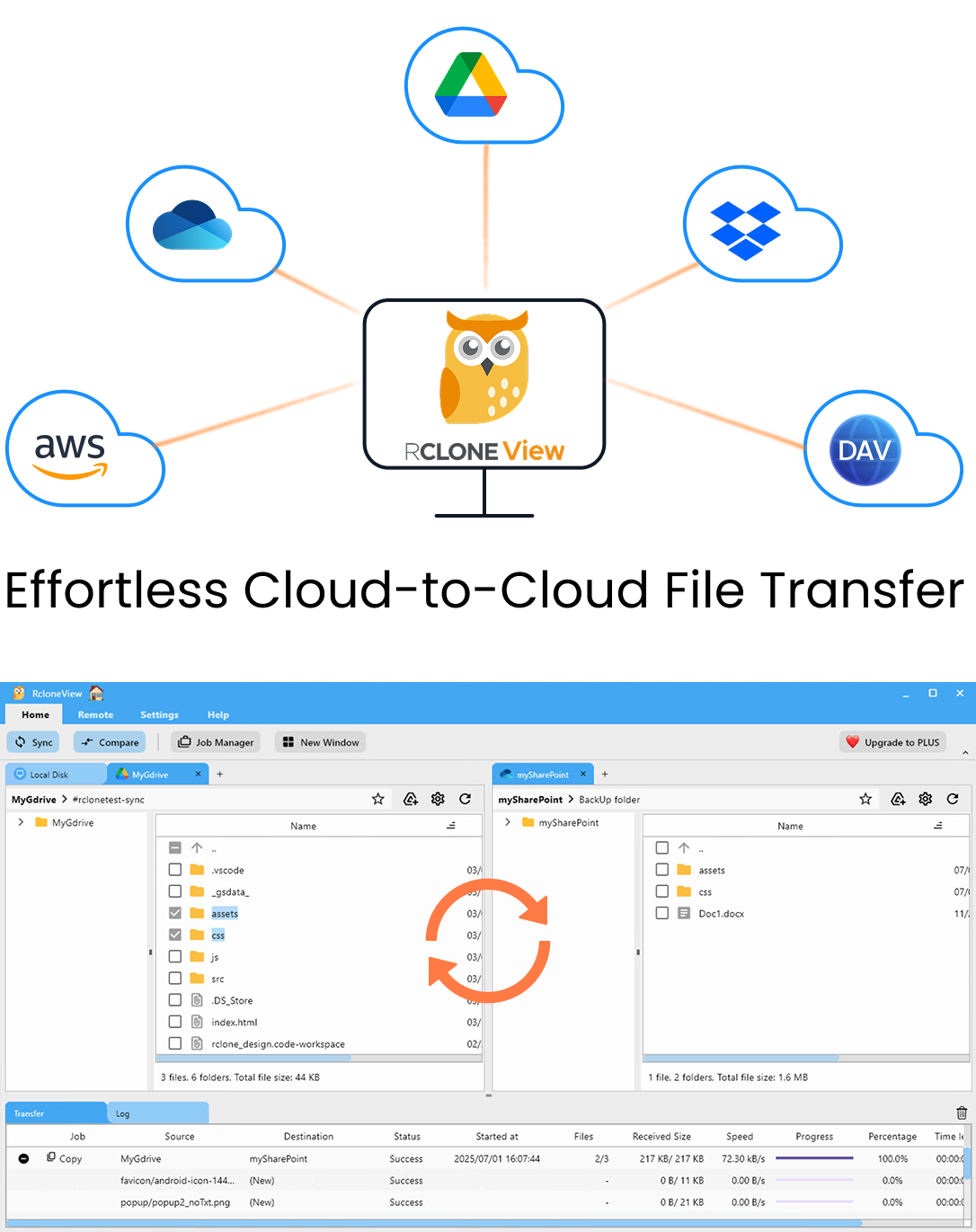
Manage & Sync All Clouds in One Place
RcloneView is a cross-platform GUI for rclone. Compare folders, transfer or sync files, and automate multi-cloud workflows with a clean, visual interface.
- One-click jobs: Copy · Sync · Compare
- Schedulers & history for reliable automation
- Works with Google Drive, OneDrive, Dropbox, S3, WebDAV, SFTP and more
Free core features. Plus automations available.
Why multi-cloud backup?
- Resilience: One provider outage or account lockout won’t halt access to your data.
- Cost control: Mix low-cost object storage (S3/Wasabi) with collaboration clouds (Google Drive/OneDrive).
- Performance: Keep a nearby NAS copy for fast restores, while keeping a cloud copy for off-site safety.
- Compliance: Separate copies reduce single points of failure and simplify retention policies.
What you can back up with RcloneView
- Google Drive / Shared Drives (OAuth, no tokens to paste).
- OneDrive / SharePoint (OAuth).
- S3-compatible: Amazon S3, Wasabi, Cloudflare R2, Backblaze B2 (access/secret keys).
- NAS / SMB / NFS: mount as a local path, or use SFTP/SMB remotes.
- External drives for offline or air-gapped copies.
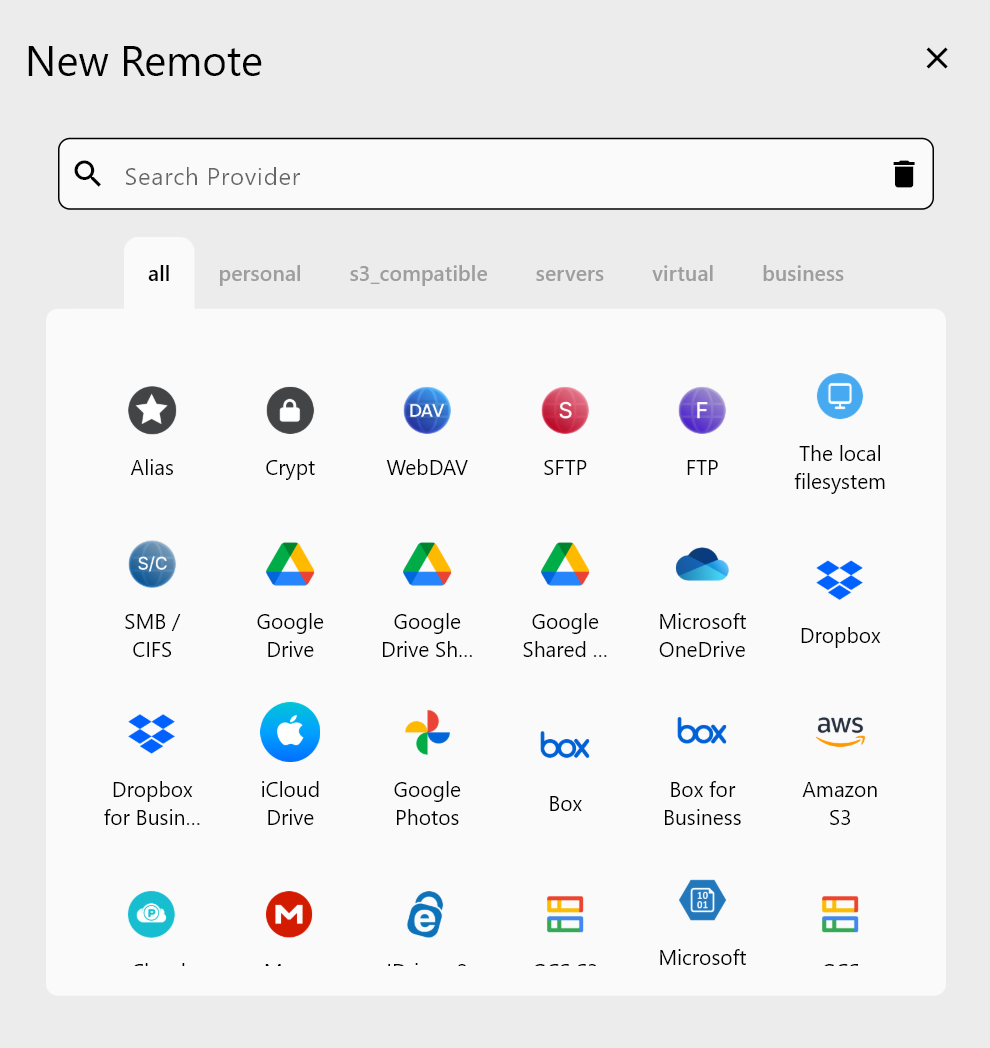
👉 Remote setup references:
Sync vs. Backup: choose the right mode
- Sync: keeps source and destination matched. Ideal for working sets but can propagate deletes. Use with care for backups.
- Backup-style one-way copy: copy new/changed files only; do not delete at destination. Safer for historical backups.
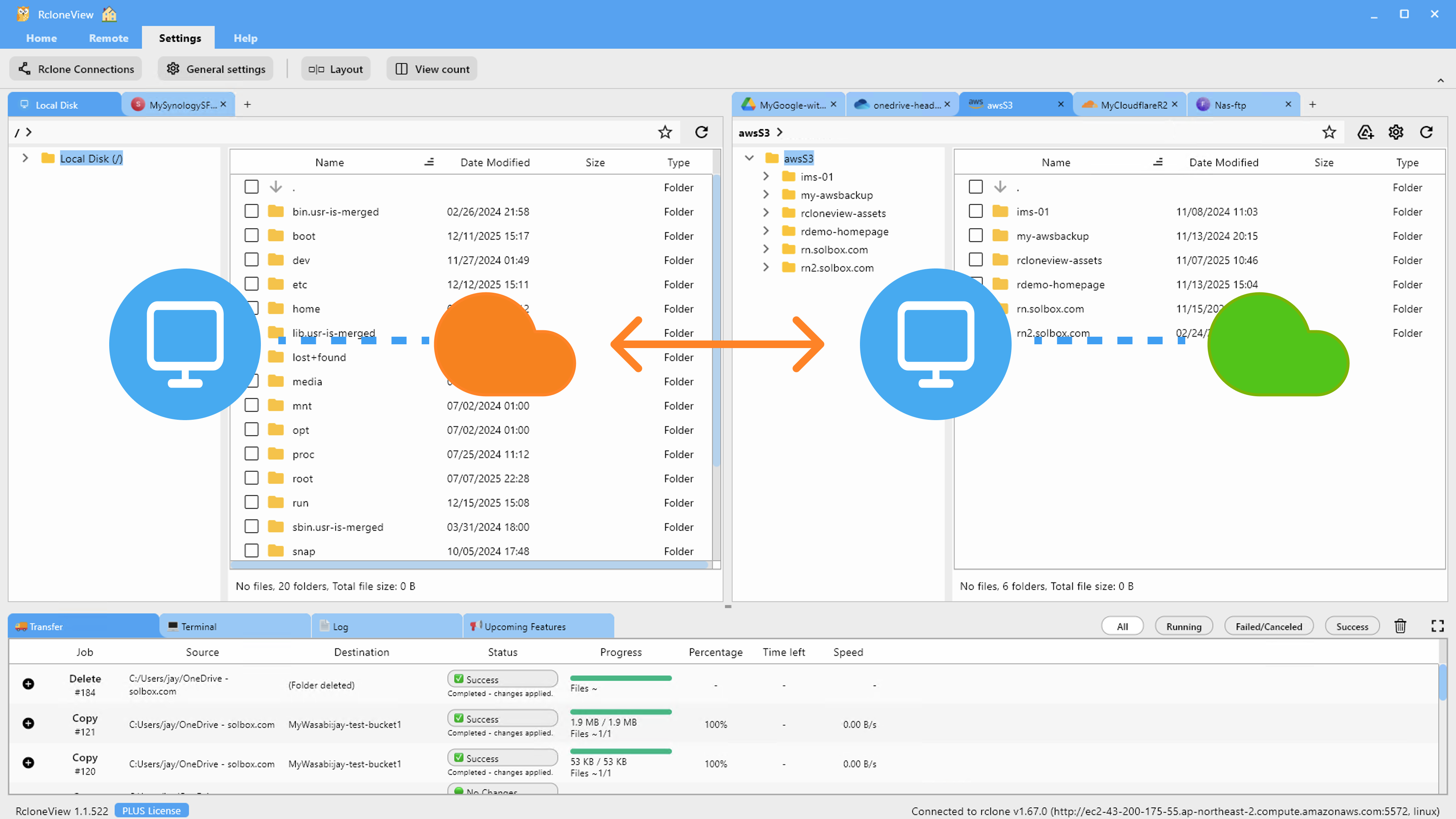
Build an automated backup job (example: Drive → S3 → NAS)
- Open Remote → + New Remote and add Google Drive, OneDrive, and S3.
- In Browse, open your source (e.g., Google Drive) in the left pane and target (S3 bucket) in the right pane.
- Click Sync (or Copy via toolbar) and choose one-way source → destination.
- Set filters: exclude temp/cache folders, include key folders, and enable checksum if the target supports it.
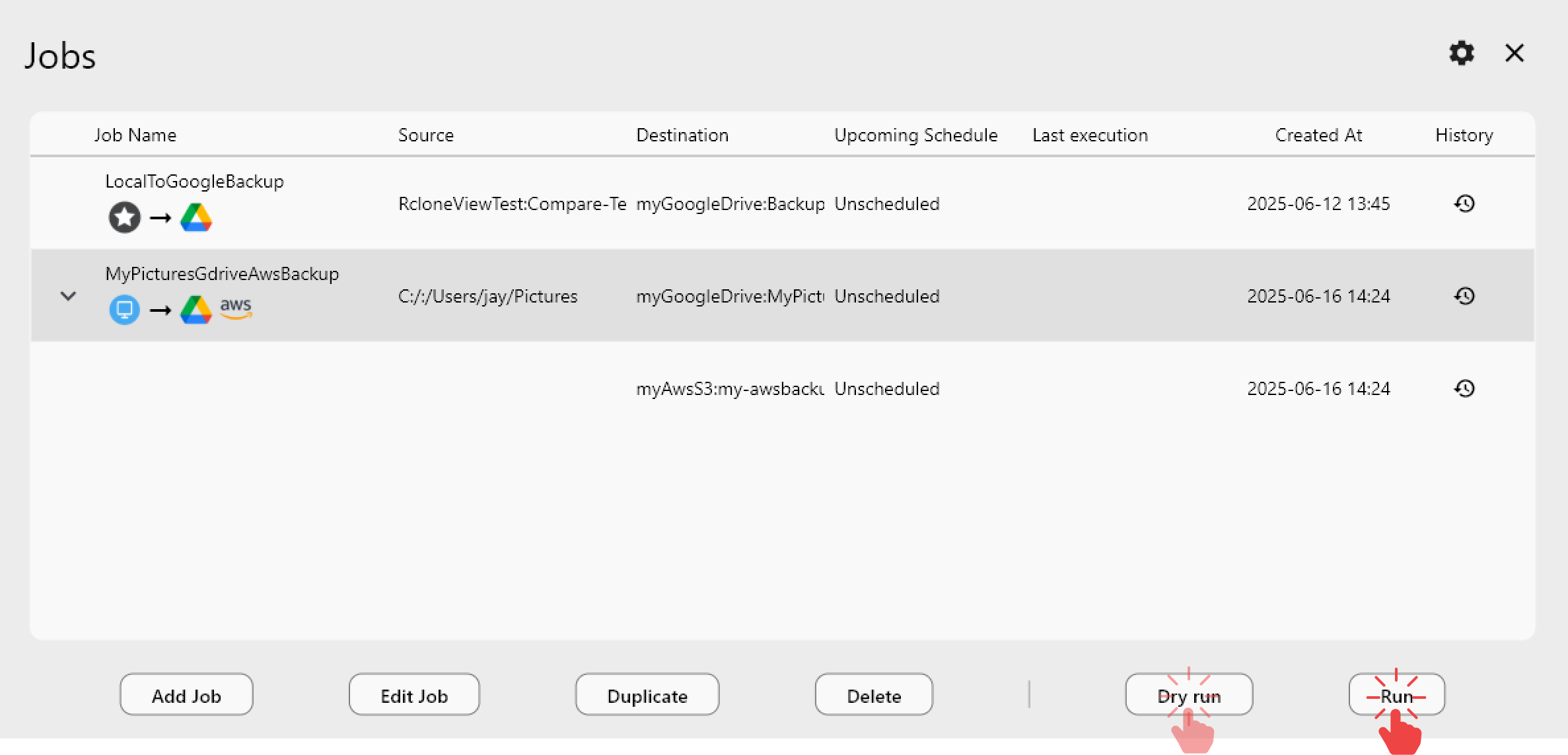
- Click Save to Jobs and name it (e.g.,
drive-to-s3-backup). - Repeat for OneDrive → S3 or S3 → NAS if you want a local secondary copy.
👉 Learn more:
Schedule nightly backups (daily 02:00)
- Open Job Manager → Add Job.
- Select your saved job (e.g.,
drive-to-s3-backup). - Set schedule to Daily at 02:00.
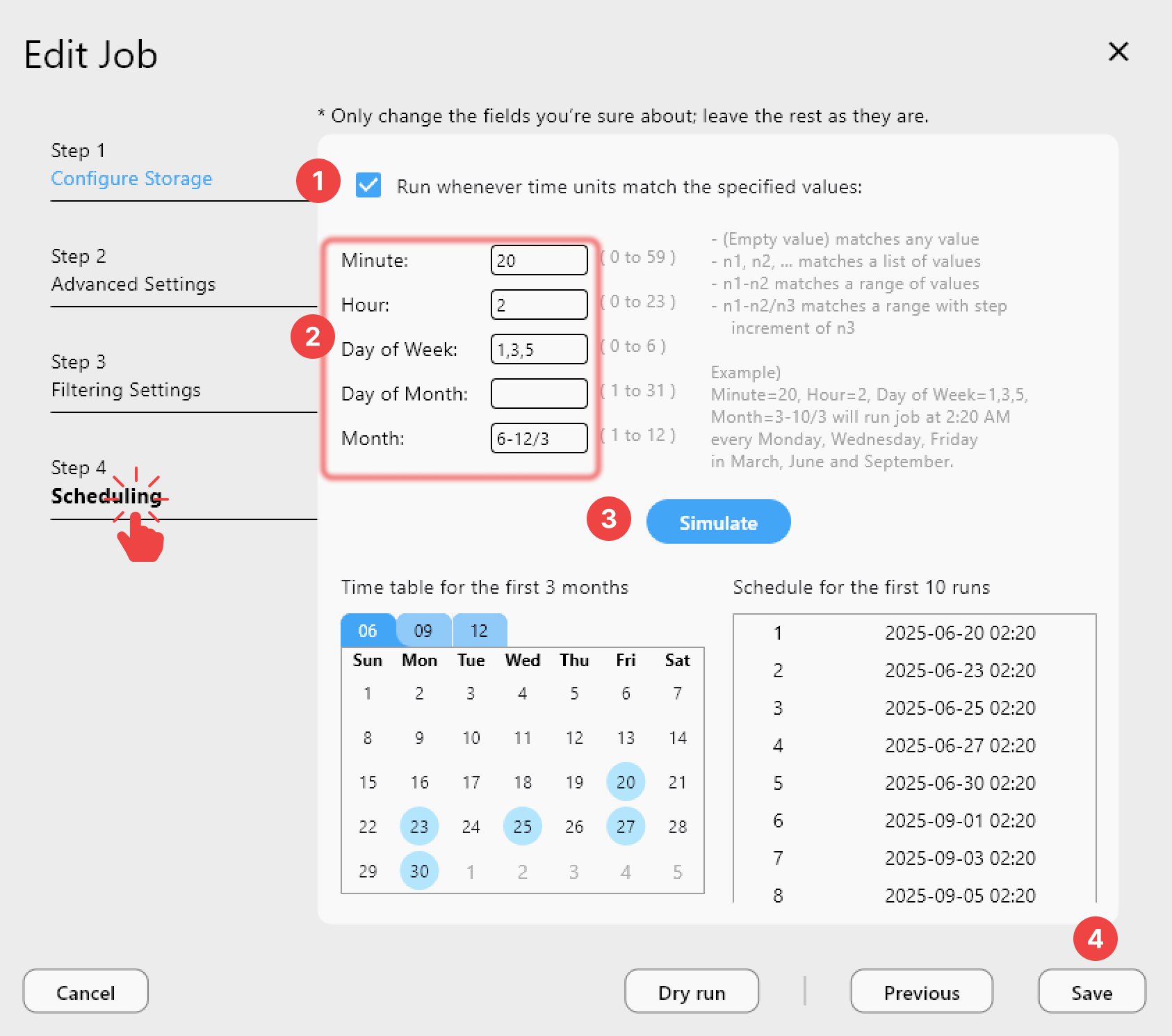
👉 Learn more: Job Scheduling and Execution
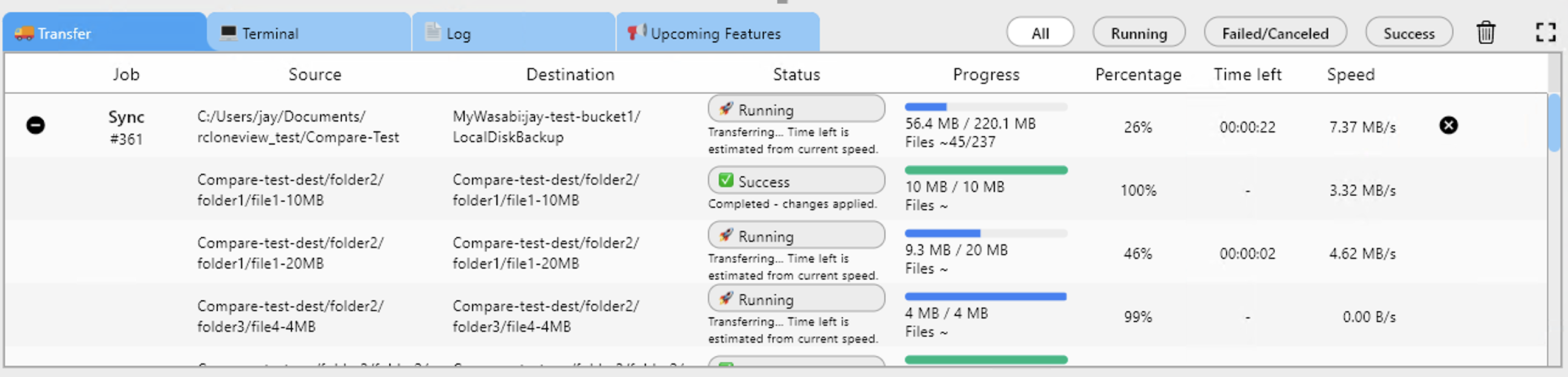
Monitor failures and retries
- Open the Transfer tab during runs to watch throughput and retry counts.
- Check Job History/Logs to see which files failed and why.
Best practices for a reliable multi-cloud backup
- Keep at least 2–3 copies across different providers/media.
- Use one-way copy to backup targets; avoid propagating deletes until you have confirmed retention.
- On NAS, ensure the volume has sufficient snapshots or RAID protection.
- Periodically test restores from each target to validate integrity and permissions.
- Document schedules and destinations so audits and handoffs are easy.
Summary
RcloneView makes multi-cloud backups practical: connect Google Drive, OneDrive, S3, Wasabi, and NAS; design one-way copy or sync flows; enable checksum verification; and schedule nightly runs—all without CLI scripts. With clear logs and retries, you can maintain redundant copies and recover quickly when something goes wrong.
Supported Cloud Providers