Map Azure Blob Storage as a Local Drive on Windows & macOS with RcloneView
Replace scripts and Storage Explorer with a two-click mount: RcloneView turns Azure Blob containers into true local drives with caching, buffering, and auto-remount across Windows, macOS, and Linux.
Azure Blob is fantastic for offloading media, backups, and static assets—but mounting it as a fast, reliable drive is tricky. rclone mount flags, WinFsp/macFUSE installs, shared access signatures (SAS), and reconnect scripts get complicated fast.
RcloneView wraps everything in a GUI: add your Azure remote once, pick a drive letter or /Volumes path, turn on VFS cache for thumbnails and media scrubbing, and let Scheduler remount it on login. No CLI required.
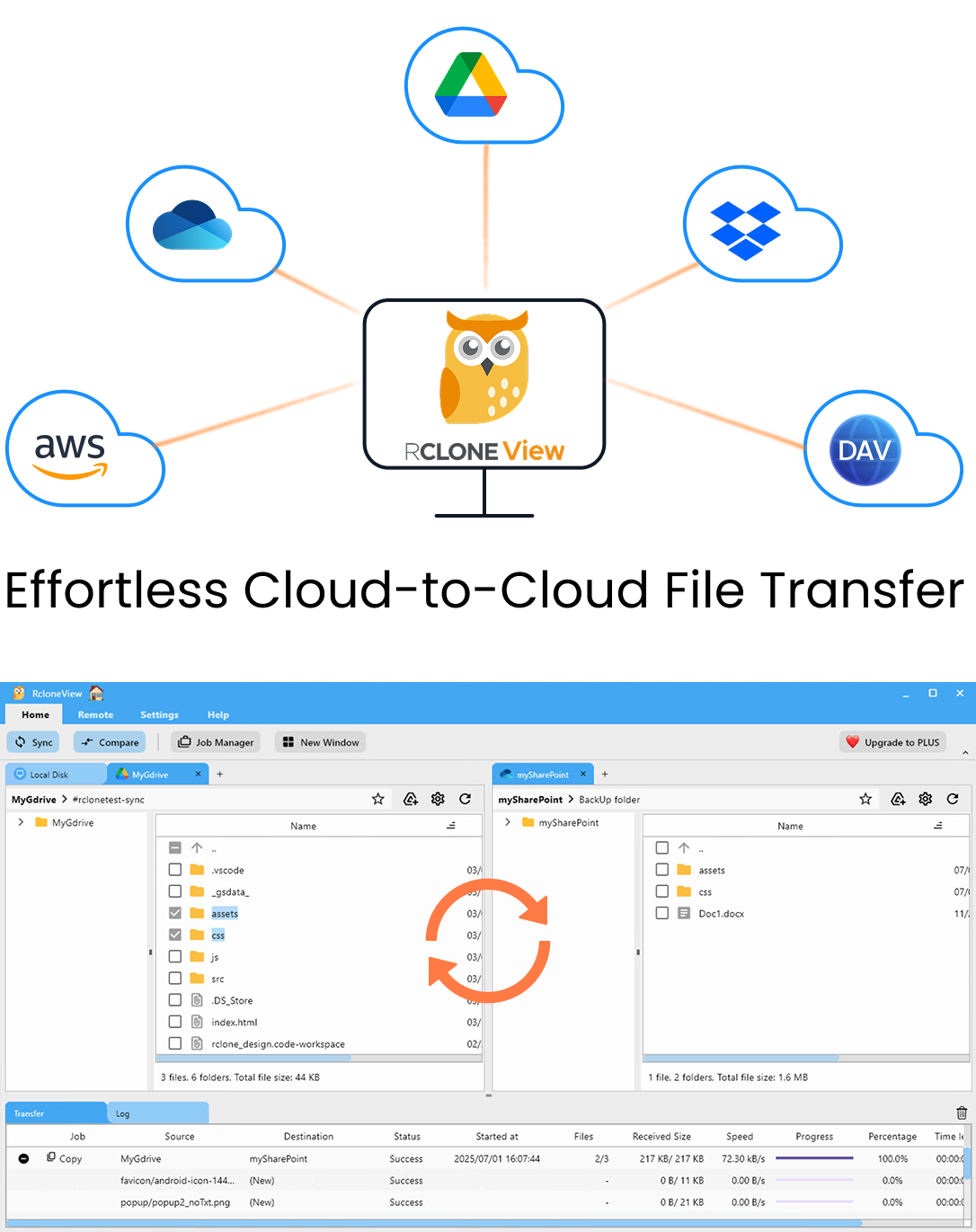
Manage & Sync All Clouds in One Place
RcloneView is a cross-platform GUI for rclone. Compare folders, transfer or sync files, and automate multi-cloud workflows with a clean, visual interface.
- One-click jobs: Copy · Sync · Compare
- Schedulers & history for reliable automation
- Works with Google Drive, OneDrive, Dropbox, S3, WebDAV, SFTP and more
Free core features. Plus automations available.
Why Mount Azure Blob with RcloneView Instead of Scripts
- Zero CLI: Remote Manager builds your Azure remote and stores credentials securely (see Remote Manager).
- Cross-platform consistency: Windows (WinFsp), macOS (macFUSE), Linux (FUSE) with the same UI.
- Real drive mapping: Drive letters on Windows or
/Volumes/Azureon macOS for any container. - Performance built in: VFS cache, thumbnail streaming, read-ahead, and buffering surfaced in the Mount dialog (see Mount cloud storage as a local drive).
- Automation & monitoring: Auto-mount on startup, reconnect on failure, and live throughput charts (see Job scheduling and execution and Real-time transfer monitoring).
Step-by-Step — Map Azure Blob as a Local Drive
1) Prepare Azure credentials
- Create a Storage Account and a Blob container.
- Generate either Access Key or SAS token (least privilege recommended for production).
- Note the Account Name and Container you want to mount.
2) Add the Azure remote
- Open Remote Manager → Add Remote → choose S3-compatible (works with Azure Blob’s S3 gateway) or WebDAV if using that endpoint.
- For S3-compatible:
- Provider: Custom / S3-compatible
- Endpoint:
https://<account>.blob.core.windows.net - Region: leave blank or
us-east-1placeholder - Access Key / Secret: your Azure key or SAS-derived pair
- Save the remote. Use a strong Config Password in General Settings.
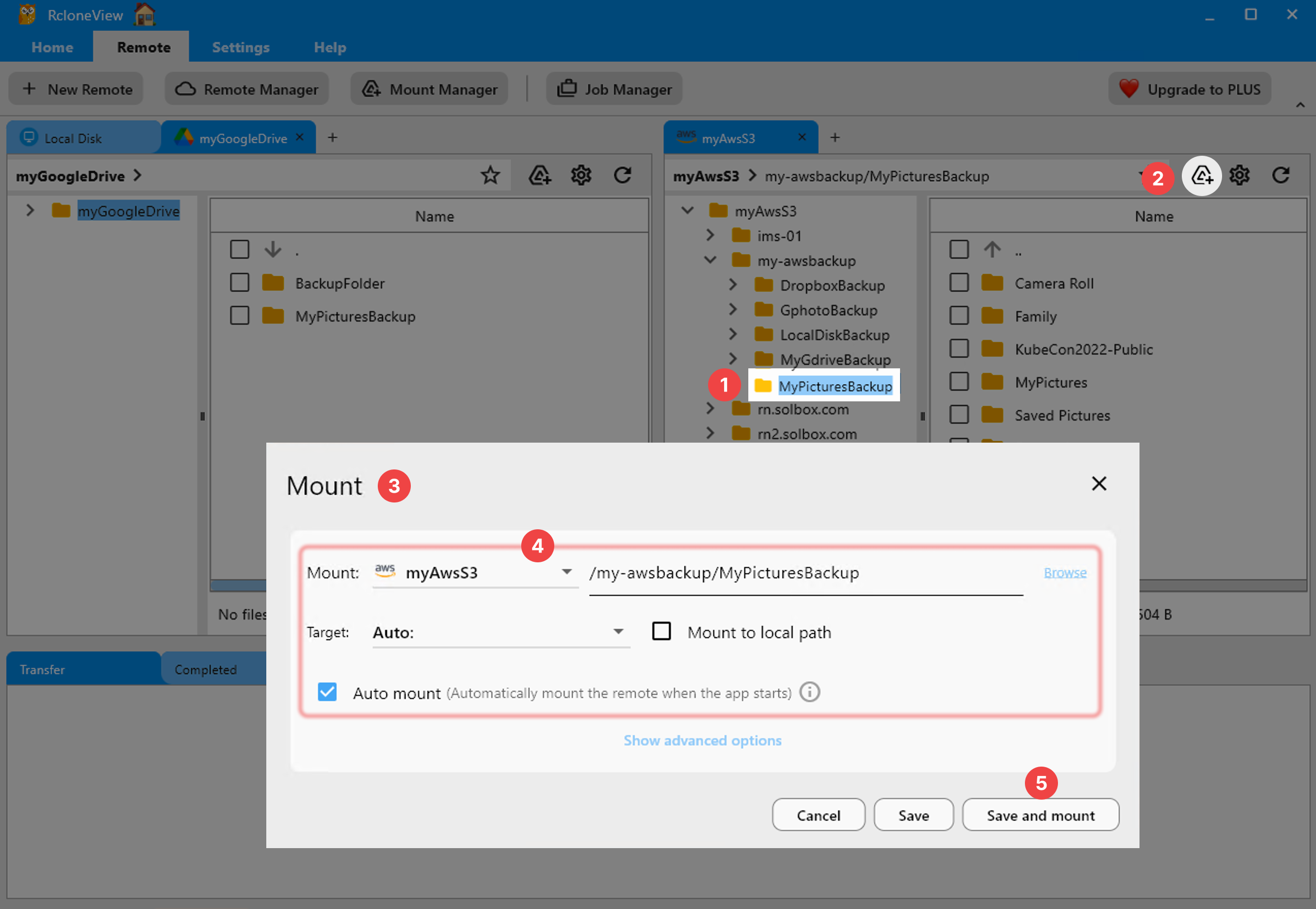
3) Create a Mount job
- In Mount Manager (or the Explorer toolbar), click Mount.
- Select your Azure remote and specify the container path (e.g.,
azure:media-assets). - Choose the mount target:
- Windows →
Z:(or any free letter) - macOS →
/Volumes/AzureMedia - Linux →
/mnt/azure-media
- Windows →
-
- Toggle Auto Mount on startup so RcloneView reconnects after reboot.
4) Tune VFS cache and buffers
- Cache mode:
Fullfor thumbnails, previews, and media scrubbing. - Cache directory: Point to an SSD folder.
- Read-ahead: 4–8 MB for photo/video browsing; increase for 4K+ workloads.
- Write-back/Buffering: Enable for large sequential uploads; cap bandwidth if sharing uplink with others.
Use Cases
- Design & media teams: Keep large asset libraries in Blob while editing locally with cached reads.
- Dev/Test environments: Mount build artifacts or static sites for quick iteration.
- Data collection: Drop IoT or log exports straight into Blob without browser uploads.
- Hybrid cloud workflows: Drag-drop between Azure, S3, Google Drive, and NAS from one dashboard.
- Backup staging: Mount Blob as cheap warm storage before archiving to Glacier/R2.
Performance Tips
- Set Cache mode: Full for heavy media/photo libraries.
- Use an NVMe/SSD cache directory; keep several GB free.
- Increase Read-ahead and buffer-size for sequential reads/writes; lower for random small files.
- For distributed teams, pair mounts with Scheduler to refresh or warm the cache daily.
- Watch throughput in Real-time transfer monitoring to spot throttling.
Troubleshooting
- 403 or auth errors: Reissue SAS/keys and confirm the endpoint
https://<account>.blob.core.windows.net. - Slow listings: Raise VFS cache size and read-ahead; ensure cache path is on SSD.
- Mount disappears after sleep: Enable Auto Mount plus Scheduler’s “Restart failed jobs” option.
- macOS permissions: Approve macFUSE prompts; then remount via Mount Manager.
Conclusion — Azure Blob as a First-Class Drive
With RcloneView, Azure Blob feels like a native drive: mapped letters or /Volumes, smart caching, and automation—all without CLI scripts. Add your container once, tune VFS for your workload, and keep your self-hosted and multi-cloud storage in one control panel.
Supported Cloud Providers