Automate Cloud Sync with Slack Notifications: A Complete v1.3 Workflow Guide
What if your cloud backups ran themselves every night and sent you a Slack message when they finished — or when something went wrong? With RcloneView v1.3, that's exactly what you can build.
Enterprise teams don't just need cloud sync — they need cloud sync they can trust without babysitting. RcloneView v1.3 brings together three powerful features — Batch Jobs, Job Scheduling, and Slack Integration — into a seamless automation pipeline. This guide shows you how to combine them into a workflow that runs on autopilot and keeps your team informed.
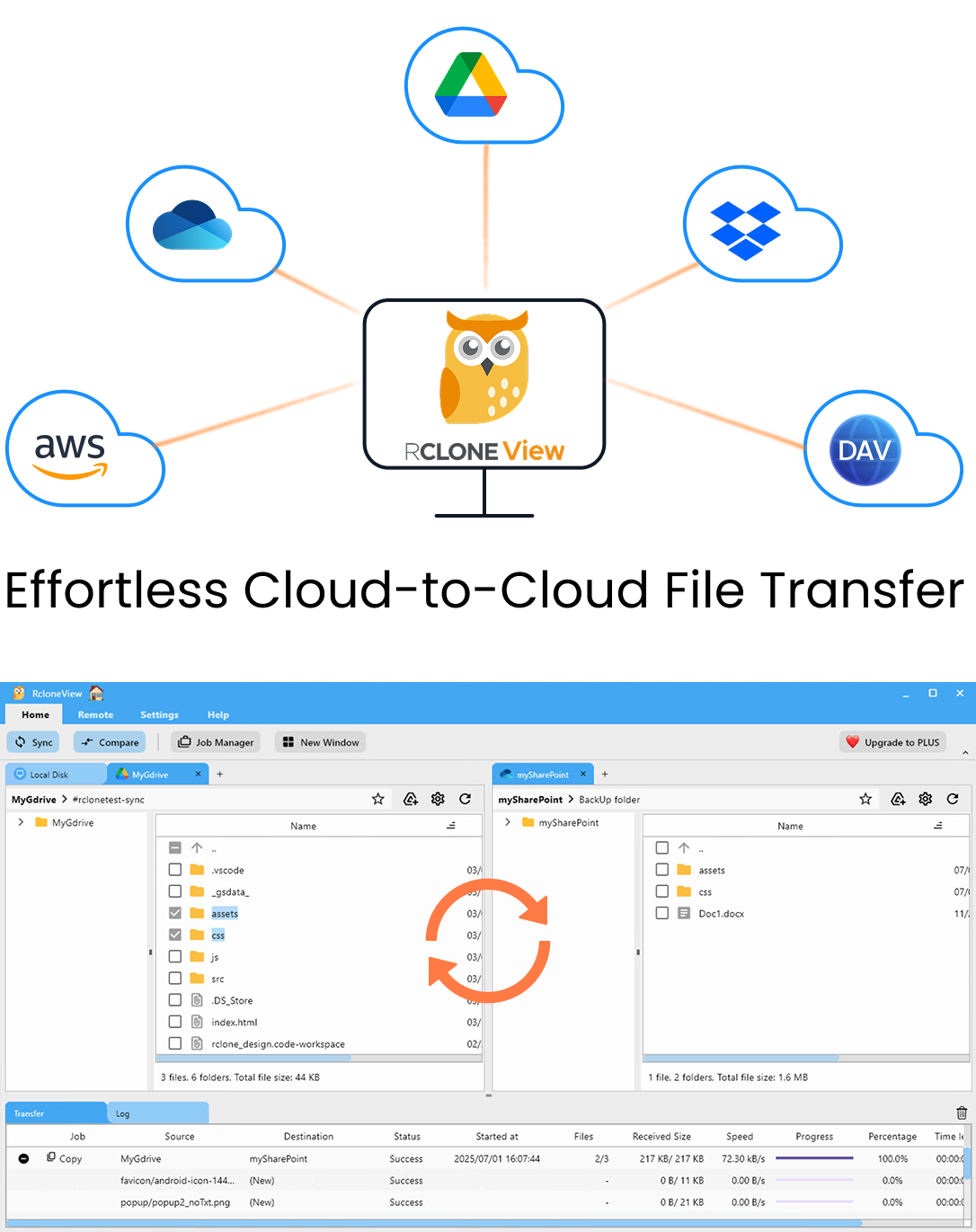
Manage & Sync All Clouds in One Place
RcloneView is a cross-platform GUI for rclone. Compare folders, transfer or sync files, and automate multi-cloud workflows with a clean, visual interface.
- One-click jobs: Copy · Sync · Compare
- Schedulers & history for reliable automation
- Works with Google Drive, OneDrive, Dropbox, S3, WebDAV, SFTP and more
Free core features. Plus automations available.
Why Automation + Notifications Matter
Manual cloud management has three failure modes:
- Forgetting to run jobs — critical backups get skipped when someone is busy, on vacation, or simply forgets.
- Not noticing failures — a sync job fails at 3 AM, and no one knows until data is needed hours later.
- No audit trail — when something goes wrong, there's no record of what ran, when, and what the result was.
The combination of scheduled automation and real-time notifications eliminates all three. Your jobs run on time, failures trigger immediate alerts, and everything is logged in both RcloneView's Job History and your Slack channel.
The Complete Automation Architecture
Here's what the end-to-end pipeline looks like:
┌─────────────────────────────────────────────────────────┐
│                   RcloneView v1.3                       │
│                                                         │
│  ┌─────────┐    ┌───────────┐    ┌──────────────────┐  │
│  │ Batch   │───▶│ Scheduler │───▶│ Job Execution    │  │
│  │ Jobs    │    │ (Cron)    │    │ (Sync/Copy/Move) │  │
│  └─────────┘    └───────────┘    └────────┬─────────┘  │
│                                           │             │
│                                    ┌──────▼──────┐      │
│                                    │ Slack/      │      │
│                                    │ Discord/    │      │
│                                    │ Telegram    │      │
│                                    └─────────────┘      │
└─────────────────────────────────────────────────────────┘
        │                                    │
        ▼                                    ▼
  ┌───────────┐                    ┌────────────────┐
  │ Job       │                    │ Team Slack     │
  │ History   │                    │ Channel        │
  └───────────┘                    └────────────────┘
Step 1: Define Your Jobs
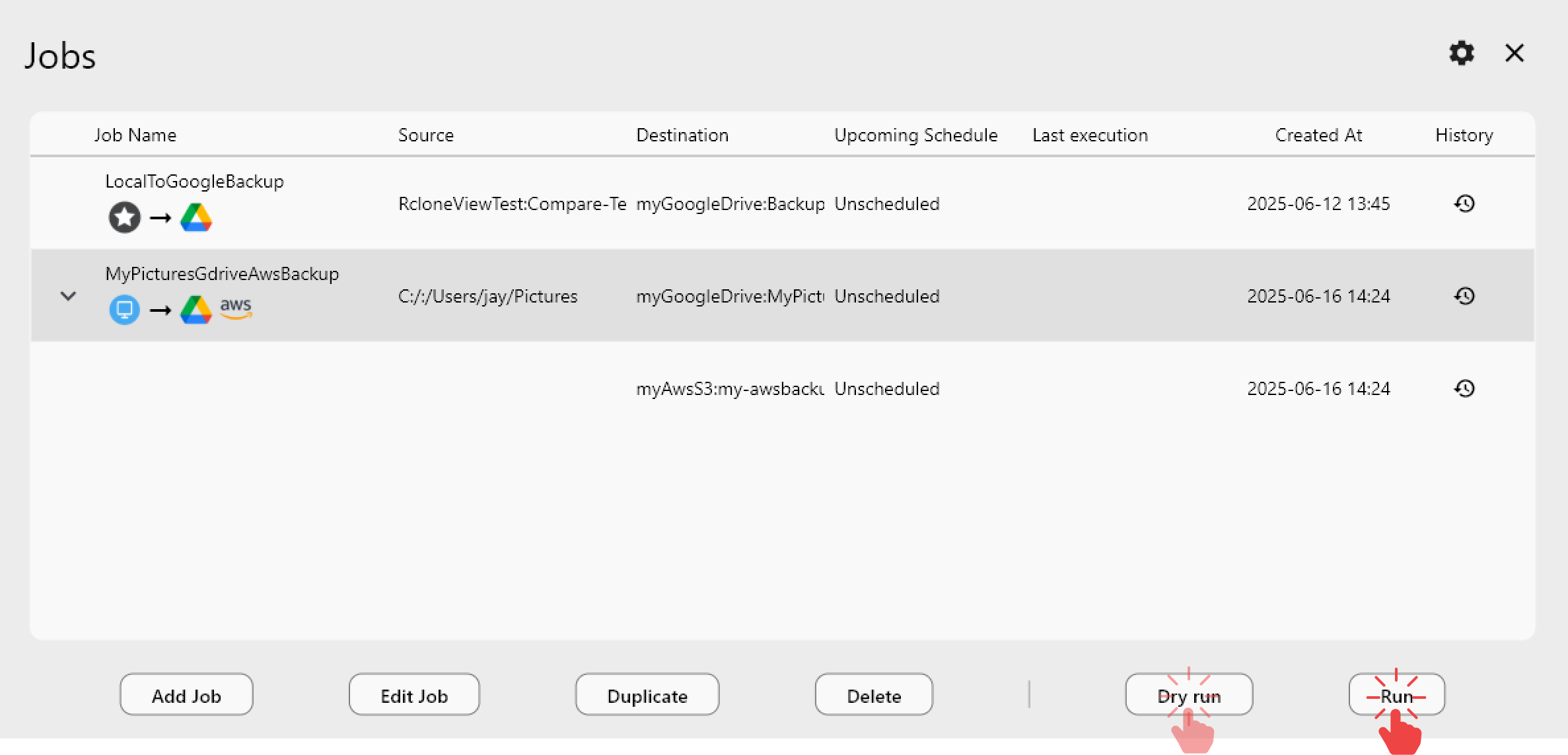
Start by creating the individual jobs you need. With v1.3's expanded job types, you have more flexibility than ever:
- Sync — Mirror project files from local storage to Google Drive
- Copy — Replicate backups to a secondary cloud (S3, Wasabi, R2)
- Move — Transfer completed archives to cold storage
- Delete — Clean up temporary files after successful backups
- Create Folder — Set up directory structures for new projects
For each job, configure:
- Source and destination remotes
- Transfer settings (parallel transfers, chunk size)
- Any filters for selective sync (Filter Rules Guide)
Step 2: Group Jobs into a Batch
Once your individual jobs are ready, create a Batch Job to run them as a sequence. For example, a "Nightly Backup" batch might include:
- Sync local project folder → Google Drive
- Copy Google Drive backup → AWS S3 (redundancy)
- Compare source and destination to verify integrity
- Delete temp files from the local staging folder
The batch executes each job in order, and if any job fails, you can use the Retry Failed Jobs feature to rerun just the failed step — no need to restart the entire sequence.
Step 3: Schedule the Batch
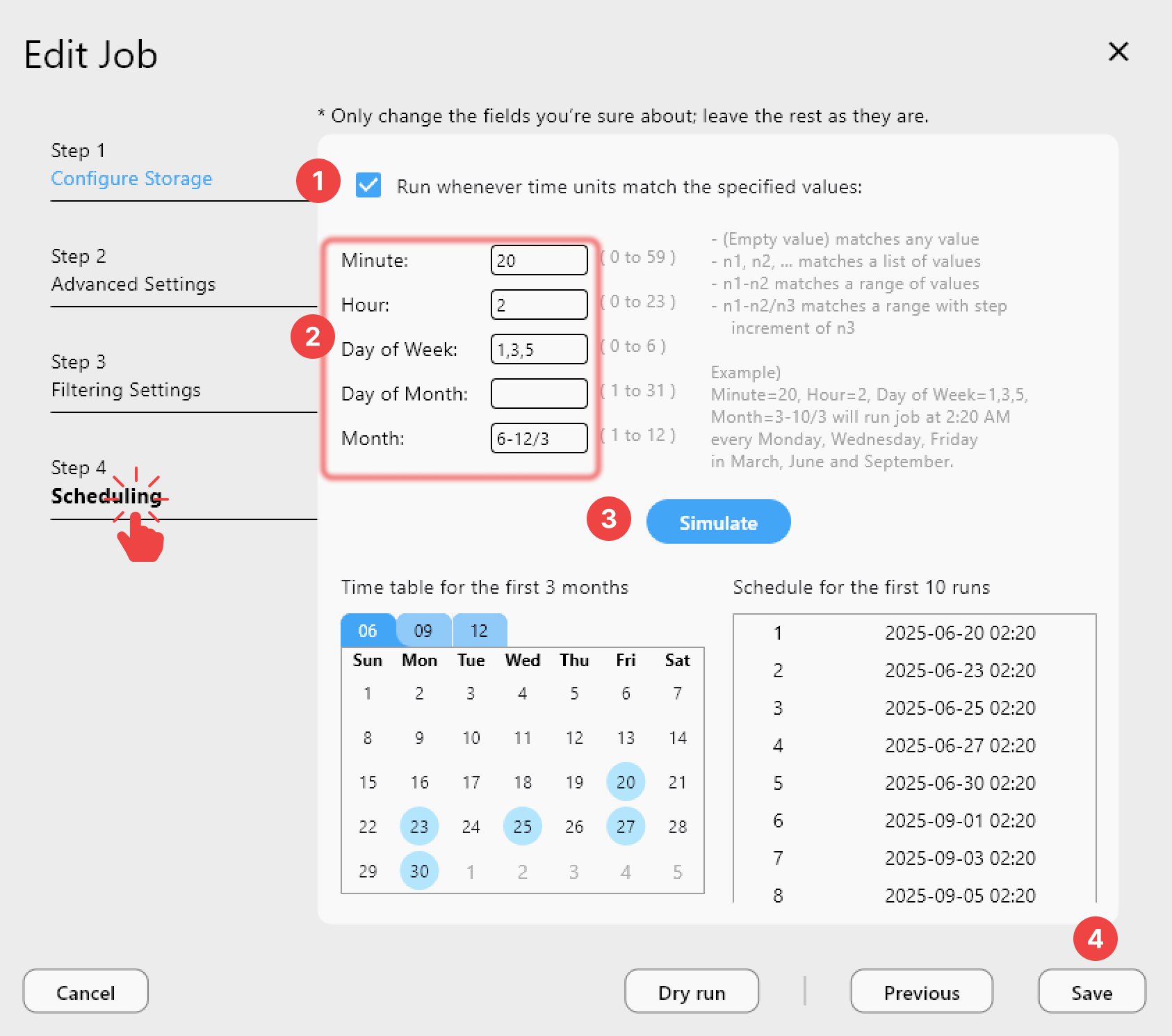
With the batch defined, set it to run automatically using Job Scheduling:
- Every weeknight at 11 PM — after business hours when network load is low
- Every Friday at 6 PM — weekly archive of completed project files
- First of every month — monthly compliance backup to immutable S3 storage
The scheduler runs reliably in the background. As long as RcloneView is running (including headless mode on servers), your jobs execute on time.
Step 4: Connect Slack for Real-Time Alerts
This is where the workflow comes alive. With Slack integration, RcloneView sends notifications to your team's Slack channel at every key moment:
What gets notified:
- Job started — "Nightly Backup batch started at 11:00 PM"
- Job completed — "Sync to Google Drive complete: 1,247 files, 23.4 GB transferred in 42 minutes"
- Job failed — "Copy to S3 failed: network timeout. Retry available."
- Batch complete — "All 4 jobs in Nightly Backup finished successfully"
Why this changes everything for teams:
- DevOps engineers see backup status without logging into any dashboard.
- IT managers get proof that compliance backups ran successfully.
- On-call staff are alerted immediately when something needs attention.
- Remote workers can monitor from their phone via Slack mobile.
For setup instructions, see the Slack Remote Control Guide. You can also use Discord or Telegram if your team prefers those platforms.
Step 5: Monitor and Respond from Slack
Slack integration isn't just one-way notifications. You can also control jobs directly from Slack:
/rv list— See all registered jobs/rv run JobName— Trigger a job manually/rv stop JobName— Stop a running job/rv status— Check current transfer progress
This means your team can respond to alerts without leaving Slack. A failed job notification comes in, and you can retry it with a single command — from your phone, during a meeting, or from anywhere with Slack access.
Real-World Use Cases
Enterprise IT: Multi-Department Backup
An IT admin managing storage for multiple departments sets up:
- Batch 1 (Marketing): Sync shared drive → Google Drive, nightly at 10 PM
- Batch 2 (Engineering): Copy repos → S3, nightly at 11 PM
- Batch 3 (Finance): Sync to encrypted remote → immutable S3, nightly at midnight
All three batches send alerts to #it-backup-alerts in Slack. Monday morning, the admin checks the channel to confirm everything ran cleanly over the weekend.
MSP (Managed Service Provider): Client Backup Monitoring
A managed service provider uses RcloneView on each client's server:
- Scheduled nightly backups to the client's preferred cloud
- Slack alerts go to a dedicated
#client-backupschannel - The MSP team reviews alerts daily and proactively addresses failures before clients notice
Remote Team: Distributed File Distribution
A distributed team needs daily file distribution:
- New design assets uploaded to a shared NAS → scheduled Copy to Google Drive + OneDrive
- Slack notifies
#design-teamwhen fresh assets are available - Team members worldwide access files from their nearest cloud provider
Email Notifications: Also Enhanced in v1.3
Not everyone uses Slack. RcloneView v1.3 also improved email notifications with:
- Cleaner layout and better formatting
- Detailed job status information (files transferred, errors, duration)
- Fixed UI issues in the email configuration panel
- Email notifications now work even after a free trial ends
This means you can set up notifications for different audiences — Slack for the ops team, email for management.
Building Your First Automated Pipeline
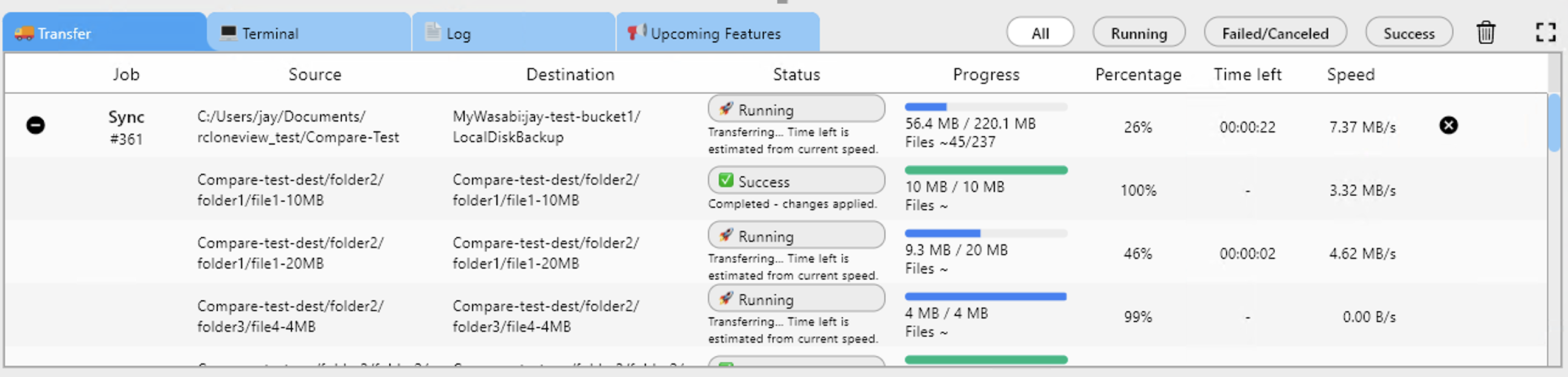
Here's a quick-start checklist:
- Install RcloneView from rcloneview.com
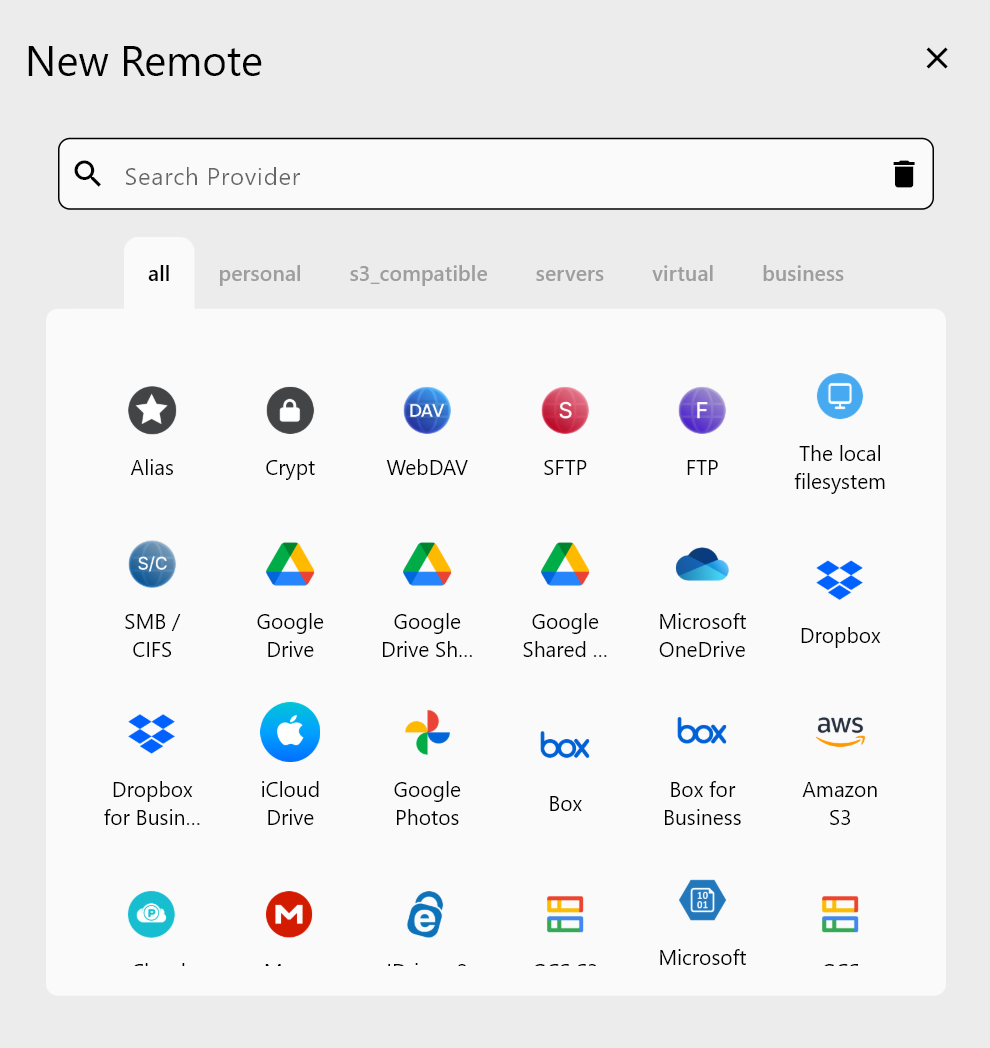
- Add your remotes — Google Drive, S3, NAS, or any provider
- Create individual jobs for each step in your workflow
- Group them into a Batch Job with the desired execution order
- Schedule the batch using the cron-based scheduler
- Connect Slack following the setup guide
- Test with a manual run to verify end-to-end flow
- Let it run — and check Slack for updates
Summary
RcloneView v1.3 transforms cloud file management from a manual chore into an automated, monitored pipeline. By combining Batch Jobs, Scheduling, and Slack (or Discord/Telegram) notifications, you create a system that runs reliably, alerts you to problems instantly, and gives your team confidence that their data is always where it needs to be — all through a visual GUI, no scripting required.
The days of SSH-ing into servers to check if last night's backup ran are over.
Related Guides:
- RcloneView Slack Remote Control
- RcloneView Discord Remote Control
- RcloneView Telegram Remote Control
- Job Scheduling and Execution
- Create Sync Jobs
- Execute & Manage Jobs
- Real-time Transfer Monitoring
Supported Cloud Providers