Accidentally Deleted Cloud Files? How to Prevent Data Loss with RcloneView Backups
You deleted a folder from Google Drive. Then emptied the trash. Three days later, you realize those files were critical. The trash is empty. Google can't help. Now what?
Accidental deletion is the most common form of cloud data loss. Cloud trash bins help, but they have time limits (Google Drive: 30 days, OneDrive: 93 days, Dropbox: 30–180 days). Once files pass that window — or if you empty the trash — they're gone. The only reliable protection is an independent backup.
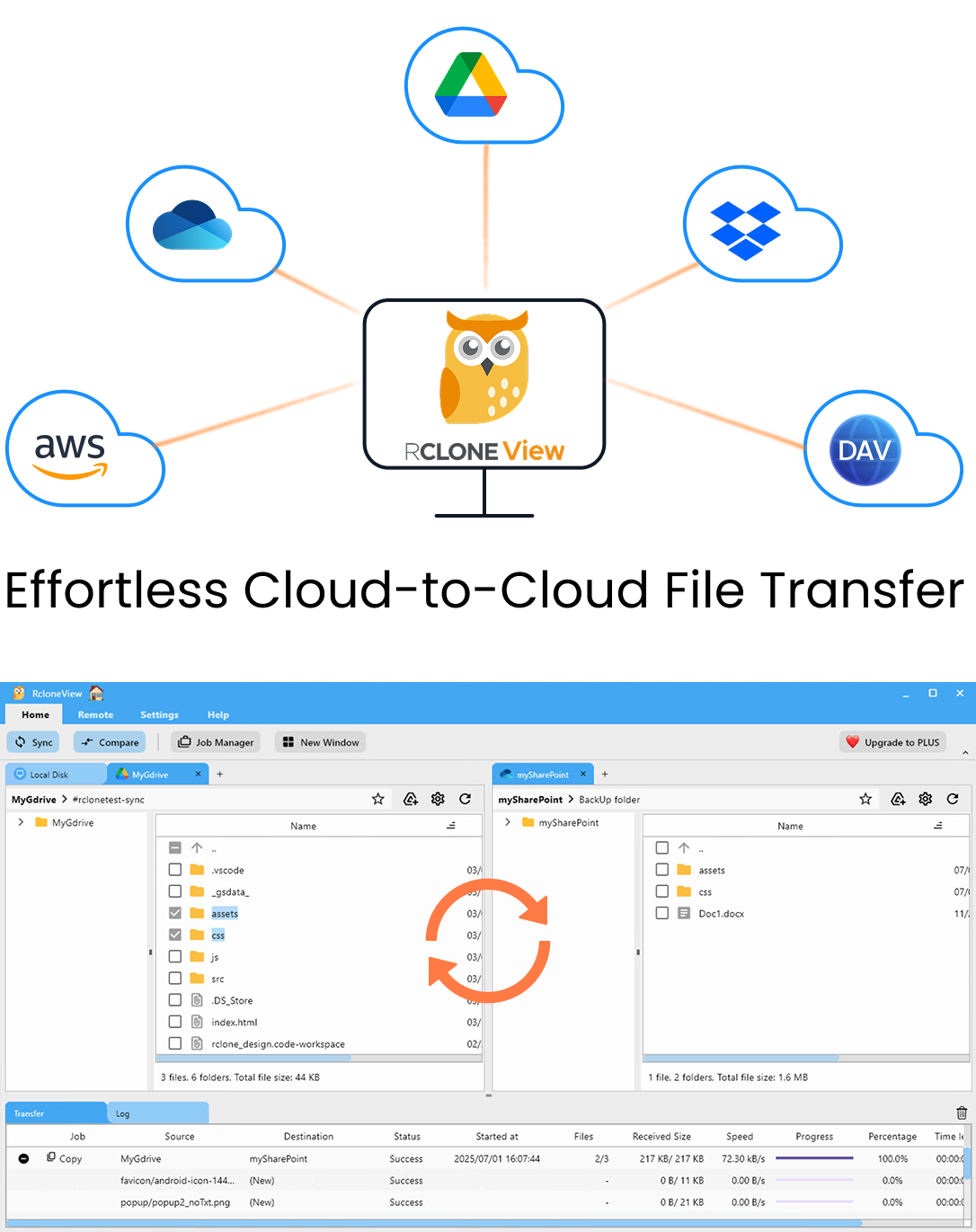
Manage & Sync All Clouds in One Place
RcloneView is a cross-platform GUI for rclone. Compare folders, transfer or sync files, and automate multi-cloud workflows with a clean, visual interface.
- One-click jobs: Copy · Sync · Compare
- Schedulers & history for reliable automation
- Works with Google Drive, OneDrive, Dropbox, S3, WebDAV, SFTP and more
Free core features. Plus automations available.
How Deletion Happens
Common scenarios
- Manual mistake — Selected wrong folder, hit delete.
- Sync gone wrong — A sync tool deletes files on one side when they're removed from the other.
- Shared folder chaos — A collaborator deletes files from a shared folder, affecting everyone.
- Ransomware — Malware encrypts or deletes files, and sync propagates the damage.
- Account compromise — Someone gains access and deletes or modifies files.
- App integration error — A third-party app connected to your cloud storage removes files unexpectedly.
Why cloud trash isn't enough
| Provider | Trash Retention | After That |
|---|---|---|
| Google Drive | 30 days | Permanently deleted |
| OneDrive | 93 days | Permanently deleted |
| Dropbox | 30 days (Basic), 180 days (Pro) | Permanently deleted |
| Box | 30 days | Permanently deleted |
| S3 | No trash (versioning optional) | Immediately deleted |
If you notice the deletion within the retention window, you can recover. If not — or if you emptied the trash — the data is lost unless you have a backup.
The Solution: Cloud-to-Cloud Backup
Set up an independent backup on a separate cloud provider. If files are deleted from your primary cloud, the backup remains unaffected.
Recommended architecture
Primary: Google Drive (daily use)
Backup: Backblaze B2 (independent copy)
The key word is independent — the backup should not be a sync mirror. If you use Sync (which deletes files from the destination when deleted from the source), deletions propagate to your backup. Instead, use Copy for backups.
Copy vs Sync for Backups
| Operation | Adds New Files | Updates Changed Files | Deletes Missing Files |
|---|---|---|---|
| Copy | ✅ | ✅ | ❌ |
| Sync | ✅ | ✅ | ✅ |
Copy never deletes files from the destination. Even if you delete a file from Google Drive, your Backblaze B2 copy remains intact.
Sync mirrors the source exactly — including deletions. Only use Sync when you explicitly want the destination to match the source.
Set Up Backup with RcloneView
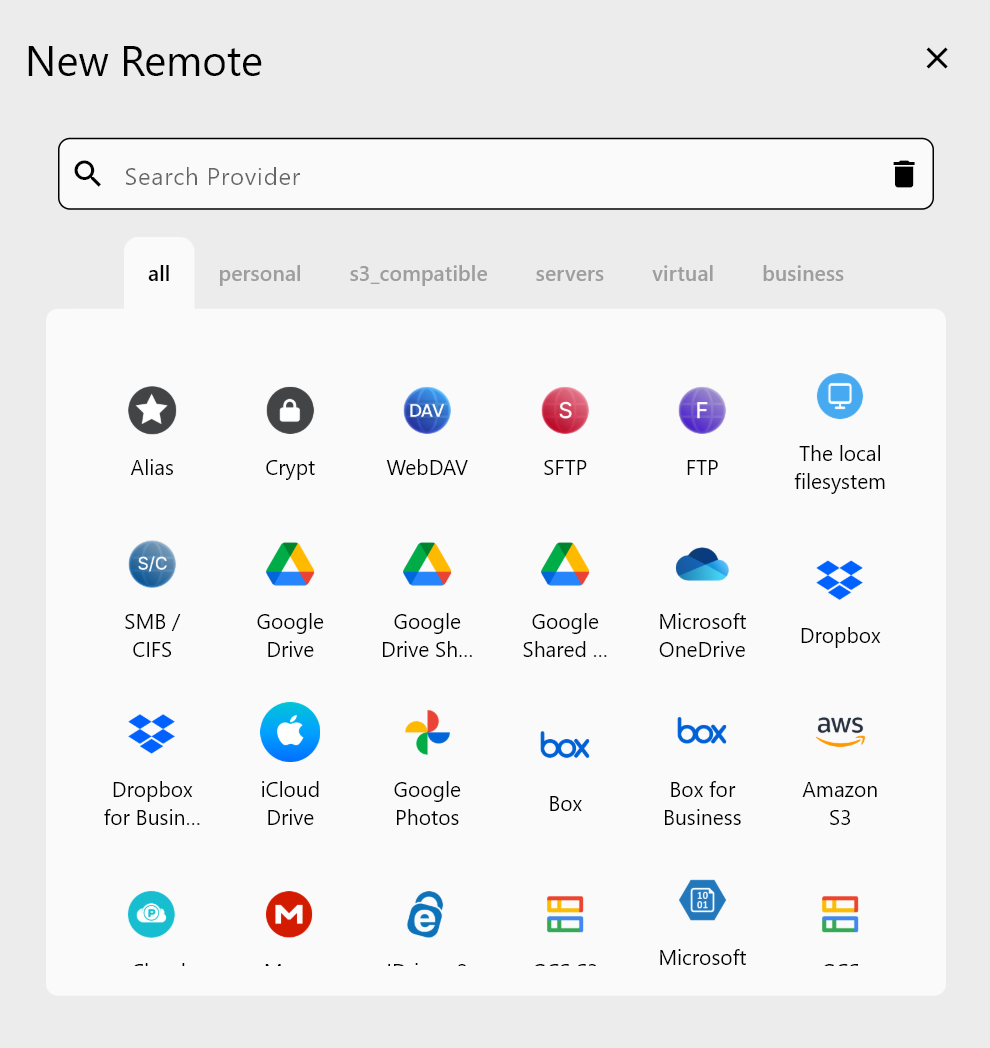
1) Add your primary and backup clouds
2) Create a Copy job (not Sync)
Copy from your primary cloud to your backup cloud:
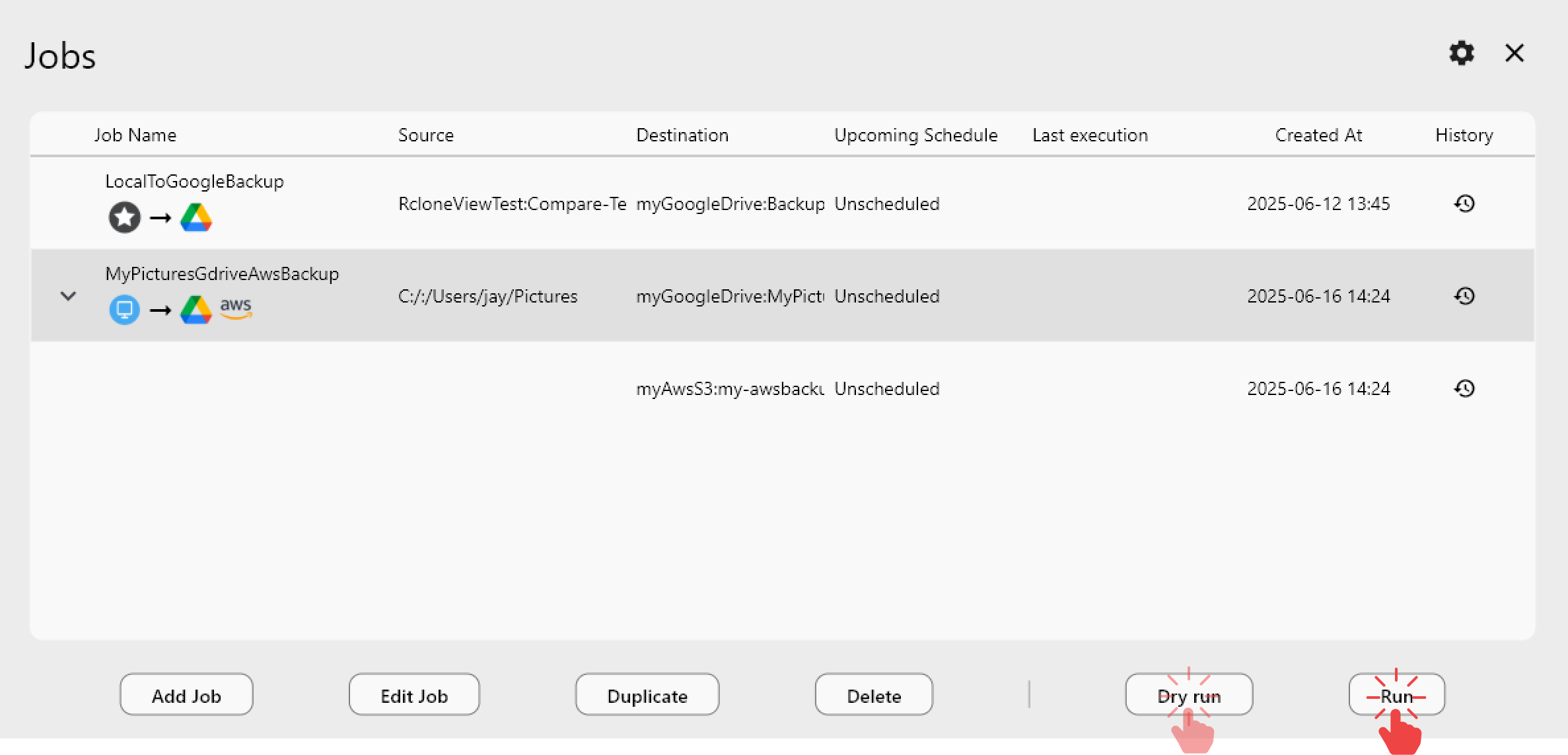
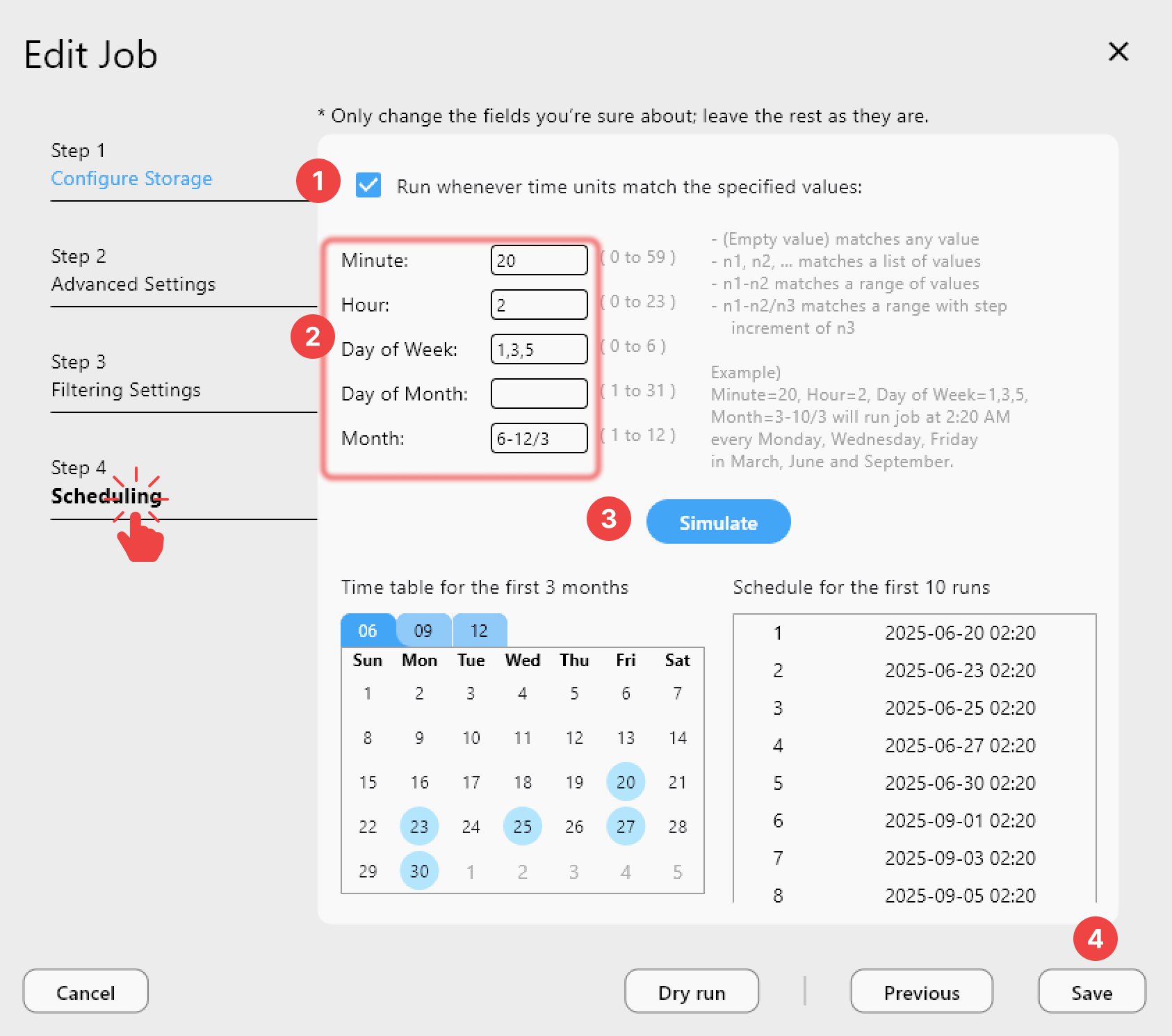
3) Schedule daily backups
4) Verify with Folder Comparison
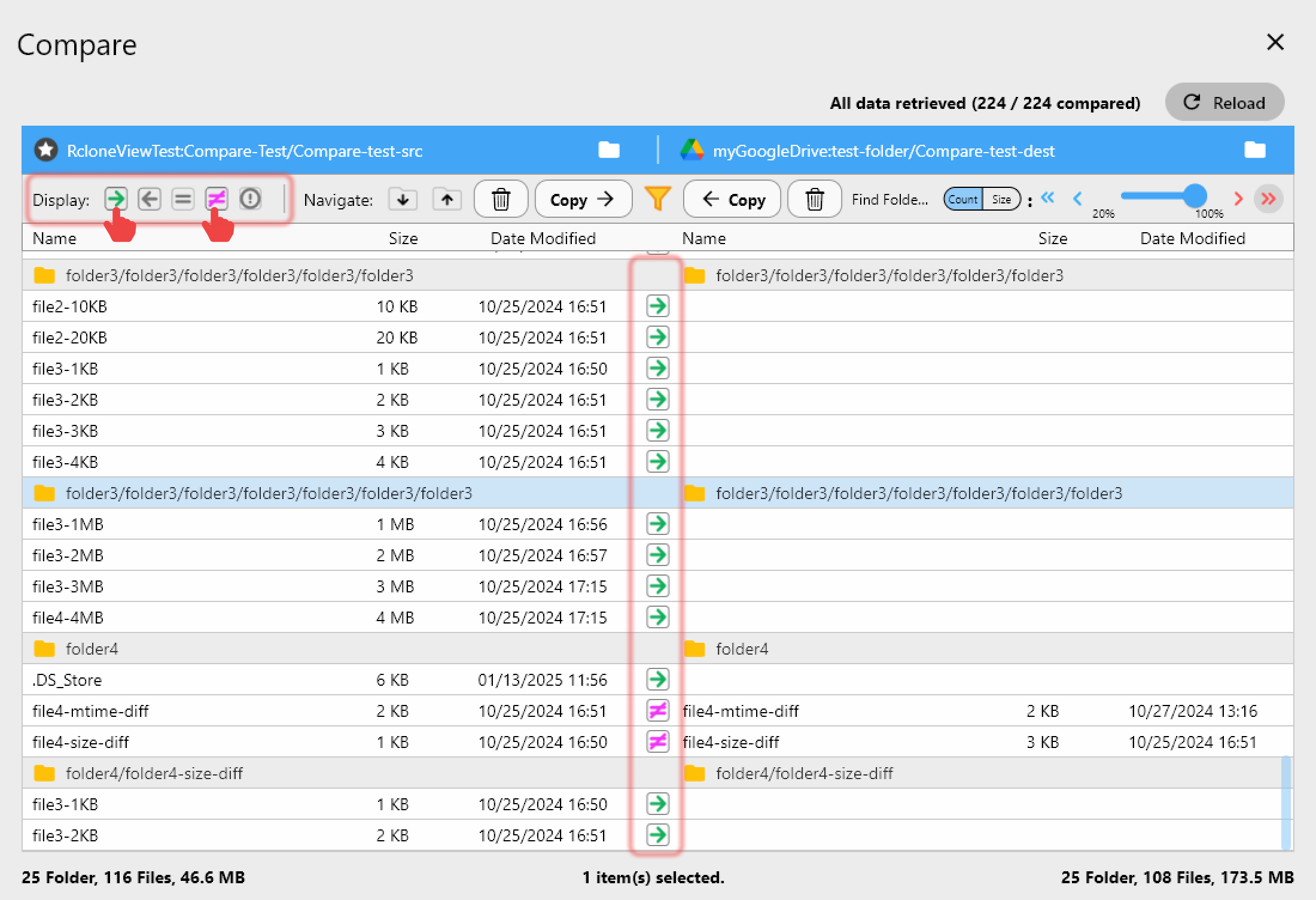
Periodically check that your backup is complete:
Advanced Protection: Versioned Backups
For even more protection, use cloud providers that support versioning:
- AWS S3 — Enable versioning on your bucket. Every overwrite creates a new version.
- Backblaze B2 — Supports file versioning by default.
- Wasabi — Object versioning available.
With versioning, even if a backup Copy job overwrites a file with a corrupted version, you can roll back to a previous version.
Encrypted Backups
Use rclone's crypt remote to encrypt your backups. This protects against:
- Backup account compromise.
- Unauthorized access to backup data.
- Insider threats at the backup provider.
Restoring from Backup
When you need to recover files:
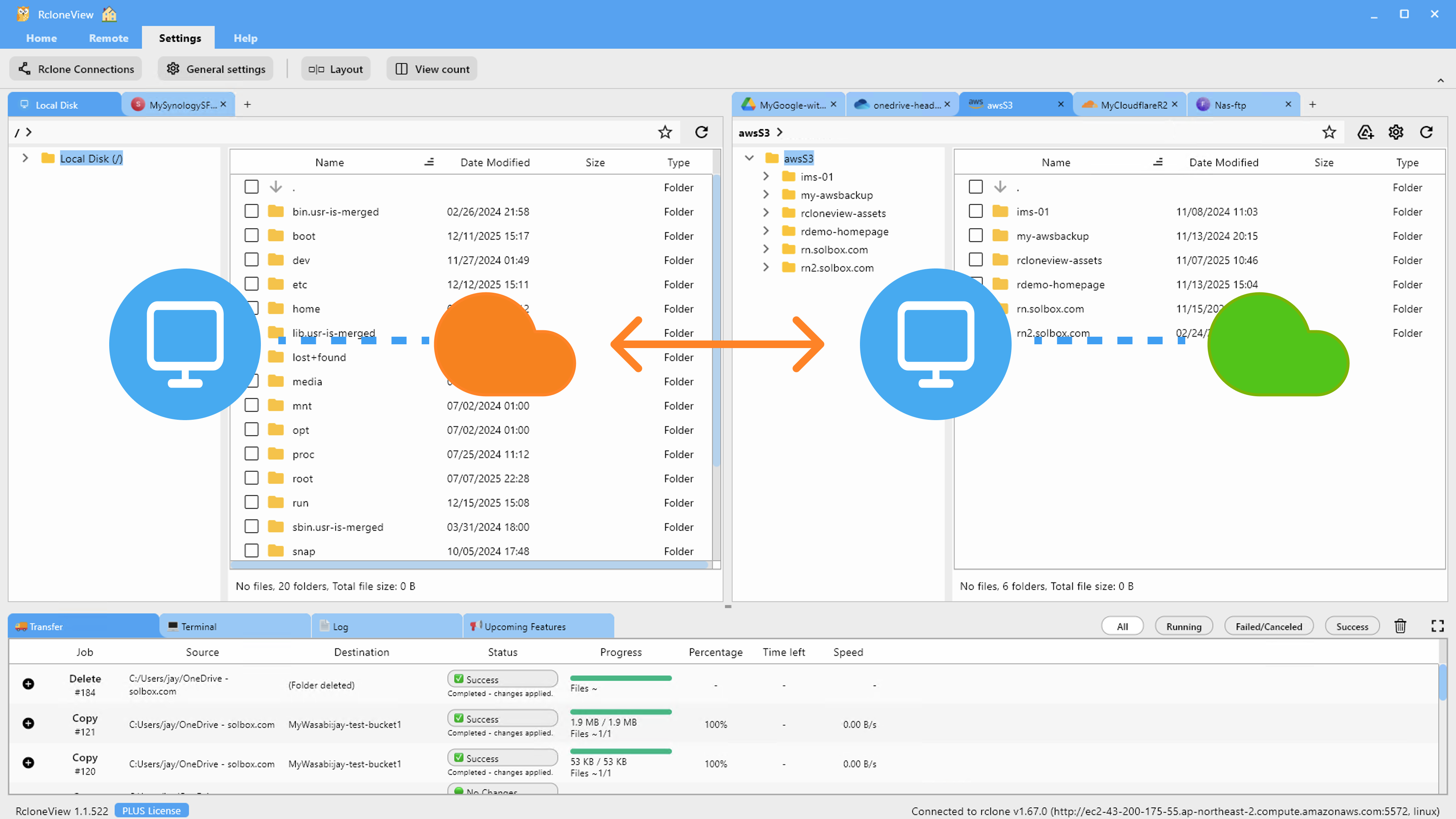
- Open your backup cloud in RcloneView.
- Navigate to the deleted files.
- Create a Copy job from backup → primary.
- Run the job to restore files.
Backup Checklist
- Use Copy, not Sync — Protect backups from deletion propagation.
- Back up to a different provider — Don't back up Google Drive to another Google Drive folder.
- Schedule daily — Minimize the gap between deletion and last backup.
- Verify regularly — Backups are useless if they're incomplete or corrupted.
- Enable versioning — On the backup storage for extra protection.
- Test restore — Practice restoring before you need to do it for real.
Getting Started
- Download RcloneView from rcloneview.com.
- Add your primary and backup clouds.
- Create a Copy job (not Sync) from primary to backup.
- Schedule daily backups.
- Verify periodically with Folder Comparison.
The best time to set up backups is before you need them.
Related Guides:
Supported Cloud Providers