Migrate from Hubic to Modern Cloud Storage Before It's Too Late with RcloneView
If you've been using Hubic (OVH's consumer cloud storage), you already know the bad news: Hubic is in maintenance mode and heading toward shutdown. OVH stopped accepting new accounts, features are frozen, and the service is on borrowed time. If you have years of files stored there, this is your wake-up call.
The good news? Migrating off Hubic is easier than you think. RcloneView makes moving your entire Hubic library to Google Drive, OneDrive, AWS S3, or any modern cloud provider a straightforward, one-time operation. More importantly, RcloneView verifies the transfer so you know nothing is lost.
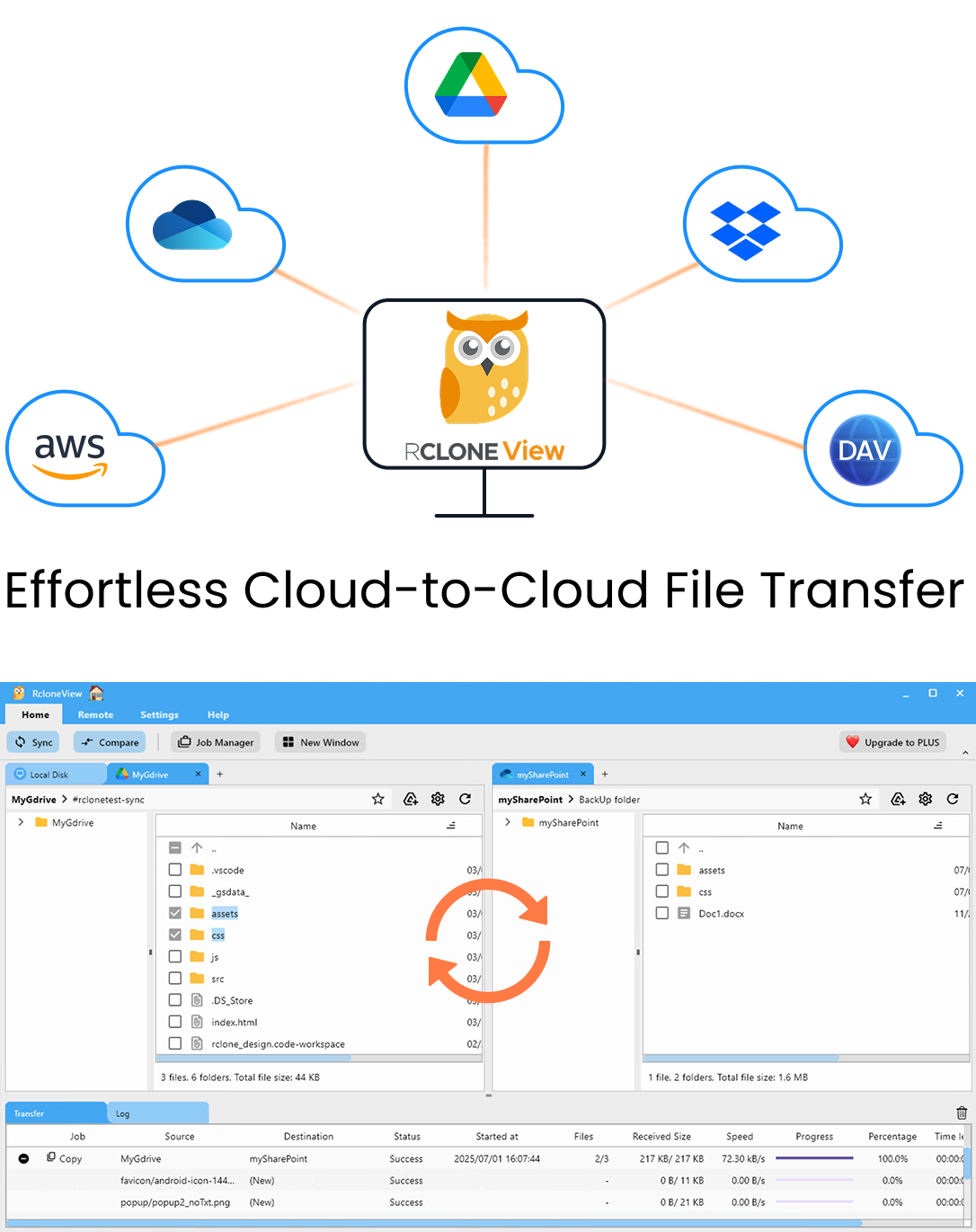
Manage & Sync All Clouds in One Place
RcloneView is a cross-platform GUI for rclone. Compare folders, transfer or sync files, and automate multi-cloud workflows with a clean, visual interface.
- One-click jobs: Copy · Sync · Compare
- Schedulers & history for reliable automation
- Works with Google Drive, OneDrive, Dropbox, S3, WebDAV, SFTP and more
Free core features. Plus automations available.
Why You Need to Migrate Now
Hubic was once solid—cheap, reliable, popular in Europe. But OVH's decision to wind down consumer cloud storage means:
- No new features: The app is frozen; bugs won't be fixed
- Uncertain timeline: OVH hasn't committed to a specific shutdown date, but it's coming
- Data loss risk: If Hubic shuts down abruptly, your files could be inaccessible or deleted
- Declining performance: Less investment = slower speeds, longer downtimes
- GDPR implications: If you process GDPR data in Hubic, you're in a legally uncertain position with a shuttering service
You can't afford to wait. If you have important files in Hubic, migrate them within the next few months—not years.
Connect Hubic to RcloneView
Open RcloneView and add a new remote:
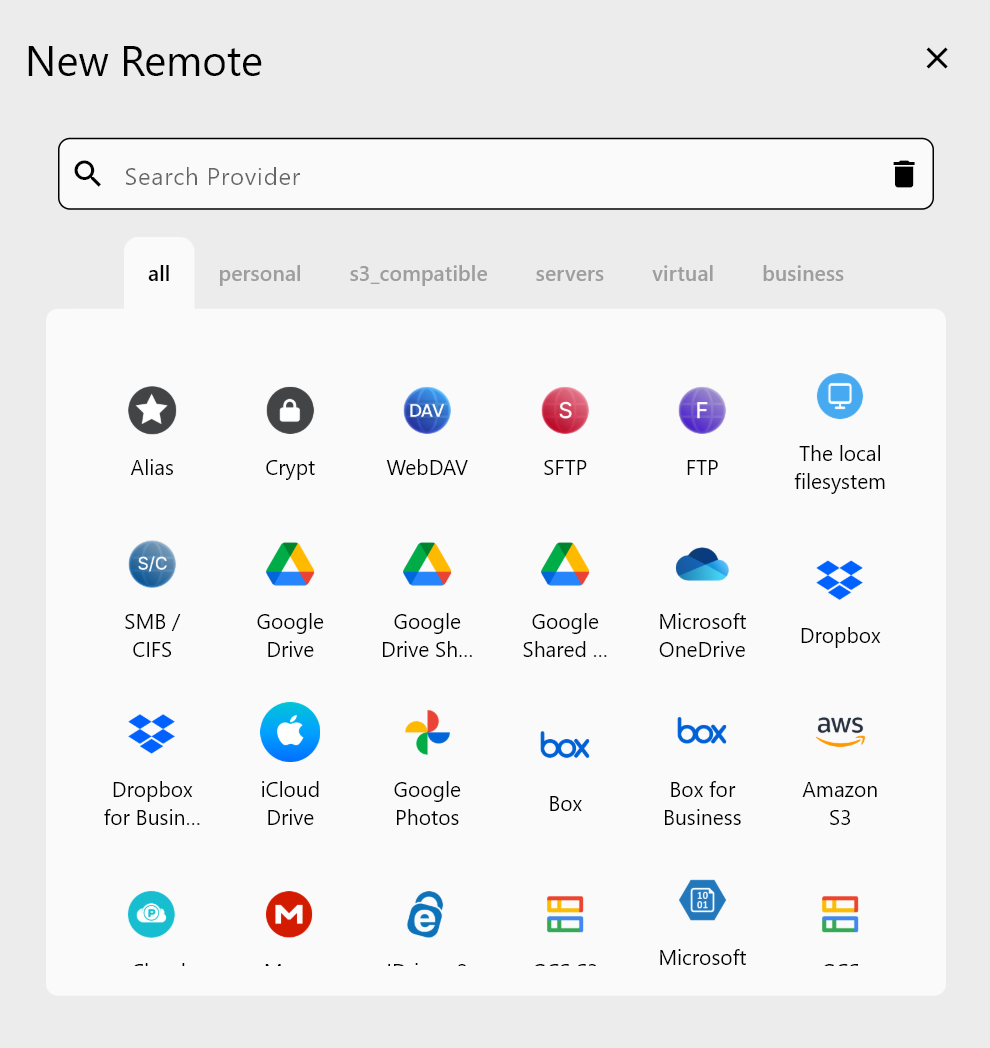
Select Hubic from the provider list. RcloneView will open a browser window where you authenticate with your Hubic account. This uses OAuth, so your Hubic password never touches RcloneView.
Once authenticated, your entire Hubic library appears in Remote Explorer:
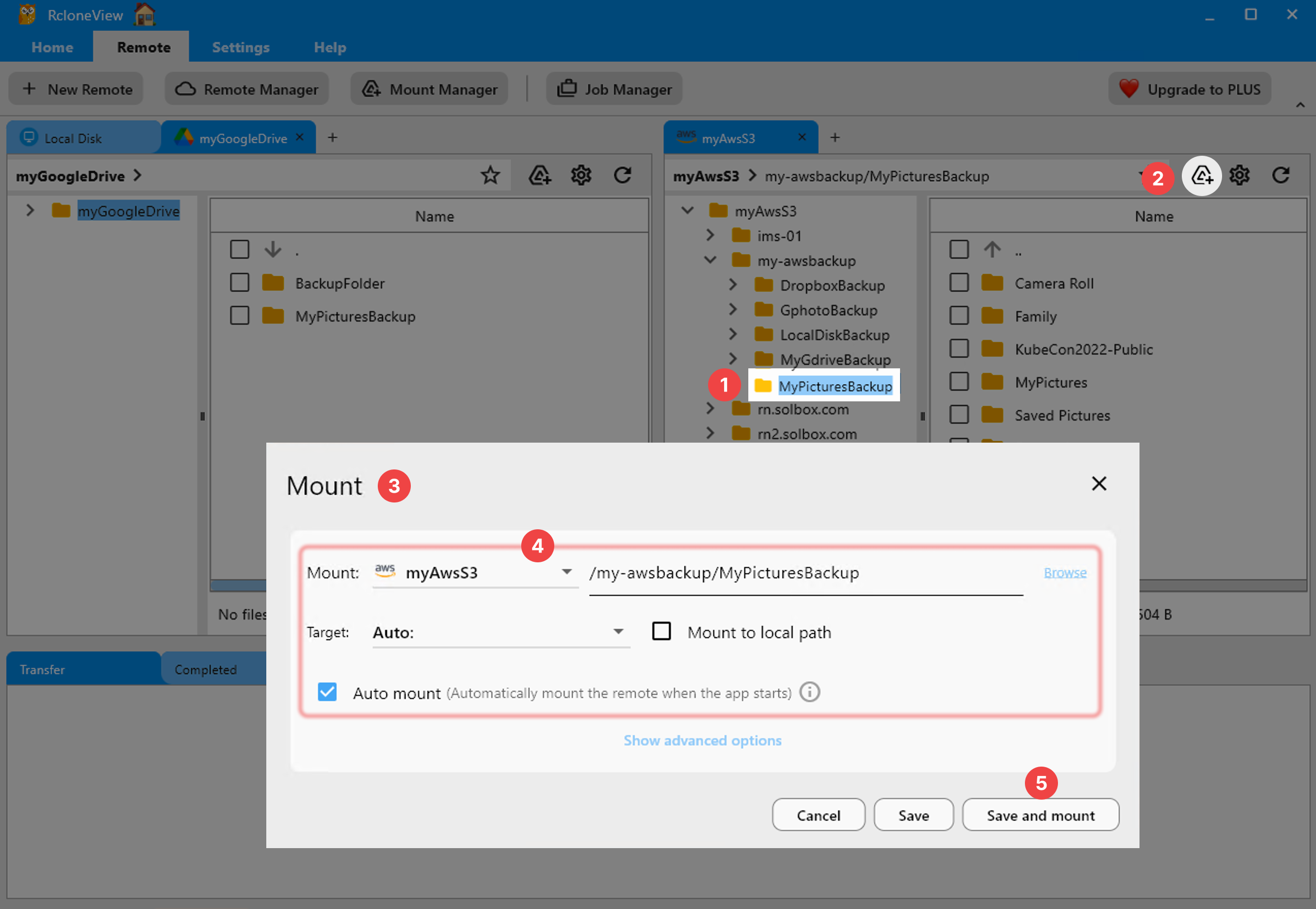
You can now browse your Hubic files in the RcloneView interface. This is also a chance to audit what's actually stored—you might be surprised how much is there.
Assess Your Data Before Migration
Before you start syncing, spend a few minutes browsing your Hubic files in RcloneView. Check:
- Total size: How much data are we moving? (matters for transfer time and destination)
- File types: Any corrupted or unusual files?
- Organization: Is your Hubic folder structure sensible, or should you reorganize during migration?
The Remote Explorer makes this visual and straightforward. If Hubic is a mess, now is the time to clean it up.
Choose Your Migration Destination
Where should your Hubic files go? Consider your needs:
- Google Drive: Best if you use Google Workspace, want search and sharing
- OneDrive: Good if you're Microsoft-focused, need Office integration
- AWS S3: Best for cost-sensitive long-term storage or data that needs durability guarantees
- Multiple destinations: Use RcloneView to sync Hubic to two clouds for redundancy
For this guide, we'll show migration to Google Drive, but RcloneView handles any target.
One-Way Migration: Hubic to Google Drive
Set up the migration with Hubic on the source side and Google Drive on the destination:
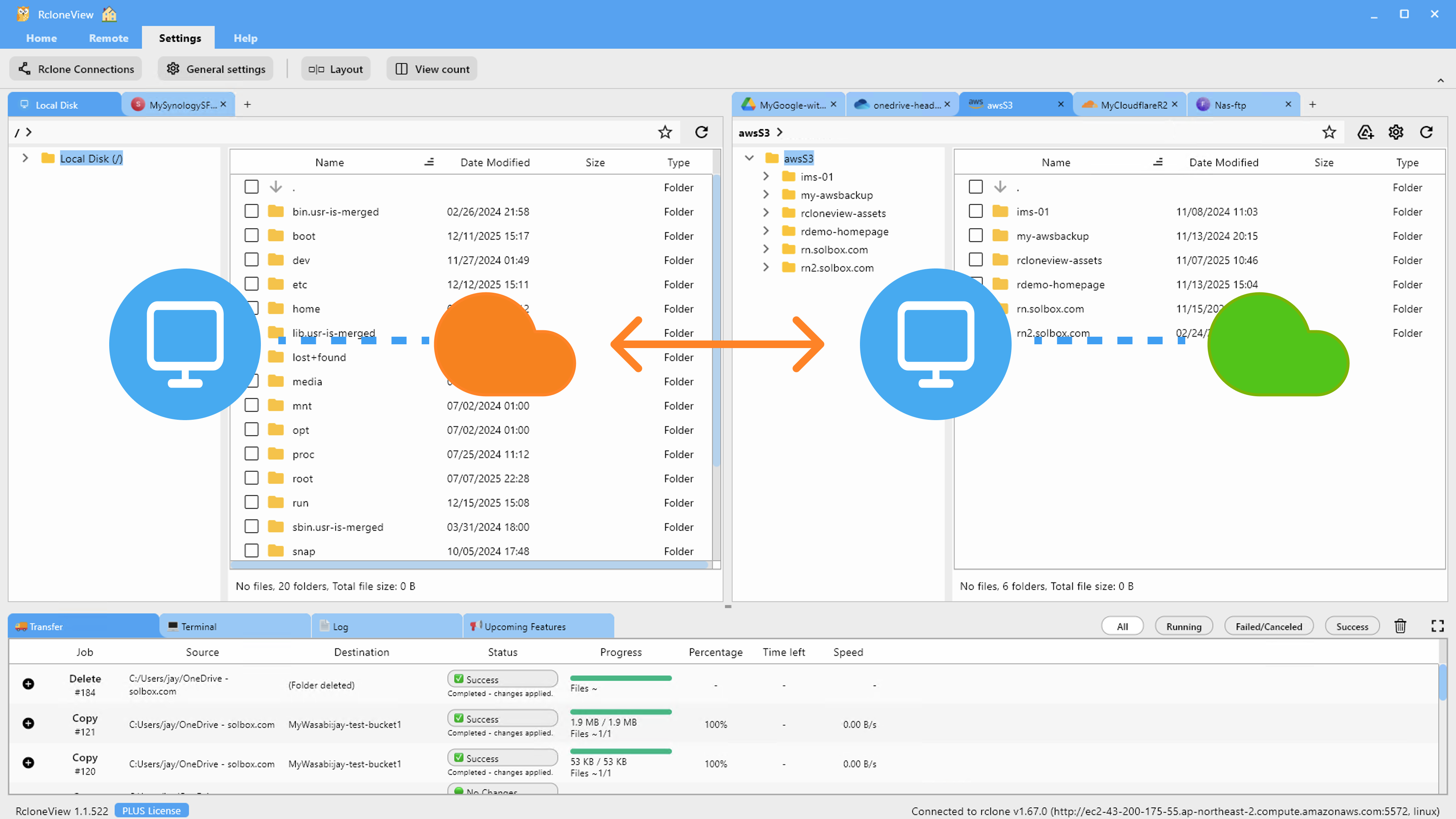
Configure the sync with these settings:
- Direction: One-way (Hubic → Google Drive)
- Overwrite: Set to "Skip existing" (if you've already migrated some files)
- Verify: Enabled (RcloneView will check checksums to ensure files didn't corrupt during transfer)
- Delete source: Disabled (we'll confirm before deleting from Hubic)
Start the sync and let it run. Depending on your data volume, this could take hours or days. RcloneView handles it efficiently:
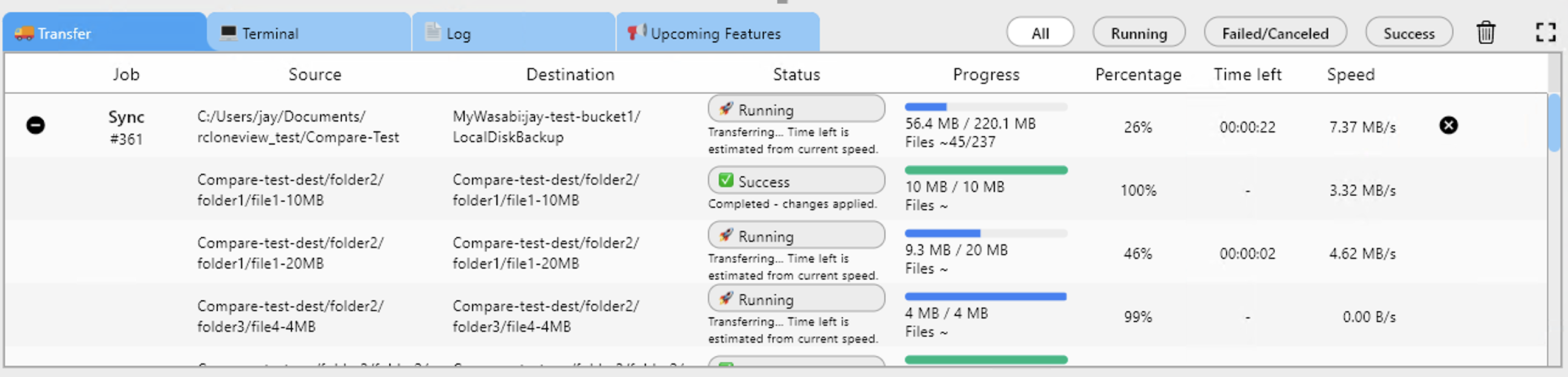
Monitor progress in real-time. You'll see:
- Files transferred / total files
- Data transferred / total data
- Transfer speed
- Estimated time remaining
- Any errors (rare, but RcloneView logs them)
Verify the Migration with Checksums
After the transfer completes, you need verification. RcloneView automatically checked checksums during transfer, but let's do a final comparison:
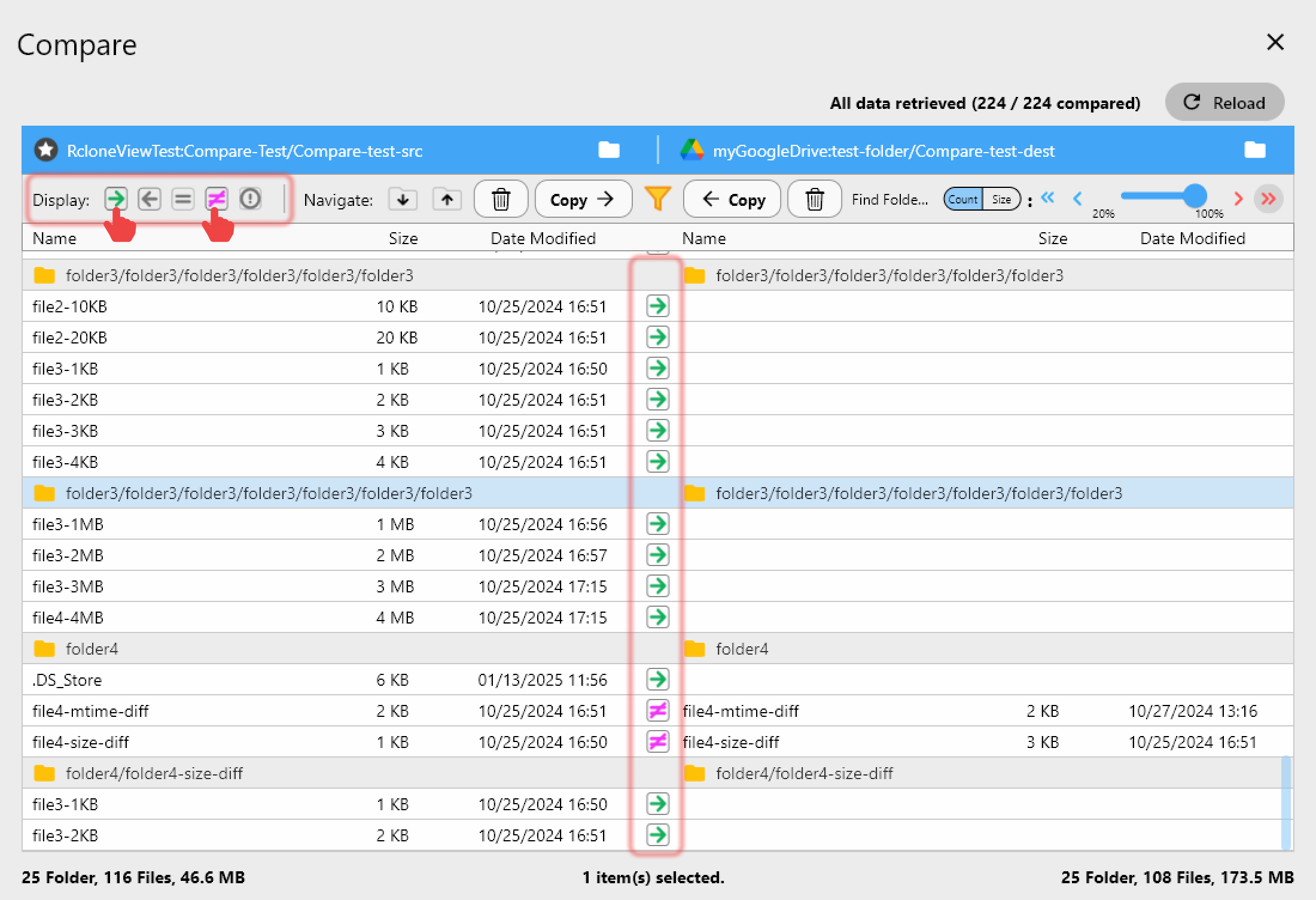
Open RcloneView's compare feature with Hubic on the left and Google Drive on the right. This shows:
- Files in Hubic but NOT in Google Drive: Migration incomplete; re-run sync
- Files in both: Successfully migrated
- Files in Google Drive but NOT in Hubic: Extra files you created after starting the migration
If the compare shows all Hubic files now exist in Google Drive with matching sizes and checksums, you're safe to delete from Hubic.
Review Transfer History and Logs
Before you do anything permanent, check the job history:
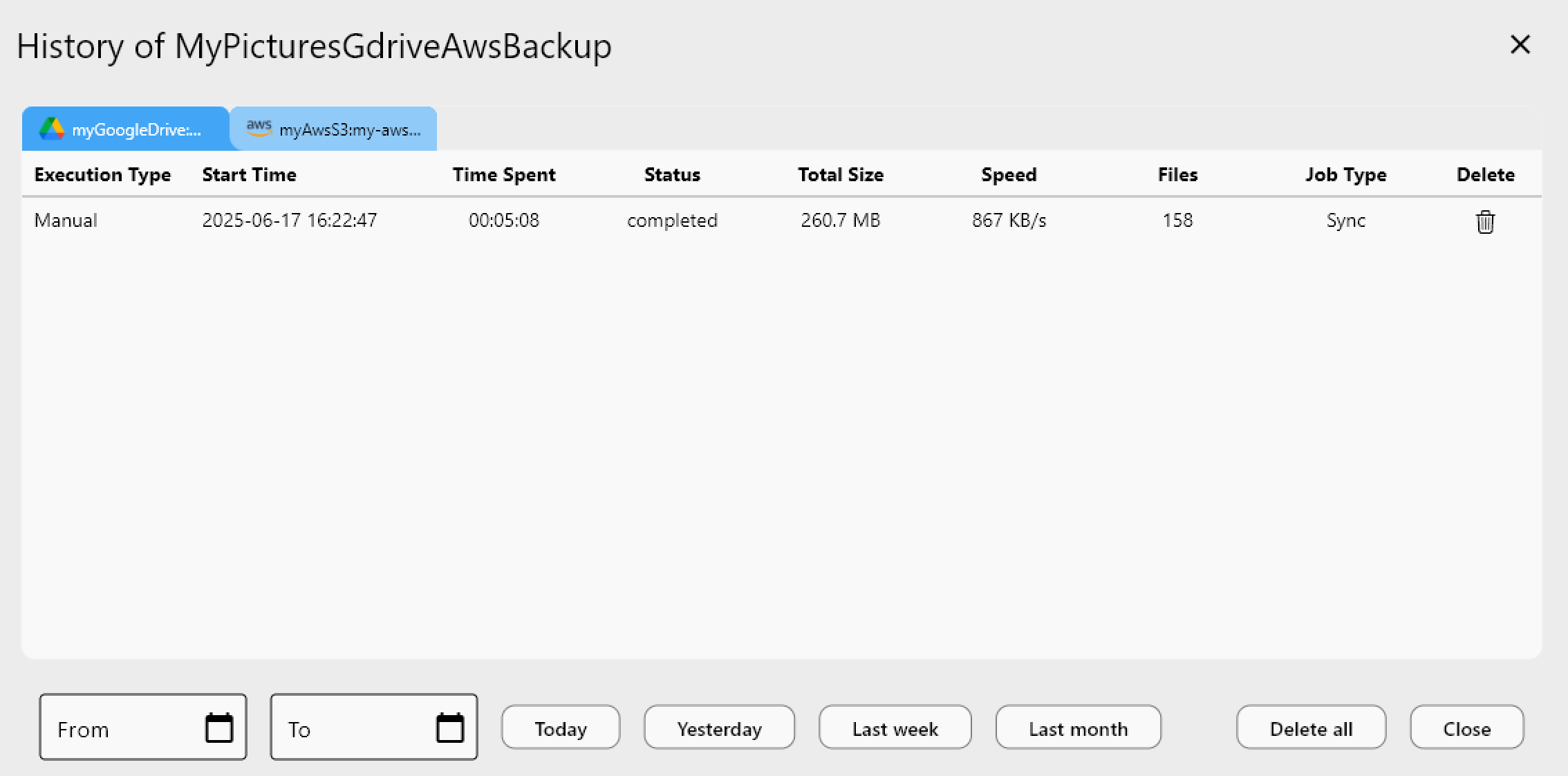
This shows:
- Exact migration date and time
- Number of files transferred
- Total data moved
- Any errors or warnings
- File-level details if you need to investigate
This creates a permanent audit trail proving your migration was successful. Valuable if anyone (boss, client, auditor) later asks whether you properly preserved data.
Optional: Clean Up Old Hubic Files
Once you've verified that all your files are safe in Google Drive, you can delete from Hubic to free up space (or just stop paying if it's a paid account). RcloneView can help with this:
Mount Hubic as a local drive and delete files through your file explorer, or use RcloneView's delete function after the comparison confirms everything is copied.
Important: Don't delete from Hubic until you've:
- Completed the migration
- Verified with checksums
- Confirmed the migration in your destination cloud
- Waited at least a week (to catch any issues)
Advanced: Multi-Cloud Migration for Redundancy
If Hubic contained critical data, consider migrating to multiple clouds for redundancy:
- Primary: Hubic → Google Drive (searchable, shareable, collaborative)
- Backup: Hubic → AWS S3 (cheap long-term storage)
- Offsite: Hubic → OneDrive (another commercial cloud)
RcloneView can set this up with multiple sync jobs:
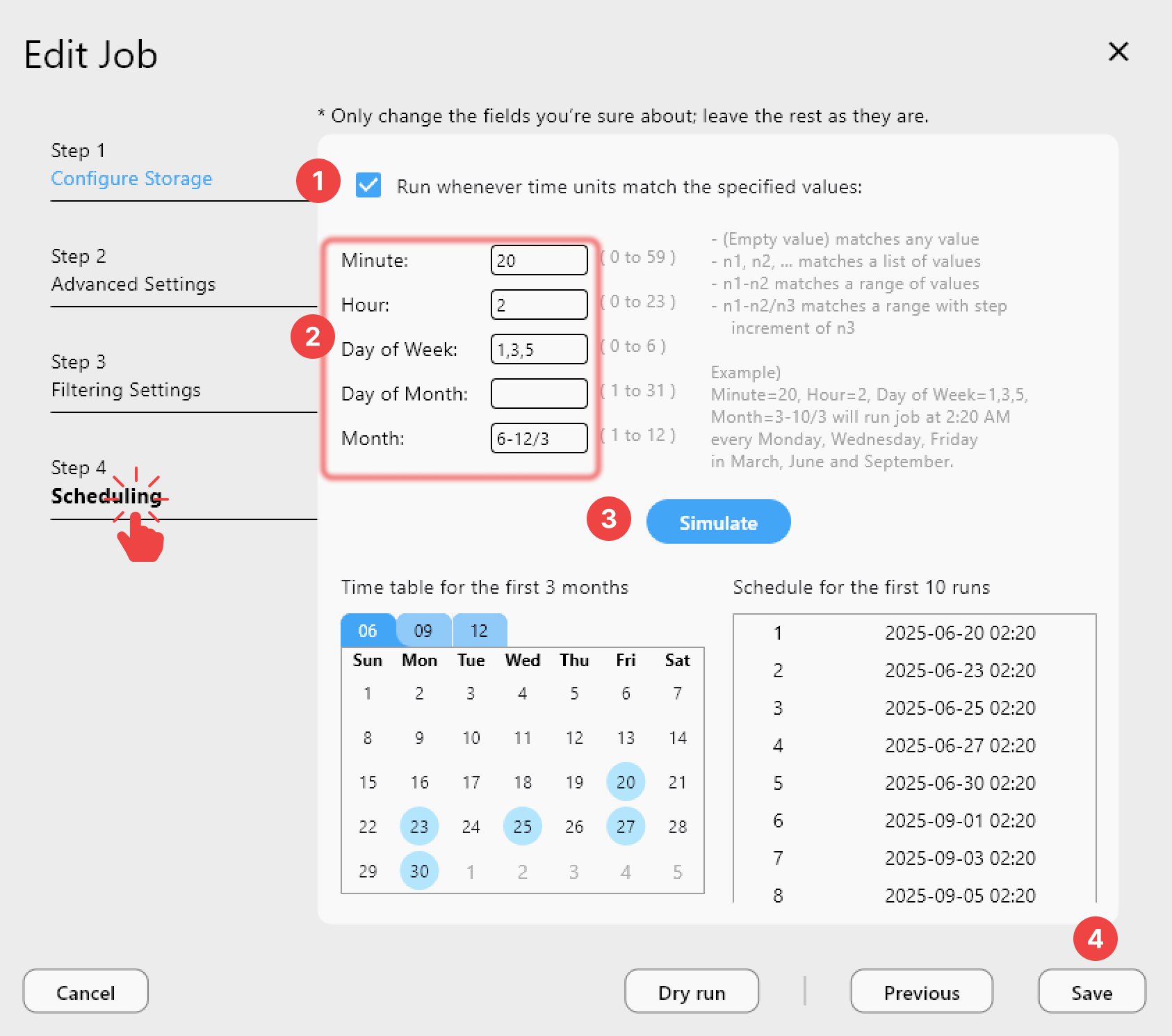
- Job 1: Sync Hubic → Google Drive (run once, manually)
- Job 2: Sync Hubic → S3 (run after Job 1 completes)
Or create two separate manual syncs and run them sequentially. The benefit: if Google Drive ever has an issue, you have S3 and OneDrive as backups.
Mount Hubic (Optional, for Last-Minute Verification)
If you're paranoid (and with data loss at stake, that's smart), you can mount Hubic as a virtual drive:
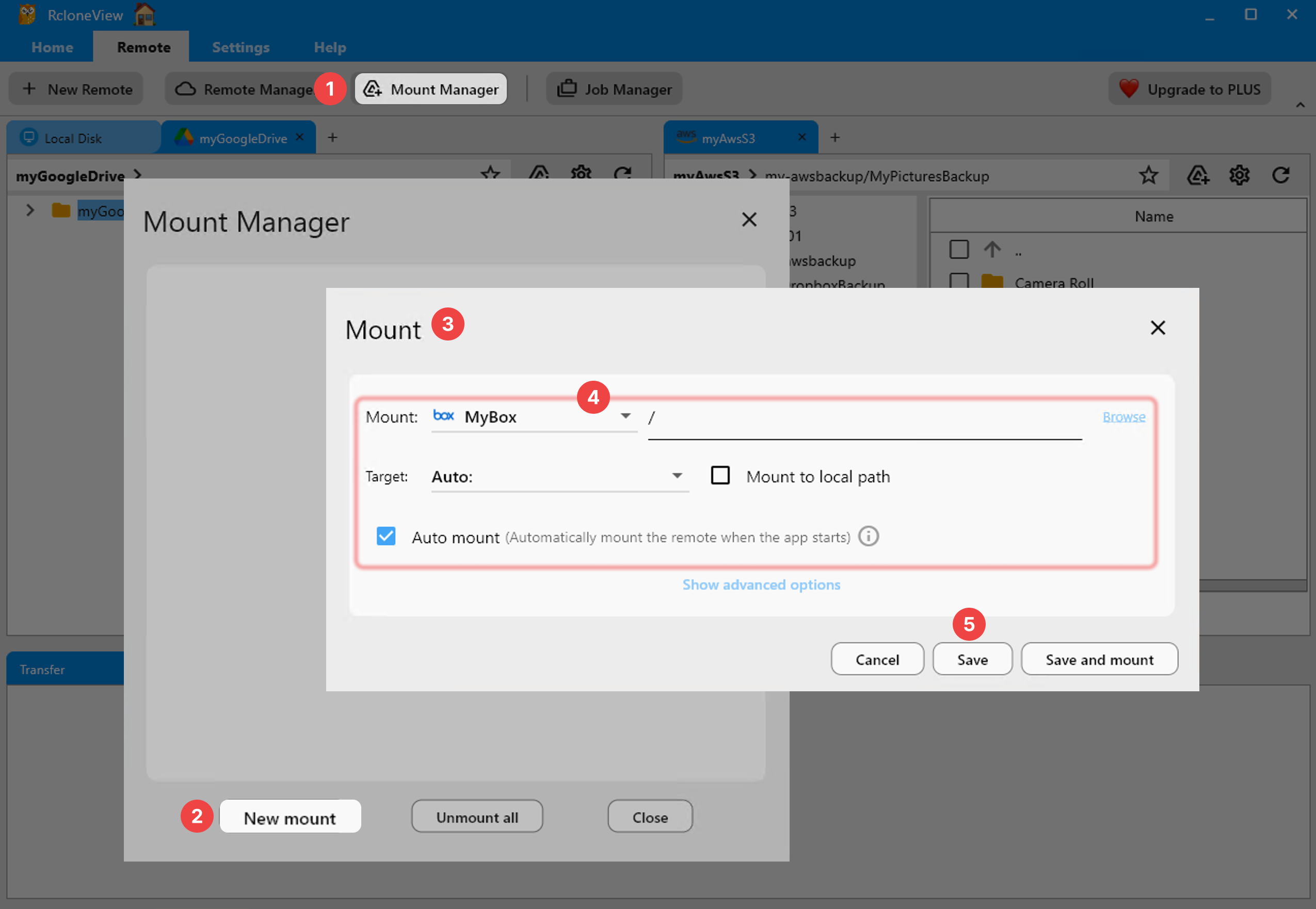
After mounting, browse your Hubic files through your native file explorer. This gives you one more visual confirmation that files are there and weren't corrupted. Then proceed with the migration knowing you've triple-checked.
Timeline and Urgency
Right now: Download RcloneView, connect Hubic, browse your files, and get a sense of what you're working with.
This week: Complete a test migration of 1-2 folders to Google Drive or another destination. Verify that the files arrive correctly.
Next 1-2 weeks: Migrate your entire Hubic library. Verify with checksums and comparisons.
After migration: Keep Hubic around for a grace period (1-2 months) in case you discover something was missed. Then delete your Hubic account.
Don't put this off. Cloud service shutdowns are unpredictable, and you don't want to be scrambling to move 500GB of files at the last minute.
Why RcloneView Is Perfect for This Migration
- Supported: RcloneView has native support for Hubic (directly, not through workarounds)
- Verified: Checksums guarantee nothing is lost or corrupted during transfer
- Flexible: Migrate to Google Drive, OneDrive, S3, or any other cloud—all from one app
- Auditable: Complete job history and logs prove the migration happened
- Safe: One-way transfer means you can verify before deleting from Hubic
- Fast: Cloud-to-cloud transfer is much faster than download-then-upload
Getting Started
- Download RcloneView (free trial available)
- Connect your Hubic account (takes 2 minutes)
- Connect your destination cloud (Google Drive, OneDrive, S3, etc.)
- Run a sync to migrate your files
- Verify with checksums and comparison
- Once confirmed, you can safely delete from Hubic
Hubic's shutdown doesn't have to mean data loss. By acting now with RcloneView, you'll have your files safely stored in a modern, stable cloud service—with a complete audit trail and zero risk. Don't wait for OVH's shutdown announcement. Migrate this week.
Related Guides
- RcloneView Documentation Introduction
- Creating and Organizing Documentation
- Publishing a New Page
- Using Markdown Features
Supported Cloud Providers