Migrate Your FTP Server to Cloud Storage Without Downtime Using RcloneView
FTP has served us well for decades, but it's time to move on. Whether you're migrating to S3, Google Drive, or OneDrive, RcloneView makes the transition painless — and keeps both systems in sync until you're ready to cut over.
FTP servers are everywhere — decades of business data, client deliverables, and shared files sitting on aging hardware. Moving all of that to modern cloud storage sounds daunting: how do you migrate terabytes without disrupting active users? RcloneView connects directly to FTP servers and lets you browse, compare, sync, and schedule transfers to any cloud provider — all through a visual interface.
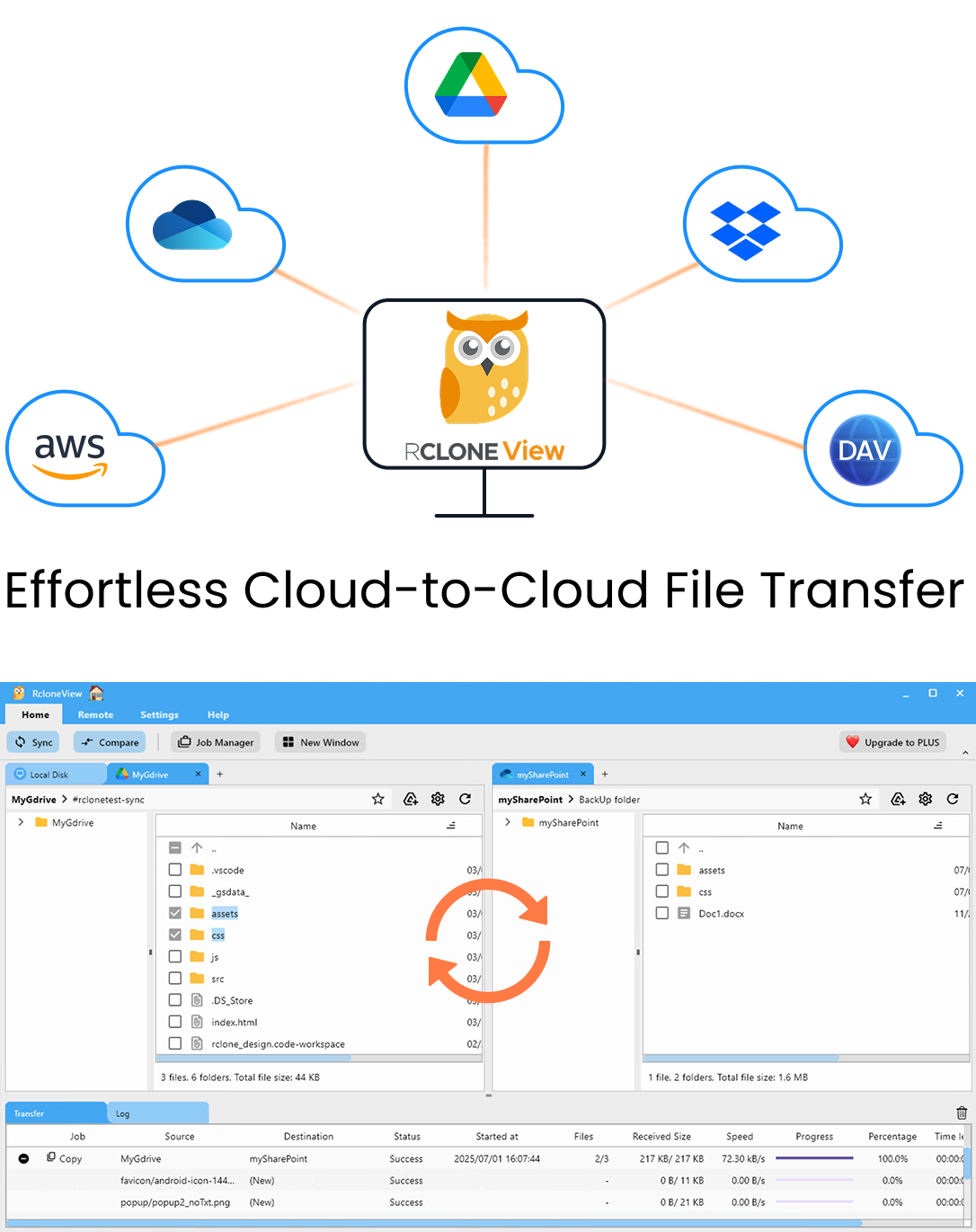
Manage & Sync All Clouds in One Place
RcloneView is a cross-platform GUI for rclone. Compare folders, transfer or sync files, and automate multi-cloud workflows with a clean, visual interface.
- One-click jobs: Copy · Sync · Compare
- Schedulers & history for reliable automation
- Works with Google Drive, OneDrive, Dropbox, S3, WebDAV, SFTP and more
Free core features. Plus automations available.
Why Migrate from FTP to Cloud?
FTP served its purpose, but cloud storage solves problems FTP never could:
- No more hardware maintenance — Cloud providers handle servers, disks, and redundancy.
- Access from anywhere — No VPN or port forwarding needed.
- Built-in versioning and recovery — S3, Google Drive, and OneDrive all offer file versioning.
- Scalability — No more running out of disk space.
- Security — Modern clouds offer encryption at rest, fine-grained access control, and audit logs.
Connecting Your FTP Server
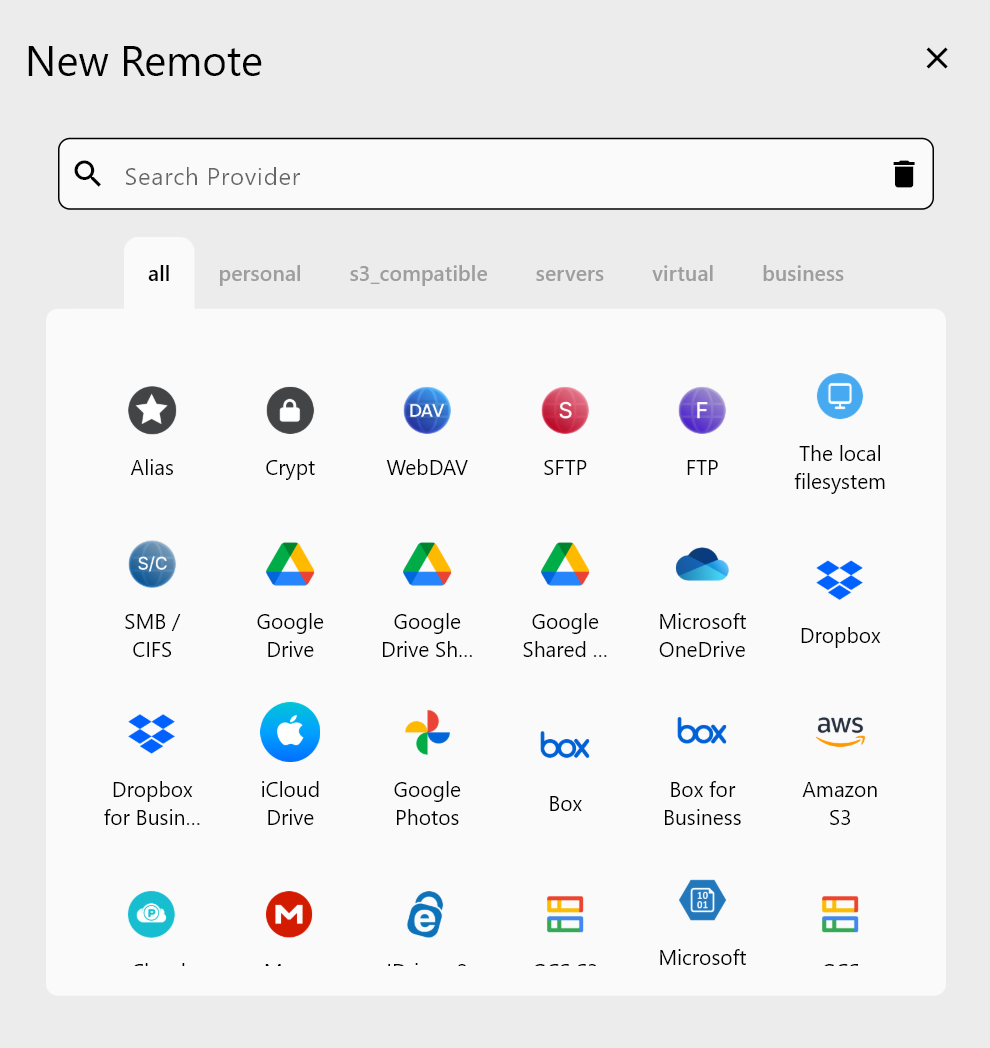
- Open RcloneView and click Add Remote.
- Select FTP from the provider list.
- Enter your FTP server details:
- Host: Your FTP server address (e.g.,
ftp.yourcompany.com). - Port: Usually 21 (or 990 for FTPS).
- Username and Password: Your FTP credentials.
- TLS/SSL: Enable if your server supports FTPS.
- Host: Your FTP server address (e.g.,
- Save — your FTP directory structure is now browsable.
Phase 1: Assess and Browse
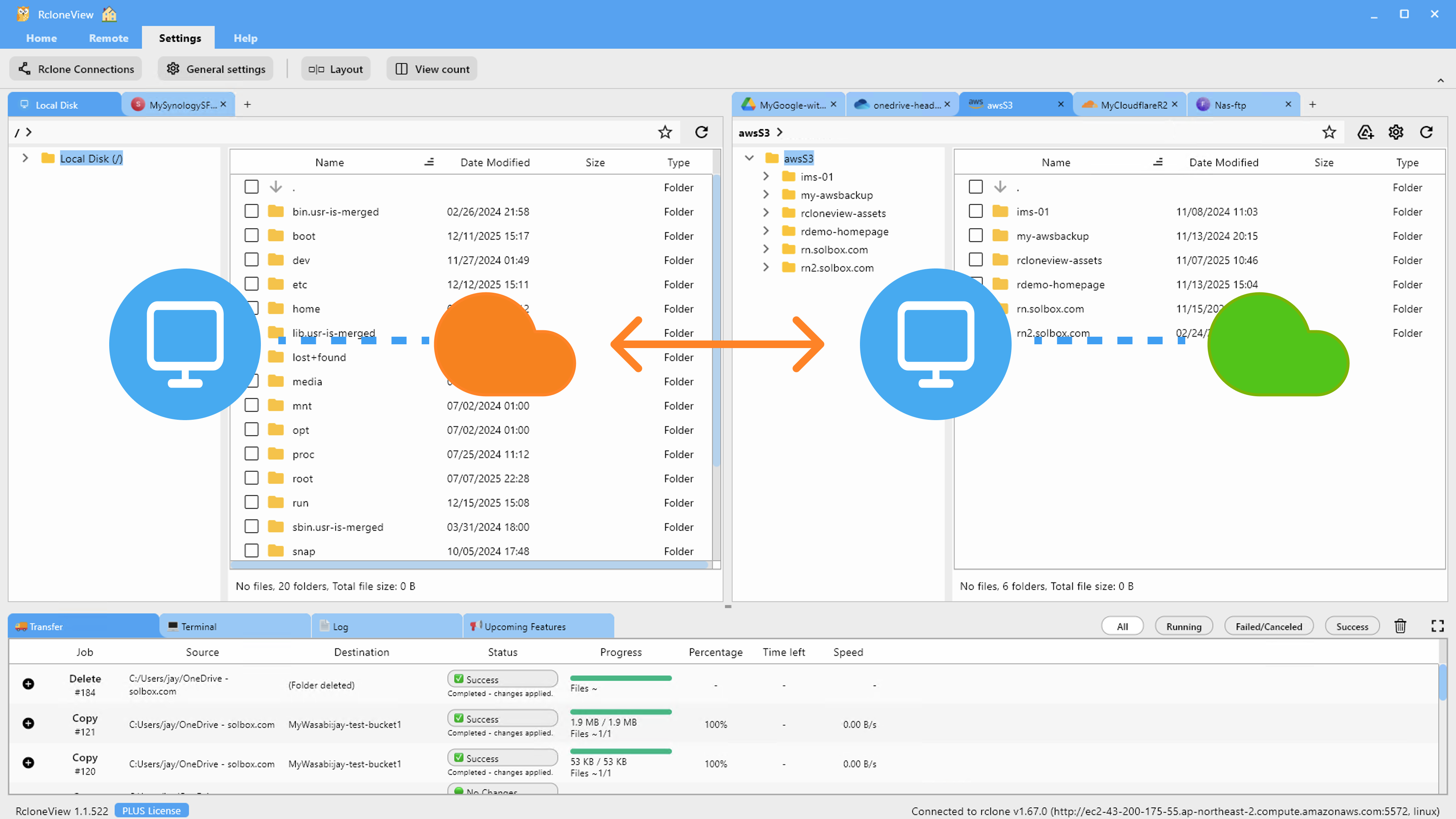
Before migrating anything, explore your FTP server in the two-pane Explorer:
- Browse the complete folder hierarchy.
- Check file counts and total sizes.
- Identify which folders need migration and which can be archived or deleted.
Phase 2: Initial Copy
Run a full copy from FTP to your chosen cloud destination:
- Create a Copy job: FTP remote → S3 bucket / Google Drive folder / OneDrive folder.
- Configure transfers: Start with 4 parallel transfers (FTP servers often can't handle more).
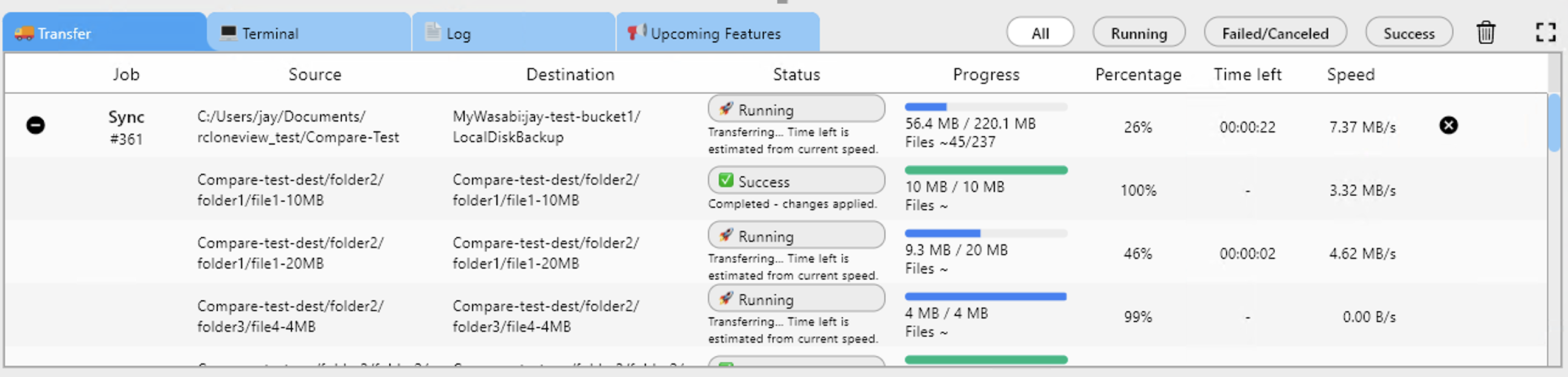
- Run the job and monitor progress.
This initial copy may take hours or days depending on data volume. RcloneView tracks progress in real time and handles retries automatically.
Phase 3: Verify with Folder Comparison
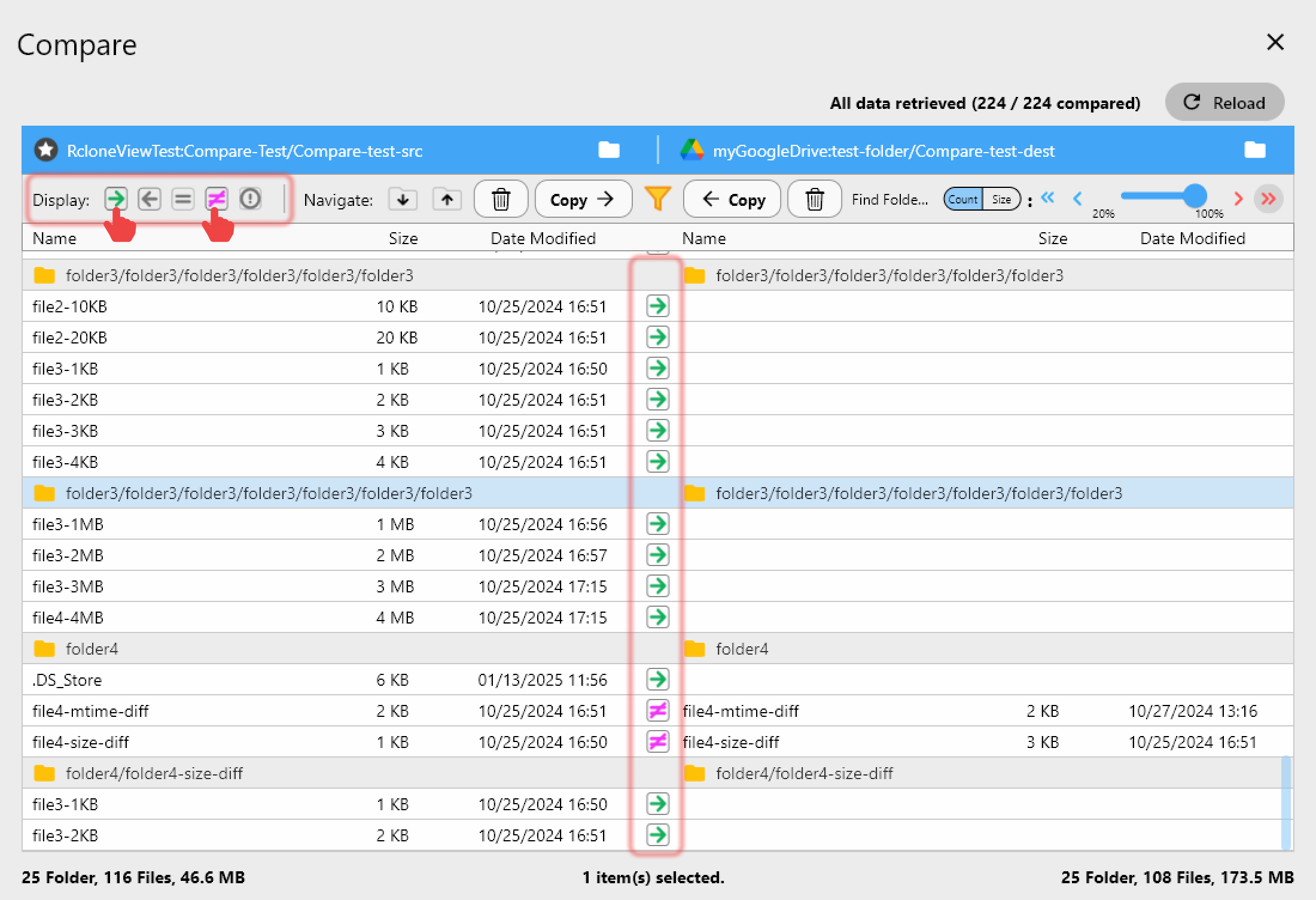
After the initial copy, verify that everything made it:
- Open Folder Comparison.
- Compare FTP source with cloud destination.
- Review any differences — files only on FTP that didn't transfer.
- Copy missing files to close the gap.
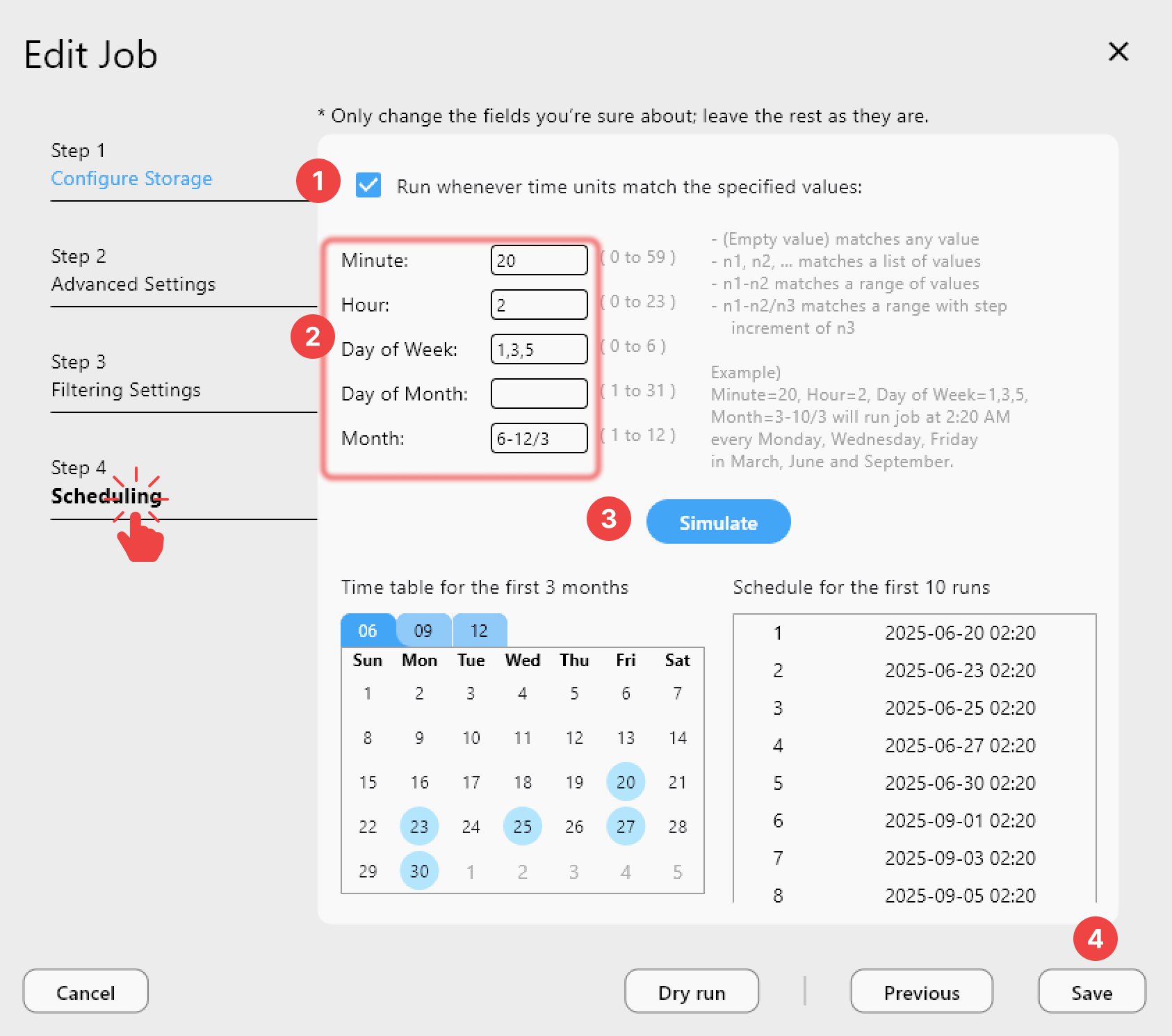
Phase 4: Ongoing Sync During Transition
Users may still be adding files to the FTP server during migration. Keep both systems in sync:
- Create a Sync job from FTP → cloud.
- Schedule it hourly or daily with Job Scheduling.
- New files added to FTP are automatically copied to the cloud.
- Continue until all users have switched to the new cloud storage.
Phase 5: Cutover
Once you're confident the cloud copy is complete and all users have migrated:
- Run a final Sync to catch any last changes.
- Do a final Folder Comparison to verify 100% match.
- Decommission the FTP server (but keep it read-only for a grace period).
- Update documentation and access credentials.
Migration Destinations
FTP → AWS S3
Best for: Technical teams, large datasets, cost-effective long-term storage. Use S3 Standard for active data, S3 Glacier for archives.
FTP → Google Drive
Best for: Teams already using Google Workspace. Files become searchable, shareable, and accessible from any device.
FTP → OneDrive / SharePoint
Best for: Microsoft 365 organizations. Integrates with Teams, Office apps, and SharePoint sites.
FTP → NAS + Cloud (Hybrid)
Migrate to a local NAS first (fast LAN transfer), then sync the NAS to cloud. This gives you a local copy for fast access and a cloud copy for offsite protection.
Performance Considerations
FTP is inherently slower than modern protocols:
| Factor | Recommendation |
|---|---|
| Parallel transfers | 4–8 (don't overwhelm the FTP server) |
| Connection limit | Check your FTP server's max connections |
| Large files | FTP handles these fine — no special tuning |
| Many small files | Slower due to per-file connection overhead |
| Retry on failure | Enable — FTP connections drop more often than cloud APIs |
Getting Started
- Download RcloneView from rcloneview.com.
- Add your FTP server as a remote.
- Add your cloud destination (S3, Google Drive, OneDrive).
- Browse and compare to understand the migration scope.
- Copy, verify, schedule — and let RcloneView handle the transition.
FTP migration doesn't have to be a weekend-long, all-hands emergency. RcloneView makes it a controlled, verifiable, and repeatable process.
Related Guides:
- Add AWS S3 and S3-Compatible
- Add Remote via Browse-based Log-in (OAuth)
- Compare Folder Contents
- Create Sync Jobs
- Job Scheduling
- Real-time Transfer Monitoring
Supported Cloud Providers