RcloneView vs Rclone CLI: When Do You Need a GUI for Cloud Storage Management?
Rclone is one of the most powerful cloud storage tools ever built. It's also one of the most complex. RcloneView keeps all that power and wraps it in a visual interface. But is the GUI right for you?
Rclone supports 70+ cloud providers, handles encryption, mounting, syncing, and more. Its command-line interface is incredibly flexible — if you know the commands. RcloneView is a desktop application built on top of rclone that provides a graphical interface for the same operations. Here's how they compare and when you'd choose one over the other.
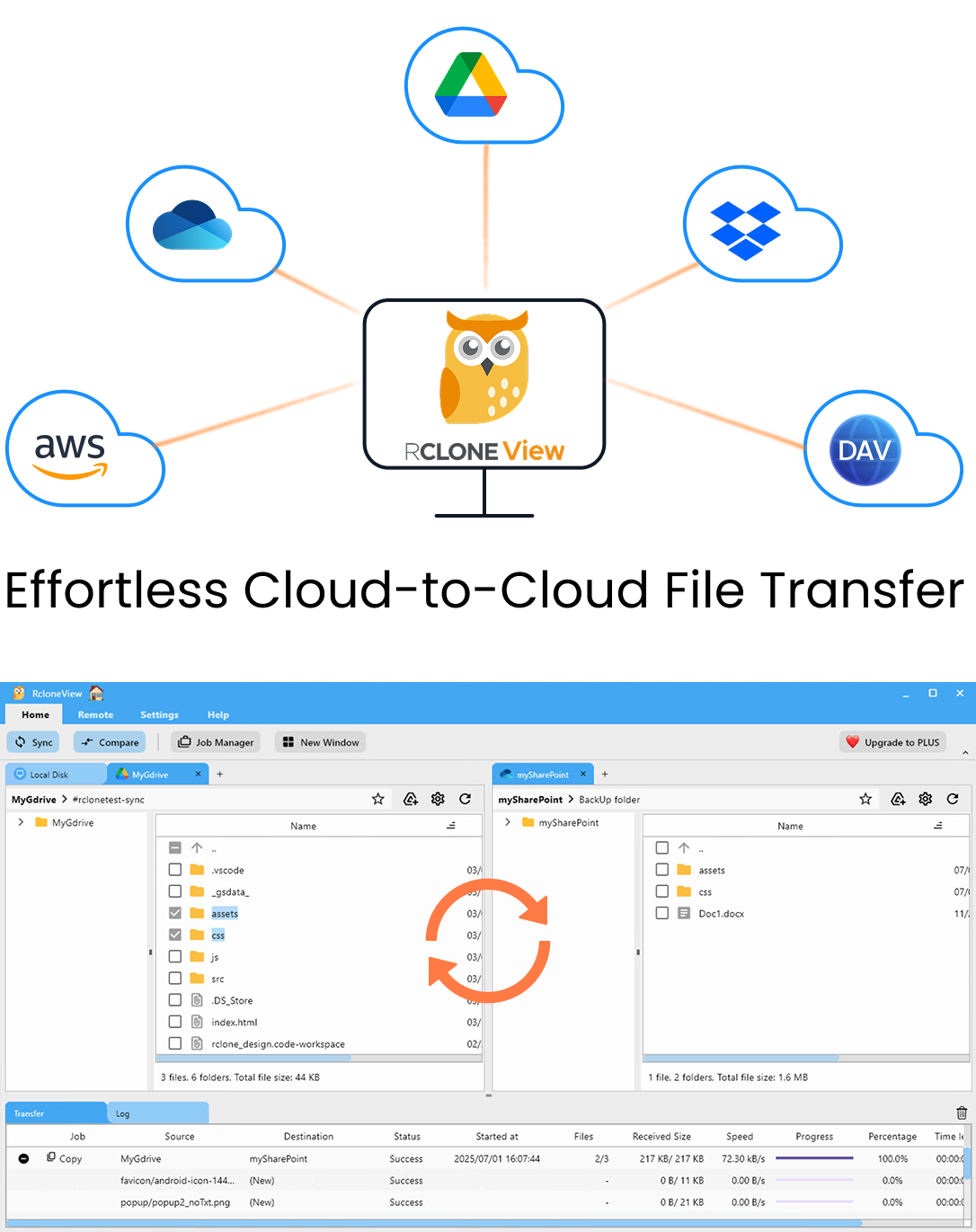
Manage & Sync All Clouds in One Place
RcloneView is a cross-platform GUI for rclone. Compare folders, transfer or sync files, and automate multi-cloud workflows with a clean, visual interface.
- One-click jobs: Copy · Sync · Compare
- Schedulers & history for reliable automation
- Works with Google Drive, OneDrive, Dropbox, S3, WebDAV, SFTP and more
Free core features. Plus automations available.
The Core Difference
Rclone CLI: You type commands. Full control, full complexity.
rclone sync remote:source remote:dest --transfers=8 --checkers=16 --filter-from=filters.txt --log-file=sync.log --stats=1s
RcloneView: You click, drag, and configure. Same rclone underneath, visual on top.
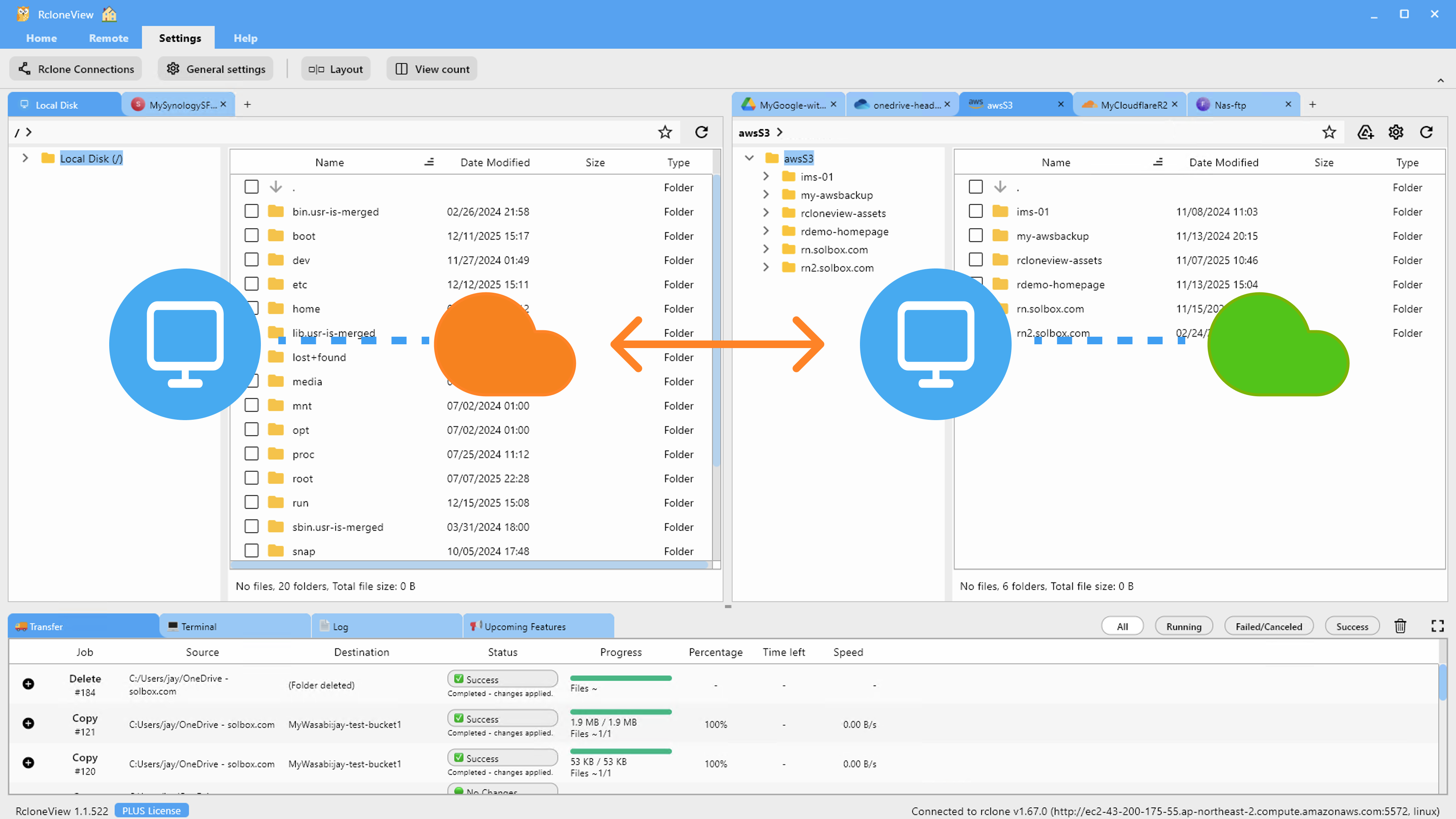
Both use the same rclone engine. The difference is the interface.
Feature Comparison
File Browsing
| Feature | Rclone CLI | RcloneView |
|---|---|---|
| List files | rclone ls remote:path | Two-pane visual explorer |
| Navigate folders | rclone lsd remote:path | Click and browse |
| File preview | Not available | Visual file listing |
| Drag and drop | Not applicable | ✅ |
The CLI gives you raw file listings. RcloneView gives you a file manager experience.
Sync and Transfer
| Feature | Rclone CLI | RcloneView |
|---|---|---|
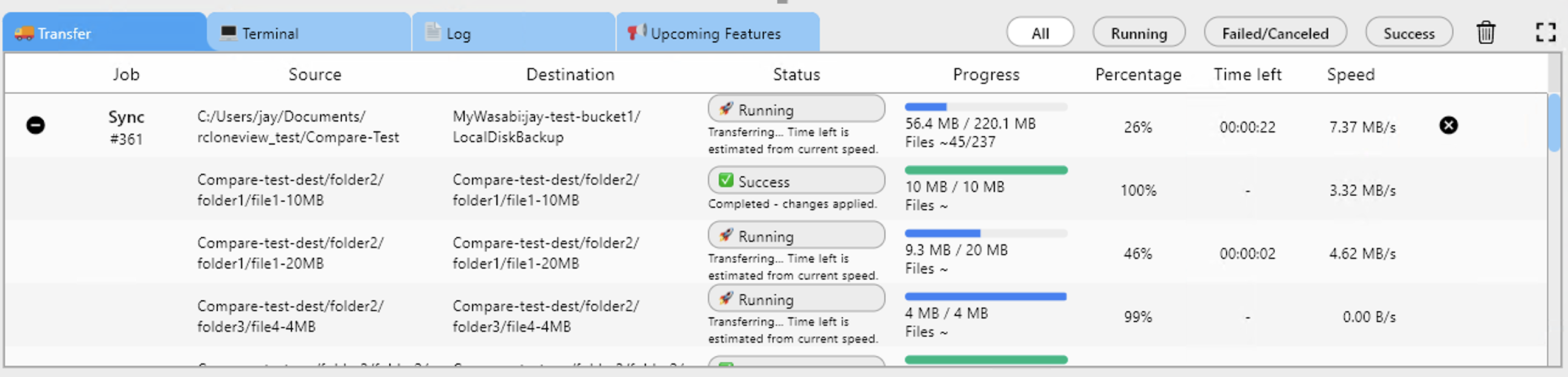
| Create sync job | Write command + flags | Visual job builder |
| Run transfer | rclone sync/copy | Click "Run" |
| Monitor progress | --stats flag in terminal | Visual progress bar |
| Dry run | --dry-run flag | Dry run toggle |
| Filter rules | --filter-from file | Configure in job settings |
Job Management
| Feature | Rclone CLI | RcloneView |
|---|---|---|
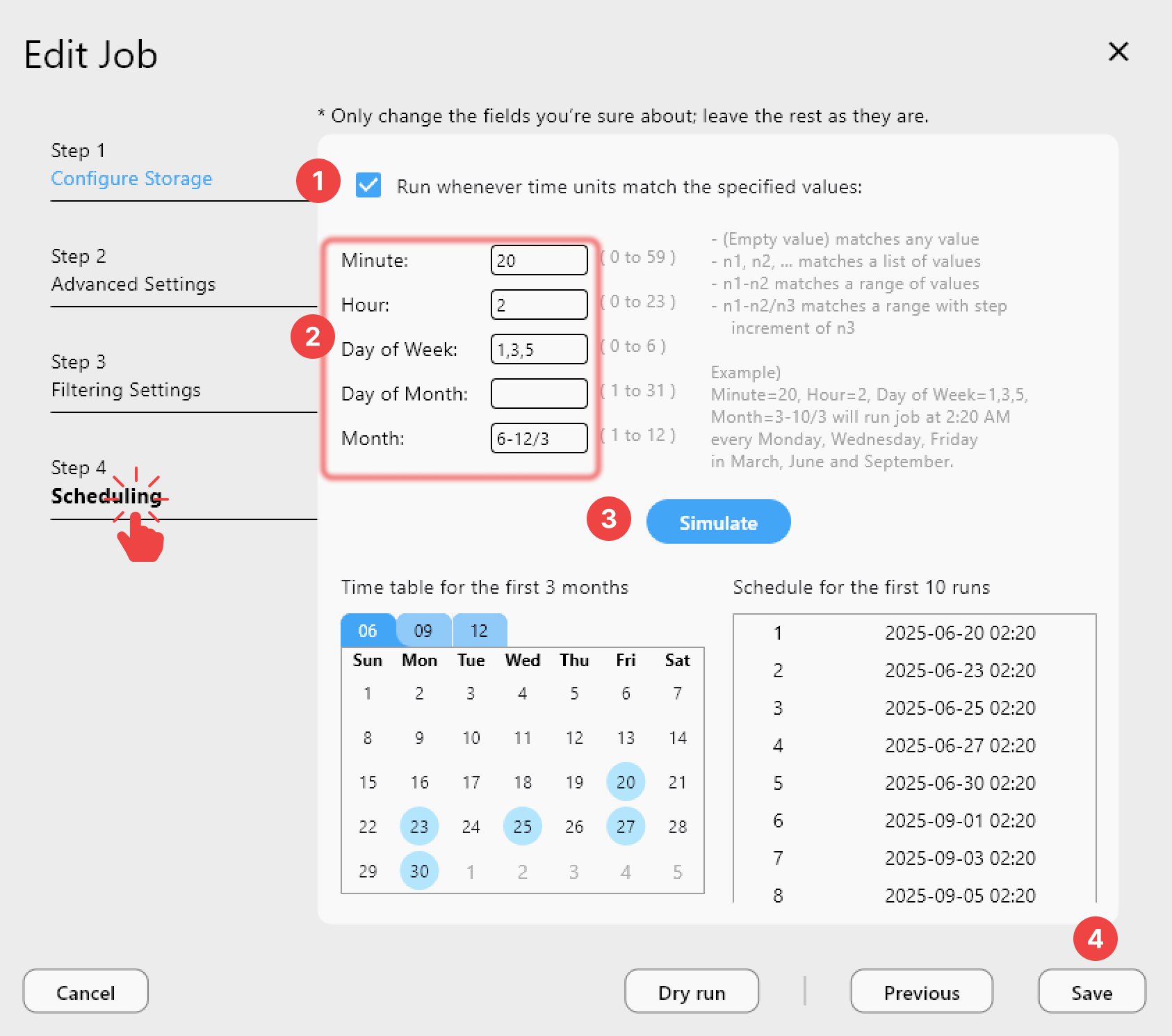
| Save jobs | Write scripts or aliases | Named jobs with settings |
| Schedule | cron / Task Scheduler | Built-in scheduler |
| Batch operations | Shell scripts | Batch Jobs (v1.3) |
| Job history | Log files | Visual history |
| Retry failed | Script it yourself | One-click retry (v1.3) |
Folder Comparison
| Feature | Rclone CLI | RcloneView |
|---|---|---|
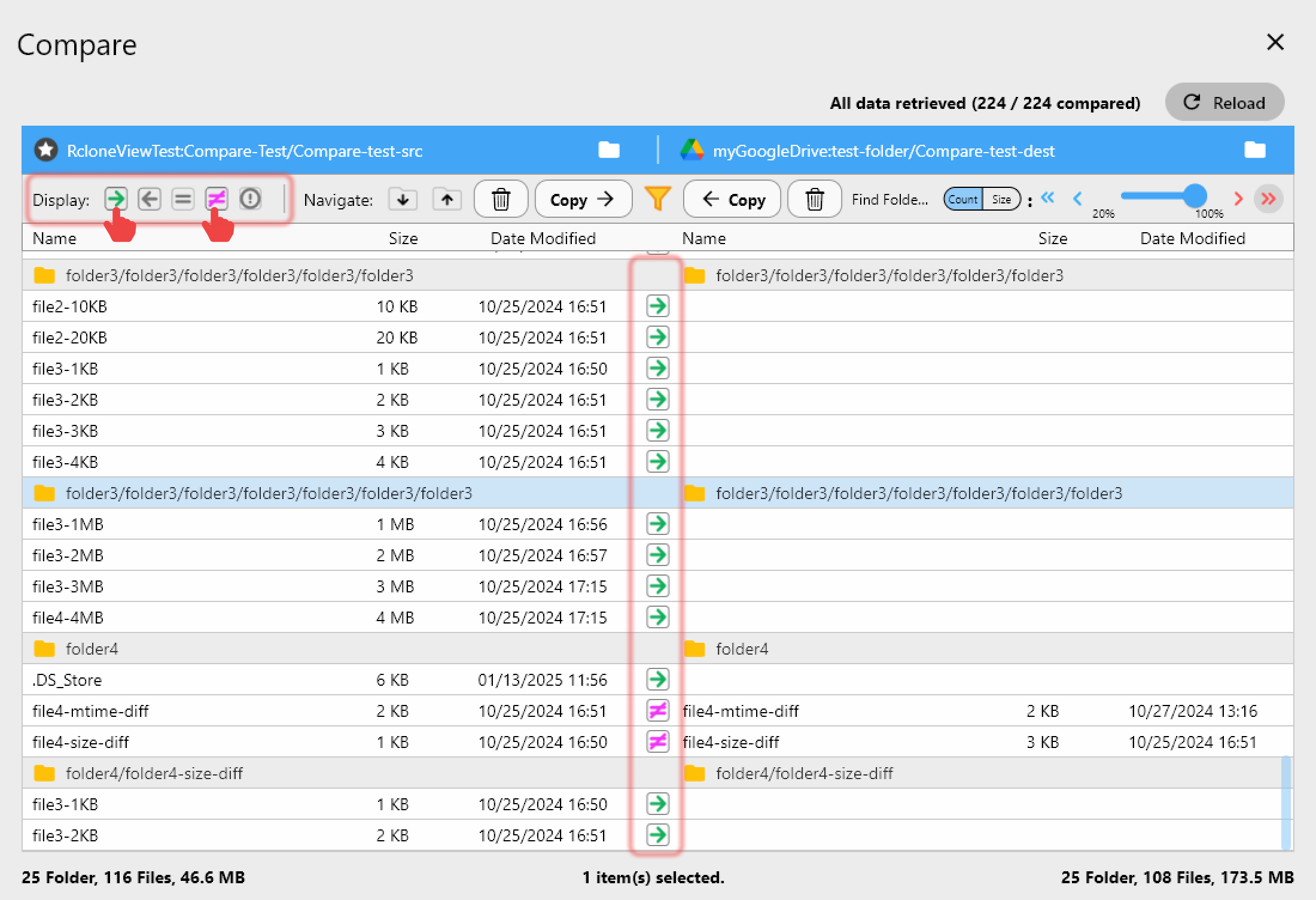
| Compare | rclone check (text output) | Visual side-by-side comparison |
| Identify differences | Text diff | Color-coded display |
| Act on differences | Write follow-up commands | Select and transfer |
Mounting
| Feature | Rclone CLI | RcloneView |
|---|---|---|
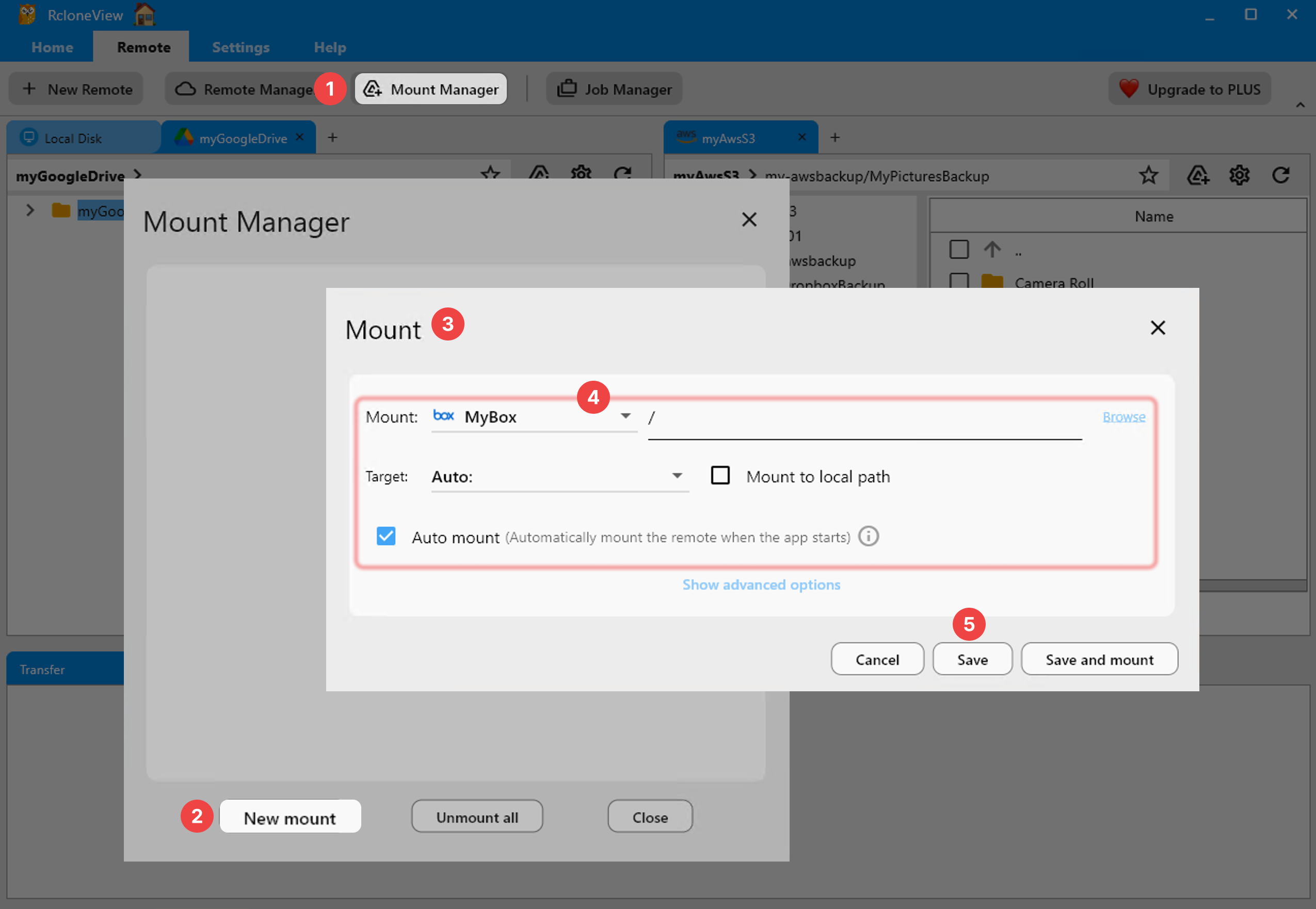
| Mount | rclone mount remote: /mnt/path | Click "Mount" in explorer |
| Mount manager | Manage manually | Mount Manager UI |
| Multiple mounts | Multiple terminal sessions | All in one interface |
Notifications
| Feature | Rclone CLI | RcloneView |
|---|---|---|
| Slack/Discord/Telegram | Script with webhooks | Built-in (v1.3) |
| Email alerts | External tools | Not yet |
Remote Configuration
| Feature | Rclone CLI | RcloneView |
|---|---|---|
| Add new remote | rclone config (interactive) | Visual wizard |
| Edit remote | rclone config update | GUI form |
| NAS auto-detect | Not available | ✅ Synology |
Terminal Access
| Feature | Rclone CLI | RcloneView |
|---|---|---|
| Direct CLI access | Your terminal | Built-in terminal |
| Custom commands | Full flexibility | Full flexibility via terminal |
RcloneView includes a built-in terminal, so you can drop to CLI when needed without leaving the app.
When CLI Wins
The command line is better when:
- Automation at scale — Writing scripts that run on headless servers, CI/CD pipelines, or Docker containers.
- SSH-only environments — Servers without a desktop environment.
- Maximum flexibility — Some advanced flags are more easily configured at the command line.
- Scripting integration — Chaining rclone with other CLI tools (
jq,awk, pipes). - You already know rclone — If the commands are second nature, the CLI is faster.
When GUI Wins
RcloneView is better when:
- Visual file browsing — Seeing your files is faster than listing them.
- Job management — Creating, editing, and scheduling jobs visually.
- Folder comparison — Side-by-side visual comparison beats text output.
- Team use — Not everyone on your team knows CLI.
- Discovery — Exploring what rclone can do without reading documentation.
- Complex configurations — Filter rules, bandwidth limits, and provider settings in a form instead of flags.
- Monitoring — Real-time visual progress instead of terminal output.
Best of Both Worlds
You don't have to choose. RcloneView includes a built-in terminal, so you can:
- Browse files visually → switch to terminal for a complex command.
- Set up jobs in the GUI → view the equivalent CLI command for scripting.
- Use the GUI for daily tasks → CLI for automated pipelines.
Getting Started
- Download RcloneView from rcloneview.com.
- Your existing rclone config is preserved — RcloneView reads the same config file.
- Browse, sync, mount — with visual controls.
- Drop to terminal — whenever you need CLI power.
If you love rclone but want a visual layer on top, RcloneView is that layer.
Related Guides:
Supported Cloud Providers