Mount Cloud Storage as a Local Drive — Complete Guide to Using Google Drive, S3, and OneDrive Like Local Folders
What if your Google Drive, S3 bucket, or OneDrive appeared as a regular folder on your computer? Open files in any app, save directly to the cloud, and browse everything in your file manager — no browser needed.
Mounting cloud storage as a local drive turns any cloud provider into what looks and feels like a USB drive or network share on your computer. Open Google Drive files in Photoshop. Save Excel reports directly to S3. Browse your Dropbox in Finder. RcloneView makes this work with 70+ cloud providers.
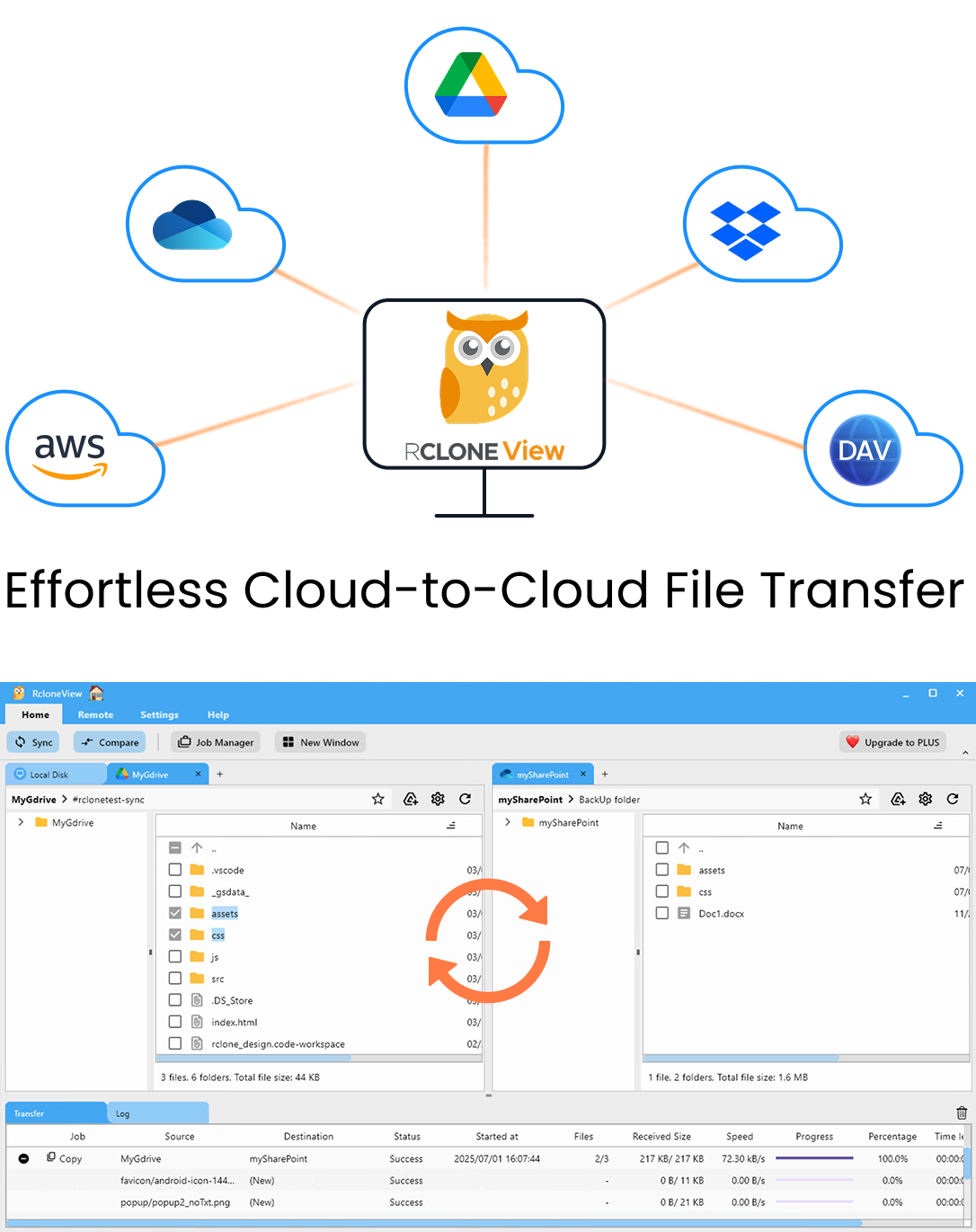
Manage & Sync All Clouds in One Place
RcloneView is a cross-platform GUI for rclone. Compare folders, transfer or sync files, and automate multi-cloud workflows with a clean, visual interface.
- One-click jobs: Copy · Sync · Compare
- Schedulers & history for reliable automation
- Works with Google Drive, OneDrive, Dropbox, S3, WebDAV, SFTP and more
Free core features. Plus automations available.
What Is Cloud Mounting?
When you "mount" cloud storage, your operating system creates a virtual drive that maps to your cloud account. The files appear in your file manager (Finder, Explorer, Nautilus) like any other drive. Behind the scenes, rclone handles the API calls to read and write files.
How it works
Your App → Local Mount Point → rclone → Cloud API → Cloud Storage
When you open a file, rclone downloads it on demand. When you save, rclone uploads the changes. It's transparent to your applications.
Mount with RcloneView
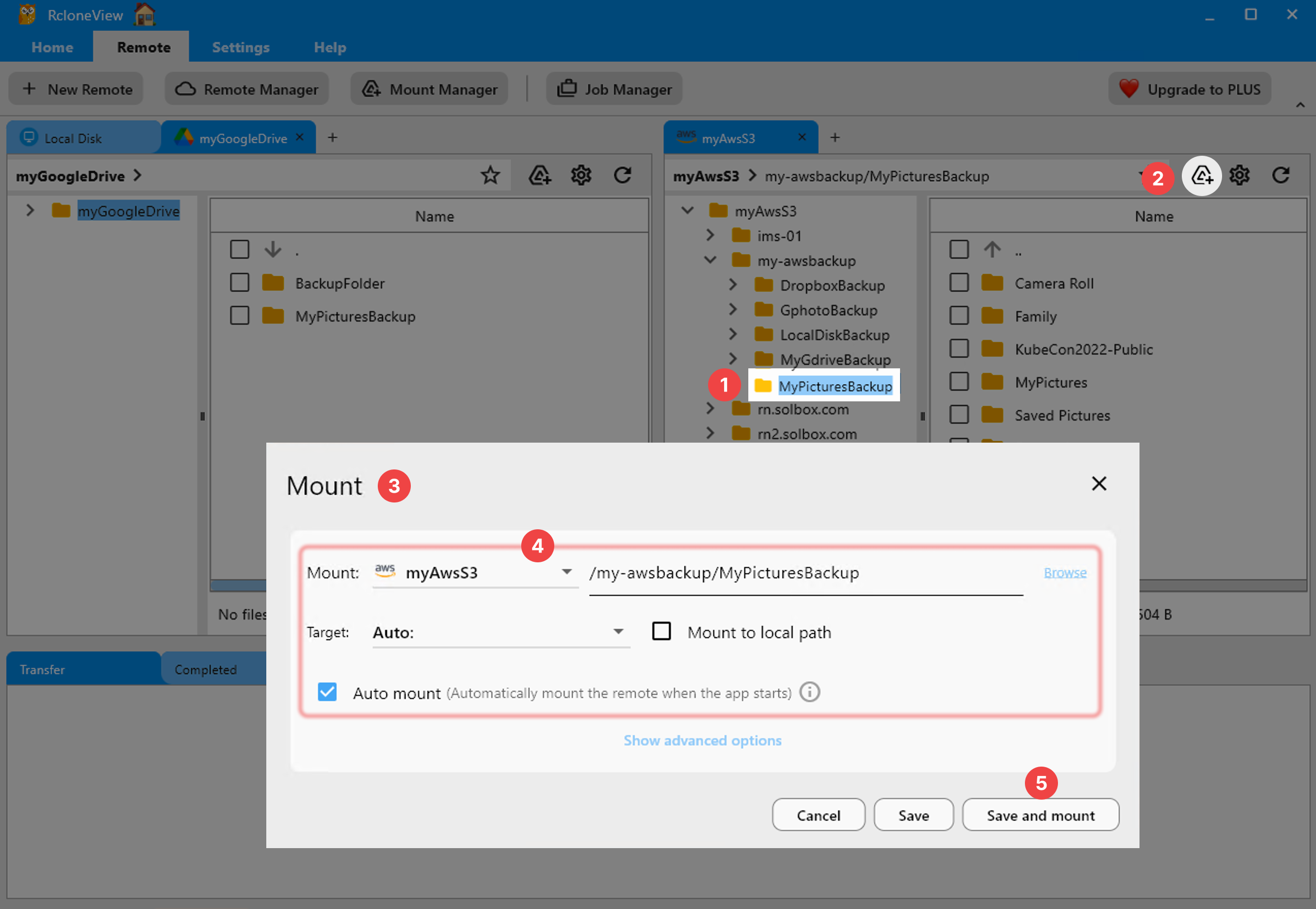
From the Remote Explorer
Right-click any remote and choose Mount:
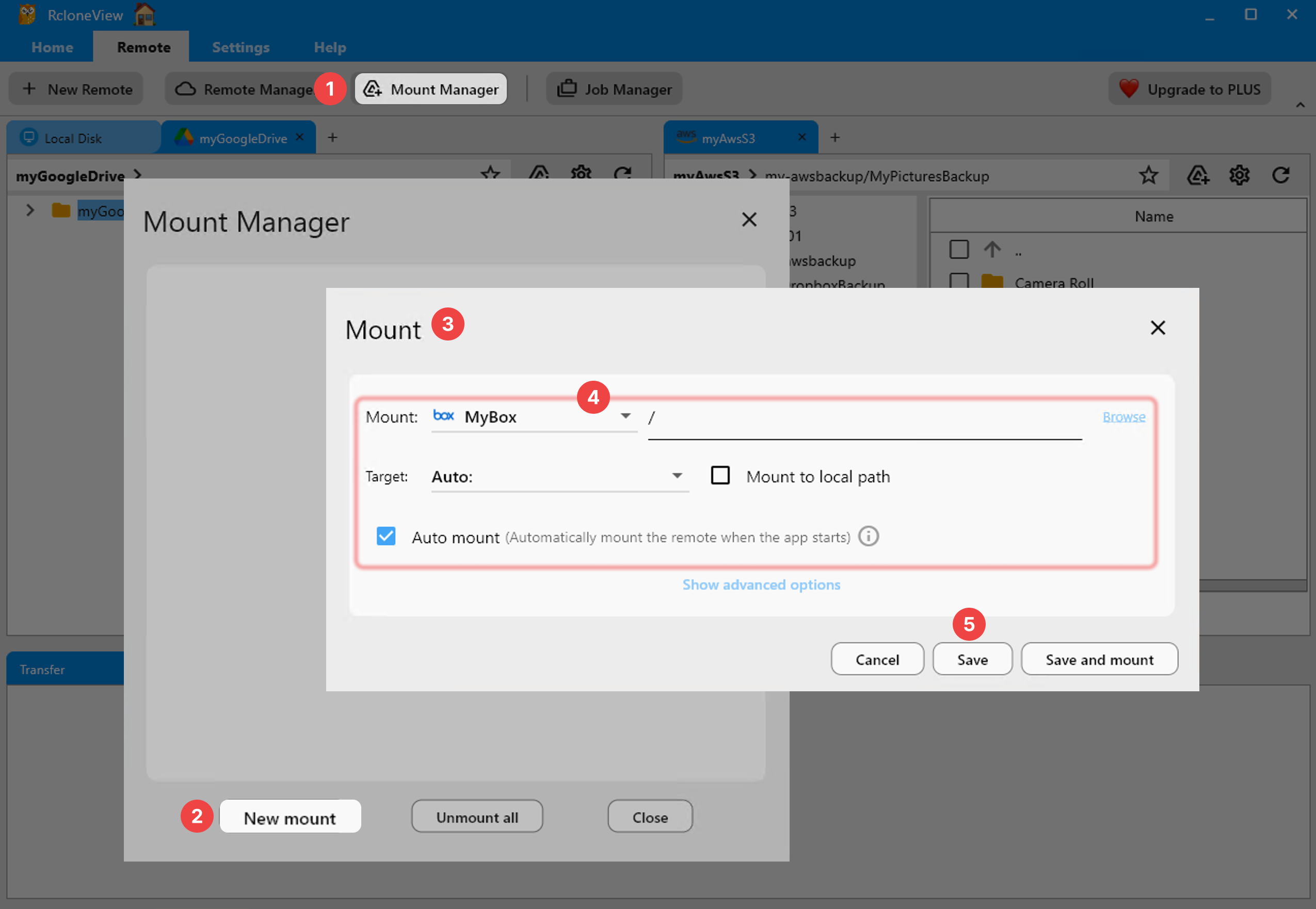
From the Mount Manager
Use the Mount Manager for more control over mount settings:
Platform-Specific Setup
Windows
On Windows, mounted cloud storage appears as a drive letter (e.g., G: for Google Drive, S: for S3).
Requirements:
- WinFsp (Windows File System Proxy) — RcloneView can install this for you.
Once mounted, the cloud drive appears in Explorer alongside your local drives. Any Windows application can read from and write to it.
macOS
On macOS, mounted storage appears in /Volumes/ and in Finder's sidebar.
Requirements:
- macFUSE — Download from macfuse.io.
After mounting, your cloud storage appears as a volume in Finder.
Linux
On Linux, mounted storage appears at your chosen mount point (e.g., /mnt/gdrive).
Requirements:
- FUSE 3 —
sudo apt install fuse3on Ubuntu/Debian.
What You Can Do with Mounted Clouds
Open cloud files in any application
- Edit a Google Drive spreadsheet in LibreOffice.
- Open S3 images in Photoshop.
- Play media files from OneDrive in VLC.
- Run scripts against files on Dropbox.
Save directly to cloud
Any "Save As" dialog in any application can save to your mounted cloud drive. No upload step needed.
Automate with scripts
Mounted cloud storage works with any command-line tool:
# Copy local backups to mounted S3
cp /backups/database.sql /mnt/s3-backup/

# Process files from mounted Google Drive
python analyze.py /mnt/gdrive/reports/*.csv
Browse in your file manager
Explore your cloud storage the same way you browse local files — with folders, search, and preview.
Performance Tips
Caching
Enable VFS (Virtual File System) caching for better performance:
- Read-only workloads: Minimal caching is fine.
- Read-write workloads: Enable full caching for smoother performance.
- Media streaming: Use read-ahead caching.
Buffer size
Increase the buffer for faster streaming of large files. The default works for most files, but video playback benefits from larger buffers.
Directory caching
For directories with thousands of files, enable directory caching to avoid repeated API calls. This makes browsing feel faster.
Mount Multiple Clouds Simultaneously
Mount all your clouds at once:
| Cloud | Mount Point (Windows) | Mount Point (Linux) |
|---|---|---|
| Google Drive | G: | /mnt/gdrive |
| OneDrive | O: | /mnt/onedrive |
| AWS S3 | S: | /mnt/s3 |
| Dropbox | D: | /mnt/dropbox |
| Backblaze B2 | B: | /mnt/b2 |
With all clouds mounted, your file manager becomes a unified view of all your storage.
Mount vs Sync: When to Use Each
| Scenario | Use Mount | Use Sync |
|---|---|---|
| Open files occasionally | ✅ | ❌ |
| Work offline | ❌ | ✅ |
| Large media streaming | ✅ (with cache) | ❌ |
| Full local copy needed | ❌ | ✅ |
| App integration | ✅ | ❌ |
| Backup/archive | ❌ | ✅ |
Mount is best when you want on-demand access without downloading everything. Sync is best when you need a full local copy for offline work or backup.
Common Issues
"Mount point not found"
Create the mount point directory first (Linux/macOS):
sudo mkdir -p /mnt/gdrive
On Windows, choose an unused drive letter.
Slow file listing
Large directories (10,000+ files) may take time on first access. Enable directory caching to speed up subsequent listings.
Application compatibility
Most applications work with mounted drives. However, some applications that require fast random access (databases, video editors with large projects) may perform better with synced local copies.
Getting Started
- Download RcloneView from rcloneview.com.
- Install FUSE (macFUSE on macOS, WinFsp on Windows, fuse3 on Linux).
- Add your cloud remotes.
- Mount from the Remote Explorer or Mount Manager.
- Access your clouds in Finder, Explorer, or Nautilus like any other drive.
Your cloud storage, your file manager. No browser tab required.
Related Guides:
Supported Cloud Providers